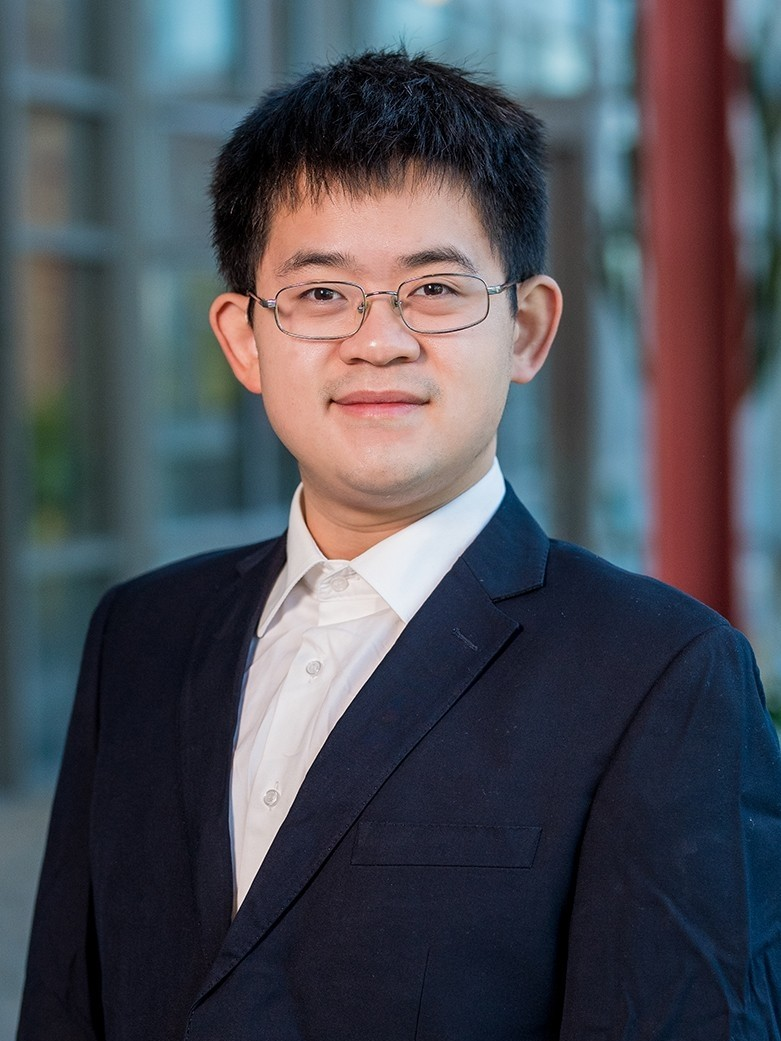
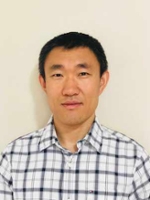
Linyi Li is an Assistant Professor in the School of Computing Science at Simon Fraser University (SFU), leading the Trustworthy Artificial Intelligence (TAI) Lab. His research focuses on certifiably trustworthy deep learning systems, combining machine learning and computer security. He holds a PhD from the University of Illinois Urbana-Champaign (UIUC) and a B.Eng. from Tsinghua University. Affiliations: Simon Fraser University, TAI Lab Education: PhD in Computer Science, UIUC, 2023 B.Eng (Cum Laude), Tsinghua University, 2018 His research interests include deep learning , trustworthy machine learning , large language models , and software engineering . He emphasizes rigorous certification of robustness, fairness, and numerical reliability in AI systems. Recent work includes the InfiBench benchmark for evaluating code LLMs and advancements in neural network verification. Recent Research Trends: His publications span certified robustness, fairness guarantees, and scalable verification techniques for deep learning models. He also explores scientific evaluation of foundation models and adversarial defense mechanisms. Awards: Rising Stars in Data Science AdvML Rising Star Award Wing Kai Cheng Fellowship Finalist: Qualcomm Innovation Fellowship (2022) Winner: VNN-COMP'23 Competition (Team α, β-CROWN) Advising & Grants: As a PI, he oversees the TAI Lab's research. Though no specific grants are listed, his work is funded through competitive awards and university resources. Labs/Teams: Leads the TAI Lab at SFU, focusing on foundational and applied research in trustworthy AI.
David Lie is a Professor at the University of Toronto, jointly appointed in the Edward S. Rogers Department of Electrical and Computer Engineering, Department of Computer Science, and Faculty of Law. He directs the Schwartz Reisman Institute for Technology and Society, co-founded the IT3 Lab, and serves as Associate Director at the Data Sciences Institute. His research focuses on securing computer systems through operating systems, architecture, and formal verification approaches. B.A.Sc (University of Toronto, 1998) M.S. (Stanford, 2001) Ph.D. (Stanford, 2004) His research emphasizes building secure systems for mobile platforms and cloud computing, with significant contributions to trusted execution environments (XOM architecture precursor to Intel SGX/ARM TrustZone) and Android permission mapping (PScout tool). Recent work spans cryptographic side-channels, web tracking detection, and AI safety. Key honors include SOSP 2003 Best Paper, Ontario MRI Early Researcher Award (2008), Connaught Global Challenge Award (2017), and Canada Research Chairs (Tier 2 2013-2018, Tier 1 current). He has secured over $30M in research funding and served as General Chair for CCS 2018. Lie leads the IT3 Lab (Technology and Policy Integration), collaborates with industry leaders (Google, VMware, Telus), and mentors graduate students working on practical security implementations. He co-teaches ECE1724: Privacy Problems with Lisa Austin from the Faculty of Law, reflecting his technology-policy interests.
Peter Rigby is an Associate Professor at Concordia University's Department of Computer Science and Software Engineering. His research focuses on software engineering practices, AI-driven development tools, test automation, and developer productivity. He has contributed to industry-scale studies at Meta, Chrome, and Ericsson, addressing challenges in code reviews, flaky tests, and release management. Rigby's work emphasizes empirical software engineering and organizational dynamics in large-scale systems. His research interests span AI-assisted coding, test prioritization, code quality, and developer collaboration. He has explored the integration of large language models (LLMs) into release deployment and SQL authoring, aiming to enhance productivity and reduce risks. His studies also address practical challenges like dead code removal and batch testing optimization. Rigby's articles highlight trends in leveraging statistical models and empirical data to improve software development workflows. His work at Meta and Chrome includes analyzing developer focus, workload management, and knowledge retention amid high turnover. The research consistently bridges theory with industrial applications, emphasizing real-world impact.
Jeremy W. Fox is a Professor in the Department of Biological Sciences at the University of Calgary. He holds a PhD in Ecology and Evolutionary Biology from Rutgers University (2000) and a BA from Williams College (1995). His work focuses on community assembly processes, combining experimental and theoretical approaches with microbial systems. Key interests include dispersal effects, ecosystem function, and the dynamics of competitive interactions. Research highlights include challenging the Intermediate Disturbance Hypothesis (2013), quantifying biodiversity's role in ecosystem stability (2013), and analyzing meta-analytic approaches in ecology (2022). His lab explores how environmental fluctuations and species traits influence community structure and stability. Fox has been recognized with awards including the British Ecological Society Early Career Award (2007) and Alberta Ingenuity grants (2005-2007). Teaching includes courses on quantitative biology (ECOL 425, BIOL 315). His work emphasizes experimental rigor, theoretical frameworks, and open science practices. The Fox Lab's research spans ecological restoration, food web dynamics, and evolutionary ecology, with a focus on long-term community processes and their applied implications.
William J. Reed is a Professor in the Department of Mathematics and Statistics at the University of Victoria, with a distinguished career spanning theoretical and applied statistics. His work bridges mathematical theory with real-world applications across ecology, finance, and biology, focusing on distributional phenomena in complex systems. Dr. Reed earned his Ph.D. from the University of British Columbia and has maintained an active research program for over three decades. His scholarly contributions are characterized by rigorous statistical modeling of natural and socioeconomic patterns. Research centers on probability distributions—particularly power-law, Normal-Laplace, and circular distributions—with applications in forest fire dynamics, income inequality, gene family evolution, and financial markets. His work explains why power-laws emerge universally across disciplines through mechanistic stochastic models. Recent publications emphasize survival analysis with bathtub-shaped hazard rates and directional data modeling. His publication trend (2000-2010) reveals interdisciplinary innovation: developing the double Pareto-lognormal distribution for size phenomena, modeling sexually transmitted disease networks, and creating Brownian-Laplace motion for financial applications. These works consistently connect theoretical distribution theory to empirical patterns in nature and society. Scientific Awards: No specific awards documented in source material Dr. Reed has supervised six graduate students on distribution-focused theses, including Peter Ott (1995) on animal abundance estimation, Tony Ho (1997) on wildfire modeling, and Fan Wu (2008) on Normal-Laplace applications. While grant details aren't specified, his collaborative work with B.D. Hughes demonstrates sustained research productivity across mathematical biology, economics, and environmental science.
Jianguo (Jeff) Xia is a Full Professor at McGill University , specializing in molecular biology and systems biology. His research focuses on host-parasite-gut microbiota interactions, bioinformatics, metabolomics, metagenomics, and network biology. He actively develops next-generation bioinformatics tools to address big data challenges in life sciences, with an emphasis on applied statistics, machine learning algorithms, data visualization, and web-based technologies. His recent publications highlight advancements in metabolomics and multi-omics integration. He has contributed to web-based platforms like MicrobiomeNet and ImpLiMet for microbial association analysis and data imputation. His work spans environmental health (e-waste exposure), disease modeling (type 1 diabetes, Parkinson’s), and toxicogenomics (EcoToxChip). As a leader in computational biology, Xia’s research bridges gut health, microbiome dynamics, and exposome-scale investigations. He currently supervises graduate students and collaborates across disciplines to develop tools like OmicsNet and MetaboAnalyst for metabolomics and systems biology applications.
Gokul Bhandari is an Associate Professor and Area Chair of Supply Chain Management & Business Data Analytics at the Odette School of Business, University of Windsor. His research focuses on leveraging data analytics, cloud computing, and consumer behavior analysis in business contexts. He holds a Ph.D. and M.S. from McMaster University, an MBA from the University of Minnesota, and a B.A. from Mehran University of Engineering & Technology. Key research areas include supply chain optimization, customer journey mapping, and the application of statistical methodologies in business decision-making. His work spans disciplines like cloud-based educational platforms and consumer-centric digital strategies. Recent publications examine IT challenges in Greece, cloud analytics tools for education, and predictive modeling for customer interactions. Dr. Bhandari's expertise integrates academic rigor with practical business solutions, emphasizing data-driven strategies across multiple domains. His current roles involve shaping curricula and research initiatives in business analytics while maintaining active engagement with industry-relevant research topics.
Paul McNicholas is a Professor in the Department of Mathematics and Statistics at McMaster University, where he holds a Tier 1 Canada Research Chair in Computational Statistics. He serves as Editor-in-Chief of the Journal of Classification and has directed the MacData Institute (2017-2022). His academic leadership extends to his role as Associate Chair of Statistics (2021-2023) and his extensive supervision of graduate students across multiple cohorts. Dr. McNicholas earned his academic credentials from Trinity College Dublin, including a Sc.D. in Statistics, Ph.D. in Statistics, M.Sc. in High Performance Computing, and B.A./M.A. in Mathematics. His educational background reflects the interdisciplinary nature of modern computational statistics, combining deep mathematical knowledge with advanced computational skills essential for contemporary data science. His research focuses on computational statistics, particularly mixture model-based clustering and classification. Current research includes work on non-Gaussian mixtures, matrix variate distributions, and real problems in big data analytics. McNicholas has made significant contributions to developing statistical methods for higher-order data, mixed-type data, and multivariate longitudinal data, with special applications in autism and aging research. His methodological innovations have enabled more sophisticated analysis of complex datasets across various domains, particularly in health sciences. Analysis of his recent publications reveals a strong focus on advancing mixture model methodology for increasingly complex data structures. His work spans theoretical developments in distribution theory, computational algorithms for model fitting, and practical applications in health sciences. A notable trend is the extension of traditional statistical methods to handle high-dimensional, non-Gaussian, and structured data while maintaining computational efficiency, with increasing attention to applications in autism spectrum disorder and aging research. Dr. McNicholas has received numerous prestigious awards recognizing his contributions to statistics: Dorothy Killam Fellowship (2023) John L. Synge Award, Royal Society of Canada (2021) Steacie Prize for the Natural Sciences (2020) E.W.R Steacie Memorial Fellowship (2019) College Member, Royal Society of Canada (2017) University Scholar (2017) Tier 1 Canada Research Chair (2015) Dr. McNicholas actively mentors the next generation of statisticians, currently supervising eight Ph.D. students, a Master's student, and an undergraduate researcher. His research group has secured significant funding through various grants and fellowships, enabling cutting-edge research in computational statistics. He has also contributed to the field through software development, with R packages like 'mixture', 'pgmm', 'CDGHMM', 'longclust', and 'vscc' that implement his methodological innovations and make advanced statistical techniques accessible to practitioners. His research group operates within the broader context of the MacData Institute at McMaster University, which he directed from 2017-2022. The group fosters interdisciplinary collaboration, particularly in applications related to health sciences, including autism spectrum disorder research and aging studies. McNicholas has built a vibrant research community that bridges theoretical statistics with practical applications through regular seminars, workshops, and collaborative projects with researchers across multiple disciplines, with particular emphasis on methodological innovations that address real-world challenges in health analytics.
Kelly Ramsay is an Assistant Professor in the Department of Mathematics and Statistics at York University, Faculty of Science, Toronto, Canada. Her research is focused on developing nonparametric and robust statistical tools for complex data, with a strong emphasis on differential privacy, functional data analysis, and high-dimensional statistics. She bridges theoretical statistics with real-world applications and computational implementation. Education: PhD in Statistics, University of Waterloo (2018–2022) MSc in Statistics, University of Manitoba (2016–2018) BSc (Honours) in Statistics and Actuarial Science, University of Manitoba (2012–2016) Her research interests include differential privacy, robust inference, functional data, changepoint detection, and data depth. She develops methods that are both theoretically sound and computationally feasible, with applications in f-MRI and privacy-preserving data analysis. Her work often integrates simulation studies and real data applications, reflecting her background in statistical consulting and technical analysis. The recent trend in her publications centers on differentially private statistical methods, particularly for multivariate and functional data. She has made significant contributions to differentially private medians, boxplots, scale testing, and changepoint detection, leveraging data depth and robust estimation techniques. Her work combines theoretical guarantees with practical utility in sensitive data environments. Scientific Awards and Funding: NSERC Discovery Grant (2023) NSERC Launch Supplement (2023) Canada Graduate Scholarship - Doctoral (NSERC, 2019) Sprott Scholarship, University of Waterloo (2021) Canada Graduate Scholarship - Masters (NSERC, 2016) SSC Student Presentation Award (2017) Outstanding Research by an M.Sc. Student, University of Manitoba (2019) Kelly Ramsay has extensive experience in statistical consulting and applied data analysis, having worked at the University of Waterloo and Bison Transport. She has contributed to R packages and large-scale web scraping projects. She actively presents her research at major conferences such as ICORS, SSC, JSM, and SIAM/CAIMS. She has collaborated with researchers including Shoja Chenouri, Dylan Spicker, and Aukosh Jagannath. There is no indication of advising graduate students yet, but her collaborative research suggests strong mentorship and teamwork. She is involved in academic seminars and research days at institutions such as McGill University and through CANSSI. Her work is disseminated via arXiv, peer-reviewed journals, and conference proceedings, highlighting her active role in the statistical research community.
Dr. Marzieh Ahmadzadeh is an Associate Professor (Teaching Stream) at the Department of Electrical Engineering & Computer Science, York University. She holds a Ph.D. and MSc in Information Technology (Software Engineering) from the University of Nottingham, UK, and a BSc in Computer Engineering from Isfahan University. A certified Professional Engineer (P.Eng.) in Ontario, she has held academic positions at Shiraz University of Technology, University of Toronto, and University of Georgia, USA before shifting her focus to education research in 2015. Education: Ph.D., Information Technology (Software Engineering), University of Nottingham (2006) MSc, Information Technology (Software Engineering), University of Nottingham (2002) BSc, Computer Engineering, Isfahan University Her research intersects Computer Science Education and Human-Computer Interaction , with a focus on Applied Data Mining for educational analytics and security applications. She has published in prestigious venues like ACM SIGCSE, IEEE Transactions, and Future Generation Computer Systems. Recent publications demonstrate expertise in: Exam design and cognitive load optimization Ransomware detection in fog computing environments Breast cancer survivability modeling with imbalanced data Gender preferences in e-commerce UX design Academic integrity analysis in programming education
Dr. Xuekui Zhang is an Associate Professor at the University of Victoria (UVic) and holds a Tier 2 Canada Research Chair in Biostatistics and Bioinformatics. He is also a Michael Smith Health Research BC Scholar. His primary affiliation is with the Department of Mathematics and Statistics, Faculty of Science at UVic, with adjunct roles at University of Manitoba and UBC's Centre for Heart Lung Innovation. He specializes in developing statistical methods and software tools for analyzing genomic data, clinical trials, and environmental datasets. **Education**: PhD in Statistics (UBC, 2011), postdoctoral training at Johns Hopkins University (2011–2013), and visiting scholarships at institutions like Fred Hutchinson Cancer Research Center.** **Research**: Focuses on bioinformatics, biostatistics, and machine learning applications in COPD, environmental monitoring, and precision medicine. Notable projects include the OPMS ocean pollution monitoring system and ADSP adaptive diagnostic testing strategy. His work integrates multi-omics data (scRNA-seq, scATAC-seq) and clinical trial design innovations. **Awards**: Recipient of the Canadian Journal of Statistics (CJS) Award (2022) for collaborative work on logistic regression modeling.** **Grants**: Leads or co-leads major projects funded by Genome Canada ($6.3M), NRC ($1.5M), and CIHR ($0.8M). Current initiatives include COPD biomarker discovery and clinical decision tools for shoulder replacements. **Students**: Supervises a dynamic team of 12+ PhD/MSc students and undergraduates, focusing on machine learning, environmental statistics, and genomic data analysis. Notable trainees include Yushan Hu (COPD research) and Haochen Ning (plant virology diagnostics). **Labs/Teams**: Coordinates a multidisciplinary group with expertise in statistical computing, collaborating with researchers in medicine, environmental science, and computer science.
Dr. Andrew Tappenden serves as Dean of Natural Science and Associate Professor of Computing Science at The King's University. He holds a PhD and B.Sc. from the University of Alberta. His research focuses on improving software quality through areas such as software verification, web application testing, security testing, and agile development. His work is supported by grants from NSERC and SSHRC. He has published extensively in journals and conferences, with notable contributions to cookie management systems, web service testing frameworks, and evolutionary testing strategies. He actively participates in academic conferences and mentorship of undergraduate researchers. His interdisciplinary approach bridges computing science with fields like geography and information systems. Education: PhD in Computing Science, University of Alberta (2010) B.Sc. in Computing Science, University of Alberta (Year unspecified) Research Interests: Dr. Tappenden’s research emphasizes practical solutions to software quality challenges. His work spans: Software verification techniques for complex systems Automated testing methodologies for web applications and services Security testing frameworks for modern platforms Agile development practices in interdisciplinary contexts Grants and Support: NSERC Discovery Grant (active) SSHRC Insight Development Grant (active) Lab/Team: Leads the Computing Science research group at King’s, focusing on applied software engineering and interdisciplinary computing projects.
Dr. Elizabeth Hassan is an Assistant Professor in the Department of Mechanical Engineering at McMaster University, affiliated with the Faculty of Engineering. Her research focuses on engineering education, biomechanics, and multivariate statistics. She has contributed to teaching innovations such as the MECH ENG 2C04 and MECH ENG 4B03 courses, emphasizing design project methodologies and product development. Her work bridges engineering education with clinical applications, evidenced by studies on surgical outcomes during the pandemic and biomechanical analysis of knee osteoarthritis treatments. Notably, she received the 2023 President’s Award for Outstanding Contributions to Teaching and Learning, recognizing her impactful teaching practices. Dr. Hassan’s publications span topics like CAD performance analysis, pandemic surgical management, and competitive team learning strategies. In teaching, she emphasizes experiential learning through initiatives like the James Dyson Awards Guide and competitive engineering team courses. Her research also explores factors influencing student participation in extracurricular technical projects, highlighting her commitment to holistic engineering education. Recent projects include collaborations on global surgical outcomes during the pandemic (CovidSurg-Gynecologic Study) and predictive models for spinal surgery recovery. Her interdisciplinary approach integrates biomechanical principles with educational and clinical challenges, making significant contributions to both academic and applied fields.
Matthew Johnson is an Associate Professor in the Department of Physics and Astronomy at York University and an Associate Faculty member at the Perimeter Institute for Theoretical Physics. His research focuses on theoretical cosmology, including cosmic inflation, eternal inflation, dark energy, and confronting fundamental theories with observations of the Cosmic Microwave Background (CMB). He explores topics such as topological defects, string theory, and gravitation, with a particular interest in designing data analysis algorithms to interpret cosmological datasets. Johnson's affiliations include York University and the Perimeter Institute. His work spans computational and theoretical approaches to understanding the universe’s origins and evolution. He collaborates widely, contributing to projects like the Atacama Cosmology Telescope and the CMB-HD Collaboration. His research interests emphasize cosmological models, phase transitions in the early universe, and the implications of string theory’s extra dimensions for cosmology. He investigates the Multiverse concept and the dynamics of bubble universes in eternal inflation scenarios. Johnson actively supervises graduate students in the York University Physics and Astronomy program and collaborates with institutions globally. His funding sources include NSERC, the Foundational Questions Institute, and the New Frontiers in Astrophysics and Cosmology grant program.
Dr. Gary Stern is an Associate Professor at the University of Manitoba's Clayton H. Riddell Faculty of Environment, Earth, and Resources, affiliated with the Centre for Earth Observation Science (CEOS). He holds a PhD in Analytical Chemistry (Mass Spectrometry) from the University of Manitoba (1992) and teaches courses in analytical mass spectrometry. Academic Background: PhD, University of Manitoba (1992) His research focuses on environmental contaminants in Arctic ecosystems, oil spill impacts, and remediation technologies. He co-leads Genome Canada’s GENICE projects on Arctic oil spill preparedness and directs the PETRL (Petroleum Environmental Research Laboratory). He chairs the Churchill Marine Observatory Board of Directors and was awarded the Governor General’s Polar Medal (2016) for Arctic service. Recent publications emphasize hydrocarbon analysis in marine sediments, oil behavior in sea ice, and microplastic contamination in Arctic environments. His work bridges analytical chemistry with ecological and engineering solutions for Arctic environmental challenges. Scientific Awards: Governor General of Canada’s Polar Medal (2016) Advising: Current student Agoston Fischer (MSc). Research leadership includes multi-million-dollar projects and cutting-edge laboratory infrastructure.