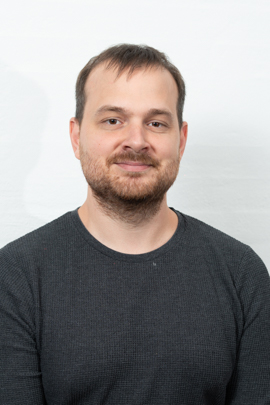
Claus Thorn Ekstrøm is a Professor at the University of Copenhagen , affiliated with the Faculty of Health and Medical Sciences and the Section of Biostatistics . His work integrates advanced statistical methods with biomedical and public health research. Contact details include ekstrom@sund.ku.dk and phone numbers +4535327597, +4535327629. The Section of Biostatistics is located at Øster Farimagsgade 5 opg. B, 1014 København K. Research Focus : Bioinformatics, statistical genetics, genetic epidemiology Teaching : Biostatistics, statistics, and bioinformatic methods Ekstrøm’s recent research trends emphasize causal inference , longitudinal data modeling , and integrated analysis of genetic and metabolic data . His publications span topics like biomarker development in psychiatric disorders , statistical frameworks for complex family data , and computational efficiency in Gaussian process regression , reflecting interdisciplinary applications in public health, genetics, and epidemiology.
Dr. Ahmad Salim Al-Sibahi is an Assistant Professor in the Programming Language and Theory of Computation Section at the University of Copenhagen's Department of Computer Science. He is a core member of the Aleatory Science Team, focusing on probabilistic programming applications in protein folding and inference algorithm optimization. His work combines formal methods with practical machine learning frameworks like Pyro. Educational Background: PhD in Computer Science (2014-2017), IT University of Copenhagen MSc in Computer Science (2014), IT University of Copenhagen Postdoctoral Researcher at University of Copenhagen (2017-2019) Research Interests: His primary focus lies at the intersection of probabilistic programming and computational biology. He develops efficient inference algorithms for probabilistic models, particularly in protein structure prediction and voucher scanning applications. His earlier work includes formal verification of program transformations using inductive refinement types and static analysis techniques. Awards: Best Paper Award at GPCE 2018 Contributions: He contributed to dependently-typed language Idris and co-developed family-based model checking techniques. His research bridges theoretical programming language constructs with applied problems in bioinformatics and software modernization.
Arthur Zimek is a Professor and Head of the Data Science section at the Department of Mathematics and Computer Science, University of Southern Denmark. He holds a Dr. rer. nat. habil. (Habilitation) from Ludwig-Maximilian University of Munich. His research focuses on outlier detection, clustering algorithms, high-dimensional data analysis, and machine learning. Zimek has held guest professorships at TU Vienna and has been a postdoctoral fellow at the University of Alberta. Education includes a Diploma in Bioinformatics, Magister Artium in Philosophy, and a Diploma in Theology, all from German institutions. His work emphasizes algorithm development and evaluation, with contributions to open-source tools like ELKI. He has received awards including the ACM SIGKDD 2017 Notable Article and the 2025 Author Service Award. Key research areas include clustering validation, semi-supervised learning, and interpretable machine learning. Projects involve cardiovascular disease prediction and synthetic data evaluation. He teaches courses on data mining, statistical learning, and spatiotemporal data analysis.
Manuella Lech Cantuaria is an Assistant Professor at the Department of Clinical Research (Karolinska Institute/Odense University Hospital) and the SDU Climate Cluster . Her research focuses on the intersection of environmental health, noise pollution, and chronic disease epidemiology. Education : PhD in Clinical Research Research Interests : Environmental health impacts of transportation noise Hearing impairment and neurodegenerative diseases Epidemiological modeling of public health risks Multi-stressor exposure assessment Article Trends : Her recent work examines noise pollution's role in dementia progression, tinnitus, and respiratory diseases. She employs advanced statistical methods in prostate cancer trajectory analysis and develops epidemiological tools like the HESD database. Teaching Activities : Supervised bachelor students (2016-2021) Co-taught courses in Preventive Audiology and Advanced Audiometric Methods Instructor in Statistics for undergraduate students
Jesper Grud Skat Madsen is an Associate Professor at the Department of Biochemistry and Molecular Biology, University of Southern Denmark (SDU), and Principal Investigator of the MadLab research group. His work bridges computational biology with experimental genomics, focusing on transcriptional regulation in tissue plasticity and metabolic diseases. Current affiliation: SDU (Department of Biochemistry and Molecular Biology) Previous affiliation: SDU (Department of Mathematics and Computer Science, 2021-2023) Research centers: ATLAS, Human Gene Regulatory Map (HGRM), ADIPOSIGN
Ulises Bercovich Szulmajster is a Postdoctoral Researcher in the Department of Mathematical Sciences at the University of Copenhagen, Faculty of Science, focusing on interdisciplinary work bridging mathematical sciences and genetics. His core research interests include: Population Genetics Statistical Genetics Bioinformatics Computational Biology Mathematical Biology His 2025 publication in Genetics analyzes linkage disequilibrium and optimization of pruning/clumping techniques for structured populations, advancing methodological rigor in genetic association studies across diverse demographic contexts. No scientific awards were documented in the source material. Details regarding student supervision, grant funding, or collaborative teams were not provided. He operates within the Department of Mathematical Sciences but no dedicated laboratory or research group was specified.
Hans Jakob Larsen is a Forensic Geneticist at the Department of Forensic Genetics within the Institute of Forensic Medicine, University of Copenhagen's Faculty of Health Sciences. With over 25 years of continuous service since 1999, he conducts forensic DNA analysis, manages crime case investigations, and provides expert testimony in Danish courts. His educational background includes: Master of Science (cand. scient.) from University of Aarhus (1992) Ph.D. in Molecular Biology from University of Aarhus (1994) Specialized training in Forensic Statistics (2005) and DNA analysis techniques Larsen's research centers on forensic DNA methodologies, specializing in mitochondrial DNA sequencing, STR analysis, and complex DNA mixture interpretation. His work bridges molecular biology and criminalistics, developing protocols for biological trace evidence analysis and statistical evaluation of DNA evidence. Recent publications demonstrate increasing focus on international collaborative frameworks for standardizing DNA mixture interpretation and software validation in forensic laboratories. His publication trends since 2015 show concentrated efforts in probabilistic genotyping systems (STRmix™) and expert software development (EDNA), addressing critical challenges in low-template DNA and mixture deconvolution. The 2025 ReAct project represents current work establishing cross-laboratory standards for DNA recovery analysis under activity-level propositions. Larsen has managed forensic laboratories (5-16 technicians) and temporarily led the Crime Case Section (20 academics, 40 technicians). His teaching portfolio includes specialized courses for Danish police on biological trace analysis and seminars for legal professionals on DNA evidence interpretation. He contributed to the 2005 Thai Tsunami Victim Identification operation and maintains active casework involvement.
Liam Thomas Lanigan serves as a Guest Researcher at the Section for Molecular Ecology and Evolution within the Globe Institute at the University of Copenhagen, leveraging ancient biomolecular techniques to investigate evolutionary and ecological dynamics across deep time periods. His research focuses on methodological rigor in ancient metagenomics and paleoproteomics, with applications spanning wildlife conservation (particularly wolf population genomics across Europe and Asia) and archaeological science (including Mesolithic bone tool analysis). Key interests include contamination control in ancient DNA studies, enzymatic protein extraction from skeletal remains, and integrating genomic data for conservation decision-making, reflecting strong interdisciplinary collaboration between genetics, archaeology, and ecology. Analysis of his 2020-2024 publications reveals consistent methodological innovation in biomolecular authentication alongside substantive contributions to canid evolutionary history and archaeological interpretation. Notable trends include protease-based biomarker recovery techniques, whole-genome sequencing for taxonomic resolution in endangered species, and multi-omics integration for reconstructing past human-environment interactions. Lanigan operates within the Section for Molecular Ecology and Evolution, a research unit applying genomic and proteomic technologies to explore ancient ecosystems, wildlife population histories, and human evolutionary trajectories through cutting-edge laboratory and computational approaches.
Ernst Stefan Seemann serves as an Associate Professor in the Department of Veterinary and Animal Sciences within the Faculty of Health and Medical Sciences at the University of Copenhagen. His research focuses on non-protein coding RNAs (ncRNAs) and RNA structure functionality, utilizing advanced methodologies including RNA structure modeling, prediction of RNA-RNA and protein-RNA binding, and analysis of next-generation sequencing data. His primary research interests encompass: Non-protein coding RNAs (ncRNAs) and RNA structure biology Next-generation sequencing and single-cell RNA-seq analysis Comparative genomics and prediction/annotation of ncRNAs Host-pathogen RNA interactions Stem cell models for neurodegenerative diseases Seemann is actively involved in multiple high-impact research initiatives including investigations of novel ncRNAs in bacteria (NextProd project), animal ncRNAs (FAANG consortium), host-virus RNA-RNA interactions with Assoc Prof Troels KH Scheel, single-cell RNA sequencing in neurogenesis studies with Assoc Prof Vanessa J Hall, and transcriptomics in stem cell models for neurodegenerative diseases (NeuroStem project). His publication record demonstrates strong interdisciplinary collaboration across computational biology, veterinary science, and medical research. His scientific contributions span environmental microbiology, gene therapy, neuroscience, and computational biology, with recent work focusing on CRISPR applications, CAR T-cell engineering, microglial metabolism in dementia, and metabolic engineering of bacterial systems. His research has been cited across multiple platforms including academic journals, Mendeley readership, Wikipedia, and news outlets.
Jakob Skou Pedersen is an external researcher affiliated with the Faculty of Health and Medical Sciences at the University of Copenhagen. His work spans evolutionary biology, genomics, and bioinformatics, with significant contributions to understanding human evolutionary constraints, regulatory RNA structures, and ancient human genomes. His research interests focus on computational approaches to evolutionary genomics, including the identification of functional elements in genomes through comparative analysis across multiple species. He has made notable contributions to understanding protein-coding sequences under selection for overlapping functions, regulatory RNA structures, and the evolutionary constraints across mammalian genomes. Analysis of his publication record reveals a strong emphasis on interdisciplinary research combining computational biology with evolutionary genomics. His work frequently appears in high-impact journals including Nature, Cell, and Genome Research, demonstrating expertise in both theoretical modeling and empirical genomic analysis. A significant portion of his research involves large-scale comparative genomic studies across multiple species. His collaborative network is extensive, with co-authorship on major genomic projects involving international research teams. His work on the ancient Palaeo-Eskimo genome represents a notable contribution to paleogenetics and human evolutionary studies.
Víctor Moreno Mayar serves as an Assistant Professor at the Section for Geogenetics within the Globe Institute at the University of Copenhagen. His work bridges genetics, anthropology, and archaeology to explore human evolutionary history and population movements across continents and millennia. Based at the Øster Voldgade campus in Copenhagen, he maintains an active research program with significant international collaborations. Dr. Moreno Mayar's research focuses on ancient genomics and population genetics, particularly examining Indigenous populations across the Americas and their historical connections. His work integrates genomic data with archaeological and anthropological evidence to reconstruct prehistoric migrations, cultural exchanges, and demographic patterns. His research has significantly contributed to understanding transoceanic contacts before European arrival, linguistic evolution through genetic evidence, and the genetic history of isolated Indigenous communities. His recent publications demonstrate a consistent focus on using ancient DNA to address major questions in human history, with particular emphasis on the Americas, Europe, and the Pacific. His work often appears in high-impact journals like Nature and Science, showing strong interdisciplinary reach across genetics, linguistics, and archaeology. The research outputs reveal a pattern of large-scale collaborative projects involving multiple institutions and diverse expertise. Dr. Moreno Mayar maintains an active research profile with substantial media attention, as evidenced by numerous news outlets, social media mentions, and academic citations across his publications. His work on Rapanui (Easter Island) genomes and Indigenous American populations has generated particular interest in both academic and public spheres. As a faculty member at the University of Copenhagen's Globe Institute, Dr. Moreno Mayar contributes to the Section for Geogenetics' mission of using genetic approaches to address fundamental questions about human history, health, and evolution. His work represents a significant contribution to the growing field of archaeogenetics and its applications for understanding human cultural and biological evolution.