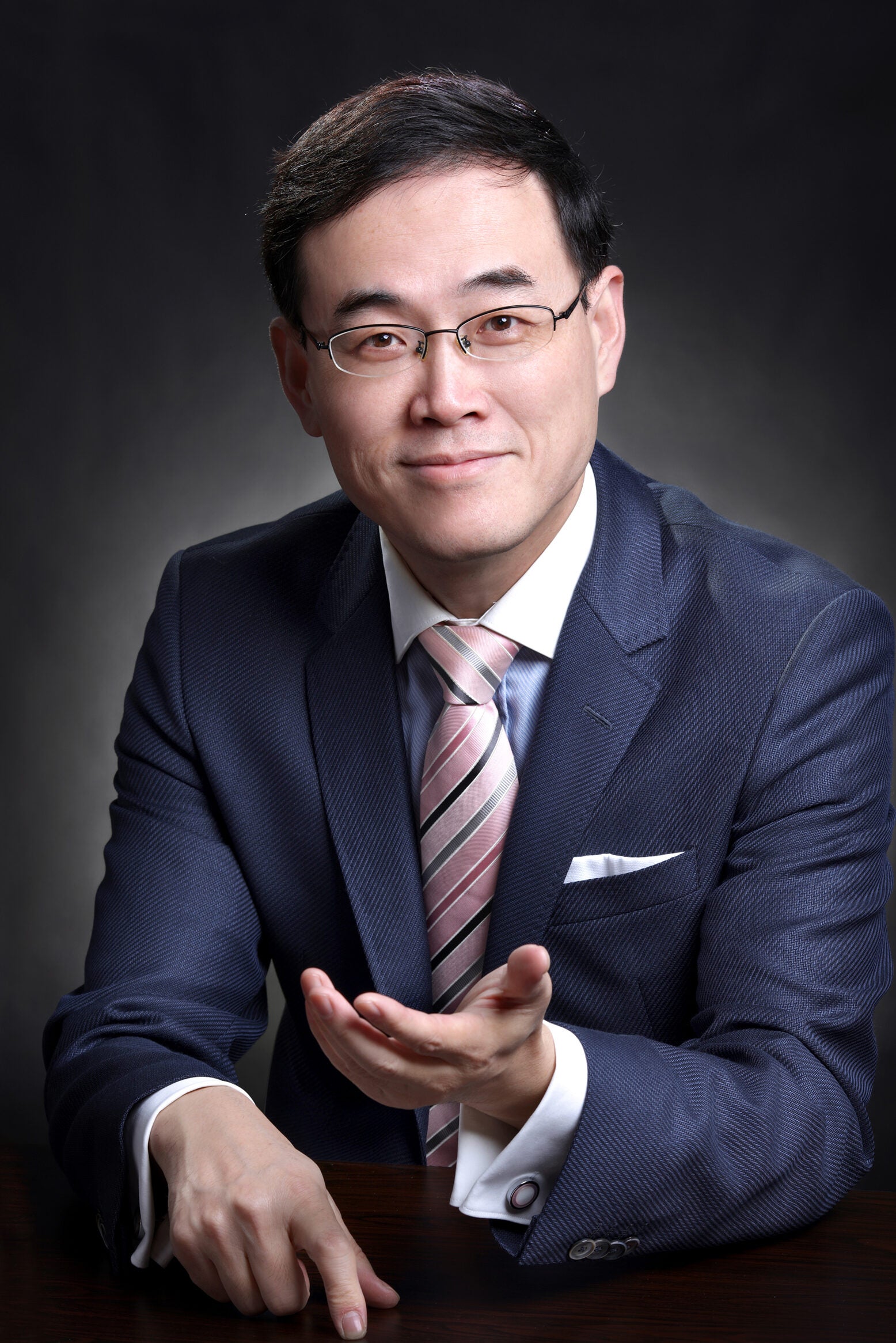
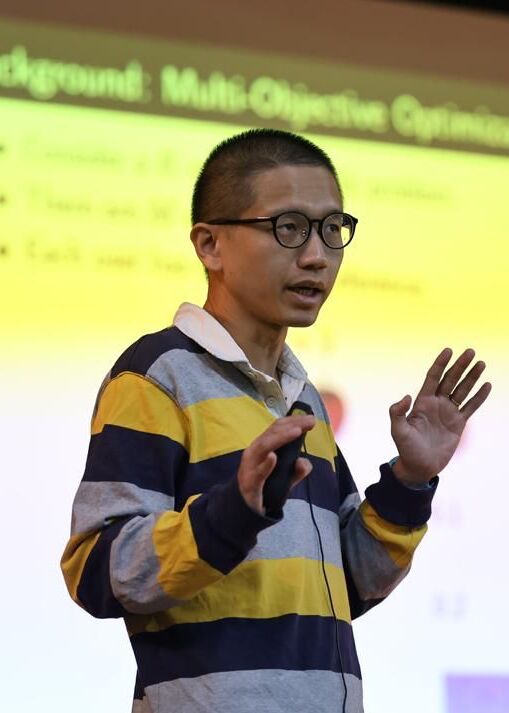
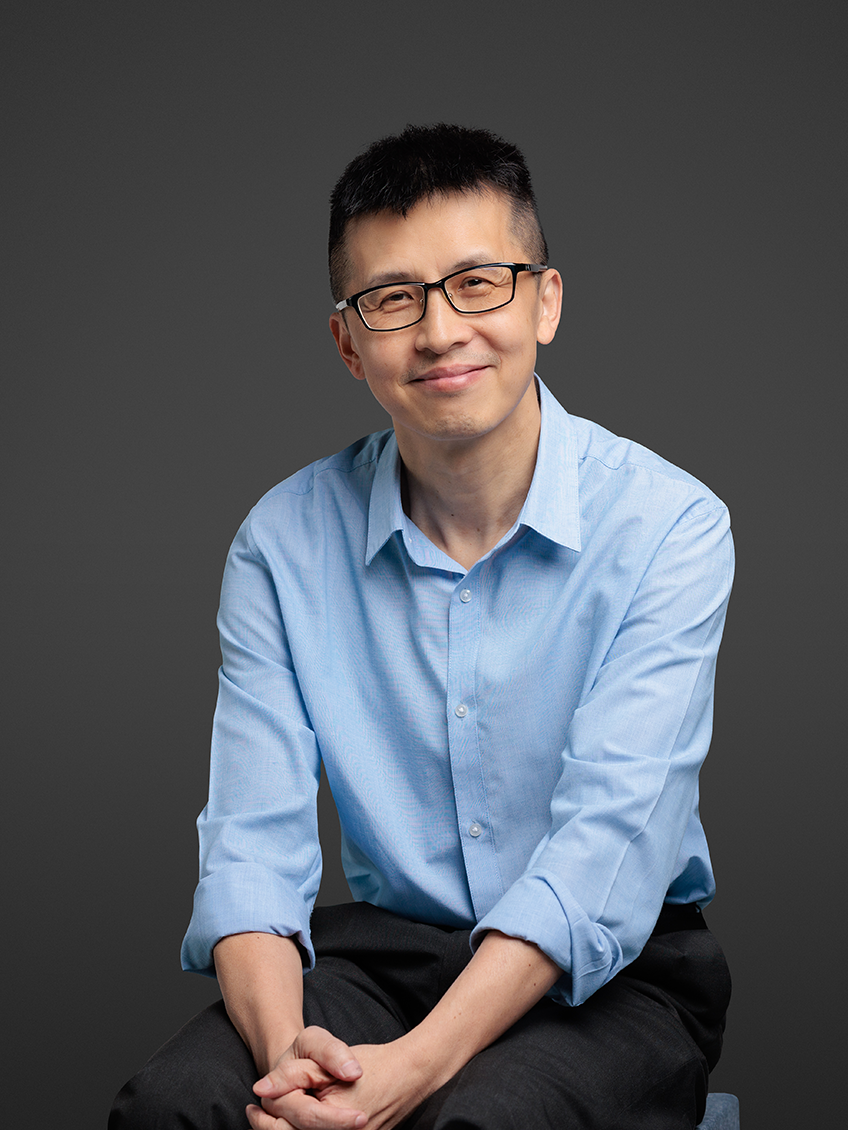
Assoc Prof Ng Teng Yong is an Associate Professor at the School of Mechanical & Aerospace Engineering (NTU), specializing in numerical modeling and simulation. With a background as Research Manager at A*STAR Institute of High Performance Computing, his work spans materials science, nanotechnology, and aerospace engineering. Current focus on graphene-based desalination membranes Expertise in molecular dynamics simulations Investigates nanoscale fluid mechanics and structural dynamics Recent publications highlight advancements in energy-efficient electrodialysis, smart robotics, and nonlinear vibration analysis. His interdisciplinary approach integrates computational methods with experimental validation in additive manufacturing and soft material mechanics.
Prof Aaron Thean is the Deputy President (Academic Affairs) and Provost at the National University of Singapore (NUS). Formerly, he served as Dean of the College of Design and Engineering at NUS and held senior roles at IMEC (Belgium) as Vice President of Logic Technologies and Director of Logic Devices Research. His expertise spans advanced semiconductor device technologies, including FinFETs, nanowire FETs, III-V/Ge channels, and emerging beyond-CMOS architectures. He holds degrees from the University of Illinois Urbana-Champaign (B.Sc., M.Sc., Ph.D. in Electrical Engineering) and has published over 300 papers with 50+ patents. His awards include the Gregory Stillman Award (2001) and Compound Semiconductor Innovation Award (2014). Research interests focus on semiconductor innovation, device-process co-optimization (DTCO), and monolithic 3D integration. Notable contributions include industry-first Gate-First HKMG technologies, advanced strained silicon platforms, and neuromorphic computing hardware. His work bridges academia and industry through collaborations with Qualcomm, IBM, and foundry partners. Current initiatives emphasize energy-efficient computing and wearable sensor systems. Prof Thean’s leadership spans NUS-wide academic strategy and global research partnerships. His technical legacy includes foundational advancements in transistor scaling, low-power CMOS design, and AI-driven failure analysis methodologies.
Shen Wei is the KoGuan Distinguished Professor of Law at the Shanghai Jiao Tong University Law School, with a concurrent role as Visiting Professor (2025). His academic career spans legal practice and academia, focusing on international investment law, corporate governance, financial regulation, and international commercial arbitration. Concurrently, his research extends into computational and mathematical domains, including machine learning, deep neural networks, and approximation theory. He teaches international investment law, international financial regulation, company law, and international economic law. His interdisciplinary work bridges legal scholarship with advanced mathematical modeling and algorithmic analysis. Recent research emphasizes neural network architecture, optimization techniques, and approximation theory applied to complex systems. Notable contributions include studies on deep network expressivity, gradient methods, and wavelet-based image restoration. Awards and grants are not explicitly mentioned, but his work reflects significant contributions to both legal and computational fields.
Professor Vincent Y. F. Tan holds dual appointments in the Department of Mathematics and the Department of Electrical and Computer Engineering (ECE) at the National University of Singapore (NUS). He is also affiliated with the Institute of Operations Research and Analytics (IORA) and the Institute of Data Science (IDS). His research focuses on Online Decision Making, Multi-Armed Bandits, Reinforcement Learning, Information Theory, and Statistical Signal Processing. Notably, he has been actively publishing in top-tier conferences like NeurIPS, ICML, and IEEE journals, with recent works exploring topics such as low-rank adaptation, off-policy evaluation, and queueing control. Professor Tan has advised numerous PhD students, including Fengzhuo Zhang, Yujun Shi, and Junwen Yang. He has received recognition for his teaching, including a 4.7/5.0 rating for EE5137 Stochastic Processes. His work has led to impactful publications, such as the best paper award at the ICML 2025 workshop on World Models and an oral presentation at ICLR 2025. He currently serves as a Senior Area Chair for NeurIPS 2025 and an Area Editor for the IEEE Transactions on Information Theory. His research group focuses on advancing theoretical and applied aspects of machine learning, with projects funded by grants in areas like distributed optimization and adversarial robustness. He collaborates widely, including with institutions like IIT Delhi and HKUST Guangzhou. Open positions are available for motivated postdocs and students in his research areas.
Abdulkadir C. Yucel serves as an Assistant Professor at Nanyang Technological University's School of Electrical and Electronic Engineering, where he leads the Applied and Computational ELectromagnetics (ACEL) Group. His research spans applied electromagnetics, radar imaging, and AI-driven electromagnetic analysis with applications in smart cities, neurotechnology, and quantum systems. Education: Ph.D. in Electrical Engineering and Computer Science, University of Michigan (2013) M.S. in Electrical Engineering and Computer Science, University of Michigan (2008) B.S. in Electronics Engineering, Gebze Institute of Technology (2005, Summa Cum Laude) Yucel's research focuses on developing advanced computational techniques for electromagnetic analysis, particularly through machine learning applications in radar detection, uncertainty quantification, and integral equation solvers. His team pioneers innovations in tree radar systems for root imaging, through-wall sensing, and bio-electromagnetic analysis for MRI/TMS applications. Recent work integrates deep learning with tensor decomposition to accelerate EM simulations. Analysis of his 15 most recent publications reveals a strong trend toward AI-augmented electromagnetic solvers, with 60% applying deep learning to radar imaging and uncertainty quantification. Key domains include tree defect detection (24%), bio-electromagnetic dosimetry (16%), and accelerated computational methods (28%), demonstrating cross-cutting applications from forest health monitoring to medical safety. Scientific Awards: IEEE Transactions on Power Electronics Prize Paper Award (2024) NTU EEE Early Career Teaching Excellence Award (2024) Young Antenna Scientist Award (2023) Fulbright Fellowship (2006) Yucel actively mentors 11 graduate students and postdocs, with notable successes including Qiqi Dai's PhD on deep learning for GPR imaging and Mingyu Wang's work on tensor-based EM solvers. His research is supported by Singapore's National Research Foundation and industry partnerships, with recent grants focusing on standoff tree radar systems and neural network-accelerated EM analysis. The ACEL Group maintains collaborations with MIT, KAUST, and National Supercomputing Center Singapore. The ACEL Group operates advanced radar testbeds including custom tree radar systems and MRI safety validation platforms, with recent deployments highlighted in NTU's social media and National Supercomputing Center newsletters. Current projects focus on real-time tree health monitoring and AI-driven electromagnetic compatibility analysis for next-generation wireless systems.
Cheung Ngai-Man is an Associate Professor and Associate Head of Pillar (Education) at Singapore University of Technology and Design (SUTD), part of the Information Systems Technology and Design (ISTD) pillar. He holds a Ph.D. in Electrical Engineering from the University of Southern California (2008) and has held research positions at Stanford University, Texas Instruments, IBM, and others. His research focuses on image and signal processing, computer vision, machine learning, and artificial intelligence. Education: Ph.D., Electrical Engineering, University of Southern California (2008); Postdoctoral research at Stanford University (2009–2011). Research Interests: Develops algorithms for multimedia data processing, explores interdisciplinary applications of signal processing and AI, and addresses challenges in computer vision and generative models. Recent work includes fairness in generative models, few-shot image generation, and adversarial robustness. Publications: Over 100+ peer-reviewed papers in top venues (CVPR, NeurIPS, IEEE TIP, TPAMI) focusing on computer vision, generative models, and AI security. Notable 2023 work includes studies on label-only model inversion attacks and fairness metrics in generative systems. Awards: Best Paper Finalist (CVPR 2019), SAIL Award Finalist (WAIC 2019), Outstanding Associate Editor (IEEE T-MM), Croucher Foundation Fellowship. Students: Supervised postdocs (Hossein Nejati, Fang Lu), research assistants (Mohammad Rostami), and visiting students (Ma Rui). Labs/Teams: Leads research groups in AI, computer vision, and multimedia systems at SUTD. Has spun off AI initiatives for wound care and contributed to Singapore’s National AI Strategy.
Cai Kui is an Associate Professor at Singapore University of Technology and Design (SUTD) and the Programme Director of the SUTD Technology Entrepreneurship Programme (STEP). Her work focuses on coding theory, communication systems, and data storage technologies. She holds a joint PhD in Electrical Engineering from Technical University of Eindhoven and National University of Singapore, along with prior degrees from Shanghai Jiao Tong University and National University of Singapore. Research interests include advanced channel coding, signal processing for emerging storage systems (e.g., DNA storage, non-volatile memory), and machine learning applications. She leads multiple projects funded by A*STAR, Temasek Labs, and SUTD-MIT collaborations, addressing challenges in high-density storage and communication. Her awards include the 2024 ScholarGPS™ Top 0.05% Scholars, 2023 China Annual Symposium Best Poster, and multiple IEEE recognitions. She is an IEEE Senior Member and has served in leadership roles at IEEE conferences. Current openings include PhD scholarships and postdoc positions in coding for data storage systems. Key labs/teams include her research group focusing on FPGA implementations, DNA storage, and memory systems.
Asst Prof LIU Boxiang holds the position of Assistant Professor and NUS Presidential Young Professorship at the Department of Pharmacy and Pharmaceutical Sciences, National University of Singapore (NUS), within the Faculty of Science. His research focuses on integrating multi-omics approaches with computational methods to study complex diseases such as coronary artery disease and age-related macular degeneration. He specializes in developing statistical and machine learning tools for genomic analysis, including eQTL mapping and deep learning architectures for gene expression regulation. Education: BA in Biophysics (Illinois Wesleyan University), MS and PhD in Bioinformatics (Stanford University). He contributed to the GTEx consortium and is part of the Asian Immune Diversity Atlas (AIDA) initiative. His lab develops methods like ANTseq for ancestry determination and scPrediXcan for cell-type-specific transcriptome studies. Research Interests: Functional genomics, eQTL analysis, deep learning in biomedicine, and computational tools for omics data integration. His work bridges disciplines such as natural language processing and computer vision with biological questions. Scientific Awards: NUS Presidential Young Professorship (2021). His lab's innovations include ParaMed, a biomedical translation dataset, and LinearDesign for optimized mRNA stability. Advising and Grants: Leads the Liu Lab (boxiangliulab.com), focusing on single-cell genomics, mitochondrial dynamics, and computational biomedicine. Collaborates on projects like the RESET cohort study for cardiovascular disease prevention.
Mirai Tanaka is an Associate Professor at The Institute of Statistical Mathematics (ISM) in Tachikawa, Tokyo, where they lead research in optimization theory and its applications. Currently affiliated with the Statistical Decision-Making Group in the Department of Fundamental Statistical Mathematics, Tanaka also holds concurrent appointments at the Risk Analysis Research Center at ISM and the Statistical Science Program at The Graduate University for Advanced Studies. Previously, Tanaka served as an Assistant Professor at ISM (2017-2020) and at Tokyo University of Science (2014-2017). Tanaka's research focuses on continuous optimization, numerical methods, and their applications across diverse fields. Their work spans convex and non-convex optimization, proximal algorithms, DC programming, and mathematical modeling for real-world problems. Specific interests include gradient methods, subgradient methods, Bregman proximal algorithms, Newton methods, and interior point methods. Tanaka has applied these techniques to problems in machine learning, data analysis, signal and image processing, control engineering, maritime affairs, supply chain management, forest science, and polymer chemistry. Their recent publications reveal a strong emphasis on developing efficient algorithms for challenging optimization problems, with particular attention to convergence properties and practical implementations. Tanaka's work bridges theoretical developments with real-world applications, as evidenced by publications spanning pure optimization theory to applied problems in various scientific domains. 12th Research Encouragement Award, Operations Research Society of Japan (2022) Best Paper Award, 15th Congress of the Asian Network for Quality (2017) Best Paper Award, 14th Congress of the Asian Network for Quality (2016) Teshima Seiichi Memorial Research Award (Doctoral Dissertation Award), Tokyo Institute of Technology (2015) Tanaka actively supervises graduate students at The Graduate University for Advanced Studies and has received multiple research grants from the Japan Society for the Promotion of Science (JSPS), including current funding for projects on forest pest control and practical aerial image processing. They have organized numerous workshops including the ZIB-IMI-ISM-NUS-RIKEN-MODAL-NHR Workshop series and the Continuous Optimization and Related Fields Summer School.
Mankei TSANG is an Associate Professor at the Department of Electrical and Computer Engineering at the National University of Singapore (NUS), with a joint appointment in the Department of Physics. He received his PhD from the California Institute of Technology in 2006 and was awarded NRF Fellowship in 2011. His research is centered around quantum measurement theory and its applications to sensing problems. His research interests primarily focus on quantum metrology, quantum optics, and superresolution imaging. His group is best known for pioneering quantum-inspired superresolution techniques for incoherent imaging, which have significant implications for optical imaging, interferometry, spectroscopy, magnetometry, optomechanical sensing, and gravitational-wave detection. The group's theoretical framework has been widely adopted and expanded upon by researchers worldwide. The publication record shows a consistent focus on quantum limits to measurement precision, with particular emphasis on overcoming the Rayleigh criterion in optical imaging. His most recent work extends into quantum thermodynamics with the development of Quantum Onsager relations, demonstrating the breadth of his theoretical contributions. His publications span leading journals including Physical Review X, Physical Review A, Quantum, Optica, and Contemporary Physics. NRF Fellow (Class of 2011) As a principal investigator, Professor Tsang has advised numerous PhD and Master's students and supervised multiple postdoctoral researchers. His research group maintains active collaborations with researchers across various institutions, particularly in quantum information and optical physics. The group's work bridges theoretical quantum measurement theory with practical applications in imaging and sensing technologies.
Wang Guanyi is an Assistant Professor in the Department of Industrial Systems Engineering and Management at the National University of Singapore (NUS). He is affiliated with the Institute of Operations Research and Analytics (IORA), part of NUS’s Smart Nation Research Cluster. His research focuses on Mixed Integer Programming, Nonlinear Optimization, and Statistical Learning with applications in Machine Learning. Guanyi holds a Ph.D. from Georgia Institute of Technology (2016–2022), advised by Prof. Santanu S. Dey, an M.S. from Johns Hopkins University (2014–2016), advised by Prof. Amitabh Basu, and a B.S. from University of Science and Technology, Beijing (2010–2014). His work bridges optimization theory and machine learning, with notable contributions to sparse principal component analysis (PCA), algorithm design for high-dimensional problems, and approximation algorithms for mixed-integer nonlinear optimization. Recent research trends include adversarial robustness in PCA, fair decision-making frameworks, and efficient stochastic optimization methods. Guanyi’s publications appear in top-tier journals like Mathematical Programming, Operations Research, and IEEE Transactions on Signal Processing. He has developed novel algorithms for sparse regression, group sparsity regularization, and neural network pruning. His research emphasizes both theoretical guarantees and practical computational efficiency.
Xin T. Tong is Associate Professor in the Department of Mathematics at the National University of Singapore, specializing in uncertainty quantification, machine learning, and operations research. His research develops theoretical foundations and methodologies for structured problem-solving in high-dimensional settings. Current investigations focus on ensemble Kalman methods, Bayesian inverse problems, sampling algorithms, and stochastic optimization with non-i.i.d. data. Research emphasizes mathematical analysis of algorithm efficiency and structure-aware computational methods. Professional background includes postdoctoral work at NYU's Courant Institute and Ph.D. from Princeton University.
GOH Siong Thye is an Adjunct Lecturer at the Lee Kong Chian School of Business, Singapore Management University. He teaches courses such as Decision Analysis and focuses on interdisciplinary research spanning quantum computing, machine learning, and optimization techniques. His work addresses challenges in high-dimensional data analysis, combinatorial optimization, and algorithm design for quantum systems. Education: Not explicitly stated in the provided text. Research interests include quantum algorithms for differential equations, interpretable density estimation methods, and applications of machine learning in industrial systems such as gas turbine failure detection. He explores hybrid quantum-classical frameworks for solving complex combinatorial problems, leveraging QUBO formulations and variational approaches. His articles highlight contributions to areas like quantum volunteer’s dilemma in game theory, sparse coding methodologies, and surrogate model-based optimization techniques. Notable topics include enhancing QUBO solvers through recommendation systems and developing frameworks for intelligent crime response scheduling. No scientific awards or grants are mentioned in the provided texts. He advises no formally listed students, though his collaborative work may involve academic partnerships.
Shihao Yu is an Assistant Professor of Finance at the Lee Kong Chian School of Business, Singapore Management University. His research focuses on market microstructure, decentralized finance, and high-frequency trading strategies. He holds a PhD from Vrije Universiteit Amsterdam and Tinbergen Institute (2023), an MPhil in Econometrics from the same institutions (2017), and a BA in Economics from Southwestern University of Finance and Economics (2015). His academic career includes a postdoctoral research position at Columbia University’s Center for Digital Finance and Technologies, supervised by Prof. Agostino Capponi. He has received notable awards such as the KRX Outstanding Paper Award (2019) and a Research Talent Grant from NWO (2017). Research interests span financial innovation, quantitative finance, and fintech applications. Recent work explores blockchain fee dynamics, decentralized exchange price discovery, and high-frequency trading in FX markets. Awards: KRX Award (2019), NWO Grant (2017) Grants/Advising: Postdoctoral research at Columbia University (2023) Labs/Teams: Active in Singapore Management University’s finance research group, collaborating on projects related to digital finance and market structure.
Thorsten WOHLAND is a Professor at the National University of Singapore (NUS), affiliated with the Departments of Biological Sciences and Chemistry within the Faculty of Science. He leads the Biophysical Fluorescence Laboratory and is part of the Center for Bioimaging Sciences. His research focuses on developing novel fluorescence spectroscopy techniques, particularly imaging fluorescence correlation spectroscopy (Imaging FCS), to study biomolecular interactions in cells, tissues, and organisms. Key research areas include viral infection mechanisms, transmembrane protein dynamics, and biofilm characteristics. Education : Postdoctoral Fellow, Stanford University (USA) PhD, Swiss Federal Institute of Technology Lausanne (EPFL, Switzerland) Dipl. Phys., University of Heidelberg, Germany Research Highlights : Wohland’s lab pioneered techniques like ITIR-FCS and SPIM-FCS, enabling high-resolution, real-time analysis of molecular dynamics with single-molecule sensitivity. They integrate statistical methods and deep learning to analyze complex biological systems, such as EGFR receptor organization and dengue virus entry mechanisms. Labs & Teams : The Biophysical Fluorescence Laboratory is a multidisciplinary group combining expertise in physics, chemistry, biology, and computer science to advance fluorescence microscopy and spectroscopy tools.