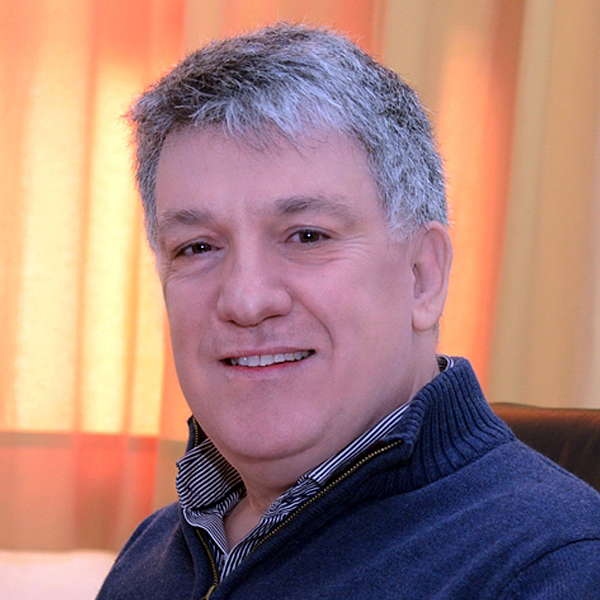
Ioannis Kalatzis serves as Professor and Head of the Department of Biomedical Engineering at the University of West Attica, Athens, Greece, holding consecutive leadership terms from 2019-2021 through 2023-2026. His academic career spans teaching postgraduate courses in medical statistics, pattern recognition, and biomedical signal/image processing at the University of West Attica, National and Kapodistrian University of Athens, University of Patras, and former Technological Educational Institute of Athens. His academic qualifications include: BSc in Physics from the University of Athens (1987) PhD in Medical Physics from the Medical School of the University of Athens (2000) Research focuses on medical image/signal processing and pattern recognition applications in medicine, with active membership in the Artificial-computational Intelligence and Multidisciplinary Applications (ACIMA) Laboratory and associate roles in the Medical Image and Signal Processing (MEDISP) and Neurophysics Laboratories at the University of West Attica. His work bridges computational intelligence with biomedical problem-solving. With 63 journal/book chapter publications, 118 conference papers, and two academic books (including 'Medical Signal Processing Algorithms', 2024), his research has achieved over 850 citations (h-index=17, Web of Science). He has secured funding as researcher and coordinator for multiple Greek government and European Union research projects. Teaching responsibilities include core courses: Computer Programming Principles, Computer Programming Techniques, Medical Signal Processing, and Pattern Recognition in Medicine and Biology. His departmental leadership continues to advance biomedical engineering education and research infrastructure at the University of West Attica.
Ourania Theodosiadou is a Researcher at the Department of Mathematics, Aristotle University of Thessaloniki (since Oct 2024). Previously, she served as a Postdoctoral Researcher at the Institute of Information and Communication Technologies (CERTH) from 2019 to 2024 and held multiple contracted lecturer roles at Aristotle University and the University of Macedonia. She earned a PhD in Mathematics (2019) and a Master's in Statistics and Modeling (2014), both from AUTH, with a focus on stochastic processes and financial applications. Her doctoral thesis explored latent stochastic processes with jumps in finance under Prof. Georgios Tsaklidis. Her research interests span stochastic modeling, time series analysis, computational statistics, and machine learning. Recent work includes real-time threat assessment using Hidden Markov Models (2023), cryptocurrency transaction analysis for illegal activity detection (2023), and centrality-based network node identification (2022). Methodological contributions include state space modeling with constraints (2021) and Kalman filter applications for jump detection in financial markets (2017-2019). Publications reflect interdisciplinary applications in finance, security, and computational methods. Current work extends AI-driven solutions against terrorist financing and explores blockchain forensics through time series analysis.
Livieris Ioannis is an Assistant Professor in the Department of Statistics and Insurance Science at the University of Piraeus. He holds academic positions including Adjunct Professorships at the University of the Peloponnese and Technological Educational Institute of Western Greece. His research focuses on optimization methods for neural networks, machine learning, ensemble techniques, and their applications in healthcare, finance, education, and environmental science. Education: Ph.D. in Mathematics (2012), University of Patras M.Sc. in Computational Mathematics & Informatics in Education (2008), University of Patras B.Sc. in Mathematics (2006), University of Patras Research Interests: Dr. Livieris specializes in developing optimization algorithms for neural networks, semi-supervised learning, and ensemble methods. His work emphasizes practical applications such as time series forecasting (financial, environmental), medical image analysis (cancer detection, X-ray classification), and educational data mining (student performance prediction). He also explores explainable AI frameworks to enhance transparency in deep learning models. Key Contributions: He has contributed to over 50 peer-reviewed articles, including work on weight-constrained neural networks, gradient-based optimization, and CNN-LSTM models for cryptocurrency forecasting. His research has been recognized with inclusion in Stanford’s top 2% scientists (2020–2023) and a best paper award at HERCMA ’09. Awards & Roles: Associate Editor, Evolving Systems (Springer) Reviewer for 50+ journals including Neurocomputing and IEEE Transactions on Neural Networks Grants & Projects: Principal investigator in EU-funded projects like NEUROCLIMA (climate resilience via AI), ORBIS (democratic participation via AI), and PVAdapt (sustainable energy systems). He also leads initiatives in explainable AI for medical imaging and causal effect estimation in social science. Labs & Teams: Active in interdisciplinary teams at the University of Piraeus, focusing on AI-driven solutions in education, healthcare, and environmental monitoring. Collaborates with institutions like the IEEE and the Hellenic Association of ICT in Education.
Maria Ragousi is a faculty member in the Department of Electrical and Electronic Engineering at the University of West Attica, affiliated with the School of Engineering. She holds a PhD in Digital Signal Processing and Pattern Recognition from NTUA (1994), an MSc from the University of Virginia (1990), and a Diploma in Electrical Engineering from NTUA (1987). Her academic role is as a Lecturer, focusing on courses such as Digital Signal Processing, Biomedical Signal Processing, and Educational Technologies. Education: PhD (1994): Digital Signal Processing & Pattern Recognition, NTUA MSc (1990): Digital Signal Processing, University of Virginia Diploma (1987): Electrical Engineering, NTUA Her research interests span Digital Signal Processing (DSP), Spectral Analysis, Pattern Recognition (including neural networks and genetic algorithms), Biomedical Signal Processing, Wireless Sensor Networks for environmental monitoring, and E-Learning technologies. She has contributed to over 30 peer-reviewed publications, including work on EEG-based person identification, environmental sound classification, and educational data mining. Recent research emphasizes integrating machine learning into education and developing tools for environmental acoustic monitoring. She has collaborated on projects like the ESOUNDMAPS initiative, deploying wireless sensor networks for real-time environmental sound mapping. Her work also explores active learning methodologies in physics education and visualization of e-learning platform data. Maria advises courses at both undergraduate and postgraduate levels, including specialized programs in medical signal analysis and smart electronic systems. She actively participates in academic governance and has led several educational innovation projects funded by national and international grants.
Roles & Affiliations: Kyriakis-Bitzaros Efstathios is a Lecturer in the Department of Electrical and Electronic Engineering at the University of West Attica, part of the School of Engineering. He is affiliated with the Electronics and Computer Technologies Laboratory (ECTLab) and teaches courses like Digital System Design and Operating Systems. His office is located at ZB206, Building Z, Ancient Eleonas Campus. Holds a PhD in Electrical Engineering and a Physics degree from the University of Patras (1994 and 1987, respectively). Research Interests: Focuses on high-energy physics detector electronics, FPGA-based digital systems, sensor array interfaces, energy harvesting for microcontrollers, and optoelectronic interconnects. His work includes contributions to the ATLAS experiment at CERN, including the New Small Wheel detector and MicroMegas electronics. Publications Overview: Over 30 publications spanning topics like high-luminosity LHC upgrades, reconfigurable embedded systems, and optoelectronic simulations. Recent work includes advancements in detector electronics for CERN experiments and energy-efficient sensor networks. Labs & Teams: Leads the ECTLab, focusing on electronics and computer technologies. Collaborates on projects like the ATLAS detector upgrades and smart sensor systems.
Vilelmini Kalabratsidou is an Adjunct Lecturer at the University of the Aegean’s Department of Product and Systems Design Engineering on Syros. Her work bridges cognitive computing, wearable technology, and performing arts, focusing on designing interfaces that augment human bodily signals (e.g., heart activity) into interactive experiences. She holds a PhD in Cognitive Computing from Rutgers University (USA) and a dance degree from the Athens Conservatory. Education: PhD in Computer Science (Cognitive Computing), Rutgers University, 2018 MSc in Electronic & Computer Engineering, Technical University of Crete, 2012 Dance Diploma, Athens Conservatory Dance Department Research Interests: Wearable biosensors, real-time biofeedback systems, embodied interaction in dance, data-driven artistic creation, and neuroplasticity interfaces. Her projects often involve collaborative art-science initiatives like the Transition to 8 project, blending social data with music/visual art. Key Contributions: Developed co-adaptive interfaces using heart rate data to steer dance performances and pioneered methods for analyzing bodily signals during social interactions (e.g., sociodrama studies). Her work has been showcased at conferences like Movement and Computing (MOCO) and published in journals like Wearable Technologies and Sensors . Awards: Qualcomm Innovation Fellowship Finalist (2016), Student Entrepreneurship Grand (2011 for a one-button communication system). Labs & Collaborations: Collaborated with Rutgers’ Sensory-Motor Integration Lab, Athena Research Center, and the University of Peloponnese. Active in transdisciplinary projects fusing art, tech, and psychology.
George P. Efthymoglou is a Professor at the Department of Digital Systems, University of Piraeus, Greece, since 2002. He currently serves as Department Chair and teaches courses including Advanced Topics in Wireless Communications, Signals and Systems, and Digital Signal Processing. His research focuses on digital communications with an emphasis on cellular and satellite systems, interference management, and network performance analysis. Education: B.S. in Physics, University of Athens (1991) M.S. & Ph.D. in Electrical Engineering, Florida Atlantic University, USA (1993 & 1997) Research Interests: His work spans wireless communication systems, UAV-assisted networks, 5G/6G technologies, and signal processing for interference-limited environments. He has contributed to advancing techniques for mobility management, energy efficiency, and performance evaluation in heterogeneous networks. Recent Contributions: His recent work explores joint sensing-communication in UAV systems, beacon-assisted wireless power transfer, and stochastic analysis of fading channels. His studies often bridge theoretical models with practical implementations in satellite and vehicular networks. Advising & Grants: Actively seeks student interns for research projects. Has led collaborative initiatives with industry partners like Motorola and Cadence Design Systems, focusing on 3G/5G system modeling and performance evaluation. Labs & Teams: Engages in interdisciplinary projects at the University of Piraeus, collaborating with experts in medical informatics and computer science through initiatives like the Health CASCADE Study.
Michael Filippakis is a Professor at the Department of Digital Systems, University of Piraeus, Greece. He holds a B.Sc. and M.Sc. in Mathematics from the University of Ioannina, and a PhD in Applied Mathematics from the National Technical University of Athens (NTUA), where he received the State Scholarships Foundation Award for his doctoral work. His academic career includes a position as a P.D.407/80 Lecturer before attaining his current professorship. He teaches courses such as Discrete Mathematics, Probability Theory, Information Theory, and Mathematical Analysis. Education: B.Sc. in Mathematics, University of Ioannina M.Sc. in Mathematics, University of Ioannina PhD in Applied Mathematics, NTUA His research focuses on nonlinear boundary value problems involving PDEs, evolution equations, optimization, optimal control, mathematical economics, game theory, communication systems simulation, and image processing. He has authored multiple textbooks, including Statistical methods in economics and business (2013) and Probability theory and elements of statistical analysis with Python, R, MATLAB, and SPSS (2019). Dr. Filippakis has published extensively in peer-reviewed journals and conference proceedings, accumulating over 50 citations. His work bridges theoretical mathematics with practical applications in technology and business. Key Awards: State Scholarships Foundation Award (PhD thesis) He actively engages in teaching and research, including guiding students through internships and advising on interdisciplinary projects. His involvement with organizations like the IEEE and IMIA reflects his commitment to advancing informatics and applied mathematics.
Kostas Tassis serves as Professor in the Department of Physics at the University of Crete, Greece, having joined in 2012 as Assistant Professor, promoted to Associate Professor in 2018, and to full Professor in 2023. He leads the PASIPHAE project (Polar-Areas Stellar-Imaging in Polarization High-Accuracy Experiment), an ERC Consolidator Grant awarded in 2018, and maintains active affiliations with Skinakas Observatory and the Institute of Theoretical and Computational Physics. His academic background includes: BSc in Physics from the University of Thessaloniki (1999) PhD in Theoretical Astrophysics from the University of Illinois at Urbana Champaign (2005) His research centers on star formation processes, interstellar medium physics, and magnetohydrodynamic simulations, with particular emphasis on cosmic magnetic fields and their role in astrophysical systems. He employs both theoretical modeling and observational polarimetry to investigate phenomena ranging from molecular cloud dynamics to cosmological-scale magnetic field effects. Analysis of his recent publications reveals dominant focus on LiteBIRD mission simulations, interstellar dust polarization, and magnetic field strength estimation techniques. Key thematic clusters include cosmic microwave background polarization analysis, blazar variability studies, and computational approaches to non-ideal magnetohydrodynamics in star-forming regions, demonstrating strong integration of observational data with theoretical modeling. Notable recognitions include: ERC Consolidator Grant for PASIPHAE project (2018) His research program involves extensive international collaboration, particularly through the PASIPHAE survey and LiteBIRD mission consortia. Current work emphasizes polarimetric instrumentation development and large-scale cosmic magnetometry, with significant contributions to understanding magnetic field roles in galaxy evolution and star formation processes. He maintains active involvement with multiple University of Crete research units including the Crete Center for Theoretical Physics (CCTP) and Skinakas Observatory, where observational components of his PASIPHAE work are conducted.
Dimitrios Pappas is a faculty member at the Department of Statistics within the School of Information Sciences and Technology at Athens University of Economics and Business . His research spans multiple disciplines, including Statistics , Linear Algebra , Image Processing , and Financial Mathematics . His work focuses on generalized inverses , matrix factorization , and quadratic optimization , with applications in image deblurring , credit risk modeling , and smart local energy systems . Recent publications highlight his contributions to network intrusion detection , Markov chain lumpability , and symbolic computation methods . While no specific scientific awards or student advising details are provided in the available text, his extensive publication record demonstrates expertise in applied mathematical modeling and computational techniques . He can be contacted at dpappas@aueb.gr .
Charalambos (Haris) Angyropoulos is an Assistant Professor in the Department of Economics at the University of Piraeus, Greece, where he joined in 2024. His academic career is complemented by significant private sector experience, bringing practical insights to his teaching and research in quantitative economic methods. Assistant Professor, Department of Economics, University of Piraeus (2024-present) Postdoctoral Researcher, Department of International & European Studies, University of Piraeus Research Fellow, Gnosis Research Center, Illinois Institute of Technology (USA) Dr. Angyropoulos holds a PhD in Economics (2018) and a Master's degree in Applied Statistics (2007), both from the University of Piraeus, as well as a Bachelor's degree in Mathematics (2002) from the National and Kapodistrian University of Athens. His academic training provides a strong foundation for his work in quantitative economic analysis. His research focuses on applied econometrics, computational finance, labor economics, and environmental economics . Specifically, he investigates the impact of the shadow economy on regional competitiveness within the EU and applies machine learning techniques to financial time series analysis. His methodological approach combines traditional econometric methods with innovative computational techniques to address complex economic questions. His recent publications demonstrate a consistent focus on quantitative economic analysis, with particular emphasis on EU economic dynamics, financial markets, and computational methods. The research shows a progression toward increasingly sophisticated analytical techniques, incorporating machine learning approaches alongside traditional econometric methods. His work appears in respected journals including International Journal of Finance and Economics , Applied Economics Letters , and International Advances in Economic Research . Dr. Angyropoulos teaches undergraduate courses including Statistical I, Statistical II, Business Analytics, and International Business and Investments. His private sector experience as CEO of TMEDE Microfinance Solutions and Head of Risk and Investments for the Public Works Engineers and Contractors Fund informs his practical teaching approach, connecting theoretical concepts with real-world applications.
Professor Kanatas Athanasios is a distinguished faculty member at the Department of Digital Systems within the School of Information & Communication Technologies at the University of Piraeus. He currently serves as Director of the institutionalized Telecommunications Systems Laboratory and Director of the Postgraduate Program 'Digital Communications & Networks.' With a career spanning over three decades in telecommunications and wireless communications research, he has established himself as a leading academic in his field. Professor at Department of Digital Systems (2012-present) Associate Professor (2008-2012) Assistant Professor (2002-2008) Dean of School of Information & Communication Technologies (2013-2017) Member of University Senate (2008-2009, 2013-2017) Professor Kanatas received his Diploma in Electrical Engineering from the School of Computer Science and Engineering of the National Technical University of Athens in 1991, followed by an M.Sc. in Satellite Communication Engineering from the University of Surrey (UK) in 1992, and completed his PhD in Electrical Engineering from the National Technical University of Athens in 1997. His academic journey began with research positions at the National Research Foundation (1993-1994), SPACETEC Ltd as a technical project manager (1995), and researcher roles at the Mobile Radio Communications Laboratory and the Research University Institute of Communications and Computer Systems of the National Technical University of Athens. Professor Kanatas's research primarily focuses on satellite and wireless communications, with recent work increasingly exploring UAV-assisted networks, integrated sensing and communication systems, antenna design, and stochastic geometry applications in telecommunications. His research has evolved from traditional satellite communications toward cutting-edge areas including unmanned aerial vehicle networks, integrated sensing and communication systems, and advanced antenna technologies. The breadth of his work demonstrates a consistent trajectory from foundational communication theory toward increasingly complex and integrated wireless systems that address contemporary challenges in telecommunications. His extensive publication record shows a clear trend toward integrating sensing capabilities with communication systems, particularly through UAV networks. Recent work emphasizes stochastic geometry for network modeling, antenna array analysis in near-field scenarios, and energy-efficient communication protocols for IoT applications. The interdisciplinary nature of his research bridges traditional communication theory with emerging technologies, creating innovative solutions for next-generation wireless networks. Four best article awards at international conferences Senior Member of IEEE (since 2002) President of the Greek Chapter of IEEE Communications Society (1999) Elected representative for Region 15 in European Association on Antennas and Propagation (since 2021) Editor for IEEE Transactions on Wireless Communications, IEEE Transactions on Antennas & Propagation, and IEEE Communication Letters With over 200 publications in international scientific journals and conferences, and six books to his credit, Professor Kanatas has made substantial contributions to the field of telecommunications. His editorial roles with prestigious IEEE journals demonstrate his standing in the academic community. His leadership extends beyond research to academic administration, having served as Dean of the School of Information & Communication Technologies and as a member of the University Senate and Research Committee. As Director of the Telecommunications Systems Laboratory, Professor Kanatas leads a research team focused on cutting-edge telecommunications technologies. His laboratory serves as a hub for innovation in wireless communications, satellite systems, and emerging network architectures. The lab provides a collaborative environment for graduate students and researchers to explore the frontiers of communication technology, with particular emphasis on practical implementations and experimental validation of theoretical concepts.
Georgios Tsichrintzis serves as a Professor in the Department of Informatics at the University of Piraeus within the School of Information and Communication Technologies. He has held significant administrative positions including Chair of the Department of Informatics from 2016-2020, Deputy Chair from 2008-2012, and Director of multiple graduate programs. With over 23 years of service at the university, he has participated in more than 50 departmental and university committees. His research focuses on Pattern Recognition, Machine Learning, Decision Theory, Statistical Signal Processing and Computational Intelligence, with applications spanning Multimedia Interactive Services, Software User Modeling, Knowledge-based Software Systems, Human-Machine Interaction and Information Retrieval. He has published over 350 research papers in major international journals and conferences, authored six monographs, and edited 30 collective volumes. Tsichrintzis holds leadership positions in academic publishing as editor-in-chief of the International Journal of Computational Intelligence Studies and Intelligent Decision Technologies, while serving on editorial boards of 18 other international journals. He co-founded book series with SPRINGER and co-chairs the steering committee for the annual INFORMATION, INTELLIGENCE, SYSTEMS AND APPLICATIONS conference. His educational background includes a degree in Electrical Engineering from the National Technical University of Athens and advanced degrees from Northeastern University in the USA.
Giorgos Stamou is a Professor at the School of Electrical and Computer Engineering, National Technical University of Athens (NTUA), and a Visiting Professor at the MIT Sloan School of Management and MIT Open Learning. He directs the Artificial Intelligence and Machine Learning Systems Laboratory (AILS Lab) and has been a senior researcher at the Institute of Communications and Computer Systems (2000-2008) and an academic visitor at Oxford University (2011-2012). His research spans Deep Learning , Explainable AI , and Knowledge Representation , with a focus on Large Language Models and Multimodal Learning . He has coordinated over 60 funded projects and published 150+ papers. Recent work highlights trends in LLM Evaluation , Gender Bias Mitigation , and Multimodal Music Analysis , reflecting his interdisciplinary approach to AI challenges. Stamou has served on steering committees for W3C working groups (Rule Interchange Format, Web Ontology Language) and contributed to cultural heritage metadata enrichment through the CrowdHeritage projects. He founded NTUA's MSc program in Data Science and Machine Learning (2018-2022) and has organized conference tracks on riddle-solving frameworks and hallucination detection.
Syed Asad Alam is a Post-Doctoral Research Fellow at the School of Computer Science and Statistics, Trinity College Dublin, The University of Dublin, Ireland, specializing in optimization and efficient implementation of digital systems for signal processing and communication algorithms. Education: Bachelors in Computer and Information Systems Engineering, N.E.D. University of Engineering and Technology, Karachi, Pakistan M.Sc. in Electrical Engineering (System-on-Chip Design), Linköping University, Sweden PhD in Electrical Engineering (Computer Engineering/Electronics Systems), Linköping University, Sweden His research integrates Machine Learning with Embedded Systems through novel approaches to Quantization and Logarithmic Number Systems , targeting efficient Neural Networks implementation on FPGAs and ASICs . This work builds on extensive industry experience with multimedia processors, communication devices, and SOC bus design, including specialized projects on filters, wireless systems, frequency multipliers, and DSP processors. His 2020 LCTES publication on non-base-2 logarithmic systems exemplifies his focus on numerical representation efficiency for resource-constrained embedded applications, reflecting broader trends in hardware-aware machine learning optimization. No scientific awards or grant information was documented in the source material. He has collaborated with multiple industry teams on FPGA-based design and Integrated Circuit Development across startup environments, though specific advising roles or student supervision were not indicated.