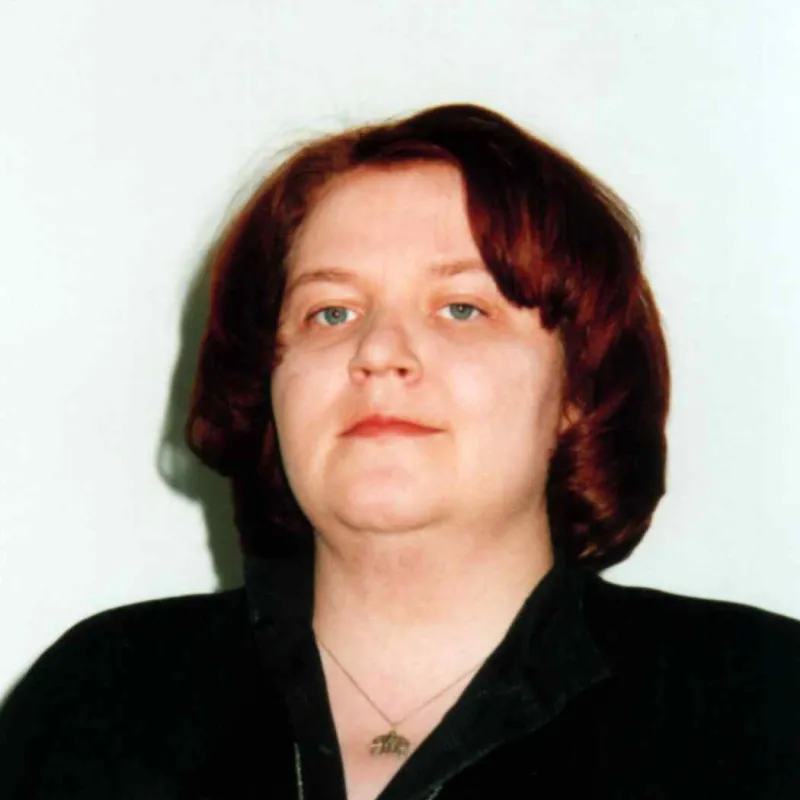
Professor Simo Särkkä holds a position in Sensor Informatics and Medical Technology at the Department of Electrical Engineering and Automation (EEA), Aalto University. His research focuses on multi-sensor data processing, Bayesian filtering, machine learning, and their applications in medical technology, brain imaging, and inverse problems. He leads research groups including the Helsinki Institute for Information Technology (HIIT) and Sensor Informatics and Medical Technology. His work bridges theoretical advancements in probabilistic methods with practical implementations in healthcare and engineering. Key research interests include Gaussian processes, stochastic differential equations, quantum machine learning, and signal processing. He has contributed to advancements in algorithms for nonlinear state-space models, parallel computing techniques, and medical imaging technologies such as scatter correction in CT scans. His methodologies are applied across domains like autonomous systems, robotics, and bioengineering. Notable publications span topics like quantum-assisted Gaussian regression, physics-informed machine learning for industrial processes, and parallel-in-time numerical methods. His work emphasizes computational efficiency and robustness in high-dimensional and real-time systems.
Aapo Hyvärinen is a Professor of Computer Science at the University of Helsinki , affiliated with the Helsinki Institute for Information Technology and the Helsinki Probabilistic Machine Learning Lab . He previously held the position of Professor of Machine Learning at the Gatsby Computational Neuroscience Unit, University College London (2016-2019). Education : Undergraduate Mathematics at University of Helsinki, Vienna, and Paris; Ph.D. in Information Science from Helsinki University of Technology (1997) His research focuses on machine learning and computational neuroscience , particularly: Independent Component Analysis (ICA) Natural Image Statistics Causal Representation Learning Neural Signal Processing Applications to brain imaging (MEG, CryoEM) Recent publications emphasize causal discovery , identifiable machine learning , and nonlinear ICA . Key projects include: VETURI (AI for health) DIGIMIND (AI in mental health) CIFAR grants (2022-2025) Scientific awards : Highly Cited Researcher (2010) He serves as Action Editor for the Journal of Machine Learning Research and Neural Computation , and has held Area Chair roles at NeurIPS, ICML, ICLR, AISTATS, and UAI conferences. His work bridges theoretical machine learning with neuroscience and philosophical implications of artificial intelligence .
Markus Heinonen is an Academy Research Fellow at Aalto University's Department of Computer Science within the School of Science. His academic position is tied to Harri Lähdesmäki's Professorship, focusing on probabilistic machine learning. He holds a Doctoral degree in Engineering and Technology from the University of Helsinki (2013). His research integrates probabilistic modeling , deep learning , and differential equations , with applications in computational biology, drug discovery, and biophysics. Key themes include Gaussian processes, Bayesian inference, generative models, and their use in understanding complex biological systems like immune cell behavior (e.g., T cell receptor analysis in aplastic anemia) and molecular design. He leads major projects such as the Deep Learning with Differential Equations initiative (2020–2025), exploring continuous-time models and physics-informed neural networks. His work bridges theory and application, evidenced by collaborations in diffusion models , optimal transport , and single-cell analysis . Publications span over 65 peer-reviewed outputs, with recent emphases on robust neural network training, multi-target molecular prediction, and interpretable drug design frameworks. His research contributes to UN Sustainable Development Goal 3 (Good Health) through advancements in disease modeling and therapeutic development. He has undertaken visiting research roles at the University of California, San Francisco (2017) and Telecom ParisTech (2013–2014). Media highlights include recognition for work on TCR-epitope prediction and AI-driven enzyme engineering.
Pekka Marttinen is a tenured Associate Professor of Machine Learning at Aalto University, Department of Computer Science, and leads the Machine Learning for Health (Aalto-ML4H) group within the Helsinki Institute for Information Technology HIIT. Education: M.Sc. in Applied Mathematics, University of Helsinki (2004) Ph.D. in Statistics, University of Helsinki (2008) Title of Docent in Information and Computer Science, Aalto University (2015) Research Focus: His methodological work spans large language models, reinforcement learning, deep learning, probabilistic machine learning, and causal inference . These techniques are applied to critical domains of healthcare, bioinformatics, statistical genetics, epidemiology, and personalized medicine . The group develops novel algorithms, theoretical guarantees, and open-source software that enable data-driven discovery and decision-making in medicine and biology. Publication Trends: Across 2022-2024 the lab has concentrated on (i) rigorous causal reasoning over temporal clinical data, (ii) principled uncertainty quantification in LLMs, (iii) representation learning for neural network comparison, and (iv) translational projects that turn raw EHRs into actionable clinical insights. Earlier work integrated high-dimensional genomics with metabolomics and mapped evolutionary forces in bacterial pathogens. Scientific Awards & Recognition: While no specific awards are listed, his sustained publication record in top-tier venues (NeurIPS, ICML, AISTATS, Nature Genetics, PLOS CB) and his role as responsible professor of the Machine-Learning, Data-Science and AI major signify significant peer recognition. Advising & Grants: Prof. Marttinen currently mentors 8 PhD students as primary supervisor and an additional 7 PhD students as co-supervisor. He has already graduated 8 PhDs since 2014. The group is supported through competitive funding including the Finnish Center for Artificial Intelligence (FCAI) doctoral program. Labs & Teams: He directs the Machine Learning for Health (Aalto-ML4H) research group, comprising postdocs Hans Moen, Ti John, Alexander Nikitin, Negar Safinianaini, Linli Zhang, Zhiyuan Li, and the above-mentioned PhD cohort.
Esa Ollila serves as Associate Professor in the Department of Signal Processing and Acoustics at Aalto University, Finland, and holds an adjunct professorship in Statistics at the University of Oulu. His academic appointments include Academy of Finland Research Fellow (2010-2015) and prior senior research/lecturing roles at both institutions. His educational background features: M.Sc. in Mathematics, University of Oulu (1998) Ph.D. in Statistics (with honors), University of Jyväskylä (2002) D.Sc.(Tech) in Signal Processing (with honors), Aalto University (2010) Professor Ollila's research centers on statistical signal processing and robust statistical methodologies , with significant contributions to array processing, high-dimensional data analysis, and covariance matrix estimation. His work bridges theoretical statistics with practical applications in radar systems, wireless communications, and big data analytics, emphasizing robustness against outliers and computational efficiency in modern data-intensive environments. Current focus areas include compressed sensing, sparse approximation, and blind source separation techniques. Analysis of his 15 most recent publications (2024-2025) reveals three dominant trends: (1) robust covariance learning for massive random access systems, (2) integrated sensing and communications (ISAC) for 6G networks using advanced beamforming, and (3) geometric approaches to elliptical distributions in statistical inference. His work increasingly incorporates deep learning (GANs, graph neural networks) while maintaining strong foundations in classical signal processing theory. Key recognitions include: Academy of Finland Postdoctoral Fellowship (2004-2007) Academy of Finland Research Fellowship (2010-2015) His research has been supported through prestigious Academy of Finland grants totaling over a decade of continuous funding. Professor Ollila currently leads an active research group at Aalto University, supervising doctoral candidates and collaborating internationally with institutions including Princeton University (where he served as Visiting Post-doctoral Research Associate during 2010-2011). He maintains strong ties with the University of Oulu through his adjunct professorship and has contributed to EURASIP's Special Area Team on Theoretical and Methodological Trends in Signal Processing. The Esa Ollila Research Group focuses on cutting-edge challenges in statistical signal processing, with current projects spanning robust DOA estimation under non-Gaussian noise, covariance matrix learning for massive MIMO systems, and machine learning-enhanced radar-communication integration. The group actively develops open-source tools like the fitHeavyTail R package for heavy-tailed distribution modeling and maintains collaborations with industry partners in wireless communications.
Mikko Kurimo is a Full Professor at Aalto University's Department of Information and Communications Engineering, School of Electrical Engineering. He earned his M.Sc., Lic.Tech., and D.Sc.(Tech.) from Helsinki University of Technology (1992, 1994, 1997) and pioneered neural networks for automatic speech recognition (ASR) in his PhD thesis. After research roles at IDIAP (Swiss AI center) and visiting positions at University of Colorado, Edinburgh, SRI, ICSI, and Nitech, he leads Aalto's ASR group since 2000. His work focuses on unsupervised subword modeling for morphologically complex languages (Finnish, Estonian, Turkish, Arabic) and large speech foundation models. PhD in Neural ASR (Helsinki University of Technology, 1997) Research Scientist at IDIAP (Switzerland) Visiting Fellow at University of Colorado, Edinburgh, SRI, ICSI, Nitech Head of Aalto ASR Group (2000-present) His research spans deep learning for ASR, spoken language modeling , and low-resource language solutions . Recent work explores continued pre-training of self-supervised models, multimodal emotion recognition, and pronunciation assessment using LLMs. He led the winning team in the 2017 Multi-Genre Broadcast challenge and secured competitive funding in Tekes Challenge Finland and EC's H2020-ICT-2017. Key article trends include: Advancements in children's speech recognition and dysarthric speech processing Integration of generative AI for language learning feedback Specialization in low-resource Uralic languages (Finnish, Northern Sámi) Development of robust ASR systems for complex phonetic environments Scientific Awards ACM Multimedia 2023 Computational Paralinguistics Challenge Prize First place in MGB3 2017 Arabic ASR Challenge ISCA Best Student Paper Award (2011) Professeur Invité at Université de Saint-Etienne (2005-2006) Royal Society International Short Visit Fellowship (2004) Professor Kurimo leads the Speech Recognition Group at Aalto, collaborating with COIN (Centre of Excellence in Computational Inference) and AIRC (Adaptive Informatics Research Centre). His projects like CaptainA mobile app demonstrate practical applications of ASR in language education. He has supervised numerous publications with co-authors in domains spanning bandwidth extension, stuttering detection, and speech sound disorder assessment.
Robert Piche is a Professor at the Computing Sciences Mathematics Research Centre, specializing in advanced signal processing, positioning systems, and sensor fusion. He holds a Doctor of Science (Technology) and Master of Science from the University of Waterloo, Canada (1986 and 1982, respectively). His research focuses on Kalman filters, Global Positioning Systems (GPS), particle filters, and indoor positioning technologies. He has contributed extensively to fields like satellite orbit prediction, non-line-of-sight (NLoS) positioning, and machine learning applications in biomechanics and robotics. Dr. Piche has authored over 230 publications and received recognition through an invitation/ranking in a 2014 competition. He actively participates in academic activities, including conference presentations and peer-review roles. His work bridges theoretical advancements and practical applications, with contributions to autonomous systems, sensor data analysis, and wearable technology. Collaborations span international institutions, reflecting his global impact in engineering and computer science disciplines.
Inigo Flores Ituarte is a Research Professor at Tampere University's Faculty of Engineering and Natural Sciences, affiliated with the Automation Technology and Mechanical Engineering department. He leads the Digital Design and Manufacturing (D2M) research lab, focusing on sustainable manufacturing and twin-transition strategies integrating digital and green technologies. His work emphasizes optimization-driven design, additive manufacturing innovations, and AI-driven expert systems to enhance energy efficiency and reduce environmental impacts. Key research pillars include: Pillar 1: Twin-transition in Engineering Design and Manufacturing Processes, addressing sustainable manufacturing and intelligent systems Pillar 2: Development of open D2M systems and Process-Structure-Property-Performance (PSPP) linkages in advanced materials His research explores multi-disciplinary optimization combining model-based simulations and data-driven techniques. Notable contributions include generative AI integration in CAD systems, cognitive manufacturing systems, and cost-effective process monitoring using CNN-based methods. Inigo's work emphasizes environmental sustainability, with a focus on reducing manufacturing's energy consumption (54% of global use) and CO2 emissions. He advocates for interconnected material systems, smart manufacturing processes, and AI-assisted decision-making to achieve cognitive intelligence in industrial operations. His D2M lab's overarching goal is to maximize product/process performance while improving cost-effectiveness and minimizing environmental footprints. Recent projects include railway bogie demonstrators via multi-material deposition and sensor systems leveraging IoT and ChatGPT integration.
Lu Cheng is a Visiting Professor in the Department of Computer Science at the University of Helsinki, affiliated with the Vehtari Aki Professorship. He holds a Doctor of Philosophy in Natural Sciences from the University of Helsinki (2013). His research focuses on computational genomics, bioinformatics, and microbial genetics, with emphasis on DNA sequence analysis, nanopore sequencing technologies, and systems biology. He leads projects on alternative splicing in cancer and the impact of microbiota on human health. Notable contributions include the NanoBaseLib benchmark dataset and methods for RNA modification analysis. His work addresses UN Sustainable Development Goals related to good health and innovations in data science. Education: Doctor of Philosophy in Natural Sciences (2013), University of Helsinki; Doctoral degree in Natural Sciences (2013), University of Helsinki. Research Interests: Genomics, computational biology, microbial ecology, RNA sequencing technologies, and bioinformatics tool development. His projects explore bacterial population dynamics, host-pathogen interactions, and applications of machine learning in genomics. Advising: Supervises doctoral researchers including Guangzhao Cheng and Chengbo Fu. Active in grants such as the Academy of Finland Research Fellowship (2023-2025). Labs/Teams: Leads research groups focused on single-cell genomics and computational methods for biological systems.
Daolang Huang is a Doctoral Researcher and Student in the Department of Computer Science at the School of Science, affiliated with Professor Samuel Kaski's group. He holds a Bachelor's degree in Engineering and Technology from Jinan University (2020). His research focuses on advanced machine learning techniques, including Bayesian inference, robust statistical modeling, and simulation-based methods. Key areas include experimental design optimization, neural processes, and equivariance in deep learning. Recent work emphasizes decision-aware algorithms and cost-effective simulation frameworks. Huang has collaborated internationally, with publications in top venues like NeurIPS. Despite no listed awards, his work demonstrates significant contributions to probabilistic modeling and optimization. Education : Bachelor's degree in Engineering and Technology, Jinan University (2020) Research Interests : Bayesian methods and amortized inference Robust statistics under model misspecification Continuous control and neural process architectures Optimization algorithms with decision-theoretic foundations Recent Research Trends : His articles (2020–2025) emphasize Bayesian experimental design, preference-based optimization, and equivariant neural networks. Themes include balancing statistical rigor with computational efficiency, particularly in high-dimensional decision-making contexts. Labs/Teams : Active member of Samuel Kaski’s research group, focusing on interdisciplinary applications of machine learning.
Katsuyuki Haneda serves as Associate Professor in Aalto University's Department of Electronics and Nanoengineering within the School of Electrical Engineering. Holding a Doctor of Engineering from Tokyo Institute of Technology (2007), his research pioneers high-frequency radio systems including millimeter-wave and Sub-THz communications, with critical applications in medical devices, post-disaster scenarios, and Internet-of-Things networks. Education: Doctor of Engineering, Tokyo Institute of Technology, 2007 Research Focus: Dr. Haneda's work spans Physical layer wireless communications , Antennas and propagation , and RF instrumentation , with groundbreaking contributions to wireless medical applications (notably capsule endoscopy) and in-band full-duplex radio technologies . His group develops advanced channel models for 6G while addressing real-world challenges in post-disaster communications through experimental validation. Publication Trends: Recent 2025 works reveal concentrated advancements in Sub-THz/D-Band communications, featuring innovative antenna designs for 28 GHz systems, channel modeling techniques for 3GPP-like standards, and medical wireless solutions. Publications demonstrate strong experimental emphasis with field measurements across urban, indoor, and medical environments. Scientific Recognition: ISMICT 2019 Best Paper Award (medical wireless) Dual 2013 Best Paper Awards (IEEE VTC Spring & EuCAP) IEICE Best Survey Paper (2015) IEEE AP-S Young Engineer Award (2007) Tokyo Tech Honorary Student Award (2002) Leadership & Collaboration: As Associate Editor for IEEE Transactions on Antennas and Propagation (2012-2016) and Wireless Communications (2013-present), Dr. Haneda shapes field standards. He co-chairs the radio channel working group in COST Action IRACON (CA15104), driving European 5G+/6G research collaboration while supervising graduate researchers in experimental high-frequency communications. Research Infrastructure: The Katsuyuki Haneda Group maintains specialized laboratories for millimeter-wave/Sub-THz channel sounding, antenna characterization, and medical wireless prototyping, supporting hardware-in-the-loop validation for next-generation communication systems.
Sergiy Vorobyov is a Professor at the Department of Signal Processing and Acoustics , Aalto University , Finland. He has held academic and research positions at multiple institutions, including the University of Alberta (Canada), Kharkiv National University of Radio Electronics (Ukraine), RIKEN (Japan), McMaster University (Canada), Duisburg-Essen University and Darmstadt University of Technology (Germany), and Heriot-Watt University (UK). His expertise spans optimization, signal processing, and multi-antenna systems. Dr. Vorobyov holds a Doctoral degree in Natural Sciences from the National Technical University Kharkiv Polytechnical Institute, awarded on January 15, 2002. His research interests focus on optimization and multi-linear algebra applied to signal processing challenges, including statistical and array signal processing, sparse signal processing, estimation and detection theory, and sampling theory. He explores multi-antenna, large-scale, cooperative, and cognitive systems, contributing to advancements in wireless communications and radar engineering. His work aligns with UN Sustainable Development Goals, emphasizing education and innovation. In recent years (2025), his publications emphasize cutting-edge advancements in wireless communications and signal processing. Topics include millimeter-wave MIMO channel estimation, optimization algorithms with momentum-based techniques, vehicular network communications, and robust covariance matrix estimation in challenging noise environments. These contributions highlight his expertise in developing efficient and adaptive methods for modern communication systems. He has received prestigious awards, including: 2004 IEEE Signal Processing Society Best Paper Award 2007 Alberta Ingenuity New Faculty Award 2011 Carl Zeiss Award for teaching and innovative methods 2012 NSERC Discovery Accelerator Award 1st Price Best Paper Award (2015) 1st Price Best Student Paper Award at CAMSAP 2015 As a researcher, Vorobyov has supervised seven theses and led multiple funded projects, such as: AI Based RAN (2023–2025): Scalable AI solutions for 5G/6G networks. MASSIVE AND SPARSE ANTENNA ARRAY PROCESSING FOR MILLIMETERWAVE COMMUNICATIONS (2019–2021): Advanced antenna design and processing techniques. M-CUBE SPA (2017–2021): EU-funded sparse antenna array research. Transmit beamspace for active compressive sensing and communication with multiple waveforms (2016–2020): Radar and MIMO system optimization. He leads the Sergiy Vorobyov Group , focusing on real-time signal processing algorithms and their applications in next-generation wireless systems. His research addresses practical challenges such as efficient channel estimation, robust detection in massive access scenarios, and improving network performance in urban environments.
Visa Koivunen is a Distinguished Professor of Signal Processing at Aalto University (since 1999), with positions as Academy Professor (2010) and Aalto Distinguished Professor (2020). He holds an honorary D.Sc. (Tech.) from the University of Oulu and has held visiting roles at Princeton University, the University of Pennsylvania, and EPFL. His research focuses on statistical signal processing, wireless communications, radar systems, and integrated sensing and communications (ISAC). He has published over 490 papers, including award-winning works, and advised 31 doctoral theses. Key roles include leadership in conferences (e.g., Asilomar 2018 General Chair) and technical committees (IEEE SPS). Recognitions include the EURASIP Technical Achievement Award (2015), IEEE Signal Processing Society Best Paper Awards (2007, 2017), and EURASIP Fellow status (2020). He co-chairs NATO panels on cognitive radars and ISAC. His research interests span signal processing fundamentals and applications in radar, communications, and machine learning. Recent work emphasizes ISAC, reinforcement learning for resource allocation, and causal inference in federated systems. He has pioneered waveform design techniques using GANs and Bayesian methods for spatial signal analysis. Educations: D.Sc. (Tech.) with honors from the University of Oulu (1994), Primus Doctor Award (1989-1994). Awards: IEEE Fellow, EURASIP Fellow, Member of Academia Europaea. Service: Associate Editor for IEEE Transactions, Chair of IEEE SPAWC and Asilomar conferences. His work bridges theory and practice, addressing challenges in radar-communication coexistence, energy-efficient edge computing, and secure distributed inference. He has delivered over 50 invited talks globally and actively contributes to NATO initiatives on cognitive radar systems.
Ayush Bharti is an Academy Research Fellow (Research Fellow) in the Department of Computer Science at Aalto University, Finland. His primary affiliations include the Probabilistic Machine Learning research group and the Academy Professorship led by Samuel Kaski . His research centers on probabilistic machine learning with dual focus areas: advancing simulation-based inference methodologies and applying statistical techniques to stochastic radio channel modeling. Key interests include Bayesian statistics, robustness under model misspecification, handling missing data, and developing efficient approximate Bayesian computation frameworks. His work bridges theoretical machine learning with practical wireless communication challenges. Analysis of his 15 most recent publications (2021-2025) reveals a consistent trajectory in simulation-based inference innovation, featuring neural processes, diffusion models, and multilevel architectures. Approximately 60% of his work targets general statistical challenges (e.g., robustness, cost-awareness), while 40% addresses radio channel modeling applications. Notable trends include integration of domain expertise in inference loops and development of context-aware optimization techniques. No information is available regarding student supervision or research grants. Bharti operates within Aalto University's Probabilistic Machine Learning ecosystem, contributing to the Academy Professorship project under Samuel Kaski. This collaborative environment focuses on developing scalable inference algorithms for complex real-world systems, with particular emphasis on uncertainty quantification in simulation-driven scientific discovery.
Satu-Pia Reinikainen is a tenured Professor in Computational Engineering at the Lappeenranta-Lahti University of Technology (LUT) School of Engineering Sciences . With expertise in chemometrics and multivariate analysis, her work bridges statistical modeling, spectroscopy, and environmental monitoring. Research Focus Development of advanced kernel-based methods for process control Application of hyperspectral imaging in material and environmental analysis Microplastic pollution dynamics in aquatic systems Integration of spectroscopic techniques for real-time monitoring Conservation of geological and heritage materials through data-driven approaches Her research combines chemometric algorithms, environmental data analysis, and industrial process monitoring to solve complex analytical challenges.