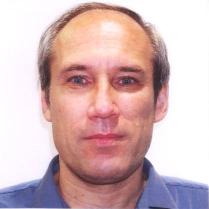
Shunichi Ishihara is a Professor at the School of Culture, History & Language, The Australian National University, where he leads research in forensic linguistics and computational linguistics. His work focuses on forensic text and voice comparison, authorship attribution, and Japanese linguistic studies. He holds qualifications including a PhD (ANU), MSc (Macquarie), MA (ANU), and BEd (Shizuoka). Research Interests: Forensic Voice/Text Comparison Computational Linguistics Intonational Modelling Japanese Language Processing Stylometric Analysis Research Trends: Recent work emphasizes likelihood ratio-based systems for authorship verification, fusion of acoustic and text features for forensic analysis, and applications of deep learning in text evidence evaluation. His studies often explore cross-lingual comparisons (e.g., Japanese, English, Vietnamese) and system validation methodologies. Grants & Projects: "Likelihood project on author recognition" (2024-2026) "Big Australian Speech Corpus" (2010-2015) Multiple forensic voice/text comparison initiatives Labs & Teams: Director of the Speech and Language Lab, collaborating on speech corpus development and forensic linguistic systems.
Dr. James Saunderson is a Senior Lecturer and Director of Education in the Department of Electrical and Computer Systems Engineering at Monash University. He holds a PhD in Electrical Engineering and Computer Science from MIT and has held postdoctoral roles at Caltech and the University of Washington. His expertise spans convex optimization, semidefinite programming, and quantum information theory. Education : PhD in EECS, MIT (2015) MS in EECS, MIT (2011) Bachelor of Engineering (Honours) and Bachelor of Science (Honours), University of Melbourne (2008) Research Interests : Convex optimization, quantum information theory, signal processing, and algorithm design. Focuses on algebraic and geometric aspects of optimization, with applications in engineering and quantum systems. Recent Projects : Exploiting duality in quantum relative entropy optimization Hyperbolic programming and conic optimization Applications in nanotechnology and bioinformatics Teaching : Courses include Control System Design, Signals and Systems, and Optimization for Engineers. Awards : SIAM Optimization Best Paper Prize (2020) Grants and Collaborations : Australian Research Council Discovery Early-Career Research Fellow (2020–2024) Leading projects in quantum optimization and bioengineering applications.
David Lo is the OUB Chair Professor of Computer Science at Singapore Management University's School of Computing and Information Systems, where he directs the Information Systems and Technology Cluster and the Center for Research on Intelligent Software Engineering. An ACM Fellow, IEEE Fellow, and ASE Fellow, his research focuses on AI for Software Engineering (AI4SE), leveraging machine learning, data mining, and NLP to enhance software analytics and automation. Research Highlights: AI4SE, code LLMs, human-AI synergy in software engineering, software reliability, and empirical studies of practitioner pain points Awards: IEEE TCSE Distinguished Service Award, university-wide Teaching Excellence Award, Outstanding Graduate Supervisor Award, 2 Test-of-Time Awards, and 11 ACM SIGSOFT/IEEE TCSE Distinguished Paper Awards Leadership: General Chair of ASE'16 and MSR'22, PC Co-Chair for ASE'20, FSE'24, and ICSE'25, ACM SIGSOFT Executive Committee member His work has received over 20 awards, 37,000 citations, and an H-index of 100. As an educator, he has mentored trainees who became faculty and R&D experts globally.
Dr. Wibowo Hardjawana is a Senior Lecturer in Telecommunications Engineering at the School of Electrical & Computer Engineering , University of Sydney. He holds a PhD from the University of Sydney and serves as an ARC DECRA Research Fellow. His research focuses on wireless network softwarisation, enabling programmable radio interfaces to address traffic elasticity in 5G/6G systems. Education : PhD (University of Sydney) Grants : ARC DP210100744 (2021), ARC DECRA DE140101114 (2014) His work spans 5G/6G network architectures , machine learning for wireless systems , and open radio interfaces . Key contributions include graph representation learning for interference management, Bayesian neural network detectors for OTFS modulation, and NOMA decoding techniques . Recent publications analyze ultra-reliable low-latency communications , UAV-enabled networks , and stochastic geometry in wireless systems . He has collaborated with institutions in China, Indonesia, and UAE, and engaged with industry partners like Telstra and Ausgrid.
Associate Professor David Rye is an Honorary Associate Professor in the School of Aerospace, Mechanical and Mechatronic Engineering at the University of Sydney, affiliated with the Australian Centre for Field Robotics. His research focuses on interdisciplinary robotics, blending engineering, social sciences, and art to explore human-robot interaction, tactile sensing, and autonomous systems. Key areas include social robotics, cooperative robot behavior, and creative robotics design. His work spans theoretical and applied robotics, including studies on robot collaboration dynamics, tactile feedback systems, and robotic excavation. Notable contributions include developing EIT-based sensitive skins for robots and analyzing human comfort in multi-agent interactions. He has led projects such as the Fish-Bird art-robotics collaboration and the experimental human-robot interaction facility funded by ARC grants. Publications highlight advancements in human-robot collaboration ethics, motion planning for social robots, and control systems for autonomous machinery. His interdisciplinary approach bridges robotics engineering with creative arts, fostering innovations in both technical and artistic domains.
Liuping Wang is a Professor in the School of Electrical and Computer Engineering at RMIT University, Australia, since 2007. He serves as Head of Discipline for Electrical Energy and Control Systems since 2005 and teaches Advanced Control Systems (EEET 2100) and Real Time Estimation and Control (EEET 2221). Current academic rank: Professor Location: City Campus, Australia Industry collaborators: ANCA, Australian Power Academy, Advanced Manufacturing CRC His research interests span: Control Theory with applications to UAVs and industrial processes Development of Model Predictive Control systems System Identification using neural networks Robust Control for constrained systems Control of AC motors and power electronics Applications in biomedical research and food process monitoring The 15 most recent publications (2015-2025) demonstrate expertise in: UAV control systems with segmented surfaces Battery condition monitoring for electric vehicles Mult-agent robotics with coordination algorithms Smart grid security and electricity dispatch GPS-denied localization for mobile robots Disturbance observer control with input constraints As a supervisor, he oversees Masters Research and PhD projects but no specific student names are listed. His email is liuping.wang@rmit.edu.au for collaboration or supervision inquiries.
Dr Bastien Lechat is a Research Fellow at Flinders Health and Medical Research Institute (FHMRI): Sleep Health, within the College of Medicine and Public Health at Flinders University. He is also a Full Member of the College of Science and Engineering and the Medical Device Research Institute. As an NHMRC Emerging Leadership Fellow, he leads innovative research at the intersection of sleep medicine, artificial intelligence, and wearable technology. Education: PhD in Sleep Health, Adelaide Institute for Sleep Health, Flinders University (2018–2021) Bachelor of Engineering in Engineering Science/Acoustics, Université du Maine, France (2014–2017) Dr Lechat’s research focuses on understanding the physiological mechanisms and consequences of obstructive sleep apnea (OSA), particularly night-to-night variability and patient subtypes. He develops AI-driven tools for efficient and accurate diagnosis using wearables and signal processing. His work aims to create a scalable, low-cost model of care for sleep-disordered breathing, addressing global diagnostic gaps. His recent publications reveal a strong trend in digital health innovation, with a focus on machine learning for OSA detection, circadian rhythm modeling, cardiovascular risk prediction, and climate impacts on sleep. His research has been published in top journals including Nature Communications , Journal of Sleep Research , and Sleep Medicine , demonstrating interdisciplinary reach. Scientific Awards and Recognition: NHMRC Emerging Leadership Fellow (2023) Helen Bearpark Memorial Scholarship (2022) Emerging Research Leader Award, Flinders University (2021) Multiple early-career awards from Sleep Down Under, Australasian Sleep Association, and Adelaide Sleep Retreat Ranked in the top 5% of international authors in sleep apnea by Expertscape Dr Lechat has secured over $2.5 million in competitive research funding and actively supervises and mentors junior researchers. He serves on the program committee of the American Thoracic Society meetings and contributes to clinical guidelines. He collaborates globally with industry and academic partners to translate research into clinical practice. Laboratories and Research Teams: He co-leads the 'Novel use of digital innovations & technology development' theme at FHMRI: Sleep Health, working closely with Professor Danny Eckert. His team integrates expertise in biomedical engineering, data science, and clinical sleep physiology to advance digital sleep medicine.
Professor Spiridon Ivanov Penev is a leading academic in the School of Mathematics and Statistics at the University of New South Wales. He holds a PhD in Mathematical Statistics from Humboldt University (Berlin, Germany) and has been affiliated with UNSW since 1992, progressing from Lecturer to Professor in 2019. His research spans wavelet methods, saddlepoint approximations, structural equation models, and stochastic risk analysis. Education: PhD in Mathematical Statistics, Humboldt University Current Affiliation: Department of Statistics, School of Mathematics and Statistics, UNSW His work focuses on advanced nonparametric techniques, including wavelet-based signal recovery with adaptive sampling rates, and robust inference in structural equation models. He has developed bias-corrected reliability measures for psychometric applications and contributed to stochastic optimization problems in finance and engineering. Recent publications highlight his expertise in semiparametric regression, robust portfolio optimization, and marine engineering applications using machine learning. Key trends include the use of Bregman divergence for shape-preserving estimation and Markov chain methods for climate model weighting. Scientific Awards: DAAD award Elected member of the International Statistical Institute (ISI) He has supervised numerous grants as Chief Investigator, including Australian Research Council projects and industry collaborations. Administrative roles include membership in the School of Mathematics and Statistics Executive Committee. Teaching duties span advanced statistical inference, multivariate analysis, and data science applications.
Professor Dinh Phung is the Head of the Department of Data Science & AI at Monash University. His research focuses on machine learning, deep learning, generative AI, and robust AI systems. He has authored over 250 publications, with applications in NLP, computer vision, digital health, and cybersecurity. Phung holds a PhD and BSc(Hons) in Computer Science from Curtin University. He leads major projects like 'Can Machines Unlearn?' and 'Trustworthy Generative AI', funded by the Australian Research Council and the Department of Defence. Education: Doctor of Philosophy, Computer Science, Curtin University (2005) Bachelor of Science (Honours), Computer Science, Curtin University (2001) Research Interests: Machine learning, deep learning, and generative models Optimal transport and Bayesian methods Robust and trustworthy AI Applications in digital health, cybersecurity, and autism research Key Projects (2023–2029): Can Machines Unlearn? (2025–2029): Safety in AI Trustworthy Generative AI (2024–2026): Foundation models Robust Machine Learning via Optimal Transport (2023–2025) Awards and Grants: Australian Research Council grants for AI safety and robustness Department of Defence funding for robust learning systems Collaborations: Global partnerships in AI ethics, cybersecurity, and healthcare. Active advisory roles, including with the Victorian Parliamentary Library.
Dr. Xuhui Fan is a Lecturer in Artificial Intelligence at the School of Computing, Macquarie University. He holds a PhD in Computer Science from the University of Technology Sydney (Australia) and a bachelor's degree in Mathematical Statistics from China. Prior to his current role, he worked as a project engineer at Data61 (formerly NICTA), a postdoc fellow at the University of New South Wales, and a lecturer at the University of Newcastle. His research focuses on Bayesian methods, federated learning, temporal point processes, and neural network architectures. He is affiliated with the Data Horizons Research Centre and the Frontier AI Research Centre at Macquarie University. Key research interests include developing interpretable AI models, advancing federated learning for privacy-sensitive applications, and applying Bayesian techniques to complex data analysis. His work bridges theoretical advancements in machine learning with practical applications in areas such as anomaly detection, generative models, and spatio-temporal data analysis. Dr. Fan’s publications span top-tier conferences like NeurIPS, ICML, and IJCAI, covering topics such as diffusion models, nonstationary processes, and scalable relational models. He has contributed to surveys on Bayesian federated learning and developed novel frameworks for dynamic customer segmentation and network sustainability. His research collaborations span institutions in Australia and internationally, reflecting his expertise in interdisciplinary AI applications. Current projects emphasize ethical AI practices, efficient uncertainty quantification, and scalable inference techniques for large-scale datasets.
Prof. Nan Yang is a Professor at the Australian National University's ANU College of Engineering, Computing and Cybernetics, leading the Information and Signal Processing Cluster and the Emerging Communications Laboratory. He holds a PhD in Electronic Engineering from Beijing Institute of Technology (2011) and has held postdoctoral roles at CSIRO and UNSW before joining ANU in 2014. His research focuses on terahertz communications, ultra-reliable low-latency systems, and cyber-physical security, with notable contributions to molecular communications and massive MIMO systems. Education: B.S. in Electronics, China Agricultural University (2005) M.S. in Electronic Engineering, Beijing Institute of Technology (2007) Ph.D. in Electronic Engineering, Beijing Institute of Technology (2011) Key Roles: Associate Dean for Higher Degree Research (2019–2021) Editorial Board Member of IEEE Transactions on Molecular, Biological, and Multi-Scale Communications, IEEE Communications Letters, and others Organizer of workshops at IEEE ICC, GlobeCOM, and ACM MobiCOM His research interests span terahertz communication systems, cyber-physical security, and intelligent communications. Recent work emphasizes secure beamforming, UAV-assisted networks, and molecular communication protocols. He has authored over 180 publications and secured grants totaling millions in funding for projects like the Ultra-Fast and Secure Terahertz Communications for 6G Wireless Systems (2023–2026). Awards & Recognition: IEEE ComSoc Distinguished Lecturer (2023–2024) Best Paper Awards at IEEE ICC 2024, GlobeCOM 2022, and VTC Spring 2013 Exemplary Editor/Reviewer Awards from IEEE Transactions Grants & Projects: iLAuNCH: SWIFT-iLAuNCH Project A (SC-9) (2024–2026) Ultra-Fast and Secure Terahertz Communications for 6G (2023–2026) Facility for Energy Security and Resilience Research (2022) His lab, the Emerging Communications Laboratory, develops cutting-edge solutions for 6G networks, including hybrid beamforming for terahertz systems and secure short-packet protocols. Collaborations span global institutions, emphasizing interdisciplinary research in communications and signal processing.
Professor JC Ji is a distinguished academic at the School of Mechanical and Mechatronic Engineering at the University of Technology Sydney (UTS), where he was promoted to Professor on January 3, 2025, after serving as an Associate Professor since January 1, 2016. He serves as the Theme Research Director at the Centre for Audio, Acoustics and Vibration (CAAV) at UTS and is an active member of the Faculty of Engineering and Information Technology. Professor Ji holds a PhD in Mechanical Engineering from Australia and a Graduate Certificate from UTS, along with CPEng NER certification from Engineers Australia since 2018. Professor Ji's research spans multiple interdisciplinary areas with significant practical applications. His primary research interests include Dynamics, Vibration and Vibration Control (focusing on wind turbine dynamics, rotor-bearing systems, and vibration isolation); Machine Condition Monitoring and Asset Management (specializing in fault diagnostics, prognostics, and digital twin-based modeling); Renewable Energy and Sustainability (particularly in vibration-based energy harvesting and battery circular economy); Mechanical and Vehicle Systems; Robotic and Multi-Agent Systems; and Ecological Systems. His work demonstrates a strong integration of theoretical foundations with practical engineering solutions for real-world problems. Analysis of Professor Ji's recent publications reveals a clear research trajectory focused on advanced vibration control systems, condition monitoring techniques, and digital twin applications. His work increasingly integrates machine learning with traditional mechanical engineering approaches, particularly in bearing and gear health management. A significant portion of his recent research focuses on quasi-zero stiffness vibration isolators using innovative structural designs including origami-inspired mechanisms. His publications show strong international impact with numerous high-citation articles in top mechanical engineering journals. Stanford University's World's Top 2% Scientists List for both career-long impact and single-calendar year impact in 2023 and 2024 CPEng NER Chartered Engineers certification from Engineers Australia (2018-present) Professor Ji actively supervises research students and has secured substantial funding for his work, including multiple ARC Discovery and Linkage Projects. He serves as an Associate Editor for Mechanical Systems and Signal Processing (Q1 journal), Journal of Vibration and Control (Q2 journal), and International Journal of Bifurcation and Chaos (Q2 journal). He is also an active assessor for ARC grant applications since 2007 and for international funding bodies including Hong Kong RGC, Belgium FNRS, and New Zealand MBIE. His industry collaborations include projects with Zip Heaters, Alstom Transport, and Coal Services Health and Safety Trust. As Theme Research Director at the Centre for Audio, Acoustics and Vibration (CAAV) at UTS, Professor Ji leads a research team focused on advancing vibration control technologies and their applications. His laboratory work includes developing innovative vibration isolators, condition monitoring systems for industrial machinery, and energy harvesting technologies. The research group maintains strong connections with industry partners to ensure practical implementation of their theoretical advancements.
Professor Jinho Choi is a Chair and Professor in Radio Frequency at the School of Electrical and Mechanical Engineering, University of Adelaide, Australia. He holds a B.E. (magna cum laude) from Sogang University, and M.S.E. and Ph.D. degrees from KAIST. His research focuses on advancing wireless communication and sensing technologies, particularly in IoT, 5G/6G, non-terrestrial networks, and cognitive satellite systems. He authored three books and has been recognized with the 1999 EURASIP Best Paper Award, IEEE Fellowship, and inclusion in Stanford's Top 2% Scientists list since 2020. He currently serves as a Senior Editor of IEEE Wireless Communications Letters and editorial roles in multiple journals. Education: B.E. (Electronics Engineering) - Sogang University, Seoul (1989) M.S.E. (Electrical Engineering) - KAIST (1991) Ph.D. (Electrical Engineering) - KAIST (1994) Research Interests: Professor Choi's work addresses connectivity challenges in non-terrestrial networks, leveraging statistical signal processing and machine learning. Current projects include UAV-assisted LEO satellite technologies, cognitive satellite radios, and semantic communication protocols. His research aims to enhance global connectivity and efficiency in terrestrial and satellite networks. Publications: His recent work spans semantic communication, satellite quantum key distribution, federated learning optimization, and coverage diversity in mega constellations. These studies reflect trends in 6G-ready technologies, AI-driven communication systems, and hybrid satellite-terrestrial networks. Awards: 1999 Best Paper Award for Signal Processing (EURASIP) IEEE Fellow (Leadership in technical excellence) World’s Top 2% Scientists (Stanford University, 2020–present) Grants & Supervision: As a senior academic, he oversees grants in wireless innovation and has advised numerous students on advanced communication systems. His lab focuses on next-generation networks, integrating theoretical insights with practical implementations. Labs/Teams: Active in interdisciplinary teams at the University of Adelaide, collaborating on projects funded by industry and government to bridge gaps between academic research and real-world applications.
Associate Professor Mahyar Shirvanimoghaddam is a distinguished academic at The University of Sydney's School of Electrical & Computer Engineering, specializing in IoT, Telecommunications, and Coding Theory. His research focuses on 6G communication strategies, ultra-reliable low-latency systems, and machine learning integration in wireless networks. He holds a PhD from The University of Sydney and has received multiple accolades, including the World Economic Forum's Young Scientist award (2018) and the Australian Award for University Teaching (2020). Education: B.Sc. (1st Class Honors) in Electrical Engineering, University of Tehran (2008) M.Sc. (1st Class Honors) in Electrical Engineering, Sharif University of Technology (2010) PhD in Electrical Engineering (Telecommunications), The University of Sydney (2015) Research Interests: IoT Communication Protocols, Rateless Coding, Non-Orthogonal Multiple Access (NOMA), 5G/6G Technologies, and Federated Learning in Wireless Networks. His work on channel coding for massive IoT and URLLC has been funded by ARC Discovery Projects and European Research Council grants. He pioneered the 'Idea Factory' interdisciplinary teaching project, blending engineering and business education. Key projects include designing 6G communication strategies (ARC 2022-2024) and robust coding for mission-critical communications (ARC 2019-2021). Awards: Over 20 awards, including teaching excellence (Vice-Chancellor's Awards 2019, 2022), research recognition (IEEE Best Paper Awards), and leadership roles in IEEE and the Higher Education Academy. He supervises 1 PhD student (Tyseer BASHIR) and actively engages in editorial roles for IEEE Transactions and other journals. His team's innovations aim to bridge technological and societal challenges in IoT and smart infrastructure.
Danielle Sulikowski is a Senior Lecturer and Associate Head of School in the School of Psychology at Charles Sturt University (Bathurst Campus). She holds a PhD from Macquarie University (2010), a BSc(Hons) from Macquarie University (2005), and a BSc from the University of New England (2003). Her research focuses on comparative cognition, integrating psychology, behavioral ecology, and evolutionary principles to study spatial cognition, attractiveness, visual attention, and lateralization in humans and animals like noisy miners. Her teaching responsibilities include PSY201 (Research Methods and Statistics in Psychology) and PSY307 (Cognition), delivered both internally and via distance learning. Key research interests span cognition, learning, perception, biopsychology, and evolutionary psychology, with projects involving human subjects and avian species. She maintains a research laboratory website for her comparative cognition work. Recent publications explore topics ranging from dark personalities in online behavior to facial symmetry studies and evolutionary mate strategies. Her work frequently bridges traditional psychology with ecological and evolutionary frameworks, emphasizing adaptive cognitive mechanisms in foraging and social behavior. No scientific awards are explicitly mentioned, though her extensive publication record reflects significant academic contribution. Teaching and advisory roles include no listed students, but her research engages with broader societal issues like domestic violence policy implications and digital media effects.