Efren Fernandez Grande is an Associate Professor at the Technical University of Denmark , specializing in Acoustic Technology within the Department of Electrical and Photonics Engineering. His research focuses on advanced acoustic modeling and signal processing techniques. Key Research Areas: Sound Field Engineering, Room Acoustics, Acoustic Holography, Beamforming, Neural Networks for Acoustic Modeling Recent publications highlight his work on sound field reconstruction, acoustic rainbows, and physics-informed neural networks, emphasizing spatial and frequency limitations in acoustic modeling. He supervises multiple PhD students in projects related to noise control and acoustic space reproduction. His contact details include efgr@dtu.dk and links to his ORCID and research website .
Pierre Boyer is a Full Professor of Economics at École polytechnique – CREST (Center for Research in Economics and Statistics) within the Polytechnic Institute of Paris (IP Paris). He serves as Deputy Director of the Institut des Politiques Publiques (IPP) and Director of the “Democracy and Institutions” research program at the IPP in Paris. Additionally, he is a Research Fellow at the Centre for Economic Policy Research (CEPR) in London and CESifo in Munich, and a member of the Compulsory Levies Council (CPO) at the Court of Auditors. Professor Boyer's research focuses on public economics, political economy, European integration, and banking regulation. His work examines tax systems, political feasibility of reforms, fiscal policy, and the political economy of European integration. He has conducted significant research on tax morale in France, the political economy of reforms, and European fiscal integration. His publications appear in top economics journals including the American Economic Review, Quarterly Journal of Economics, Econometrica, and Journal of Public Economics. His recent work includes studies on public debt and political economy of reforms (2024), Pareto-improving tax reforms (2023), and European fiscal reform preferences across European parliamentarians (2022). Research Fellow, CEPR, London Research Fellow, CESifo, Munich Deputy Director, Institut des Politiques Publiques (IPP) Director, “Democracy and Institutions” program at IPP Member, Compulsory Levies Council (CPO), Court of Auditors Professor Boyer teaches Public Finance at the Master's level, Microeconomics for engineering students, and Market Design. He also co-directs the MSc&T “Data and Economics for Public Policy” program, a collaboration between École polytechnique, ENSAE Paris, and Télécom Paris. In 2024, he published the book “Peut-on être heureux de payer des impôts ?” (Can We Be Happy to Pay Taxes?) with Presses Universitaires de France.
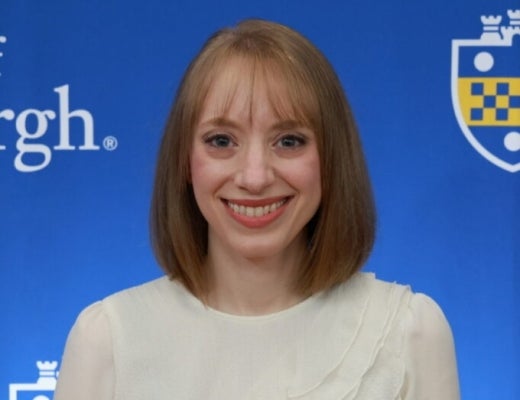
Theresa A. Koleck , PhD, RN, is an Assistant Professor at the University of Pittsburgh School of Nursing within the Health Promotion & Development department. She serves as Chair/Director of the Nursing Honors Program and co-facilitator of the Digital Health Hub Health Informatics and Data Science Core . Research Focus: Dr. Koleck mitigates symptom burden in chronic conditions using omics-based approaches and informatics techniques (clinical data mining, EHR phenotyping, NLP, unsupervised machine learning). Her work leverages the NIH All of Us Research Program to characterize symptom landscapes via structured and unstructured EHR data. Teaching: Courses in nursing research, informatics, and machine learning in healthcare. Service: Member-at-Large on the International Society of Nurses in Genetics (ISONG) Board (2024-2026) , leading the ISONG History Project, and former All of Us Researcher Ambassador (2022-2024). Scientific Expertise: Integrates genomics , biomedical informatics , and data science to advance symptom science and healthy aging . Her articles highlight applications of NLP in EHR analysis, genetic polymorphisms in symptom variability, and health disparities in pain management.
Anders Åsberg is a Professor at the Department of Pharmacy, University of Oslo, with a focus on pharmacokinetics and its application in organ transplant recipients. He leads the Section of Pharmacology and Pharmaceutical Biosciences and is actively involved in clinical studies related to immunosuppressive drug therapy. Current affiliation: Professor II, University of Oslo Previous roles: Managing Director, Renal Physiology Laboratory (2013–present); Medical Director, Roche Norge AS (2000–2003) Research Interests : Pharmacokinetics of immunosuppressive drugs Drug interactions in transplantation Role of transporters in drug disposition Population modeling for therapeutic drug monitoring Clinical trials in transplant recipients Effects of metabolic changes (e.g., gastric bypass) on drug metabolism Scientific Awards : Best Young Investigator, European Renal Association (2001) Collaborations span institutions such as the Clinical Pharmacokinetic Research Laboratory at the University of Rhode Island and the Laboratory of Applied Pharmacokinetics at the University of Southern California. His work frequently addresses the interplay between drug therapy, patient physiology, and long-term outcomes in kidney transplantation.
Dr. Aneesh Subramanian is an Assistant Professor in the Department of Atmospheric and Oceanic Sciences (ATOC) at the University of Colorado Boulder. He also holds visiting positions at the Center for Western Weather and Water Extremes at Scripps Institution of Oceanography, UC San Diego, and as a visiting scholar in the Predictability of Weather and Climate group at the University of Oxford. Additionally, he serves as an international collaborator with the Geophysical Flows Lab at the Indian Institute of Technology Madras. His educational background includes: Ph.D. in Climate Research from Scripps Institution of Oceanography, UC San Diego (2012) M.Sc. (Engineering) from Indian Institute of Science (2006) B.Tech from Indian Institute of Technology (IIT) Madras (2004) Dr. Subramanian's research focuses on weather and climate predictability, with particular emphasis on subseasonal-to-seasonal forecasting. His work spans tropical climate dynamics, atmospheric river prediction, data assimilation techniques, and the application of machine learning to improve earth system models. He investigates coupled ocean-atmosphere processes, particularly related to the Madden-Julian Oscillation and its teleconnections, and develops stochastic parameterization schemes for climate models. Dr. Subramanian's recent publications demonstrate a strong focus on advancing subseasonal-to-seasonal prediction capabilities, particularly for extreme weather events like atmospheric rivers and marine heatwaves. His work increasingly integrates machine learning techniques with traditional physics-based approaches, reflecting a growing trend in the field toward hybrid modeling frameworks. Much of his recent research examines regional climate phenomena in the Indian Ocean, Pacific, and Arabian Sea regions, with applications to monsoon prediction and understanding climate change impacts. Dr. Subramanian has received several notable awards and honors throughout his career: Best Team in visualization of weather forecasts Award, ECMWF Users Meeting (2017) Best Student Presentation Award, WCRP Open Science Conference (2011) Best Teaching Assistant Award, Scripps Institution of Oceanography (2011) SUNNY Scripps-NCAR Graduate Student Fellowship (2009-2011) NCAR ASP Summer Fellowship (2008, 2012) Dr. Subramanian has secured multiple research grants totaling over $3 million from agencies including NOAA, ONR, NASA, and KAUST. Current projects focus on improving understanding of air-sea interaction processes, marine ecosystem drivers in the California Current System, monsoon intra-seasonal oscillations, and marine heatwaves. He actively mentors undergraduate research assistants, graduate students, and postdoctoral scholars through his Climate Processes and Predictability Group at CU Boulder. Dr. Subramanian leads the Climate Processes and Predictability Group at CU Boulder, which focuses on subseasonal predictability, data assimilation, Atmospheric River dynamics, and tropical-extratropical teleconnections. He is also an active participant in several collaborative research initiatives including the Geophysical Flows Lab at IIT Madras and the Center for Western Weather and Water Extremes at Scripps Institution of Oceanography. His work frequently involves international collaborations with researchers from institutions in the UK, Saudi Arabia, and India.
Professor Elena Papanastasiou is the Dean of the School of Education at the University of Nicosia, Cyprus, where she teaches Educational Research , Quantitative Methods , and Assessment . She holds a PhD in Measurement and Quantitative Methods from Michigan State University (2001) and an Honors B.Sc. in Elementary Education from Pennsylvania State University (1996). Her research focuses on educational assessment , structural equation modeling , multilevel modeling , and mixed methods research , with applications in international assessments like TIMSS and IEA . Recent publications analyze generative AI in education , test-taking metacognition , student well-being , and international schooling contexts in Cyprus, Europe, and the USA. She serves as Cyprus’ General Assembly representative in IEA and is a member of the IEA Standing Committee and Publications Committee , as well as the Professional Development Committee of the Association for Educational Assessment. Her consulting work on methodological frameworks supports research teams globally, emphasizing advanced statistical analysis and educational policy development.
Lauri Hietajärvi is a Lecturer in Educational Psychology at the University of Helsinki, actively contributing to both teaching and research. He supervises in the Doctoral Program in Cognition, Learning, Teaching and Communication, with a focus on educational and developmental psychology as well as quantitative research methods. Doctor of Philosophy in Educational Psychology (University of Helsinki, 2019) Master of Education / Classroom Teacher (University of Helsinki, 2012) His research explores: Factors influencing school and study well-being Dynamics of study motivation and academic success Teachers' and principals' work-related well-being Impact of digital media on youth development Key research methodologies include Longitudinal studies Intra-individual and person-centered approaches Quantitative statistical analysis Digital behavior assessment Recent publications highlight Comparative studies of immigrant and native student well-being Climate change distress and adolescent coping Digital media's differential impacts on mental health Teacher leadership dynamics during educational reforms Current collaborations span projects with the Academy of Finland, REMEDIS, and EU Kids Online V. He regularly contributes to media discussions on educational well-being and digital media effects.
Susana Sanduvete Chaves serves as a Researcher in the Department of Psychology at the University of Seville, Spain, where she specializes in Behavioral Science Methodology. Her academic foundation includes a 2008 Doctorate from the University of Seville with the thesis "Innovaciones metodológicas en la evaluación de la formación continúa" (Methodological Innovations in Continuous Training Evaluation), supervised by Dr. Salvador Chacón Moscoso. She maintains active roles in both research methodology development and applied psychological interventions across clinical and educational settings. Her research program centers on three interconnected pillars: methodological quality assessment in psychological research, health psychology interventions, and educational innovations in psychology training. She has pioneered tools like the Methodological Quality Scale (MQS) and Methodological Quality Checklist for Observational Methodology (MQCOM), establishing rigorous standards for intervention program evaluation. In health psychology, her work targets chronic pain management, parental support for preterm infants, and quality-of-life improvements for autoimmune disorder patients. Educational contributions include bilingual teaching methodologies and active learning frameworks for psychology statistics courses. Analysis of her 2022-2025 publications reveals a strategic integration of methodological precision with real-world applications. Her health psychology studies predominantly employ randomized controlled trials and systematic reviews to evaluate interventions for vulnerable populations, while her methodological work emphasizes cross-cultural adaptation and international research standards. Educational publications document practical innovations in Spanish university settings, particularly regarding English-medium instruction challenges in psychology methodology courses. Though specific grant details remain undocumented in available sources, her extensive publication record in high-impact areas suggests sustained research funding and collaborative projects with healthcare institutions. Her work demonstrates consistent leadership in advancing methodological rigor within Spanish psychological research while addressing pressing clinical and educational needs through evidence-based interventions.
Grzegorz Krawczyk, PhD, is an Assistant Professor at the John Paul II Catholic University of Lublin, employed in the Department of Social and Humanistic Foundations of Landscape Architecture, Institute of Mathematics, Informatics and Landscape Architecture, Faculty of Natural and Technical Sciences. His research focuses on regional socio-economic development, local public finance, demographic change, FDI, innovation and academic entrepreneurship. Research interests revolve around measuring and explaining patterns of development at municipal and regional level, with particular emphasis on: local public budgets and fiscal capacity socio-economic mapping and typologies of communes demographic ageing and its fiscal consequences foreign-direct-investment determinants and local spill-overs academic entrepreneurship and university-industry knowledge transfer evaluation of cohesion-policy instruments Empirical coverage is dominated by the Lublin Voivodeship and Eastern Poland, but comparative studies (e.g. Poland-Spain FDI) are also present. Methodologically the work combines descriptive statistics, comparative case studies and policy-oriented evaluation. Scientific output comprises over 40 items, including peer-reviewed articles, chapters and conference papers published between 2003 and 2023; no research grants or supervised doctoral candidates are listed in the source material.
Hans Georg Beyer is an Affiliated Professor in Energy Engineering at the Faculty of Science and Technology, The University of the Faroe Islands. His work focuses on sustainable energy systems with emphasis on renewable energy integration and meteorological aspects of power generation. With extensive publication history spanning over three decades, he has established himself as a leading researcher in renewable energy systems analysis. Professor Beyer's research interests center on sustainable energy supply systems based on renewables, with special emphasis on relating system performance characteristics to meteorological conditions. His work in Energy Meteorology covers analysis and modeling of spatial and temporal statistics of wind and irradiance fields, including forecasting methods for wind speed and solar irradiance with horizons of 6-35 hours and near now-casts in minute time scales. In Renewable Energy Systems, he investigates layout, dimensioning, modeling and performance analysis of grid-connected and stand-alone solar, wind and hybrid systems. His research bridges meteorological science with practical energy engineering applications, particularly for island and remote communities. His publication record shows consistent research activity with 55 research outputs documented, including significant contributions to solar and wind energy forecasting, hybrid system design, and grid integration challenges. Notable work includes the development of methods for satellite-derived irradiance data applications in PV system monitoring and performance assessment. Solar Energy Best Paper Award, ISES 1999 Solar World Congress, Jerusalem Professor Beyer has been instrumental in several major collaborative projects including PVSAT-2 (satellite-based PV system performance monitoring), SWERA (UNEP solar resource assessment), and various European initiatives focused on renewable energy integration. His work demonstrates strong international collaboration, particularly with German, Brazilian, and other European research institutions. While specific grant details aren't provided in the source material, his extensive publication record in high-impact journals suggests substantial research funding support throughout his career.
Paul Stankovski Wagner is an Associate Professor and Senior Lecturer at Lund University's Faculty of Engineering (LTH), Department of Electrical and Information Technology. He serves as a Project Manager for the Department and is affiliated with several research initiatives including ELLIIT: the Linköping-Lund initiative on IT and mobile communication, LTH Profile Area: AI and Digitalization, and the Secure and Networked Systems research group. His research focuses on cryptography and information security , with particular expertise in post-quantum cryptography, lattice-based cryptographic systems, and side-channel analysis. His work spans theoretical foundations of cryptographic security as well as practical implementations for real-world applications. Key research areas include: Learning with Errors (LWE) problem and related algorithms BKW algorithm optimization for lattice-based cryptography Key management systems and secure communication protocols Anonymous credentials and privacy-preserving technologies Post-quantum cryptographic implementations Stream cipher analysis and nonrandomness detection Analysis of his recent publications (2023-2025) reveals a strategic expansion of his research from theoretical cryptography into applied security domains. While maintaining strong contributions to lattice-based cryptography (particularly the LWE problem and BKW algorithm), he has increasingly focused on practical applications in healthcare technology, pharmaceutical research, and vehicle networks. His 2025 paper on hospital-at-home security architecture demonstrates this applied direction, while his 2024 work on NFT frameworks for pharmaceutical R&D shows interdisciplinary innovation at the intersection of blockchain technology and healthcare. Dr. Stankovski Wagner has supervised 8 graduate students and has been involved in multiple significant research projects: SMARTY (2018-2024): A major project on secure software updates for smart cities funded by the Swedish Foundation for Strategic Research Side channels on post-quantum cryptographic algorithms (2017-2023): Dissertation project as assistant supervisor Developing tools for secure software patch deployment (2018-2022): Dissertation project as assistant supervisor Artificial Persons (2021): Advanced study group at Pufendorf IAS He is a core member of the Secure and Networked Systems research group at Lund University, which focuses on developing robust security solutions for emerging networked technologies. The group maintains strong collaborations with industry partners working on IoT security, healthcare technology, and smart city infrastructure.
Casey Lew-Williams is a Professor and Department Chair at Princeton University, where he leads the Princeton Baby Lab. His research focuses on how infants learn from dynamic communicative environments, integrating experimental, descriptive, computational, and social neuroscience approaches. He collaborates with institutions like Concordia University to study bilingual language acquisition and has developed tools like iCatcher+ for automated gaze analysis. His work spans typical development, adversity, and bilingual contexts. Research Interests: Language acquisition, bilingualism, infant cognition, caregiver-child interactions, neural synchrony, and computational modeling of learning processes. Recent Article Trends: His publications address sociodemographic reporting standards, emotion dynamics, caregiver speech variability, and open science methodologies in developmental research. Awards: Phi Beta Kappa Award President’s Award for Distinguished Teaching Excellence in Mentoring Graduate Students Advisees: Kennedy Casey Brooke Ryan Bianca Santi His lab emphasizes translating theoretical insights into community-focused applications to support child development.
Paul S. Rosenbloom is a Professor in the Department of Computer Science at the University of Southern California , with affiliations at the Institute for Creative Technologies . His work focuses on cognitive architectures , particularly the development of the Sigma architecture and contributions to the Common Model of Cognition . He has pioneered the integration of symbolic, probabilistic, and neural systems in AI research. Research Interests: Dr. Rosenbloom's research spans hybrid symbol systems , neural-symbolic integration , and the evolution of computational models of cognition . His recent work rethinks the Physical Symbol Systems Hypothesis through hybrid systems that bridge symbolic AI and neural networks, addressing challenges in universality , compositional reasoning , and cognitive modeling . Scientific Awards: 2011 Kurzweil Award for Best AGI Idea 2012 Kurzweil Award for Best AGI Paper 2023 Springer Prize for Best Paper Publications and Contributions: He has authored over 150 publications and co-authored foundational works on the Common Model of Cognition with Laird, Lebiere, and Stocco. His research has been supported by grants from the U.S. Army RDECOM and USC's Institute for Creative Technologies. He has mentored numerous collaborators and co-authors, including researchers like V. Ustun , A. Demski , and H. Joshi , in projects spanning virtual humans , reinforcement learning , and distributed vector representations .
Professor Spiridon Penev is a faculty member at the School of Mathematics & Statistics , University of New South Wales (UNSW), Sydney. After completing his PhD in Mathematical Statistics at Humboldt University, Berlin, he worked at Technical University of Sofia (Bulgaria) for 10 years, becoming Associate Professor in 1991. He joined UNSW in 1992, progressing from Lecturer to Professor in 2019. His teaching focuses on Statistical Inference , Multivariate Analysis , Longitudinal Data Analysis , and related advanced courses. Research Interests: Wavelet Methods in Non-Parametric Curve Estimation, Edgeworth Expansions, Saddlepoint Approximation, Structural Equation Models, Inference in Semiparametric Models, and Stochastic Risk Modelling. Article Trends: His work spans from foundational wavelet methods (pre-2010) to modern applications in climate model ensembles , portfolio optimization , marine engineering , and machine learning . Keywords include Statistics, Finance, Climate Science, Structural Health Monitoring, and Optimization. Awards: DAAD Award, Elected Member of the International Statistical Institute (ISI). Grants: Led ARC Discovery Project (2016–2018), ARC Linkage Project (2018–2022), and industry collaborations like SCA water quality analysis (2014–2019). Location: School of Mathematics and Statistics, UNSW Sydney, Room 1038, The Red Centre.
Randal Barnes serves as an Associate Professor and Director of Undergraduate Studies for Civil Engineering and Geoengineering at the University of Minnesota's Department of Civil, Environmental, and Geo-Engineering. He holds the distinguished title of Distinguished University Teaching Professor, recognizing his exceptional contributions to education. His research traverses mathematical modeling in geological and civil engineering with three primary foci: geostatistical site characterization (optimal sample design and engineering decision-making under spatial variability and parameter uncertainty), incorporation of uncertainty into quantitative modeling for geoengineering, and computational aspects of the Analytic Element Method. His work spans civil infrastructure, geotechnical applications, and environmental engineering, with particular emphasis on uncertainty quantification in engineering systems. Barnes' recent publications demonstrate a strong trend toward integrating machine learning techniques with traditional engineering modeling, particularly in uncertainty quantification for both civil infrastructure and environmental applications. His work bridges civil engineering with data science approaches, showing increasing focus on neural network applications for engineering problems. Distinguished University Teaching Professor Barnes has served as Principal Investigator and Co-Investigator on significant transportation research projects funded by the Minnesota Department of Transportation, including the MnROAD Data Mining project and PCC Pavement Thickness Variation study. His research has garnered substantial academic attention with multiple publications receiving double-digit Scopus citations. His work contributes to UN Sustainable Development Goals related to sustainable infrastructure development and environmental protection through improved engineering modeling and decision-making under uncertainty.