Krishna P. Gummadi is a Professor and Scientific Director at the Max Planck Institute for Software Systems (MPI-SWS) , leading the Networked Systems Research Group. His work bridges computer science and social science, focusing on social computing systems that network humans and computers at societal scale. Academic Leadership: Faculty (Scientific Director), Head of Networked Systems Research Group Key Research Areas: Algorithmic fairness, privacy in social media, distributed systems, human-centered machine learning His research methodology combines user-centric studies through large-scale observational analysis, data-centric studies using statistical learning and NLP, and systems-centric approaches for practical deployments like information diet tools and fraud detection services . Current work explores crowdsourcing systems , peer-to-peer networks , and trusted cloud computing . Scientific Awards & Recognitions: CNIL-INRIA Privacy Runners-Up Award (2018) Casper Bowden PET Runners-Up Award (2018) SIGCOMM Test of Time Award (2007) Students & Postdocs: Current: Junaid Ali, Reza Babaei, Nina Grgić-Hlača, Preethi Lahoti, Johnnatan Messias, Till Speicher Former: Asia J. Biega (Microsoft Research), Przemyslaw Grabowicz (UMass Amherst), Muhammad Bilal Zafar (Bosch AI), Juhi Kulshrestha (GESIS), Mainack Mondal (University of Chicago), Rijurekha Sen (IIT Delhi)
Kim Nimon is a Professor in the Department of Human Resource Development at The University of Texas at Tyler and serves as Director of the Office of Research and Scholarship Research Design and Data Analysis Lab. She holds a PhD in Educational Research (2013) and Applied Technology and Performance Improvement (2007) from the University of North Texas, an M.A. in Organizational Leadership (2003) from Regent University, and a B.S. in Computer Science (1981) from the University of Arkansas. Her research focuses on workforce development, statistical methodologies, and HRD theory. Notable contributions include work on managerial coaching, employee engagement, and meta-analytic techniques. Dr. Nimon has led or contributed to multiple NSF grants, including Co-PI on grant #2039408 and External Evaluator for grants #2421228 and others. Her publications span journals like Human Resource Quarterly and Organizational Research Methods , emphasizing methodological rigor and practical applications in HRD. Key Awards: Early Career Scholar Award (201x), Outstanding HRD Scholar Award, and inclusion in the top 2% cited researchers (2020–2022). Patents: U.S. and Canadian intellectual property related to digital rights management. Leadership: Former co-editor of Human Resource Development Quarterly and leader in professional organizations like AERA and HRD Academy. Her work bridges statistical innovation and HR practices, addressing challenges in organizational learning, employee behavior, and workplace technology integration.
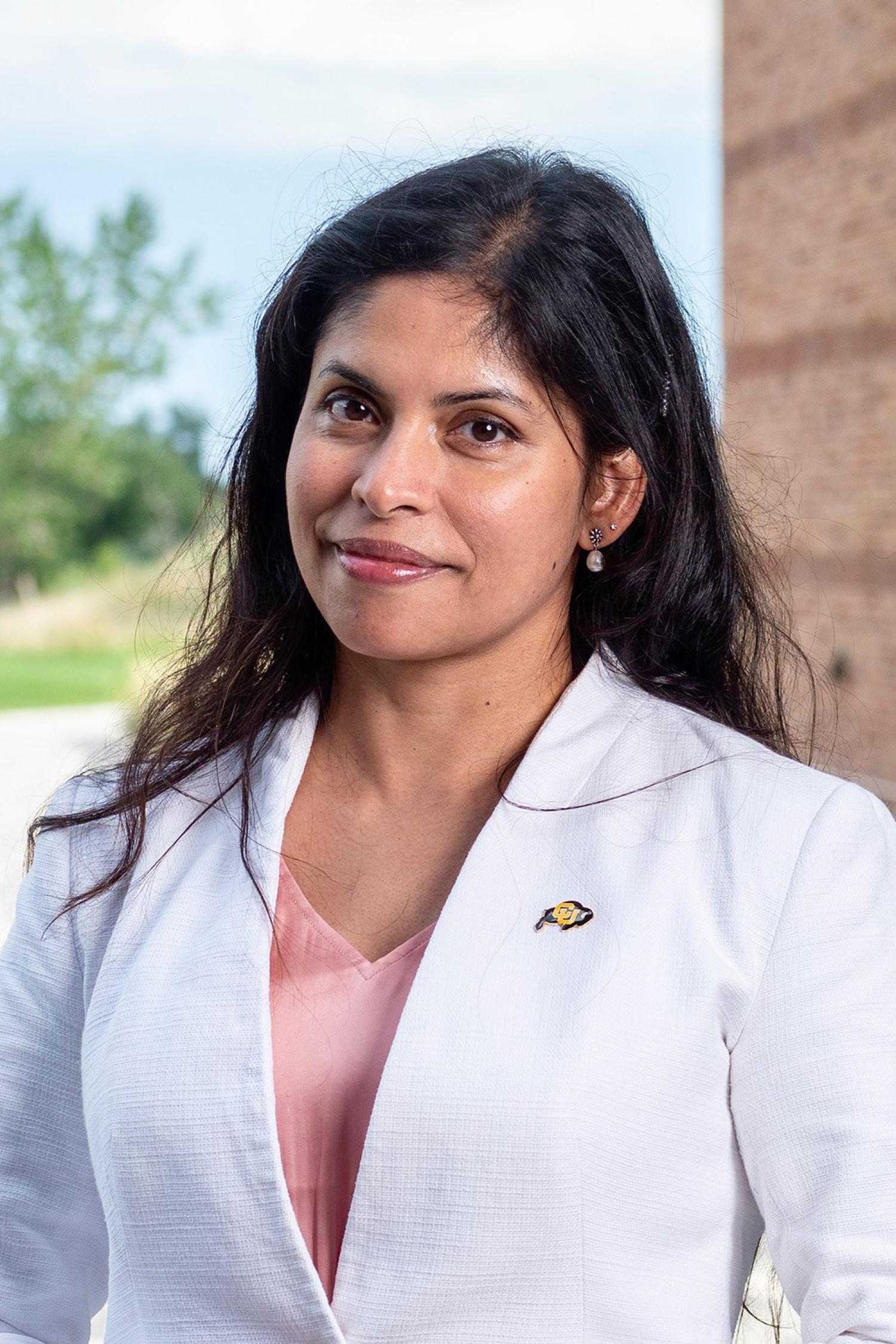
Sanghamitra Neogi is an Associate Professor in the departments of Aerospace Engineering Sciences and Materials Science & Engineering at the University of Colorado Boulder. She holds affiliations with the Aerospace Mechanics Research Center (AMREC). Her research focuses on theoretical and computational materials science, statistical learning methods, quantum systems, and nanoscale heat and electronic transport. She has expertise in electron-phonon coupling, neuromorphic computing materials, and energy transport in defected systems. Neogi holds a Ph.D. in Physics from Pennsylvania State University (2011), an M.Sc. from IIT Kanpur (2002), and a B.Sc. from Jadavpur University (2000). Her postdoctoral work at the Max Planck Institute for Polymer Research (2011–2015) and prior teaching roles at Penn State underscore her academic trajectory. Her research interests span advanced materials modeling, with notable work in semiconductor heterostructures, machine learning for inverse design, and thermal/charge transport phenomena. Key contributions include pioneering studies on nanophononic metamaterials and the development of physics-aware AI models for microstructure optimization. Neogi has received prestigious awards including the Web of Science Top 1% Highly Cited Paper in Physics (2017), David C. Duncan Fellowship (Penn State), and academic excellence distinctions in India. Her work bridges computational modeling and experimental validation in materials science. Her lab focuses on advancing autonomous materials design through AI-driven approaches and has collaborated on projects related to thermoelectric efficiency, phonon engineering, and semiconductor superlattices. The laboratory's website provides further details on ongoing research initiatives.
Dr. Surya Kalidindi is a Regents' Professor at the School of Computational Science and Engineering , Georgia Institute of Technology, with a joint appointment in the George W. Woodruff School of Mechanical Engineering. His research focuses on designing material microstructures for optimal performance through multi-scale modeling, machine learning, and high-throughput experimentation. Key projects include microstructure-property linkages, materials informatics, and additive manufacturing optimization. His work integrates computational mechanics, crystal plasticity, and data analytics to address challenges in heterogeneous materials. Notable contributions include developing AI-driven methods for microstructure generation, Bayesian optimization frameworks, and advanced indentation techniques for material characterization. Dr. Kalidindi leads initiatives in materials graph ontology, digital twins, and virtual materials design. His research has been applied to aerospace alloys, biomaterials, and energy materials, emphasizing data-driven approaches to accelerate materials innovation. He maintains an active lab group (MINED Super Group) and collaborates extensively on federal grants related to materials discovery and manufacturing. His work bridges theory, computation, and experimentation to achieve predictive materials modeling and industrial applications.
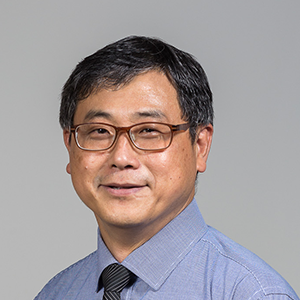
NG Teck Khim is an Associate Professor (Practice Track) at the School of Computing, National University of Singapore (NUS). He holds a Ph.D. from Carnegie Mellon University (1999) and M.Sc./B.Eng. degrees from NUS (1992/1988). His academic career bridges both academia and industry with significant experience at DSO National Laboratories and Media Development Authority. Education: Ph.D. (CMU), M.Sc. & B.Eng. (NUS) Leadership: Vice-Dean, Industry Relations at NUS Computing Research Focus: Geometrical computer vision, signal processing, and their applications in Markerless AR, sports analytics, and image forensics. His work also explores audio signal processing and military technology applications. Publication Trends: Recent works emphasize multimodal learning, adversarial attack defenses, medical imaging, and efficient neural architectures. Key themes include distribution regression, self-supervised frameworks, and video recognition optimization. Scientific Awards: NUS School of Computing Faculty Teaching Excellence Award (AY14/15, AY15/16, AY16/17) NUS School of Computing Teaching Honours Roll (AY17/18) NUS Annual Teaching Excellence Award (2016/17) Teaching & Industry Contributions: He serves as Vice-Dean for Industry Relations, actively shaping academic-industry partnerships. Previously, he led the Signal Processing Lab at DSO National Laboratories Singapore, focusing on defense applications of image processing and computer vision.
Dr. Dawei Zhou is an Assistant Professor in the Computer Science Department at Virginia Tech and Director of the VirginiaTech Learning on Graphs (VLOG) Lab. He holds a Ph.D. from the University of Illinois Urbana-Champaign (UIUC) and focuses on Open-World Machine Learning (OpenML), with applications in material science, finance, healthcare, and AI safety. His research has been supported by NSF, DARPA, and industry partners like Amazon and Google. His work addresses challenges in long-tailed learning, graph neural networks, and agentic AI for scientific discovery. Notable contributions include benchmarks like MetamatBench and DISPROTBENCH, and frameworks like MentorGNN and UnifiedGT. Awards include the NSF Career Award (2024) and Virginia Tech’s Outstanding Assistant Professor Award (2025). Education: Ph.D., Computer Science, UIUC Grants: NSF, DARPA, Commonwealth Cyber Initiative Service Roles: Vice Program Chair (KDD 2023), Proceedings Chair (SIGKDD 2024) Lab: VLOG Lab focuses on hypothesis generation/validation, LLM safety, and open-world learning Recent articles emphasize scientific hypothesis validation, LLM generalization, and fair graph learning. Students with CS, statistics, or physics backgrounds are recruited for Ph.D. and postdoc roles.
Mo Li is a Professor jointly appointed in the Department of Electrical & Computer Engineering and the Department of Physics at the University of Washington (UW), part of the College of Arts & Sciences. He joined UW in 2018 after serving as faculty at the University of Minnesota, Twin Cities (2010–2018) and postdoctoral research at Yale University (2007–2010). His expertise spans condensed matter physics, photonics, and quantum information, with a focus on integrated photonic systems, optoelectronics, and quantum photonics. Education: Ph.D., Applied Physics, California Institute of Technology, 2007 M.S., Physics, University of California, San Diego, 2003 B.S., Physics, University of Science and Technology of China, 2001 Research Interests: Dr. Li leads the Laboratory of Photonic Devices, investigating hybrid nanoscale devices, optoelectronic materials, and quantum phenomena. His work integrates experimental and theoretical approaches to explore photon-electron-phonon interactions, with applications in photonic circuits, quantum communication, and biomedical sensing. Key areas include 2D materials, spintronics, and MEMS/NEMS systems. Publications & Patents: Over 80 peer-reviewed papers and 6 U.S. patents. Recent research emphasizes graph-based algorithms (e.g., Color framework), enterprise data integration (BEAVER benchmark), and causal relational learning. Lab & Team: The Laboratory of Photonic Systems at UW develops cutting-edge photonic technologies. Openings exist for postdocs (photonic interconnection projects) and graduate students in ECE/Physics programs.
Wei Chen is the Chair and Professor of Mechanical Engineering at Northwestern University's McCormick School of Engineering, holding courtesy appointments in Industrial Engineering and Materials Science. He leads the Integrated Design Automation Laboratory (IDEAL) and founded the Predictive Science and Engineering Design (PSED) Cluster. His research focuses on AI-driven materials design, uncertainty quantification, and digital twins for advanced manufacturing. Chen has pioneered methods integrating machine learning with materials science, impacting commercial software and industrial applications. He holds the Wilson-Cook Professorship in Engineering Design and has authored influential works like Decision-based Design . Education: PhD in Mechanical Engineering from Georgia Tech, MS from University of Houston, and BS from Shanghai Jiaotong University. Research Interests: Simulation-based design under uncertainty, AI/machine learning for predictive design, metamaterials, topology optimization, and data-driven material systems. His lab emphasizes interdisciplinary approaches combining materials science, data science, and design optimization. Awards: Member of the National Academy of Engineering (2019), American Academy of Arts and Sciences (2024), NSF BRITE Fellow (2023), and numerous ASME awards including the Charles Russ Richards Memorial Award (2021). Recognized for contributions to design automation and materials discovery. Professional Service: Past President of the International Society of Structural & Multidisciplinary Optimization (ISSMO), Editor-in-Chief of ASME's Journal of Mechanical Design , and leadership roles in ASME and the National Academies' Board on Mathematical Sciences. Teaching: Courses include Intro to Mechanical Design, Engineering Optimization, and Advanced Computational Methods. Committed to integrating AI and data science into engineering education. Labs & Initiatives: IDEAL Lab explores digital twins and AI for manufacturing. PSED Cluster advances predictive design methodologies. Collaborates with industry on sustainable materials and additive manufacturing innovations.
Douglas G. Simpson is a Professor of Statistics at the University of Illinois Urbana-Champaign (UIUC) and Affiliate Professor at the Beckman Institute for Advanced Science and Technology. He has held leadership roles, including Chair of the Department of Statistics (2000–2019) and Associate Director of the Institute for Mathematical and Statistical Innovation (2020–2022). His research focuses on applied computational statistics, biostatistics, robust statistical methods, functional data analysis, and quantitative image analysis. Education: BA in Mathematics (Carleton College, 1980), MS and PhD in Statistics (UNC Chapel Hill, 1983 and 1985). He has served on editorial boards for journals like the Journal of the American Statistical Association and Biometrics , and on NIH’s Biostatistical Research and Design Study Section. Awards include Fellowships from the American Statistical Association (2000), Institute of Mathematical Statistics (1998), and AAAS (2017). Recent work emphasizes preterm birth risk prediction via quantitative ultrasound, leveraging interdisciplinary collaborations. His publications explore statistical methodologies for functional data, medical imaging, and clinical decision-making. He advises on external relations for the Statistics Department and maintains active roles in professional societies like the ASA and SIAM. Key contributions include advancing robust statistical techniques, developing algorithms for medical image analysis, and leading institutional initiatives in statistical innovation. His work bridges theory and application, addressing challenges in biomedicine, environmental science, and public health.
Guoxin Su is a Senior Lecturer in the School of Computing and Information Technology at the University of Wollongong. He holds a Ph.D. in Computer Science from the University of Technology Sydney (2013) and previously served as a Senior Research Fellow at the National University of Singapore. His research spans software engineering (formal methods, probabilistic verification) and artificial intelligence (multi-agent systems, reinforcement learning). Current projects focus on developing verification techniques for distributed systems and adaptive AI algorithms. Su secured multiple grants including AUD $30,000 from the Australian Department of Defence for research on multi-agent systems. He teaches courses in Systems Analysis, Software Engineering Practices, and Big Data Management. As an active researcher, he serves on program committees for AIACT and CECIT conferences and reviews for IEEE Transactions on Software Engineering and IEEE Transactions on Information Forensics and Security.
Sandy Suardi is a Professor at the School of Business, University of Wollongong , specializing in the intersection of economics and finance. He holds a PhD in Economics from the University of Melbourne (2005) and has previously taught at the University of Queensland and La Trobe University. His research focuses on systemic financial risk, public debt impacts on banking, cryptocurrency market microstructure, and green finance transitions. Teaching interests include ECON102 - Economics and Society and BUS330 - Economics and Finance Applied Research Project . He currently supervises PhD candidates researching environmental injustice and ESG integration in digital transformation. His work has been published in leading journals such as Review of Finance and Journal of Banking and Finance , and cited in Senate inquiries and media. Research Themes: Systemic Risk, Cross-Border Finance, Cryptocurrency Dynamics, Green M&A, ESG Disclosures Key Contributions: Analysis of pandemic-driven public debt effects on banking stability, market-wide circuit breakers in China, and Ethereum's Proof of Stake transition impacts. He maintains active research collaborations through platforms like ResearchGate and Google Scholar.
Eric Abrahamson is the Hughie E. Mills Professor of Business at Columbia Business School, where he has been a faculty member since 1989. He serves as the Bernstein Faculty Leader at the Bernstein Center for Leadership and Ethics and teaches courses on leadership power and political influence, and on leading organizational change. His work explores how artificial intelligence, particularly interactive AI chatbots, help students and executives practice leadership in ethical and effective ways. Abrahamson earned his BA from Haverford (1982), MPhil from New York University (1987), and PhD (1990). Growing up in Paris, France, he is perfectly bilingual in French and English. His educational background forms the foundation for his interdisciplinary approach to organizational behavior and leadership studies. Professor Abrahamson's research focuses on the intersection of leadership development, organizational behavior, and artificial intelligence. As an early adopter of computational techniques for analyzing organizational language, he combines behavioral science, linguistics, and AI to help people navigate high-stakes workplace interactions. His current projects explore how AI large language models can support leadership development, decision-making, and learning. He is also a leading authority on management fashions and the diffusion of innovative techniques for managing organizations. Abrahamson is internationally recognized for his scholarly contributions and bestselling books. His book A Perfect Mess is translated into 18 languages and ranked among Amazon's top 50 titles. Change Without Pain won Strategy + Business magazine's Best Book Award. His research has been published in top management journals including Administrative Science Quarterly, Academy of Management Journal, and Organization Science, where he has received multiple best-article awards. International bestseller 'A Perfect Mess' translated into 18 languages 'Change Without Pain' won Strategy + Business magazine's Best Book Award Multiple best-article awards from leading management journals Regular features in The New York Times, The Economist, and Harvard Business Review Academy of Management recognition for scholarly contributions At Columbia Business School, Abrahamson innovatively uses AI chatbots in the classroom to help students road-test leadership strategies before deploying them in real workplace settings. He is also an avid digital artist exploring the aesthetic integration of chatbot identity, linguistic style, spoken voice, and 3D dynamic avatars. His teaching and research bridge traditional organizational behavior with cutting-edge technological applications, creating a unique approach to leadership development that prepares students for the complexities of modern organizational life.
Dr Daniel Allington is a Reader in Social Analytics at King's College London, based in the Department of Digital Humanities within the Faculty of Arts & Humanities. He is a leading scholar in the fields of social analytics, computational social science, and media studies, with a focus on extremism, hate speech, disinformation, and the historical study of publishing and media. As a Co-Investigator of the Decoding Antisemitism project funded by the Alfred Landecker Foundation, his work explores antisemitism and conspiracy theories in digital contexts. Dr Allington's research interests include political ideology, hate speech and incitement, disinformation, and the historical study of publishing and media. He employs both qualitative and quantitative methods in his investigations, including social network analysis and statistical text analysis. His current work emphasizes the role of digital media in spreading extremism and antisemitic discourse. His recent publications reflect a deep engagement with antisemitism, conspiracy theories, and public health responses to crises such as the COVID-19 pandemic. He has examined the correlation between conspiracy beliefs and vaccine hesitancy, the predictive factors of antisemitic attitudes, and the use of AI in analyzing hate speech online. His work bridges computational methods with critical social science, offering insights into contemporary societal challenges. Dr Allington has not been explicitly mentioned as having received named scientific awards or fellowships in the provided text. He has secured funding through projects like the Decoding Antisemitism initiative and has collaborated with organizations such as the Campaign Against Antisemitism and the Centre for Countering Digital Hate. Dr Allington is also actively involved in PhD supervision, guiding students in qualitative or quantitative research within his areas of expertise. His research is conducted within the Department of Digital Humanities at King’s College London, and he contributes to interdisciplinary projects addressing digital media’s role in societal issues.
Abdel Douiri is a Professor of Medical Statistics and Clinical Trials at King's College London's School of Population Health & Environmental Sciences. He holds a PhD from Paris-Sud University (2002) and an MSc from Paris-Sorbonne University (1999). His expertise spans clinical trial design, epidemiology of chronic conditions, and predictive medicine. He leads the MPH epidemiology/statistics modules and directs the university's statistical consultancy services. A Fellow of the Royal Statistical Society, he advises organizations like the Research Design Service London and co-edits Thorax . His research focuses on stroke outcomes, multimorbidity patterns, and health equity, leveraging electronic health records and advanced statistical methods. Active in global health initiatives, he contributes to UN Sustainable Development Goals related to public health and education. Education: PhD in Applied Mathematics, University of Paris-Sud (2002) MSc in Mathematics, Paris-Sorbonne University (1999) Research Focus: His work addresses stroke epidemiology, clinical trial methodology, and the application of machine learning to health data. Notable projects include the South London Stroke Register (30-year longitudinal study) and biomarker-guided immunosuppression trials in organ transplantation. Grants & Collaborations: Leads or co-invests in 45+ projects funded by NIHR, BHF, and the Stroke Association, including AI-driven fetal ultrasound studies and trials on vitamin D supplementation efficacy. Labs/Teams: Statistical advisor for King's Biomedical Research Centre and part of multidisciplinary teams analyzing global disease burden (e.g., GBD Study) and ethnic disparities in healthcare outcomes.
Professor Denis Martin serves as Professor of Rehabilitation and Director of the Centre for Rehabilitation, Lifestyle Medicine, and Human Performance at Teesside University's School of Health and Life Sciences within the Allied Health Professions department. An active researcher accepting PhD students, he holds significant leadership positions including Vice Chair of the XR4Rehab Network and leads the Integrating Physical Health, Mental Health, and Social Care theme in the ARC NENC. Professor Martin earned his BSc (Hons) Physiotherapy from the University of Ulster in 1988, followed by a DPhil from the same institution in 1993, and an MSc Applied Statistics from Napier University in 2000. Prior to joining Teesside University in 2006, he was a Principal Research Fellow at Sheffield Hallam University, Director of the Scottish Network for Chronic Pain Research, and Award Coordinator of the MSc Pain at Queen Margaret University, Edinburgh. During his Scottish tenure, he chaired Pain Association Scotland and served as Vice-chair of the Scottish Parliament Cross Party Group on Chronic Pain. His research focuses on assessing and managing pain and disability impacts, with particular expertise in chronic pain conditions, rehabilitation techniques, and XR/digital technology applications in rehabilitation. His work spans respiratory medicine, musculoskeletal health, and health literacy, securing over £25 million in external funding from prestigious bodies including the EU, Research Councils, NIHR, and various charities. Recent research demonstrates a clear trend toward integrating virtual reality and digital technologies into pain management and rehabilitation, especially for COPD and persistent pain conditions. His publications reveal a methodological shift toward mixed-methods approaches combining systematic reviews with innovative technology implementation studies, addressing both clinical effectiveness and user experience in digital health interventions. Professor Martin's work has received media attention including features on 'cutting-edge technology as a game changer for pain management' and coverage related to William Shatner's AI technology applications. His research has been highlighted by multiple media outlets focusing on Teesside University's development of AI agents for pain management and long Covid rehabilitation solutions. As an experienced supervisor, Professor Martin has overseen 28 doctoral completions with current supervision of additional students. His active research portfolio includes the STOP project (Studies into the Treatment Of Phantom limb pain, 2021-2026), Virtual Reality for Rehabilitation: VR4LongCovid Rehab, and the EU NWE Interreg funded Scale-Up4Rehab project, demonstrating his commitment to innovative rehabilitation approaches across diverse conditions. Professor Martin leads multidisciplinary research teams focused on integrating physical health, mental health, and social care. His current work includes developing AI agents for pain management support and exploring virtual reality solutions for long Covid rehabilitation through multiple funded projects with clinical partners across the UK.