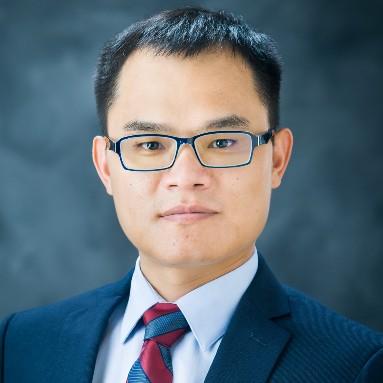
Dr. Bo Tang is an Associate Professor in the Department of Electrical and Computer Engineering at Worcester Polytechnic Institute (WPI), with collaborative appointments in Computer Science and Data Science. His research focuses on bio-inspired AI, AI security, edge AI, and applications in Cyber-Physical Systems such as wireless networks, autonomous vehicles, and power systems. He holds a Ph.D. from the University of Rhode Island (2016) and previously served as an Assistant Professor at Mississippi State University (MSU). Education: Ph.D., University of Rhode Island, 2012–2016 M.S., Chinese Academy of Sciences, 2007–2010 B.E., Central South University, 2003–2007 Research interests include bio-inspired neural networks, AI security frameworks, edge computing for IoT, and autonomous systems. He leads the Computational Intelligence and Learning Systems (CILS) Lab, developing AI solutions for real-world challenges like secure federated learning, underwater robotics, and smart grid resilience. Notable awards include the NSF CAREER Award (2021), NIJ Early Career Award (2019), and MSU's Emerging Research Scholar Award (2022). He is a Senior IEEE Member and Associate Editor for IEEE Transactions on Neural Networks and Learning Systems . Grants and Projects: NSF CISE CCRI Grant ($1.8M, Co-PI, 2021) NTIA Grant ($1.9M, 2023) ONR Grant ($249K, Co-PI, 2019) Lab & Teams: The CILS Lab collaborates on projects like Open AI Cellular (OAIC), secure O-RAN networks, and autonomous vehicle navigation. Recent student projects include federated learning algorithms and underwater robot localization.
Prof. Tobias Meggendorfer is an academic leader in formal methods and probabilistic systems verification. He currently holds an interim professorship at the Technical University Munich (TUM) within the Computational Mathematics department under the TUM School of Computation, Information and Technology. His career includes a postdoc at the Institute of Science and Technology Austria (IST Austria) and a PhD at TUM under Prof. Jan Křetínský. His research focuses on formal verification techniques for probabilistic systems, including risk-aware verification frameworks, stochastic games, and integration of machine learning into verification processes. Notable contributions include the Owl tool library for ω-automata and LTL translations, and the PET partial exploration tool for probabilistic verification. Prof. Meggendorfer has published extensively on topics such as value iteration stopping criteria for stochastic games, entropic risk measures, and semantic learning in LTL synthesis. He actively serves on program committees for AAAI, CAV, and other top conferences, and has reviewed for journals like JACM and IEEE TSE. His work bridges theoretical foundations with practical tool development, evidenced by contributions to open-source projects like the JBDD library and DOMtutor educational framework. He has advised multiple MSc and BSc theses, translating research into impactful educational and industrial applications.
Emaad Manzoor is an Assistant Professor of Marketing and a graduate field member of Computer Science at Cornell University's SC Johnson College of Business. He specializes in designing algorithms to enhance human decision-making, focusing on reinforcement learning, human-algorithm collaboration, and causal inference with unstructured data. His work bridges marketing science, machine learning, and computational social science. Education: PhD in Machine Learning (Carnegie Mellon University). Professional experience includes roles at Yahoo! and Pinterest, and he currently leads projects like stopping-agents and clipalyze. Teaching highlights include creating the AI course at Johnson School and teaching courses on data technologies and human-AI collaboration. Research is funded by the National Science Foundation ($562,000), Atkinson Center for Sustainability ($25,000), and others. Key contributions include causal inference methods for text analysis, status biases in online deliberation, and ethics in machine learning applications. Organized sessions at Marketing Science 2025 on 'Behavioral Insights for Algorithm Design' and co-organized the first EMNLP workshop on causal inference with text (2021). His work emphasizes practical applications in marketing, social media, and algorithmic fairness.
Maxim Buzdalov is a Lecturer in Computer Science at the Department of Computer Science, Aberystwyth University. His research focuses on evolutionary algorithms, optimization, and theoretical computer science, with particular emphasis on algorithm design, runtime analysis, and parameter control. He has contributed to advancements in genetic algorithms, crossover operators, and non-dominated sorting techniques. His work addresses challenges in computational complexity, including fixed-target optimization, black-box complexity, and efficiency improvements through novel storage mechanisms like minimum spanning trees. Buzdalov's research also explores parameter tuning strategies, such as lazy parameter control, and their applications in improving algorithm performance. His publications span conferences like GECCO, FOGA, and IEEE Congress on Evolutionary Computation, reflecting a strong track record in evolutionary computation theory and practice. Key themes in his articles include runtime analysis, algorithmic efficiency, and the theoretical foundations of evolutionary methods. His contributions often bridge algorithm design with practical applications, such as optimizing robotic systems and testing algorithms for programming challenges.
UnivProf. Dr. Fabian Sinz is a Professor at the Institute of Computer Science, University of Göttingen, heading the Machine Learning group. His research focuses on interdisciplinary applications of machine learning in computational neuroscience, data science, and neuroscience. He teaches courses such as Data Science I and leads seminars on Machine Learning and Computational Neuroscience. His work bridges theoretical machine learning with empirical neuroscience, particularly in modeling neural activity and connectomics. Research interests include neural population coding, generative models for neural data, and applying machine learning to understand brain function. Notable contributions involve developing methods like TRACE and NEURD for analyzing neural datasets and predicting visual cortex responses. Recent publications emphasize foundational models for neural activity prediction and cross-modal learning. Dr. Sinz collaborates on large-scale projects like the Dynamic Sensorium Competition, advancing reproducibility in predictive modeling of brain activity. He has advised on machine learning applications in health informatics and biomechanical reconstruction. His lab’s work frequently intersects with computer vision, computational biology, and neuroimaging technologies.
Joerg Osterrieder is an Associate Professor of Finance and Artificial Intelligence at the University of Twente, Netherlands, and Professor of Sustainable Finance at Bern Business School, Switzerland. He earned his Ph.D. in Mathematics (2007) from ETH Zurich, Swiss Federal Institute of Technology. Ph.D. in Mathematics, ETH Zurich (2007) His research spans financial statistics, quantitative finance, and artificial intelligence applications in finance , with a focus on sustainable finance, ESG scoring systems, and corporate share buyback strategies. He integrates machine learning techniques into financial modeling and digital finance innovations. Recent publications address ESG scoring engines, share buyback execution anomalies, and deep reinforcement learning in finance , reflecting his interdisciplinary approach to merging AI with financial systems. He actively contributes to editorial boards, including Financial Blockchain and AI in Finance .
Masashi Sugiyama is a Professor at the Department of Complexity Science and Engineering, Graduate School of Frontier Sciences, The University of Tokyo, where he has been serving since 2014. He concurrently serves as the Director of the RIKEN Center for Advanced Intelligence Project (AIP) since 2016, leading research groups focused on fundamental AI technologies, AI applications, and social issues of AI. His academic journey began at Tokyo Institute of Technology, where he earned his Bachelor, Master, and Doctor of Engineering degrees in Computer Science in 1997, 1999, and 2001 respectively, before becoming an Assistant Professor and later Associate Professor at the same institution. Sugiyama's research primarily focuses on statistical machine learning, with particular expertise in weakly supervised learning, learning from noisy supervision, and learning under distribution shift. His work has established important theoretical frameworks for density ratio estimation, covariate shift adaptation, and non-stationary environments. He has developed numerous practical algorithms including KLIEP (Kullback-Leibler importance estimation procedure), uLSIF (unconstrained least-squares importance fitting), and LSDD (least-squares density difference), which have become standard tools in the machine learning community. Analysis of his recent publications reveals a strong emphasis on reliable and robust machine learning techniques that can handle imperfect supervision and data distribution changes. His work spans theoretical foundations, algorithm development, and practical applications across various domains including bioinformatics, anomaly detection, and dimensionality reduction. The recurring themes in his research include direct density ratio estimation methods, importance weighting techniques, and mutual information-based approaches for various machine learning tasks. Award for Science and Technology from the Japanese Minister of Education, Culture, Sports, Science and Technology (2022) Japan Academy Medal (2017) Japan Society for the Promotion of Science Award (2017) Faculty Award from IBM (2007) Nagao Special Researcher Award from the Information Processing Society of Japan (2011) Young Scientists' Prize for the Commendation for Science and Technology by the Minister of Education, Culture, Sports, Science and Technology Japan (2014) Sugiyama has served as program co-chair for major machine learning conferences including NeurIPS 2015, AISTATS 2019, and ACML 2010 and 2020. He has received prestigious fellowships including the Alexander von Humboldt Foundation Research Fellowship (2003-2004) and the European Commission Program Erasmus Mundus Scholarship (2006). He is the (co-)author of influential machine learning monographs including Machine Learning in Non-Stationary Environments (MIT Press, 2012), Density Ratio Estimation in Machine Learning (Cambridge University Press, 2012), Statistical Reinforcement Learning (Chapman & Hall, 2015), and Machine Learning from Weak Supervision (MIT Press, 2022). At RIKEN AIP, Sugiyama leads research initiatives focused on developing robust AI systems that can operate reliably in real-world conditions with imperfect data. His laboratory maintains an active software development effort, providing open-source implementations of many of his research contributions, which has significantly influenced both academic research and practical applications of machine learning.
Rianne de Heide is a Researcher in the Machine Learning department at Centrum Wiskunde & Informatica (CWI) in Amsterdam, The Netherlands. Her work focuses on theoretical aspects of statistical learning, particularly in the areas of Bayesian inference and hypothesis testing. Dr. de Heide's research interests span several interconnected domains in statistical theory and machine learning: Bayesian statistics and inference Hypothesis testing and statistical validity E-values and anytime-valid testing Group invariance in statistical models Safe Bayesian learning under misspecification Multi-armed bandit problems Her recent publications demonstrate a strong focus on developing theoretically sound statistical methods that maintain validity under flexible conditions. A significant portion of her work explores 'safe testing' frameworks that remain valid regardless of when testing is stopped, addressing a long-standing challenge in statistical practice. Her research bridges theoretical statistics with practical applications in machine learning, with publications in top journals including the Annals of Statistics and the Journal of the Royal Statistical Society Series B. Dr. de Heide has received recognition for her work, including: Willem R. van Zwet Award (2022) Her research is supported by the project 'Safe Bayesian Inference: A Theory of Misspecification based on Statistical Learning,' funded by The Netherlands Organisation for Scientific Research (NWO). She collaborates extensively with Peter Grünwald, Wouter Koolen-Wijkstra, and other researchers in the Machine Learning group at CWI.
Fengxiang He is a Lecturer in AI Driven Business Informatics and Financial Computing at the School of Informatics, University of Edinburgh, where he is affiliated with the Artificial Intelligence and its Applications Institute. He also holds fellowships and affiliations with the Generative AI Laboratory, Institute for Adaptive and Neural Computation, Edinburgh Future Institute, and the Edinburgh Centre for Financial Innovations. Prior to Edinburgh, he was the Founding Lead of the Trustworthy AI project at JD.com, Inc. His research centers on trustworthy AI, with core interests in deep learning theory, decentralised learning, privacy and fairness in machine learning, symmetry in machine learning, and algorithmic game theory, with applications in economics and finance. He leads the Edinburgh Ventures for Intelligence and Economics and is actively involved in shaping ethical and robust AI systems. The recent publications highlight a strong trend in theoretical and applied machine learning, particularly in decentralised learning, trustworthy AI, game theory, and financial modeling. His work bridges deep learning theory with real-world applications, focusing on safety, privacy, fairness, and robustness. The articles span top venues including ICML, NeurIPS, ICLR, IEEE TPAMI, and ACM, reflecting high impact and interdisciplinary reach. Area Chair, ICML Area Chair, NeurIPS Area Chair, UAI Area Chair, AISTATS Area Chair, ECAI Area Chair, ACML Associate Editor, IEEE Transactions on Technology and Society Fengxiang He supervises multiple PhD and MScR students and is currently recruiting for postdoctoral researchers and fully funded PhD studentships through Centres for Doctoral Training in Machine Learning Systems, Designing Responsible NLP, and AI for Biomedical Innovation. He welcomes visitors and collaborators. His team includes PhD students Johnny MyungWon Lee, Kejiang Brian Qian, Saimun Habib, Qian Zuo, and MScR student Ye Wang, along with several interns and visiting researchers. He leads the Edinburgh Ventures for Intelligence and Economics and is a key member of the Generative AI Laboratory and other interdisciplinary research centers, fostering collaboration across AI, finance, and societal impact domains.
Anis Yazidi is an Associate Professor at the Department of Informatics, Faculty of Mathematics and Natural Sciences, University of Oslo, where he leads research in the Research Group for Digital Signal Processing and Image Analysis. His academic profile demonstrates significant contributions to artificial intelligence, machine learning, and signal processing with over 50 publications between 2021-2025 in high-impact venues including IEEE Transactions, Frontiers journals, and AAAI proceedings. Professor Yazidi's research spans multiple interconnected domains with particular emphasis on Tsetlin Machines, deep learning for medical applications, and signal processing theory. His work bridges theoretical foundations with practical implementations, developing novel frameworks like DREAMS for EEG analysis with model card reporting and interpretable methods for ECG classification. His contributions to learning automata theory, particularly in convergence analysis of Tsetlin-based algorithms, represent significant theoretical advances. The research portfolio also extends to cybersecurity applications of AI for IoT protection, agricultural technology for plant disease detection, and renewable energy modeling for wind-speed statistics. Yazidi's publication record reveals a strong interdisciplinary approach, with collaborations across computer science, neuroscience, medical diagnostics, and engineering disciplines. His recent work shows increasing focus on trustworthy AI systems, ethical considerations in medical applications, and specialized neural architectures tailored for specific data modalities including EEG, ECG, and eye-tracking data. The research demonstrates both theoretical rigor in algorithm development and practical implementation for real-world problems. Professor Yazidi maintains an active collaboration network with researchers across the Department of Informatics at UiO, particularly with Pedro Lind, Hugo Lewi Hammer, and Paal Engelstad, while also engaging in international collaborations. His work contributes significantly to both the theoretical foundations of learning systems and their practical implementation in diverse application domains from healthcare to renewable energy.
Allmin Susaiyah is a University Researcher at Eindhoven University of Technology (TU/e), affiliated with the Mathematics and Computer Science school and the Eindhoven MedTech Innovation Center (e/MTIC). Her work bridges Security and Process Analytics research groups, focusing on AI-driven health technology solutions that transform complex data into actionable behavioral insights for personalized health management. Dr. Susaiyah holds a Master of Science degree and completed her PhD at TU/e in 2024 with the dissertation "Insight Generation and Recommendation: Driving Behavior and Systemic Change," which explored unstructured/structured data integration for behavioral interventions. Her research expertise spans Artificial Intelligence, Machine Learning, and Health Informatics, with specialized focus on Wearable Computing and Natural Language Processing for health self-management systems. Her scientific contributions emphasize user-centered AI, particularly in developing neural network models that adapt to individual preferences and feedback mechanisms. Key innovations include smart insight selection from wearable devices, privacy-preserving text mining, and reinforcement learning frameworks for lifestyle simulation, all targeting practical health behavior change through computational methods. Analysis of her 15 most recent publications (2021-2025) reveals an evolving trajectory from foundational behavior insight mining frameworks toward advanced zero-shot learning for medical event logs and privacy-aware health analytics. This progression demonstrates increasing sophistication in handling high-dimensional health data while addressing critical challenges in user preference modeling and domain-specific adaptation. No scientific awards or fellowships are documented in available sources. Public information does not indicate active student supervision or specific grant funding details, though her e/MTIC affiliation suggests participation in multidisciplinary health technology initiatives. Her work contributes to UN Sustainable Development Goal 3 (Good Health and Well-being) through AI applications for preventive healthcare and personalized medicine. Within TU/e's ecosystem, Dr. Susaiyah collaborates extensively through the Eindhoven MedTech Innovation Center—a strategic partnership between TU/e, Catharina Hospital, and Philips—where she integrates computer science methodologies with clinical practice to advance wearable-based health monitoring systems and intelligent recommendation engines for real-world healthcare settings.
Dries Peumans serves as a Research Fellow at the Department of Electronics and Informatics within the Faculty of Engineering at Vrije Universiteit Brussel (VUB), Belgium. His research spans RF engineering, microwave systems, and nonlinear signal processing with significant contributions to measurement instrumentation and 6G technology development. Based at the Pleinlaan 2 campus in Brussels, he maintains an active research profile with an h-index of 139 according to institutional metrics. Peumans' research focuses on RF/microwave systems engineering and nonlinear distortion analysis , particularly in power amplifiers and time-varying systems. His work integrates intelligent instrumentation techniques using reinforcement learning and big data approaches to reduce measurement complexity. Key application areas include 6G communications, beamforming transmitters, and EMI shielding materials. His fingerprint analysis reveals dominant expertise in frequency response (100%), power amplifiers (58%), and nonlinear distortion (47%). Recent publications demonstrate strong trends in real-time signal processing for 5G/6G systems, with particular emphasis on digital predistortion techniques using ROVA modeling. His 2025-2024 output shows increasing diversification into materials science (EMI shielding composites) and geophysical applications (lava lake thermal sensing), while maintaining core expertise in RF measurement optimization and time-varying system modeling. Scientific contributions include: Development of scalable models for linear periodic time-varying (LPTV) systems Innovations in power sweep stitching for modulated RF experiments Compact impedance sensors for 24-31GHz beamforming transmitters Equivalent modeling of multilayered conductive composites Peumans actively supervises doctoral research, notably guiding Amedeo Varano's work on ROVA modeling applications. His current projects include OZR4181 (Reducing measurement complexity through intelligent instrumentation, 2023-2027) and SRP78 (Center for Model-Based Systems Improvement, 2022-2027), which integrate photonics, reinforcement learning, and transceiver design. He participates in the FOD168 initiative for 6G leadership development and maintains collaborations across European research institutions through the VUB's Center for Model-Based Systems Improvement. His laboratory work centers on advanced RF measurement systems, with emphasis on time-domain characterization of nonlinear systems and development of intelligent instrumentation frameworks. Current team projects focus on scaling LPTV modeling techniques to incorporate system parameter variations, enabling predictive design of rotating mechanical systems and electronic oscillators.
Shuangning Li is an Assistant Professor of Econometrics and Statistics at the University of Chicago Booth School of Business. Her research focuses on advanced statistical methodologies, including causal inference, multiple hypothesis testing, selective inference, and statistical reinforcement learning. Prior to joining Booth, she held a postdoctoral fellowship at Harvard University's Department of Statistics. Education: PhD in Statistics from Stanford University, advised by Emmanuel Candès and Stefan Wager Bachelor of Science from the University of Hong Kong Her academic work intersects with computational statistics and machine learning, addressing challenges in high-dimensional inference and adaptive data analysis. While specific publications are not listed in the provided text, her research trends emphasize robustness and interpretability in statistical learning frameworks.
Dr. Sudharman K. Jayaweera is a Professor in the Department of Electrical and Computer Engineering at the University of New Mexico, Albuquerque, NM. He holds a PhD in Electrical Engineering from Princeton University (2003), an MS in Electrical Engineering from Princeton University (2001), and a BE in Electrical and Electronic Engineering with First Class Honors from the University of Melbourne, Australia (1997). He is a Senior Member of IEEE and serves as an editor for IEEE Transactions in Vehicular Technology. Dr. Jayaweera's research spans several key areas in modern communications and signal processing: Cognitive radios and autonomous learning systems Wireless communications and statistical signal processing Machine learning applications in communications Smart-grid technologies and cyber-physical systems Satellite communications and space networks Vehicular networks and distributed systems His recent work shows a clear trend toward integrating artificial intelligence with traditional communications systems, particularly focusing on UAV networks, spectrum management, and security aspects of cognitive radio systems. The publications reflect a strong emphasis on practical implementations of theoretical concepts, with applications ranging from smart grids to space communications. Dr. Jayaweera has received numerous scientific awards including the IEEE PACRIM 2011 Gold Award for Best Communications Paper, the IEEE AVSS '06 Best Paper Award, and the WPMC '03 Excellent Paper Award. He has also been recognized with fellowships including the National Research Council (NRC) Senior Fellow at the Naval Postgraduate School and ASEE Air Force Summer Faculty Fellow. As an advisor, Dr. Jayaweera has mentored numerous graduate students to completion of their PhD and MS degrees. His former students have gone on to successful careers at institutions including Syracuse University, SUNY Oswego, Qualcomm, Sandia National Labs, and other leading technology companies. He also directs the EYES Summer Internship program for international students at UNM. Dr. Jayaweera leads the Communications and Information Sciences Lab (CISL) and the Cognitive Radio Lab (CRL) at UNM, where his teams work on cutting-edge research in autonomous cognitive radios (which he terms "Radiobots"), machine learning for communications, and next-generation wireless systems.
Vidya Samadi is a Research Professor at Clemson University, leading the Hydroinformatics Research Group. Her work bridges cyberinfrastructure, data analytics, and water resources management across interdisciplinary domains, including the College of Agriculture, College of Engineering, and School of Computing. She focuses on creating sophisticated, user-friendly software to address complex water management challenges. Her research interests span Machine learning for hydrology and flood prediction Deep learning architectures (e.g., Transformers, recurrent networks) Reinforcement learning applications in irrigation and reservoir management Cyberinfrastructure development for water science Uncertainty quantification in hydrological models Explainable AI for environmental decision-making Recent publications highlight trends in applying cutting-edge ML/DL models (N-BEATS, N-HiTS, Transformers) to soil moisture prediction, flood analytics, and irrigation optimization. Her work integrates physics-informed neural networks, probabilistic frameworks, and multimodal data (e.g., satellite imagery, sensor networks) for scalable water management solutions.