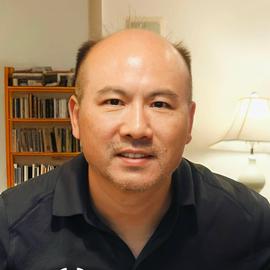
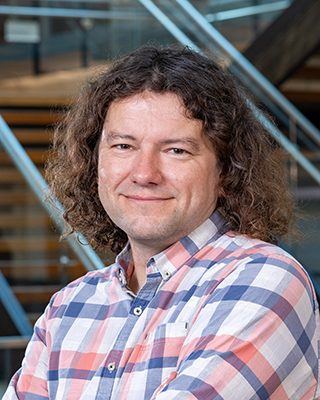
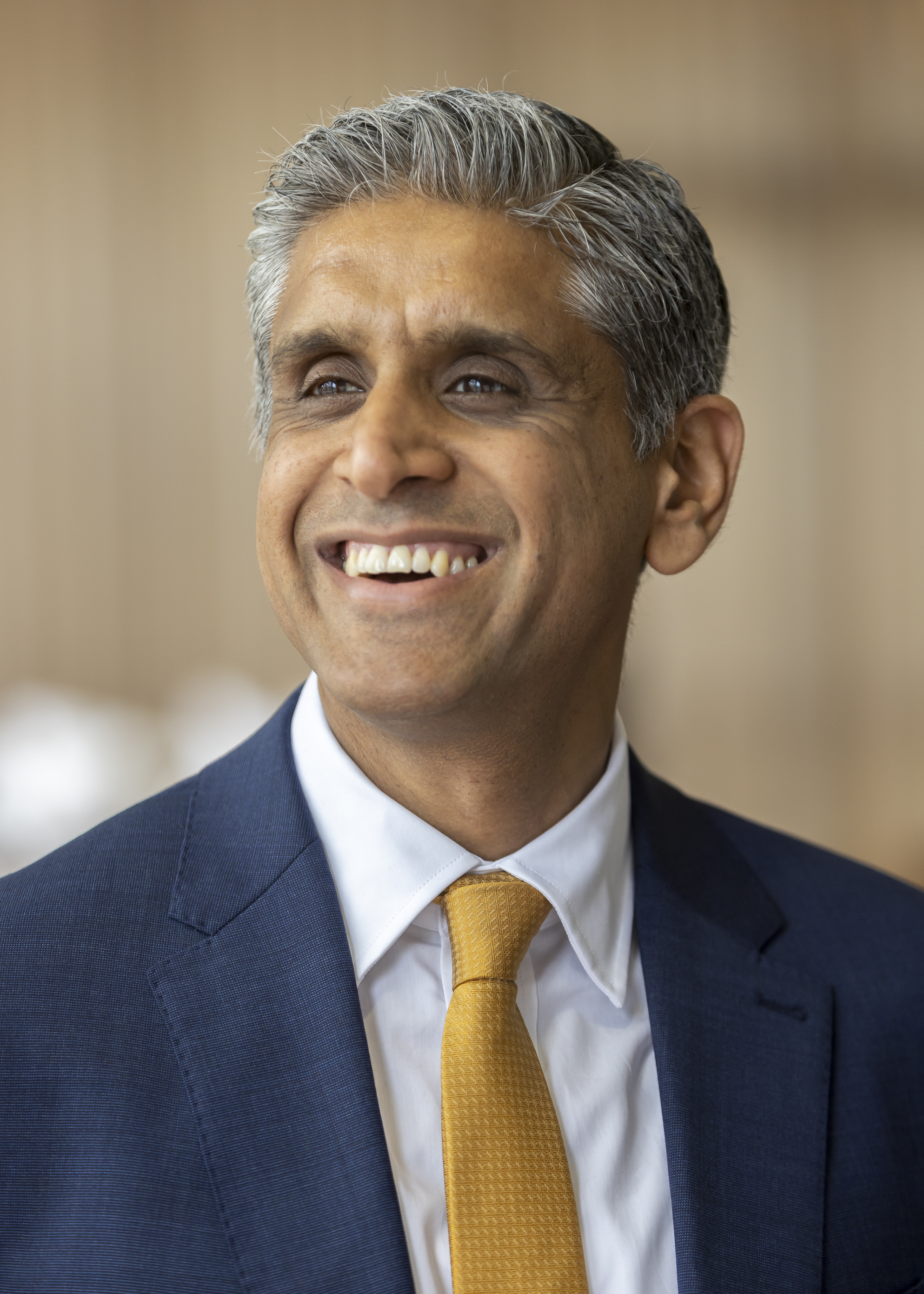
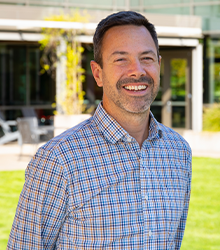
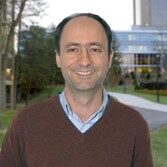
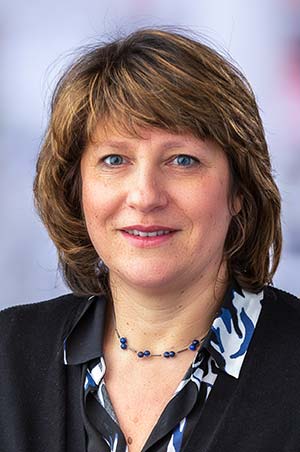
Zhiling Gu is a Research Fellow at Yale School of Public Health, having earned her Ph.D. in Statistics at Iowa State University. Her work integrates statistical theory with applications in public health and medicine. Her research spans Functional Data Analysis Network Analysis Spatiotemporal Modeling Statistical AI Foundations Nonparametric Learning applied to neuroimaging, electronic health records, and environmental health studies. Recent publications focus on Adaptive spatiotemporal models Neuroimaging data processing Pandemic forecasting frameworks Environmental exposure modeling with methodological rigor and practical implementation. Scientific achievements include Runner-up in SMI 2023 Student Paper Competition She has taught STAT 305: Engineering Statistics (ISU) STAT 226: Business Statistics Statistical Computing Statistical Learning and actively engages in academic presentations at conferences like SMI 2024 and CMStatistics 2022.
Dr. Abdullah Bal is a researcher at Georgia State University's College of Arts & Sciences, Department of Computer Science, with over 25 years of academic experience. He holds a Ph.D. in Electrical Engineering from Yildiz Technical University (2002) and has taught graduate and undergraduate courses in algorithms, machine learning, and optical pattern recognition. B.Sc., Electronics and Communication Engineering, Istanbul Technical University (1993) M.Sc., Electrical Engineering, Yildiz Technical University (1997) Ph.D., Electrical Engineering, Yildiz Technical University (2002) His research focuses on data science, machine learning, and hyperspectral imaging applications in fields ranging from forensic analysis to historical structure preservation. He has led projects funded by the U.S. Army Research Office and the Scientific and Technological Research Council of Turkey, including real-time target detection systems and digital imaging for historical structures. Recent publications demonstrate his expertise in kernel-based transforms, ensemble learning, and hyperspectral data analysis. His work spans food safety inspection, infrared target tracking, and biometric verification systems. Faculty Outstanding Research Publication Award (2006) Turkish Air Force Academy Science Competition Winner (2009) Best Paper Award at ICFCT (2016) Previously, he chaired YTU's Informatics Department (2009-2016) and participated in academic governance through the Electrical and Electronics College Executive Committee (2012-2015). You can contact him at abal@gsu.edu in room 739, 25 Park Place.
Eli Ben-Michael is an Assistant Professor jointly appointed in the Heinz College of Information Systems and Public Policy and the Department of Statistics & Data Science at Carnegie Mellon University. He is affiliated with the CMU-NIST AI Measurement Science & Engineering Cooperative Research Center (AIMSEC), contributing to cutting-edge research at the intersection of statistics, policy analysis, and artificial intelligence. His educational background includes a PhD in Statistics from U.C. Berkeley and undergraduate studies at Columbia University where he earned a dual degree in Computer Science and Statistics. Prior to his current position, he completed a postdoctoral fellowship at Harvard University's Institute for Quantitative Social Science and Department of Statistics. Ben-Michael's research focuses on developing innovative statistical and computational methods for causal inference and policy evaluation, with particular emphasis on integrating machine learning techniques to address complex problems in public policy and social science. His work bridges theoretical statistics with practical applications in healthcare, criminal justice, education, and social policy. Current research directions include safe policy learning, sensitivity analysis for clustered data, and methodological innovations for the synthetic control method. His publication record shows a strong trajectory in top-tier journals including Journal of the American Statistical Association, Journal of the Royal Statistical Society, and Proceedings of ICML. Recent work demonstrates increasing focus on policy-relevant applications including abortion legislation impacts, pre-trial risk assessment, and healthcare disparities, while maintaining methodological rigor in causal inference frameworks. Ben-Michael has developed open-source software tools including augsynth and multical R packages, which implement his methodological contributions for synthetic controls and multilevel calibration weighting. These packages have been adopted by researchers in multiple disciplines for causal inference applications.
Jason Eisner is a Professor in the Department of Computer Science at Johns Hopkins University's Whiting School of Engineering, with a secondary joint appointment in Cognitive Science. He is affiliated with the Center for Language and Speech Processing (CLSP), the Human Language Technology Center of Excellence, and leads JHU's cross-departmental machine learning group. His research focuses on developing probabilistic modeling, inference, and learning techniques for linguistic structure. Eisner has authored over 100 papers in computational linguistics, particularly in parsing, grammar induction, machine translation, computational phonology, computational morphology, and weighted finite-state methods. He is the lead designer of Dyna, a declarative programming language for AI research that allows concise programs backed by efficiency tricks. Eisner's work centers on novel methods in NLP and machine learning, with emphasis on probabilistic modeling and inference in complex, structured settings. His research program combines computer science with statistics and linguistics to create statistical models that capture linguistic structure and develop efficient algorithms for applying these models to data with minimal supervision or through large pre-trained models. As an ACL Fellow, Eisner has made significant contributions to the field. His recent work (2023-2025) shows a strong focus on large language models, semantic parsing, controlled text generation, model interpretability, and privacy-preserving techniques, continuing his long-standing interest in the intersection of probabilistic modeling and linguistic structure. ACL Fellow He teaches courses including Natural Language Processing (601.465/665), Machine Learning: Linguistic and Sequence Modeling (601.765), Declarative Methods (601.325/425/625), and Selected Topics in Natural Language Processing (601.865). His advising focuses on research students through the Argo research group, with emphasis on fundamental research questions in NLP rather than immediate applied engineering.
Professor Thomas Blumensath is a Professor of Signal and Image Processing at the University of Southampton and a Fellow at the Alan Turing Institute. He is the Academic Lead in Image Processing and Reconstruction at the University's μ-VIS X-ray Imaging Centre and Director of Research at the Institute of Sound and Vibration Research (ISVR). His research focuses on advanced algorithms for solving inverse problems in tomographic imaging, combining machine learning, optimization, and statistical methods. Key areas include X-ray tomography strategies, GPU-accelerated reconstruction, and multimodal imaging applications. Education: B.Sc. (Hons) Music Technology and Audio System Design, University of Derby (2002) PhD in Electronic Engineering (Bayesian Signal Processing), University of London (2006) Research Interests: Professor Blumensath's work spans theoretical and applied signal/image processing, with emphasis on tomographic imaging techniques. His current projects address efficient reconstruction methods, spectral X-ray CT, and applications in manufacturing and plant science. He collaborates with advanced imaging facilities like Diamond Light Source and ISIS neutron imaging beamline. Key Contributions: His research bridges computational methods (e.g., compressed sensing) with practical imaging challenges, including limited-angle tomography and stereo imaging strategies. He leads the National Research Facility for Lab X-ray CT and has developed the TIGRE reconstruction toolbox. Grants & Projects: Active funding includes EPSRC projects on tomographic sensitivity monitoring and CT-based manufacturing inspections. Completed projects cover constrained reconstruction, AM process verification, and industrial CT metrology. Awards: Alan Turing Institute Fellowship Teaching & Leadership: He teaches modules on machine learning, biomedical image processing, and robotics. Leads the BEng Control Engineering program at the Joint Education Institute with Harbin Engineering University. Labs/Teams: Active in the Signal Processing, Audio and Hearing research group (SPAH) and the Institute for Life Sciences. Oversees the μ-VIS X-ray Imaging Centre's research initiatives.
Dr. Manish Kumar is a Professor in the Department of Mechanical Engineering at the University of Cincinnati, leading the Cooperative Distributed Systems (CDS) Laboratory and the UAV MASTER Lab. He specializes in robotics, unmanned aerial systems (UAVs), and swarm systems, with a focus on decision-making, control in complex systems, and multi-sensor data fusion. His research has been supported by grants from the National Science Foundation, Department of Defense, and industry partners. Education: Ph.D. in Mechanical Engineering, Duke University (2004) M.S. in Mechanical Engineering, Duke University (2002) Research Interests: Dr. Kumar's work addresses challenges in autonomous systems, including UAV coordination, swarm robotics, and emergency response technologies. He integrates machine learning, control theory, and optimization to develop robust systems for applications such as wildfire management, telehealth, and industrial automation. Grants & Labs: Directed projects funded by federal agencies (NSF, DoD) and industry, totaling over $5M. Co-directs the Collaboratory for Medical Innovation and Implementation and the UAV MASTER Lab. Key Contributions: Pioneered algorithms for UAV path planning and swarm coordination. Developed PDE-based models for epidemic spread prediction and control.
Lee Yong Lim is a Professor of Pharmaceutics at The University of Western Australia (UWA), leading the Laboratory for Drug Delivery. She specializes in innovative drug delivery systems, particularly for pediatric populations and marine aquaculture. Her work focuses on overcoming medication challenges for children through taste-masked formulations and stable drug-loaded scaffolds for ear diseases. She has secured over $4.5 million in research grants from diverse funding bodies. Education: BSc (Pharmacy) Hons, National University of Singapore PhD, University of Manchester Research: Her team developed a patented chocolate-based formulation for bitter drugs and conducts pediatric trials. Collaborations include WA hospitals for safe compounded medicines and international projects in nanotechnology. Key research areas include pediatric medicinal products, veterinary drug delivery, and sustainable drug formulations aligned with UN SDGs. Grants & Funding: Major supporters include NHMRC, ARC, Telethon, and industry partnerships. Current active grants focus on pre-procedural chewables for children and perioperative analytics. Labs/Teams: Heads the Laboratory for Drug Delivery and collaborates with the Centre for Optimisation of Medicines and Institute for Paediatric Perioperative Excellence.
Dr. Baijian "Justin" Yang serves as the Associate Dean for Research at Purdue Polytechnic Institute and is a Professor in the Department of Computer and Information Technology at Purdue University. He earned his Ph.D. in Computer Science from Michigan State University, with Master's and Bachelor's degrees in Automation (EECS) from Tsinghua University. Dr. Yang has established himself as a leader in multiple interdisciplinary research domains. Dr. Yang's educational background includes: PhD in Computer Science, Michigan State University (2002) MS in Automation (EECS), Tsinghua University (1998) BS in Automation (EECS), Tsinghua University (1995) His research interests span multiple cutting-edge domains with practical applications: Cybersecurity : Developing novel approaches for threat intelligence, security education, and network defense Big Data : Creating innovative algorithms for dimension reduction, regression with categorical variables, and tensor decomposition Applied Machine Learning : Implementing AI solutions in healthcare, manufacturing, and forestry applications Digital Forestry : Using UAV imagery and remote sensing for forest management and tree species classification Dr. Yang's publication record demonstrates significant impact across multiple disciplines, with recent work focusing on spatial transcriptomics analysis (SiGra), delirium detection using limited-lead EEG, and visual localization technologies. His research bridges theoretical advances with practical applications in healthcare, manufacturing quality control, and environmental monitoring. The interdisciplinary nature of his work is evident in collaborations spanning computer science, healthcare, forestry, and manufacturing domains. His scientific achievements have been recognized with numerous awards: 2023 HRSA Building Bridges to Better Health Competition Winner (Phase 1) and 2nd place ($100,000 prize) in Phase 3 2023 Outstanding Faculty Award in Engagement, Department of Computer and Information Technology, Purdue University 2021 Leadership in Manufacturing Award, Manufacturing Times Digital (MxD) 2021 Good to Great Award, Purdue Polytechnic 2020 Outstanding Faculty Award in Discovery, Department of Computer and Information Technology 2019 University Faculty Scholars, Purdue University As an educator and mentor, Dr. Yang has advised numerous graduate students through their PhD and Master's research. His leadership extends to significant service roles including serving as Faculty Champion for the Holistic Safety and Security research impact area at Purdue Polytechnic from 2018 to 2021, board membership with ATMAE (2014-2016), and participation in the IEEE Cybersecurity Initiative Steering Committee (2015-2017). He holds valuable industry certifications including CISSP, MCSE, and Six Sigma Black Belt, demonstrating his commitment to bridging academic research with industry practice. Dr. Yang leads multiple research projects including "Digital Forestry" for developing tools to quantify forest function, "CHEESE" (Cyber Human Ecosystem of Engaged Security Education), and "CICI" (Supporting Controlled Unclassified Information with a Campus Awareness and Risk Management Framework). His work on "Applied Machine Learning" focuses on solving real-world problems, while his "Dimension Reduction and Memory Amnestic Big Data Regression" project innovates computational algorithms for large-scale data analysis.
James Fogarty is a Professor at the Paul G. Allen School of Computer Science & Engineering, University of Washington. He serves as a core member of the DUB Group (Design. Use. Build.), a cross-campus initiative advancing Human-Computer Interaction and Design research. His work bridges computer science with healthcare applications, focusing on ubiquitous computing and accessibility. Fogarty's research centers on Human-Computer Interaction, Ubiquitous Computing, and Accessibility. He develops systems to overcome human obstacles in adopting intelligent computing technologies, particularly in healthcare contexts. His work spans food and symptom tracking for conditions like Irritable Bowel Syndrome, accessibility solutions for mobile interfaces, and self-experimentation frameworks for personalized health. Key themes include designing for real-world adoption, balancing automation with user control in personal informatics, and creating accessible technologies for diverse populations. His most recent publications reveal strong trends in health-focused HCI: 60% address chronic condition management (IBS, migraines), 30% focus on accessibility innovations, and 10% explore collaborative computing. Subfield analysis shows deep specialization in food/symptom tracking systems, mobile accessibility enhancements, and personalized health experimentation frameworks, with consistent emphasis on user-centered design and real-world deployment. Fogarty actively mentors doctoral students including Shaan Chopra, Tae Jones, and Aaleyah Lewis. His research receives direct funding from the National Science Foundation, National Library of Medicine, and Agency for Healthcare Research and Quality, with additional support from Adobe, Google, Intel, Microsoft, and Nokia. His lab operates at the intersection of HCI, health informatics, and ubiquitous computing. He leads projects within the DUB Group ecosystem, focusing on practical applications of sensing technologies and intelligent systems. Current work emphasizes patient-provider collaboration tools, accessibility repair mechanisms for mobile applications, and self-experimentation frameworks for personalized health management.
Professor Peter F. Driessen is a faculty member in the Department of Electrical and Computer Engineering at the University of Victoria, with a cross-appointment in the School of Music. He holds a BSc and PhD from the University of Victoria and is a Professional Engineer (PEng). His research focuses on communication systems, signal processing, control, and interdisciplinary projects in computer music and wireless technologies. Key areas include audio/video signal processing, radio propagation, sound recording, and multimedia systems. He leads the University of Victoria Propagation Laboratory, which explores radio wave propagation and Amateur radio integration with engineering education. His work spans theoretical research and applied projects like ECOSat satellite systems, software-defined radio (SDR), and innovative musical instruments such as the Radio Drum. He supervises undergraduate and graduate projects in these domains through ELEC 499 courses. Notable contributions include the APEGBC Editorial Board Award for Best Paper (2002) and patents in wireless networking and signal processing. His teaching includes courses in signal analysis and electromagnetics, and he collaborates on interdisciplinary programs like the Music/Computer Science degree. Education: BSc in Electrical Engineering, University of Victoria PhD in Electrical Engineering, University of Victoria Research Interests: Audio and video signal processing for music and media Software-defined radio and Amateur radio technologies Satellite communication and ground station development Gesture-based interfaces and musical instrument design Error mitigation in streaming audio/video Optical and microwave-photonic systems Labs & Collaborations: Propagation Laboratory (radio wave research) UVic Experimental Radio Group (Amateur radio club) UVic Satellite Design Team (ECOSat projects) UVic Centre for Aerospace Research Grants & Awards: APEGBC Editorial Board Award (2002) Multiple US patents in wireless systems and signal processing
Vishal Ahuja is an Associate Professor and Corrigan Research Professor at Southern Methodist University's Cox School of Business, with adjunct faculty status at University of Texas Southwestern Medical Center. He focuses on decision analytic tools for healthcare improvement through operations management. PhD, University of Chicago Booth School of Business MBA, University of Chicago Booth School of Business His research interests span healthcare operations, service optimization, and AI applications in clinical decision-making. He collaborates with the Department of Veterans Affairs, Parkland Hospital, and pediatric institutions to address care quality and delivery efficiency. Recent publications emphasize predictive modeling for chronic disease management, adaptive clinical trial design, and regulatory healthcare policy. Awards include the Dlin/Fischer Clinical Research Award (2021), INFORMS Pierskalla Award (2012), and 2025 AI75 recognition for Dallas-Fort Worth AI leadership. D CEO Excellence in Healthcare Award - Outstanding Healthcare Innovator (2023) NSF Game Changer Academies for Advancing Research Innovation (2022) C. Jackson Grayson Faculty Innovation Award (2022-23) At SMU, he teaches graduate courses in operations, supply chain, and service management, integrating corporate sector experience from chemical and consumer goods industries. His work has been cited by the FDA in safety labeling changes workshops.
Dr. Ben Clarke is an Associate Professor and Department Head of Special Education and Clinical Sciences at the University of Oregon’s College of Education. His research focuses on mathematical development, assessment systems, and school-based interventions to support student achievement. He has led over 20 federally funded grants totaling ~$55 million, emphasizing early numeracy interventions and multi-tiered instructional models. Clarke’s work bridges theory and practice, with publications on mathematics instruction, assessment, and RTI frameworks. Education: PhD (2002), MA (2001) in School Psychology/Special Education from University of Oregon; BS (1997) in Psychology from Wabash College (Phi Beta Kappa). Research Interests: Mathematics intervention design and efficacy Early numeracy assessment Multi-tiered systems of support (MTSS) Technology in education Equity in mathematics education Publications highlight his focus on intervention fidelity, tiered models, and outcomes for students with learning difficulties. Awards include the AERA Special Education SIG Research Award and recognition for academic excellence. Grants and Advising: Principal Investigator on ~$55M in federal grants; advises graduate students in School Psychology and Special Education. His lab develops evidence-based tools like the KinderTEK iPad program and contributes to national practice guides (e.g., IES RTI for Mathematics). Labs/Teams: Leads research teams focused on early mathematics intervention and MTSS implementation, collaborating with schools and policymakers to scale effective practices.
Dr. Amir Hakami is a Professor in the Department of Civil & Environmental Engineering at Carleton University , where he leads the Carleton Atmospheric Modelling Group . His research focuses on advanced air quality modeling techniques to inform environmental policy. Degrees: B.Sc. (Polytechnic of Tehran), M.Sc., Ph.D. (Georgia Tech), Postdoc (Caltech) Contact: Office 3454 Mackenzie Building, Phone: 613-520-2600 ext. 8609, Email: amir.hakami@carleton.ca Research Interests: Air quality modeling at multiple spatial scales Adjoint sensitivity analysis for atmospheric response Inverse modeling and data assimilation techniques Uncertainty quantification in environmental systems Interdisciplinary applications in policy, public health, and economics Teaching: Courses include Environmental Engineering Systems Modeling , Contaminant Transport , and Air Pollution & Emissions Control at undergraduate and graduate levels. Research Group: The group includes Ph.D. candidates, postdoctoral fellows, and alumni working on topics ranging from atmospheric chemistry to sustainable energy systems. Members come from diverse backgrounds in engineering, science, and policy disciplines.
Thomas Bäck is a Professor at the Leiden Institute of Advanced Computer Science (LIACS) , Leiden University , Netherlands, and a member of the interdisciplinary programme Society, Artificial Intelligence and Life Sciences (SAILS) . His academic career spans roles at Leiden University (1996–present) and leadership positions at the Center for Applied Systems Analysis in Dortmund (1994–2000). Education : Diplom-Informatiker (Computer Science), Technische Universität Dortmund (1990) Dr. rer. nat. (Computer Science), Technische Universität Dortmund (1994) Research Interests : Dr. Bäck specializes in evolutionary computation , machine learning , and their applications in sustainable smart industry and healthcare . Recent work focuses on integrating large language models (LLMs) and quantum computing into optimization frameworks, with projects like CIMPLO (predictive maintenance), ECOLE (experience-based optimization), and SAPPAO (airline operations optimization). Scientific Contributions : His 526+ publications cover evolutionary algorithms, quantum optimization, and LLM-driven design, with recent trends including: Quantum computing (e.g., quantum approximate optimization, quantum advantage challenges) LLM integration (e.g., hyperparameter tuning, mutation control, code evolution graphs) Healthcare and industry (e.g., predictive maintenance, anomaly detection, melt quality prediction) Algorithm benchmarking (e.g., IOHprofiler, MA-BBOB, explainable benchmarking) Scientific Awards : IEEE Fellow (2022) Royal Netherlands Academy of Arts and Sciences (KNAW) member (2021) Academia Europaea member (2022) IEEE Computational Intelligence Society Evolutionary Computation Pioneer Award (2015) Fellow, International Society of Genetic and Evolutionary Computation (2003) Best Ph.D. thesis award, German Society of Computer Science (GI) (1995) Advising and Grants : He supervises Ph.D. candidates in evolutionary computation and machine learning and has secured 7 major grants from organizations like the Dutch Research Council , European Commission , and The Research Council of Norway . His editorial roles include Editor-in-Chief of the Evolutionary Computation Journal and associate editorships in leading AI journals.
Ruth Etzioni is an Affiliate Professor in the Biostatistics Program and Public Health Sciences Division at the Fred Hutchinson Cancer Center. She leads the Etzioni Lab, focusing on cancer screening, early detection, and overdiagnosis analysis. Her work integrates statistical modeling, epidemiology, and clinical research to address critical questions in prostate and breast cancer control. Dr. Etzioni holds the Rosalie & Harold Rea Brown Endowed Chair and has received a $7.4M NIH Outstanding Investigator Award. Education: PhD in Statistics (Carnegie Mellon University, 1990), MS in Statistics (Carnegie Mellon, 1987), BS in Mathematics (University of Cape Town, South Africa). Research interests emphasize biomarkers, clinical trials, and epidemiological methods. She leads the Biostatistics Core for the Pacific Northwest Prostate Cancer SPORE and participates in the Cancer Intervention and Surveillance Modeling Network (CISNET). Her lab develops models to evaluate screening policies, quantify overdiagnosis, and inform healthcare disparities reduction strategies. Key achievements include groundbreaking work on prostate cancer screening's harm-benefit tradeoffs and contributions to multi-cancer early detection (MCED) frameworks. Recent studies address racial disparities in prostate cancer outcomes, metastasis trends, and the clinical utility of novel diagnostics like PSMA PET imaging. Awards include the Brown Endowed Chair (2020), NCI OIA Award (2023), and recognition for advancing cancer data science. Her lab collaborates with institutions globally and mentors students in biostatistics and translational data science.