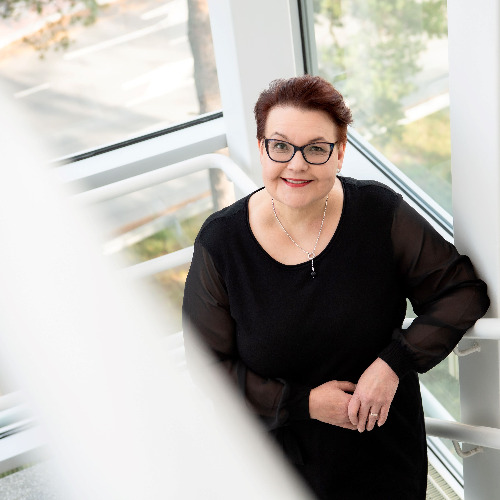
Ye Hong is a Project Researcher at Åbo Akademi University's Faculty of Natural Sciences and Technology, affiliated with the Turku Life Sciences Centre and the InFLAMES flagship program focused on immune system innovation ecosystems. Their research bridges computational biology and neurodegenerative disease studies. Key research interests include: Phosphoproteomic analysis of signaling pathways Proteostasis regulation in Parkinson's disease Zebrafish larvae as model organisms for anxiety studies Development of automated bioinformatics pipelines Identification of Parkinson's disease diagnostic biomarkers Functional analysis of LRRK2-G2019S mutations Recent work demonstrates expertise in combining mass spectrometry with computational workflows to analyze protein phosphorylation patterns and translational repression in neurodegenerative contexts. Award highlights: Nordic Life Sciences Days prize (2019)
Petri Jylhä is an Associate Professor of Finance and Vice Head of the Department at Aalto University School of Business. He holds an Academy of Finland Research Fellowship. His research focuses on asset pricing, market imperfections, and investment funds, with notable contributions to understanding margin requirements, hedge fund liquidity dynamics, and currency carry trades. His work has been published in top-tier journals such as the Journal of Finance and Journal of Financial Economics . His current research includes examining leverage constraints in portfolio choice and Basel regulatory gaps. He has received prestigious awards including the Amundi Pioneer Distinguished Paper Prize and the Graham and Dodd Scroll Award. Jylhä teaches Investment and Portfolio Management in Aalto’s MBA program and the Fundamentals of Investments course in the Finance Minor program. His articles explore themes like security market line dynamics, beta bubbles, and the impact of margin policies on asset markets. He collaborates internationally, evidenced by co-authored works with scholars like Matti Suominen and Albert Menkveld. His research emphasizes empirical methods and real-world policy implications, particularly in regulatory frameworks and market microstructure.
Nikolaj Tatti is a Visiting Professor at Aalto University's Department of Computer Science , affiliated with the Helsinki Institute for Information Technology (HIIT) and the Adj. Prof. Gionis Aris research group . His work focuses on algorithmic analysis of temporal networks and graph theory. Research Interests: Temporal network analysis Graph decomposition and density Segmentation algorithms Pattern discovery in time-series data Interactive data analysis frameworks Publication Trends (2018-2021): Research spans Temporal Networks (dynamic hierarchies, cascade reconstruction), Graph Theory (density, decomposition), and Data Mining (periodic patterns, event detection). Collaborative work with Aris Gionis and Polina Rozenshtein dominates his publications. Technical Collaborations : Works with multidisciplinary teams including researchers from ACM Transactions on Knowledge Discovery and IEEE conferences.
Markku Maula is a Professor of Venture Capital and Vice Head of the Department of Industrial Engineering and Management at Aalto University School of Science. He earned his PhD from Helsinki University of Technology in 2001 and has been a visiting scholar at INSEAD and Stanford University. His research focuses on venture capital/private equity, corporate venturing, mergers and acquisitions, and technology-based startups, integrating strategy, entrepreneurship, international business, innovation, and corporate finance. His work often employs quantitative empirical methods on large datasets, contributing to behavioral theory of the firm, attention-based view, and institutional theory. He has published in leading journals like Academy of Management Journal , Strategic Management Journal , and Journal of Business Venturing , receiving international awards for outstanding scholarship. Senior Editor, Entrepreneurship Theory & Practice Editorial Board Member, Strategic Management Journal , Journal of Business Venturing , and Venture Capital: An International Journal of Entrepreneurial Finance Markku has served as Founding Director of Aalto Ventures Program and advised firms and government agencies on venture capital and entrepreneurship. Awards include the Knight, First Class of the Order of the White Rose of Finland (2021), Citation of Excellence Award (2013), and Heizer Doctoral Dissertation Award (2002). Contact: markku.maula@aalto.fi
Professor Iiro Harjunkoski is affiliated with Aalto University, School of Chemical Engineering, Department of Chemical Engineering and Metallurgy. His research focuses on advanced optimization techniques in Process Systems Engineering. The top fields of interest for Professor Harjunkoski include: Process Systems Engineering Production Planning and Scheduling Waste Supply Chain Management Mixed Integer Linear and Non-Linear Programming Hybrid Algorithms with Data Analytics Process and Operational Optimization His recent work emphasizes: Energy systems optimization under uncertainty Bike-sharing logistics modeling Machine learning integration in chemical production scheduling Stochastic programming for energy storage operations Surrogate-based optimization techniques Hybrid algorithm development Scientific awards and recognitions: Computers and Chemical Engineering Best Paper Award (2014) Award or recognition for output from Department of Chemical Engineering and Metallurgy (Nov 2015)
Riikka Hirvonen is a Senior Researcher at the University of Eastern Finland (UEF) in the School of Applied Educational Science and Teacher Education, part of the Philosophical Faculty. She holds a PhD in Psychology and has been at UEF since 2019, previously working at the University of Jyväskylä. Her research focuses on primary and secondary students’ academic behaviors, emotions, and well-being, particularly exploring how temperament and learning environments influence achievement and adjustment. She is affiliated with the Motivation, learning, and well-being (MoLeWe UEF) research group and leads projects like 'Sustainable Food Education and Food Waste' and 'STAIRWAY study.' Her educational background includes a PhD in Psychology, with no listed formal degrees beyond this. Research interests span academic emotions, self-regulation, statistical modeling, and teacher education roles. Notable projects investigate motivation dynamics during educational transitions and pandemic impacts on student well-being. Riikka’s work emphasizes practical pedagogy in teacher training schools, balancing subject expertise with mentorship for student teachers. Recent publications (2021–2025) highlight themes like teacher educator roles, maternal homework involvement, and adolescent mental health interventions. She collaborates widely, co-authoring studies on classroom climate, perfectionism, and remote learning during the pandemic. Key contributions include developing programs like the 'Youth Compass' for adolescent mental health and analyzing bidirectional influences between family involvement and academic motivation. Her research bridges theory and practice, aiming to improve support systems for students with learning or adjustment challenges.
Juha Eskelinen is a Visiting Professor at the Department of Information and Service Management, Aalto University. His research focuses on employee well-being, financial services, and workplace productivity, emphasizing survey analysis and organizational behavior. He has contributed to studies on remote work strategies, synthetic control methods, and the impact of job resources on performance in financial sectors. Key collaborations include work with institutions like INFORMS and contributions to public employment services research. His media appearances highlight topics such as workplace well-being and hybrid work models. Recent publications include analyses of synthetic control optimization and employee adaptation to remote work environments. He has authored reports on multi-location work readiness and policy evaluations for unemployment prevention. Academic Role: Visiting Professor Institution: Aalto University Research Themes: Employee Productivity, Remote Work, Financial Services
Leo Lahti is a Professor in Data Science at the University of Turku, Finland. His research focuses on computational analysis and modeling of complex natural and social systems, with applications in microbiome science, ecological modeling, and computational humanities. He is actively involved in open science initiatives and leads a dynamic research team. University: University of Turku Role: Professor, Data Science Contact: leo.lahti@utu.fi Lahti holds a Doctor of Science (DSc) from Aalto University (2010), where he developed probabilistic machine learning methods for life science data. He conducted postdoctoral research at EBI/Hinxton (UK), Wageningen University (NL), and VIB/KU Leuven (BE), establishing a strong international research profile. His research interests span Data Science, Artificial Intelligence, Machine Learning, Applied Statistics, Probabilistic Models, Microbial Ecology, Computational Humanities, and Open Science . He applies computational and statistical methods to understand complex systems, particularly in microbiome dynamics, ecological resilience, and historical data analysis. His work integrates interdisciplinary approaches, combining data analytics with domain-specific knowledge in biology, medicine, and humanities. The recent publications (2021–2025) reflect a strong focus on gut microbiome analysis , including maternal-infant health, dietary impacts, disease risk (CKD), and methodological advances in differential abundance and phylogenetic diversity. Other themes include ecological modeling (resilience, early warning signals), infectious disease modeling (COVID-19), and open science education (Bioconductor). The keyword trends show deep engagement with microbiology, bioinformatics, and mathematical modeling, with subfields emphasizing reproducibility, host-microbe interactions, and computational methods. Lahti plays a significant role in open science and academic leadership: Vice Chair, Open Science Finland Member, International Science Council Committee on Data (2023–2025) Member, Bioconductor Community Advisory Board Founder, Open Science Working Group, Open Knowledge Finland He is also active in teaching computational and data science, statistical programming, AI, and open science. His research homepage is available at iki.fi/Leo.Lahti, and his full publication list is accessible via ORCID and bibtex.
Juulia Paavonen is a Docent (Associate Professor) at the Faculty of Medicine, University of Helsinki, and serves as a supervisor in the Doctoral Programme in Clinical Research. She is actively affiliated with HUS Children and Adolescents and holds a leadership role as Chief Physician at Helsinki University and Polytechnic Hospital District (HUS). Her academic and clinical work is centered on child and adolescent psychiatry, particularly in developmental neuropsychiatric epidemiology. Licentiate of Medicine, University of Helsinki Doctor of Medicine, University of Helsinki Docent in Developmental Neuropsychiatric Epidemiology, University of Helsinki Specialist in Child Psychiatry, University of Helsinki Bachelor of Political Science (Statistics), University of Helsinki Her research focuses on child psychiatry, sleep medicine, psychosocial development, and maternal mental health . She investigates how sleep patterns, screen time, parental bonding, and pandemic stressors affect children's emotional and behavioral outcomes. Her work bridges clinical practice and population-level epidemiology, emphasizing preventive strategies and digital mental health interventions. Her recent publications highlight trends in infant and child sleep, maternal-infant bonding, and the impact of digital media. She has contributed to defining normative sleep criteria in infants and evaluating self-care and online therapies for youth mental health. Her research is highly collaborative, involving multidisciplinary teams and national institutions like THL. Vuoden artikkeli Lääkärilehdessä (Article of the Year in Lääkärilehti), 2009 Vuoden artikkeli Lääkärilehdessä (Article of the Year in Lääkärilehti), 2012 Juulia Paavonen has supervised doctoral students and leads major research projects such as Lapsen uni ja terveys (Child Sleep and Health) and studies on prenatal attachment. She has secured long-term research funding and collaborates internationally, including an academic visit to the University of Birmingham. Her work integrates clinical insights with epidemiological rigor to improve child mental health outcomes. She is involved in public health communication, frequently contributing to media on child sleep and mental health. Her leadership in both clinical and academic domains underscores her role as a key figure in Finnish child psychiatry.
Annakaisa Haapasalo is a Professor and Research Group Leader at the A.I. Virtanen Institute for Molecular Sciences, University of Eastern Finland, under the Faculty of Health Sciences. Her research focuses on molecular mechanisms underlying frontotemporal dementia (FTD), synaptic dysfunction, neuroinflammation, and biomarker discovery. She leads the Molecular Neurodegeneration Research Group and coordinates the EU-funded SynaDeg project investigating early synaptic disturbances in neurodegenerative diseases. Her work emphasizes translating findings into clinical applications, including diagnostics and therapeutic targets. She chairs the Regional Steering Group of the Kuopio Brain & Mind network under Neurocenter Finland. Key projects include exploring genetic and sporadic FTD pathogenesis, fluid biomarkers, and the overlap between psychiatric symptoms and neurodegenerative diseases. Recent studies address criminal behavior in early-onset dementias, epilepsy prevalence in FTD, and protective genetic variants in Alzheimer’s disease. Haapasalo has secured prestigious funding from the Jane and Aatos Erkko Foundation, Academy of Finland, and EU Horizon programs. Her collaborative networks span clinical and molecular neuroscience, with a focus on interdisciplinary approaches to neurodegenerative disorders. Publications highlight advancements in synaptic physiology, microglial function, and genetic risk factors, contributing to understanding disease mechanisms and potential therapies. Her team’s work bridges basic science and clinical practice, aiming to improve patient outcomes through early diagnosis and targeted interventions.
Laura Antão is an Academy Research Fellow at the University of Helsinki's Faculty of Biological and Environmental Sciences, working within the Organismal and Evolutionary Biology Research Program. She leads a research project on biodiversity change investigation using global butterfly data, funded by the Academy of Finland (2024-2028). Education: Ph.D. in Biology and Ecology of Global Change (2013-2017) from University of St Andrews, UK and University of Aveiro, Portugal M.Sc. in Marine Ecology (2007-2008) from University of Lisbon, Portugal B.Sc. in Environmental Marine Biology (2003-2007) from University of Lisbon, Portugal As a global change ecologist, Antão specializes in biodiversity, macroecology, and global change research. She focuses on biodiversity synthesis and patterns, examining how information can be generalized across taxa, habitats, and scales. Her work analyzes biodiversity change over space and time using long-term data, linking these patterns to large-scale environmental drivers like climate and land-use. She employs advanced statistical methods to understand community dynamics and species responses to environmental change, with particular emphasis on boreal ecosystems and multi-taxa patterns. Analysis of her recent publications reveals a strong focus on biodiversity monitoring, community dynamics under climate change, and the development of large-scale ecological databases. Her work spans theoretical ecology, applied conservation, and policy-relevant research, with increasing emphasis on temporal dynamics and extreme events in recent years. Scientific Awards: Best Journal Article 2020 for Early State Researchers in the Faculty of Biological and Environmental Sciences (2021) Outstanding Journal Article 2022 in the Faculty of Biological and Environmental Sciences (2023, shared with Weigel, B.) Antão has secured competitive research funding, currently leading an Academy Research Fellow project (2024-2028) investigating biodiversity changes using global butterfly datasets. She has supervised multiple master's theses and served on dissertation monitoring committees. Her editorial work includes significant contributions as an editor for Global Ecology and Biogeography and reviewer for Ecology Letters. Her research is conducted through the Research Center for Ecological Change at the University of Helsinki, where she collaborates with an international network of researchers across multiple institutions. She has been instrumental in developing the BioTIME database, a major resource for biodiversity time-series analysis.
Janne Ravantti is a University Lecturer at the University of Helsinki, affiliated with the Molecular and Integrative Biosciences Research Program and the Doctoral Programme in Integrative Life Science. His research focuses on bioinformatics, structural bioinformatics, NGS analysis, computational methods for Cryo-EM, and BioPython. He has contributed to collaborations in structural biology, virology, and cancer research. Department: Molecular and Integrative Biosciences Research Program Supervision: Co-supervisor for PhD theses and member of thesis committees Collaborations: Center of Excellence in Virus Research (CoE_VIRRES), Okinawa Institute of Science and Technology (OIST) Ravantti's recent publications examine topics such as giant virus characterization, cancer risk factors, and RNA processing mechanisms. He has co-authored studies on colorectal cancer, viral structural analysis, and epidemiological modeling of disease incidence. His activities include participation in academic conferences, peer review for journals, and collaborative projects with international researchers. He has also served as a preliminary reviewer and committee member for doctoral dissertations.
Lauri Ahonen is a Postdoctoral Researcher at the Department of Education, Faculty of Educational Sciences, University of Helsinki. His research focuses on cognitive science with applications in outdoor recreation safety, particularly in avalanche risk assessment and decision-making in dangerous environments. He is affiliated with the High Performance Cognition research group and maintains an active research profile through the University of Helsinki research portal. Dr. Ahonen's research interests span cognitive science, neuroscience, and decision-making processes, with a strong emphasis on real-world applications in outdoor recreation safety. His work combines cognitive theory with field research methodologies to understand how individuals and groups make decisions in high-risk environments like avalanche terrain. He has developed expertise in physiological measurement techniques to study cognitive processes in natural settings, bridging the gap between laboratory-based cognitive science and real-world decision contexts. His publication record shows a clear trajectory from foundational cognitive neuroscience work toward applied research in outdoor safety. Recent publications (2024-2025) focus on avalanche risk assessment, decision-making in backcountry environments, and group dynamics in high-risk recreational settings. Earlier work (2016-2019) established his expertise in psychophysiology, cognitive measurement, and collaborative learning processes. This progression demonstrates his ability to apply cognitive science principles to practical safety concerns in outdoor recreation. Dr. Ahonen is actively involved in multiple research projects, including the Niemi: DAIA 2023-2025 VETURI project funded by Business Finland Oy and the AI Personality and Cognition (AiPerCog) project funded by the Academy of Finland (2023-2027). His research has been presented at international conferences including the International Snow Science Workshop.
Mihail Kopotev is a Senior Lecturer (Docent) in Russian Language and Literature at the Department of Languages, Faculty of Arts, University of Helsinki. He serves as a supervisor for doctoral programs and has taught courses on Russian grammar, corpus linguistics, and historical linguistics. His role spans academic research, teaching, and international collaboration. University: University of Helsinki School: Faculty of Arts Department: Department of Languages Academic Rank: Senior Lecturer Research Interests: Kopotev specializes in corpus linguistics , employing quantitative methods to analyze Russian grammar and historical language evolution. His work bridges cognitive linguistics with computational approaches, focusing on heritage language preservation and plagiarism detection in Russian. He has contributed to teaching methodology innovations and interdisciplinary studies. Collaboration & Trends: His publications and projects emphasize language technology applications, collocation extraction , and plagiarism detection algorithms . Collaborations span institutions like Harvard University and Saint-Petersburg State University, reflecting a blend of computational and theoretical linguistics. Scientific Awards: The best project for Russian language centers abroad (2016) ASLA-Fulbright Research Grant for Senior Scholar (2015) Teacher' Academy award (2025) Advising & Grants: He has co-supervised PhD students at the Department of Modern Languages and participated in funded projects like CoCoCo (Collocations, Colligations, and Corpora) and BAULT (Building and Use of Language Technology) . His work also includes editorial roles in journals such as Slovo and peer-review contributions to conferences like Bilingual Education: Theory and Practice .
Sakari Penttilä serves as a Postdoctoral Researcher within the Department of Mechanical Engineering at the School of Energy Systems, LUT University (Lappeenranta-Lahti University of Technology) in Lappeenranta, Finland. His professional role centers on cutting-edge research in advanced manufacturing, with a specific focus on welding automation, robotics, and the integration of digital technologies to improve manufacturing processes and product quality. Penttilä's research spans several key areas in modern manufacturing engineering. Primary interests include welding technology and its automation, particularly through multi-robot systems and digital twin implementations. He actively explores the application of artificial intelligence for real-time process control and quality assurance in welding. Additionally, his work addresses Industry 4.0 readiness in regional manufacturing sectors, additive manufacturing quality assessment, and the use of extended reality for manufacturing complex components. His interdisciplinary approach combines mechanical engineering principles with information technology to solve persistent challenges in manufacturing reliability and efficiency. A review of Penttilä's recent publications indicates a consistent trajectory toward intelligent manufacturing systems. His work increasingly integrates artificial intelligence, digital twins, and extended reality to tackle welding distortion, quality control, and process optimization. Notably, he has contributed to advancing multi-robot welding systems with pre-setting and feedback mechanisms, and has investigated fatigue strength in additively manufactured parts. His research also extends to regional Industry 4.0 adoption, particularly in the Baltic Sea Region, highlighting both technological and organizational aspects of digital transformation in manufacturing. Scientific Awards: No scientific awards, fellowships, or medals were mentioned in the provided information. Advising and Grants: The available information does not specify any students advised by Dr. Penttilä or any research grants he has secured. His role as a postdoctoral researcher suggests he may be involved in collaborative projects, but specific details are not provided.