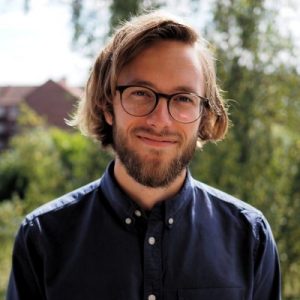
Jonas L. Juul is an Assistant Professor in the Computer Science Department at the IT University of Copenhagen . With a background in network science and complex systems, he employs statistical methods, mathematical modeling, and computer simulations to study social networks, spreading processes, and human behavior. Focus areas include: information diffusion in social networks Disease spread mitigation in human populations Interdisciplinary collaboration with medical doctors, economists, and computer scientists Recent research highlights include improving statistical models for pandemic forecasting through the InForM project funded by the Novo Nordisk Foundation , and groundbreaking work on contact tracing optimization and information cascade dynamics. Notable recognitions: 2025 H.C. Ørsted Research Talent Prize 2024 Novo Nordisk Foundation Data Science Emerging Investigator Grant 2025 Young Academy membership He has contributed to mathematical modeling efforts during Denmark's COVID-19 reopening in 2020 and maintains active collaborations with institutions including Cornell University , Technical University of Denmark , and Niels Bohr Institute .
Jonas Vinther is a Research Fellow at the Department of Computer Science , University of Copenhagen, specializing in Machine Learning and its intersections with quantum computing, medical data analysis, and sustainability. He is also an external PhD student in the Quantum Information Science & Technology program at the Niels Bohr Institute. Email: jonas.vinther@nbi.ku.dk , jonas.vinther@di.ku.dk Location: Universitetsparken 1, 2100 København Ø His research spans quantum machine learning , AI ethics , medical imaging , and environmentally sustainable AI , with recent publications on topics ranging from quantum neural networks to fairness in recommender systems . He contributes to the SCIENCE AI Centre and collaborates on initiatives like TreeSense for global tree resource monitoring.
Francois Lauze is an Associate Professor at the Department of Computer Science , University of Copenhagen, affiliated with the Image Analysis, Computational Modelling and Geometry research group. His work bridges mathematical rigor and practical applications in image processing and shape analysis. Research Focus: Mathematical Image Analysis (variational/PDE methods) Differential and Riemannian geometry for shape statistics Applications: image inpainting, motion estimation, segmentation, medical imaging Contact: Email: francois@di.ku.dk Phone: +4535335671, +4521553933 Location: Universitetsparken 1, 2100 Copenhagen Ø Recent publications highlight advancements in SE(3) group CNNs for diffusion imaging, locally orderless networks for efficient processing, and refractive multi-view stereo techniques. His work integrates geometric modeling with computational implementations, emphasizing medical and video applications.
Dr. Daniel Malz is an Assistant Professor at the Department of Mathematical Sciences, University of Copenhagen. His research focuses on quantum many-body systems, quantum optics, and quantum computing, with affiliations to research groups QA, QMATH, and QfL. His work bridges theoretical physics and mathematical modeling, addressing topics like superradiance, entanglement dynamics, and quantum state preparation. Key research interests include quantum information theory, non-Markovian dynamics, and the development of efficient quantum simulation techniques. His recent publications explore advanced topics such as photonic cluster states, tensor network simulations, and cross-platform quantum network verification. Much of his work addresses foundational questions in quantum mechanics while maintaining practical relevance for quantum technologies. His contributions span both theoretical derivations and numerical methods, with a focus on bridging classical and quantum many-body dynamics.
Abdulkadir Celikkanat is an Assistant Professor in the Department of Computer Science at Aalborg University, Denmark. He is affiliated with The Technical Faculty of IT and Design and the Data, Knowledge and Web Engineering research group. His research focuses on graph representation learning, network analysis, bioinformatics, and machine learning applications in dynamic systems. Key projects include the Villum Foundation-funded 'DarkScience: Illuminating microbial dark matter through data science,' which explores metagenomic binning and microbial ecology using advanced data science techniques. He has been recognized with the Best Paper Award (2023) for contributions to temporal graph analysis and modeling. His work spans continuous-time dynamic node representations, scalable genome profiling, and polarization detection in social networks. Celikkanat collaborates widely, contributing to interdisciplinary research at the intersection of computer science, biology, and environmental science. Recent publications highlight innovations in graph embeddings, citation network modeling, and hybrid membership latent distance models. His research addresses challenges in low-dimensional graph representations, efficient kernel methods, and integrating biological networks for protein analysis.
Charlotte Bay Hasager serves as Professor in the Department of Wind and Energy Systems at the Technical University of Denmark (DTU), specializing in offshore wind energy meteorology with expertise in remote sensing, boundary-layer processes, and environmental load impacts on wind turbines. Her research directly supports UN Sustainable Development Goals through renewable energy innovation and climate action initiatives. Her primary research domains include: Offshore wind resource assessment using satellite and radar technologies Boundary-layer meteorology and surface flux dynamics Leading edge erosion mechanisms from rain-wind interactions AI-driven operational strategies for wind farm durability Synthetic Aperture Radar (SAR) applications for wind field mapping Recent publications (2024-2025) demonstrate converging trends in erosion risk modeling, reinforcement learning for turbine operation, and advanced remote sensing techniques. These works span renewable energy engineering, meteorological science, and artificial intelligence applications, with strong emphasis on practical solutions for offshore wind farm challenges under extreme weather conditions. Professor Hasager actively secures major research funding through projects including: AIRE Horizon Europe project (2023-2026): Atmospheric flow integration for wind farm design Thunderbolt project (2023-2025): Wind power optimization initiatives ESA WAII project (2023-2025): Explainable AI for SAR wind assessment CCA LEE project (2022): Leading Edge Erosion cross-cutting research INOWER project (2022-2023): International offshore wind energy networks She maintains significant scientific leadership through conference organization (6th International Symposium on Leading Edge Erosion, 2025), workshop participation (Sandia Blade Workshop, 2024), and media contributions on wind energy topics including North Sea wind farm impacts and satellite Earth observation.
Bekzod Khakimov is an Associate Professor in the Department of Food Science at the University of Copenhagen, specializing in Food Analytics and Biotechnology. He has held this position since 2017, following his postdoctoral work (2013-2017) and PhD fellowship (2010-2013) at the same institution. His research group focuses on advanced analytical techniques for food quality assessment and nutritional value determination. His educational background includes: PhD in Plant Metabolomics, Department of Food Science, University of Copenhagen (2013) MSc in Chemical Research, Queen Mary, University of London, UK (2009) BSc in Chemistry, Faculty of Chemistry, National University of Uzbekistan (2006) Dr. Khakimov's research centers on food molecular composition (foodomics) and its health impacts through untargeted molecular screening of bio-fluids (metabolomics). His team works on optimizing standard operating procedures, developing efficient algorithms for processing raw instrumental data, and extracting information from complex omics data using multivariate data analysis (chemometrics). His analytical expertise spans high resolution liquid state NMR spectroscopy, GC-Tof-MS and LC-QTof-MS techniques, with applications ranging from plant foods to dairy products and human health studies. His publication record demonstrates consistent advancement in foodomics methodology and applications, with recent work focusing on metabolomics approaches to understand food quality, nutritional value, and health impacts across diverse food matrices including grapes, potatoes, dairy products, and botanical resources. His research increasingly incorporates advanced statistical modeling and deep learning approaches to overcome analytical challenges like the 'cage of covariance' in metabolomics data. His notable scientific achievements include: Nils Foss Talent Prize (2016) - International Award for ground-breaking science in advanced technologies for improved food quality and safety Best Young Investigator Award in Plant Metabolomics (2015) - 10th International Conference of the Metabolomics Society Dr. Khakimov currently serves as main supervisor for three postdocs, one PhD student, and two MSc students. He has successfully secured multiple competitive research grants as PI or Co-PI from sources including the Independent Research Fund Denmark, UCPH Funding, Danish Dairy Research Foundation, and the European Union. His laboratory maintains state-of-the-art analytical capabilities with responsibility for multiple GC-MS systems, LC-QTof-MS, and co-responsibility for NMR spectrometers. His research infrastructure includes four high-throughput GC-MS systems (Agilent GC-singleQ-MS, LECO Pegasus HT GC-TOF-MS and Bruker EVOQ QQQ systems), one LC-QTof-MS (Bruker Impact II), one LC-UV/Vis-FC system (Thermo Ultimate 3000), and co-responsibility for three NMR spectrometers (600, 500, and 400 MHz) from Bruker.
Poul G. Hjorth is an Associate Professor in the Department of Applied Mathematics and Computer Science (DTU Compute) at the Technical University of Denmark (DTU). He specializes in dynamical systems, mathematical modeling, and industrial applied mathematics, with strong interdisciplinary ties to neuroscience and industrial problem-solving. He has held visiting positions at the University of Southern Denmark and maintains affiliations with the University of Copenhagen as an External Lecturer. Ph.D. in Mathematical Physics, University of California, San Diego (1988) cand.scient in Mathematics, University of Copenhagen (1982) His research focuses on mathematical physics, classical mechanics, dynamical systems, and geometry , particularly in real-world industrial applications. He has been instrumental in organizing the European Study Groups with Industry (ESGI) in Denmark and is Executive Director of the European Consortium for Mathematics in Industry (ECMI). His recent work includes modeling the glymphatic system and cerebrospinal fluid dynamics in the brain, contributing to neuroscience and medical research. The most recent publications reflect a shift toward interdisciplinary applications, especially in neuroscience, fluid dynamics, and environmental modeling , while maintaining a strong foundation in pure and applied mathematics. Themes include brain efflux, phytoplankton dynamics, and philosophical explorations of probability and cosmology. DTU Teaching Award (2010) Hjorth has supervised students and led multiple long-term research projects since the 1990s. He serves as Editor for the Danish Mathematical Society Newsletter Matilde and the Fields Institute journal Mathematics in Industry Case Studies . His collaborative network spans institutions in Denmark, Israel, the UK, and the USA, reflecting his international engagement in both research and academic service.
Jørgen Beck Hansen is an Associate Professor at the Niels Bohr Institute , University of Copenhagen, specializing in Experimental Subatomic Physics . His career spans roles at CERN and NBI, focusing on particle physics detectors, high-energy collisions, and computational methods. Education: Ph.D. in Particle Physics (1996) and M.Sc. in Physics (1993) from the University of Copenhagen. Research interests include two-boson physics at the ATLAS detector, precision measurements within the Standard Model, effective Lagrangian densities, and searches for new physics beyond the Standard Model (e.g., Higgsless theories, extra dimensions). He also works on GRID computing and distributed data analysis. Recent trends in his research involve Higgs boson studies, vectorlike top quarks, photonuclear collisions, and detector trigger optimization. Collaborative efforts with the ATLAS Collaboration and Danish NORDUGRID team highlight his interdisciplinary approach. Scientific awards : Skou Stipend (Assistant Professor) from the Danish Natural Science Council Teaching and supervision include mentoring 5 summer students, 2 Ph.D., 4 Master's, and 10 Bachelor's students. He has contributed to popular science through Danish Cosmic Rays at Schools and public lectures. Labs and teams : Actively involved in the ATLAS Collaboration and the Danish NORDUGRID team for distributed computing infrastructure.
Petra Hermankova serves as an Assistant Professor in Classical Archaeology at Aarhus University's School of Culture and Society, where she also contributes to the Social Resilience Lab. Her academic appointment is active with ongoing projects through 2025 and recent publications in 2025 confirm her current faculty status. Her research focuses on digital epigraphy and the application of computational methods to ancient inscriptions. She employs text mining, machine learning, and social network analysis to study inscription functions across Graeco-Roman societies, economic history patterns, and labor specialization. Her work emphasizes FAIR and Open Science principles in archaeological data management, particularly through leadership in the Epigraphy.info initiative which develops international standards for digital epigraphy. Hermankova's publication trends reveal increasing engagement with computational approaches to ancient social networks and epigraphic big data , with recent work integrating SPARQL querying, RDF modeling, and network visualization techniques. Her research bridges traditional archaeological methods with cutting-edge digital humanities tools, focusing on Mediterranean communities from Thrace to the Roman Empire. She actively participates in major collaborative projects including The Past Social Networks Project (Carlsberg Foundation, 2022-2025), PPAP: Perachora Peninsula Archaeological Project (2019-2024), and SDAM: Small data - Big Challenges (2019-2023). Hermankova regularly organizes international workshops through Epigraphy.info and teaches practical courses in digital epigraphy methodology.
Efren Fernandez Grande is an Associate Professor at the Technical University of Denmark , specializing in Acoustic Technology within the Department of Electrical and Photonics Engineering. His research focuses on advanced acoustic modeling and signal processing techniques. Key Research Areas: Sound Field Engineering, Room Acoustics, Acoustic Holography, Beamforming, Neural Networks for Acoustic Modeling Recent publications highlight his work on sound field reconstruction, acoustic rainbows, and physics-informed neural networks, emphasizing spatial and frequency limitations in acoustic modeling. He supervises multiple PhD students in projects related to noise control and acoustic space reproduction. His contact details include efgr@dtu.dk and links to his ORCID and research website .
Joel Daniel Andersson is a Research Fellow at the Department of Computer Science , University of Copenhagen, affiliated with the Faculty of Science . He is a member of the Providentia group under the supervision of Rasmus Pagh , focusing on differentially private algorithms in the continual observation setting. His work bridges theoretical challenges in privacy-preserving data analysis with practical applications in machine learning and statistics. PhD in progress (third-year) at the University of Copenhagen Former Master's student in Engineering Physics (Lund University, 2020) Previous industry experience: Software Engineer at Ericsson (5G protocols) Research Interests Joel's research explores differential privacy in streaming algorithms , particularly for continual observation —a framework where private statistics must be released incrementally over time. He investigates optimal solutions for problems like binary continual counting, comparing noise mechanisms (Laplace vs. Gaussian), and designing efficient algorithms for dynamic data streams. Earlier work includes computational modeling of beam dynamics at CERN for high-energy physics applications. Recent Publications His publications span theoretical computer science and computational physics , appearing in venues like NeurIPS , ICML , FORC , and physics journals. Key themes include: Differential privacy in streaming and machine learning Algorithmic design for continual data release Computational modeling for particle accelerators Privacy expiration and noise mechanism trade-offs Affiliations Joel collaborates with: BARC (Basic Algorithms Research Copenhagen) group Providentia group Adam Smith's lab at Boston University (visiting researcher, Jan–Apr 2025)
Jon Sporring is a Professor at the Department of Computer Science, University of Copenhagen, specializing in theoretical and applied image processing, stochastic geometry, and biomedical imaging. He leads research in mathematical and medical image analysis, computer graphics, and pattern recognition. Education: Ph.D. in Computer Science (1998), Master in Computer Science (1995), both from University of Copenhagen Affiliations: Pioneer AI section, Applied Geometry Lab, and Faculty of Science External Roles: Visiting professor at McGill University (2012-13), co-founder of DigiCorpus Aps (2012-16) His research integrates scale-space theory, statistical shape analysis, and advanced imaging techniques for applications in medical diagnostics, materials science, and neuroscience. Recent work focuses on 3D reconstruction, persistent homology for bias correction, and AI-driven biomedical analysis. Jon teaches computer science at all academic levels, currently offering courses in bioimaging, signal processing, and deep learning. He emphasizes collaborative projects with external partners and has held administrative roles including Vice-Chair for Research at DIKU. His 15 most recent publications reflect expertise in medical imaging, 3D modeling, and AI applications, with subfields spanning neurodegenerative disease analysis, mitochondrial ultrastructure, and multi-scale image processing. Articles demonstrate interdisciplinary impact across medicine, biology, and materials science.
Panagiotis Tampakis is an Associate Professor at the Department of Mathematics and Computer Science, University of Southern Denmark. His research focuses on Big Data Analytics, Mobility Data Analysis, and Predictive Modeling with applications in fields such as maritime surveillance, sports analytics, and healthcare informatics. He is actively involved in developing scalable algorithms for trajectory clustering, spatiotemporal data mining, and distributed systems. His work emphasizes practical solutions through platforms like i4sea for maritime activity monitoring and Pythia for distributed trajectory prediction. He has collaborated internationally on mobility data projects and earned the SSTD 2021 Best Paper Award for innovative spatial-keyword indexing techniques. Tampakis also supervises student projects integrating machine learning with real-world problems in finance, sports, and journalism. Key research themes include predictive analytics for traffic patterns, outlier detection in traffic flows, and analyzing passing sequences in football to predict goal-scoring opportunities. His publications span trajectory clustering, spatial-keyword query optimization, and explainable AI in journalism. Awards: SSTD 2021 Best Paper Award Key Projects: i4sea maritime platform, Pythia trajectory prediction framework, RoadRunner big data processing framework Collaborations: Active in global mobility data communities, with contributions to BMDA initiatives
Søren Hvidkjær is a Professor of Finance and currently serves as the Dean of Research at Copenhagen Business School (CBS). His academic career includes roles as an Associate Professor at INSEAD and the R.H. Smith School of Business at the University of Maryland before joining CBS in 2008. He is actively involved in research, policy analysis, and academic leadership, focusing on empirical asset pricing, market microstructure, and behavioral finance. His work has been published in leading journals such as the Journal of Finance and the Review of Financial Studies, earning accolades like the Journal of Finance Smith Breeden Distinguished Paper Prize. As Dean of Research, he advocates for reforms in PhD programs and addresses systemic challenges in academic funding and governance. His research explores liquidity dynamics, informed trading, and ESG investing, with notable contributions to understanding market efficiency and investor behavior. Beyond academia, he serves on boards for financial institutions and advises on investment strategies. His interdisciplinary approach bridges finance theory with practical policy solutions, addressing societal challenges through collaborative research initiatives. Research Interests: Empirical asset pricing, market microstructure, behavioral finance, liquidity management, and ESG investing. Awards: Journal of Finance Smith Breeden Distinguished Paper Prize (2002). Professional Activities: Board member at Danske Invest Management A/S, expert witness, and contributor to policy reports on financial regulation and educational equity. His articles span topics like co-illiquidity management, policy impacts of PhD program structures, and the role of universities in societal problem-solving. Hvidkjær’s work emphasizes quantitative analysis and real-world applications, making him a prominent figure in financial academia and policy circles.