Oliver G. Ernst is a Professor of Numerical Analysis at Technische Universität Chemnitz . His research focuses on Numerical Analysis , Uncertainty Quantification , and Inverse Problems , with applications in Thermo-Hydro-Mechanical (THM) processes , Electromagnetics , and Stochastic Partial Differential Equations . He is associated with the Numerical Analysis group at TU Chemnitz. Key Research Areas : Efficient numerical methods for PDEs Krylov subspace techniques Stochastic finite element methods Multi-physics modeling Geoscientific applications Recent Publications (2025-2010): THM simulations under uncertainty Neural network PDE solvers Bayesian inversion frameworks Rational Krylov algorithms Deflated restarting strategies Collaborations : TU Bergakademie Freiberg University of Manchester Technical University of Munich University of Maryland University of Geneva Software Development : Contributor to OpenGeoSys platform Developer of FEMALY MATLAB library Academic Recognition : h-index 32, i10-index 66, with over 4423 citations since 2020.
Dr Matthias Kramer is a Senior Lecturer at the UNSW Canberra , School of Engineering and Information Technology. He has previously worked at the University of Queensland and the University of Stuttgart. His research focuses on open-channel hydrodynamics with an emphasis on multiphase flows, hydraulic structures, and measurement instrumentation. Education: PhD from University of Stuttgart (2015) on 'Air demand of impulse turbines in counter pressure operation' His research interests include open-channel flow dynamics, multiphase flow analysis, and the development of innovative flow measurement technologies . He has extensively published on topics such as air-water flow properties , turbulent free-surface flows , and plastic pollution transport in fluvial systems. His recent publications demonstrate a focus on environmental engineering , with strong emphasis on fluid dynamics , instrumentation , and hydrological systems . These works include studies on air-water flow measurement , plastic transport modeling , and hydraulic structure design . Dr Kramer has received multiple scientific awards including: UNSW Rector Funded Visiting Fellowship Research Infrastructure Scheme (Combined open-channel/wave flume) Substantial merit-based startup grant (UNSW Canberra) Establishment award (UNSW Canberra) DFG research fellowship on 'Air-water mass transfer at hydraulic structures' He currently supervises PhD candidate Hanwen Cui (joint with Dr Stefan Felder) and Masters student Reilly Cox (UNSW Sydney). Dr Kramer is involved in hydro-environmental research infrastructure at UNSW and serves on the Editorial Panel of ICE Water Management .
Xiaoyue Ni is an Assistant Professor at Duke University’s Thomas Lord Department of Mechanical Engineering and Materials Science, with additional appointments in Biostatistics & Bioinformatics and Electrical and Computer Engineering. They lead the Ni Lab, developing human-oriented materials intelligence through soft electronics and digital metamaterials. PhD, California Institute of Technology (2018) Research focuses on flexible electronics , mechanical metamaterials , and machine learning to create dynamic materials that sense and adapt to human physiology. Key innovations include soft wireless sensors , liquid metal actuation , and non-invasive biomarker monitoring . Recent publications (2022–2019) highlight expertise in wearable health technology , mechanical-acoustic interfaces , and programmable materials . Collaborative work spans reconstructive surgery , athlete monitoring , and thermal expansion control .
Dr. Thi Phuong Khanh Nguyen is a researcher at the Ecole Nationale d'Ingénieurs de Tarbes (ENIT) , affiliated with the College of Engineering and Department of Systems . Her work focuses on Prognostics and Health Management (PHM) , predictive maintenance, and industrial data analytics, combining machine learning with physics-informed modeling to address uncertainty in system degradation. Teaching: Mathematics for engineers, Probability, Statistics, Operating safety Research: Health indicators, diagnostics, prognostics, multimodal data fusion Methods: Data mining, physical and data-driven models, decision support systems Tools: FAST, Petri nets, UML, HMM, RNN, CNN, Transformer architectures Her recent publications highlight advancements in explainable AI , physics-informed neural networks , and multimodal learning for fault detection, battery RUL prediction, and robotic inverse dynamics. She also explores blockchain and federated learning for decentralized prognostics.
Jasmine Foo serves as Associate Head and Distinguished McKnight University Professor at the University of Minnesota-Twin Cities' School of Mathematics, holding the Northrop Professorship and co-directing the Therapy Modeling and Design Center. Her leadership spans academic administration and interdisciplinary research initiatives in mathematical oncology. Foo's research pioneers stochastic evolutionary modeling of cancer dynamics, integrating mathematical theory with clinical data to understand tumor initiation, progression, and treatment resistance. Her group focuses on five interconnected themes: plasticity and epigenetics in tumor evolution; drug resistance optimization; data-driven precision oncology; spatial carcinogenesis; and tumor-microenvironment interactions using organoid models. This work bridges probability theory, systems biology, and clinical oncology to develop novel therapeutic strategies. Analysis of her 15 most recent publications reveals a consistent emphasis on quantitative approaches to cancer evolution, with growing integration of machine learning and high-resolution experimental data. Key trends include modeling phenotypic plasticity in resistance development, optimizing dosing schedules using evolutionary principles, and translating spatial tumor dynamics into clinical applications. Scientific recognition includes: Honorable Mention, Feldman Prize for theoretical contributions to tumor evolution modeling Foo actively mentors graduate students and postdoctoral researchers through the School of Mathematics, with research supported by multiple grants (though specific funding sources aren't detailed). Her group maintains strong collaborations with experimental oncology labs and clinical researchers, facilitating data-driven model validation. She co-leads the Therapy Modeling and Design Center and organizes the UMN MathBio Group Meetings, fostering cross-disciplinary collaboration between mathematicians, biologists, and clinicians in cancer research.
Robert Brunner serves as Professor of Astronomy at the University of Illinois at Urbana-Champaign, where he bridges astrophysical research with computational innovation. His work focuses on extracting knowledge from massive astronomical datasets through advanced statistical and machine learning techniques, while also extending methodologies to finance and agricultural applications. Research interests center on developing machine learning algorithms (random forests, deep neural networks, Bayesian estimation) for astronomical data analysis, cosmological parameter constraints via n-point clustering measurements, and hardware acceleration using GPUs/cloud systems. His interdisciplinary approach spans source classification, transient phenomena detection in surveys like SDSS and DES, and applications in financial time-series analysis and agricultural remote sensing. Recent publications (2019-2025) reveal strong cross-domain expertise: astronomical catalogs for Rubin Observatory and Spitzer surveys coexist with financial market analysis using community detection methods and agricultural computer vision systems. Key methodological threads include spatio-temporal forecasting, multimodal learning for earnings calls, and anomaly detection via extended isolation forests, demonstrating consistent innovation in handling petascale datasets across scientific boundaries.
Leonardo Ricci is an Associate Professor at the Department of Physics, University of Trento , with a 28-year teaching career spanning 56 courses (31 in English) and extensive roles in the Interdepartmental Center for Mind/Brain Sciences - CIMEC (30% affiliation). His research bridges nonlinear dynamics , information theory , and neuroscience , focusing on chaos detection in time series and entropy analysis. Academic Career : From 1994 post-doc at Max-Planck-Institut to 2022 promotion to Associate Professor Teaching : Courses in Experimental Physics, Advanced Electronics, and Statistical Methods across Physics and Computer Science programs Ricci leads the NSE Lab (Nonlinear Systems and Electronics) , developing hardware/software systems for experimental research. His 2022 Entropy cover story on permutation entropy highlights his impact in information theory. Scientific Contributions : 20 patents (visibility measurement devices), collaborations with international researchers on complex systems Editorial Roles : Associate Editor for Chaos, Solitons & Fractals and Frontiers in Network Physiology
Dr. Fei Chiang is an Associate Professor in the Department of Computing and Software at McMaster University's Faculty of Engineering. Her research focuses on data management , with emphasis on data quality, data privacy, information extraction , and contextual data cleaning . She has collaborated with IBM Global Services and Microsoft Research on improving data quality in enterprise systems. Key research themes include graph databases , temporal data analysis , and privacy-aware data processing Recent publications explore federated learning , SQL understanding in LLMs , and temporal graph constraints Industry collaborations with IBM Toronto Lab and Microsoft Research have led to innovations in data cleaning automation and semantic analysis. Her work bridges database theory with machine learning applications in healthcare inventory optimization and flight reliability prediction.
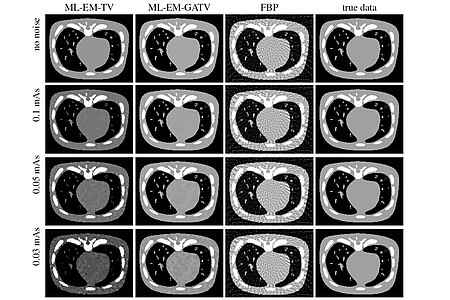
Jürgen Hesser is a Professor at the Mannheim Medical Faculty , Heidelberg University, specializing in Experimental Radiotherapy and Medical Imaging . His research focuses on solving inverse problems in imaging, particularly for CT reconstruction , brachytherapy planning , and low-dose imaging . Current affiliations: Clinic for Radiotherapy and Radiooncology, Mannheim University Hospital Collaborative ties: Interdisciplinary Center for Scientific Computing (IWR) and Center for Bioinformatics (ZITI) at Heidelberg University Research interests center on anisotropic total variation techniques for medical and industrial applications, including MR-guided interventions and real-time radiation therapy . His work has led to a 1000x speed improvement in brachytherapy planning algorithms. Recent publications highlight expertise in image reconstruction (CT/X-ray), noise optimization , machine learning for cancer classification, and big data management solutions. His methods are applied to both clinical and industrial imaging challenges. Additional contributions include scientific data infrastructure development and variance stabilization techniques for medical sensors. The research group maintains strong interdisciplinary links with Physics, Mathematics, and Computer Science faculties.
Tayfun Akgül is a Professor at Istanbul Technical University's Faculty of Electrical and Electronics Engineering, Department of Electronics and Communication Engineering. With academic affiliations spanning decades, he combines engineering rigor with innovative research in signal processing and underwater acoustics. His research focuses on advanced signal processing techniques, including Compressive sensing and cyclostationary analysis Underwater acoustic monitoring and sensor arrays Thermal imaging and infrared reflection modeling Biometric identification through facial attributes Seismic signal processing Recent publications demonstrate expertise in Propeller noise analysis in maritime environments Micro-Doppler helicopter signature detection Seismic activity precursor identification Novel fisheye camera human detection systems Awarded Most Successful Doctoral Thesis Award from TESID (2024) IEEE Top 10 Award (2013) he maintains active IEEE membership since 1992 and has led multiple high-impact projects including casualty detection systems and electric vehicle warning systems.
Dr. Carolina Euan is a Lecturer in Statistics at the School of Mathematical Sciences, Lancaster University, with affiliations to the Data Science Institute and STOR-i Centre for Doctoral Training. Her research focuses on time series analysis, spatio-temporal modeling, and their applications in environmental data science and brain data analysis. School of Mathematical Sciences Data Science Institute STOR-i Centre for Doctoral Training Biostatistics Research Group Centre of Excellence in Environmental Data Science Her work spans multiple disciplines: Environmental Data Science: Marine heatwaves, solar irradiance modeling, particle number size distribution Brain Data Analysis: Neural connectivity, brain signal clustering, coherence-based inference Statistical Methodology: Spatio-temporal extremes, spectral estimation, functional data analysis Recent publications demonstrate expertise in: 2025: Neural connectivity modeling, functional data analysis, particle distribution 2024: Virtual collaboration frameworks, precipitation regime modeling, spectral estimation 2023: Brain signal clustering, source apportionment, directional wave spectra Supervision includes: Kajal Dodhia: STOR-i (extreme sea temperatures) Jordan Hood: Bayesian modeling (COVID prevalence) Carla Pinkney: STOR-i
Barry Rowlingson is a Research Fellow at Lancaster University Medical School , affiliated with the Chicas Research Group and DSI-Health . He specializes in spatial statistics applied to disease epidemiology and geospatial software development . Teaches Geospatial Data module for MRes in Global Health Developed online course on Spatial Statistics in R with DataCamp Focuses on open-source geospatial tools for public health Research Interests: His work bridges spatial statistical methodology and infectious disease modeling , with applications in antimicrobial resistance mapping , wastewater-based pandemic surveillance , and health inequality analysis . Recent projects include modeling ESBL-producing bacteria in Malawi and developing spatio-temporal frameworks for COVID-19 wastewater monitoring . Scientific Contributions: Over 15 years, he has developed critical R packages like stpp for spatio-temporal analysis and rgdal for geospatial data abstraction. His 2023 publications address health workforce disparities and disease transmission dynamics using advanced statistical methods. Collaborations: Works with multidisciplinary teams across Lancaster Medical School , DataCamp , and SAVSNet Agile research projects. Supervises PhD student Charlotte Appleton in biostatistics.
Professor Craig Radford at the University of Auckland's Faculty of Science specializes in Marine Science with a focus on sensory systems and underwater soundscapes. Holding a PhD from Auckland , MSc from Canterbury , and BSc from Waikato , his research examines sensory physiology in fish and crustaceans, vocal communication mechanisms, and anthropogenic sound impacts. Current teaching includes Marine 702 Techniques in Marine Science and BioSci 334 - The Biology of Marine Organisms Postgraduate supervision topics span lateral line function, multisensory processing, ontogenetic hearing changes, and ecoacoustic indices His work on passive acoustic monitoring (149+ outputs) reveals trends in marine bioacoustics, particularly in shark hearing physiology , crustacean sound detection , and anthropogenic noise mitigation . Key collaborations exist with marine technologists and statisticians for developing machine learning boat classification systems and ecoacoustic biodiversity metrics. Research extends to auditory evoked potential thresholds across elasmobranchs, shark sleep electrophysiology , and global soundscape synthesis projects. Current projects include analyzing recreational boat noise impacts in Hauraki Gulf and investigating directional hearing mechanisms in sharks using advanced bioimaging techniques.
Dr. Christopher Hassall is an Associate Professor of Animal Biology at the School of Biology, University of Leeds , with research spanning entomology, climate change impacts, urban ecology, and conservation science. He leads the Hassall Lab and the BioDAR Project , which uses weather radar for biodiversity monitoring. Research Interests Quantifying insect abundance via weather radar (BioDAR/PestDAR/DRUID projects) Urban freshwater ecosystems and socio-ecological dynamics Evolution of insect camouflage/mimicry and flight behavior Climate change impacts on pollinators and invasive species Shadow diversity and extinction studies (Leverhulme DTP Co-Director) Scientific Awards Fellow of the Higher Education Academy Fellow of the Royal Entomological Society Advising : Supervises postgraduate researchers including Sicily Fiennes , Isabella Flowers , and Mx Solanum Foulstone , with a focus on interdisciplinary extinction studies and urban entomology.
Prof. Dr. Igor Lesanovsky is a leading researcher in quantum physics at the University of Tübingen, where he heads the Arbeitsgruppe (Research Group) Lesanovsky within the Institute of Theoretical Physics, part of the Faculty of Mathematics and Natural Sciences. His research focuses on quantum many-body systems, particularly utilizing Rydberg atoms for quantum simulation, quantum information processing, and exploring non-equilibrium phenomena. His research interests span quantum many-body physics, Rydberg atom systems, quantum simulation techniques, non-equilibrium quantum dynamics, quantum thermodynamics, and quantum soft-matter physics. His group investigates how highly excited Rydberg atoms can be used to simulate complex quantum processes, study phase transitions, and develop applications for quantum information processing. They're particularly interested in emergent phenomena such as time-crystals, quantum glassiness, and non-ergodic behavior in quantum systems. The publication record shows a consistent stream of high-impact research, primarily in Physical Review Letters, Physical Review A, and other top physics journals. The research trends indicate a strong focus on quantum simulation with Rydberg systems, quantum non-equilibrium dynamics, quantum information applications, and increasingly on the intersection of quantum physics with machine learning. Recent work explores quantum neural networks, quantum measurement theory, and the application of large-deviation methods to quantum trajectory ensembles. Prof. Lesanovsky's research is supported by multiple prestigious projects including the BMBF Quantum Technology project 'Neural quantum networks on NISQ quantum computers', the DFG Excellence Cluster 'Machine Learning: New Perspectives for Science', DFG Research Units on long-range interacting quantum spin systems and quantum thermalization, the EU EIC Pathfinder Project 'Brisk Rydberg Ions for Scalable Quantum Processors', the QuantERA Project CoQuaDis, and The Center for Integrated Quantum Science and Technology (IQST). The group maintains strong connections with experimental teams, particularly in the areas of quantum simulation of interacting many-body systems and the development of matter wave interferometers and collectively enhanced electric field sensors. They collaborate extensively across Germany and internationally, with publications showing co-authorship with researchers from multiple institutions worldwide.