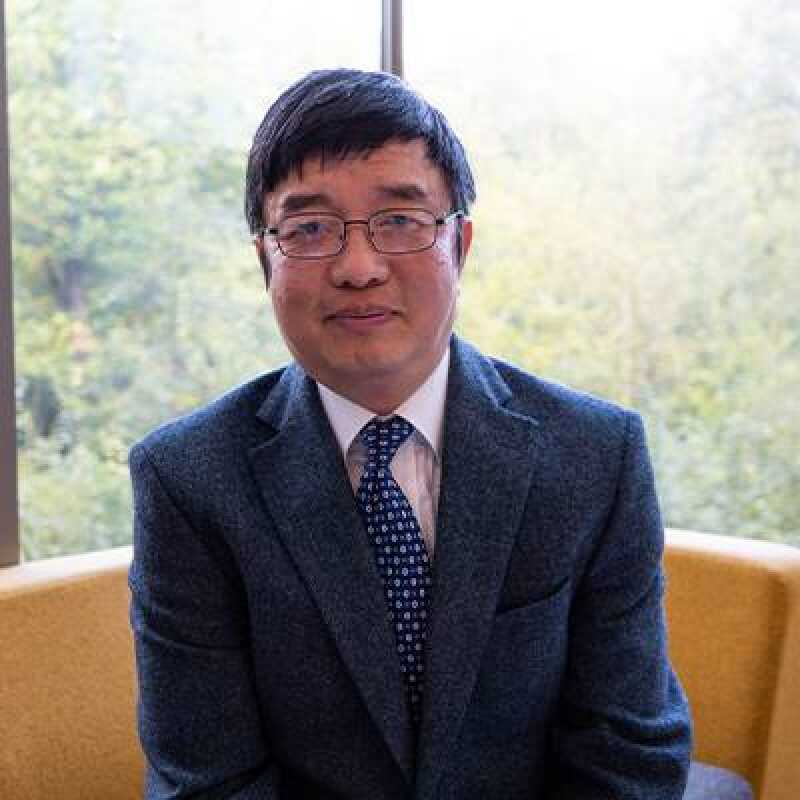
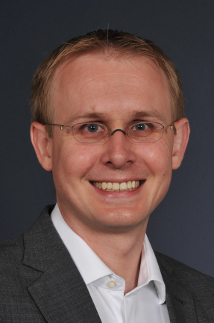
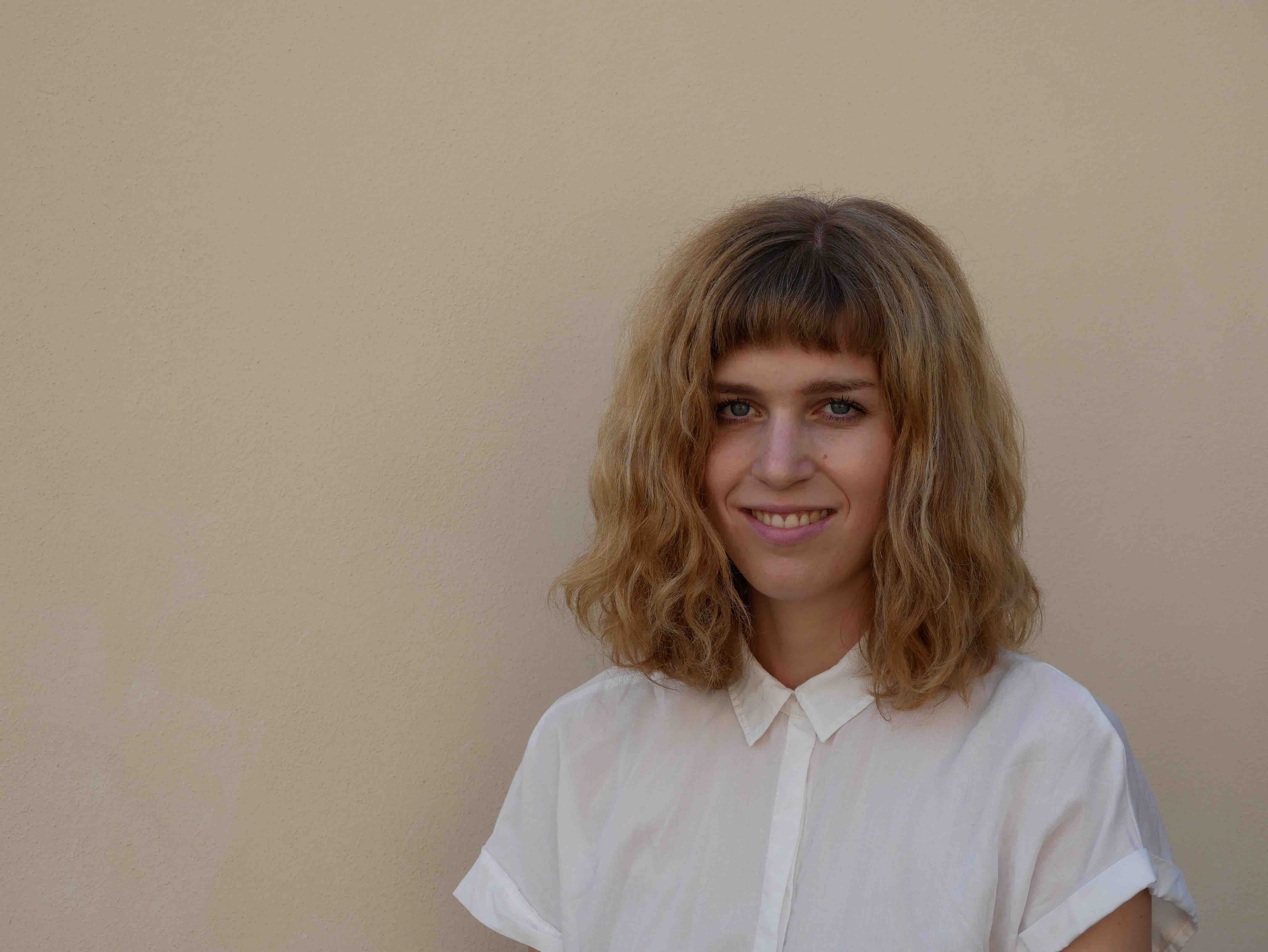
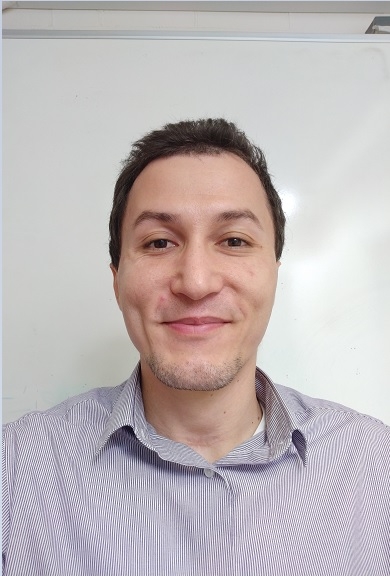
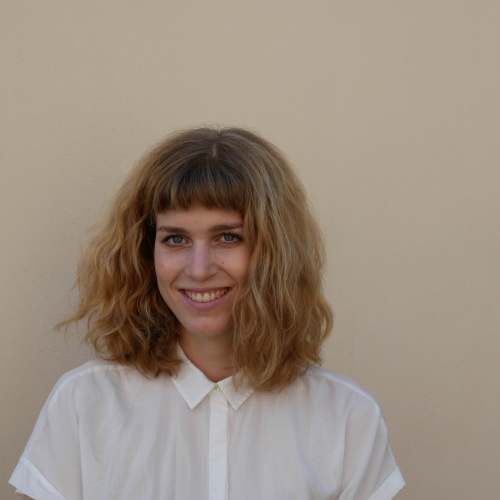
Steve Hailes is a Professor of Wireless Systems at the Department of Computer Science, University College London. He has served as Head of Department since 2019 and Deputy Head from 2005. His research spans wireless networks, computational trust, AI, and sensor systems for health, ecological, and environmental applications. Education: PhD and undergraduate degree from Cambridge University Appointment: Joined UCL in 1991 (postdoc), Lecturer in 1992 Research interests include: Trust and security in networked systems (co-founder of computational trust) Security of industrial control systems AI/ML applications in security and causal discovery Multi-agent reinforcement learning and moral behavior modeling Gas sensor fabrication and deployment for diverse applications Recent publications focus on feature selection for cybersecurity , moral alignment in LLM agents , trust-based consensus algorithms , and causal discovery using reinforcement learning . Collaborations include co-authors like Westphal, Musolesi, and Tennant. Applications span healthcare (dementia, JIA), ecology (endangered species in Botswana), and environmental monitoring (CO distribution, meth lab detection).
Professor Shaomin Wu is a faculty member at the University of Kent's Kent Business School, where he holds the academic rank of Professor of Business/Applied Statistics. He earned an MSc and PhD in applied statistics and has extensive industry experience, including a five-and-a-half-year stint at a global manufacturer in Shanghai before moving to the UK in 2001. He has held roles as a postdoctoral researcher and lecturer before joining Cranfield University and later the University of Kent. His research focuses on recurrent event data analysis, machine learning, and reliability mathematics, with funding from the EPSRC and ESRC. His research projects include managing risk in warranty servicing policies, smart data analytics for local government, and sustainable supply chain demand forecasting. He teaches modules such as risk analysis, reliability engineering, and machine learning. Currently supervising PhD students in time series forecasting, explainable AI, and recurrent event data analysis, he also serves as a co-chair of international conferences, editorial board member, and external examiner for doctoral degrees. Notably, he ranks among the top 2% of global scientists by Stanford University. His work integrates machine learning with business analytics, resilience engineering, and environmental sustainability. Key contributions include IoT-driven resilience methodologies for smart grids and unmanned systems, as well as frameworks for corporate carbon disclosure and maintenance optimization under uncertainty.
Jim Smith is a Professor in Interactive Artificial Intelligence at the University of the West of England (UWE), Bristol, affiliated with the School of Computing and Creative Technologies and the Department of Computer Science and Creative Technologies. He serves as Director of the Computer Science Research Centre and leads the AI@UWE theme. His research is supported by UKRI, Innovate UK, and partnerships with organizations including Health Data Research UK, Office for National Statistics, NHS Scotland, and DSTL. University: University of the West of England School: School of Computing and Creative Technologies Department: Department of Computer Science and Creative Technologies Role: Professor in Interactive Artificial Intelligence Leadership: Director, Computer Science Research Centre Research Interests : Jim Smith's work focuses on Interactive Artificial Intelligence, particularly at the intersection of AI and privacy preservation when using sensitive data for public good. His research includes statistical disclosure control, privacy leakage from AI models, evolutionary computation, machine learning, and systems that learn through human interaction or self-adaptation. He explores how AI can automate privacy checks in research outputs and assess vulnerabilities in trained models. Recent Publications : His recent work spans AI privacy in trusted research environments (e.g., SACRO, SDC-Reboot), dialogue act classification, human-robot interaction, and visualization of deep learning models. Themes include privacy-preserving AI, automated disclosure control, interactive machine learning, and neuromorphic computing. Machine Learning & Privacy Evolutionary Computation Interactive AI Systems Human-Computer Interaction Statistical Disclosure Control Federated Learning Security Scientific Awards : No specific awards are mentioned in the provided texts. Advising and Grants : He currently supervises PhD students on topics including spatio-temporal air quality modeling, federated learning privacy, and threat detection in mobile networks. He leads Innovate UK and UKRI-funded projects such as SACRO and SDC-Reboot, focusing on AI-driven solutions for data confidentiality in public sector research. Interactive Machine Learning for Claim Settlement (Innovate UK) SDC-Reboot (DARE UK/Health Data Research UK) Threat Identification in Mobile Networks (Ribbon Communications) Labs and Teams : He leads the AI@UWE initiative and the Computer Science Research Centre at UWE. His work involves collaboration through DARE UK and open-source development via the AI-SDC GitHub organization, which hosts tools from SACRO and GRAIMATTER projects.
Dr Anandadeep Mandal is an Associate Professor in Finance and the Scotcoin Distinguished Chair of Digital Finance at the University of Birmingham , within the Birmingham Business School and the Department of Finance . He is the founding director of the MSc Financial Technology programme and the Programme Director for the MBA (Distance Learning), demonstrating significant leadership in academic program development. Education: PhD in Probability Distribution Fitting, Cranfield University (2016) MRes in Management Science, Cranfield University (2012) MSc in Finance and Investments, Durham University (2008) Bachelor’s in Electronics Engineering Research Interests: Dr Mandal’s interdisciplinary research lies at the intersection of mathematical modelling, artificial intelligence, finance, and digital innovation . His work focuses on AI-enabled investment strategies , blockchain for financial transparency , ESG performance measurement , and the development of the Sustainable Efficiency Index (SEI) . He also pioneers AI applications in digital education , including a patent-pending platform for automated grading of multi-modal student submissions using ensemble AI methods. Publication Trends: His recent scholarly output spans high-impact journals and conferences, reflecting a strong focus on digital finance , climate and social media analytics , cryptocurrency regulation , and AI in financial forecasting . His work combines advanced data science techniques with real-world policy and financial applications, particularly in sustainability and public health. Scientific Awards: No specific awards are mentioned in the provided text. Advising and Grants: Dr Mandal has secured over £2 million in research funding from sources including UKRI, UoB QR Funding, and industry partners. While specific students are not listed, his role as programme director and research leader suggests active mentorship. His research has direct policy impact through collaborations with the NHS Trusts , NIHR , and the UK Government . Labs, Teams, and Impact: Dr Mandal leads a research agenda that bridges academia and public policy. His work extends beyond the university through public engagement at science festivals, outreach for young learners, and expert contributions to UK Parliamentary consultations on AI, sustainability, and financial innovation. He is a key figure in advancing digital finance education and research at the University of Birmingham.
Axel Gandy is a Professor of Statistics at the Department of Mathematics, Imperial College London. He serves as Director of the EPSRC CDT in Modern Statistics and Statistical Machine Learning , overseeing PhD supervision and advanced statistical training.
Dr. Sarah A.M. Loos is a Research Fellow at the Department of Applied Mathematics and Theoretical Physics (DAMTP) at the University of Cambridge and a Research Fellow at Corpus Christi College, Cambridge. She holds a PhD in Physics (summa cum laude) from TU Berlin (2020), with postdoctoral research at ICTP (Trieste) and Leipzig University. Her research focuses on stochastic thermodynamics, non-Markovian processes, and nonreciprocal systems. She has received major awards including the Royal Society of Chemistry Early Career Award (2024) and Marie Skłodowska Curie Fellowship (2023). Education: PhD in Physics (2020, TU Berlin), Master's in Physics (2015, TU Berlin), Bachelor's in Physics (2012, TU Berlin). Research interests include entropy production in nonreciprocal systems, active matter, and control theory. She has organized workshops on adaptive dynamical systems and contributed to KITP programs on active solids. Publications span topics like optimal control at microscale, PT symmetry in non-Hermitian systems, and nonreciprocal heat transfer. Her work bridges statistical physics and nonlinear dynamics, with applications in biological and nanoscale systems. Awards: 8 major prizes including DPG and RSC recognitions Grants: MSCA Fellowship (€200k), DFG Walter-Benjamin Fellowship Labs/Teams: Active Matter Group at DAMTP, collaborations with Édgar Roldán and Klaus Kroy
Miguel Rodrigues is a Professor of Information Theory and Processing at University College London's Department of Electronic & Electrical Engineering. He leads the Information, Inference and Machine Learning Lab at UCL and serves as the founder and director of the master programme in Integrated Machine Learning Systems. Rodrigues is also the UCL Turing University Lead and a Turing Fellow with the Alan Turing Institute, the UK National Institute of Data Science and Artificial Intelligence. His academic background includes an undergraduate degree in Electrical and Computer Engineering from the Faculty of Engineering of the University of Porto, Portugal, and a PhD in Electronic and Electrical Engineering from University College London. He has held appointments at prestigious institutions worldwide including Cambridge University, Princeton University, Duke University, and the University of Porto. Dr. Rodrigues's research spans information theory, information processing, and machine learning. His work has attracted over £5 million in funding from competitive national and international funding bodies and resulted in more than 250 publications with over 8000 citations in leading journals and conferences, including top AI venues like NeurIPS, ICML, and ICLR. His recent publications demonstrate a strong focus on multimodal learning, machine learning security, climate modeling with satellite data, and applications of AI in healthcare and precision medicine. His work shows increasing interdisciplinary collaboration across fields from climate science to pharmaceutical engineering. IEEE Communications and Information Theory Societies Joint Paper Award 2011 Fellow of the Institute of Electronics and Electrical Engineers (IEEE) Prize for Merit from the University of Porto Prize Engenheiro Cristian Spratley Prize Engenheiro Antonio de Almeida Fellowships from the Portuguese Foundation for Science and Technology Fellowships from the Foundation Calouste Gulbenkian Dr. Rodrigues has served as Editor for IEEE BITS – The Information Theory Magazine and IEEE Transactions on Information Theory, among other editorial roles. He consults widely in machine learning and AI with government institutions, funding agencies, industry, and startups, and sits on committees responsible for AI standardization such as the BSI Art/1 working group. His leadership extends to directing research labs and educational programs focused on advancing machine learning systems. He leads the Information, Inference and Machine Learning Lab at UCL, which focuses on fundamental aspects of information theory and their applications to machine learning and data processing. The lab works on both theoretical foundations and practical implementations of learning systems.
Stephanie Wilson is a Professor of Human-Computer Interaction at City St George's, University of London, and Co-Director of the Centre for HCI Design (HCID). She co-founded the EPSRC Centre for Doctoral Training in Diversity in Data Visualization (DIVERSE CDT) and contributes to the Institute for Creativity and AI. Her research emphasizes inclusive interaction design, data visualization, co-design, and innovative digital technologies for healthcare, particularly for people with aphasia. She has supervised 17 PhD students to completion and led significant projects like EVA Park and INCA, which explore accessible virtual worlds and digital tools for aphasia. Her work has earned multiple awards, including ACM SIGCHI Honorable Mention Awards and the Tech4Good Accessibility Award Finalist. Stephanie has secured over £10 million in research funding, including grants from EPSRC and Innovate UK, and actively contributes to academic governance through roles like Chair of the Research Degrees Committee and establishing the Women++ group. She advocates for participatory design and ethical research practices in healthcare technology.
Cathryn Mitchell is a Professor of Radio Science and Royal Society Industry Fellow at the University of Bath, specializing in ionospheric physics, position, navigation, and timing (PNT). She leads research in the Space & Telecoms Research Group (STAR), focusing on radio propagation, data assimilation, and space weather impacts on communication systems. Her work bridges theoretical, computational, and experimental approaches, with applications in satellite navigation, climate monitoring, and defense sectors. Her research interests include ionospheric tomography, HF communications, and the development of robust PNT systems. Mitchell collaborates extensively with industry partners like Spirent Communications on future navigation technologies and space weather resilience. She has held roles such as Academic Director of the Doctoral College and contributes to interdisciplinary projects like the DRIIVE initiative exploring ionospheric variability with EISCAT-3D radar. Recent work emphasizes ionospheric effects during geomagnetic storms (e.g., the 2024 Gannon Storm) and cooperative autonomous systems under communication constraints. Her projects are funded by the Royal Society, Natural Environment Research Council (NERC), and ESA, addressing challenges in space weather forecasting and PNT system reliability. Awards: Royal Society Industry Fellow (2022–present) Key Projects: Royal Society Industry Fellowship on Future PNT Technologies DRIVERS (DRIIVE): Ionospheric Variability Studies EISCAT-3D FINESSE: Ionospheric Structuring Analysis Mitchell’s lab, STAR, integrates academic and industrial partnerships to advance space weather applications and sustainable navigation systems, contributing to UN Sustainable Development Goals related to climate action and innovation.
Lande Liu is a Senior Lecturer in Chemical Engineering at the University of Huddersfield's School of Applied Sciences. Previously, he held a Lectureship at the University of Manchester (2010-2014), and earlier worked as an industrial consultant and research fellow at Leeds and Sheffield Universities. His academic journey began with a MEng in Chemical Engineering and a PhD in kinetic theory of aggregation from Sheffield (2004), preceded by a visiting PhD at Twente University (2002). Education: PhD in Chemical Engineering (University of Sheffield, 2004) Visiting PhD (Twente University, 2002) MEng in Chemical Engineering (Tsinghua University, 1999) BSc in Applied Mathematics (Tsinghua University, 1996) Liu's research focuses on multi-scale particle interactions (molecular to granular) using kinetic theory of aggregation, with applications spanning nanotechnology, pharmaceutical engineering, and sustainable chemical processes. His work aligns with UN Sustainable Development Goals for environmental protection and industrial innovation. Recent publications examine particle deposition in turbulent flows, enhanced heat exchanger designs, and nanofluid stabilization techniques. He teaches core chemical engineering topics including transport phenomena, unit operations, and process design. Active in collaborative research, Liu has partnered with institutions across Europe on projects involving spectroscopy, ultrasonics, and dynamic modeling. His technical expertise includes particle size analysis, tomography, and computational simulation of complex systems.
Khaled Giasin is a Senior Lecturer in Mechanical Engineering at the University of Portsmouth, part of the School of Electrical and Mechanical Engineering and affiliated with the Portsmouth Centre for Advanced Materials and Manufacturing. He joined the university in 2019, bringing expertise in machining aerospace materials through experimental and numerical techniques. Prior to this, he worked at Cardiff University on the ASTUTE2020 project, focusing on applied research for advanced manufacturing challenges in Wales. His research interests span machining of metals, composites, and fiber metal laminates, finite element modeling of machining processes, and additive manufacturing of metallic alloys. He collaborates internationally with institutions in France, Turkey, China, and Australia, emphasizing industry-academia partnerships. Dr. Giasin currently supervises PhD projects on topics such as GLARE fiber metal laminate machining and ultrasonic-assisted drilling, reflecting his focus on advanced materials and manufacturing solutions. He teaches modules including Engineering Materials and Design, Advanced Materials, and Metrology. Over 137 research outputs highlight his contributions to machining methodologies, material characterization, and sustainable manufacturing techniques. His work bridges theoretical modeling and industrial applications, addressing challenges in aerospace and advanced manufacturing sectors.
Dr. Alfred Chong is an Associate Professor in the Department of Actuarial Mathematics and Statistics at Heriot-Watt University (HWU). Previously, he served as an Assistant Professor at the University of Illinois at Urbana-Champaign (UIUC) and co-founded the Illinois Risk Lab. His research focuses on Actuarial Science, Financial Mathematics, and Quantitative Risk Management, addressing emerging risks like cyber, pandemic, and climate risks, leveraging machine learning, optimization, and stochastic control. He holds a PhD from The University of Hong Kong and King's College London, and is an Associate of the Society of Actuaries. Chong actively contributes to academic governance, including roles in the EPSRC Mathematical Sciences Early Career Forum and the Maxwell Institute's Data and Decisions research theme. Education: PhD in Actuarial Science, University of Hong Kong & King's College London Research Interests: Chong explores risk sharing mechanisms, forward preferences in insurance, and mitigation strategies for large-scale risks. His work integrates data analytics and machine learning to solve decision-making challenges, such as cybersecurity risk assessment, pandemic resource allocation, and climate risk modeling. Recent projects include incident-specific cyber insurance design and delegated investment strategies for retirement savings. Awards: Michael V. Colla Prize for Mathematics Related to Medicine (2022) Best of 2020 in the Annual Meeting of the Casualty Actuarial Society (2021) Advising & Grants: Chong supervises PhD students in holistic risk management, forward preferences, and reinforcement learning applications. He has secured grants supporting interdisciplinary research in risk modeling and insurance innovation. Labs & Teams: Co-founder of the Illinois Risk Lab (UIUC), now leading research at HWU's Actuarial Mathematics & Statistics department. Engaged with the International Centre for Mathematical Sciences for knowledge exchange initiatives.
Dr. Eva-Maria Graefe is a Royal Society University Research Fellow and Senior Lecturer in the Department of Mathematics at Imperial College London. She specializes in quantum dynamics, focusing on the interplay between quantum and classical systems, particularly chaos and dissipation in non-Hermitian systems. Her research explores foundational questions such as how quantum motion relates to macroscopic physical laws and how dissipation can be engineered to control quantum behavior. Education: She earned her PhD in theoretical quantum physics from the Technical University of Kaiserslautern, Germany, followed by a postdoctoral position at the University of Bristol’s mathematical physics group. She joined Imperial College in 2010 as a Junior Research Fellow. Research Interests: Her work spans non-Hermitian quantum systems (e.g., PT-symmetric models), quantum chaos, semiclassical quantization, and Bose-Hubbard systems. She investigates exceptional points, Landau-Zener transitions, and the dynamics of open quantum systems with losses or gain. Her group is supported by the Royal Society and an ERC Starting Grant. Scientific Contributions: Notable achievements include studies on Husimi distributions in non-Hermitian systems, quantum-jump dynamics, and the semiclassical analysis of Bloch oscillations in dissipative lattices. Teaching & Outreach: She teaches quantum mechanics to undergraduates and Master’s students and engages in outreach to inspire high school students. She mentors a research group of PhD and Master’s students. Labs/Teams: Her lab focuses on theoretical and computational studies of quantum dynamics, supported by advanced grants and collaborations within Imperial’s Faculty of Natural Sciences.
Dr. Sarah Loos is an independent postdoctoral researcher at the Department of Applied Mathematics and Theoretical Physics (DAMTP), University of Cambridge, and a Research Fellow at Corpus Christi College. Her work focuses on theoretical descriptions of nonequilibrium systems, integrating statistical physics, thermodynamics, control theory, and nonlinear dynamics. PhD in Statistical Physics (TU Berlin, 2020) Marie-Curie and DFG Walter-Benjamin Fellow Key research areas: stochastic thermodynamics, non-Markovian processes, active matter, nonreciprocal systems Her research explores entropy production, time-reversal asymmetry, and collective dynamics in active matter. She has received multiple awards, including the Royal Society of Chemistry's Early Career Award (2024) and Springer Thesis Award (2020). Recent publications emphasize nonreciprocal interactions, optimal control protocols, and memory effects in complex systems. Scientific Awards: Early Career Award (2024) Marie-Skłodowska-Curie Fellowship (2022) DFG Walter-Benjamin Fellowship (2022) SKM Dissertation Prize (2021) Carl Ramsauer Preis (2020) EPL Poster Prize (2019) Her work has been supported by the Joachim-Herz Stiftung (2022) and Studienstiftung des Deutschen Volkes (2013-2015). Collaborations span institutions like ICTP Trieste, Leipzig University, and Duke University.
Iain Murray is Professor of Machine Learning and Inference at the School of Informatics, University of Edinburgh. His research focuses on developing flexible probabilistic models applicable across diverse domains including cosmology, neuroscience, perception, speech, sports, and text. Program Chair for ICLR (2018) Publications Chair for ICML (2017, 2018) Area Chair for AISTATS, ICLR, ICML, NeurIPS, and UAI Amazon Scholar (2018-2024), first appointed in Europe Murray's research interests center on probabilistic reasoning using machine learning, with specific expertise in density estimation and Markov chain Monte Carlo methods. His work spans theoretical foundations and practical applications, with significant contributions to neural autoregressive distribution estimation (NADE), real-valued NADE (RNADE), and pseudo-marginal slice sampling techniques. His research has enabled advances in flexible probabilistic modeling across multiple domains. His publications show consistent focus on advancing probabilistic modeling techniques, with recent work emphasizing neural autoregressive models, density estimation methods, and efficient sampling algorithms. The research trajectory demonstrates progression from foundational work on NADE to increasingly sophisticated deep learning approaches for density estimation and inference. Notable Paper Award for NADE work Amazon Scholar (2018-2024) Murray has supervised numerous PhD students who have gone on to prominent positions at Google DeepMind, NYU, stability.ai, and other leading institutions. His teaching responsibilities include the Machine Learning and Pattern Recognition course and project supervision. His research group focuses on developing tractable probabilistic models with applications across multiple scientific domains.