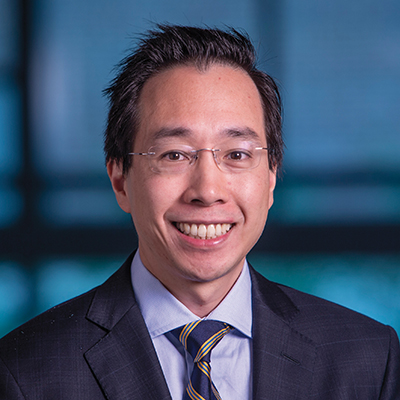
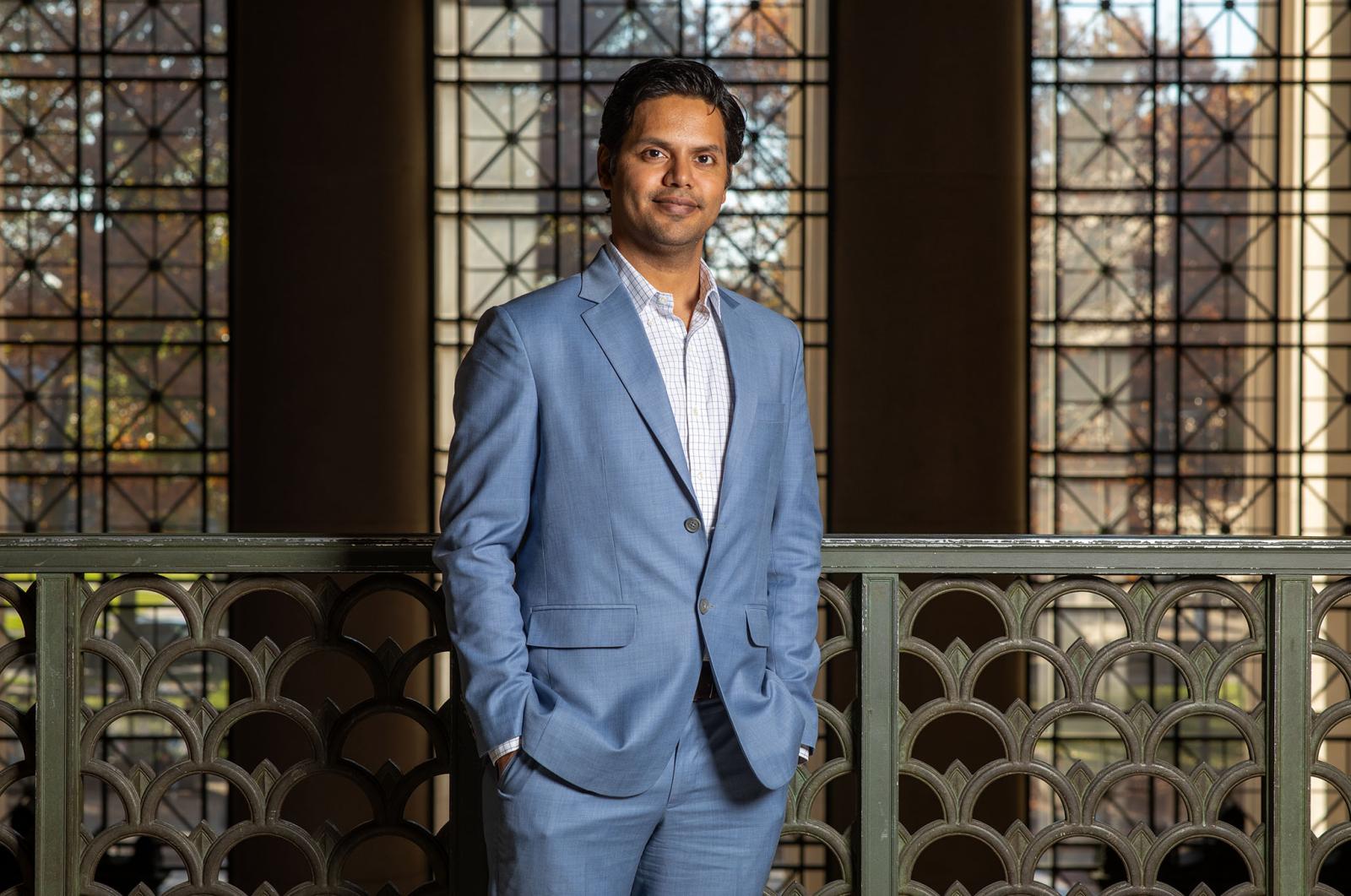
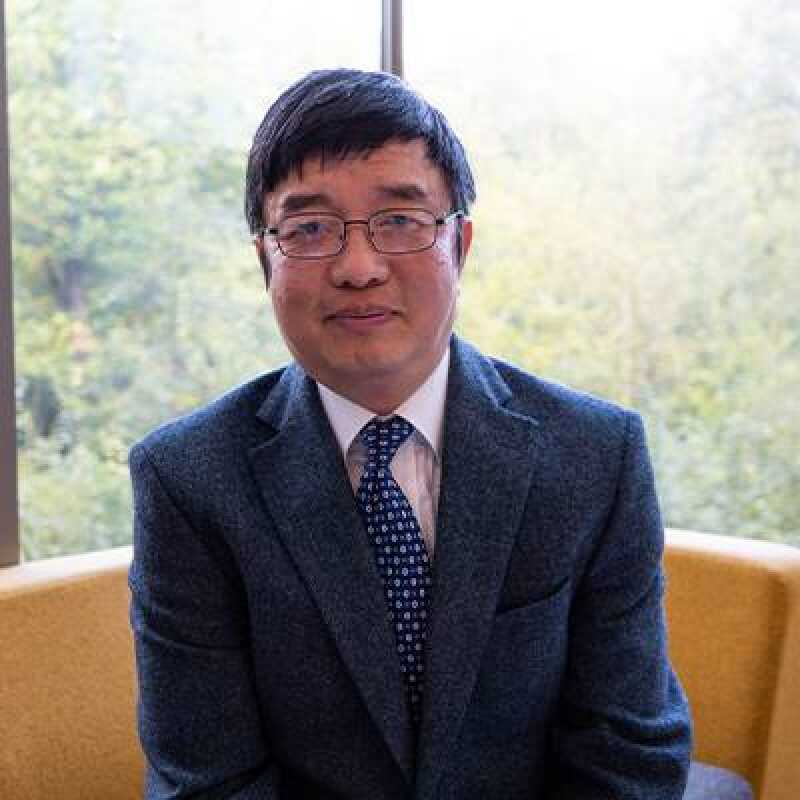
Martin Solberger is an Associate Professor in the Department of Statistics at Uppsala University, where he received his PhD in statistics in 2013 and was promoted to associate professor in 2022. His office is located at Ekonomikum (3rd floor), Kyrkogårdsgatan 10, with postal address Box 513, 751 20 UPPSALA. Dr. Solberger specializes in time series econometrics with particular expertise in macroeconomic forecasting and estimation of latent time series variables including potential GDP and the neutral interest rate. His research demonstrates sophisticated methodological approaches to dynamic factor models, unit root testing, and interest rate analysis, frequently employing Kalman filtering techniques and Bayesian VAR modeling. His publication record reveals a strong focus on Scandinavian economic analysis, particularly examining the natural rate of interest and neutral interest rate dynamics within Swedish and broader Nordic contexts. Recent work shows increasing attention to international spillover effects on domestic monetary policy variables and methodological refinements in panel data econometrics. Through extensive collaboration with researchers including Spånberg, Armelius, and Österholm, Solberger has established himself as a significant contributor to modern time series econometrics methodology and its application to central banking and fiscal policy questions.
Varun Jog is Professor of Information Theory and Statistics in the Department of Pure Mathematics and Mathematical Statistics (DPMMS) at the University of Cambridge, Faculty of Mathematics. Previously, he served as Assistant Professor at the University of Wisconsin-Madison (2016-2020) and at the University of Cambridge (2021-2024). His academic background includes a B.Tech. in Electrical Engineering from IIT Bombay (2010) and a Ph.D. in Electrical Engineering and Computer Sciences from UC Berkeley (2015). Professor Jog's research centers on fundamental questions at the intersection of information theory, statistics, and machine learning. He develops theoretical frameworks for statistical inference under constraints such as limited communication and privacy requirements, with significant contributions to hypothesis testing, differential privacy, adversarial risk analysis, and information-theoretic inequalities. His work bridges abstract mathematical principles with practical applications in data science and robust machine learning. Recent publications demonstrate a concentrated focus on distributed inference systems, particularly examining sample complexity limits in hypothesis testing under information constraints and privacy-preserving mechanisms. His research consistently reveals deep connections between information theory and statistical learning, with increasing emphasis on adversarial robustness and foundational inequalities. His scientific contributions have earned recognition through prestigious awards: NSF-CAREER Award (2020) R. Narasimhan Memorial Lecture Award (2020) Eli Jury Award from UC Berkeley EECS Department (2015) Jack Keil Wolf student paper award at ISIT (2015) Professor Jog maintains an active research group, currently supervising one PhD student while having graduated four PhD students and four Master's students. His mentorship extends to postdoctoral researchers including Amir Asadi, Deepanshu Vasal, and Andre Wibisono. Research funding includes the competitive NSF-CAREER grant. He co-organizes the Cambridge Information Theory Seminar, fostering academic exchange and collaboration within the theoretical research community.
Christine Mahoney is a Professor of Public Policy and Politics and Chief Innovation Officer at the Frank Batten School of Leadership and Public Policy at the University of Virginia. She also serves as Director of the Tadler Program in Impact Investing in Appalachia, the UVA Environmental Institute-funded Climate Collaborative on Appalachian Renewable Energy & Resilience, and the EPA-funded Community Change project for economic development in Appalachia. Previously, she was an Assistant Professor at the Maxwell School of Syracuse University and Director of the Center for European Studies and the Maxwell EU Center. Dr. Mahoney earned her Ph.D. in Political Science from Pennsylvania State University in 2006, with fields of study in American politics, Comparative politics, and Research Methods & Statistical Analysis. She also completed her M.A. (2003) and B.A. (2001) in Political Science and International Politics, respectively, at Pennsylvania State University. Professor Mahoney specializes in social justice advocacy, activism, and direct action through social entrepreneurship. Her research focuses on how advocates shape public policy, with particular attention to lobbying strategies in powerful political systems like the United States and the European Union. She has conducted extensive fieldwork in seven conflict zones across Asia, Africa, Eastern Europe, and Latin America, studying the rights of forcibly displaced people and proposing innovative solutions through social entrepreneurship. Her work bridges political science with practical applications in impact investing and refugee integration, creating tangible pathways for social change through entrepreneurial approaches. Professor Mahoney's scholarly output reveals an evolution from comparative studies of advocacy systems to practical applications of social entrepreneurship for forcibly displaced populations. Her early work established foundational knowledge about lobbying in transatlantic political systems, while her more recent research has shifted toward actionable solutions for global displacement crises and sustainable community development. This trajectory demonstrates her commitment to translating academic insights into real-world impact, particularly through the lens of social entrepreneurship and impact investing. Fulbright Fellow Visiting Scholar at Oxford National Science Foundation grant recipient Emerging Scholar award from the American Political Science Association UVA's Public Impact-Focused Research Award Through Social Entrepreneurship at UVA (SE@UVA), which she founded and led for a decade (2011-2021), Professor Mahoney has mentored over 80 student social enterprise teams and supported more than 100 social entrepreneurs with over 38,400 hours of pro-bono consulting. She has secured $37.7 million in funding for programs addressing social and environmental challenges, including the Tadler Program in Appalachia that has made significant strides in advancing rural policy and economic development. Her work demonstrates a consistent commitment to connecting academic research with practical applications that address pressing social problems. Professor Mahoney leads several significant initiatives including the Refugee Investment Network, where she serves as fellow and advisor, and multiple UVA-based programs focused on social entrepreneurship, impact investing, and community development. Her interdisciplinary approach brings together policy experts, social entrepreneurs, impact investors, and community stakeholders to develop innovative solutions to complex social problems, particularly in the areas of refugee integration and rural economic development in Appalachia.
Benjamin C. Lee is a Professor at the University of Pennsylvania, affiliated with both the Department of Electrical and Systems Engineering and the Department of Computer and Information Science. He also serves as Associate Department Chair and Co-Director of the NSF Expedition in Computing: Carbon Connect. His research spans computer architecture, energy efficiency, and environmental sustainability, with interdisciplinary links to machine learning and algorithmic economics. Education: Ph.D. and S.M. from Harvard University, B.S. from UC Berkeley, postdoctoral work at Stanford University. His research integrates computer architecture with datacenter-scale systems, focusing on energy-efficient designs, statistical learning for performance analysis, and sustainable computing. Past projects include the Hound framework for straggler diagnosis in datacenters and the CORE library for regression modeling in microarchitecture. The 15 most recent articles reflect expertise in datacenter architecture, mobile computing, and regression modeling for hardware. Awards include IEEE Fellow (2024), ACM Distinguished Scientist (2019), and multiple best paper/prize recognitions from SIGMETRICS, ASPLOS, and HPCA. Doctoral and Masters alumni have pursued roles at institutions like Meta, Microsoft, and University of Waterloo. Current affiliations include the Distributed Systems Laboratory (DSL) and PRECISE center, with industry collaborations at Google, Meta, and Intel.
Hanna Halaburda is an Associate Professor of Technology, Operations, and Statistics at the Leonard N. Stern School of Business, New York University, where she joined in 2019. Her research lies at the intersection of economics, technology, and digital platforms, with a strong focus on blockchain, cryptocurrencies, and platform competition. She has published extensively in top academic journals and co-authored the seminal book Beyond Bitcoin: The Economics of Digital Currencies . PhD in Economics, Northwestern University MA in Economics, Warsaw School of Economics MA in Philosophy, Warsaw University Her research interests center on the economic implications of digital transformation. She investigates how blockchain technology reshapes trust, governance, and competition in digital markets. Her work explores token design, consensus mechanisms, smart contracts, and the strategic use of decentralization in platforms. She also studies platform competition under network effects, consumer choice, and omnichannel marketing. A recurring theme is how digital technologies alter traditional economic forces and business models. The most recent articles show a strong trend toward analyzing the governance, security, and economic design of blockchain systems. Her work combines rigorous theoretical modeling with empirical insights, often applying game theory and industrial organization frameworks. Topics include permissioned vs. permissionless blockchains, the role of cryptographic tokens in coordination, and the macroeconomic implications of digital currencies. She also contributes to debates on Web3, AI, and the future of digital platforms. Scientific awards and recognitions include: ISR Best Paper Published in 2022 Runner-Up Lead article in RAND Journal of Economics Best Paper Award at Tokenomics 2023 Best Paper Award at WISE 2023 Best Paper Finalist at WISE 2022 and WISE 2021 Hanna Halaburda has advised and collaborated with numerous researchers and institutions. Her co-authors include leading scholars from Harvard, NYU, and international universities. She has received research recognition through best paper awards and invitations to contribute to high-impact journals and policy discussions. Her work has been supported by academic and policy institutions, including the Bank of Canada, where she previously served as a senior economist. She frequently publishes in both academic and practitioner outlets, including Harvard Business Review and Nature Human Behavior , indicating strong translational impact. She is actively involved in research teams focused on digital assets, blockchain governance, and platform economics. While no formal lab is mentioned, her extensive list of working papers and collaborations suggests leadership in a dynamic research group at NYU Stern. Her recent work on DAOs, public crypto mining firms, and CBDCs indicates ongoing, forward-looking research programs with real-world policy and business implications.
Anna Levina is an Assistant Professor for Computational Neuroscience at the University of Tübingen , affiliated with the Department of Computer Science under the Faculty of Science. Her research focuses on the self-organization of neuronal activity, critical dynamics in neural networks, and the excitation/inhibition balance in cortical circuits. Current positions: Assistant Professor (since 2018), Group Leader (2017-2018), Equality Officer (Computer Science) Previous roles: IST Fellow (2015-2017), Associated Researcher (2011-2015), Postdoc/PI (2011-2015), Postdoc (2008-2011) Her research integrates mathematical modeling , statistical physics , and computational neuroscience to study criticality phenomena, neural avalanches, and adaptive network dynamics. Key interests include: Self-organized criticality in neural systems Excitation/Inhibition balance mechanisms Network topology and dynamics Timescale analysis in neural processing Stochastic modeling of neural activity Recent publications reveal trends in understanding critical dynamics across biological and artificial networks, with applications to memory systems, sensorimotor integration, and disease modeling. She has received recognition as an IST Fellow .
Prof. Dr. Dominik Schwarz is a faculty member at the Faculty of Physics , Bielefeld University. His research focuses on Cosmology and Particle Physics , particularly in the areas of Dark Energy , Dark Matter , Cosmological Inflation , and Large-Scale Structure Formation . He contributes to projects like the International LOFAR Telescope Consortium and the SFB-TRR 211 on strongly interacting matter. APART Fellow of Austrian Academy of Sciences Humboldt Fellow CERN Fellow His recent work explores the cosmic dipole anisotropy , axion density perturbations , and multi-wavelength cosmic web mapping . He also advances data science infrastructure through the PUNCH4NFDI consortium.
Lars Nordström is a Professor at the Division of Electric Power and Energy Systems within KTH Royal Institute of Technology, Stockholm, Sweden. His work bridges control systems , communication networks , and power systems , with a focus on future architectures, functionality, and quality aspects of ICT for power grid operations. He has led initiatives such as the Swedish Centre of Electric Power Engineering and served as Thematic Leader for Smartgrids in KIC InnoEnergy. In 2014, he was a Visiting Professor at Washington State University. Education : Ph.D., MSc.EE Nordström's research explores the intersection of smart grids , machine learning , and cybersecurity for power systems. Key areas include: Wide-Area Monitoring and Control (WAMC) systems Decentralized control strategies for DC microgrids Impedance modeling using neural networks Data-driven methods for islanding detection ICT reliability and protocol design for grid operations His recent publications emphasize machine learning applications in power systems, including LSTM networks for EV charging management, graph attention networks for stability monitoring, and digital twin approaches for cyber-attack mitigation. These works span disciplines such as Smart Grids, Power Electronics, and Data Science. Scientific Recognitions : Senior Member, IEEE Senior Member, CIRED Senior Member, Cigre Past Chairman, Swedish IEC TC57 Mirror Committee Nordström actively teaches and examines graduate courses like Communication and Control in Electric Power Systems and Computer Applications and Machine Learning in Electric Power Systems . His work influences industry practices through collaborations on digital substations, energy market analysis, and resilience strategies.
Lawrence C. Washington is a Professor of Mathematics at the University of Maryland, College Park . His office is located in Mathematics Building 1105, and he can be reached at lcw@math.umd.edu . Teaching & Courses: In Spring 2023 he is teaching Cryptography 456 (TuTh 11:00–12:15) and co-organising the Algebra Seminar (MW 2–3). Office hours are held Tuesdays 1:30–2:30 and Thursdays 10:00–10:50. Research Interests: His work centres on number theory , with particular emphasis on cyclotomic fields , elliptic curves , cryptology , and Iwasawa theory . He has made extensive contributions to the study of p-adic L-functions , class groups , heuristics for class numbers , and the arithmetic of elliptic curves, often bridging deep theoretical questions with computational investigations. Textbooks & Scholarly Output: Washington is the author of several widely-used textbooks: Introduction to Cryptography with Coding Theory (3rd ed.) Introduction to Cyclotomic Fields Elliptic Curves: Number Theory and Cryptography An Introduction to Number Theory with Cryptography (2nd ed.) Elementary Number Theory Recent Publication Trends: Over the past five years his papers have focused on heuristics for Iwasawa invariants , anti-cyclotomic extensions , class groups of real cyclotomic fields , and analytic estimates for sums of prime powers . The work is characterised by a synthesis of algebraic, analytic, and computational techniques, frequently yielding explicit examples and numerical data that inform broader conjectures in algebraic number theory. Extracurricular Interests: Outside mathematics, Washington enjoys running and playing the bassoon , and he maintains a light-hearted page devoted to his favourite intersection in Chevy Chase, MD. Advising & Grants: While the provided text does not enumerate individual students or specific grants, his extensive publication record and long-standing professorship indicate ongoing supervision of graduate research and participation in funded projects in number theory and cryptography.
Faez Ahmed is an Associate Professor at the Department of Mechanical Engineering, Massachusetts Institute of Technology (MIT), where he serves as the Doherty Chair in Ocean Utilization. He leads the Design Computation and Digital Engineering (DeCoDE) Lab, focusing on integrating machine learning and optimization with engineering design to enhance human-AI collaboration and accelerate design processes. Ph.D., Mechanical Engineering, University of Maryland College Park (2019) B.Tech.-M.Tech., Mechanical Engineering, Indian Institute of Technology Kanpur (2012) His research interests include generative design methodologies, AI-driven optimization techniques, and the development of algorithms that facilitate collaboration between human designers and artificial intelligence systems. This interdisciplinary work spans applications in automotive design , ship hull synthesis , and wind turbine optimization , with a strong emphasis on creating open-source tools and datasets for the engineering community. Recent publications demonstrate his lab's leadership in fields such as 3D CAD generation , multimodal design datasets , and constraint-aware generative models . These works often address challenges in design space exploration , performance prediction , and data-driven design frameworks . Scientific Awards NSF CAREER Award (2025) ASME Young Investigator Award (2024) Google Research Scholar Award (2024) 3M Non-Tenured Faculty Award (2022) University of Maryland Alumni Research Award (2022) Faez Ahmed's lab has trained numerous Ph.D. candidates and postdoctoral researchers, fostering a collaborative research environment that bridges mechanical engineering , artificial intelligence , and computational methods . The DeCoDE Lab actively engages with industry partners and academic institutions, contributing to large-scale datasets and benchmarks that power the next generation of engineering design research.
Axel Gandy is a Professor of Statistics at the Department of Mathematics, Imperial College London. He serves as Director of the EPSRC CDT in Modern Statistics and Statistical Machine Learning , overseeing PhD supervision and advanced statistical training.
Prof Aaron Thean is the Deputy President (Academic Affairs) and Provost at the National University of Singapore (NUS). Formerly, he served as Dean of the College of Design and Engineering at NUS and held senior roles at IMEC (Belgium) as Vice President of Logic Technologies and Director of Logic Devices Research. His expertise spans advanced semiconductor device technologies, including FinFETs, nanowire FETs, III-V/Ge channels, and emerging beyond-CMOS architectures. He holds degrees from the University of Illinois Urbana-Champaign (B.Sc., M.Sc., Ph.D. in Electrical Engineering) and has published over 300 papers with 50+ patents. His awards include the Gregory Stillman Award (2001) and Compound Semiconductor Innovation Award (2014). Research interests focus on semiconductor innovation, device-process co-optimization (DTCO), and monolithic 3D integration. Notable contributions include industry-first Gate-First HKMG technologies, advanced strained silicon platforms, and neuromorphic computing hardware. His work bridges academia and industry through collaborations with Qualcomm, IBM, and foundry partners. Current initiatives emphasize energy-efficient computing and wearable sensor systems. Prof Thean’s leadership spans NUS-wide academic strategy and global research partnerships. His technical legacy includes foundational advancements in transistor scaling, low-power CMOS design, and AI-driven failure analysis methodologies.
Professor Shaomin Wu is a faculty member at the University of Kent's Kent Business School, where he holds the academic rank of Professor of Business/Applied Statistics. He earned an MSc and PhD in applied statistics and has extensive industry experience, including a five-and-a-half-year stint at a global manufacturer in Shanghai before moving to the UK in 2001. He has held roles as a postdoctoral researcher and lecturer before joining Cranfield University and later the University of Kent. His research focuses on recurrent event data analysis, machine learning, and reliability mathematics, with funding from the EPSRC and ESRC. His research projects include managing risk in warranty servicing policies, smart data analytics for local government, and sustainable supply chain demand forecasting. He teaches modules such as risk analysis, reliability engineering, and machine learning. Currently supervising PhD students in time series forecasting, explainable AI, and recurrent event data analysis, he also serves as a co-chair of international conferences, editorial board member, and external examiner for doctoral degrees. Notably, he ranks among the top 2% of global scientists by Stanford University. His work integrates machine learning with business analytics, resilience engineering, and environmental sustainability. Key contributions include IoT-driven resilience methodologies for smart grids and unmanned systems, as well as frameworks for corporate carbon disclosure and maintenance optimization under uncertainty.
Mark Bocko is a Distinguished Professor of Electrical and Computer Engineering at the University of Rochester, affiliated with the Hajim School of Engineering & Applied Sciences. He holds roles as Director of the Center for Emerging and Innovative Sciences (CEIS) and Director of Audio & Music Engineering. He earned his PhD in Physics from the University of Rochester in 1984, focusing on gravitational wave detectors. His research spans audio signal processing, sensors, superconductivity, and quantum computing. Notable contributions include flat-panel loudspeaker development, non-contact ECG sensors, and quantum coherence studies in Josephson junctions. Research interests include audio and acoustic signal processing, computer audition, and sensor technologies. His work integrates interdisciplinary approaches, combining electrical engineering, physics, and computer science. Awards include the 2012 Goergen Award for Teaching and Mercer Brugler Distinguished Teaching Professor (2008–2011). Recent publications address modal crossover networks for loudspeakers, vibrational touch sensing, and room impulse response modeling. He has advised PhD students on topics like spatial audio rendering and musical vibrato analysis. His labs focus on advancing audio engineering and smart sensor systems through collaborative industry partnerships.
Prof. Dr. Rudi Zagst is a Professor of Mathematical Finance at the Technical University of Munich (TUM), where he serves as Head of the Department of Mathematical Finance within the TUM School of Computation, Information and Technology. He has held this position since 2001 and is actively involved in teaching, research, and academic leadership. In 2003, he was appointed as a second member of the Faculty of Economics, and since 2004, he has served as Deputy Chairman of the joint elite degree program 'Finance & Information Management' of the University of Augsburg and TUM. Prof. Zagst earned his doctorate in business mathematics from the University of Ulm, where he later completed his habilitation in 2000. His academic journey began with a professional career at HypoVereinsbank AG, where he served as Head of Product Development in Institutional Investment Management before becoming Managing Director of RiskLab GmbH in 1997. His research focuses primarily on financial engineering, risk management, and asset management, with particular emphasis on portfolio optimization, mathematical finance, and quantitative risk management. His work bridges theoretical finance with practical applications, often incorporating advanced mathematical techniques to solve complex financial problems. Recent publications demonstrate his continued interest in GARCH models, portfolio optimization under various constraints, and the application of machine learning techniques to financial problems. Analysis of his recent publications (2024-2025) reveals a strong focus on portfolio optimization under complex market conditions, particularly using GARCH models to capture volatility dynamics. His work increasingly incorporates machine learning techniques (as seen in the credit spread analysis paper) while maintaining rigorous mathematical foundations. Many papers explore the intersection of theoretical finance with practical investment strategies, reflecting his commitment to bridging academic research with real-world financial applications. Professor of the Year 2007 (awarded by Unicum Profession magazine) Prof. Zagst has supervised numerous bachelor's, master's, and doctoral theses through TUM's Finance and Actuarial Science research group. His collaborative work with industry partners through the TUM CAIR Labs and RiskFactory demonstrates strong connections between academic research and practical financial applications. He has received research funding through various industry partnerships with major financial institutions including Allianz, Munich Re, and ERGO Group AG. Prof. Zagst leads the Research Group Finance and Actuarial Science at TUM, which includes Professors Matthias Scherer, Aleksey Min, and Christoph Knochenhauer. The group maintains strong industry connections through the TUM CAIR Labs initiative, collaborating with over 25 financial institutions including Allianz, Munich Re, Deloitte, PwC, and KPMG. Their RiskFactory laboratory serves as a bridge between academic research and practical financial risk management applications in the industry.