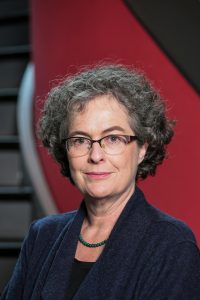
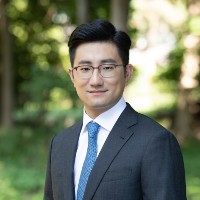
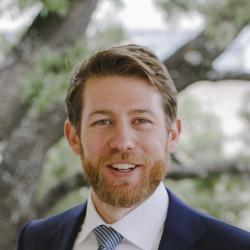
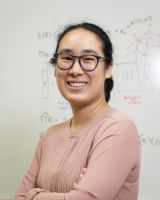
Sabine Süsstrunk is a Full Professor and Director of the Images and Visual Representation Laboratory (IVRL) at EPFL's School of Computer and Communication Sciences. She holds a BS in Scientific Photography from ETH Zürich, MS from Rochester Institute of Technology, and PhD from University of East Anglia. Her career includes positions at Hewlett-Packard Labs and Corbis Corporation. Her research explores computational imaging, computational photography, color processing, computer vision, and image quality. Key interests include near-infrared applications, multispectral imaging, and computational aesthetics. Her work bridges hardware and software solutions for imaging challenges. Publications demonstrate consistent focus on advancing generative models (diffusion models, neural cellular automata), 3D reconstruction (NeRF variants), and media integrity (DeepFake detection). Recent trends show increased emphasis on 3D vision, robustness in generative AI, and video analysis. Awards & Honors: IS&T/SPIE Electronic Imaging Scientist of the Year (2013) Raymond C. Bowman Teaching Award (2018) EPFL AGEPoly IC Polysphere Award (2020) 8 Best Paper/Demo Awards Fellowships: IEEE, IS&T, ELLIS, AIIA She leads the IVRL lab and advises PhD candidates while serving as President of the Swiss Science Council. Research is supported through competitive grants and industry collaborations.
Jeffrey Heinz is a Professor at Stony Brook University, with a joint appointment in the Department of Linguistics and the Institute for Advanced Computational Science. He holds a Ph.D. from UCLA (2007) and previously served on the faculty at the University of Delaware from 2007–2017. His research bridges theoretical linguistics, computational learning theory, and formal language models, focusing on phonology, linguistic typology, and grammatical inference. He has contributed to influential works on computational phonology and edited volumes on topics like phonological stress and learning theory. Key academic achievements include the 2017 Linguistic Society of America Early Career Award for contributions to computational inference in language. His work emphasizes the intersection of formal models and empirical linguistics, with applications to reduplication, phonological processes, and machine learning benchmarks like MLRegTest. Heinz has co-authored a book on grammatical inference and guest-edited special issues in Machine Learning and Phonology . His research also extends to interdisciplinary applications, such as modeling human-robot interaction and pediatric motor rehabilitation through grammatical inference techniques.
Neal Sullivan is a Professor of Mechanical Engineering at the Colorado School of Mines (CSM), leading experimental research at the Colorado Fuel Cell Center as its director. His expertise lies in electrochemical ceramics, with a focus on fuel cells, electrolyzers, and membrane reactors for energy conversion and storage. Sullivan’s work spans from materials development to large-scale system integration, addressing applications such as hydrogen production, CO₂-to-fuels processes, and geothermic fuel cell systems for unconventional oil recovery. His research is supported by grants from the U.S. Department of Energy (DOE), NASA, and industry partners, totaling over $15M. Notable projects include the development of proton-conducting ceramic electrolyzers for water splitting, high-efficiency hybrid SOFC-IC engine systems, and Mars-based CO₂ methanation. Sullivan has led collaborative efforts with global leaders in electrochemistry, emphasizing scalability and durability in energy systems. Key contributions include innovations in protonic ceramic fabrication, catalyst integration, and multi-stack system design. His lab focuses on bridging early-stage materials research with full-scale demonstrations, achieving power outputs up to 100 kW. Sullivan’s work has been published in top journals like Nature Energy and International Journal of Hydrogen Energy , with a strong emphasis on practical applications and renewable energy solutions. Labs/Teams: Director of the Colorado Fuel Cell Center. Grants/Advising: PI/co-PI on multiple DOE and NASA grants, including $5M for hybrid SOFC systems and $1.5M for geothermic fuel cells. Advises on advanced materials and system integration for energy storage and conversion.
Sung Hoon Choi is an Assistant Professor in the Department of Economics at the University of Connecticut, part of the College of Liberal Arts and Sciences. His research focuses on developing econometric tools for analyzing big data, machine learning applications, and forecasting using high-dimensional panel datasets. He holds a Ph.D. in Economics from Rutgers University (2021), an M.A. in Applied Statistics from Yonsei University (2016), and a B.A. in Statistics from the University of California, Berkeley (2013). His research interests include econometric theory, financial econometrics, and high-frequency data analysis. Notable areas of concentration are large panel data and factor models, high-dimensional data techniques, and volatility matrix analysis. He teaches courses such as Econometrics I and III for Ph.D. students, and Python programming for economists at undergraduate and master's levels. Recent publications focus on volatility modeling using factor structures, high-frequency financial data, and panel data econometrics. His work addresses challenges in structural information analysis, standard errors for clustered panels, and feasible generalized least squares methods. He collaborates with researchers like Donggyu Kim and Jushan Bai, contributing to leading journals like the Journal of Econometrics and Econometric Theory .
Lena Simine is an Associate Professor in the Department of Chemistry at McGill University, affiliated with the Faculty of Science. She holds a B.Sc. (2009) and Ph.D. (2015) from the University of Toronto, followed by a postdoctoral fellowship at Rice University (2015–2019). Her laboratory is located in P&P 118A, focusing on developing computational approaches for modeling molecular phenomena in theoretical chemistry and chemical physics. Her research interests center on computational materials design, quantum dynamics, and the application of machine learning to chemistry. Specific areas include simulating amorphous materials, aptamer design, and quantum systems modeling. She teaches CHEM 365 (Statistical Thermodynamics) and CHEM 593 (Statistical Mechanics and Machine Learning for Chemistry). Her work explores interdisciplinary frontiers, such as path-integral simulations, GFlowNets for molecular design, and the physical principles underlying deep learning in materials science. Recent studies highlight innovations like DeltaGzip for binding affinity prediction and the MAP protocol for 3D disordered matter simulations. Her lab’s contributions span computational methods, material innovation, and quantum phenomena, with a focus on advancing both theoretical frameworks and practical applications in chemistry and materials science.
Ben Bloem-Reddy is an Assistant Professor in the Department of Statistics at the University of British Columbia (UBC), Vancouver Campus. His research focuses on statistical theory and applications in machine learning, particularly in causal inference, Bayesian methods, neural networks, and probabilistic models. He advises current students Quanhan (Johnny) Xi, Kenny Chiu, and Gian Carlo Diluvi. His work bridges foundational statistical theory with practical machine learning challenges, including causal discovery, model identifiability, and uncertainty quantification. Recent research explores topics such as latent variable models, generative processes, and symmetry in data and algorithms. His contributions span interdisciplinary areas like particle physics applications and information theory-based compression techniques. Ben’s research trends emphasize advancing theoretical guarantees for modern machine learning systems while addressing real-world problems. His publications frequently intersect with algebraic topology (e.g., cocycles in causal inference) and nonparametric methods. He maintains an active lab within the Department of Statistics, fostering collaborations across UBC’s academic ecosystem. No scientific awards are explicitly listed in the provided information. His advising and grant activities focus on statistical methodology development, as evidenced by his student supervision and published work. His office is located in ESB 3168, and he can be reached at benbr@stat.ubc.ca.
Christina Lee Yu is an Assistant Professor at Cornell University in the School of Operations Research and Information Engineering (ORIE). She holds a PhD and MS in Electrical Engineering and Computer Science from MIT (2017, 2013) and a BS in Computer Science from Caltech (2011). Her research focuses on algorithm design, high-dimensional statistics, causal inference in networks, and reinforcement learning. She is also an Amazon Scholar and has received prestigious awards, including the NSF CAREER Award and Intel Rising Stars Award. Her work is supported by grants from the NSF and Air Force Office of Scientific Research. Education: PhD in EECS, MIT (2017) MS in EECS, MIT (2013) BS in Computer Science, Caltech (2011) Research Interests: Algorithm design and analysis Inference over networks and causal inference Sequential decision making under uncertainty Online learning and reinforcement learning High-dimensional statistics Awards and Honors: NSF CAREER Award (2024) ACM SIGMETRICS Rising Stars Award (2024) Intel® Rising Stars Award (2021) JPMorgan Faculty Research Award (2021) Simons Institute Research Fellow (2020) INFORMS Dantzig Dissertation Award Honorable Mention (2018) Grants and Funding: National Science Foundation (NSF) CAREER Grant Air Force Office of Scientific Research Grant Advising: PhD Students: Sean Sinclair, Tyler Sam, Xumei Xi Collaborators: Mayleen Cortez, Matthew Eichhorn Labs and Collaborations: Member of ORIE, Statistics, CAM, and CS graduate fields at Cornell Amazon Visiting Academic in Fulfillment Optimization (2025)
David Simmons-Duffin is a Professor of Theoretical Physics at the California Institute of Technology (Caltech), where he has held positions since 2016. He is part of the Division of Physics, Mathematics and Astronomy, contributing to the Physics Department. His career progression includes roles as Visiting Associate (2016–17), Assistant Professor (2017–20), and Associate Professor (2020–21) before becoming full Professor in 2021. Education: A.B. and A.M. from Harvard University (2006), CASM from the University of Cambridge (2007), and Ph.D. from Harvard University (2012). His research focuses on conformal field theory (CFT), bootstrap methods, quantum field theory, and AdS/CFT correspondence. Key areas include precision computations in strongly coupled systems, critical phenomena, and applications to holography and quantum gravity. Research highlights include advancing the conformal bootstrap program, analyzing CFT data in 3D Ising models, and exploring connections between CFTs and gravitational theories. His work often bridges theoretical frameworks with numerical methods, yielding insights into operator product expansions (OPE), spectral gaps, and causality constraints. Affiliations include the Institute for Quantum Information and Matter (IQIM) and other Caltech research centers. His contributions have shaped modern approaches to understanding universality in critical systems and the geometric aspects of quantum field theories. Notable collaborations involve high-precision calculations, bootstrap island techniques, and studies of thermal QFT and light-ray operators. His work emphasizes interdisciplinary methods, combining analytic tools with computational advancements to tackle complex theoretical problems.
Carl Henrik Ek is a Professor of Statistical Learning at the Department of Computer Science and Technology (Computer Laboratory) at the University of Cambridge. He is also a fellow and Director of Studies at Pembroke College, and holds visiting positions at Karolinska Institute in Stockholm and the Royal Institute of Technology. He serves as co-Director for the UKRI AI Centre for Doctoral Training in Decision Making for Complex Systems, a collaboration between Cambridge and Manchester universities, and is involved with the Accelerate Program in the Computer Laboratory. Dr. Ek's educational background includes a MEng degree in Vehicle Engineering from the Royal Institute of Technology in Stockholm, followed by a PhD from Oxford Brookes University. During his PhD, he spent time at the University of Manchester and the University of Sheffield. His PhD supervisors were Professor Neil Lawrence and Professor Phil Torr, and his postdoctoral research was conducted at UC Berkeley with Professor Trevor Darrell and Professor Raquel Urtasun. Professor Ek's research focuses on statistical learning, particularly on developing data-efficient and interpretable machine learning methods. His work spans modeling and inference in machine learning, with special emphasis on Bayesian non-parametric methods and Gaussian processes. He explores how to specify assumptions that allow learning from small amounts of data, bridging theoretical foundations with practical applications in various domains. His recent publications demonstrate a strong trend toward applying machine learning to healthcare, drug discovery, and engineering design. There's significant work on Gaussian processes, reinforcement learning, and generative models, with applications ranging from medical diagnostics to structural engineering. His research shows an increasing interdisciplinary focus, connecting machine learning with fields like cardiology, pharmacology, and computational geometry. Professor Ek has received numerous teaching awards throughout his career: Pilkington Price for Teaching Excellence (2024) Teacher of the year in Computer Science at University of Bristol (2016) Docent in Machine Learning at Royal Institute of Technology (2016) Teacher of the year at Royal Institute of Technology, Sweden (2015) Teacher of the year from Student chapter in Industrial Economics at Royal Institute of Technology (2015) Teacher of the year in Computer Science at Royal Institute of Technology (2012) Professor Ek teaches Advanced Data Science, Advanced topics in machine learning, and Machine Learning and the Physical World. He has supervised PhD students throughout his career but is not currently accepting new PhD students for 2025/26 or 2026/27. His research is supported by various grants, including his role as co-Director of the UKRI AI Centre for Doctoral Training. He is an active member of the ml@cl research group at Cambridge and has previously been involved with research groups at University of Bristol and Royal Institute of Technology. His work connects with several interdisciplinary initiatives, particularly in healthcare AI and engineering applications of machine learning.
June Huh is a Mathematics Professor at Princeton University's Department of Mathematics. His research focuses on the interplay between algebraic geometry, combinatorics, and matroid theory, with notable contributions to Hodge theory, tropical geometry, and log-concavity phenomena. He is actively involved in collaborative projects such as the FRG initiative on matroids, graphs, and algebraic geometry. Key research interests include matroid polytopes, Chow rings, Lagrangian geometry, and combinatorial applications of Hodge-Riemann relations. His work bridges discrete and continuous mathematics, with implications for enumerative geometry and geometric combinatorics. Recent publications explore topics like volume polynomials, Bergman fans, and singular Hodge theory in combinatorial geometries. He has received funding for interdisciplinary research through grants like the FRG Collaborative Research program. His contributions highlight innovative methods in geometric and algebraic combinatorics.
Greta Panova is a Gabilan Distinguished Professor of Science and Engineering and a Professor of Mathematics at the University of Southern California (USC). Her research focuses on Algebraic Combinatorics, with connections to representation theory, statistical mechanics, probability, and computational complexity theory. She also engages in molecular biology modeling. Panova holds editorial roles at journals including the Electronic Journal of Combinatorics, Arnold Mathematical Journal, and Communications of the American Mathematical Society. She is a writer/editor for the Putnam Mathematical Competition (2023-2025) and is currently supported by NSF grants in the CCF division. Her research interests span Algebraic Combinatorics, Representation Theory, Statistical Mechanics, Probability, and Computational Complexity Theory. Specific areas include Kronecker and Littlewood-Richardson coefficients, asymptotic behavior of combinatorial structures, and the interplay between algebraic structures and computational complexity. She also explores applications in molecular biology, particularly protein dynamics in DNA lesions. NSF grants in CCF division (current) Editorial roles at Electronic Journal of Combinatorics, Arnold Mathematical Journal, and others Contributor to the Putnam Mathematical Competition Panova's research is supported by NSF grants, focusing on computational complexity and algebraic combinatorics. She has advised students in areas related to her research, though specific names aren’t listed here. Grants have funded explorations into geometric complexity theory, asymptotic combinatorics, and molecular biology modeling. Her work involves collaborations across disciplines, including statistical mechanics and integrability, as highlighted in her white paper contributions.
Prof. Tobias Müller is a Professor at the Bernoulli Institute for Mathematics, Computer Science and Artificial Intelligence at the University of Groningen. His academic journey includes previous positions at Utrecht University, CWI (Centrum Wiskunde & Informatica), Tel Aviv University, and Eindhoven University of Technology, with a doctorate from the University of Oxford under Colin McDiarmid. His research focuses on combinatorics, probability theory, random graphs, percolation, discrete and stochastic geometry, and combinatorial game theory. He has contributed extensively to understanding complex networks, hyperbolic models, and geometric random structures. Research Interests: Random Graphs and Percolation Theory Discrete and Stochastic Geometry Hyperbolic Network Models Probabilistic Combinatorics Geometric Probability Graph Algorithms and Connectivity Notable Contributions: Analysis of Voronoi and Poisson-Voronoi percolation in hyperbolic planes. Studies on Mallows random permutations and their cycle structures. Research on component games and logical limit laws in graph theory. Investigations into the geometry and properties of random geometric graphs. Grants & Collaborations: Active in organizing workshops and conferences on random graphs and geometric networks, including the BIRS Workshop on Random Geometric Graphs and the STAR Workshops series. Labs/Teams: Member of the Bernoulli Institute’s research groups, focusing on stochastic studies, combinatorics, and algorithmic methods.
Di Bu is an Associate Professor in the Department of Applied Finance at Macquarie University, leading the Macquarie University FinTech and Banking Research Centre. He holds a PhD in Finance from the University of Queensland (2015). His research focuses on FinTech innovations, climate finance, household finance, and behavioral finance, with an emphasis on embedding sustainability into financial systems. He has secured over AUD 4 million in research funding through ARC Linkage and Discovery projects, focusing on AI-driven credit assessments, Open Banking, ESG analytics, and climate resilience. Education PhD in Finance, University of Queensland (2015) Research Interests Di's work explores belief formation in financial decisions, sustainable lending practices, and climate adaptation tools. He pioneers projects such as AI credit scoring systems, behavioral interventions for sustainable investing, and digital platforms for climate resilience. His interdisciplinary approach bridges industry, government, and academia to address financial and environmental challenges. Projects & Funding AUD 4M+ in grants including two ARC Linkage and one ARC Discovery projects Current initiatives: Greenwashing detection, ESG rating divergence analysis, and climate-resilient finance platforms Labs/Teams Director of the FinTech & Banking Research Centre and affiliated with Data Horizons Research Centre and Frontier AI Research Centre at Macquarie University.
Christopher Honey is an Associate Professor in the Department of Psychological & Brain Sciences at Johns Hopkins University, affiliated with the Krieger School of Arts & Sciences. His research focuses on computational cognitive neuroscience, exploring how the brain processes sequential information such as language and memory. He holds a PhD from Indiana University and has held positions at Princeton University and the University of Toronto before joining JHU in 2016. Education: PhD in Psychological and Brain Sciences, Indiana University Postdoctoral Fellowship at Princeton University with Uri Hasson Bachelor’s in Applied Mathematics and English Literature, University of Cape Town Research Interests: Neural dynamics of memory and perception Temporal processing in the brain Cognitive modeling using computational methods Neuroimaging data standards (e.g., BIDS) Publications highlight his work on brain state fluctuations, neuroimaging data structures, and memory enhancement. His lab develops tools for analyzing fMRI and EEG data, emphasizing real-world applications like smartphone-based cognitive interventions. Lab and Collaborations: Active projects on narrative processing and hippocampal replay Development of open-source neuroscience tools like iELVis Focus on translational research for aging populations
Kavan Modi is a Professor at the School of Physics and Astronomy, Monash University. His research focuses on quantum information theory applied to dynamics, metrology, computation, thermodynamics, and relativity. He leads the Monash Quantum Information Science (MonQIS) group and serves as Director of the Centre for Quantum Technology at Transport for NSW (2022–2024). Education: B.Sc. Engineering Physics (Embry-Riddle Aeronautical University, 2001), M.A. Physics (University of Texas at Austin, 2004), Ph.D. Physics (University of Texas at Austin, 2008). Postdoctoral positions included the Centre for Quantum Technologies (Singapore, 2008–2011) and Clarendon Lab, Oxford (2011–2013). Joined Monash in 2014. Research interests center on quantum dynamics, non-Markovian processes, and their applications in quantum computing and information science. Projects include developing error correction codes, quantum algorithms for network analysis, and mitigating correlated noise in quantum systems. He has authored over 111 publications, with recent work emphasizing non-Markovian characterization, quantum process tomography, and topology-based quantum algorithms. Awards and grants include leadership in multiple Australian Research Council projects. Advising/Grants: Primary Chief Investigator in projects like 'Quantum Software Platform' (2023–2026) and 'Mitigating Correlated Noise in Quantum Machines' (2020–2021). Supervises graduate students and collaborates globally on quantum information science. Labs/Teams: MonQIS group focuses on foundational and applied quantum research, integrating theory and experimental collaborations.