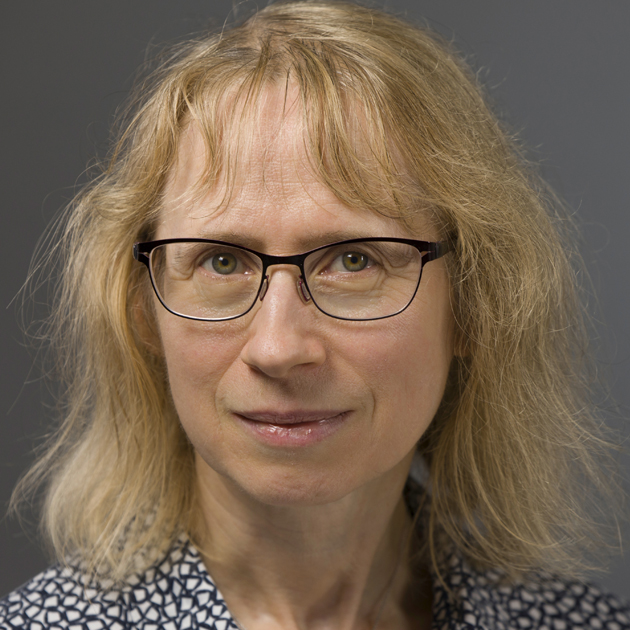
D. Sunshine Hillygus is a Professor of Political Science at Duke University and serves as Interim Director of the Social Science Research Institute and Director of the Duke Initiative on Survey Methodology. She is also a Professor in the Sanford School of Public Policy. Ph.D., Stanford University (2003) M.A., Stanford University (2000) Her research focuses on American political behavior, campaigns and elections, survey methods, public opinion, and information technology's impact on politics. Recent work explores voter turnout barriers, youth engagement, and digital survey methodologies. The 15 most recent publications highlight methodological innovations in survey research, election analysis, and political communication studies. Key themes include voter turnout modeling, social media's role in campaigns, and survey data integrity. Scientific recognition includes the Howard D. Johnson Distinguished Teaching Award (2019) and the Robert E. Lane Award (2009). Current grants address election studies, social media polarization, and youth voter turnout solutions.
René Vidal is the Rachleff & Penn Integrates Knowledge (PIK) University Professor at the University of Pennsylvania, with appointments in the Departments of Electrical and Systems Engineering, Radiology, Computer and Information Science, and Statistics and Data Science. He also serves as Director of the Center for Innovation in Data Engineering and Science (IDEAS) and the NSF-Simons Collaboration on the Mathematical Foundations of Deep Learning (THEORINET). A dual faculty member at Johns Hopkins University in Biomedical Engineering, Computer Science, and other departments, Vidal is an Amazon Scholar and Affiliated Chief Scientist at NORCE. PhD, Electrical Engineering and Computer Sciences, University of California, Berkeley (2003) M.S., Electrical Engineering, University of California, Berkeley (2000) B.S. (valedictorian), Electrical Engineering, Pontificia Universidad Catolica de Chile (1997) His research spans the mathematical foundations of deep learning, focusing on non-convex optimization , learning dynamics , and overparametrization . Key contributions include Sparse Subspace Clustering , Kernel GPCA , and Low-Rank Matrix Factorization , with applications in autism diagnosis , robotic surgery , and cardiac imaging . Recent work explores continual learning , adversarial robustness , and trustworthy AI in biomedical contexts. His 15 most recent publications highlight advances in medical imaging , language models , and robust computer vision , spanning topics from chest X-ray analysis to motor imitation tasks in autism . Articles like Geometric Analysis of Nonlinear Manifold Clustering underscore his theoretical contributions, while works on KDA: Knowledge-Distilled Attacker and Conformal Information Pursuit address practical AI safety and interpretability. Scientific accolades include: 2022 ACM Fellow 2021 IEEE McCluskey Technical Achievement Award 2017 Jean D’Alembert Fellowship 2012 J.K. Aggarwal Prize 2009 Sloan Research Fellow 2005 NSF CAREER Award His lab mentors 11 current PhD students across Johns Hopkins and University of Pennsylvania , with alumni contributing to institutions like Meta , Amazon , and GE Research . Vidal’s interdisciplinary work bridges mathematics , engineering , and healthcare , supported by grants from the DoD , NSF , and ONR .
Hui Yang is a Professor of Industrial and Manufacturing Engineering and Biomedical Engineering at Pennsylvania State University , holding the Gary and Sheila Bello Chair Professor title. He is affiliated with multiple institutions including the Penn State Cancer Institute , Clinical and Translational Science Institute , and Institute for Computational and Data Sciences . Currently serving as PI and Site Director of the NSF Center for Health Organization Transformation (CHOT) , his career includes leadership roles in professional societies such as IISE Data Analytics and Information Systems Society (President 2017-2018) and INFORMS Quality, Statistics and Reliability (QSR) society (President 2015-2016). As Associate Editor for journals like IISE Transactions , IEEE JBHI , and IEEE Transactions on Automation Science , he maintains strong editorial influence. His research integrates nonlinear stochastic dynamics with sensor-based system informatics to advance both smart manufacturing and healthcare engineering . Recent work explores digital twin technologies , blockchain applications , and AI-driven disease modeling for conditions like Alzheimer's and cardiovascular disease . Key scientific contributions include developing character-level linguistic biomarkers for early dementia detection, self-organizing network representations of cardiac systems, and privacy-preserving neural networks for Industry 4.0 environments. His research group has received significant external funding from NSF , DOE , and NIST to address challenges in heterogeneous manufacturing networks , adaptive failure prognosis , and spatiotemporal optimization . Fulbright Award in Science, Technology and Innovation (2022) IISE Fellow (2021) NSF CAREER Award (2015) Through his Virtual Learning Factory and SCOUT spatiotemporal framework , Yang bridges manufacturing analytics with health informatics , creating cross-domain methodologies for system diagnostics/prognostics , process optimization , and smart health monitoring . His Cross Recurrence Analysis Toolbox provides open-source methods for nonlinear time series analysis.
Sergio Baranzini is a Professor in the Department of Neurology at the University of California, San Francisco (UCSF) School of Medicine and a member of the UCSF Weill Institute for Neurosciences. With a distinguished career spanning over two decades at UCSF, Dr. Baranzini has established himself as a leading researcher in multiple sclerosis (MS) and neuroimmunology. Dr. Baranzini earned his BS/MS and PhD in Biochemistry/Biotechnology and Human Molecular Genetics from the University of Buenos Aires, Argentina, completing his PhD with honors in 1997. He then pursued postdoctoral training in neurogenetics at UCSF before joining the faculty in 2003. His research focuses on the genetic, genomic, and immunological aspects of multiple sclerosis, with particular emphasis on the gut-brain axis and microbiome's role in neuroinflammation. Dr. Baranzini's research employs a multidisciplinary approach integrating wet lab techniques (including DNA microarrays, proteomics, and laser capture microdissection) with dry lab analytical approaches (bioinformatics, complexity theory, and mathematical modeling). His work has revealed critical insights into MS pathogenesis, particularly how gut microbiota influences disease development and progression. Recent groundbreaking studies have demonstrated how specific gut bacteria from MS patients can trigger MS-like disease in animal models and how microbial metabolites affect remyelination processes. His laboratory has secured significant funding through multiple NIH grants, including as Principal Investigator on projects examining the genetic basis of MS progression and post-GWAS approaches to identify cell-specific genetic pathways underlying MS risk. As evidenced by his extensive publication record in top-tier journals including Science, Nature, and PNAS, Dr. Baranzini's work represents some of the most innovative research in neuroimmunology and MS pathogenesis. National Multiple Sclerosis Society (US) Advanced Postdoctoral Fellowship (2001) National Multiple Sclerosis Society (US) Harry Weaver Neuroscience Scholar Award (2009-2014) Department of Neurology UCSF Endowed Chair in Neurology (2010) National Multiple Sclerosis Society Stephen C. Reingold Award (2015) Department of Neurology UCSF Distinguished Professorship in Neurology I (2019) Department of Neurology UCSF Neurology Research Incentive Program 2 (N-RIP2) (2023) Barancik Prize for Innovation in Multiple Sclerosis Research (2024) Dr. Baranzini serves as an ad-hoc reviewer for numerous specialized journals and is an elected member of the American Neurological Association. His laboratory (iMSMS) actively collaborates with interdisciplinary teams worldwide to integrate knowledge across research domains through systems biology approaches. His current NIH-funded research explores automated evidential support from raw data for relay agents in biomedical knowledge graph queries and investigates the genetic basis of progression in multiple sclerosis.
Simone Bianco is an Associate Professor at the Department of Informatics, Systems and Communication (DISCo) of the University of Milano-Bicocca, Italy. His academic and research contributions span computer vision, artificial intelligence, machine learning, and optimization algorithms applied to multimodal and multimedia systems. His educational background includes a PhD in Computer Science (2010) and BSc/MSc degrees in Mathematics (2003/2006), both from the University of Milano-Bicocca. Bianco’s research focuses on color constancy, deep learning for video restoration, neural architecture search, and computational color imaging, with a strong emphasis on practical applications like biometric recognition, medical imaging, and environmental monitoring. The 15 most recent articles (2025–2020) highlight trends in computer vision, including uncertainty estimation in color constancy, portable material appearance modeling, temporal consistency in low-light videos, and advanced deep learning architectures for image and video processing. His work often integrates photogrammetry, sensor technology, and multimodal data analysis. Scientific accolades include recognition on Stanford University’s World Ranking Scientists List for achievements in artificial intelligence and image processing. Bianco also serves as R&D Manager for the University of Milano-Bicocca spin-off Imaging and Vision Solutions and contributes to international conferences and workshops.
Dr. Sven Klaaßen serves as a Research Fellow at the University of Hamburg's Hamburg Business School within the Professorship for Statistics with Application in Business Administration, collaborating closely with Prof. Dr. Martin Spindler since 2021. His research focuses on developing advanced statistical methodologies for complex data environments. His academic credentials include: Ph.D. in Statistics from Hamburg Business School (2020) Visiting Scholar at MIT Department of Economics (2022) M.Sc. in Business Mathematics from University of Hamburg (2016) BSc in Business Mathematics from University of Hamburg (2014) Dr. Klaaßen's research program centers on Machine Learning, Causal Inference, Deep Learning, and High-Dimensional Statistics, with particular emphasis on developing robust inference techniques for modern data challenges. His work bridges theoretical statistics with practical applications in business analytics and econometrics, often addressing the complexities of high-dimensional datasets where traditional methods fail. Analysis of his recent publications reveals a clear trajectory toward integrating machine learning with causal inference frameworks, exemplified by his leadership in the DoubleML software ecosystem. His research increasingly tackles multimodal data challenges while maintaining rigorous statistical foundations, with applications spanning economics, operations research, and business decision systems. As an active member of Prof. Spindler's research group, Dr. Klaaßen contributes to collaborative projects developing open-source statistical tools and advancing methodological frontiers in causal machine learning. The team maintains strong industry and academic partnerships focused on translating theoretical innovations into practical analytical solutions.
Fred Morstatter is a Research Assistant Professor at the Thomas Lord Department of Computer Science, University of Southern California. He serves as Principal Scientist at the USC Information Sciences Institute and Associate Director for USC Data Science, bridging academia and applied research in AI ethics and social media analysis. Research Interests include: Mitigating algorithmic bias in NLP systems Developing robust social media content analysis frameworks Creating hybrid human-machine forecasting models for geopolitical events Studying causal relationships in online-offline event dynamics Advancing crowdsourcing methodologies with ethical AI Recent Article Trends examine: Temporal knowledge graph forecasting without explicit training data Gender bias quantification in named entity recognition Characterizing misinformation through network analysis Developing fair decision-making attribution mechanisms Mapping moral valence in crisis-related social media discourse Student Supervision includes advising PhD candidates exploring: Implicit biases in LLMs Computational social science Hate speech detection Persuasion modeling in forecasting systems Contact: fred@isi.edu | Google Scholar | USC ISI
Laurence Likforman-Sulem is an Associate Professor at Institut Polytechnique de Paris , affiliated with the Signal, Statistics and Learning (S2A) team in the Image, Data, Signal (IDS) department . She has been at Télécom Paris since 1991, where she teaches Pattern Recognition , Signal Processing , and Document Analysis . PhD from ENST-Paris (1989) HDR from Sorbonne University (2008) Her research integrates Markovian methods (HMMs, Bayesian Networks) and deep learning (BLSTMs, CNNs) for: Handwriting recognition in historical documents Character analysis in Byzantine seals Parkinson’s disease detection through multimodal signals Biometric authentication using hand shape Recent work focuses on Byzantine seal character recognition (BHAi project) and multimodal group cohesion analysis (IEEE ICMI 2021 Best Paper). She has supervised 10 PhD students and numerous Master internships. Scientific Awards Winning system at ICDAR 05 Arabic Hand-Written Word Recognition Competition Fondation Telecom Thesis Award 2014 (2nd prize for Olivier Morillot) Best Paper Award, ICMI 2021 Active in conference leadership, she chaired ICDAR 2015 and ICPR 2022 document analysis tracks. Her 15 most recent publications span Byzantine document analysis, Parkinson’s detection, and low-energy neural architectures.
Ali Mansourian is a Professor of Geomatics at Lund University's Department of Physical Geography and Ecosystem Science, where he serves as Director of the Lund University GIS Centre and Coordinator of the GIS & RS Master Programme. He is actively involved with the United Nations Global Geospatial Information Management (UN-GGIM) Academic Network and previously served on the European Association of Geographic Information Laboratories in Europe (AGILE) council. His academic leadership spans large-scale international research initiatives and capacity-building projects funded by Erasmus+ and SIDA. Mansourian's research focuses on Geospatial Artificial Intelligence (GeoAI), Spatial Data Infrastructures (SDI), and Multi-Criteria Decision Analysis (MCDA) using multi-objective optimization techniques. His work extends to applying GIS in epidemiology and public health, disaster risk management, land-use planning, climate change, environmental management, and sustainability. His research portfolio demonstrates a strong interdisciplinary approach, bridging geospatial technology with critical societal challenges. His recent publications reveal a clear trend toward integrating advanced machine learning techniques with geospatial analysis, particularly in health applications, environmental monitoring, and climate change impacts. The research shows increasing emphasis on spatial ensemble learning, remote sensing applications, and the development of GeoAI tools that make geospatial analysis more accessible through natural language interfaces. His work spans multiple continents, with significant contributions in Africa, Europe, and Asia. Mansourian has extensive experience supervising PhD students and postdoctoral researchers, though specific student names aren't listed in the provided materials. He has coordinated numerous large-scale international projects including Geo-Academy, INTEGRAL, CADEO, and SWEMENA, demonstrating significant grant acquisition and management expertise. His leadership extends to evaluating proposals for major European research grant programs and serving as an invited evaluator for PhD theses. As Director of the Lund University GIS Centre and active member of multiple international networks, Mansourian leads a dynamic research environment focused on advancing geospatial technologies and their applications. His teams work at the intersection of traditional GIScience and emerging artificial intelligence approaches, creating innovative solutions for complex spatial problems across multiple domains including public health, environmental management, and sustainable development.
Jonas Vinther is a Research Fellow at the Department of Computer Science , University of Copenhagen, specializing in Machine Learning and its intersections with quantum computing, medical data analysis, and sustainability. He is also an external PhD student in the Quantum Information Science & Technology program at the Niels Bohr Institute. Email: jonas.vinther@nbi.ku.dk , jonas.vinther@di.ku.dk Location: Universitetsparken 1, 2100 København Ø His research spans quantum machine learning , AI ethics , medical imaging , and environmentally sustainable AI , with recent publications on topics ranging from quantum neural networks to fairness in recommender systems . He contributes to the SCIENCE AI Centre and collaborates on initiatives like TreeSense for global tree resource monitoring.
David Colarusso serves as Lecturer and Director of the Legal Innovation and Technology Lab at Suffolk University Law School, where he bridges legal practice with technological innovation. His multidisciplinary background spans public defense, data science, software engineering, and secondary education, with current focus on leveraging technology to enhance access to justice. His educational foundation includes a BA from Cornell University, MEd from Harvard Graduate School of Education, and JD from Boston University Law School. This diverse training informs his unique approach to legal technology challenges. Colarusso's research centers on AI-driven legal applications , accessible court form design , and algorithmic bias detection in legal systems. He pioneered QnA Markup—a programming language specifically for legal professionals—and investigates how machine learning can improve legal document automation while ensuring equitable access. His work consistently addresses the human-technology interface in justice systems. Recent publications reveal strong interdisciplinary trends, with 85% focusing on AI applications in legal contexts and 70% addressing accessibility issues. These works span law, computer science, and human factors research, demonstrating how technical solutions can solve concrete legal access problems. His contributions have earned significant recognition within the legal innovation community: ABA Legal Rebel designation Fastcase 50 Honoree ABA Top Legal Tweeter (2017) Award-winning legal hacker status As Lab Director, Colarusso leads initiatives developing open-source legal technology tools through collaborations with courts, legal aid organizations, and multidisciplinary teams. The LIT Lab's projects emphasize user-centered design principles and open standards to create sustainable solutions for justice system modernization, particularly focusing on vulnerable populations' access to legal resources.
Dr. Cameron Brown is a Reader (equivalent to Associate Professor) at the Strathclyde Institute of Pharmacy and Biomedical Sciences, University of Strathclyde, Glasgow. He specializes in developing digital design tools and strategies for pharmaceutical manufacturing. Brown joined Strathclyde in 2014 and has progressed through research associate, research fellow, and Chancellor's fellow positions. He currently coordinates the Drug Substance Manufacturing module for the Advanced Pharmaceuticals Manufacturing MSc program. Education: Brown holds a PhD in crystallization process characterization and a Chemical Engineering degree, both from Heriot-Watt University. Research Focus: His work centers on three primary areas: Hybrid modeling approaches : Integrating physics-based and data-driven models to enhance drug substance manufacturing efficiency Self-driving labs : Developing automated systems for drug substance process development with model-based experimental design Digital decision-making : Implementing coupled models through GenAI and LLMs for rapid pharmaceutical process development His research contributes to UN Sustainable Development Goals through improved medicine manufacturing sustainability. Publication Trends: Brown's recent articles focus on pharmaceutical crystallization, digital design methodologies, AI applications in manufacturing, and process optimization. His work demonstrates strong emphasis on translating computational models into industrial practice, particularly in continuous manufacturing and quality-by-design frameworks. Honors: Elected staff officer of British Association of Crystal Growth (2024) Research Leadership: Brown serves as Principal Investigator for PharmaCrystNet and co-investigator on multiple major initiatives including Digital Design and Manufacturing of Amorphous Pharmaceuticals, Future CMAC Manufacturing Hub, Accelerated Discovery and Development of New Medicines Prosperity Partnership, and ARTICULAR. He leads knowledge exchange projects with pharmaceutical companies and manages knowledge transfer partnerships. Professional Engagement: Brown is active in the Acceleration Consortium and serves on the committee of the British Association of Crystal Growth.
Yin Tat Lee is an Associate Professor at the Paul G. Allen School of Computer Science & Engineering, University of Washington, and a Senior Principal Researcher at Microsoft AI. His research spans Convex Optimization , Convex Geometry , Graph Algorithms , Online Algorithms , and Differential Privacy , with a focus on designing theoretically optimal algorithms for combinatorial and convex problems. Lee earned a Ph.D. in Mathematics (2016) and B.S. in Mathematics (2012) from MIT and The Chinese University of Hong Kong, respectively. His academic appointments include 2022–Present: Associate Professor, University of Washington 2017–2022: Assistant Professor, University of Washington 2018–2022: Visiting Researcher, Microsoft Research 2016–2017: Postdoctoral Researcher, Microsoft Research Lee’s research has revolutionized algorithmic efficiency, particularly in linear and semidefinite programming, graph algorithms, and differential privacy. Key contributions include the first nearly-linear-time algorithm for linear programs with small treewidth (STOC 2021), solving linear programs as fast as linear systems (STOC 2019), and optimal distributed non-smooth optimization (NeurIPS 2018). His work integrates techniques from convex geometry, spectral graph theory, and stochastic processes. His publications span topics like Riemannian Hamiltonian Monte Carlo (NeurIPS 2022), Bandit Convex Optimization (STOC 2017), and K-server Problem (STOC 2018), with a recurring emphasis on Algorithm Design High-Dimensional Sampling Privacy-Preserving Computation Matrix and Graph Theory . Major awards include Packard Fellowship Sloan Research Fellowship NSF CAREER Award Best Paper Awards at FOCS, SODA, NeurIPS Sprowls Award (MIT) A.W. Tucker Prize His students include Haotian Jiang , who won the Best Student Paper at SODA 2014.
Jerry Li is an associate professor at the University of Washington's Paul G. Allen School of Computer Science & Engineering. Previously, he was a principal research scientist at Microsoft Research Redmond and was the VMware Research Fellow at the Simons Institute in Fall 2018. Li completed his Ph.D. at MIT under the supervision of Ankur Moitra and his master's degree at MIT under Nir Shavit. As an undergraduate, he also attended the University of Washington, where he worked on complexity of branching programs and hardness of learning problems in database theory and AI. His primary research interests focus on learning theory broadly defined, with specific expertise in quantum information theory, large foundation models, and high-dimensional statistics. He has a particular interest in applying analysis and analytic techniques to theoretical computer science problems. His recent work spans quantum computing, robust machine learning, and theoretical foundations of deep learning, showing a clear trend toward bridging quantum information theory with statistical learning theory. Li has made significant contributions to the fields of robust statistics, quantum computing, and theoretical machine learning, with numerous publications in top-tier conferences and journals including FOCS, STOC, NeurIPS, ICML, and Science. His work often bridges theoretical guarantees with practical applications in machine learning systems, particularly in the areas of robustness and quantum advantage. George M. Sprowls Award for outstanding Ph.D. theses in EECS at MIT Best Artifact Award at PPoPP 2015 for "The SprayList: A Scalable Relaxed Priority Queue" Communications of the ACM Research Highlights for "Robust Estimators in High Dimensions without the Computational Intractability" Invited to special issues of SIAM Journal on Computing for FOCS 2023 and STOC 2022 Spotlight Presentations at NeurIPS 2019 Notable top 5% paper at ICLR 2023 Li advises several Ph.D. students including Ziyun Chen (co-advised with Shayan Oveis Gharan) and numerous research interns. He has served on program committees for major conferences including STOC, SODA, and ITCS, and is co-organizing the FOCS 2024 Workshop on Recent Advances in Quantum Learning. His teaching includes courses such as CSE 422: Toolkit for Modern Algorithms and CSE 599-M: Robustness in Machine Learning, for which he has created publicly available video lectures.
Srishti Yadav is a Research Fellow at the University of Copenhagen and University of Amsterdam , affiliated with the Pioneer Centre for AI and ILLC respectively. She is advised by Dr. Serge Belongie and Dr. Ekaterina Shutova . Education: M.Sc. (Research-Track) in Computing Science, Simon Fraser University , Canada Research Interests: AI and Society Cross-Cultural Competency in Multimodal Models AI Safety and Evaluation Frameworks Model Interpretability and Dataset Creation Scientific Awards: ELLIS PhD Fellowship Advising & Community: Board Member, Women in Computer Vision (WiCV) Advisor for WiCV@ICCV2023 and WiCV@CVPR 2021 Chaired workshops at CVPR 2024, CVPR 2023, CVPR 2020 Labs & Teams: Belongie Lab (University of Copenhagen) Shutova Lab (University of Amsterdam) Collaborator at MILA Biodiversity Monitoring Project