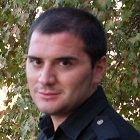
Steven Wu is an Associate Professor in the School of Computer Science at Carnegie Mellon University, with primary appointments in the Software and Societal Systems Department (S3D) and affiliated roles in the Machine Learning Department, Human-Computer Interaction Institute, CyLab, and Theory Group. Previously, he held positions at the University of Minnesota (Assistant Professor) and Microsoft Research-New York City (post-doctoral researcher). Ph.D. in Computer Science, University of Pennsylvania (co-advised by Michael Kearns and Aaron Roth) His research spans Machine Learning , Algorithms , Privacy , and Fairness , focusing on responsible AI foundations, interactive learning, causal inference, and economic applications. Recent work explores uncertainty quantification and privacy risks in synthetic data. He has received prestigious awards including the NSF CAREER Award and Penn's Rubinoff Award for his dissertation. His group mentors students across Ph.D. , postdoc, and visiting programs, with alumni now at institutions like UC Berkeley, Stanford, and Amazon. Key grants: NSF, Okawa Foundation, Open Philanthropy, Amazon, Google, J.P. Morgan, Meta, Mozilla, Apple, Cisco
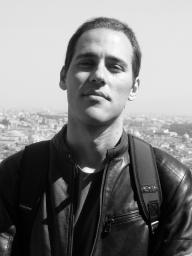
Leon Derczynski is an Associate Professor of Computer Science at the IT University of Copenhagen , with a dual role as Principal Research Scientist/LLMSEC at NVIDIA . He leads the Strømberg NLP research group and coordinates NLP South at ITU, while also being affiliated with the Machine Learning group. Specializes in Natural Language Processing , Machine Learning , and LLM security Focus on Misinformation detection , Clinical text mining , and Danish language technology Research grants include Verif-AI (2.9M DKK), ClinRead (544K DKK), and LITHME (EU COST action, €11K). He has coordinated major projects like COMRADES and PHEME , and contributed to uComp and TrendMiner . Scientific recognition includes the University of Sheffield Exceptional Contribution Award (twice), WEBIST Best Student Paper award , and FP7 funding . His technical work includes the garak.ai LLM vulnerability scanner and generalised-brown clustering library. Actively supervises students and maintains numerous GitHub repositories (86 public projects) related to NLP, machine learning, and computational linguistics. He has delivered keynotes and guest lectures , including at Innopolis University (Russia) and PET (Danish Security and Intelligence Service).
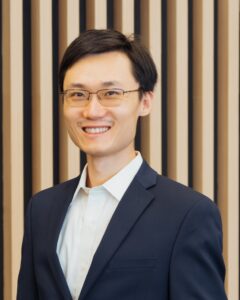
Dr. Damien Masson is an Assistant Professor in Human-Computer Interaction at the Université de Montréal, affiliated with Mila (Quebec AI Institute) and IVADO. He leads the Montréal HCI group and focuses on intelligent systems, document augmentation, and interactive visualization tools. His work bridges HCI, AI, and data science to improve how humans interact with complex information. Education: PhD in Computer Science (University of Waterloo, 2023), MSc from Université de Lille (2018). His research includes systems like Chameleon (interactive documents), ChartDetective (data extraction), and Textoshop (AI-based text editing). He has published at top venues like CHI and UIST, winning multiple awards including the 2023 Bill Buxton Dissertation Award. He actively mentors students across PhD/master's/undergraduate levels and develops open-source tools like Statslator.js and DirectGPT. His lab explores future directions in adaptive interfaces, multimodal interaction, and AI-driven document systems.
Wei Ai is an Assistant Professor at the University of Maryland, affiliated with the College of Information (INFO) and the Institute for Advanced Computer Studies (UMIACS). His research focuses on data science for social good (DSSG), integrating machine learning, causal inference, and experimental design to address societal challenges in education, virtual collaboration, and quantum computing. He leads the Center for Educational Data Science and Innovation (EDSI) and has secured grants from the NSF, Gates Foundation, and Walton Family Foundation for projects like M-Powering Teachers and classroom quality assessment tools. Education: PhD in Information from the University of Michigan (advised by Qiaozhu Mei). Previous academic roles include teaching at the University of Michigan and Peking University in courses like Data Mining and Information Retrieval. Research Interests: Machine Learning and Causal Inference, AI for Education, Virtual Teams and Social Identity, Large Language Models for Social Applications. He has published in venues such as PNAS, Management Science, ACL, and the Web Conference. Grants: Major awards include a NSF grant on middle-grade math instruction analysis (with Min Sun) and a Gates Foundation grant for classroom dataset development (with Jing Liu). Labs/Teams: CLIP Lab member, collaborating on interdisciplinary projects with UMIACS and the Joint Quantum Institute. Prospective students: Open to mentoring PhD students through INFO and Computer Science programs. Actively supervises current students in education technology and quantum computing domains.
Patrick Florance is the Director of Research Technology at Tufts University, where he leads Tufts Technology Services’ support for High-Performance Computing, research storage, scientific instrumentation, and data science. He is concurrently an affiliate of the Department of Urban & Environmental Policy & Planning in the School of Arts and Sciences and a senior instructor at the Fletcher School of Law and Diplomacy. Education Bachelor of Arts, University of Oregon, Eugene, United States Master of Arts, Geography – Geographic Information Science, City University of New York – Hunter College, New York, United States Research & Scholarly Interests Florance’s scholarship and service converge on the design, deployment, and governance of open-source geospatial infrastructures. His work encompasses: Global and humanitarian mapping, crisis mapping, and geospatial support for disaster response Development of the Open Geoportal (OGP) Federation — a Sloan-funded collaborative platform for sharing geospatial data across universities 3D GIS, remote sensing, UAV/drone workflows, and spatial data infrastructures for urban modeling Digital humanities, natural language processing, and data-mining approaches to historical and textual geodata Geospatial pedagogy, open-data advocacy, and capacity-building in the developing world Publications & Intellectual Trajectory Across more than two decades, Florance has authored or co-authored scholarly articles, software reviews, and special journal issues that advance both technical architectures and sociotechnical practices for geospatial information curation. His writings trace a trajectory from foundational concerns of GIS collection development in academic libraries to contemporary challenges of real-time, open, and ethical crisis mapping. Scientific Awards & Grants Alfred P. Sloan Foundation – Open Geoportal Cloud (OGP) Federation (US$ grant, 2013) University Service & Leadership Patrick chairs or serves on multiple university committees driving data-intensive research strategy: Data Analytics Steering Committee, School of Arts & Sciences Digital Humanities Steering Committee, Tufts University Data-Intensive Scholarship Center (DISC) Advisory Committee on Infrastructure and Services (ACIS) GIS Steering Committee Research Data Services Committee Labs, Teams & Infrastructure He directs the Tufts Data Lab , a campus hub for GIS, statistics, visualization, and machine-learning services, and oversees the Open Geoportal Project , a multi-institutional consortium providing federated discovery and access to geospatial data sets. His team supports thousands of researchers university-wide with high-performance compute clusters, research storage arrays, and discipline-specific scientific instrumentation.
Murat Kantarcioglu is an Ashbel Smith Professor of Computer Science at the University of Texas at Dallas within the Erik Jonsson School of Engineering and Computer Science. He holds visiting appointments at UC Berkeley and Harvard University, focusing on data privacy and security. With a Ph.D. in Computer Science from Purdue University (2005), he has made significant contributions to privacy-preserving data mining, blockchain analytics, and secure machine learning. Education: Ph.D. in Computer Science (Purdue, 2005) Current Roles: Ashbel Smith Professor (2021-present), Visiting Scholar at UC Berkeley (2020-present), Affiliate at Harvard (2013-present) Past Roles: Assistant (2005-2011), Associate (2011-2015), and Full Professor (2015-2021) at UTD His research focuses on data privacy , computer security , and machine learning , particularly addressing challenges in privacy-preserving distributed data mining , blockchain analytics , and adversarial machine learning . He has pioneered techniques for secure federated learning , topological analysis of blockchain networks , and privacy-utility tradeoffs in health data systems. Recent publications reveal a strong emphasis on IoT security , graph neural network vulnerabilities , and blockchain data structures . His work combines theoretical rigor with practical implementations using technologies like Intel SGX and homomorphic encryption. Notable Awards NSF CAREER Award (2009) IEEE Technical Achievement Award (2017) AMIA Homer Warner Best Paper Award (2014) Fellow of IEEE (2022), AAAS (2020), and ACM (2016) Key Projects Privacy-Preserving Genomics Data Sharing Adversarial Learning Frameworks Smart Contract Security Medical Data Protection Systems Labs Director of Data Security and Privacy Lab Collaborations with Vanderbilt, UC Berkeley (RISE Lab), and Harvard (Data Privacy Lab)
Fahad Ahmad is a Lecturer in the School of Computing within the Faculty of Technology at the University of Portsmouth. He holds affiliations with the Portsmouth AI and Data Science Centre, Centre for Cybercrime and Economic Crime, and Portsmouth Centre for Advanced Materials and Manufacturing. His research focuses on machine learning applications in healthcare, cybersecurity, and quantum computing. He supervises PhD students in topics like quantum machine learning for securing IoT medical devices. Key research areas include: Medical imaging diagnostics using deep learning (e.g., echocardiograms, X-rays) Cybersecurity for financial systems and SDN-NFV networks Quantum key distribution for post-quantum security AI-driven health management systems Recent work emphasizes: Human activity recognition through machine learning Cancer subtype classification using RNA expression data Emotional empathy modeling in intelligent agents His articles span healthcare technology, cybersecurity frameworks, and hybrid AI architectures. He actively contributes to international conferences and journals, with over 60 peer-reviewed publications. Research collaborations include institutions in Pakistan and the UK.
Corrado Loglisci is an Assistant Professor at the Department of Computer Science, University of Bari Aldo Moro, Italy. His research focuses on Temporal Data Mining , Machine Learning , and Quantum Computing , with applications in bioinformatics, medical informatics, and cybersecurity. He earned his Ph.D. in Computer Science with a thesis on temporal projection in longitudinal data. Research Highlights : Temporal Learning, Textual Data Mining, Quantum-Classical Hybrid Systems Collaborations : IRSTEA Research Institute (France), Aristotle University of Thessaloniki (Greece) His publications address dynamic network analysis , emotion detection in social media , and quantum-enhanced classification . He contributes to program committees and journal editorial work, including a special issue on Mining Complex Patterns in the Journal of Intelligent Information Systems . Notable contributions include the jKarma framework for change detection and studies on concept drift robustness in intrusion detection systems. His work spans European/National research projects, leveraging machine learning for tasks like mobile crowd sensing trustworthiness prediction (2020) and investor behavior analysis (2023-2025).
Monique Sénéchal is a Professor in the Department of Psychology at Carleton University, affiliated with the Faculty of Arts and Social Sciences. She holds a Ph.D. from the University of Alberta. Her research focuses on child language and literacy development, particularly how natural activities like shared book reading and home literacy practices influence learning. She investigates mechanisms underlying reading and writing acquisition in English and French, emphasizing the cognitive and linguistic foundations of literacy. Her work spans cross-cultural studies, bilingualism, and longitudinal analyses of developmental outcomes. Her research lab, the Child Language and Literacy Research Lab , explores topics such as invented spelling, morphological knowledge, and the impact of parental involvement. Recent studies highlight the role of home literacy environments, maternal mental health, and statistical learning in orthographic systems. Publications from 2016–2025 reflect a focus on cross-linguistic comparisons (e.g., French silent letters), longitudinal developmental trajectories, and interventions to improve literacy skills. Key themes include early vocabulary’s predictive role in later literacy, bilingual language processing, and the efficacy of shared reading practices.
Bernardino Casas Fernández is an Adjunct Professor at the Departament de Llenguatges i Sistemes Informàtics (LSI) of Universitat Politècnica de Catalunya (UPC). He holds offices at both the Vilanova i la Geltrú campus (EPSEVG-VG1, Room 120) and the Barcelona campus (Campus Nord-Edifici Omega, Room 224). His research focuses on quantitative linguistics, natural language processing, polysemy analysis, and computational linguistics. He has contributed to open-source tools like FreeLing and projects such as CARPANTA for email summarization. Recent work explores semanticity in Catalan using large language models and ethical implications of generative AI in education. He maintains active involvement in computational linguistics and child language development studies. Education details are not explicitly listed, but his academic career spans from 2003 (earliest article) to 2024. He collaborates with initiatives like LAPPS (Language Acquisition and Processing Systems) and has participated in projects involving churn prediction systems and entropy estimation techniques.
Asst Prof LIU Boxiang holds the position of Assistant Professor and NUS Presidential Young Professorship at the Department of Pharmacy and Pharmaceutical Sciences, National University of Singapore (NUS), within the Faculty of Science. His research focuses on integrating multi-omics approaches with computational methods to study complex diseases such as coronary artery disease and age-related macular degeneration. He specializes in developing statistical and machine learning tools for genomic analysis, including eQTL mapping and deep learning architectures for gene expression regulation. Education: BA in Biophysics (Illinois Wesleyan University), MS and PhD in Bioinformatics (Stanford University). He contributed to the GTEx consortium and is part of the Asian Immune Diversity Atlas (AIDA) initiative. His lab develops methods like ANTseq for ancestry determination and scPrediXcan for cell-type-specific transcriptome studies. Research Interests: Functional genomics, eQTL analysis, deep learning in biomedicine, and computational tools for omics data integration. His work bridges disciplines such as natural language processing and computer vision with biological questions. Scientific Awards: NUS Presidential Young Professorship (2021). His lab's innovations include ParaMed, a biomedical translation dataset, and LinearDesign for optimized mRNA stability. Advising and Grants: Leads the Liu Lab (boxiangliulab.com), focusing on single-cell genomics, mitochondrial dynamics, and computational biomedicine. Collaborates on projects like the RESET cohort study for cardiovascular disease prevention.
Thomas A. Runkler is an Adjunct Professor at the Technical University of Munich (TUM), holding a Chair in the Foundations of Software Reliability and Theoretical Computer Science within the TUM School of Computation, Information and Technology. Since 1999, he has taught computer science at TUM while concurrently serving in various expert and managerial roles at Siemens AG, where he currently holds the position of Senior Principal Research Scientist. His academic journey includes a Master’s and PhD in electrical engineering from TU Darmstadt (1992/1995), followed by postdoctoral research at the University of West Florida (1996–1997). Runkler’s research spans machine learning , data analytics , fuzzy systems , and optimization . He has authored/co-authored over 200 publications, focusing on topics like clustering algorithms, neural networks, and decision-making frameworks. Professional contributions include leadership roles in organizations such as the IEEE CIS committees and the German Association for Computer Science’s Fuzzy Systems group. His teaching includes courses on Data Mining and Knowledge Discovery . Key publications include foundational works on fuzzy preference structures, Bayesian decomposition of dynamical systems, and interpretable reinforcement learning policies. Runkler’s work bridges academia and industry, emphasizing practical applications in automation, recommendation systems, and industrial procurement forecasting. His research often addresses challenges in uncertainty handling, algorithm design, and scalable data analysis.
Andrei Popescu-Belis is a Professor of Computer Science at the Haute-École d'Ingénierie et de Gestion du Canton de Vaud (HEIG-VD / HES-SO) and an external Senior Lecturer and Researcher at EPFL's EDEE-ENS unit. His work focuses on human language technology and its applications to information access, with a strong emphasis on natural language processing and machine translation. His research addresses barriers to information access through technologies like: Quantity barrier: Information retrieval, web search, document classification, topic models, learning to rank, question answering, recommender systems Crosslingual barrier: Machine translation (history of the field, rule-based systems, statistical systems including phrase-based models) He has supervised numerous doctoral theses at EPFL, including students such as Li Yiming, Habibi Maryam, and Meyer Thomas. At EPFL, he teaches the doctoral course Human Language Technology: Applications to Information Access (EE-724), focusing on advanced techniques in this domain. Contact: andrei.popescu-belis@epfl.ch
Anshul Thakur is a Departmental Lecturer in Clinical Machine Learning at the University of Oxford's Institute of Biomedical Engineering. His research focuses on advancing data-efficient deep learning techniques, adversarial attacks, and interpretable AI frameworks for healthcare applications. He holds a PhD from IIT Mandi (2020), where his thesis explored audio signal analysis using dynamic kernels and deep learning. Education: PhD in Computing & Electrical Engineering, Indian Institute of Technology Mandi (2020) Research concentrated on bioacoustic signal pattern analysis and ML frameworks for acoustic classification. Research Interests: His work emphasizes clinical AI applications, including federated learning for medical data, multimodal diagnosis systems, and mitigating class imbalance in healthcare datasets. He develops interpretable models for medical practitioners and explores ethical AI deployment in clinical settings. Recent Trends in Publications: Recent work addresses federated learning optimization, multimodal clinical diagnosis, and early disease prediction using biomarker patterns. His studies highlight innovations in EHR analysis, privacy-preserving techniques, and cross-domain medical model adaptation. Labs & Teams: Active in the Institute of Biomedical Engineering, collaborating on projects like the RapiD_AI framework for pandemic preparedness and Continuous Patient State Attention Models for irregular EHR data analysis.
Ralf Schlüter is a senior researcher and Lecturer (Privatdozent) at RWTH Aachen University, where he leads the Automatic Speech Recognition Group within the Department of Computer Science. His academic roles include serving as Academic Director and leading research initiatives at Lehrstuhl Informatik 6: Human Language Technology and Pattern Recognition. He holds a Dipl. in Physics (1995), a Dr. rer. nat. in Computer Science (2000), and a Habilitation in Computer Science (2019), all from RWTH Aachen University. His research focuses on advanced speech recognition technologies, including end-to-end architectures, acoustic modeling, discriminative training, and machine learning applications. He has led numerous national and international projects, such as EU-funded initiatives like BABEL, BOLT, and GALE. Schlüter has published extensively in top-tier conferences like Interspeech and ICASSP, contributing to advancements in neural network frameworks, feature extraction, and error analysis. He teaches courses on speech recognition, pattern recognition, and signal processing, and serves as a Subject Editor for Speech Communication . His work also involves developing the RWTH ASR toolkit, emphasizing scalable and efficient speech recognition systems. Schlüter’s contributions to speech technology have earned recognition, including the ISCA Best Student Paper Award (2019).