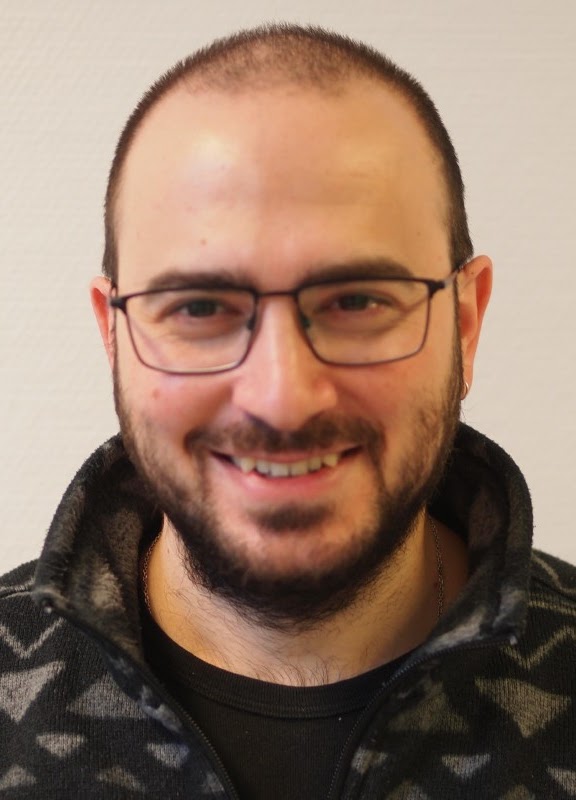
Bo Markussen is a Professor at the University of Copenhagen within the Department of Mathematical Sciences . He is also a member of the Data Science Laboratory , where he contributes to statistical methodology and interdisciplinary collaborations. His academic journey began with a Cand.Scient (MSc) and PhD in Statistics from the University of Copenhagen, awarded in 1998 and 2002 respectively. 2012–present: Professor, Department of Mathematical Sciences, University of Copenhagen 2009–2012: Associate Professor, Department of Basic Sciences and Environment, University of Copenhagen 2006–2009: Assistant Professor, Department of Basic Sciences and Environment, University of Copenhagen Bo Markussen's research focuses on applied statistics , particularly in functional data analysis and multiple testing corrections in genetics . His work spans diverse domains including environmental science, agriculture, and public health. Recent research output highlights applications in Arctic climate data analysis, fire risk modeling, plant stress phenotyping, and nutritional biomarker prediction. His recent publications demonstrate a strong trend toward machine learning integration with statistical modeling , addressing challenges in high-dimensional data analysis and environmental risk assessment. Collaborations span institutions in Denmark and internationally, reflecting his engagement in pan-Arctic climate studies and tropical agricultural research. 2018–present: Associate Editor, Scandinavian Journal of Statistics 2017–2019: Chair, Danish Society for Theoretical Statistics 2015–2017: Board Member, Danish Society for Theoretical Statistics As a central figure in the Data Science Laboratory , Markussen leads statistical consultancy initiatives and contributes to methodological advancements. His expertise bridges theoretical statistics with real-world applications, particularly in handling complex datasets across biological and environmental domains.
Fabio Pierella is an Associate Professor at the Technical University of Denmark (DTU), affiliated with the Department of Wind and Energy Systems Flows, specializing in Wind Turbine Design Division. His research focuses on offshore wind energy systems, fluid dynamics, and structural engineering. He has contributed to projects like OC6 Phase IV and the DeRisk database, validating numerical models for floating offshore wind structures and extreme wave loads. Key research interests include computational fluid dynamics (CFD), hydrodynamic load modeling, and the design of large-scale floating wind turbines. His work spans numerical simulations, experimental validation, and database development for extreme sea states. Pierella has presented at international conferences on topics like wave-structure interaction and turbine control systems. He received the Best Poster Presentation Award (2024) and contributed to datasets such as the DeRisk Database, which provides critical wave data for offshore wind turbine design. His research emphasizes practical applications, including monopile structural integrity under extreme loads and control strategies for floating platforms. Pierella's activities include conference presentations on ultra-large floating turbines (EMULF2 project) and the impact of wave shape on 15MW turbine loads. His interdisciplinary approach integrates computational models with experimental results to address challenges in offshore renewable energy systems.
Christian Pascal Hirsch is an Associate Professor for Data Science and Statistics at the Department of Mathematics, Aarhus University. His research focuses on random networks inspired by biology and health sciences, utilizing techniques from topological data analysis and stochastic geometry. He is affiliated with the Stochastics group, AU DIGIT Centre, and AU Quantum Campus. Research Interests: Topological data analysis, large deviations theory, spatial random networks, and stochastic geometry. His work includes studies on percolation theory, Gibbs measures, and applications to neural networks and geometric functionals. Publications span journals such as the Journal of Applied and Computational Topology, Journal of Statistical Physics, and Stochastic Processes and Their Applications, covering topics from network topology to Poisson approximation.
Jes Frellsen is an Associate Professor at the Department of Applied Mathematics and Computer Science (DTU) since 2016. Previously, he held academic positions at the IT University of Copenhagen (2016-2019), postdoctoral roles at University of Cambridge (2013-2016) and University of Copenhagen (2011-2013). Education: PhD in Bioinformatics (2011), University of Copenhagen MSc in Bioinformatics (2007), University of Copenhagen BSc in Mathematics and Computer Science (2005), University of Copenhagen EAP Exchange at University of California, Santa Cruz (2004-2005) Research Focus Jes Frellsen specializes in statistical machine learning , particularly generative AI and deep generative models with applications in bioinformatics . His work integrates Bayesian inference , directional statistics , and Markov chain Monte Carlo methods to address challenges in macromolecular structure prediction and missing data imputation . Recent efforts explore uncertainty quantification in image segmentation and generative modeling for materials science. Advising & Collaborations He actively supervises PhD students and postdoctoral researchers in projects spanning news recommendation systems , medical imaging , and 3D structure generation . Collaborations include work with Zoubin Ghahramani (Cambridge) and Thomas Hamelryck (Copenhagen), with contributions to protein structure prediction and statistical methods in structural bioinformatics .
Kohei Nakajima is an Associate Professor at the Department of Intelligent Mechano-Informatics, Graduate School of Information Science and Technology, The University of Tokyo. He holds concurrent positions at the Department of Creative Informatics and the Next Generation Artificial Intelligence Research Center (AI Center). As an Endowed Chair in Advanced Artificial Intelligence Education, he leads the Physical Intelligence Lab, which focuses on the intersection of soft robotics, nonlinear dynamics, and physical computing. His research interests center on Physical Reservoir Computing (PRC), a paradigm that exploits the natural dynamics of physical systems for computation, with applications in soft robotics, spintronics, and quantum machine learning. Nakajima's work demonstrates how physical systems can inherently process information without traditional digital computation, leveraging phenomena like chaos, bifurcations, and embodied intelligence. Nakajima's publications reveal a strong focus on understanding how physical systems can perform computational tasks. His recent work spans from biological applications (jellyfish cyborgs, ostrich-inspired robotics) to fundamental theoretical advances in reservoir computing. The research demonstrates how physical phenomena can be harnessed for information processing, with implications for energy-efficient computing and novel robotic control paradigms. As the organizer of the Reservoir Computing Seminar, Nakajima has built a vibrant research community exploring the nature of information processing across disciplines. His lab actively recruits graduate students and postdocs, indicating strong research momentum and institutional support for his work in physical intelligence.
Zorana Jovanovic Andersen is an Associate Professor at the University of Copenhagen, Department of Public Health, Section of Environmental Health, specializing in Environmental and Occupational Epidemiology. Her research focuses on health impacts of air pollution , noise exposure , and lifestyle factors across large cohorts including the Danish Nurse Cohort and Diet, Health, and Cancer cohort. Primary research areas: Environmental Epidemiology, Breast Cancer Risk, Air Pollution, Noise Studies, Physical Activity Interactions Key projects: Hyperion (road traffic noise), ELAPSE (low-level air pollution), TAPAS (climate-transportation health risks) Research Themes She investigates long-term exposure to air pollution and noise in relation to breast cancer , diabetes , cardiovascular disease , and brain cancer , while exploring how factors like physical activity modify these risks. Recent work includes dementia and COVID-19 mortality analyses. Scientific Contributions Her 15 most recent publications address: 1) Air pollution disparities in Europe 2) Dementia-air pollution links 3) Stroke-noise interactions 4) Airport ultrafine particle exposure 5) Asthma-COPD overlap 6) Breast cancer-mammographic density relationships. Major Grants Danish Working Environment Research Fund (1.79M DKK, 2017) Danish Heart Association (433K DKK, 2016) Danish Council for Independent Research (1.93M DKK, 2015) Teaching & Leadership Course Leader for Data Processing in Health Care and Public Health Informatics at UCPH since 2011. Organized Danish Health Registries seminars and served on scientific committees for environmental conferences.
Endrit Hoxha is an Associate Professor at the Department of the Built Environment within the Faculty of Engineering and Science at Aalborg University. His research focuses on sustainability in construction, particularly life cycle assessment (LCA), environmental impact analysis, and circular economy strategies. He leads and co-supervises multiple PhD projects, including studies on LCA tools for carbon-optimized fire safety in biobased buildings and climate impact analysis of EU building materials. His work integrates environmental product declarations (EPDs), BIM technologies, and policy frameworks to address climate mitigation and sustainable practices in the built environment. Projects include Nordic harmonization of LCA methodologies and analysis of greenhouse gas emissions in construction. Key research areas: Sustainable construction, LCA, circularity, and policy-driven environmental mitigation. Consultancy involvement in environmental impact assessments of construction practices. Dr. Hoxha's recent publications emphasize circular building stock modeling, fire protection system environmental impacts, and light source sustainability. He has received recognition, such as the Sweco Transform Award for innovative master thesis projects. His work bridges academic research with practical applications, influencing both industry standards and policy development. Advisees include Kanafani, Dormohamadi, and Tozan, focusing on LCA methodologies and mitigation strategies. Labs/teams: Collaborates with interdisciplinary groups on building lifecycle analysis and sustainability metrics.
Márton Karsai is an Associate Professor and Head of the Department of Network and Data Science at the Central European University in Vienna, and a Research Professor at the HUN-REN Alfréd Rényi Institute of Mathematics in Budapest. He leads the Computational Human Dynamics Lab, focusing on data-driven modeling of social and biological systems. He is also the Editor-in-Chief of the journal Advances in Complex Systems . His research interests lie at the intersection of network science, human dynamics, and socioeconomic systems. He specializes in temporal and spatial networks, modeling contagion processes (both social and biological), and analyzing large-scale human behavioral datasets. His work integrates computational methods with real-world data to understand complex social phenomena such as mobility patterns, migration, segregation, and epidemic spread. He is particularly known for using remote sensing and digital trace data to infer poverty and socioeconomic conditions in urban areas. The recent publications highlight a strong trend in applying network science and machine learning to societal challenges. His work spans high-impact journals in complex systems, data science, and computational social science, with recurring themes in epidemic modeling, urban analytics, socioeconomic inference, and the structure of temporal and spatial networks. The research is highly interdisciplinary, combining physics, computer science, and social science methodologies. He has been invited to speak at major events such as the Conference on Complex Systems, the Lake Como School on Complex Networks, and workshops on data for vulnerability assessment. He served as general co-chair of CCS 2021 in Lyon, demonstrating leadership in the complexity science community. General Co-Chair, Conference on Complex Systems (CCS) 2021, Lyon Invited speaker, 4th Workshop on Data for the Wellbeing of the Most Vulnerable @ ICWSM'23 Invited speaker, Complexity72h Workshop Invited lecturer, Lake Como School on Complex Networks Invited talk, Hungarian Academy of Sciences on COVID-19 modeling While specific grant details are not listed, his coordination of projects on segregation, migration, and poverty inference—often in collaboration with the Complexity Science Hub—suggests active involvement in externally funded interdisciplinary research. He advises students through the Department of Network and Data Science at CEU, though specific advisees are not named. His lab, the Computational Human Dynamics Lab, serves as a hub for data-driven research on social systems.
Jun Yang is a Tenure Track Assistant Professor at the Department of Mathematical Sciences, University of Copenhagen. His research spans computational statistics and machine learning, with a focus on high-dimensional inference, time series analysis, and Monte Carlo methods. Current Position: Tenure Track Assistant Professor, University of Copenhagen (2023–present) Previous Role: Florence Nightingale Bicentennial Fellow, University of Oxford (2020–2023) Education: Ph.D. in Statistics, University of Toronto (2020), advised by Daniel M. Roy and Jeffrey S. Rosenthal Research Interests: Jun’s work addresses the intersection of computational statistics and machine learning, including: - High-dimensional Markov chain Monte Carlo (MCMC) algorithms - Bayesian variable selection in complex models - Spectral inference for nonlinear time series - Quantitative bounds and complexity analysis for MCMC Publications: His publications highlight advancements in high-dimensional sampling, time series analysis, and algorithm design. Key contributions include: - Dimension-free mixing results for Bayesian variable selection - Stereographic projection techniques for MCMC - State-domain change point detection in nonlinear regression Awards: Florence Nightingale Bicentennial Fellow, University of Oxford (2020–2023) Collaborations: Jun collaborates with researchers like K. Łatuszyński, G.O. Roberts, and J.S. Rosenthal, advancing statistical theory and applications in econometrics, machine learning, and stochastic processes.
Jeppe Rich is a Professor at the Department of Technology, Management and Economics at the Technical University of Denmark (DTU). His primary research focuses on statistical and mathematical modeling applied to transport-related challenges, including transport demand modeling, discrete choice models, freight transport, cost-benefit assessments, and strategic long-term demand models. Rich holds a Mathematical Planning qualification from the University of Aarhus (1989–1995). He has held external positions as a Senior Consultant at Atkins A/S (2001–2002) and as a Researcher at the National Environmental Research Institute (1995–1998). His work aligns with UN Sustainable Development Goals related to sustainable cities and communities (SDG 11) and climate action (SDG 13). His research interests span transport policy, transportation science, and the application of advanced modeling techniques to address urban mobility challenges. Notable areas include EV infrastructure planning, bicycle network optimization, and cost-benefit analysis of transport projects. He supervises several PhD students in topics like electric freight transport, micromobility safety, and urban charging infrastructure. Rich has published extensively on transport policy, demand modeling, and sustainable mobility solutions. His work emphasizes interdisciplinary approaches to solving complex transport challenges, combining engineering, economics, and data science methodologies.
Peter D. Ditlevsen is a Professor at the Niels Bohr Institute , University of Copenhagen, specializing in Physics of Ice, Climate and Earth (PICE) . With a background in theoretical physics, he transitioned to climate dynamics and turbulence. Dr. Scient (2004), University of Copenhagen PhD (1991), Technical University of Denmark Research Interests : Focuses on Tipping Points in the Earth System , especially AMOC collapse , using stochastic dynamical systems , alpha-stable processes , and nonlinear climate modeling . His work bridges climate physics , dynamical meteorology , and time series analysis . Recent Publications : 2025 work on ice-core-based Dansgaard–Oeschger event modeling , 2024 studies on AMOC multistability and complex system predictability , and 2023 Nature Communications paper on AMOC collapse early warning (cited 4000+ times in media). Scientific Leadership : Leads CriticalEarth H2020 (2021-24) and contributed to TiPES (2019-23). Holds Carlsberg Fellowship and Ole Rømer Prize . Outreach : Produces weekly climate science podcast with David Trads, delivers 4-6 public lectures/year, and has appeared in 40+ media outlets. Teaches Electrodynamics , Thermodynamics , and Turbulence courses.
Mogens Fosgerau is a Professor at the Department of Economics, University of Copenhagen, with a research focus on discrete choice theory, rational inattention, transportation and urban economics, congestion modeling, and entropy-based frameworks. He has held an ERC Advanced Grant (2017-2023) and completed a Grand Solutions project for the Innovation Fund Denmark (2016-20). Education: Mathematical Economics (Aarhus University, 1990), PhD in Mathematics (University College London, 1992). Current affiliations: Department of Economics (University of Copenhagen), Faculty of Social Sciences. Former roles: Guest Professor at DTU (2022-2023), member of the Commission for Green Transition of Passenger Cars (2019-2021). His research explores the intersection of information theory and discrete choice models, addressing complex substitution patterns and endogeneity issues through generalized entropy frameworks. He applies these models to transportation planning, urban economics, and climate policy analysis. Recent publications focus on perturbed utility models, inverse product differentiation logit, and rational inattention in spatial choice contexts. His work bridges theoretical econometrics with practical transport and environmental policy challenges. Awards: Recipient of the 2021 Transportation Science Meritorious Service Award. Former Editor-in-Chief of Economics of Transportation (2012-2020). Advising and Grants: Leads research projects funded by the European Research Council and Innovation Fund Denmark. Has participated in policy committees including the Danish Environmental Economic Council (2019-2025) and the Committee on Public Transport Mobility (2023-24).
Georgios Arvanitidis is an Associate Professor at the Technical University of Denmark (DTU) in the Department of Applied Mathematics and Computer Science, specifically within the Section for Cognitive Systems (CogSys). He has established himself as a leading researcher in geometric machine learning, focusing on the application of differential geometry principles to enhance machine learning models. His work bridges theoretical mathematics with practical applications in artificial intelligence, with particular emphasis on understanding the geometric structure of data manifolds and latent spaces. Dr. Arvanitidis completed his educational journey with a Bachelor's degree from the Department of Informatics at the Aristotle University of Thessaloniki, followed by a Master's degree in Computer Science from Saarland University supported by the Max Planck Institute for Informatics. He earned his PhD at DTU's Cognitive Systems section under the supervision of Søren Hauberg, with additional research experience at Philipp Hennig's Probabilistic Numerics group. Prior to his current position as associate professor, he was a PostDoc at the Max Planck Institute for Intelligent Systems working with Bernhard Schölkopf. Dr. Arvanitidis's research primarily focuses on differential geometry in machine learning , where he explores how geometric structures can enhance representation learning and statistical modeling. His work in generative models investigates how learning the geometry of data manifolds can improve deep learning architectures. In the domain of deep learning theory , he examines why deep learning models generalize effectively on unseen data, with particular attention to the curvature properties of loss landscapes. His research in approximate Bayesian inference applies geometric principles to improve uncertainty quantification in neural networks. Through his innovative approaches, Dr. Arvanitidis has established himself as a leading researcher in geometric machine learning, contributing to both theoretical foundations and practical applications across various domains including robotics and life sciences. The publication trends of Dr. Arvanitidis reveal a consistent and evolving focus on geometric approaches to machine learning problems. His recent work (2023-2025) demonstrates increasing sophistication in applying Riemannian geometry to deep learning architectures, with particular emphasis on latent space geometry, optimization on manifolds, and geometric interpretations of neural network behavior. A notable pattern is the progression from foundational work on geometric representations to more applied research in areas like robotics and causal inference. His publications span top-tier conferences including NeurIPS, ICML, ICLR, and AISTATS, reflecting the high impact of his research. The interdisciplinary nature of his work is evident in collaborations across mathematics, computer science, and robotics domains, with recent papers addressing challenges in multimodal sampling, safety guarantees for dynamical systems, and counterfactual explanations. Dr. Arvanitidis has received several notable scientific awards and recognitions: Sapere Aude starting grant from the Independent Research Fund Denmark (DFF) GADL funding i-Rase, Pathfinder, and EIC (European Innovation Council) funding Best reviewer award for NeurIPS 2019 Best reviewer award for NeurIPS 2018 Best student paper award at Robotics: Science and Systems (R:SS) 2021 Dr. Arvanitidis actively mentors PhD students and researchers, currently supervising Alejandro Valverde, Johanna Gegenfurtner, and Albert Kjøller Jacobsen. He has previously co-supervised Alison Pouplin's PhD and worked with research assistant Georgios Pantis. His group receives substantial funding through multiple prestigious grants including the Sapere Aude starting grant from the Independent Research Fund Denmark, as well as European Innovation Council funding. He has been instrumental in creating opportunities for students interested in geometric machine learning, offering BSc and MSc thesis projects focused on generative models, deep learning theory, and optimization techniques. Dr. Arvanitidis also contributes significantly to the academic community as a reviewer for top conferences including ICLR and TMLR, and as an area chair for NeurIPS, ICML, AISTATS, and UAI. He co-organized the Machine Learning Summer School 2020 in Tübingen, further demonstrating his commitment to education and community building. Dr. Arvanitidis leads a vibrant research group focused on geometric machine learning within the Cognitive Systems section at DTU. His team includes multiple PhD students working on cutting-edge research at the intersection of differential geometry and artificial intelligence. The group has developed notable software tools, including the "geometric_ml" GitHub repository with over 70 stars, which contains implementations for applying Riemannian geometry in machine learning. His research has practical applications in robotics, where geometric approaches enable more robust motion planning, as evidenced by his work on "Reactive Motion Generation on Learned Riemannian Manifolds" which received a best student paper award. Additionally, his methodologies have found applications in life sciences, as mentioned in his 2022 AISTATS paper. The collaborative nature of his work is evident through extensive partnerships with researchers at institutions including the Max Planck Institute for Intelligent Systems, University of Cambridge, and various European universities. His recent news items indicate active engagement with the academic community through talks, conference presentations, and ongoing supervision of new PhD students joining his group.
Harpa Birgisdottir is a Professor and Head of the Building Sustainability Section at Aalborg University's Department of Construction, Urban and Environmental Engineering. Her work focuses on Life Cycle Assessment (LCA), net-zero carbon buildings, and circular economy strategies in construction. Key Research Areas: Greenhouse Gas Emissions, Environmental Product Declarations (EPD), Urban Development, and Climate Mitigation Academic Recognition: 2022 Best Paper at Sustainable Built Environment, 2020 Applied Energy Highly Cited Award Research Trends Recent publications emphasize data-driven sustainability assessments, embodied carbon in buildings, and fire safety LCA tools. She leads EU-wide projects on greenhouse gas emissions and co-develops frameworks for net-zero carbon buildings through IEA EBC Annex 89. Scientific Awards Best Paper (Sustainable Built Environment Berlin 2022) Highly Cited Research Paper (Applied Energy 2020) Det Bæredygtige Element - Produktprisen (2019) ROCKWOOL Prisen (2017) Best Paper (2013) As a principal investigator and supervisor, she guides PhD projects on biobased fire safety and urban circularity. Her team collaborates with international researchers on climate impact metrics and sustainable construction standards.
Line Katrine Harder Clemmensen is an Associate Professor at the Department of Applied Mathematics and Computer Science, Technical University of Denmark (DTU), affiliated with the DTU Microbes Initiative. She holds a Ph.D. from DTU's IMM (2006–2009) and previously served as Principal Data Scientist at the Maersk Group (2016–2017). Her research focuses on machine learning, statistical modeling, deep learning, and sparse methods, applied to environmental, biological, industrial, and financial domains. Notable projects include hydroacoustic modeling in aquaculture systems, AI-driven sea safety, and bio-based sustainability modeling. Her recent work addresses topics like parent-child interaction patterns in OCD, Alzheimer’s treatment via spectral flicker, and genomic studies on social trust. She supervises multiple PhD students, including those exploring Raman spectroscopy applications and contamination detection in drug products. Language skills include Danish, English, Spanish, French, and Portuguese.