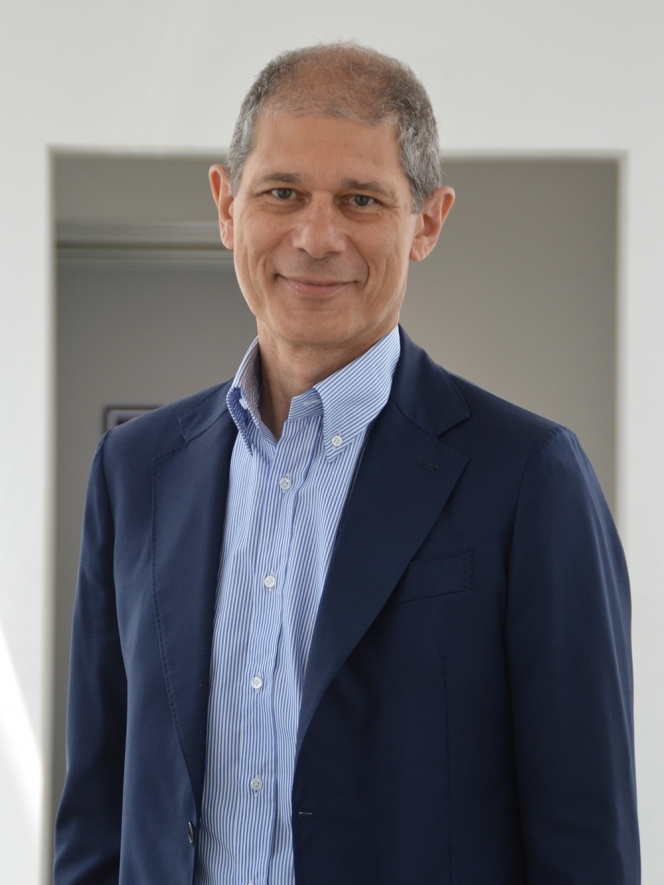
Prof. Sergio Ginebri is an Associate Professor at the Department of Jurisprudence, University of Rome Tre. He holds a PhD in Economics from Sapienza University of Rome and has extensive experience in fiscal policy, pension systems, and public finance research. His work focuses on topics like pension sustainability, social inequality, and the political economy of public debt. Education: PhD in Economics, Sapienza University of Rome (1988–1992) MA in Economics, University of Warwick (1987–1988) Laurea in Statistics and Demography, Sapienza University of Rome (1977–1984) Research Interests: Prof. Ginebri specializes in public policy, fiscal sustainability, and the social impacts of pension reforms. His research explores how demographic trends, wealth distribution, and political dynamics shape economic policies. Recent work includes analyses of longevity risks, pension equity, and fiscal policy integration in the EU. Key Projects: Coordinated studies on pension system sustainability (2002–2018) Developed models for forecasting public pension expenditure Contributed to EU tax policy observatories Awards: Recipient of the national PhD award (1994) and recognition for academic excellence in tax policy research (2001). Teaching: Teaches courses in political economy, public finance, and macroeconomics at undergraduate and graduate levels.
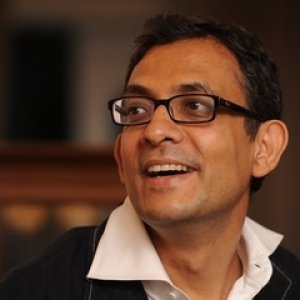
Abhijit Banerjee is the Ford Foundation International Professor of Economics at MIT and Director of the Abdul Latif Jameel Poverty Action Lab (J-PAL). A 2019 Nobel laureate in Economic Sciences, his research focuses on development economics, political economy, and poverty alleviation. He co-authored influential books like Poor Economics and Good Economics for Hard Times , emphasizing evidence-based policies and randomized controlled trials. Banerjee’s work addresses global challenges such as education, health, and social welfare, with notable contributions to microfinance, public health interventions, and anti-poverty programs. He holds leadership roles in global initiatives like the Global Education Evidence Advisory Panel and has advised governments worldwide. His research spans topics from police resource allocation in India to the impact of information during crises like demonetization and the pandemic. Education: Bachelor’s in Statistics, Presidency College, Kolkata M.A. in Economics, Jawaharlal Nehru University PhD in Economics, Harvard University Key Contributions: Co-founder of J-PAL, promoting evidence-based poverty reduction strategies. Pioneer in using randomized controlled trials (RCTs) for policy evaluation. Research on microfinance, education reforms, and health interventions in developing countries. Awards: Nobel Prize in Economics (2019), Infosys Prize in Social Sciences (2009), Member of the National Academy of Sciences (2020). Grants/Advisory Roles: Collaborations with institutions like the World Bank, UN, and governments on poverty, health, and education policies. Labs/Teams: J-PAL global network, Abdul Latif Jameel Poverty Action Lab.
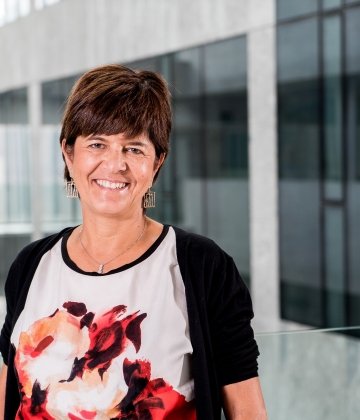
Barbara Caputo is a Full Professor at Politecnico di Torino, leading the VANDAL Laboratory and directing the AI@PoliTo Interdepartmental Lab. She holds a double affiliation with the Italian Institute of Technology (IIT) and has held roles at Idiap-EPFL and Sapienza University. Her research focuses on AI, computer vision, domain adaptation, and federated learning. She contributes to national AI policy, including the Italian Strategy on AI and the National PhD on AI for Industry 4.0. She is an ERC Laureate and ELLIS Fellow, co-founding ELLIS society. Her work spans visual place recognition, action recognition, and cross-domain learning. Education: PhD in Computer Science from KTH Royal Institute of Technology (2005). Major roles include Rector’s Advisor on AI at PoliTo, Board Member of ELLIS, and coordinator of the AI & Industry 4.0 vertical in the National PhD program. Awards include ERC Laureate (2017), ELLIS Fellow (2019), and Inspiring Fifty Italy (2018). Her research emphasizes federated learning, domain adaptation, and AI ethics. Recent articles explore domain generalization, resource-efficient federated models, and AI-environment interactions. She collaborates with institutions like MUR, CNR, and the European Commission on AI policy and tech initiatives.
Luca De Benedictis is a Professor of International Economics and Network Analysis at the University of Macerata's Department of Economics and Law. His research focuses on international trade empirics, including trade specialization measurement, network analysis, and causal models. He has authored numerous articles on topics like gravity models, migration impacts, and historical trade networks. His work spans journals such as the Journal of the Royal Statistical Society and Network Science . He teaches courses in International Economics and Network Analysis. His research interests include economic geography, policy evaluation, and applied econometrics. Notable projects include analyzing the Erasmus Program's inclusivity, Roman road networks' legacy, and immigration's effect on trade. De Benedictis has secured funding from EU initiatives like COSTNET and GeComplexity, focusing on network data science and economic systems. He serves on editorial boards of journals like Italian Economic Journal and Journal of Historical Network Research . His work bridges theoretical models with empirical applications in trade, migration, and policy.
Michele Zorzi is a Professor of Telecommunications at the School of Engineering, University of Padova, Italy, where he has held a faculty position since 2003. He leads the SIGNET (Signal processing and Networking) Research Group, focusing on cutting-edge wireless networking challenges including mmWave communications and underwater networks. His extensive publication record exceeds 600 papers in top-tier journals and conferences, reflecting significant contributions to the field through both theoretical and experimental work. He received his Laurea Degree (1990) and Ph.D. (1994) in Electrical Engineering from the University of Padova. Prior academic appointments include Politecnico di Milano (1993-1996), University of California San Diego (1995-1998), and University of Ferrara (1998-2003), where he progressed from Associate Professor to full Professor. His educational trajectory demonstrates deep roots in Italian academia with international exposure. Professor Zorzi's research spans wireless communications and networking, with current emphases on mmWave networking for vehicular systems, underwater acoustic/optical communications, non-terrestrial networks, and AI-driven networking solutions. His group conducts experimental validations including at-sea trials for underwater systems and testbeds for vehicular networks. Key projects include PRATA for predictive QoS in autonomous driving and IoT-based environmental monitoring of the Venice Lagoon, demonstrating practical applications of theoretical work. Analysis of his 2022-2025 publications reveals strong trends in applying artificial intelligence to networking challenges across diverse environments. There is significant emphasis on vehicular networks (predictive QoS, teleoperated driving), underwater systems (acoustic/optical communications, AUV swarms), and satellite networks (Starlink integration, NTN security). Experimental validation in real-world scenarios like the Venice Lagoon monitoring project and underwater sea trials characterizes his applied research approach. His scientific accolades include: IEEE Fellow (2007) IEEE Communications Society Best Tutorial Paper Award (2008, 2019) Stephen O. Rice Best Paper Award (2018) Multiple best paper awards at IEEE conferences (2005-2020) As principal investigator for numerous European and US research projects plus 20+ industry-funded initiatives, Professor Zorzi has mentored over 35 PhD students and post-docs. Graduates now hold prominent positions at institutions including Stanford, UCSD, CTTC, and Huawei. His SIGNET group maintains active international collaborations and contributes to open-source networking tools via GitHub, demonstrating commitment to community engagement. The SIGNET Research Group, housed within the Department of Information Engineering, operates specialized experimental facilities for mmWave and underwater communications. Current initiatives include AI-based predictive QoS frameworks for vehicular networks, underwater optical communication systems using ultraviolet light, and large-scale IoT deployments for environmental monitoring. The group's GitHub presence indicates strong open-science practices, while recent sea trials confirm hands-on experimental capabilities beyond theoretical work.
Anna Gottard is an Associate Professor of Statistics at the University of Florence, where she leads the Department of Statistics, Computer Science, and Applications. She directs the Florence Center for Data Science (FDS) and participates in the Technical Scientific Committee of the Tuscan Center for Big Data, Data Science, and AI (CBDAI). Her research focuses on multivariate statistical models, particularly graphical models, and extends to statistical machine learning, fair models, and directional data analysis. She is an Associate Editor for the Journal of the Royal Statistical Society Series A (JRSSA) and Statistical Methods & Applications (SMA). Her recent work includes Bayesian approaches for mixed graphical models, uncertainty-aware classification trees, and methodological advancements in latent uncertainty models. Her contributions span theoretical developments and applied research in interdisciplinary areas like biostatistics and sustainability. Her research interests emphasize bridging statistical theory with practical applications, including fairness in machine learning, interpretable models, and tree-based methodologies. She has actively contributed to open-source software, notably the Mix3Trees R package for mixed-effect tree models. Her work addresses challenges in variable selection, graphical model inference, and ethical AI practices. Current projects explore Bayesian frameworks for complex data structures and methodological improvements in graphical model interpretability. Anna has advised on interdisciplinary collaborations, such as studies on GDPR compliance in biobanking and epidemiological modeling of the SARS-CoV-2 pandemic in Tuscany. She collaborates with institutions like the CBDAI to advance data science applications in regional policy and healthcare. Her research trajectory reflects a commitment to both foundational statistical theory and real-world problem-solving across diverse domains.
Gaetano Valenza is an Associate Professor of Bioengineering at the University of Pisa, Italy, where he leads the Neuro-Cardiovascular Intelligence Lab at the Enrico Piaggio Research Centre. He holds affiliations with the Neuroscience Statistics Research Laboratory at MIT and has served as a Research Fellow at Harvard Medical School and Massachusetts General Hospital. His academic work spans bioengineering, computational physiology, and affective computing. His research focuses on statistical and nonlinear biomedical signal and image processing , cardiovascular and neural modeling , and physiologically interpretable artificial intelligence . He develops wearable systems for physiological monitoring, with applications in autonomic nervous system assessment, brain-heart interactions, and mental health. His work has led to novel metrics such as the Sympathetic and Parasympathetic activity indices derived from ECG. The 15 most recent publications reflect a consistent trend in brain-heart interplay , complexity analysis of physiological signals , explainable AI in healthcare , and virtual reality applications in mental health . His work integrates advanced signal processing, nonlinear dynamics, and machine learning to decode emotional and cognitive states from physiological data. Dr. Valenza is a Senior Member of IEEE and serves on several technical committees. He is an active editorial leader, currently serving as Associate Editor for IEEE-EMBC , Plos One , Complexity , and Scientific Reports , and has guest-edited special issues in Philosophical Transactions of the Royal Society A and IEEE Journal of Biomedical and Health Informatics . He has led or participated in numerous international research projects, including FP7 and H2020 initiatives such as NEVERMIND and EXPERIENCE. He teaches courses in Biostatistics, Probability & Biostatistics, and Advanced Image Processing at the University of Pisa. As lab head and project coordinator, he leads a multidisciplinary team working on neuro-cardiovascular intelligence, wearable systems, and AI-driven mental health interventions.
Valter Moretti is a Full Professor in the Department of Mathematics at the University of Trento. His academic career spans roles from Research Fellow to Full Professor, focusing on Mathematical Physics and Quantum Field Theory (QFT) in curved spacetime. He earned an MSc in Physics from Genova University and a PhD in Theoretical Physics from Trento University. Research Interests : Algebraic QFT, General Relativity, Quantum Mechanics, Operator Algebras, and Spectral Theory. His work bridges mathematical rigor with physical applications, particularly in quantum localization, entanglement, and curved spacetime phenomena. Publications : Authored 15+ recent papers on topics like quantum particle localization, entanglement certification, and QFT on curved backgrounds. Collaborated on a 2022 patent for generating entangled photon states. Awards : Holds a patent for a quantum-certified random number generator (2022). Supervision : Advised 8 PhD students, including N. Pinamonti, L. Franceschini, and C. van de Ven. Coordinated national and international research projects (e.g., H2020-MSCA-COFUND-2015). Labs & Collaborations : Affiliated with INFN, TIFPA-INFN, and Q@TN (Quantum@Trento). Organized conferences like Quantum Physics and Geometry (2014) and Quantum Machine Learning (2023). Teaching : Lectures on Analytical Mechanics, Quantum Relativistic Theories, and Special Relativity. Authored textbooks on Spectral Theory and Quantum Mechanics.
Dr. Sonia Petrone is a Full Professor of Statistics at Bocconi University's Department of Decision Sciences. She earned her PhD in Statistics from Bocconi University and has held academic positions at the University of Pavia and University of Insubria before joining Bocconi. Her extensive international experience includes research visits across North America, Latin America, Europe, India, and Russia. Her research specializes in Bayesian statistics, with contributions to foundational theory, predictive modeling, Bayesian nonparametrics, and stochastic processes. She currently directs the Bocconi Summer School in Advanced Statistics and Probability and previously led the PhD program in Statistics (2011-2018). Her research portfolio demonstrates consistent focus on Bayesian nonparametric methods, predictive modeling, and applications to complex data structures. Recent work explores urn processes, time series analysis, and network modeling using innovative Bayesian approaches. Awards & Honors: IMS Medallion Lecture Award (2018) ISBA Foundational Lecture Award (2016) Fellow of International Society for Bayesian Analysis Fellow of Institute of Mathematical Statistics Fellow of European Laboratory for Intelligent Systems Fellow of Bocconi Institute of Data Science She has held editorial leadership positions as Editor of Statistical Science (2020-2022) and Bayesian Analysis (2010-2014), and served as President of the International Society for Bayesian Analysis (2014).
Suzanne Stevenson is a Professor in the Department of Computer Science at the University of Toronto, affiliated with the Cognitive Science Research Community (CoRC). She holds a BS in Computer Science and Linguistics from William & Mary and MS/PhD in Computer Science from the University of Maryland. Before joining UofT in 2000, she was faculty at Rutgers University with joint appointments in Computer Science and Cognitive Science. Her research focuses on computational cognitive models of language acquisition and processing, integrating insights from linguistics, psycholinguistics, and machine learning. Key areas include semantic/syntactic learning from text, probabilistic computational models of word learning, and cross-situational learning. Notable awards include the NSERC University Faculty Award (2000) and NSF CAREER Award (1997). Her work bridges computational linguistics and cognitive science, emphasizing multidisciplinary approaches. Recent publications (2014–2018) explore topics like probabilistic perspective models in language production, bilingual word associations, and semantic search algorithms. She advises on computational linguistics and cognitive modeling, with grants supporting investigations into language acquisition dynamics and semantic networks. Active in teaching, she previously offered courses on computational linguistics and the computational lexicon. Her lab’s research themes include child language acquisition, ambiguity resolution, and computational modeling of linguistic phenomena.
Mirco Musolesi is a Full Professor of Computer Science at both University College London (UCL) and the University of Bologna. He leads the Machine Intelligence Lab at UCL, part of the UCL Centre for Artificial Intelligence. His research focuses on Machine Learning, Generative AI, and computational models of human behavior, with applications in ubiquitous systems and societal impacts of AI. Education: PhD in Computer Science from UCL (2007) and Laurea in Electronic Engineering from the University of Bologna (2002). Previous roles include positions at the University of Birmingham, Dartmouth College, and the Alan Turing Institute. Research spans multi-agent systems, reinforcement learning, and AI ethics. Notable awards include ACM UbiComp 10-Year Impact Award (2020/2024) and the NetExplorateur/UNESCO Top 100 Innovations (2011). His work on EmotionSense and CenceMe applications has been recognized with Test-of-Time awards. Recent publications (2024-2025) address moral alignment in AI agents, multi-agent environmental policy simulations, and creativity in LLMs. His labs explore AI-driven solutions for urban systems and ethical decision-making frameworks.
Luca Iocchi is a Full Professor at Sapienza University of Rome, where he teaches in the Master in Artificial Intelligence and Robotics program. He is affiliated with the Department of Computer, Control, and Management Engineering and the Faculty of Engineering of Information, Computer Science and Statistics. Iocchi serves as an Associate Editor for Artificial Intelligence Journal and has been the scientific coordinator of Spoke of PNRR project FAIR (Future AI Research). His educational background includes: Master in Engineering in Computer Science (Laurea in Ingegneria Informatica) cum Laude, Sapienza Università di Roma, 1995 PhD in Engineering in Computer Science (Dottorato in Ingegneria Informatica), Sapienza Università di Roma, 1999 Professor Iocchi's research focuses on cognitive robotics, task planning, multi-robot coordination, robot perception, robot learning, human-robot interaction, and social robotics. His work has significant applications in security, surveillance, and environmental monitoring. He has published over 200 referred papers with an h-index of 46 (Google Scholar). His research bridges theoretical AI with practical robotic systems operating in real-world environments, with a particular emphasis on developing intelligent systems that can interact effectively with humans. His recent publications show a strong trend toward multi-agent reinforcement learning, trust modeling in human-AI teams, UAV coordination, and planning systems. There's a clear focus on making robotic systems more reliable, efficient, and capable of operating in complex real-world scenarios like healthcare facilities and smart cities. His work increasingly integrates formal planning approaches with machine learning techniques. Professor Iocchi has received numerous scientific awards: 1999 Top Paper Award WebNet'99 2006 Best Paper Award RoboCup 2006 2008 Best Robotics Demo Award AAMAS 2008 2014 Best Paper Award For Engineering Contribution RoboCup 2014 2017 RoboCup@Home SSPL 2017 - 3rd place 2018 Canada-Italy Innovation Award 2019 Best Paper Award For Engineering Contribution RoboCup 2019 As an academic advisor, Iocchi has directed the PhD Program in Engineering in Computer Science from 2020 to 2023. He has been Principal Investigator for numerous research projects including SciRoc (European Robotics League), AI4EU (European AI project), BUBBLES, AIPlan4EU, ROSITA, Trust Your Agents, and FAIR. His research has been supported by EU H2020 programs, national grants, and industry collaborations, demonstrating strong connections between academia and practical applications. Professor Iocchi is actively involved with the Cognitive Cooperating Robots Lab (LabRoCoCo) and is a key member of the RoboCup Federation, having served as Vice-President from 2019 to 2024. He has played a significant role in benchmarking domestic service robots through RoboCup@Home and the European Robotics League Service Robots (ERL-SR), which he helped establish. His leadership in organizing international scientific robot competitions has been instrumental in advancing the field of service robotics.
Armando Rungi is a Professor of Economics at IMT School for Advanced Studies in Lucca, Italy. He teaches econometrics, international economics, and macroeconomics to PhD students. In addition to his academic role, he serves as a research fellow at the Observatory on Foreign Firms in Italy and has consulted for the European Commission, OECD, and UNCTAD on international trade and investment issues. His research focuses on international economics, industrial organization, applied econometrics, and statistical learning. Recent work emphasizes the organization of multinational enterprises, global value chains, labor markets, cyber-resilience of supply chains, and the integration of econometric and machine learning tools for policy evaluation and predictive analysis. His recent publications explore topics such as the impact of trade agreements, multinational enterprises' strategies, and the application of machine learning in predicting firm behaviors and evaluating economic policies. A common theme is the analysis of supply chain resilience, corporate ownership structures, and the effects of globalization on firms' competitiveness and productivity. No scientific awards are mentioned in the provided information. No advisees or grant details are listed in the text. His professional activities include consulting roles and research collaborations. He is affiliated with the Observatory on Foreign Firms in Italy, which evaluates the impact of multinational companies and strategies to attract foreign investment in Italy.
Dino Pedreschi is a Full Professor of Computer Science at the University of Pisa, affiliated with the Department of Computer Science (DI-UNIPI). He co-leads the Pisa KDD Lab, a joint research initiative between the University of Pisa and the Italian National Research Council’s Institute of Information Science and Technology, one of the earliest labs focused on data mining and knowledge discovery. His research spans Big Data Analytics , Social Network Analysis , Human Mobility Analysis , Privacy-by-Design , Explainable AI (XAI) , and ethical data mining . He is a pioneer in privacy-preserving data mining and has contributed significantly to understanding societal impacts of AI and big data. Recent publications highlight trends in explainable AI , fairness-aware data mining , urban mobility modeling , and socio-economic nowcasting , reflecting a strong interdisciplinary focus combining computer science, social science, and policy. Notable scientific awards include: Google Research Award on Privacy (2009) University of Pisa Ordine del Cherubino (2017) Pedreschi has played leadership roles in major conferences such as ECML/PKDD (Co-Chair 2004), ICDM (Vice-Chair 2005), and ICDE (Vice-Chair 2014). He founded the Business Informatics MSc program at the University of Pisa to train interdisciplinary data scientists. He has been a visiting scientist at the University of Texas at Austin, CWI Amsterdam, UCLA, and the Barabási Lab at Northeastern University. He actively contributes to European research initiatives including SoBigData++, FAIR, and TAILOR, and has advised on AI policy, including testimony before the Italian Parliament on AI and labor markets. He is a key member of the Pisa KDD Lab, a leading research group in data science and AI ethics, fostering collaboration between academia and public institutions.
Giulia Giordano is a Full Professor in the Department of Industrial Engineering at the University of Trento, Italy, where she leads the Dynamical Networks and Systems Biology research group. She also holds a dual appointment as Visiting Professor and Delft Technology Fellow at the Delft Center for Systems and Control, Delft University of Technology, The Netherlands. Her career includes previous positions as Assistant Professor at Delft University of Technology (2017-2019), Postdoctoral Research Fellow at Lund University, Sweden (2016-2017), and Research Fellow at the University of Udine, Italy (2016). Giulia earned her Ph.D. in Industrial and Information Engineering: Automation (Excellent) from the University of Udine with a thesis titled "Structural Analysis and Control of Dynamical Networks." She completed her M.Sc. and B.Sc. in Electrical Engineering (both Summa cum laude) at the same institution. She also undertook research visits at Caltech (2012) as a SURF Fellow and at the University of Stuttgart (2015) as a DAAD Research Scholar. Her primary research focuses on the analysis and control of dynamical networks with applications in systems biology, mathematical ecology, and mathematical epidemiology. She develops mathematical frameworks that bridge control theory, network theory, and dynamical systems to address complex problems in biological systems. Her recent work spans epidemic modeling, opinion dynamics, biochemical networks, and neurological disorders, with a particular emphasis on structural analysis of networked systems. She employs both theoretical and computational approaches to understand system behavior under uncertainty. Giulia's publications reveal a strong interdisciplinary focus, spanning from theoretical control systems to practical applications in epidemiology and biology. Her recent work shows increasing emphasis on epidemic modeling (particularly related to mpox and SARS-CoV-2), network synchronization, and the application of control theory to biological phenomena like fibromyalgia pathogenesis and opinion formation. Many of her papers appear in top-tier control journals including Automatica and IEEE Transactions on Automatic Control. 2024: Outstanding Service as Associate Editor of IEEE Control Systems Letters 2021: SIAM Activity Group on Control and Systems Theory Prize 2020: Outstanding Reviewer, Annals of Internal Medicine 2017: NAHS Best Paper Prize and EECI PhD Award 2016: Outstanding TAC Reviewer, IEEE Transactions on Automatic Control Giulia actively mentors students and postdoctoral researchers, currently supervising five postdoctoral researchers and two Ph.D. students at the University of Trento. She has advised numerous M.Sc. and B.Sc. students on topics ranging from bio-inspired modeling to optimal control of epidemic systems. Her research is supported by competitive grants including the ERC Starting Grant INSPIRE (Integrated Structural and Probabilistic Approaches for Biological and Epidemiological Systems). She serves as Associate Editor for IEEE Control Systems Letters and Automatica, and is a Senior Member of IEEE and the Control Systems Society. Giulia leads the Dynamical Networks and Systems Biology research group at the University of Trento, which maintains strong international collaborations across Europe and North America. The group's work combines theoretical advances in control theory with practical applications to pressing problems in public health and biological systems, demonstrating the power of mathematical approaches to understanding complex phenomena in the life sciences.