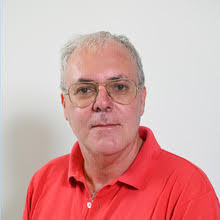
Luca Sebastiani is a Full Professor in Horticultural Sciences (AGR/03) at Scuola Superiore Sant'Anna in Pisa, Italy, since 2014. He currently coordinates the PhD Course in AgroBioSciences and has previously served as Director of the Institute of Life Sciences (2016-2021). His academic career includes roles as Associate Professor (2002-2014) and Assistant Professor (1998-2002) at the same institution. PhD in Plant Biology from Scuola Superiore Sant'Anna (1996) MSc in Agricultural Sciences from University of Pisa (cum laude, 1991) Postdoctoral research in agricultural biotechnology (1996-1998) Research Interests: Focus on plant-environment interactions, particularly abiotic and biotic stress responses in crops. Key areas include: Physiological and molecular responses to climate change stressors Nutraceutical enhancement of food crops Plant germplasm conservation using molecular markers Agriculture 4.0 integrating AI, IoT, and robotics Phytoremediation using poplar and Brassica species Scientific Contributions: His work bridges molecular mechanisms (aquaporin function, heavy metal transport) with ecosystem-level applications (precision irrigation, contaminant phytoremediation). Recent publications emphasize genome sequencing, stress tolerance modeling, and nutraceutical food development. ISHS Medal for SapFlow Workshop organization (2011) Giovanni Spitali Foundation Award for PhD dissertation (1998) Collaborations: Extensive international collaborations with institutions like Beijing Forestry University, Comenius University, and Purdue University. Currently supervises projects in plant phenotyping, omics technologies, and sustainable crop management.
Stefano Grivet Talocia is a Full Professor in the Department of Electronics and Telecommunications at Polytechnic University of Turin. He serves as Director of the Doctoral School, is a member of the Interdepartmental Center SmartData@PoliTO - Big Data and Data Science Laboratory, and holds positions on the University Committee for Research and the Commission for the Promotion of Library, Archive and Museum Heritage. He is also President of the Doctoral School Council. His educational background includes a Laurea degree (summa cum laude) in Electronic Engineering (1994) and a Ph.D. in Electronic and Communication Engineering (1998), both from Polytechnic University of Torino. From 1994 to 1996, he worked at NASA/Goddard Space Flight Center in Greenbelt, MD, USA. Professor Grivet Talocia's research focuses on passive macro-modeling of concentrated and distributed interconnect structures for Signal/Power Integrity, order reduction techniques, and modeling and simulation of fields, circuits, and their interactions. His work spans several key areas including fast simulation of transmission lines (TOPLine technique), macromodeling and model order reduction, simulation methods for fields and circuits, passivity enforcement of lumped macromodels, waveform relaxation techniques, and wavelet applications. His research has significant applications in electromagnetic compatibility and signal integrity verification of complex electronic systems. His recent publications demonstrate strong trends in model order reduction techniques applied to power integrity verification, advanced macromodeling for electromagnetic compatibility, nonlinear circuit analysis, uncertainty quantification in PCB design, and power electronics modeling. These works consistently address practical engineering challenges in high-speed electronic design with emphasis on computational efficiency and accuracy. URSI Young Scientist Award (1999) Best symposium paper (2006) Three IBM Shared University Research Awards (2007-2009) IEEE Transactions on Advanced Packaging Best Paper Award (2007) Best EPEP conference paper awards (2007, 2008) Best Associate Editor Award - IEEE Transactions (2020) Best Conference Paper Award (2020) Three Intel SRS Grants (2022-2024) IEEE Fellow (2018) Professor Grivet Talocia actively supervises PhD students working on cutting-edge topics including machine learning applications in signal integrity, model reduction techniques, and electromagnetic compatibility. He has secured significant research funding through competitive grants including PRIN projects and multiple industry-sponsored research contracts with major technology companies such as IBM, Intel, Nokia, Hitachi, and Infineon. His technology transfer activities include co-founding the spin-off IdemWorks (acquired by CST in 2016) and maintaining active collaborations with industry partners. He leads the EMC Group (Electromagnetic Compatibility) within the Department of Electronics and Telecommunications and has developed the autoCircuits web service for automated generation of circuit theory problems. His research has been recognized by inclusion in the top 2% worldwide researcher catalog (Stanford) since 2019.
Sandra Paterlini is a Full Professor in the Department of Economics and Management at the University of Trento, Italy. She holds academic roles including Co-Chair of the ERCIM Working Group on Optimization Heuristics and Vice-Chair of the IEEE Task Force on Portfolio Optimization. Her career includes visiting positions at institutions such as the University of Minnesota and Ludwig-Maximilians-Universität München. She earned a PhD in Computational Methods for Financial and Economic Decisions from the University of Bergamo, an MSc in Financial Mathematics from the University of Warwick, and a Laurea in Economics from the University of Modena and Reggio E. Her research focuses on quantitative finance, risk management, portfolio optimization, and network analysis, with applications to ESG, systemic risk, and financial stability. Key research contributions include methodologies for sparse graphical modeling, systemic risk analysis, and ESG scoring frameworks. She has received multiple awards for research excellence and serves on editorial boards of journals like Computational Statistics & Data Analysis and Frontiers in Applied Mathematics and Statistics . Her work bridges academia and policy, with contributions to the European Central Bank’s Financial Stability Directorate and involvement in global conferences on computational finance and econometrics.
Riccardo Raheli is a Full Professor at the University of Parma , Department of Engineering and Architecture, with a career spanning over three decades in Information and Communication Technologies (ICT). He has served as Chair of the Councils for Telecommunications and Communication Engineering programs, and as representative of the University of Parma in CNIT and its Members' Assembly. Education: Laurea in Electronic Engineering (University of Pisa, 1983), M.Sc. in Electrical and Computer Engineering (University of Massachusetts, 1986), Postgraduate Diploma (Scuola Superiore Sant'Anna, 1987) Key Roles: President of Degree Councils (2002-2018), CNIT Committee Member (2000-2005), Editorial Board member for IEEE Transactions, Springer and MDPI journals His research bridges telecommunications , digital signal processing , and healthcare applications , producing extensive international publications and industrial patents. He has co-authored monographs including Detection Algorithms for Wireless Communications (Wiley, 2004) and LDPC Coded Modulations (Springer, 2009). Recent article trends show interdisciplinary work in automotive stress monitoring (IoT/Matlab-based systems), video processing for healthcare (neonatal seizures, respiratory monitoring), and acoustic field control (microphone virtualization, personal sound zones). His work spans machine learning applications in automotive systems, stochastic acoustic modeling , and power-line communications . Scientific Leadership : Co-Chair for IEEE conferences (ICC 2010, GLOBECOM 2011, ISPLC 2020) Editorial roles in 7+ international journals Grants & Collaborations : Led industrial patents in communications systems Coordinated CNIT Technical Reports series (2025) He teaches Wireless Communications and Digital Signals Laboratory , emphasizing Matlab/Simulink proficiency. His laboratory sessions focus on practical implementation of signal processing algorithms, requiring full software installation on personal devices.
Stefano Grivet-Talocia is a Full Professor at the Department of Electronics and Telecommunications at the Polytechnic University of Turin, where he also serves as Director of the Doctoral School and President of the Doctoral School Council. He is a member of the Interdepartmental Center SmartData@PoliTO - Big Data and Data Science Laboratory, the University Committee for Research, Technology Transfer and Services to the Territory, and the Commission for the Promotion of Library, Archive and Museum Heritage. His academic career spans over two decades at Politecnico di Torino, where he has established himself as a leading researcher in electromagnetic modeling and signal integrity. Grivet-Talocia earned his Laurea degree (summa cum laude) in Electronic Engineering in 1994 and his Ph.D. in Electronic and Communication Engineering in 1998, both from the Polytechnic University of Turin. Between 1994 and 1996, he conducted research at NASA/Goddard Space Flight Center in Greenbelt, Maryland. His educational background laid the foundation for his expertise in electromagnetic modeling, wavelet analysis, and signal processing. His research focuses on behavioral modeling, electromagnetic compatibility, macromodeling, model order reduction, numerical modeling, passivity, power integrity, signal integrity, transmission lines, and wavelets . Grivet-Talocia is particularly renowned for his work on passive macromodeling of interconnect structures, development of the TOPLine technique for transmission line simulation, and pioneering contributions to passivity enforcement algorithms. He has co-authored the first book entirely dedicated to Macromodeling (2016) and developed innovative approaches to waveform relaxation and wavelet-based signal processing. His recent publications (2024-2025) demonstrate continued leadership in model order reduction, with significant contributions to data-driven modeling of linear and nonlinear systems, power integrity analysis, and electromagnetic compatibility. His work spans both theoretical advances in numerical methods and practical applications in circuit design, with strong industry relevance particularly for semiconductor and electronic design automation companies. IEEE Fellow (2018-present) Three Intel SRS Grants (2022-2024) Three IBM SUR Grant Awards (2007-2009) Best Associate Editor Award - IEEE Transactions on Components, Packaging and Manufacturing Technology (2020) Multiple Best Conference Paper Awards (2006-2020) URSI Young Scientist Awards (1999) Ranked among the "top 2% worldwide researchers" (Stanford) since 2019 Grivet-Talocia actively supervises doctoral students including Michele Cusano, Sara Paknezhad Panahi, Antonio Carlucci, and Kun Zhao. He has secured numerous research grants from competitive national calls (PRIN) and commercial contracts with industry partners including Intel, IBM, Nokia, Hitachi, Infineon, and Cadence. His technology transfer activities include co-founding the spin-off IdemWorks (2007-2016), which was acquired by CST in 2016. He also developed the autoCircuits web service for automated circuit problem generation, widely used in electrical engineering education. He leads the EMC Group (Electromagnetic Compatibility) at DET and has been instrumental in establishing the Compact Dynamical Modeling research area. His work has practical applications in high-speed electronics design, with algorithms embedded in commercial tools like IBM PowerSPICE. Grivet-Talocia maintains strong industry connections through his research projects and serves as Associate Editor for IEEE Transactions on Components, Packaging and Manufacturing Technology.
Giuseppe Santucci is an Associate Professor at the Department of Computer, Control and Management Engineering Antonio Ruberti at Sapienza University of Rome. He teaches courses on Fundamentals of Computer Science, Software Engineering, and Visual Analytics. His office is located in Room B218 at Via Ariosto 25, Rome, and his contact email is santucci@diag.uniroma1.it. Dr. Santucci's research focuses on Visual Analytics, Information Visualization, Human-Computer Interaction, and Information Retrieval. His work spans theoretical aspects of visual query languages for semantic models to practical applications in visual analytics for cybersecurity, cryptocurrencies, and deep learning explainability. He has published over 130 articles in international journals and conferences, demonstrating his significant contributions to these fields. His recent publications show a strong trend toward applying visual analytics to increasingly complex domains including cybersecurity, cryptocurrencies, and explainable AI. The work demonstrates an evolution from theoretical foundations of visual query systems to practical applications that help users understand complex data and systems. His research bridges the gap between theoretical computer science and practical user-centered solutions. Dr. Santucci has received notable recognition including: IEEE VizSec 2018 Best Paper Award Human-Computer Interaction Cybersecurity Awards 2018 He actively mentors students through thesis projects focused on information visualization and visual analytics. His PROMISE project provides a framework for students to engage in cutting-edge research in information retrieval and visual analytics. He has supervised work on topics including visual evaluation techniques, visual mappings optimization, and user studies for Infovis systems. Dr. Santucci leads the A.WA.RE (Advanced Visualization & Visual Analytics REsearch) group at Sapienza University. This group conducts research on visual analytics tools for information retrieval evaluation, cybersecurity analysis, and deep learning explainability. Their work includes developing frameworks like CryptoComparator for cryptocurrency analysis and BUCEPHALUS for cybersecurity platform analysis.
Francesco Caravenna is a Full Professor at the Department of Mathematics and Applications of the University of Milan-Bicocca. His research focuses on Probability Theory and Mathematical Statistics, particularly in stochastic processes, disordered systems, and scaling limits. Editorial Roles: Associate Editor for The Annals of Applied Probability (2019) and Annales de l'Institut Henri Poincaré-Probabilités et Statistiques (2018). His recent work includes studies on the critical 2D stochastic heat flow, directed polymers, and the interplay between disorder and criticality. Publications emphasize rigorous mathematical analysis of stochastic partial differential equations, Gaussian multiplicative chaos, and universal scaling properties. He has received grants from MIUR and the Italian-French University (UniTO) for projects like Random Walks and Polymers (2019) and Large Scale Random Structures (2016). Scientific Awards: Fubini Award (2011), Mario Boella High School, with the Polymath Project and Subalpine Mathesis Association. His contributions span stochastic analysis, disordered systems, and interdisciplinary applications in statistical mechanics and financial modeling. Key themes include pathwise analysis, multiscale behavior, and critical phenomena in random systems.
Matteo Penegini serves as an Associate Professor in the Department of Mathematics at the University of Genoa, where he holds a seat on the Department Board. His teaching portfolio spans multiple degree programs including Economic and Financial Sciences, Biomedical Engineering, and Mathematical Statistics, with courses such as General Mathematics, Geometry, and Linear Algebra and Analytic Geometry. His research centers on advanced Algebraic Geometry, specializing in the classification and structural analysis of algebraic surfaces and threefolds. Key investigations include triple covers of K3 surfaces, surfaces with pg=q=2 invariants, and projective varieties of general type. His work integrates cohomological methods, birational transformations, and moduli space theory to explore geometric genus constraints and Albanese map properties. Recent publications reveal a consistent focus on geometric invariants and covering spaces, with collaborative studies examining K3 surface covers (2022), surface families with specific Chern numbers (2021), threefold classification (2021), cohomology of irregular surfaces (2020), and Zariski multiplets from isogenous surfaces (2020). This trajectory demonstrates deepening engagement with Hodge theory and moduli problems in complex algebraic geometry.
Orazio Giancola is Associate Professor at the Department of Social and Economic Sciences, Sapienza University of Rome. His research focuses on social research methodologies, educational inequality analysis, and policy evaluation in Italian and comparative contexts. He teaches courses such as Applied Social Research Methodology , Research Methods for Social Policies , and data analysis techniques. Research Interests : Sociology of education, social stratification, big data analytics, educational equity, tertiary education access, and policy evaluation. Key Projects : School experiences and educational choices in the post-pandemic landscape (Rome high school survey). His recent publications examine educational poverty , digital technology disparities , and policy impacts in Italy and Europe. Articles employ multivariate analysis and logistic modeling to explore structural inequalities. No scientific awards are currently documented.
Michele Salvi is an Associate Professor in Mathematics at Università degli Studi di Tor Vergata in Rome. He previously held a Marie Skłodowska-Curie fellowship, conducting research in Berlin, Munich, and Paris. His work focuses on Probability Theory, with emphasis on random processes in random media, random graphs, and statistical mechanics, bridging applications in Physics, Computer Science, and Biology. Random processes in random media Random graphs Mathematics of Neural Networks Stochastic homogenization Mixing times for Markov chains Statistical mechanics Salvi’s recent publications highlight interdisciplinary trends, particularly in the spectral analysis of deep neural networks, scale-free percolation dynamics, and spanning tree geometry in random environments. His collaborations span Europe, with projects involving probabilistic models in epidemiology, reinforcement learning, and stochastic homogenization. He has received the Marie Skłodowska-Curie fellowship, reflecting his international research experience. His work is aligned with the Department of Mathematics at Tor Vergata, which holds the "Department of Excellence" MatMod@TOV 2023-2027 grant.
Monica Pratesi is a Full Professor of Statistics at the Department of Economics and Management of the University of Pisa. She currently serves on leave as Director of the Department for Statistical Production at ISTAT, coordinating 937 researchers and managers. Her expertise spans small area estimation, poverty measurement, survey methodology, and official statistics. She leads the Tuscan Universities Research Centre “Camilo Dagum” and has held two Jean Monnet Chairs focusing on poverty and living conditions in the EU. She has coordinated major EU projects like INGRID-2 and MAKSWELL, advancing methodologies for inclusive growth and sustainable development. Her research integrates big data and citizen-generated data into statistical frameworks. Awards include presidencies of the Italian Statistical Society and the International Association of Survey Statisticians. Education & Roles: Full Professor of Statistics (SECS-S/01) at University of Pisa since 2012 Director, Department for Statistical Production at ISTAT (until 2024) President, Italian Statistical Society (2016-2020) President-elect, International Association of Survey Statisticians (2022-2023) Research Focus: Advanced statistical methods for poverty monitoring, small area estimation, survey design, and leveraging big data for policy impact. Key areas include multidimensional poverty, educational poverty, and sustainable development indicators. Her work emphasizes real-time data integration and policy relevance. Grants & Projects: Principal Investigator for INGRID-2 (EU H2020, 2017-2021) Principal Investigator for MAKSWELL (EU H2020, 2017-2020) Coordinator of SAMPLE (FP7) and INGRID (FP7) Labs & Teams: Active in the Societal Transitions group and contributes to the European Master in Official Statistics program. Her research center, REMARC, focuses on policy-driven statistical innovation.
Roberto Pastres is an Associate Professor at the Department of Environmental Sciences, Informatics and Statistics, Ca' Foscari University of Venice. He specializes in ecology, with a focus on coastal ecosystems, aquaculture sustainability, and environmental modeling. His research integrates interdisciplinary approaches to address challenges in marine resource management, including aquaculture impacts, water quality, and climate change adaptation. Teaching: He teaches Environmental Modelling (Master's level) and Ecology courses in Environmental Engineering and Cultural Heritage programs. Recent teaching roles include: Environmental Modelling (6 cfu) for M.Sc. in Environmental Sciences Ecology of Cultural Heritage (6 cfu) for M.Sc. in Conservation Science Research Interests: Pastres' work spans ecological modeling, sustainable aquaculture practices, and ecosystem services valuation. Key projects include: Leading the GAIN H2020 project for green aquaculture intensification Contributing to EU-funded initiatives like BeBlue (aquaponics) and FORCE (Egyptian fisheries) Modeling coastal zone management strategies for the Venice Lagoon Grants & Projects: He coordinates or participates in multiple EU and national grants, including: H2020 GAIN (2018-2022): €6M for sustainable aquaculture innovation Interreg BeBlue (2023-2025): Promoting sustainable aquaponics Life12 NAT/IT/000331: Restoring Venice Lagoon seagrass beds Labs/Teams: Active in the Research Institute for Green and Blue Growth and the Interconnected Nord-Est Innovation Ecosystem. Collaborates with international teams on digital twin systems for aquaculture and precision farming tools.
Marco Pirola is a Full Professor at the Department of Electronics and Telecommunications (DET) of the Polytechnic University of Turin, Italy. He is a member of the Interdepartmental Center 'CleanWaterCenter@PoliTo' and actively contributes to research in high-frequency electronics and microwave engineering. His work focuses on power amplifiers, device characterization, and advanced microwave circuit design. Research Interests: Microwave power devices, GaN technology, 5G/mm-Wave applications, space communications, and smart pipeline monitoring systems. Awards: IEEE Fellow (since 2019), IEEE Senior Member. Recent Publications address topics like Ka-band MMIC amplifiers for SAR systems, broadband Doherty amplifiers using GaN, and harmonic analysis of current-mode power stages. His projects include STARGATE (European GaAs power architectures) and Millimetre-Wave GaN Radar for UAV detection. Teaching: He leads courses on 'Radio Frequency Integrated Circuits' and 'Advanced Devices for High Frequency Applications' at the Polytechnic University of Turin. Supervised PhD students include Wenjun Zhang and Abbas Nasri, who worked on III-V HEMT circuits and GaN power amplifiers.
Giacomo Fiumara is an Associate Professor at the University of Messina, Department of Mathematical and Computer Sciences, Physical Sciences and Earth Sciences. He holds academic rank since October 2021. Previously, he served as a Permanent Researcher (2008–2021) and secondary school teacher (1997–2008). He earned a Doctorate in Physics (1993) and a Degree in Physics (1989), both from the University of Messina. He is an associate member of the Accademia Peloritana dei Pericolanti and qualified as an associate professor in INF/01 and ING-INF/05 sectors. His research focuses on social network analysis, network science, data science, criminal networks, knowledge representation, bioinformatics, and computational modeling. He has supervised over 170 theses and advised PhD students in Mathematics and Computational Sciences. Key collaborations include work with Prof. Pasquale De Meo on criminal networks and complex systems, and international projects with institutions in the US, UK, China, and Australia. Teaching includes courses on Algorithms, Data Structures, Bioinformatics, and Machine Learning across Computer Science, Engineering, and Medical programs since 2000. He also contributed to international programs at Lviv Polytechnic, Birzeit University, Cluj-Napoca, and Murcia. His editorial roles include Associate Editor of IEEE Access and Academic Editor of Complexity. He holds a patent for predictive analysis of criminal organizations' social structures and has received FFABR research funding. Key awards include FFABR funding (2017) and recognition in the FFABR Unime 2020 II edition. He organized conferences like Crimenet 2014 and participated in high-profile events such as the 2022 Complex Networks conference in Palermo, presenting on quantum walks for criminal network analysis.
Alberto Viglione is an Associate Professor at the Politecnico di Torino , Department of Environment, Land and Infrastructure Engineering (DIATI), and a member of the Interdepartmental Center SmartData@PoliTO. He has been a faculty member since 2019, following a decade as a Research Fellow at the Vienna University of Technology. University: Politecnico di Torino Department: DIATI – Department of Environment, Land and Infrastructure Engineering Rank: Associate Professor Email: alberto.viglione@polito.it His research focuses on flood hydrology, water resources, and hydro-meteorological extremes , integrating statistical analysis, climate change impacts, land use dynamics, and socio-hydrological modeling. He investigates the spatio-temporal dynamics of climatic, hydrological, and human processes in river basins and their implications for extreme event risks. His work emphasizes data integration, conceptual modeling, and risk assessment across scales. The recent publications highlight a strong trend in analyzing European flood dynamics , the impacts of climate change , and the development of socio-hydrological frameworks that incorporate human behavior and societal memory into flood risk modeling. His research spans from statistical hydrology in ungauged basins to large-scale assessments of climate-flood interactions. Scientific Awards and Honors: AMGA Award for best PhD thesis on water resources (2009) Editorial and Professional Service: Associate Editor, Water Resources Research (2014–present) Associate Editor, Hydrological Sciences Journal (2012–2018) Associate Editor, WIRES Water (2012–2020) Associate Editor, Journal of Hydrology and Hydromechanics (2019–present) Scientific Committee Member, European Geosciences Union (2019–2023) Secretary, International Commission on Water Resources Systems, IAHS (2015–present) Teaching and Advising: He teaches courses such as Bayesian Inference , Applied Hydrology , Fundamentals of Environmental Geosciences , and Hydro-meteorological Risk Assessment . He is a PhD supervisor and member of multiple PhD colleges in Civil and Environmental Engineering at Politecnico di Torino. He currently advises PhD students including Tsion Ayalew Kebede , Emanuele Mombrini , Luigi Cafiero , Luca Lombardo , and Matteo Pesce . His research is supported by grants from national (PRIN), EU, and commercial sources, including projects like Clim2FlEx , RETURN , and ATO4WATER . Research Labs and Teams: He is affiliated with the SmartData@PoliTO laboratory, focusing on big data and data science applications in hydrology and environmental systems.