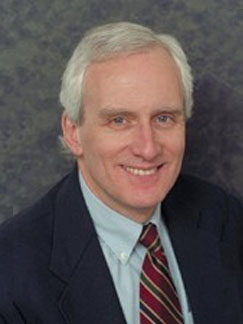
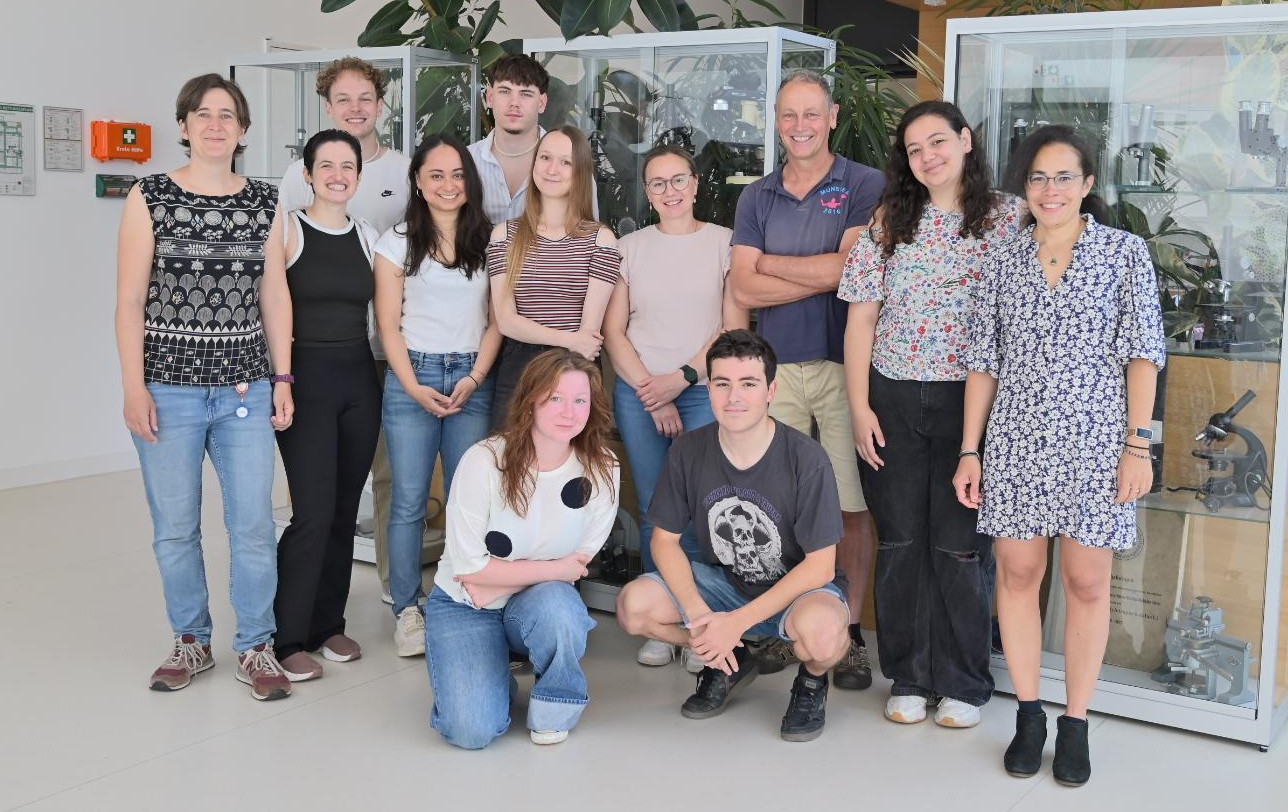
Prof. Laura Busse is a Professor at Ludwig Maximilian University of Munich (LMU), leading the Research Group in the Department of Biology II, Division Neurobiology. She holds roles as a Regular Member of MCN, Full Member of GSN, and Deputy Head of the GSN Examination Board. Her research focuses on cellular and systems neuroscience, particularly investigating how contextual information influences visual perception through neural circuits in mice. Key areas include feedback mechanisms, behavioral state effects, and thalamocortical interactions. Her work employs advanced techniques like high-density extracellular recordings and optogenetics to study active behavior in rodents. Current students include Simon Renner, Gregory Born, and others. Recent research highlights include studies on corticothalamic feedback effects, thalamic spatial integration, and the role of pupil dynamics in neural activity. She leads the Vision Circuits Lab (https://visioncircuitslab.org), exploring how sensory inputs and brain states shape visual processing. Her articles reveal trends in understanding thalamocortical communication, adaptive sensory systems, and the biological basis of neural network models. She coordinates the SPP2411 project on cortico-subcortical loops, emphasizing interdisciplinary neuroscience.
Bryan Dowd is a Professor in the Division of Health Policy & Management at the University of Minnesota. With a PhD in Public Policy Analysis from the University of Pennsylvania (1982), MS in Urban Administration from Georgia State University (1976), and BA in Architecture from Georgia Institute of Technology (1972), his work focuses on health economics , statistical modeling , and healthcare financing . PhD, Public Policy Analysis, University of Pennsylvania, 1982 MS, Urban Administration, Georgia State University, 1976 BA, Architecture, Georgia Institute of Technology, 1972 His research spans health insurance dynamics , payment models , and statistical methodologies in healthcare. Key themes include upcoding practices , instrumental variable applications , and policy implications of risk ratios . Publications often address healthcare access , economic incentives , and data-driven policy evaluation . Recent article trends highlight moral hazard decomposition , odds ratio critiques , and switching cost analysis in Medicare Advantage. These works emphasize causal inference , economic modeling , and policy design challenges . Contact: dowdx001@umn.edu
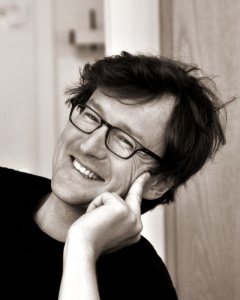
Oskar Hallatschek is an Associate Professor and McAdams Chair in the Department of Physics and Integrative Biology at the University of California, Berkeley. His research focuses on biological physics and evolutionary dynamics, particularly how collective patterns emerge from heterogeneous microbial populations. He leads the Hallatschek Lab, which maintains collaborations with institutions like the University of Leipzig. Research Emphasis: Microbial systems, population genetics, non-equilibrium statistical physics, evolutionary adaptation, and mechanical interactions in cellular populations. Publications span journals like Nature , PNAS , and Science , with recent work on allele surfing, jamming in microbial colonies, and long-range dispersal effects. Grants: Supported by NIH and NSF, as indicated by institutional logos in the lab web presence.
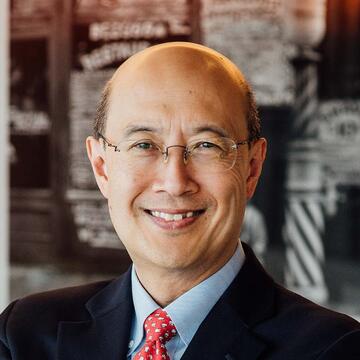
Andrew W. Lo is the Charles E. and Susan T. Harris Professor and a Professor of Finance at the MIT Sloan School of Management. He serves as Director of the Laboratory for Financial Engineering and is a principal investigator at the MIT Computer Science and Artificial Intelligence Laboratory (CSAIL). His academic affiliations include the American Finance Association, Academia Sinica, American Academy of Arts and Sciences, Econometric Society, and Society of Financial Econometrics. As an external faculty member at the Santa Fe Institute and research associate at the National Bureau of Economic Research, Lo bridges finance, AI, and healthcare. BA in Economics, Yale University AM and PhD in Economics, Harvard University His research focuses on evolutionary models of investor behavior , AI in financial technology , healthcare finance , and impact investing . Recent work includes adaptive market frameworks, AI-driven financial advice systems, and statistical tools for clinical trial prediction. His 2025 articles explore applications of Bayesian analysis in healthcare, endowment risk management, and market innovation dynamics. Lo has received prestigious awards including the Guggenheim Fellowship , TIME 100 recognition, and multiple teaching and research honors. He co-founded asset management and biotech companies and serves on healthcare organization boards. MIT Sloan Executive Education courses highlight his leadership in AI and machine learning for business applications.
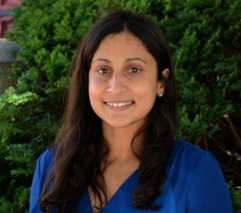
Tina Gupta will join the University of Oregon as an Assistant Professor in the Department of Psychology under the College of Arts and Sciences in Fall 2025. With expertise in clinical psychology and affective neuroscience, she focuses on adolescent emotional development and severe mental illness risk markers. Research Interests: Adolescent Development, Psychosis-risk, Resilience, Emotion Processing, Reward Processing, Early Intervention Methods: Clinical interviews, behavioral measures, facial expression coding, neuroimaging, eye-tracking, computational statistics Her work bridges clinical psychology and developmental psychopathology to identify biological and environmental factors contributing to severe mental illnesses like schizophrenia. She specifically examines disruptions in emotional processes and protective resilience mechanisms in at-risk adolescents. Dr. Gupta employs multi-modal approaches including fMRI , EMG , and longitudinal tracking to map brain-behavior relationships. Her recent publications analyze anhedonia trajectories, facial expressivity changes, and inflammation's role in adolescent mental health.
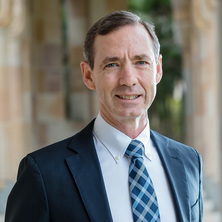
Professor Shaun Bond is the Frank Finn Professor of Finance at the UQ Business School, University of Queensland. He has held prior positions as the West Shell Professor of Real Estate at the University of Cincinnati (Director of the UC Real Estate Center) and as a lecturer at the University of Cambridge’s Department of Land Economy. He has also served as a visiting professor at Pennsylvania State University and George Washington University. Education: PhD and MPhil in Economics from the University of Cambridge; Bachelor of Economics (First Class Honours) from the University of Queensland. Research Interests: Real estate finance, financial economics, investment and risk management, and financial econometrics. Publications: Over 33 works including 28 journal articles, 2 book chapters, and 2 conference publications, focusing on real estate markets, financial forecasting, and ESG integration. Funding: Current Macoun Research Scholar Program (2021–2025); recent grants from Queensland Government and QIC Limited for short-term rental regulation and investment management research. Supervision: Available for PhD supervision in real estate asset pricing and financial market sentiment.
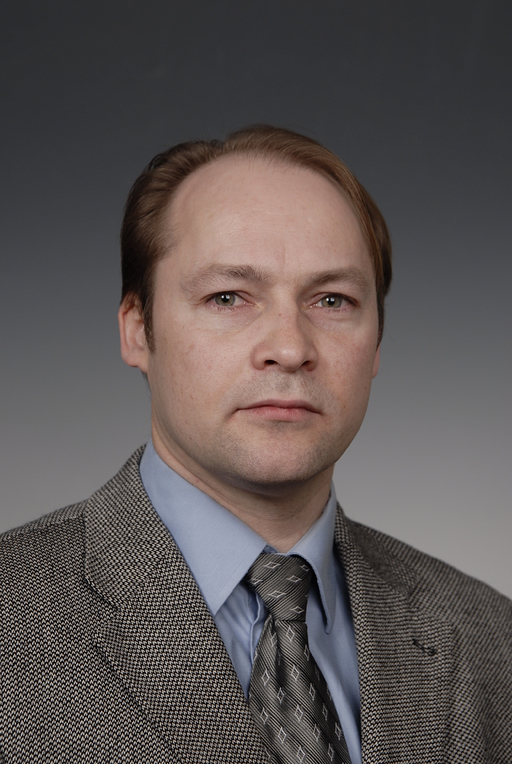
Dr. Raimon Tolosana Delgado is a Research Fellow at the Helmholtz-Zentrum Dresden-Rossendorf (HZDR), affiliated with the Helmholtz Institute Freiberg for Resource Technology. He leads research in predictive geometallurgy and statistical analysis of mineral resources, focusing on translating geological data into processing insights. His research integrates geostatistics , compositional data analysis (CoDa) , and machine learning to model ore behavior and resource potential. Key areas include: Predictive geometallurgy for forecasting ore/waste behavior Bayesian statistics for parameter estimation and uncertainty analysis Development of R-based tools (e.g., compositions and gmGeostats packages) for mineral data analysis Particle-based process modelling for mineral separation optimization Recent publications emphasize machine learning integration (e.g., neural networks for geophysical tensor fields), tailings reprocessing (3D geostatistical assessment of resource potential), and advanced statistical methods for compositional data. A consistent trend involves enhancing predictive accuracy in mineral processing through multi-source data fusion. Dr. Tolosana Delgado coordinates the development of technology platforms for geometallurgical data analysis, including databases and interfaces for industrial applications. His work bridges ore geology, mineral processing, and metallurgy to optimize resource efficiency.
Elena Asparouhova is a Professor of Finance at the David Eccles School of Business , University of Utah. She holds a doctorate in Social Sciences from the California Institute of Technology and a Masters in Statistics from Sofia University , Bulgaria. Her research focuses on theoretical and experimental financial economics , including asset pricing theory , experimental finance , general equilibrium theory , and econometrics . Recent work examines financial market competition under delegation , information percolation in dark markets , and human-robot interaction in trading . Best Paper Award, Journal of Financial Markets (2025) Best Paper Award, Review of Finance (2024) Best Paper, Behavioral Finance and Capital Markets Conference, Australia (2025) Continuous National Science Foundation funding for 10+ years Contact: e.asparouhova@utah.edu , University of Utah, Salt Lake City, Utah 84112.
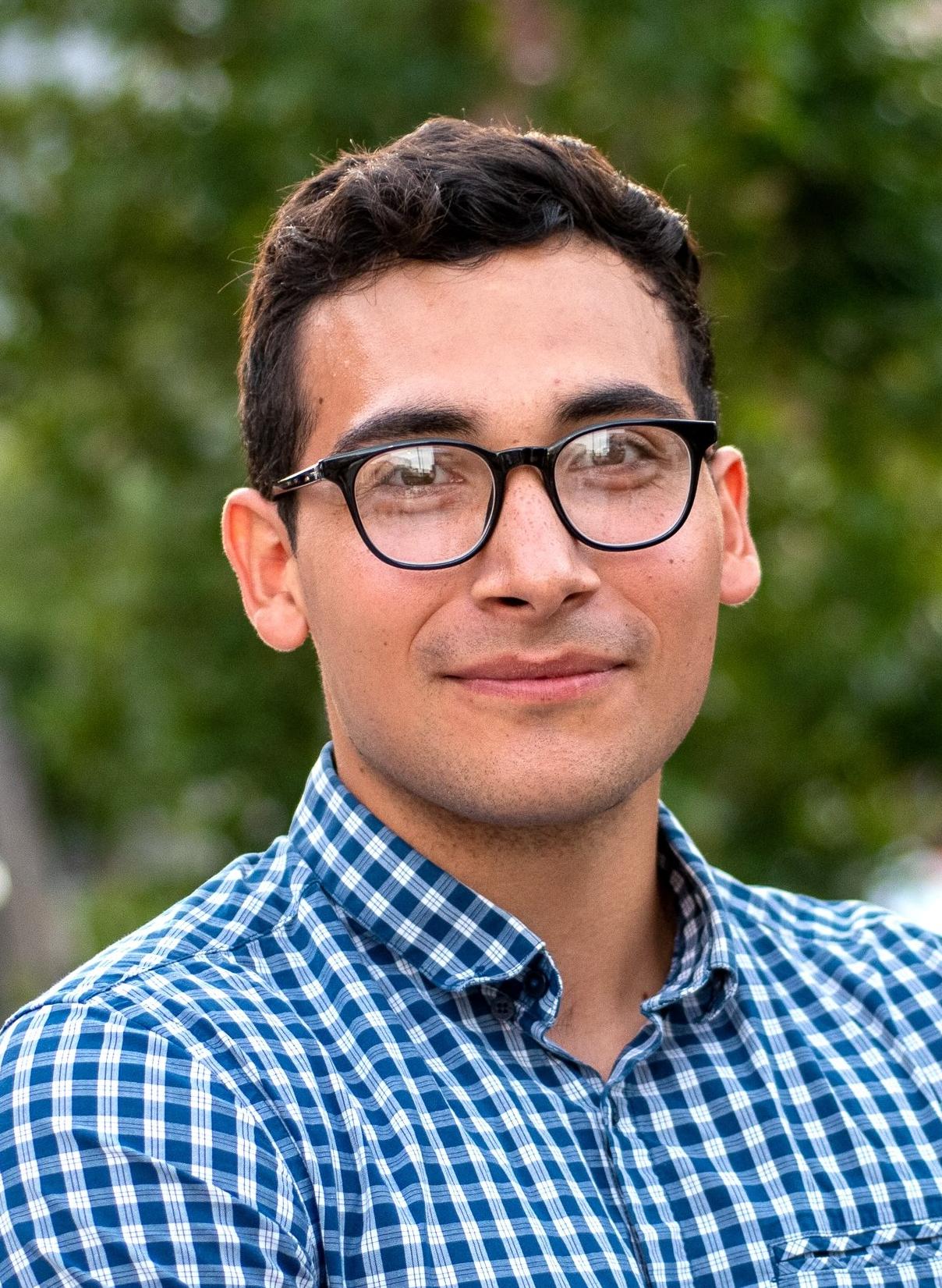
Marat I. Latypov serves as Assistant Professor in the Department of Materials Science and Engineering at the University of Arizona's College of Engineering. He is also a member of the Applied Mathematics Graduate Interdisciplinary Program and leads the Materials Informatics Lab. His research spans computational materials science, sustainable alloy design, and machine learning applications for materials development. Dr. Latypov holds a PhD in Materials Science and Engineering from Pohang University of Science and Technology (POSTECH, South Korea, 2014) and a Dipl.-Ing. in Engineering Physics from Ufa State Aviation Technical University (Russia, 2011). His postdoctoral training included appointments at Georgia Tech/CNRS in France and the University of California, Santa Barbara. His research focuses on materials informatics , physics-informed machine learning , and sustainable structural alloys . Key methodologies include graph neural networks for polycrystal mechanics, vision transformers for microstructure representation, and adaptive experimental design for materials optimization. Recent work emphasizes circular economy applications through construction waste recycling and copper mine tailings valorization. Analysis of his publication record reveals strong emphasis on computational microstructure-property linkages (35% of recent work), machine learning for materials design (30%), and sustainable materials processing (25%), with growing integration of large language models for materials knowledge extraction. NSF CAREER Award (2025) : For damage control in recycled aluminum alloys ISTI Distinguished Faculty Scholar (2024) : At Los Alamos National Laboratory Novelis Hackathon First Prize (2021) : Computer vision application Acta Materialia Outstanding Reviewer (2018) Young Researcher Award (2017) : NanoSPD7 Conference Dr. Latypov advises PhD students including Herbold Fellow Zhuocheng Huang and leads projects funded by NSF and the Grantham Foundation. Current initiatives include chalcopyrite leaching optimization for copper mining and graph neural network development for fatigue prediction. His Materials Informatics Lab maintains collaborations with Los Alamos National Laboratory, MIT, and industry partners including Novelis. The lab operates at the intersection of metallurgy , machine learning , and high-performance computing , with capabilities spanning deep learning, Bayesian inference, and cloud-based computational infrastructure. Recent news highlights participation in CODAS-HEP summer school and publication of vision transformer work in Acta Materialia.
Keunhyun (Keun) Park is an Assistant Professor of Urban Forestry at the University of British Columbia (UBC), affiliated with the Department of Forest Resources Management . He also holds an Adjunct Professor position at Utah State University in the Department of Landscape Architecture and Environmental Planning. Education: BSc and MSc in Landscape Architecture from Seoul National University; PhD in Urban Planning and Design from the University of Utah Research Lab: Faculty lead of the Urban Nature Design Research Lab ( under_lab ) His research focuses on designing healthy, just, and resilient cities through urban nature , with particular emphasis on: Environmental justice and equitable access to urban green spaces Human behavior in public spaces using drone/sensor/VR technology Smart growth urban design impacts on public health and ecological systems Recent publications demonstrate expertise in GIS applications , pedestrian behavior analysis , and urban planning across 20+ studies from 2013-2025. Collaborations include the Vancouver Park Board , Metro Vancouver , and Wasatch Front Regional Council .
Moïse Blanchard is an Assistant Professor and Tennenbaum Early Career Professor at the H. Milton Stewart School of Industrial and Systems Engineering at Georgia Institute of Technology, having joined in August 2025. Previously, he was a Postdoctoral Fellow at Columbia University Data Science Institute. His academic journey includes a Ph.D. in Operations Research from MIT (2024), and M.Sc. and B.Sc. degrees in Applied Mathematics from École Polytechnique. Blanchard's research focuses on the intersection of machine learning theory, statistics, and optimization. His work addresses fundamental questions in universal learning, online algorithms, and convex optimization under memory constraints. His research program explores learnability under minimal assumptions, query complexity/memory tradeoffs, and decision-making in adversarial environments. This work has significant implications for theoretical computer science, operations research, and statistical learning theory. His publications reveal a strong emphasis on foundational aspects of learning theory and optimization. Recent work demonstrates expertise in universal learning frameworks, memory-constrained optimization, and probabilistic analysis of combinatorial problems. His research often bridges theoretical computer science with practical optimization challenges, particularly in contexts where traditional i.i.d. assumptions don't hold. Columbia DSI postdoctoral fellowship, 2024 INFORMS Transportation Science & Logistics (TSL) best student paper award, 2023 Air Force Office of Scientific Research Grant (AFOSR), with Prof. Patrick Jaillet, 2023 COLT 2022 Best student paper runner-up Bronze medal, Alibaba Global Mathematics Competition, 2022 Blanchard has received significant research funding including an Air Force Office of Scientific Research Grant. His work has been recognized with multiple prestigious awards, including the INFORMS TSL best student paper award for his research on the k-Traveling Salesman Problem. His extensive publication record in top venues demonstrates a strong research trajectory with impactful contributions to theoretical machine learning and optimization.
Irena Koprinska is a prominent researcher at the University of Sydney with over 150 publications from 1996 to 2025. Her work spans multiple interdisciplinary domains with significant contributions to machine learning applications in educational technology, time series forecasting, and health informatics. She maintains strong research collaborations, particularly with Kalina Yacef (38 joint publications), Mashud Rana (26 papers), and Bryn Jeffries (22 papers), indicating leadership in her research group. Her research interests focus on practical applications of machine learning across diverse domains. In educational data mining, she has pioneered methods for predicting student performance in programming courses, analyzing syntax errors, and developing automated hint generation systems. Her work in time series forecasting has made significant contributions to solar power prediction using advanced neural network architectures. Additionally, she has applied machine learning techniques to medical domains, particularly in sleep disorder detection and analysis. The analysis of her 15 most recent publications (2022-2025) reveals a continued focus on educational technology and time series analysis, with increasing attention to interpretable methods and health applications. Her work demonstrates a consistent trajectory of applying sophisticated machine learning techniques to solve real-world problems across multiple domains, with particular emphasis on creating practical tools for education and renewable energy management. Notable Research Contributions: Development of the HINTS framework for automated programming hint generation Innovative approaches to multistep-ahead time series forecasting Applications of deep learning to sleep disorder detection Methods for predicting student performance in programming education Her publication record in top venues including Machine Learning journal, AIED, EDM, and IJCNN demonstrates significant impact in both machine learning and educational technology communities. The consistent output of high-quality research over nearly three decades indicates sustained scholarly productivity and leadership in her fields of expertise.
Heikki Remes serves as Associate Professor in the Department of Energy and Mechanical Engineering at Aalto University's School of Engineering, where he investigates high-performance steel structures for marine environments with emphasis on lightweight ship designs using advanced materials and manufacturing techniques. His research integrates fundamental fatigue and fracture mechanics with practical structural challenges, spanning from crystal-level material behavior to continuum-scale modeling. Key focus areas include welded joint integrity, additive manufacturing defects, and computational analysis of marine structures under extreme conditions. Recent publications reveal strong trends in fatigue assessment methodologies for complex welded geometries, experimental validation of distortion effects, and AI-enhanced damage prediction systems, reflecting his commitment to bridging theoretical mechanics with shipbuilding applications. Scientific Awards: Aalto Education Impact Award (2018) for establishing Marine Technology study programs SNAME Honorable Mention for 2018 Vice Admiral E. L. Cochrane Award Teaching Award of Aalto School of Engineering (2012) for educational tools No specific student advising or grant information appears in available sources, though his active publication record indicates ongoing research leadership. He contributes significantly to the Marine and Arctic Technology research group, driving projects on structural integrity assessment and advanced manufacturing solutions for next-generation marine vessels.
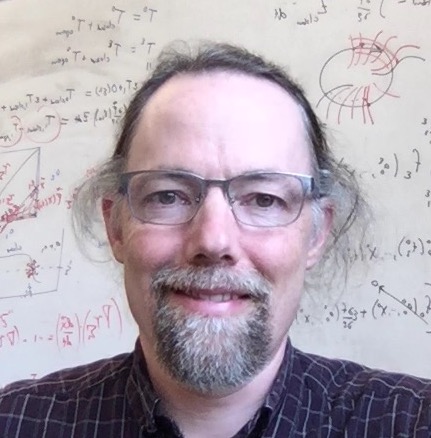
Peter J. Thomas is a Professor in the Department of Mathematics, Applied Mathematics, and Statistics at Case Western Reserve University's College of Arts and Sciences, with secondary appointments in Electrical Engineering and Computer Science, Cognitive Science, and Biology. He serves as Co-Editor-in-Chief of Biological Cybernetics and leads the Computational Biomathematics Laboratory. Primary Affiliation: Department of Mathematics, Applied Mathematics, and Statistics Secondary Affiliations: Department of Electrical Engineering and Computer Science, Department of Cognitive Science, Department of Biology Leadership: Co-Editor-in-Chief of Biological Cybernetics Thomas earned his B.A. in Physics and Philosophy from Yale University (1990), M.S. in Mathematics from the University of Chicago (1994), and both M.A. in Conceptual Foundations of Science and Ph.D. in Mathematics from the University of Chicago (2000). His research spans mathematical neuroscience, theoretical biophysics, and information theory applications to biological systems. Thomas specializes in understanding how noise and stochasticity affect neural coding, developing mathematical frameworks for gradient sensing in cells, and applying graph theory to biological networks. His work on stochastic shielding has provided novel approaches to simplifying complex stochastic models while preserving essential dynamics. His research bridges theoretical mathematics with experimental neuroscience through collaborations with the Chiel laboratory and others. Thomas's recent publications demonstrate a strong focus on stochastic oscillators, sensory feedback mechanisms, and information theory applications to biological systems. His work consistently develops novel mathematical frameworks to address specific biological questions, with significant contributions to understanding phase dynamics in neural oscillators and information processing in biochemical signaling. Core Fulbright Scholar Program (2013) Simons Fellow in Mathematics Program (2014) Multiple NSF grants as Principal Investigator Co-Editor-in-Chief of Biological Cybernetics Thomas has mentored numerous students at all levels, from undergraduates to postdoctoral researchers. His laboratory has produced successful scholars who have gone on to faculty positions at institutions like New Jersey Institute of Technology and the University of Nevada, Reno. He has actively organized workshops at the Banff International Research Station and served on editorial boards for leading journals in computational neuroscience. The Computational Biomathematics Laboratory focuses on developing mathematical frameworks to understand neural dynamics, cellular signaling, and pattern formation. The lab maintains strong collaborations with experimental neuroscience groups and has made significant contributions to understanding rhythmic neural systems, respiratory control mechanisms, and information processing in biological systems.
Professor Ralf Stanewsky leads the Stanewsky Group at the Institute of Neuro- and Behavioral Biology, University of Münster. His research focuses on the molecular mechanisms of circadian rhythms in Drosophila melanogaster , particularly how environmental cues like light and temperature reset the circadian clock. The group employs genetic, molecular, histological, and behavioral approaches to study sensory pathways and their integration in central clock neurons. Member of the Multiscale Imaging Centre (MIC) and Imaging Network – Microscopy Current lab members: Ph.D. students Anna Katharina Eick, Angelica Coculla, Maia Zabel Barroso Technical assistants Regina Hube and Ume Aiman Research Themes Light and temperature synchronization of circadian clocks Temperature compensation mechanisms in biological timing Neuronal integration of environmental signals Evolutionary aspects of circadian regulation Professor Stanewsky’s work spans molecular clock components (e.g., cryptochromes, timeless gene variants) to broader ecological implications of temporal niche choice. His lab investigates how clock gene expression responds to seasonal changes and environmental stressors, while also exploring novel synchronization pathways beyond classical photoreceptors. Publication Trends Recent articles emphasize temperature-dependent clock regulation , evolutionary capacitance via Hsp90 , and non-canonical phototransduction in circadian systems. Key subfields include nuclear transport dynamics, kinase evolution, and computational modeling of periodic patterns across species. Contact Information Institute of Neuro- and Behavioral Biology, University of Münster MIC | Röntgenstraße 16, D-48149 Münster, Germany Email: stanewsky@uni-muenster.de Phone: +49 251 8321029