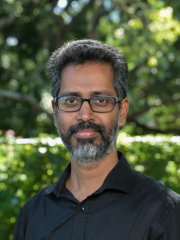
Franz Berthiller is an Associate Professor at the University of Natural Resources and Life Sciences, Vienna (BOKU), affiliated with the Department of Agricultural Sciences and the Institute of Bioanalytics and Agro-Metabolomics in Tulln an der Donau. His research specializes in mycotoxin analysis, mass spectrometry, and metabolomics, with a focus on developing advanced detection methods and understanding toxin metabolism in food/feed systems. He leads significant projects like the EU-funded BIOTOXDoc (2023–2027) and FWF-supported studies on modified fumonisins. Research interests include: Development of LC-MS/MS methods for mycotoxin quantification Metabolic pathways of trichothecenes and fumonisins Plant-fungal interactions affecting toxin production Biomarker discovery for contaminant exposure Multi-omics approaches in food safety Berthiller's recent publications emphasize metabolomics method optimization, environmental impacts on mycotoxin biosynthesis, and enzymatic modification of toxins. His work integrates analytical chemistry, molecular biology, and agricultural science to address food safety challenges. He directs a research group at the Institute of Bioanalytics and Agro-Metabolomics, collaborating internationally on projects related to mycotoxin management. No awards or supervised students are documented.
Se-Ran Jun is an Associate Professor in the Department of Biomedical Informatics at the University of Arkansas for Medical Sciences College of Medicine. With a strong background in mathematics and data science, Dr. Jun leads research at the intersection of bioinformatics, microbial genomics, and infectious disease surveillance. Dr. Jun's research focuses on the analysis and integration of non-omics and multi-omics data—including genomics, microbiome, transcriptomics, epigenomics, metabolomics, and proteomics—to study disease and environmental interactions using advanced machine learning and statistical learning methodologies. Their laboratory is dedicated to real-time surveillance of antimicrobial-resistant pathogens, particularly in immunocompromised patient populations, integrating genomic data with electronic health records to drive actionable insights for infectious disease prevention and antibiotic stewardship. Dr. Jun's publication record demonstrates expertise in genomic surveillance of ESKAPE pathogens, antimicrobial resistance mechanisms, and application of machine learning to microbiome data. Their recent work emphasizes pathogen genomics using Oxford Nanopore sequencing technology, with significant contributions to understanding resistance evolution in carbapenem-resistant pathogens and vancomycin-resistant Enterococcus faecium. As an educator, Dr. Jun teaches multiple courses including Genomic Surveillance of Antimicrobial Resistance, Fundamentals of the Human Microbiome, and Foundations of Biomedical Informatics, demonstrating commitment to training the next generation of bioinformaticians and data scientists. Principal Investigator on NIH R21 grant for Real-Time High Resolution Method for Genomic Surveillance of ESKAPE pathogens Principal Investigator on NSF grant for Data Governance in Genomic Pathogen Surveillance Co-Investigator on multiple NIH, USDA, and institutional grants related to antimicrobial resistance and pathogen genomics Dr. Jun serves as an editor for Microbiology Spectrum and Frontiers in Microbiology, and reviews for various NIH study sections including Infectious Disease and Immunology, Anti-Infective Resistance and Targets, and Biodata Management and Analysis. They also chair the Biomedical Informatics Admissions Committee and serve as Arkansas Chapter President of the Korean-American Scientists and Engineers Association.
Benjamin J Ridenhour is an Associate Professor in Mathematics and Statistical Science at the University of Idaho's College of Science. His research bridges computational biology, evolutionary theory, and public health, with affiliations to the Initiative for Bioinformatics and Evolutionary Studies, Institute for Interdisciplinary Data Sciences, and the Institute for Modeling Collaboration and Innovation. He applies mathematical models to microbiome studies, epidemiology, and bacterial evolution. Education: BA in Environmental Biology (1998) from Utah State University, PhD in Evolution, Ecology, and Behavior (2004) from Indiana University Bloomington His work focuses on microbial community dynamics, including Lotka-Volterra models for microbiome resilience, phenotypic heterogeneity in bacterial adaptation, and plasmid-driven evolution . Recent studies analyze SARS-CoV-2 wastewater surveillance, sociodemographic risk factors for diseases, and geroscience applications in primate models. He employs advanced statistical methods like elastic net regression and Hi-C technology for rare plasmid detection. His affiliations highlight interdisciplinary collaboration between data sciences, bioinformatics, and modeling institutions. Research trends emphasize translational approaches to aging, microbial network analysis, and public health policy implications.
Fan Yi serves as an Assistant Professor in the Department of Mathematics and Statistical Science within the College of Science at the University of Idaho. Her academic foundation includes a Ph.D. in Biostatistics from the University of Florida (2023), an M.S. in Statistics from Nankai University (2018), and a B.S. in Mathematics from Lanzhou University (2015). Education: Ph.D. in Biostatistics, University of Florida (2023) M.S. in Statistics, Nankai University (2018) B.S. in Mathematics, Lanzhou University (2015) Research Focus: Her work bridges biostatistics and statistical process control, with emphasis on healthcare applications including chronic wound healing, biomarker analysis, and nurse burnout. She develops advanced monitoring systems using machine learning for medical and environmental contexts, demonstrated through publications on venous ulcer healing, cardiovascular biomarkers, and adaptive image analysis. Publication Trends: Recent work (2021-2024) reveals dual trajectories: clinical biostatistics focused on geriatric wound care and cardiovascular outcomes, alongside methodological innovations in sequential monitoring and image processing. Her research consistently applies statistical rigor to real-world problems across healthcare, nursing, and environmental surveillance.
Dr. Andrew Hess is an Assistant Professor in the Department of Agriculture, Veterinary & Rangeland Sciences at the University of Nevada, Reno. His research focuses on developing bioinformatics pipelines for genomic selection and identifying genetic markers applicable to livestock and aquaculture industries. He specializes in integrating real-time long-read sequencing technologies and digital agriculture tools (e.g., accelerometers, GPS collars) for high-throughput phenotyping and genetic improvement. Dr. Hess earned his Ph.D. from Iowa State University and has conducted groundbreaking research in sheep, goats, pigs, deer, and Greenshell mussels. His work emphasizes direct industry application, targeting traits like methane emissions, feed efficiency, and disease tolerance using advanced genomic methods such as GWAS, CNV analysis, methylation studies, and pangenome development. His recent publications highlight cross-species genomic strategies, including rumen microbiome profiling for methane prediction and genomic selection in sheep. While no awards are explicitly mentioned, his collaborations with institutions like Iowa State University, University of Nevada, Reno, and New Zealand-based teams underscore his interdisciplinary impact in animal breeding and data-driven agricultural technologies.
John Danesh is Professor of Epidemiology and Medicine and Head of the Department of Public Health and Primary Care at the University of Cambridge. He concurrently serves as a Faculty Member at the Wellcome Sanger Institute, Honorary Consultant at Cambridge University Hospital NHS Foundation Trust (Addenbrooke's Hospital), Professorial Fellow at Jesus College, Cambridge, Founder-Director of the Cardiovascular Epidemiology Unit, and Director of Health Data Research UK-Cambridge. His research spans cardiovascular epidemiology, genetic determinants of disease, and health data science. He pioneers the integration of genomics, metabolomics, and large-scale population data to unravel disease mechanisms, with emphasis on polygenic risk scores, metabolite-disease associations, and international collaborations like the BELIEVE cohort in Bangladesh. His work bridges molecular biology with public health applications for precision prevention. Analysis of his 2022-2025 publications reveals dominant themes in multi-omics cardiovascular risk prediction, including genetic architecture of coronary disease, iron homeostasis pathways, and regional risk variations in South Asian populations. Key methodologies involve individual-participant-data meta-analyses, Mendelian randomization, and computational modeling of biological networks. Scientific Awards: No specific awards listed in source materials Professor Danesh leads major grant-funded initiatives including the Cardiovascular Epidemiology Unit and Health Data Research UK-Cambridge. His advisory roles in national health data infrastructure and longitudinal research environments demonstrate significant influence in shaping large-scale epidemiological studies and translational data science applications. He directs the Cambridge Mathematics of Information in Healthcare (CMIH) hub, fostering cross-disciplinary teams that apply advanced computational methods to healthcare data. His laboratory focuses on genetic and metabolic drivers of cardiovascular disease through international cohort studies and innovative risk prediction modeling.
William Stafford Noble is a Professor in the Department of Genome Sciences with a joint appointment in the Paul G. Allen School of Computer Science and Engineering at the University of Washington. He earned his Ph.D. in Computer Science and Cognitive Science from UC San Diego (1998) after completing a B.S. in Symbolic Systems at Stanford University (1991). Research Focus: Dr. Noble develops machine learning and statistical methods for complex biological data analysis. His interdisciplinary work spans: Computational genomics and proteomics Sequence analysis and genome annotation 3D genome architecture modeling Mass spectrometry data analysis AI applications in biological discovery Publication Trends: His recent work (2025) focuses on advanced computational techniques for single-cell analysis, mass spectrometry innovation, and multi-modal biological data integration, demonstrating consistent leadership in AI-driven biological research. Awards & Honors: ISCB Innovator Award NSF CAREER Award Sloan Research Fellowship Highly Cited Researcher (Clarivate Analytics) ISCB Fellow Leadership & Training: Co-director of the UW 4D Genomic Nuclear Organization Center. Mentored 24 Ph.D. students and 34 postdoctoral fellows, with trainees now holding faculty positions at Columbia, UCLA, UBC, and other leading institutions.
Dr. Bo Wang is an Assistant Professor in the Department of Chemistry and Chemical Engineering at Florida Institute of Technology's College of Engineering and Science. His research bridges analytical chemistry, data science, and biological applications with a focus on metabolomics methodologies and their implementation across environmental and human health domains. Dr. Wang's research interests center on computational methods development in metabolomics with applications spanning drug discovery of food compounds, environmental science, and cancer mechanism studies. His work includes instrumentation analysis using NMR and HPLC/MS on natural compound extractions and metabolomic profiling studies examining responses to various environmental exposures. A significant focus is finding links between cancer metabolomic profiling and plant extract compounds to identify synergistic combinations. He also investigates combinatorial effects of environmental toxins using NMR-based metabolomics approaches. His recent publications demonstrate strong trends in integrating metabolomics with microbiome analysis to study gut-brain axis mechanisms, environmental toxin effects on marine organisms, and metabolic responses to dietary interventions. The research increasingly incorporates machine learning approaches for metabolomics data interpretation and emphasizes sex-specific responses in metabolic studies. National Science Foundation (NSF) LEAPS-MPS: $248,613 for Artificial Intelligence Techniques for Automatic NMR Metabolomics Data Processing (2021-2025) Gulf of Mexico Alliance (GOMA): $200,000 for AI-Directed Tool Development for Pathogenic "Flesh-eating" Vibrio Bacteria Prediction and Control (2024-2027) National Institutes of Health (NIH) R01: $85,184 for Microbial therapy improves gut permeability to reduce cognitive decline and Alzheimer's disease (2021-2026) NSF Collaborative Research: $168,690 for Therapeutic and Diagnostic System for Inflammatory Bowel Diseases (2023-2028) Dr. Wang actively mentors multiple PhD students including Julie Pollak (Metabolomics in human health), Moses Mayonu (Metabolomics data processing), Tammy Tran (Water pollutant treatment), and Saeedeh Babaee (Marine animal response to environmental toxins). His research group also includes several undergraduate students working on NMR-based metabolomics studies of milk products and tea extracts. The research is conducted through collaborations with institutions including University of South Florida, Florida State University, and Ohio University.
Jorge Hidalgo is an Assistant Professor in the Department of Animal and Dairy Science at the University of Georgia (since August 2023). He earned his PhD in Animal Breeding and Genetics from UGA in 2021, following a Master's and Bachelor's from Universidad Autónoma Chapingo in Mexico. His research focuses on genomic evaluations for livestock, particularly in: Statistical methods for large-scale genomic data Crossbred populations (beef-on-dairy) Categorical trait analysis (diseases, mortality) Social interaction models in breeding Heat tolerance in cattle Recent publications highlight his work in: Genomic prediction optimization Run-of-homozygosity analysis Machine learning techniques Metafounder methodologies GxE interactions Selection signature studies Awards include Outstanding Graduate (2024) and leadership in a USDA NIFA grant (2023-2028) on negative effects of genomic selection. He teaches ADSC 3110: Introduction to Genetics of Livestock Improvement and serves in UGA's Graduate Program Faculty until 2028.
Zenglu Li serves as the Georgia Seed Development Professor in Soybean Breeding and Genetics within the Department of Crop & Soil Sciences at the University of Georgia's College of Agricultural & Environmental Sciences. His research program focuses on developing high-yielding soybean varieties with enhanced seed composition, disease resistance, and stress tolerance through integrated genomic and conventional breeding approaches. Education Ph.D. in Plant Breeding and Genetics, University of Illinois at Urbana-Champaign Dr. Li's research centers on genetic improvement of soybean through identification of genomic regions controlling critical traits including yield, seed protein/oil composition, disease resistance (frogeye leaf spot, soybean rust, nematodes), and abiotic stress tolerance. His methodology combines QTL mapping, marker-assisted selection, genomic selection, and germplasm enhancement using exotic genetic resources to accelerate breeding cycles. Current projects emphasize translating genomic discoveries into practical cultivar development with commercial viability across Southern U.S. production environments. Analysis of recent publications reveals consistent focus on genomic applications in soybean breeding, particularly in disease resistance genetics (Rcs loci for frogeye leaf spot), seed composition optimization (protein, oleic acid), and development of breeding tools like SNP assays and genomic prediction models. His work demonstrates strong translational impact through numerous registered cultivars exhibiting traits such as high yield, disease resistance, and modified oil profiles for specific market needs. Scientific Awards No awards specified in source materials Dr. Li leads the soybean breeding program at UGA's Center for Applied Genetic Technologies, operating the research facility documented at https://soybeans.uga.edu/ . His program maintains active field trials across multiple Southern states and has released over 20 commercial soybean cultivars since 2020, indicating substantial grant funding and industry partnerships. While specific student advising details are unavailable, his professorship entails graduate mentorship in plant breeding and genetics within UGA's Institute of Plant Breeding, Genetics and Genomics.
Md Ashraful Alam is a public health researcher at the University of Queensland's Poche Centre for Indigenous Health. He holds an RTP scholarship for his PhD research on environmental exposures in pregnancy and birth outcomes in Queensland . With prior affiliations at icddr,b in Dhaka, Bangladesh, his work bridges statistical analysis and epidemiological studies. M.Sc in Statistics, Rajshahi University MPH in Epidemiology, University of South Asia His research focuses on maternal and child malnutrition , adverse childhood experiences , mental health , and environmental enteric dysfunction . Recent studies examine gut biomarkers, nutritional interventions, and pandemic impacts on vulnerable populations. Key publications include machine learning models for pediatric mortality prediction , L-carnitine supplementation trials , and systematic reviews on indigenous health outcomes . Collaborations span institutions like Harvard University , University of Virginia , and icddr,b .
Peter Adler is a Professor in the Wildland Resources department within the College of Natural Resources at Utah State University. He directs the USU Ecology Center and leads the Adler Lab, which focuses on plant ecology, population and community dynamics, coexistence mechanisms, and climate change impacts on plant communities. His research spans both theoretical and applied ecology, with significant field work conducted in arid and semiarid ecosystems across North America. Dr. Adler received his PhD in Ecology from Colorado State University in 2003 and an Environmental Studies degree from Harvard College in 1994. His academic journey has positioned him as a leading researcher in plant community ecology, with particular expertise in grassland ecosystems and species coexistence. His research program investigates fundamental questions about coexistence and diversity, ecological forecasting, and plant-animal interactions. Key interests include understanding the relative importance of niche versus neutral coexistence mechanisms, how climate variability affects species diversity, and how plant functional traits can predict population and community dynamics in the face of climate change. Much of his field work focuses on arid and semiarid ecosystems, where he examines how domestic livestock impacts vary across different ecological contexts. Analysis of Dr. Adler's recent publications (2023-2025) reveals a strong focus on biodiversity dynamics, climate change impacts, and ecosystem functioning. His work spans theoretical ecology (coexistence mechanisms, spatial dynamics) and applied ecology (invasive species management, rangeland adaptation). A significant thread connects plant-soil interactions, nutrient cycling, and species coexistence across multiple studies. His research increasingly integrates remote sensing techniques with field observations to scale up ecological understanding. College of Natural Resources Researcher of the Year, 2010 (Utah State University) Distinguished Alumnus Award, Graduate Degree Program in Ecology, 2010 (Colorado State University) Dr. Adler has mentored numerous graduate students, including PhD candidates and master's students specializing in wildland resources. His lab has secured significant research funding for long-term ecological studies, particularly examining climate change impacts on plant communities and invasive species dynamics. The Adler Lab maintains extensive datasets from permanent quadrat studies across multiple grassland ecosystems, providing valuable resources for demographic and community ecology research. The Adler Lab brings together researchers interested in plant ecology, population dynamics, and community assembly. The lab maintains long-term field sites across arid and semiarid ecosystems and collaborates extensively with other researchers through large-scale, multi-institutional projects like the Nutrient Network (NutNet). Their work combines field observations, experimental manipulations, and sophisticated statistical and simulation modeling approaches.
Nicholas A. Christakis is a Sterling Professor of Social and Natural Science at Yale University, affiliated with multiple departments including Sociology, Statistics and Data Science, Ecology and Evolutionary Biology, Biomedical Engineering, Medicine, and the School of Management. He directs the Human Nature Lab and the Yale Institute for Network Science. BS - Yale University (1984) MD - Harvard Medical School (1989) MPH - Harvard School of Public Health (1989) PhD - University of Pennsylvania (1995) His research spans network science, biosocial science, and computational social science, focusing on how social networks influence health behaviors, the genetic determinants of social connections, and AI's role in social systems. Recent work explores microbiome dynamics and social cognition in isolated communities. His 15 most recent publications (2023-2025) emphasize network motifs, social boosting interventions, microbiome transmission in rural populations, and AI's impact on democracy. These works blend computational methods with public health applications. Elected to National Academy of Medicine (2006) AAAS Fellow (2010) AAAS Member (2017) National Academy of Sciences (2024) Christakis has mentored diverse students across disciplines and developed open-source tools like Breadboard and Trellis for network research. His career includes professorships at University of Chicago (1995) and Harvard University (2001), followed by his current Yale appointment (2013).
Tarmo Niine is an Associate Professor of Population Medicine (tenure-track) at the Estonian University of Life Sciences, affiliated with the Institute of Veterinary Medicine and Animal Sciences and the Chair of Veterinary Biomedicine and Food Hygiene. His career at the university includes progressive roles: Senior Lecturer in Veterinary Immunology (2023-2024), Lecturer in Veterinary Immunology (2020-2022), and Teaching Assistant in Veterinary Immunology and Physiology (2017-2019). He holds a Doctor's Degree (2019) and Master's Degree (2010) from the same institution, with research focusing on neonatal ruminant immunology. Dr. Niine's research spans veterinary immunology, epidemiology, biosecurity, and population medicine. He leads projects on automatic health monitoring in livestock, disease prevalence modeling, and biosecurity training frameworks. His work emphasizes practical applications in dairy herd management, zoonotic disease control, and animal welfare assessment using digital technologies. Publication analysis reveals consistent focus on gastrointestinal pathogens, neonatal immunity, and biosecurity systems. Recent works increasingly incorporate advanced statistical modeling (multiblock analysis) and microbiota research. Awards include recognition in the 2020 National Contest for University Students for his doctoral research on protozoan infections in ruminants. He coordinates multiple grants including EU-funded projects like 'Biosecurity Enhanced Through Training Evaluation and Raising Awareness' (COST Action CA20103). As co-leader of the COST Action working group, he develops international biosecurity standards. Dr. Niine teaches Veterinary Immunology and Animal Physiology, and serves on curriculum and academic ethics committees.
Dr. Haiying Wang is a Reader in computer science at Ulster University's School of Computing , and a full member of the Computer Science Research Institute . He holds a PhD in artificial intelligence and biomedicine (2004) and a Postgraduate Certificate in Teaching in Higher Education (2008). Active in AI, machine learning, and complex network analysis Applications in bioinformatics, healthcare informatics, and systems biology Grant holder for Innovate UK and EU-Horizon2020 projects Publisher of 120+ peer-reviewed works Research Focus : Large-scale data integration, activity recognition, gait analysis in smart environments, metagenomics data analysis, and network-based systems biology approaches. His work explores microbiome-host interactions, methane prediction in agriculture, and AI-assisted healthcare technologies. Scientific Awards : Ulster University Research Excellence Award - Business Category (2019) Collaborations : Organized European Research Conferences (2020-2021) and collaborated on projects analyzing rumen microbiomes, Alzheimer's disease, and wearable sensor systems.