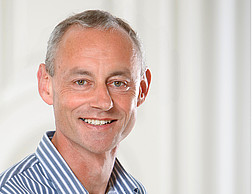
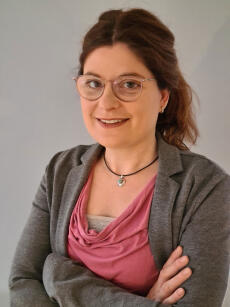
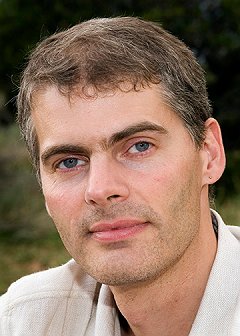
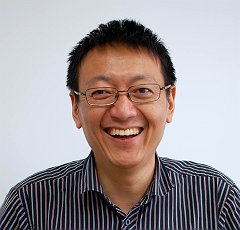
Prof. Dr. Matthias Weidlich is a faculty member at Humboldt University of Berlin within the Institute of Computer Science under the Faculty of Mathematics and Natural Sciences . His research focuses on Process Mining , Complex Event Processing , and Data Privacy with applications in Business Process Management and Scientific Workflows . Research Interests: Business Process Management and Process Mining Complex Event Processing and Stream Data Analysis Data Privacy and Security in Process Systems Scientific Workflow Systems and User Behavior Heterogeneous Network Embeddings Algorithm Design and Optimization Recent Publications (2023-2025) demonstrate expertise in: Efficient stream processing techniques Privacy-preserving process mining frameworks Scientific workflow analysis tools Graph neural network applications Multi-modal data integration Adaptive querying systems Contact: Office: Unter den Linden 6, 10099 Berlin Phone: 030 2093-41277 Email: matthias.weidlich@hu-berlin.de Web: hu.berlin/data
Professor Julia Schlüter is a distinguished academic in the Chair of English Linguistics within the Humanities Faculty at the University of Bamberg, Germany. She has served as Senior Lecturer at the Chair of English Linguistics and Language History under Prof. Manfred Krug since June 2008, holding the title of Professor following her habilitation in 2008. Her institutional profile demonstrates deep commitment to both research and teaching innovation, particularly through her leadership of the KorPLUS project and development of open educational resources for corpus linguistics. Her research interests span corpus linguistics for English language learners, empirical methods for studying language variation and change, and the application of corpus methods to teaching. She specializes in examining grammatical, phonological, and lexical differences between British and American English across historical periods from Middle English to present-day usage. Her work investigates phonological variation (particularly phonotactically controlled alternations), morphological change, and syntactic variation through corpus analysis, with special attention to functional grammar and grammaticalization theory. Professor Schlüter's recent publications (2022-2025) reveal a strategic evolution in her research focus, with increasing emphasis on the intersection of corpus linguistics and digital education. While maintaining her foundational work in historical English linguistics, she has developed significant expertise in applying corpus methods to language teacher education and evaluating AI writing tools. Her work demonstrates consistent methodological innovation, moving from traditional corpus analysis to blended learning approaches and digital educational resource development. Her scientific recognition includes: Winner of the 2025 Teaching Innovation Prize from the International Society for the Linguistics of English for the KorPLUS project University of Bamberg Prize for outstanding habilitation (2009) Lise Meitner Programme post-doctoral scholarship (2005-2006) Rectorate Prize from University of Paderborn for outstanding Ph.D. thesis (2005) Multiple DAAD scholarships for international study Professor Schlüter actively supervises doctoral research, currently guiding three Ph.D. candidates (Katharina Deckert, Aklima Nahar, and Nikolai Beland) while having successfully completed supervision for several others. She leads the KorPLUS project (2021-2025), funded by the Stiftung Innovation in der Hochschullehre, which develops open educational resources for corpus linguistics. Her research has been consistently supported by the German Research Foundation (DFG) and other funding bodies throughout her career. She heads the KorPLUS team (with Carina Großmann and Katharina Deckert) which develops the interactive Open Educational Resource platform for corpus linguistics. Her YouTube channel offers video tutorials on corpus basics, and she has created the Video Podcast Series "How to Update your Grammar" for English teachers. She regularly organizes in-service teacher trainings and collaborates with the Virtual Linguistics Campus at RWTH Aachen University to deliver her educational materials globally.
Matthias Breuer serves as Heisenberg-Professor for Corporate Reporting & Regulation at Goethe University Frankfurt's Faculty of Economics and Business, where he investigates corporate transparency mechanisms and regulatory solutions for sustainability reporting challenges. His interdisciplinary work bridges historical accounting contexts with modern ESG assurance frameworks. His academic foundation includes: PhD from the University of Chicago Master’s degree from the London School of Economics and Political Science Bachelor’s degree from WHU Breuer's research program centers on information verification dynamics in corporate reporting, with particular emphasis on how financial regulation shapes resource allocation, innovation incentives, and disclosure practices. He examines historical precedents (e.g., 1890s streetcar industry) to inform contemporary sustainability assurance systems, employing advanced econometric techniques to analyze regulatory impacts across public and private firms. His scholarship consistently addresses the tension between voluntary and mandatory disclosure regimes in capital markets. Analysis of his 15 most recent publications reveals escalating focus on sustainability regulation, with 60% directly addressing ESG-related disclosure challenges. Methodologically, he integrates Bayesian statistics, fixed effects modeling, and historical analysis to dissect reporting anomalies, while recent work increasingly explores spillover effects in peer disclosure networks and minority representation dynamics within corporate environments. Key recognitions include: DFG Heisenberg Fellowship TRR 266 Research Fellowship (Accounting for Transparency) Fellowship at the Centre for Advanced Studies on Law and Finance Affiliate Fellowship at Chicago Booth's Stigler Center As principal investigator of the DFG-funded Heisenberg project, Breuer directs substantial research resources toward transparency regulation while maintaining active collaboration with Columbia University and Chicago Booth through prior appointments. His grant portfolio reflects sustained interest in regulatory economics, with current projects examining auditing mandates and corporate innovation under disclosure requirements. Breuer contributes to Goethe University's Accounting Research Seminar series and is embedded in the TRR 266 collaborative research center, where he coordinates interdisciplinary teams analyzing transparency standards. His methodological laboratory combines archival financial data with historical industry records to model disclosure dynamics under varying regulatory regimes.
Ralph Hertwig is the Director of the Research Department of Adaptive Rationality and Deputy Managing Director of the Max Planck Institute for Human Development in Berlin. He holds honorary professorships at both the Free University of Berlin (since 2016) and Humboldt University of Berlin (since 2013). His research focuses on models of limited and ecological rationality, experience-based decisions, psychology of risk, development of decision-making processes across the lifespan, and evidence-based interventions to increase decision-making and self-control skills (boosting). Hertwig's work bridges cognitive science, psychology, and practical applications for improving decision-making in complex environments. Hertwig's recent publications reveal a strong focus on behavioral interventions against misinformation, risk perception across the lifespan, cross-species comparisons of decision-making, and the development of boosting techniques as alternatives to traditional nudging approaches. His work increasingly addresses digital challenges, misinformation, and democratic discourse in the attention economy. Selected honors: Gottfried Wilhelm Leibniz Prize (2017) Charlotte and Karl Bühler Prize (2006) Fellow, Association for Psychological Science (2011) Member, German National Academy of Sciences Leopoldina Hertwig actively contributes to multiple academic initiatives including the International Max Planck Research School on the Life Course (LIFE), the Max Planck School of Cognition, and the International Max Planck Research School for Computational Methods in Psychiatry and Aging Research (COMP2PSYCH). His keynote speeches worldwide demonstrate the broad impact of his research on decision-making science.
Ralf Wilke is a Professor in Applied Econometrics and Microeconometrics at the Copenhagen Business School , with affiliations to ZEW as a research associate. His career spans multiple institutions including the University of Leicester, University of Nottingham, and University of York. Education: Diplom-Volkswirt (Bonn University), DEA (University of Toulouse I), Dr. rer. pol. (Dortmund University) Current Roles: Professor at CBS, Research Associate at ZEW Prior Roles: Lecturer/Associate Professor at Leicester/Nottingham, Readership at York Research Focus: Specializing in econometric methods for analyzing duration data, competing risks, panel models with group structures, and applications in industrial life modeling. His work addresses complex censoring mechanisms and spatial diffusion patterns in historical economic contexts. Recent Publication Trends: Recent articles emphasize duration modeling with dependent censoring, copula-based competing risks frameworks, and structural econometric approaches to panel data. Key disciplines include computational statistics, quality engineering, and cliometrics.
Philippe Ciblat is a Professor at TELECOM Paris Tech, affiliated with the Department of Signal Processing and Communications. His research spans signal processing, wireless communications, and machine learning applications in networking. He has collaborated extensively with institutions like the University of Paris-Saclay and international researchers in areas such as cooperative communication protocols, resource allocation, and coding theory. Research Interests: Machine learning for signal processing, wireless channel modeling (Rician fading), lattice decoding, caching strategies, and distributed optimization. Notable Work: Pioneered transformer-based packet scheduling, neural network approaches to lattice decoding, and effective capacity analysis in fading channels. His contributions include over 170 publications in top venues (IEEE Trans. Signal Process., IEEE Trans. Wireless Commun.) and collaborations with industry partners on practical implementations like cache-aided polar coding. He has advised multiple researchers in distributed systems and wireless resource management.
Prof. Dr. Hans-Peter Piepho is a faculty member at the University of Hohenheim , serving as Director of Biostatistics (340c) within the Institute of Crop Science . His research focuses on advanced statistical methods for plant sciences, including genomic prediction, spatial modeling of field trials, and network meta-analysis. Key research areas: Genotype-environment interaction, mixed model applications, and experimental design in agriculture. Collaborations span plant breeding, cultivar testing, and environmental stress analysis. His group emphasizes mixed model procedures as the backbone of methodological innovation. Recent publications highlight climate change adaptation, nitrogen optimization, and agroforestry yield dynamics. Contact: piepho@uni-hohenheim.de | Fruwirthstr. 23, Institute Building, 211, Stuttgart, Germany
Professor Anne Remke leads the safety-critical systems group at the Faculty of Mathematics and Computer Science at Westfälische Wilhelms-Universität Münster since October 2014. She is also affiliated with the Design and Analysis of Communication Systems group at the University of Twente, where she served as assistant professor from June 2010 and became associate professor in March 2016. Her research focuses on dependability and security in critical infrastructures, particularly electrical power systems and telecommunication networks. Her educational background includes a PhD (2008) and MSc (2004) in Computer Science from the University of Twente and RWTH Aachen respectively. Her doctoral research focused on 'Model Checking Structured Infinite Markov Chains,' for which she publicly defended her thesis in June 2008. Professor Remke's research interests center on cyber-physical systems, with particular focus on evaluation of charging strategies for local energy storage in smart homes and security of control networks (SCADA) in smart grids. Her work bridges theoretical model checking techniques with practical applications in critical infrastructure protection. She has made significant contributions to the analysis of hybrid Petri nets, stochastic models, and the development of tools for dependability evaluation. Her recent publications demonstrate a strong trend toward integrating machine learning with formal verification methods for cyber-physical systems. The research spans stochastic hybrid systems, reachability analysis, and security evaluation of smart grid infrastructures, showing consistent growth in both theoretical foundations and practical applications of dependability analysis. Veni award from Dutch Science foundation (NWO) for 'Counting on a reliable water supply' GI/ITG MMB prize for best diploma thesis in computer and communication systems Best Paper Award at Valuetools 2023 conference Best Repeatability and Artifact Evaluation Award at QEST21 Teaching award from Fachschaft FB10 (2019) Professor Remke has successfully secured multiple research grants including the DFG project 'RealyST: Reachability Analysis for Stochastic Hybrid Systems' in collaboration with RWTH Aachen. She has supervised numerous students including Katharina Sichma, Pauline Blohm, Joanna Delicaris, Verena Menzel, Mathis Niehage, Jonas Stübbe, and Lisa Willemsen. Her research group actively participates in international collaborations and standardization efforts in critical infrastructure security. The safety-critical systems group maintains several research tools including HYPEG (for simulation and analysis of hybrid Petri nets), TimeNET (a GUI for modeling hybrid Petri nets), and a Smart Neighbourhood Simulation Tool for community energy storage and trading. These tools support their research in modeling and evaluating complex critical infrastructures through both analytical methods and simulation techniques.
Sven Schewe is a Professor in the Department of Computer Science at the University of Liverpool, affiliated with the School of Electrical Engineering, Electronics and Computer Science. He leads the AI Section and is a founding member and former leader of the Verification Group. He also has secondary affiliations with the Algorithms, Complexity Theory and Optimisation Group and the Institute for Risk and Uncertainty. Research Interests: His research centers on automata theory and game theory, particularly their applications in the verification and synthesis of reactive and safety-critical systems. He investigates infinite-duration games, automata over infinite words and trees, and develops algorithms and tools for automated verification, synthesis, and learning of optimal control strategies. His work extends to reinforcement learning with formal guarantees, cyber-physical systems, and AI safety. Recent Research Trends: His recent publications demonstrate a strong integration of formal methods with machine learning, particularly in adversarial training, neural network robustness, and model-free reinforcement learning under omega-regular objectives. He also applies formal reasoning to interdisciplinary domains such as chemical space exploration and materials science. Scientific Awards: Finalist for the ERCIM Cor Baayen Award 2010 Dr. Eduard Martin Preis 2009 GI Dissertation Award 2008 Advising and Grants: He actively supervises numerous PhD students and postdoctoral researchers. He is Principal Investigator (PI) or Co-Investigator (CI) on multiple major grants, including EPSRC Programme Grants, Royal Society Fellowships, and Horizon Europe projects. His funded research spans topics such as game theory, verification, synthesis, reinforcement learning, and risk analysis. He has hosted visiting researchers and collaborated internationally with institutions in Germany, France, India, Taiwan, and the US. Labs and Teams: He co-founded and led the Verification Group and previously led the AI Section at the University of Liverpool. These groups focus on formal methods, automata, games, and their applications in AI and safety-critical systems.
Christoph Breunig is a Professor in the Department of Economics at the University of Bonn. His work bridges theoretical econometrics with empirical applications, focusing on nonparametric methods, instrumental variable modeling, and causal inference. His research addresses challenges in high-dimensional data, missingness mechanisms, and treatment effect estimation. University: University of Bonn Department: Economics Academic Rank: Professor Email: cbreunig@uni-bonn.de Research Trends: Nonparametric and semiparametric estimation techniques Applications of instrumental variables in causal inference Handling missing data and measurement error High-dimensional statistical models with economic applications Specification testing in complex regression frameworks Connections between microeconomic theory and empirical methods
Shibashis Guha is an Associate Professor (Reader) at the School of Technology and Computer Science, Tata Institute of Fundamental Research (TIFR), where he conducts research and teaches in formal methods, logic, automata theory, and verification. His work focuses on reactive controller synthesis, probabilistic systems, timed automata, and the integration of machine learning with formal verification. Institution: Tata Institute of Fundamental Research School: School of Technology and Computer Science Department: Department of Computer Science Academic Rank: Associate Professor His research interests span formal methods, logic in computer science, automata theory, probabilistic systems, algorithmic game theory, and reinforcement learning. He investigates the synthesis of reactive controllers, behavioral equivalences, and the application of learning in verification. His work often intersects with infinite games and descriptive complexity. The recent publications highlight a strong trend in stochastic games, mean-payoff objectives, window properties, probabilistic model checking, and the synthesis of controllers under logical specifications. There is a clear emphasis on bridging formal methods with learning, especially in continuous-time and probabilistic settings. Scientific Awards: Best paper award at MFCS 2021 Guha advises several students and collaborates widely across institutions. His research is funded by the DST-SERB project on zero-sum and nonzero-sum games for controller synthesis. He has served on program committees for major conferences including CAV, ATVA, CONCUR, LICS, and VMCAI, and has organized workshops such as iVerif. He teaches advanced graduate courses like Automata and Computability, Descriptive Complexity, and Automata, Verification, and Infinite Games. He is actively involved in the research community, delivering invited talks at institutions like IST Austria, ENS Paris-Saclay, and Indian Statistical Institute. He also leads seminar series and participates in panels on AI and verification.
Benjamin C. Pierce is the Henry Salvatori Professor of Computer and Information Science in the School of Engineering and Applied Science at the University of Pennsylvania. As a Fellow of the ACM, he has made significant contributions to programming language theory and formal methods. His academic leadership includes previous editorial roles as co-Editor in Chief of the Journal of Functional Programming and Managing Editor for Logical Methods in Computer Science. His research spans multiple interconnected domains in programming language theory, with particular emphasis on type systems and their applications to security and verification. Pierce's work bridges theoretical foundations with practical implementations, most notably through his development of the Unison file synchronization tool and contributions to the Clowdr virtual conference platform. His research interests form a cohesive trajectory from foundational type theory to applied security and verification techniques. Pierce's scholarly output shows consistent focus on property-based testing, type systems, and formal verification methods. His recent publications demonstrate evolving interests in differential privacy verification, synchronization technologies, and the practical challenges of implementing formal methods in real-world systems. The progression of his work reflects both theoretical depth and practical relevance to software development challenges. Fellow of the ACM Author of influential textbooks Types and Programming Languages and Software Foundations Lead designer of the Unison file synchronizer Co-developer of the Clowdr virtual conference platform Former editorial leadership for multiple prominent programming languages journals As an educator and mentor, Pierce has contributed to the Programming Languages Mentoring Workshop (PLMW) and has served on numerous conference program committees. His academic service extends to SIGPLAN leadership roles including SIGPLAN Vice Chair and Steering Committee membership. His textbook Software Foundations has become a standard resource for teaching formal methods and proof assistants.
M.Sc. Pascal Esser is a researcher at the Department of Informatics at Technical University of Munich (TUM). He specializes in theoretical computer science, formal methods, and machine learning, with a focus on neural networks and verification techniques. His teaching responsibilities include courses on theoretical computer science fundamentals such as Petri Nets, Automata and Formal Languages, Logic, and Model Checking. He has contributed to research in representation learning, graph neural networks, and probabilistic models, as evidenced by his recent publications. Esser is involved in the development of tools like Automata Tutor and has collaborated on projects such as PaVeS and ConVeY. His work bridges formal methods and artificial intelligence, emphasizing rigorous theoretical foundations while exploring practical applications in neural network verification and algorithm design. Education: Master of Science in Computer Science (degree details unspecified). Research Interests: Formal verification, machine learning theory, neural networks, representation learning, graph algorithms, and theoretical computer science. Professional Activities: Active in teaching advanced undergraduate and graduate courses since 2020, with a focus on foundational topics in informatics and emerging areas like neural network verification. Egger's research trends emphasize interdisciplinary approaches, combining insights from statistical learning theory with algorithmic analysis to address challenges in modern AI systems. His publications highlight advancements in understanding model dynamics, kernel-based methods, and graph neural network architectures. While no specific grants or awards are listed, his sustained academic contributions indicate active engagement in the informatics research community. He is part of a research group at TUM including notable figures like Javier Esparza and Jan Křetínský, contributing to tools and frameworks for automata theory and model checking. His work often intersects with practical software implementations such as the Automata Tutor educational platform and Strix verification tools.
Prof. Tobias Meggendorfer is an academic leader in formal methods and probabilistic systems verification. He currently holds an interim professorship at the Technical University Munich (TUM) within the Computational Mathematics department under the TUM School of Computation, Information and Technology. His career includes a postdoc at the Institute of Science and Technology Austria (IST Austria) and a PhD at TUM under Prof. Jan Křetínský. His research focuses on formal verification techniques for probabilistic systems, including risk-aware verification frameworks, stochastic games, and integration of machine learning into verification processes. Notable contributions include the Owl tool library for ω-automata and LTL translations, and the PET partial exploration tool for probabilistic verification. Prof. Meggendorfer has published extensively on topics such as value iteration stopping criteria for stochastic games, entropic risk measures, and semantic learning in LTL synthesis. He actively serves on program committees for AAAI, CAV, and other top conferences, and has reviewed for journals like JACM and IEEE TSE. His work bridges theoretical foundations with practical tool development, evidenced by contributions to open-source projects like the JBDD library and DOMtutor educational framework. He has advised multiple MSc and BSc theses, translating research into impactful educational and industrial applications.
Xiaoxing Ma is a Professor at the State Key Laboratory for Novel Software Technology , Nanjing University , focusing on Software Engineering , Self-adaptive Software Systems , and Software Engineering for Machine Learning . His recent work bridges neuro-symbolic reasoning and formal verification. Key research areas: Software Engineering, Self-adaptive Systems, Neuro-symbolic AI Awards: China National Awards (2006, 2011), MOE Award (2010), CVIC SE Award (2009) His 2023-2024 publications emphasize: Formal semantics for hardware description languages (Verilog) Neuro-symbolic frameworks for mathematical reasoning Dynamic update verification and CRDT model checking LLM-driven API migration and traceability recovery He serves as Program Co-Chair for SEAMS 2024 and contributes to major software engineering conferences (ICSE, ASE, FSE, PLDI).