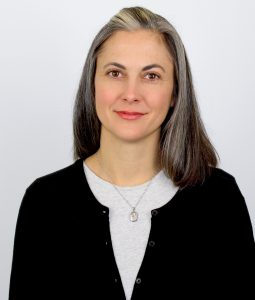
Sergio Ribeiro, PhD, is an Associate Professor of Management at Crandall University. His educational background includes an AT from Pontifical Catholic University of Campinas, DipBA from University of Northern Parana, PGDipSE from Sao Luiz College, MCS from State University of Ponta Grossa, and PhD from Pontifical Catholic University of Paraná. He teaches courses including Strategic Organizational Management, Managerial Economics, Operations Management, Entrepreneurship, and Software Engineering Methodology. Research focuses on strategic digital cities, business information systems, computational agriculture, and evidence-based decision models. Publications emphasize urban digitalization, computational methods in agriculture, business informatics, and decision-support systems, utilizing techniques like machine learning and image classification. Awards include a Postdoctoral Fellowship at University of Regina, multiple scholarship awards from CAPES and University of Regina.
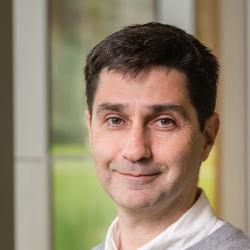
Wytse Van Dijk is an Adjunct Professor in the Department of Physics & Astronomy at McMaster University. His research focuses on quantum mechanics, computational physics, and theoretical studies of nuclear and atomic systems. He has published extensively on numerical solutions of the Schrödinger equation, quantum tunneling, and quantum information processing. Research Interests : Quantum systems simulation, numerical methods in quantum mechanics, quantum computing algorithms, nuclear decay processes, and many-body systems like Fermi and Bose gases. His work bridges theoretical physics with computational techniques, addressing challenges in wavepacket dynamics and time-dependent quantum phenomena. Articles Trends : Recent work emphasizes numerical methods for quantum systems, including efficient algorithms for the time-dependent Schrödinger equation and quantum search algorithms. He has also explored quantum backflow, tunneling effects, and unitary Fermi gas properties. Co-Authors : Collaborations with Yukihisa Nogami and Melvin Preston highlight his network in theoretical and computational physics. His research spans over 50 years with 94+ publications (1967–2024).
Dr. Liqun Cao is a Professor in the Department of Criminology and Sociology within the Faculty of Social Science and Humanities at Ontario Tech University. His academic career spans multiple institutions including Eastern Michigan University and Salem State University before joining Ontario Tech University. He holds a PhD in Sociology from the University of Cincinnati (1993) and is bilingual in English and Chinese. Dr. Cao's research focuses on criminological theory, policing, race and ethnicity in criminal justice systems, juvenile delinquency, and quantitative methods. His work particularly emphasizes Asian studies within criminology, with extensive research on policing in Taiwan and Chinese criminology. He has made significant contributions to understanding police legitimacy, cultural influences on crime and justice, and Indigenous peoples' relationship with the criminal justice system. Dr. Cao's scholarly work demonstrates a clear trajectory toward cross-cultural comparative criminology, with increasing focus on East Asian contexts and Indigenous populations in North America. His recent publications show sophisticated quantitative analyses of mass shootings, police legitimacy across diverse populations, and the development of distinctive sociological frameworks in Chinese contexts. 2025 Academy Fellow Award at the Academy of Criminal Justice Sciences annual conference 2008 Academy of Criminal Justice Sciences' Donal MacNamara Award for best article of the year Dr. Cao has supervised Master's students including Marie Polgar-Matthews (2009-2012) and Andrea Lee (2010-2013). His research has been supported by grants including funding from the Chiang Ching-Kuo Foundation for International Scholarly Exchange for his work on policing in Taiwan. He currently serves as a guest-editor for a special issue of the Canadian Journal of Criminology and Criminal Justice focusing on police legitimacy with a race/ethnicity perspective.
Dr. Krista Ritchie is an Associate Professor at Mount Saint Vincent University (MSVU), affiliated with the Faculty of Education. She holds a PhD in Educational Psychology from McGill University (2009) and has post-doctoral training in Psychology and Neuroscience from Dalhousie University (2012). Her research focuses on the social and emotional aspects of teaching and learning, measurement and evaluation methodologies, evidence-informed practices, and intersections between health and education. She also serves as a Scientist at the Maritime Drug Study Site (MDSS) at the IWK Health Centre. Dr. Ritchie’s educational background includes a BAH in Psychology from Acadia University (2002), an MA in Educational Psychology from McGill (2005), and her doctoral work at McGill. Her expertise spans applied multivariate statistics and collaborative healthcare research, particularly in pediatric settings. She actively engages in interdisciplinary projects addressing teacher well-being, evidence-based practice, and health intervention design. Her recent research explores teacher emotions in Eastern Canada, psychoeducational assessment processes, and electronic discharge communication tools in pediatric care. She collaborates internationally on studies involving nurses, physicians, and youth engagement in healthcare design. Her work emphasizes practical applications of research in education and healthcare systems. Dr. Ritchie’s contributions include co-developing the 23-item Evidence-Based Practice (EBP) survey for health professional students and analyzing formative feedback in anesthesia training. Her publications bridge educational psychology, healthcare decision-making, and cultural responsiveness in education. She advocates for integrating emotional and evidence-based practices into professional development frameworks for educators and healthcare providers.
Alessia Vignoli is a Research Fellow (RTD-A) at the Department of Chemistry, University of Florence. She is affiliated with the Magnetic Resonance Center (CERM) and CIRMMP. Her research focuses on NMR-based metabolomics for diagnostic and prognostic applications in medicine, particularly in cardiovascular diseases, neurodegenerative disorders, and oncology. Education: M.Sc. in Chemical Sciences (cum laude, 2014) Ph.D. in Structural Biology (cum laude, 2017) Research Interests: Metabolomics of biofluids using NMR spectroscopy Development of predictive biomarkers for disease outcomes Multivariate statistical analysis of metabolic networks Applications in clinical settings including cardiology, oncology, and neurology Awards & Grants: GIDRM Under 35 award (2022) Airalzh Grant for Young Researchers (2022) AIRC fellowship (2019-2020) Professional Experience: Post-doctoral researcher under Prof. Luchinat (2018) AIRC fellow at CERM/CIRMMP (2019-2020) Post-doctoral fellow under Dr. Leonardo Tenori (2021-2022) Her work integrates advanced NMR techniques with computational methods to uncover metabolic signatures predictive of disease progression and treatment response.
Jevan Cherniwchan serves as Associate Professor in the Department of Economics at McMaster University, teaching Environmental Economics courses (ECON 2J03 at undergraduate level and ECON 736 at graduate level) through 2025 academic year. His research integrates Environmental Economics, International Trade, and Economic History with emphases on regulatory impacts on manufacturing exports, historical trade policies in Canada, and agricultural development in precolonial Africa. Key methodological approaches include plant-level empirical analysis and historical case studies addressing trade-environment interactions. Recent publications reveal consistent focus on empirical trade-environment dynamics, featuring high-impact journal placements including American Economic Journal: Economic Policy and Review of Economics and Statistics. His work demonstrates chronological progression from historical Canadian trade analysis toward contemporary regulatory impact studies using granular manufacturing data. Scholarly impact extends beyond academia with policy document references, Wikipedia citations, and significant social media engagement (161 X posts, 2 Facebook pages), indicating real-world relevance of his research on trade liberalization and environmental regulation.
Dr. Jill Parnell is a Professor and Chair of the Health and Physical Education Department at Mount Royal University. She holds a PhD in Medical Sciences from the University of Calgary and teaches courses in Nutrition and Health, Statistics and Research Methods, and Aquatics. Her research focuses on performance nutrition for Paralympic athletes, dietary strategies to mitigate gastrointestinal issues in endurance runners, and optimizing nutritional interventions for athletes with spinal cord injuries. Dr. Parnell actively collaborates with the sports community to ensure practical application of her research findings. She serves as the Faculty of Health, Community and Education Scholar in Research, emphasizing translational studies between academia and practice. Notable research interests include prebiotic effects on metabolic health, dietary supplement safety in athletes, and nutritional strategies for chronic disease management. Her work bridges clinical and applied nutrition, with studies published in journals like the Journal of the International Society of Sports Nutrition and Nutrients . Dr. Parnell's research portfolio includes investigations into carbohydrate and protein intake optimization, sports nutrition education for para-athletes, and microbiota-host interactions in obesity. She has conducted randomized controlled trials evaluating prebiotics for non-alcoholic fatty liver disease and developed assessment tools for runner dietary restrictions. Dr. Parnell's community engagement includes delivering nutrition presentations for Calgary athletic groups and developing interventions like the SSPANLI program targeting spinal stenosis management through lifestyle changes. Her research consistently emphasizes evidence-based strategies that directly benefit athletic populations and improve public health outcomes.
Dr. Alison Sills is a Professor in the Department of Physics & Astronomy at McMaster University, where she has been a faculty member since 2001 and Chair since 2012. Her research focuses on stellar collisions, binary interactions, and the formation of blue stragglers in dense stellar clusters. She earned her BSc from the University of Western Ontario and PhD from Yale University, followed by postdoctoral positions at Ohio State and Leicester. Affiliations : McMaster University (Faculty since 2001, Full Professor since 2012) Canadian Astronomical Society Canadian Institute for Theoretical Astrophysics International Astronomical Union Dr. Sills specializes in Stellar Astrophysics and Computational Astrophysics , analyzing how stars evolve through collisions and binary interactions in dense clusters. Her work combines Galactic Dynamics and Star Clusters to understand formation mechanisms and chemical enrichment processes. Her recent publications (2023-2025) examine Star Cluster Formation in gas-rich environments, Binary Star Systems as enrichment sources, and Dark Matter Halo constraints using globular clusters. She employs N-body Simulations , Hydrodynamic Modeling , and Radiation Hydrodynamics to study these phenomena. Dr. Sills has supervised over 50 students and postdoctoral fellows, managed $2M+ in research grants, and reviewed applications for international agencies. She actively participates in outreach programs to promote astronomy and support underrepresented groups in STEM.
Paul McNicholas is a Professor in the Department of Mathematics and Statistics at McMaster University, where he holds a Tier 1 Canada Research Chair in Computational Statistics. He serves as Editor-in-Chief of the Journal of Classification and has directed the MacData Institute (2017-2022). His academic leadership extends to his role as Associate Chair of Statistics (2021-2023) and his extensive supervision of graduate students across multiple cohorts. Dr. McNicholas earned his academic credentials from Trinity College Dublin, including a Sc.D. in Statistics, Ph.D. in Statistics, M.Sc. in High Performance Computing, and B.A./M.A. in Mathematics. His educational background reflects the interdisciplinary nature of modern computational statistics, combining deep mathematical knowledge with advanced computational skills essential for contemporary data science. His research focuses on computational statistics, particularly mixture model-based clustering and classification. Current research includes work on non-Gaussian mixtures, matrix variate distributions, and real problems in big data analytics. McNicholas has made significant contributions to developing statistical methods for higher-order data, mixed-type data, and multivariate longitudinal data, with special applications in autism and aging research. His methodological innovations have enabled more sophisticated analysis of complex datasets across various domains, particularly in health sciences. Analysis of his recent publications reveals a strong focus on advancing mixture model methodology for increasingly complex data structures. His work spans theoretical developments in distribution theory, computational algorithms for model fitting, and practical applications in health sciences. A notable trend is the extension of traditional statistical methods to handle high-dimensional, non-Gaussian, and structured data while maintaining computational efficiency, with increasing attention to applications in autism spectrum disorder and aging research. Dr. McNicholas has received numerous prestigious awards recognizing his contributions to statistics: Dorothy Killam Fellowship (2023) John L. Synge Award, Royal Society of Canada (2021) Steacie Prize for the Natural Sciences (2020) E.W.R Steacie Memorial Fellowship (2019) College Member, Royal Society of Canada (2017) University Scholar (2017) Tier 1 Canada Research Chair (2015) Dr. McNicholas actively mentors the next generation of statisticians, currently supervising eight Ph.D. students, a Master's student, and an undergraduate researcher. His research group has secured significant funding through various grants and fellowships, enabling cutting-edge research in computational statistics. He has also contributed to the field through software development, with R packages like 'mixture', 'pgmm', 'CDGHMM', 'longclust', and 'vscc' that implement his methodological innovations and make advanced statistical techniques accessible to practitioners. His research group operates within the broader context of the MacData Institute at McMaster University, which he directed from 2017-2022. The group fosters interdisciplinary collaboration, particularly in applications related to health sciences, including autism spectrum disorder research and aging studies. McNicholas has built a vibrant research community that bridges theoretical statistics with practical applications through regular seminars, workshops, and collaborative projects with researchers across multiple disciplines, with particular emphasis on methodological innovations that address real-world challenges in health analytics.
Dr. Mehdi Dagdoug is an Assistant Professor in the Department of Mathematics and Statistics at McGill University, Montreal, Canada. His research focuses on the intersection of survey sampling, missing data treatment, and statistical learning. He holds a Ph.D. from the Université de Bourgogne Franche-Comté, supervised by Camelia Goga and David Haziza. Education: Ph.D. in Mathematics, 2022, Université de Bourgogne Franche-Comté Postdoctoral Fellow, 2022-2023, University of Ottawa Research Interests: Dr. Dagdoug develops rigorous inference methods for survey sampling, particularly addressing nonresponse challenges through statistical learning tools. His work emphasizes high-dimensional settings where auxiliary variables exceed sample sizes. Key areas include model-assisted estimation, variance estimation for imputed survey data, and random forest applications in finite population sampling. Teaching: Currently teaches MATH 533 (Linear Regression & ANOVA) and MATH 525 (Sampling Theory) at McGill. Previously instructed courses in survey sampling, statistical learning, and programming at undergraduate and graduate levels. Awards: 2022 Jean-Claude Deville Prize (French Statistical Society) Grants: NSERC Discovery Grant, Mitacs Accelerate Proposal. Previously supported by Region Franche-Comté and Médiamétrie. Administrative Roles: Committee Member, Student Travel Grants (Statistical Society of Canada) Organizer, McGill Statistics Seminar Series (2023-2025) Board Member, BFC-Maths Federation (2020-2022) Popularization: Engages in science outreach through workshops and conferences for high school students, including a popular 'Titanic and Random Forests' workshop.
Marcin Sabok is an Associate Professor in the Department of Mathematics and Statistics at McGill University, part of the Faculty of Science. His research focuses on descriptive set theory, Ramsey theory, forcing, and their applications in operator algebras and geometric group theory. He co-authored the book *Canonical Ramsey Theory on Polish Spaces* with Vladimir Kanovei and Jindrich Zapletal. Sabok's work bridges foundational mathematics with geometric and algebraic structures, addressing classification problems and structural properties of mathematical objects. His research has been supported by contributions to areas such as Borel combinatorics, ergodic theory, and hyperfiniteness in group actions. Affiliation: Department of Mathematics and Statistics, McGill University Key Research Themes: Set Theory, Geometric Group Theory, Logic, Operator Algebras His recent interests include exploring connections between Ramsey-theoretic methods and operator algebras, as well as studying hyperfinite actions of groups on boundaries in geometric contexts. Sabok has published extensively in top journals like *Inventiones Mathematicae* and *Advances in Mathematics*, contributing to foundational questions in set theory and its applications. While no specific awards are listed, his contributions to descriptive set theory and geometric group theory indicate significant recognition in his field. He collaborates widely, with co-authors including experts in logic, combinatorics, and functional analysis. His academic website provides further details on his research and teaching activities.
Matías Salibián-Barrera is a Professor in the Department of Statistics at the University of British Columbia (UBC), located on the Vancouver Campus. He is affiliated with the Faculty of Science and can be reached at ESB 3114. His contact information includes the email matias@stat.ubc.ca and phone number 604-822-3410. He maintains an active GitHub profile at github.com/msalibian . His research interests focus on statistical methodology, robust statistics, and computational techniques, with applications in data analysis and statistical theory. While no specific publications are listed here, his work likely contributes to advancing statistical methods and their computational implementation. Dr. Salibián-Barrera currently advises or collaborates with Jonathan O.K. Agyeman, a graduate student in the Department of Statistics. No scientific awards or grants are explicitly mentioned in the provided materials. His office is part of the Earth Sciences Building (ESB 3114) on UBC’s Vancouver Campus, which houses the Department of Statistics. The department is a key hub for statistical research and education within the Faculty of Science.
Kenny Chiu is a Ph.D. Statistics candidate and Sessional Lecturer at the University of British Columbia's Department of Statistics within the Faculty of Science. Supervised by Benjamin Bloem-Reddy, he teaches undergraduate statistics courses including STAT 306: Finding Relationships in Data and serves as a TA Trainer for new teaching assistants. Ph.D. Statistics (2021-Present) M.Sc. Statistics (2019-2021) B.Sc. Combined Honours in Computer Science and Statistics (2013-2018) His research focuses on symmetry applications in statistical inference and computation, developing methods for identifying distributional symmetries from data with applications spanning statistics, machine learning, and scientific discovery. He actively contributes to Flexible Learning initiatives developing statistics educational resources and facilitates Instructional Skills Workshops for graduate students through UBC's Centre for Teaching, Learning and Technology. His publication portfolio demonstrates expertise in symmetry-based hypothesis testing, particularly with applications to particle physics as evidenced by his NeurIPS 2023 workshop paper. His work combines theoretical statistical innovation with practical computational implementations, reflected in his publicly available GitHub repositories containing Julia code for symmetry testing frameworks. As an educator, Chiu has extensive teaching experience across multiple statistics courses including STAT 305, STAT 404, and SCIE 300, demonstrating commitment to both undergraduate instruction and graduate teaching development through his TA training role since 2021.
Harlan Campbell is an Adjunct Professor in the Department of Statistics at the University of British Columbia (UBC), affiliated with the Faculty of Science. His research focuses on Bayesian statistics, causal inference, meta-analysis, and statistical methodology, with applications in medical and public health contexts. Campbell collaborates internationally, such as leading the Zika virus individual participant data consortium to study pregnancy outcomes. He has advised at least one student: Nathaniel Wu Dyrkton. His work integrates evidence synthesis, clinical trial analysis, and methodological innovation to address gaps in data reporting and analysis across disciplines. Education details are not explicitly provided, but his career reflects advanced training in statistical theory and applications. Research interests include developing robust statistical techniques for observational studies, addressing measurement error in meta-analyses, and improving methodologies for indirect treatment comparisons. He has contributed to frameworks for estimating infection fatality rates during the COVID-19 pandemic and advancing Bayesian approaches to evidence synthesis. Publications span topics like structural uncertainty in evidence synthesis, doubly robust estimators for clinical trials, and causal inference in longitudinal studies. His work emphasizes rigorous statistical methods to enhance reliability in medical and epidemiological research. Grants and collaborations are implied through his involvement in global consortia and methodological reviews but are not explicitly detailed in the provided text. Campbell maintains an active Google Scholar profile with extensive citation activity.
Amélie Quesnel-Vallée is a Professor in the Department of Sociology at McGill University and Director of the McGill Observatory on Health and Social Services Reforms. Her research focuses on health inequities, aging populations, and healthcare system reforms. She leads interdisciplinary projects addressing dementia care, social determinants of health, and policy interventions to improve access to health and social services. Her work integrates epidemiological, sociological, and policy analysis approaches. Dr. Quesnel-Vallée’s academic roles include teaching and mentoring students in sociology and health policy. She collaborates with researchers, clinicians, and policymakers to develop evidence-based solutions for complex care challenges. Her recent initiatives include evaluating telehealth tools for older adults during the pandemic and analyzing care trajectories for individuals with dementia. Research Interests: - Social determinants of health - Aging populations and gerontology - Health policy and equity - Healthcare system integration - Mental health and work-family dynamics - Dementia epidemiology and care pathways Key Projects: - Director, McGill Observatory on Health and Social Services Reforms - Collaborator, Canadian Consortium on Neurodegeneration in Aging (CCNA) - Principal Investigator on studies about rural-urban healthcare disparities and pandemic impacts on caregiving Awards and Grants: - Multiple grants from Canadian Institutes of Health Research (CIHR) - Collaborative research funding from Quebec Health Ministry initiatives Labs/Teams: - Leading the Laval-ROSA Transilab (living lab for dementia care transitions) - Member of the Quebec Inter-University Centre for Social Statistics