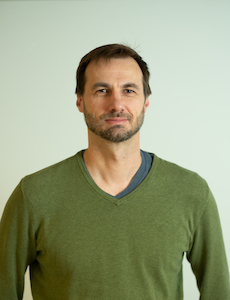
Per Kragh Andersen is a Professor at the Department of Public Health, University of Copenhagen, within the Faculty of Health and Medical Sciences. He is affiliated with the Section of Biostatistics, which focuses on statistical theory, methods, and applications in biomedical research, providing advisory services and educational programs in statistics from undergraduate to PhD levels. Location: Øster Farimagsgade 5, Building CSS (2nd floor in CSS-5, CSS-10, CSS-15), Copenhagen K Contact: +45 35 32 79 08 | pka@biostat.ku.dk The Section of Biostatistics collaborates with other health sciences departments to advance scientific knowledge through rigorous statistical analysis and education. Its mission includes advising researchers on study design, conducting methodological research, and promoting quantitative methods in biomedical sciences.
Mikkel N. Schmidt is an Associate Professor in the Department of Applied Mathematics and Computer Science at the Technical University of Denmark (DTU). His research focuses on statistical modeling, Bayesian methods, and their applications in science and industry. He has held visiting roles at Columbia University (2007) and Cambridge University (2008-2009). His work integrates probabilistic modeling with computational inference to address complex problems in diverse fields such as molecular discovery, optical communication, and brain connectivity analysis. Education highlights include visiting scholar and postdoctoral experiences at top-tier institutions. Research interests span statistical methodology development, machine learning applications, and interdisciplinary problem-solving. Current projects involve Bayesian neural networks for molecular discovery and federated learning optimization. Advising efforts include supervising multiple PhD students in areas like molecular discovery and denoising diffusion models. Notable collaborations involve work on materials science, quantum communication, and medical signal processing. His contributions bridge theoretical advancements with practical industrial applications, emphasizing interdisciplinary innovation.
Susanne Ditlevsen is a Professor at the Department of Mathematical Sciences , University of Copenhagen. Her research focuses on statistical inference for stochastic processes , mathematical modeling of physiological systems , nonlinear dynamics , neuroscience , and biomathematics . Research : She develops statistical methods for diffusion processes, hidden Markov models, and stochastic differential equations, with applications in biomedical data and marine mammal behavior. Teaching : Covers basic statistics, probability, stochastic processes, regression, and generalized linear models. Publications highlight her work on climate tipping points (2023, Nature Communications ), nonlinear neuronal systems (2017), and statistical ecology (2020). Her collaborations span Denmark, France, and international institutions.
Line Katrine Harder Clemmensen is an Associate Professor at the Department of Applied Mathematics and Computer Science, Technical University of Denmark (DTU), affiliated with the DTU Microbes Initiative. She holds a Ph.D. from DTU's IMM (2006–2009) and previously served as Principal Data Scientist at the Maersk Group (2016–2017). Her research focuses on machine learning, statistical modeling, deep learning, and sparse methods, applied to environmental, biological, industrial, and financial domains. Notable projects include hydroacoustic modeling in aquaculture systems, AI-driven sea safety, and bio-based sustainability modeling. Her recent work addresses topics like parent-child interaction patterns in OCD, Alzheimer’s treatment via spectral flicker, and genomic studies on social trust. She supervises multiple PhD students, including those exploring Raman spectroscopy applications and contamination detection in drug products. Language skills include Danish, English, Spanish, French, and Portuguese.
Francis Berthias is an academic staff member in the Department of Biochemistry and Molecular Biology at the University of Southern Denmark , specializing in Biomedical Mass Spectrometry and Systems Biology . His research focuses on advanced mass spectrometry techniques and structural analysis of biomolecules. Research Interests: Mass Spectrometry, Ion Mobility Spectrometry, Proteomics, Structural Biology, Biochemistry, and Analytical Chemistry. His recent publications (2022–2025) emphasize ion mobility separations , proteoform sequencing , and enzyme specificity . Collaborations span Denmark, Germany, and international institutions, with a focus on N-methylhistidine modifications , therapeutic antibodies , and peptide epimer analysis . Keywords: Biochemistry, Mass Spectrometry, Proteomics, Structural Biology, Analytical Chemistry, Molecular Biology.
Rasmus Waagepetersen is a Professor in the Department of Mathematical Sciences at Aalborg University, affiliated with The Faculty of Engineering and Science. His research focuses on spatial statistics, quantitative genetics, and statistical methodology for spatial point processes. He leads and participates in interdisciplinary projects such as urbanLab (spatial data analysis for urban planning) and studies on microbiome interactions in agricultural systems. Key research areas include spatial point processes, Markov chain Monte Carlo methods, and statistical inference for complex ecological and biomedical data. His work frequently involves collaborations with environmental and biological scientists, as seen in projects analyzing root microbiota assemblies in legumes and climate data for building simulations. Waagepetersen has contributed to methodological advancements in spatial statistics, including goodness-of-fit tests, likelihood-based inference for log Gaussian Cox processes, and quasi-likelihood approaches for case-control point pattern data. His research has been supported by grants from institutions like the Villum Foundation. Key Projects: urbanLab, Klimadata til fugtsimuleringer, Nod factor signaling in plant microbiota. Grants: Multiple projects funded by the Villum Foundation and Danish research councils. His recent publications address topics such as space-time point processes, microbiome data analysis, and statistical modeling in education. Waagepetersen maintains an active research group and collaborates internationally on both theoretical and applied statistical problems.
Torben Hansen is a Professor at the University of Copenhagen's Faculty of Health and Medical Sciences, leading the Hansen Group at the Novo Nordisk Foundation Center for Basic Metabolic Research (CBMR). His research focuses on genetic and molecular mechanisms underlying metabolic diseases, particularly type 2 diabetes and obesity. Professor Hansen's research encompasses several critical areas: Genetic determinants of type 2 diabetes and metabolic traits Genome-wide association studies of metabolic phenotypes Statistical methods for multi-omics data integration Early life determinants of metabolic disease risk Cardiometabolic complications in diabetes With 779 research outputs, his work demonstrates significant contributions to metabolic disease research. Recent publications highlight advanced computational approaches to multi-omics datasets for identifying causal relationships in type 2 diabetes pathogenesis. His research group actively participates in major international collaborations including the IMI DIRECT consortium, which integrates diverse data types for diabetes research advancement. Professor Hansen's work has substantial translational potential with implications for prevention strategies and therapeutic approaches for metabolic disorders. His publications in high-impact journals including PLOS Genetics, Nature Microbiology, Diabetologia, and the Journal of Clinical Endocrinology and Metabolism reflect the significance and quality of his research contributions.
William Henrich Due serves as a Lecturer at the Department of Computer Science (DIKU), University of Copenhagen, within the Machine Learning section. His work intersects with the SCIENCE AI Centre and leverages the department's high-performance compute cluster for research in quantum computing, sustainable AI, and medical applications. Research focuses span quantum machine learning (biomolecular simulations, photonic processors), sustainable AI systems (energy efficiency, climate impact), and clinical applications (EEG analysis, medical imaging). His recent publications reveal strong activity in quantum-classical hybrid systems, with 8/15 recent papers addressing quantum computing challenges. The work emphasizes practical implementations in medical imaging and resource-constrained environments. His research aligns with DIKU's Machine Learning section priorities including medical imaging biomarkers and sustainable computing. Key infrastructure includes TreeSense for remote sensing and the department's dedicated compute cluster. No scientific awards were explicitly documented in the provided materials. Due contributes to DIKU's teaching mission as a Lecturer while engaging with the SCIENCE AI Centre's interdisciplinary initiatives. His work connects with medical imaging applications and quantum computing infrastructure development. Active in the Machine Learning section's research ecosystem, his work intersects with medical imaging analysis and quantum computing applications, utilizing specialized resources like TreeSense for environmental monitoring.
Lone Simonsen is a Professor of Population Health Sciences at Roskilde University's Department of Science and Environment, leading the PandemiX Center for Interdisciplinary Study of Pandemic Signatures. She holds a PhD in Population Genetics from the University of Massachusetts Amherst and has held senior roles at the CDC, NIH, WHO, and University of Copenhagen. Her research integrates historical epidemiology, mathematical modeling, and global health policy to address pandemic preparedness across centuries. Education: PhD in Population Genetics (1992), University of Massachusetts Amherst Postdoc in Microbial Ecology (1992), NIH Masters in Biology/Chemistry (1985), Roskilde University Research Focus: Historical and contemporary pandemic patterns (influenza, smallpox, Ebola) Modeling disease spread dynamics (SARS-CoV-2, RSV, HIV) Vaccine impact evaluation (influenza, pneumococcus) Interdisciplinary methods bridging history, mathematics, and biology Awards & Leadership: Recipient of the 2023 Fritz Kauffmann Prize DNRF-funded PandemiX Center Director since 2023 Former WHO lead on global influenza response (2009) Key Projects: NORDEMICS: Pathogens and Nordic Societies (NordForsk, 2021–2025) Carlsberg PandemiX: Historical pandemic studies (2020–2024) CDC Epidemic Intelligence Service Diploma (1994) Labs/Teams: Leads interdisciplinary teams combining epidemiologists, historians, and mathematicians at the PandemiX Center and Roskilde University's Mathematics and Physics division (IMFUFA).
Veit Stefan Schwämmle is an Associate Professor at the Department of Biochemistry and Molecular Biology, University of Southern Denmark. His work focuses on biomedical mass spectrometry and systems biology, with expertise in proteomics, bioinformatics, and computational modeling of multivalent histone modifications in gene regulation. Research Interests: His research combines statistical data analysis, Monte Carlo simulations, and advanced mass spectrometry techniques to study proteomics, posttranslational modifications, and their applications in biomedical contexts. Key areas include liquid chromatography-mass spectrometry, bottom-up proteomics, and privacy-preserving data analysis methods. Projects: He participates in EU Horizon Europe initiatives like ELIXIR-STEERS and ELIXIR-STREERS, focusing on research infrastructure and bioinformatics. His involvement in projects such as PROTEIN and Elixir Hub highlights his contributions to multicenter proteomics and data standardization. Activities: A seasoned lecturer, he has delivered presentations on computational proteomics, statistics, and bioinformatics in both academic and industry settings since 2012, emphasizing large datasets and analytical rigor.
Afsaneh M. Nejad is an Assistant Professor in the Department of Mathematics and Computer Science at the University of Southern Denmark, where she conducts research at the intersection of data science, bioinformatics, and biomedical research. Her work leverages large-scale omics data and twin studies to investigate aging, hypertension, cancer, and cardiovascular disease. Assistant Professor, Department of Mathematics and Computer Science Specialization: Data Science, Bioinformatics, Biostatistics Institution: University of Southern Denmark (SDU) Her research focuses on epigenomics, transcriptomics, and proteomics, particularly in longitudinal twin cohorts. She applies advanced statistical and machine learning techniques to identify biomarkers of disease and aging. Key areas include DNA methylation, gene expression, and multi-omics integration in conditions such as hypertension, Alzheimer’s, diabetes, and myocardial infarction. The recent publications highlight a strong trend in using twin-based designs to control for genetic background while studying environmental and lifestyle impacts on health. Her work spans clinical applications, predictive modeling, and mixed-methods public health research, particularly in sports medicine and chronic disease. She serves as a peer reviewer for journals including BMC Medicine , Clinical Epigenetics , Human Genomics , and Scientific Reports . Her teaching includes courses in bioinformatics and biostatistics, indicating active mentorship and curriculum development. DM847: Introduction to Bioinformatics Applied Biostatistics Evidence-based Drug Use and Biostatistics She has contributed to significant collaborative studies such as the DREAM Trial and has presented at conferences on topics like cancer and frailty in aging. Her methodological expertise in longitudinal data analysis, omics integration, and machine learning positions her at the forefront of computational biomedicine.
Veit Schwämmle is an Associate Professor in Computational Proteomics and Bioinformatics at the Department of Biochemistry and Molecular Biology, University of Southern Denmark (SDU), where he leads the Computational Proteomics Group. His research focuses on developing computational solutions for large-scale omics data analysis, particularly in proteomics and post-translational modifications. PhD in Physics, University of Stuttgart (2006) Postdoctoral Fellowships: Centro de Pesquisas Fisicas (Rio de Janeiro), ETH Zürich Postdoctoral Researcher and Assistant Professor, University of Southern Denmark Research interests include software and workflow development for protein mass spectrometry data analysis, chromatin biology through histone modifications, tools for omics data quantification and interpretation, and the application of deep learning methods to improve proteomics data processing. His work bridges physics-based modeling and biological data science, with a strong emphasis on open, reproducible research. His recent publications highlight trends in machine learning for proteomics, benchmarking of analysis workflows, and community-driven bioinformatics standards. He is actively involved in international initiatives like EuBIC-MS and bio.tools, promoting software interoperability and training. Member of the European Bioinformatics Community for Mass Spectrometry (EuBIC-MS) Contributor to the bio.tools registry for life sciences software Advocate for open science and reproducible workflows He supervises researchers and students in computational proteomics and has contributed to numerous collaborative projects in systems biology and biomedical mass spectrometry. His group develops tools such as VIQoR, CrossTalkMapper, and MetaboLink, supporting the broader scientific community. Visit the group’s webpage: http://computproteomics.bmb.sdu.dk
Hiromichi Suetani is a Professor at the Department of Co-creative Science and Engineering , Faculty of Science and Engineering , Oita University . He holds concurrent positions as an Affiliated Researcher at the International Research Center for Neurointelligence , University of Tokyo , and has previously worked at institutions including RIKEN Center for Brain Science , ATR , and Kagoshima University . His research bridges nonlinear dynamics , machine learning , and neuroscience . Education : PhD in Informatics from Kyoto University, with research at the Institute of Statistical Mathematics and graduate training in Mathematical Engineering at the University of Tokyo. Research Society Affiliations : Society for Neuroscience Japan Neuroscience Society Physical Society of Japan His research focuses on decoding brain information and controlling complex systems using techniques like reservoir computing , topological data analysis , and nonlinear modeling . He investigates human EEG individuality , collective patterns in active matter , and chaotic synchronization in dynamical systems. Recent work with collaborators explores hybrid prediction models combining anticipating synchronization and echo state networks to improve time series forecasting in chaotic systems. Earlier studies analyzed EEG consistency under noisy stimuli and applied manifold learning to map brain oscillations. His teaching includes mechanics , computational physics , and nonlinear science at Oita University. He has secured competitive funding from the Japan Society for the Promotion of Science for projects on critical computation systems , stable chaos in neural networks , and topological analysis of biological data .
Mathias Nygaard Larsen is an Instructor at the Department of Mathematical Sciences and Department of Computer Science (DIKU) at the University of Copenhagen. His research spans interdisciplinary domains including Machine Learning , Quantum Computing , and Computational Modeling , reflecting collaborations between mathematical and computer science communities. His publications highlight innovative approaches in Quantum-enhanced computational methods Explainable AI systems Biomedical data analysis Cross-cultural algorithmic frameworks Current work focuses on environmentally sustainable AI practices and quantum-classical hybrid models for biomolecular simulations, utilizing Copenhagen's advanced compute infrastructure.
Troels Pedersen is an Associate Professor at the Department of Electronic Systems, Aalborg University, affiliated with The Technical Faculty of IT and Design. His research focuses on stochastic radio channel modeling, MIMO systems, radar signal processing, and positioning technologies. Key projects include WHERE2 and NEWCOM++, addressing wireless hybrid estimators and network excellence in communications. Expertise in reverberant channel modeling, propagation graphs, and Bayesian inference methods Developed models for in-room radio channels using point processes and Galton-Watson trees Contributions to MIMO radar tracking, clutter mitigation, and drone swarm micro-Doppler analysis Active in wireless positioning, cooperative networks, and IoT interference modeling with 99+ publications in journals/conferences. Supervised 1 PhD candidate and contributed to EU-funded research initiatives.