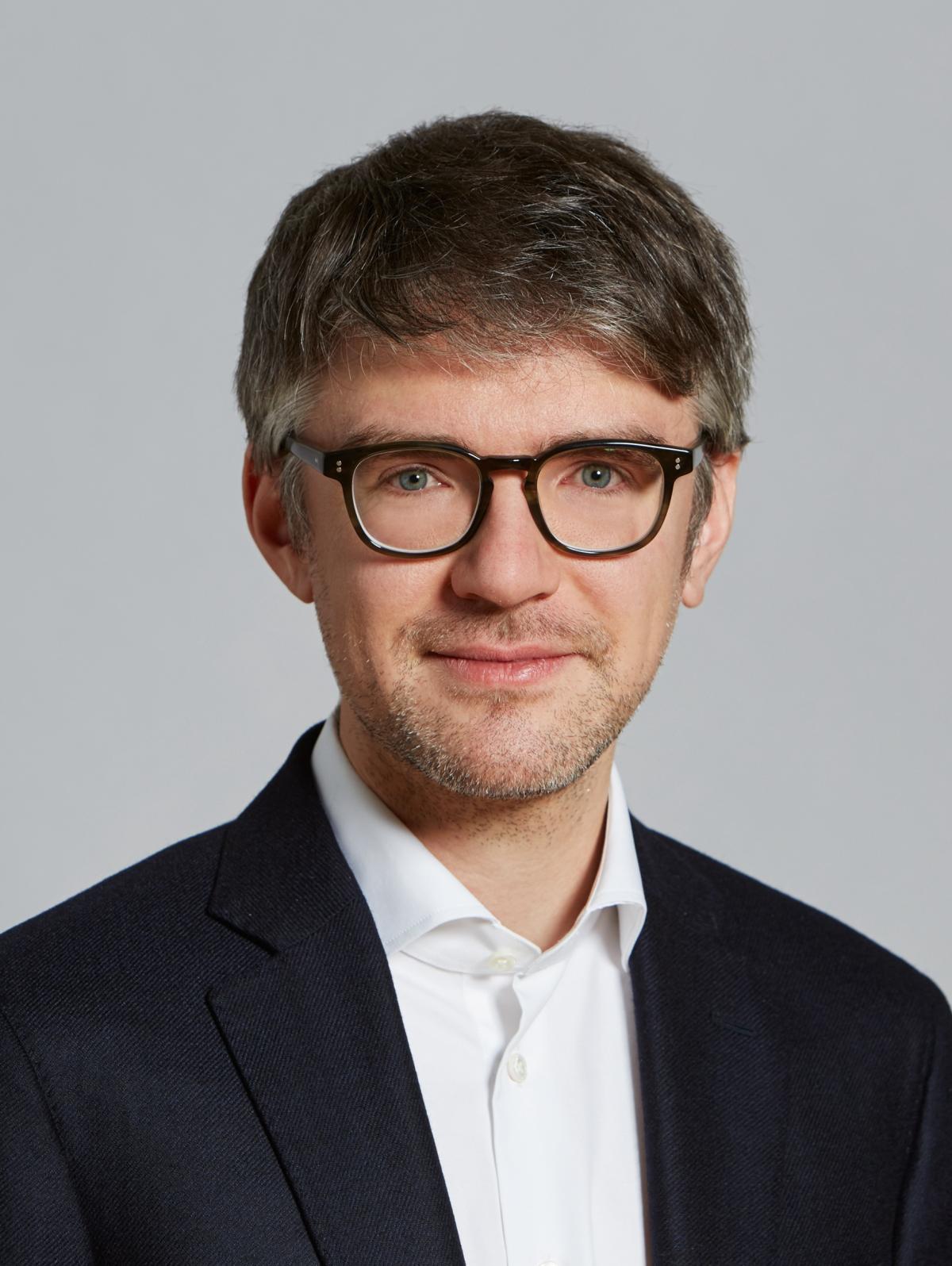
Michael Gastpar is a full Professor at École Polytechnique Fédérale de Lausanne (EPFL) in the School of Computer and Communication Sciences, where he leads the Laboratory for Information in Networked Systems (LINX). He previously held faculty positions at the University of California, Berkeley (2003-2011, earning tenure in 2008) and Delft University of Technology. His research spans information theory, signal processing, communications, and systems neuroscience. His research interests focus on network information theory and related coding and signal processing techniques, with applications to sensor networks and neuroscience. Recent work demonstrates a strong shift toward exploring the theoretical foundations of modern machine learning, particularly investigating transformer architectures from an information-theoretic perspective. His research group at EPFL explores how information theory principles can provide fundamental limits and novel approaches for contemporary machine learning problems. His recent publications reveal a clear trend toward bridging classical information theory with modern machine learning. The 15 most recent papers show increasing focus on theoretical analysis of transformers, rate-distortion frameworks for language models, universal prediction methods, and applications of information measures to machine learning theory. This represents a strategic evolution from his earlier work on sensor networks and physical-layer network coding toward foundational questions in artificial intelligence. Scientific Awards: IEEE Fellow 2013 Communications Society & Information Theory Society Joint Paper Award Information Theory Society Distinguished Lecturer (2009-2011) ERC Starting Grant (2010) Okawa Foundation Research Grant (2008) NSF CAREER award (2004) 2002 EPFL Best Thesis Award Professor Gastpar has advised over 20 PhD students who have gone on to successful careers in both academia and industry. His research has been generously supported by major grants including an ERC Starting Grant "ComCom" (2011-2016) and ongoing support from the Swiss National Science Foundation. He has served in significant editorial roles, including as Associate Editor for Shannon Theory for the IEEE Transactions on Information Theory (2008-11) and as Technical Program Committee Co-Chair for the IEEE International Symposium on Information Theory in 2010 and 2021. He leads the Laboratory for Information in Networked Systems (LINX) at EPFL, which brings together researchers working at the intersection of information theory, machine learning, and networked systems. The lab maintains strong connections with both theoretical research communities and practical applications in communications and neuroscience.