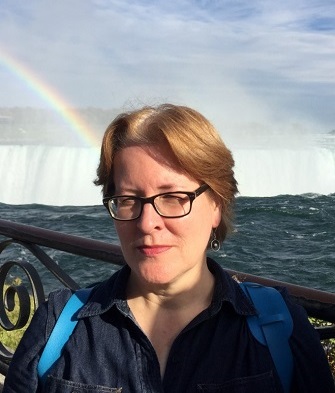
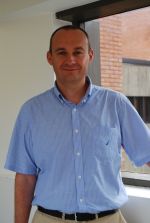
Boris Beranger is a Senior Lecturer in Statistics and Data Science at the School of Mathematics and Statistics, UNSW Sydney . He is also a member of the UNSW Data Science Hub (uDASH) and previously served as an Associate Investigator at the ARC Centre of Excellence for Mathematical and Statistical Frontiers (ACEMS) . His research spans theoretical and applied statistics, focusing on Extreme Value Theory (environmental, financial, and insurance applications) and Symbolic Data Analysis (complex/non-standard data structures). Education: PhD in Statistics (Université Pierre and Marie Curie & UNSW, 2016), MSc in Mathematics (Université Pierre and Marie Curie, 2011) Research Trends are evident in: High-dimensional extremal dependence modeling (ExtremalDep package) Spatial extremes and max-stable processes Symbolic/histogram/interval-valued data analysis Composite likelihood and aggregated data methods Tail density estimation via kernel methods Scientific Awards & Grants include: J.B. Douglas Award for Postgraduate Excellence (2014) Multiple ARC ACEMS Research Support Schemes Discovery Project DP220103269 ($405,000) for modeling real-world extremes Supervision covers PhD, Masters, and Honours students in areas like Symbolic Data Analysis, Spatial Extremes, and Statistical Computing. He also co-organized workshops and served as Vice-President (2025-26) of the Statistical Society of Australia's NSW Branch.
Dr. Hang Zhou serves as a Lecturer in Electrically Powered Aircraft and Operations specializing in Autonomous Systems & Connectivity at the University of Glasgow. His academic work focuses on enhancing reliability and maintenance strategies for complex engineering systems, particularly civil aircraft engines and critical infrastructure. His research encompasses: Aircraft Reliability Engineering Data-Driven Maintenance Optimization Bayesian Reliability Evaluation Risk Analysis in Complex Systems Condition Monitoring Systems Competing Risk Identification Analysis of his 2021-2023 publications reveals a consistent emphasis on integrating statistical modeling with machine learning for aerospace and power systems. Key contributions include copula-based airworthiness frameworks, reliability contour mapping for engine life prediction, and bivariate cluster analysis for maintenance prioritization. His work demonstrates cross-domain applicability from aircraft engines to power grid infrastructure through advanced probabilistic methods. Scientific Awards: No awards or fellowships documented in available sources Academic engagement shows active collaboration with researchers including Ajith Kumar Parlikad and Alexandra Brintrup, though specific advising roles or grant funding details remain unreported in current documentation.
Dr. Atefeh Zamani is a Lecturer at the School of Mathematics and Statistics , University of New South Wales (UNSW), Sydney. She holds a Master of Data Science from the University of Melbourne (2023) and a Ph.D. in Mathematical Statistics from Shiraz University, Iran (2011). Her academic career spans institutions across Australia and Iran, with research contributions in time series and functional data analysis. Education: Ph.D., Mathematical Statistics (Probability Theory), Shiraz University (2011) M.Sc., Mathematical Statistics, Shiraz University (2005) B.Sc., Mathematical Statistics, Shiraz University (2003) Master of Data Science, University of Melbourne (2023) Her research interests include: Time Series Analysis Functional Data Analysis Statistical Inference for complex processes Data Science applications in health and environmental studies The articles highlight her expertise in: Functional autoregressive models and their seasonal extensions Integer-valued time series and their innovations Portmanteau tests for model diagnostics Covariance operator convergence in periodic processes Machine learning applications for health risk prediction Stress-strength reliability analysis Teaching includes courses like MATH5845 Time Series, MATH5855 Multivariate Analysis, and ZZSC5806 Regression Analysis for Data Scientists. She supervises Master’s projects in time series and data science, including outlier detection and Bayesian spectral analysis. Contact: Email: atefeh.zamani@unsw.edu.au Location: Room 2071, Anita B. Lawrence Centre, UNSW Sydney
Matthieu Labeau is a Senior Lecturer at Télécom Paris, affiliated with the Department of Image, Data, Signal (IDS). He joined the institution in 2019 after completing his PhD at the University of Paris-Saclay and a postdoctoral position at the University of Edinburgh. His research primarily centers on Natural Language Processing (NLP), with specialized interests in representation learning, language modeling, and conversational AI. His work spans: Core NLP : Contextual word representations, semantic alignment, and polysemy analysis. Machine Learning : Hierarchical classification, graph prediction, and few-shot learning techniques. Applications : Emotion recognition in dialogues, persuasiveness decoding, and educational NLP tools. Labeau leads research in the Signal, Statistics and Learning (S2A) team at the Information Processing and Communication Laboratory (LTCI). His recent publications demonstrate a strong focus on improving language model interpretability and efficiency, with innovations in tokenization effects and multimodal fusion. Though no awards or grants are mentioned, his consistent output in top-tier venues (e.g., NeurIPS, ACL, AAAI) highlights significant scholarly contributions. He actively collaborates on tools like EZCAT for conversation annotation and mentors researchers in NLP projects. Current work explores LLM capabilities in persuasion assessment and optimal transport methods for graph-based learning.
Dr. Emma Eastoe is a Senior Lecturer in Statistics at the School of Mathematical Sciences, Lancaster University. Her research focuses on Extreme Value Theory and Environmental Statistics, with applications in climate modeling, oceanography, and environmental risk assessment. Current research projects include: Improved Models for Multivariate Metocean Extremes (IMEX, 2020–2021) STORi: Multivariate Oceanographic Extremes in Time and Space (2019–2023) Her work spans disciplines such as: Extreme value analysis of bivariate and multivariate processes Statistical downscaling of climate models Modeling non-stationary extremes in environmental data Applications to oceanographic, atmospheric, and glaciological systems She supervises PhD students including Kajal Dodhia and Aiden Farrell, and collaborates with research groups like the Data Science Institute (DSI) - Environment, Environmental and Ecological Statistics, and the STOR-i Centre for Doctoral Training.
Fredrik Charpentier Ljungqvist is a Professor of History, especially Historical Geography, at Stockholm University , with a concurrent Associate Professorship in Physical Geography at the same institution. His research bridges climate science and historical analysis through interdisciplinary environmental and climate history studies, focusing on Europe and global regions. He has actively contributed to climate history understanding via dendrochronological methods, paleoclimatic reconstructions, and societal-climate interaction analyses. Professor Ljungqvist's work includes significant projects on the Integrated History and Future of People on Earth (IHOPE) program’s scientific steering committee, and past roles with the UN Climate Panel IPCC , the PAGES 2k network , and the Swedish Research Council . He has conducted visiting research at the University of Cambridge, University of Bern, Freiburg Institute for Advanced Studies (FRIAS), and the Norwegian Academy of Sciences and Letters. His research spans climate variability impacts on pre-industrial societies, including grain harvest and price relationships with climate factors, plague history connections to building activity patterns, and comparative legal analysis of Nordic medieval laws. He has published extensively in both scientific and popular science formats, with notable works including Climate and Man for 12,000 Years (2017), The Long Middle Ages (2015, updated 2022), and Europe Today (2024). Scientific Recognition Rettig Prize (2022) from the Royal Swedish Academy of Sciences for interdisciplinary climate-disease research Clio Prize (2016) for public science communication His methodological approach combines proxy records like tree-ring data with documentary sources, statistical modeling, and Earth System climate simulations. Current teaching responsibilities span both history and paleoclimatology courses, including supervision of one primary PhD student in history and two co-supervised students across history and physical geography disciplines.
Daniel Leung is a Professor of Internal Medicine and Adjunct Professor of Microbiology and Immunology at the University of Utah . He holds a B.Sc. and M.Sc. from the University of British Columbia and an M.D. from Wake Forest University School of Medicine . His research focuses on Mucosal-Associated Invariant T (MAIT) cells in infections like cholera , sepsis , and diarrheal diseases , with emphasis on their immune regulatory roles and vaccine implications. Education: B.Sc., University of British Columbia M.Sc., University of British Columbia M.D., Wake Forest University School of Medicine Leung's work examines how MAIT cells contribute to B cell help , antibody production , and mucosal immunity . His team investigates these cells in human tonsil germinal centers and mouse models , particularly in cholera vaccine development using MAIT-activating ligands . Recent publications highlight his efforts in serosurveillance for cholera and SARS-CoV-2 , integrating statistical and machine learning approaches to estimate disease incidence from cross-sectional data. He also develops electronic clinical decision support tools (eCDST) for diarrhea management in low- and high-resource settings , aiming to reduce antibiotic misuse and improve patient outcomes. Key collaborations include the International Centre for Diarrhoeal Disease Research, Bangladesh (icddr,b) , GHESKIO (Haiti) , and institutions like Johns Hopkins and University of Florida . His research is funded by NIH (R01AI130378, R01AI135114, R01AI135115) and the Bill & Melinda Gates Foundation (OPP1198876).
Seyoung Kim is an Associate Professor in the Department of Epidemiology at the University of Pittsburgh School of Public Health. She holds a PhD in Computer Science from University of California, Irvine (2007), preceded by a BS in Computer Engineering from Seoul National University (2001), and completed postdoctoral training at Carnegie Mellon University (2010). Her methodological research focuses on statistical machine learning for systems genomics, with applications to gene network reconstruction, eQTL mapping, and longitudinal data analysis. Education : BS in Computer Engineering, Seoul National University (2001) PhD in Computer Science, University of California, Irvine (2007) Postdoctoral Fellow in Computer Science and Machine Learning, Carnegie Mellon University (2010) Her lab develops computational tools for analyzing complex genomic datasets, including methods for: Learning gene networks under SNP perturbations Allele-specific expression quantification via kallisto extensions Integrating multi-omics data with scalable algorithms Doubly mixed-effects Gaussian process regression for spatio-temporal modeling Joint covariance estimation in high-dimensional biological datasets Recent work demonstrates methodological advancements in handling dependencies among samples and features in genomic studies. She teaches EPIDEM 2186 Introduction to R Programming within the epidemiology curriculum.
Musa Mammadov is a Senior Lecturer in Data Science at Deakin University's School of Information Technology, part of the Faculty of Science Engineering and Built Environment. His research focuses on data science, machine learning, and computational mathematics with applications in environmental modeling, healthcare analytics, and financial systems. Education: Doctor of Philosophy from University of Ballarat Research Interests: Specializing in numerical and computational mathematics, Mammadov develops advanced machine learning techniques for complex classification problems while exploring optimization methods in mathematical economics. His work spans environmental modeling applications in Sri Lanka's Kalu River Basin, healthcare fraud detection algorithms, and financial market analysis. Scientific Contributions: The recent publications highlight his work in hydrological forecasting using deep learning architectures, anomaly detection in medical billing systems, and probabilistic modeling of financial indices. His methodological contributions include improving Bayesian network classifiers and developing novel dependency estimation techniques. Academic Roles: Mammadov serves as editorial board member for Optimization Letters and Annals of Data Science . He supervises doctoral students in data science projects including health provider billing analysis and satellite downlink scheduling optimization.
Dr. Bo Guan is a Lecturer in Accounting and Finance at Cardiff Business School, Cardiff University. His academic career spans both financial research and public health analysis, with significant contributions to empirical asset pricing, volatility spillovers across financial markets, exchange-traded funds, and forecasting methodologies. Dr. Guan earned his PhD in Business Management (Accounting and Finance) from Cardiff Business School in 2021, following an MSc in Social Science Research Methods from Cardiff University and an MSc in Accounting and Finance from the London School of Economics and Political Science. His undergraduate degree is a Bachelor's in Accounting and Finance (First Class Honours) from Cardiff University. His primary research interests focus on financial econometrics, particularly in volatility spillovers between different asset classes, forecasting methodologies for tourism demand and agricultural commodities, and financing patterns in high-tech enterprises. Additionally, he has made significant contributions to public health research through the National Violence Surveillance Network, analyzing violence patterns in England and Wales using emergency department data. His work demonstrates strong interdisciplinary capabilities, bridging finance, economics, and public health surveillance. Dr. Guan's research has been published in high-impact journals including Annals of Tourism Research (ABS 4), Energy Economics (ABS 3), and Journal of Forecasting, with his 2020 paper being recognized as the top-cited paper in the Journal of Forecasting for 2020/2021. He serves as a reviewer for numerous prestigious finance journals including Journal of International Financial Markets, Institutions and Money and European Journal of Finance. As an educator, Dr. Guan has taught across multiple undergraduate and postgraduate modules at Cardiff Business School, including Financial Derivatives, Quantitative Methods in Finance, and Big Data Analytics in Finance. His leadership of the BST950 Accounting and Finance in Context module in 2024/25 achieved 94.15% positive student feedback. He supervises PhD students and serves on the School Research Ethics Committees. Dr. Guan is an active member of several research groups at Cardiff University, including the Cardiff Sustainable Finance Research Group, Cardiff Corporate Governance Research Group, and the National Violence Surveillance Network. His research on violence patterns has received media coverage from BBC News and was featured in the Office for Statistics Regulation report.
Dr. Victoria Allgar holds a joint appointment as a Reader in Medical Statistics between Hull York Medical School and the Department of Health Sciences at the University of York. She serves as Head of the Centre for Health and Population Sciences (CHaPS), HYMS Athena SWAN Champion (Chair), Deputy Chair of the HYMS Department Research Committee, and holds multiple other leadership positions across both institutions including membership on the HYMS Management Board, Ethics Committee, and Exceptional Circumstances Committee. Dr. Allgar earned her BSc(Hons) in Statistics from the University of Newcastle upon Tyne, followed by a PhD from the same institution. She maintains professional recognition as a Chartered Statistician with the Royal Statistical Society and a Chartered Scientist with the Science Council, reflecting her expertise in statistical methodology and research design. Her research focuses on medical statistics and study design, bringing together experts from various specializations to identify and answer key research questions through the design and conduct of new studies. Dr. Allgar provides statistical and project oversight for these studies, with particular expertise in clinical trials methodology. Her research spans multiple domains including autism spectrum disorders, palliative care, child mental health, epidemiology, and health services research, demonstrating her ability to bridge statistical methodology with clinical applications across diverse medical specialties. Dr. Allgar's extensive publication record (approximately 150 research outputs) reveals a strong commitment to methodological rigor and interdisciplinary collaboration. Her recent work shows particular strength in autism research, clinical trial design, and palliative care studies, often addressing health inequalities and service delivery improvements. She frequently serves as statistical lead on complex interdisciplinary projects, applying sophisticated analytical approaches to challenging clinical questions. Chartered Statistician, Royal Statistical Society Chartered Scientist, The Science Council Member of Charitable Trust Scientific Panel, The Chartered Society of Physiotherapy Member of Treatment Sub-committee, Versus Arthritis UK Member of MS Society's Grant Review Panel Dr. Allgar actively mentors the next generation of researchers as a PhD Supervisor and MSc Dissertation Supervisor. She serves as both an Internal PhD Examiner (Health Sciences) and External PhD Examiner. Her teaching responsibilities include delivering HYMS MBBS statistical plenary lectures and serving as a personal mentor to three cohorts of MBBS students. She also contributes significantly to the scholarly community as Statistical Editor for Health & Social Care in the Community and Associate Editor for Trials, while reviewing for numerous high-impact journals including Palliative Care, BMJ Open, Lancet, and Trials. Additionally, she reviews for major UK funding bodies including HTA, NAEDI, NICE, and MRC. As Statistical Editor for Health & Social Care in the Community and Associate Editor for Trials, Dr. Allgar plays a pivotal role in advancing methodological standards in medical research publication. Her leadership in the Centre for Health and Population Sciences reflects her commitment to fostering interdisciplinary research collaborations that address pressing health challenges through rigorous statistical methodology and innovative study design.
Heather D. Baker is an Associate Professor in the Department of Near and Middle Eastern Civilizations at the University of Toronto (St. George Campus). Her research focuses on 1st millennium BC Mesopotamia, particularly Babylonian urbanism, Neo-Assyrian royal households, and integration of textual/archaeological data. She holds a DPhil from the University of Oxford and led the SSHRC-funded MTAAC project (2017–2019) on cuneiform machine translation. Education: DPhil, University of Oxford Key Projects: Principal Investigator for Machine Translation and Automated Analysis of Cuneiform Languages (MTAAC) project Her research interests include Mesopotamian socio-economic history, Babylonian urban morphology, and digital humanities applications. She combines archaeological fieldwork with cuneiform text analysis to study domestic spaces, urban development, and state administration. Recent work explores the built environment’s role in political and social structures. Awards: SSHRC Grant for MTAAC Project (2019) Teaching/Outreach: Taught courses on Assyrian/Babylonian history at Charles University (2019) and contributed to public lectures on Babylonian housing and urbanism via podcasts (e.g., Thin End of the Wedge). Currently on leave until December 2025. Her publications bridge archaeology and textual analysis, emphasizing quantitative methods in studying domestic architecture, household organization, and urban socio-economic dynamics.
Dr. David Kofke is a SUNY Distinguished Professor in the Department of Chemical and Biological Engineering at the School of Engineering and Applied Sciences, University at Buffalo . He holds the Walter E. Schmid Chair and has been a faculty member since 1989. His research focuses on molecular simulation, free-energy calculations, and the development of object-oriented software for education. Education PhD in Chemical Engineering, University of Pennsylvania (1988) BS in Chemical Engineering, Carnegie-Mellon University (1983) Dr. Kofke’s research interests span statistical physics , molecular modeling , and software engineering , with a focus on virial coefficients, crystal-phase calculations, and simulation method development. His work bridges theoretical and applied chemistry, emphasizing computational efficiency and accuracy. The 15 most recent articles highlight his expertise in virial equations of state , molecular simulation methods , and thermophysical data analysis . Topics include quantum fluids, polymer thermodynamics, and machine learning integration, reflecting his commitment to advancing computational chemistry through interdisciplinary approaches. Scientific Awards Presidential Young Investigator (1990) SUNY Chancellor’s Excellence in Teaching (1994) John M. Prausnitz Award (2012) Jacob F. Schoellkopf Medal (2007) Himmelblau Award (2012) AIChE Fellow (2014) AAAS Fellow (2015) Dr. Kofke has served as Associate Editor of the Journal of Chemical & Engineering Data since 2016 and led CACHE as President (2010-2012). His software development includes the Etomica simulation framework and the pyHMA post-processor for anharmonic properties.
Yaakov Malinovsky is a Professor in the Department of Mathematics and Statistics at the University of Maryland, Baltimore County (UMBC). His research focuses on decision theory, stochastic ordering, sequential selection methods, group testing, and nonparametric methods. He has held editorial roles at journals including Enumerative Combinatorics and Applications , Methodology and Computing in Applied Probability , and The American Statistician . His work bridges theoretical probability and applied statistics, with contributions to group testing optimization, sequential analysis, and combinatorial probability. Malinovsky earned his Ph.D. in Statistics from The Hebrew University of Jerusalem in 2009. He has secured research funding from the United States-Israel Binational Science Foundation for projects on minimax online learning policies in stochastic sequential selection. His teaching portfolio includes courses such as Probability Theory, Mathematical Statistics, and specialized topics in stochastic processes and nonparametric methods. His recent research explores round-robin tournament models, prime number distribution via dice rolls, and optimal stopping rules. He has published extensively in top-tier journals like Statistica Sinica , Biometrics , and Sequential Analysis , demonstrating expertise in statistical inference and combinatorial problems. His work often addresses practical applications in epidemiology and algorithm design while advancing foundational probability theory.
Prof. Dr. Ing. Alexandru Isar is a Full Professor at the Department of Communications, Faculty of Electronics and Telecommunications, Politehnica University of Timișoara. He holds academic ranks since 1990 (Adjunct Professor), 1995 (Associate Professor), and 1999 (Full Professor). His research focuses on signal processing, wavelet analysis, and medical imaging. He has advised 5 Ph.D. students and currently supervises 2 doctoral candidates. Isar has published extensively in IEEE journals and authored books on time-frequency representations and network security. **Education**: Ph.D. in Engineering (1993), supervised by Prof. Eugen Pop. Completed postdoctoral research at Telecom Bretagne, France (2003). **Grants**: European Space Agency-funded projects (2013-2017) and national grants (IDEI 2009-2011). **Research Directions**: Introduced time-frequency representations and wavelet theory applications. **Notable Contributions**: Inventions in ultrasonic control systems (1987), development of the Hyperanalytic Wavelet Transform (2008), and SAR/SONAR image denoising algorithms. **Administrative Roles**: Deputy Dean (2001-2004), Department Director (2012-2020). **Collaborations**: European Space Agency projects, international conferences (Brest, Bordeaux), and peer reviews for IEEE journals. His work bridges theoretical signal processing with practical applications in healthcare and telecommunications.