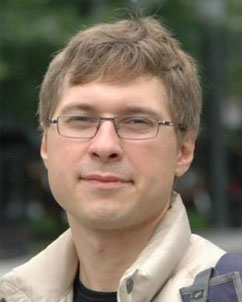
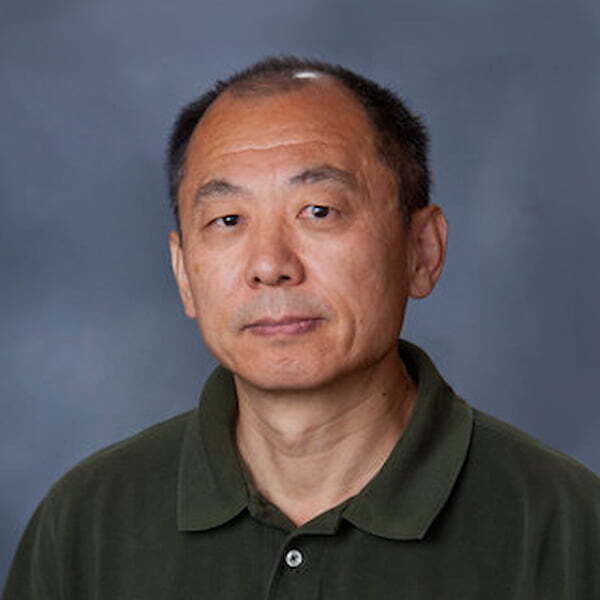
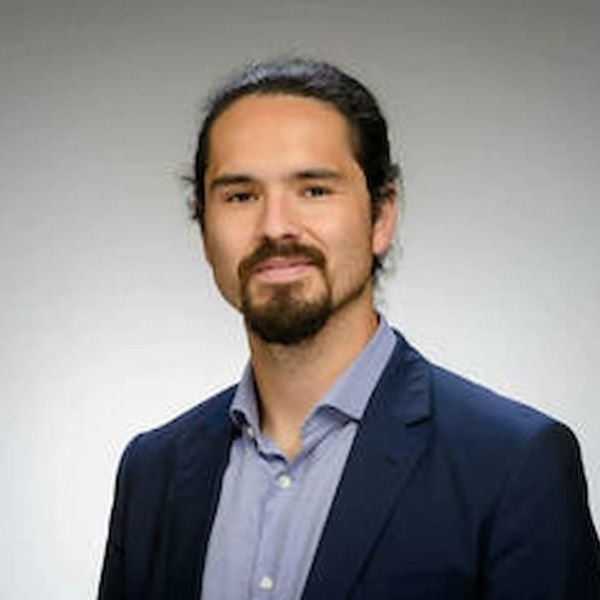
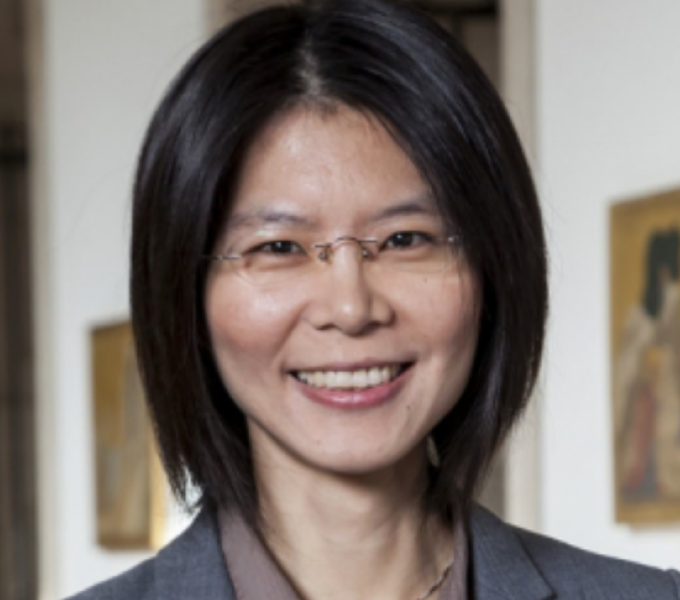
Christian Beckmann is a Full Professor of Statistics in Imaging Neurosciences at Radboud University Medical Centre Nijmegen and a Principal Investigator at the Donders Institute for Brain, Cognition and Behaviour. His career spans institutions including the University of Twente, Imperial College London, and the University of Oxford, with a focus on interdisciplinary approaches integrating cognitive neuroimaging, imaging genetics, and pharmacology. Education: MSc and DPhil degrees at the University of Oxford (20014). His research centers on developing novel computational analysis methods for neuroimaging data, particularly Independent Component Analysis (ICA), applied to connectomics, imaging epidemiology, and big data analytics. He emphasizes creating sensitive, specific, and interpretable tools for neurobiological applications, such as the widely used FSL (FMRIB Software Library), which impacts over 650 institutions globally. Scientific Awards: Thomson Reuters/Clarivate Analytics Highly Cited Researcher (2014–2016) NWO VIDI Fellowship (2014) Wiley OHBM Young Investigator Award (2011) Membership, Young Academy, University of Twente (2011) Advising & Grants: He has trained over 20 PhD students (8 completed) and 9 postdoctoral researchers, securing grants from the Netherlands Organisation for Scientific Research and other international bodies. His work bridges technical innovation with clinical applications, advancing diagnostics and treatment strategies.
Lisa CROSATO is an Associate Professor at the Department of Economics and the Interdepartmental School of Economics, Languages and Entrepreneurship at Ca' Foscari University of Venice. She holds a position in San Giobbe and Treviso campuses. Her research focuses on econometric methodologies applied to financial risk management, SME default prediction, and the use of unconventional data sources such as corporate websites for economic analysis. Her research interests include credit risk modeling, innovation measurement in SMEs, and the integration of web-scraped data with traditional financial indicators. She has contributed to projects like 'Data Driven Innovation' funded by MUR, exploring the effects of unconventional data on industries and business models. Recent publications emphasize the application of machine learning techniques for interpretable default prediction and leveraging web data to assess firm innovativeness and creditworthiness. Her work often bridges econometric theory with practical policy applications, such as anti-usury policies and financial inclusion. Dr. CROSATO advises students on topics like firm size analysis, credit risk, and marketing research, requiring empirical methods and LaTeX for master's theses. She has taught courses in business statistics, data analytics, and international market analysis across various degree programs.
Stuti Thapa is an Assistant Professor of Industrial-Organizational Psychology at the University of Tulsa, specifically within the Department of Psychology under the Kendall College of Arts & Sciences. Her research focuses on workplace well-being, emotion dynamics, and cross-cultural approaches to organizational behavior. She holds a Ph.D. from Purdue University, alongside an M.A. and B.A. from Purdue University and St. Olaf College, respectively. Her work employs advanced methodologies such as multilevel modeling, text mining, and machine learning to study temporal variations in individual and organizational outcomes. Notable contributions include exploring personalized happiness metrics, cross-cultural linguistic differences in emotion expression, and the implications of social media on work environments. Dr. Thapa has been recognized with the John and Joyce Schaeuble Award (2023) and Joseph Tiffin Award (2023) for her quantitative research excellence. Her research interests extend to psychometrics, experience sampling methods, and the ethical evaluation of human-machine interactions in moral dilemmas. Beyond academia, she engages in creative activities like painting, crocheting, and gardening, alongside caring for her cat, Moon.
Jie Gao is a Professor of Computer Science at Rutgers University, serving as the Graduate Program Director. Her research focuses on algorithms, computational geometry, wireless networks, and social networks. She holds an office in Hill 411 and can be reached at jg1555@rutgers.edu. Her work emphasizes geometric algorithms, privacy-preserving techniques, and network optimization. Professor Gao teaches advanced courses such as Computational Geometry (CS529), Design and Analysis of Data Structures and Algorithms (CS513/CS514), and Introduction to Discrete Structures (CS205). Her courses blend theoretical foundations with practical applications in geometric computing and algorithm design. Her research group explores geometric algorithms, distributed systems, and privacy-preserving data analysis. Notable projects include developing efficient algorithms for unit-disk graphs, security game theory for patrol scheduling, and methodologies for interpreting health data from wearable devices. She actively contributes to the field through interdisciplinary collaborations, addressing challenges in both theoretical and applied computing domains.
Chris Lippitt is an Associate Professor in the Department of Geography and Environmental Studies at the University of New Mexico (UNM), where he has been a faculty member since 2012. He holds a Ph.D. in Geography from San Diego State University and the University of California, Santa Barbara, and an M.S. in Geographic Information Science from Clark University. His research focuses on remote sensing and GIScience, emphasizing time-sensitive geographic information systems, infrastructure assessment, and wildlife monitoring. He collaborates with government and private-sector entities and leverages diverse funding sources to advance interdisciplinary projects. Dr. Lippitt has pioneered several research-derived companies and mentors students through initiatives like the NSF iCorps Research Commercialization Program. He founded the Interdisciplinary Science Cooperative (IS Co-op) and serves as the Associate Dean. His work integrates cutting-edge technologies such as LiDAR, drones, and machine learning to address challenges in environmental monitoring, infrastructure durability, and disaster response. He actively promotes innovation through the ASPIRE Website, fostering collaboration between academia, industry, and government agencies. Key research themes include automated infrastructure assessment using LiDAR, wildlife population surveys via aerial imagery, and the application of AI in remote sensing. His contributions bridge theoretical advancements with practical solutions, enhancing decision-making across sectors like transportation, ecology, and urban planning. Despite no explicit mention of awards, his extensive publication record and industry partnerships reflect his impactful contributions to geospatial science. Advising and grants: Dr. Lippitt has advised multiple student teams and secured grants for projects spanning infrastructure monitoring, environmental modeling, and technology commercialization. His labs and collaborative networks, including the IS Co-op, facilitate cross-disciplinary training and innovation.
Dr. Michael Bussmann is the Founding Manager of the Center for Advanced Systems Understanding (CASUS) at the Helmholtz-Zentrum Dresden-Rossendorf (HZDR). He holds a Research Fellow position and has been a Group Leader at HZDR since 2016, focusing on computational radiation physics and laser-plasma interactions. His academic journey includes a PhD in Physics from Ludwig-Maximilians University Munich, with research encompassing laser-cooling of ion beams, plasma dynamics, and high-performance computing. Bussmann's work bridges experimental and computational physics, particularly in advancing particle acceleration technologies and plasma-based applications. Research Interests: His primary focus lies in laser plasma acceleration, computational physics, radiation physics, and the development of exascale simulation tools. Notably, he contributes to projects like PIConGPU and explores applications of AI in scientific workflows. His interdisciplinary approach integrates plasma physics with medical research, such as federated learning for oncology. Publications: Recent work spans topics from exascale plasma simulations to AI-driven medical research, reflecting his dual expertise in computational science and applied physics. Key contributions include optimizing laser-ion acceleration using machine learning and advancing federated learning frameworks in cancer studies. Awards: While no specific awards are listed, his sustained leadership in high-impact research and contributions to HZDR’s initiatives highlight his recognized expertise. Grants & Collaborations: Bussmann leads the CASUS initiative, fostering collaboration between HZDR and international partners. His projects often involve EU frameworks and industrial partnerships, emphasizing translational research in energy and healthcare. Labs/Teams: Directs the Computational Radiation Physics group at HZDR and oversees CASUS, a hub for data-driven systems research. His teams develop cutting-edge simulation tools and explore interdisciplinary applications of plasma physics.
Rebecca Riley is a Professor of Practice in Economics at King’s Business School, King’s College London, and Director of the UK Economic Statistics Centre of Excellence (ESCoE). She leads the measurement and methods research theme at the ESRC-funded Productivity Institute, focusing on productivity growth through academic-policy collaboration. Previously, she held roles as Associate Research Director at the National Institute of Economic Research (NIESR), including leading research groups on productivity and the UK economy forecast team. Her research focuses on labor market policy, productivity performance, and economic measurement, with emphasis on minimum wage impacts, business performance, intangible asset investments, and globalization effects. She advises UK government departments including BEIS, DWP, and the Low Pay Commission, and is affiliated with the NBER and IARIW. Her work trends highlight persistent themes: analyzing productivity challenges post-2008, minimum wage policy effects, and global economic shifts. She emphasizes data-driven solutions for policy and measurement innovations. Rebecca is actively involved in advising and mentoring, accepting new PhD students in her research areas. She collaborates with the Office for National Statistics and leads initiatives like ESCoE to enhance economic statistics and address emerging challenges.
Sergii Skakun is an Associate Professor at the University of Maryland, College Park with a joint appointment in the Department of Geographical Sciences and the College of Information Studies (iSchool). He holds a PhD in Computer Science from the National Academy of Sciences of Ukraine (2005) and an M.S. in Applied Mathematics from Kyiv Polytechnic Institute (2004). His research focuses on advancing remote sensing data fusion, machine learning applications for Earth observation, and agricultural monitoring. Skakun has led projects funded by NASA, NSF, and international agencies, including initiatives on war-induced agricultural damage mapping and climate change impacts in conflict zones. Education: PhD in Computer Science, National Academy of Sciences of Ukraine (2005) M.S. (Hons.) Applied Mathematics, Kyiv Polytechnic Institute (2004) B.S. Applied Mathematics, Kyiv Polytechnic Institute (2002) Research Interests: Remote sensing of land cover/use change Machine learning in geospatial analysis Disaster monitoring and conflict zone agriculture Earth observation for food security His work has produced over 70 peer-reviewed papers and collaborations with NASA Harvest, CEOS, and international teams. Notable recent projects include artillery crater mapping in Ukraine and climate analog velocity estimation using optical flow. Grants & Leadership: Two-time NASA FINESST grant recipient (2021–2025) PI for NASA Rapid Response projects on Ukraine’s agricultural monitoring Co-leads CEOS Cloud Masking Inter-comparison Exercise (CMIX) Labs & Teams: Active contributor to NASA Harvest and Terrestrial Information Systems Laboratory (NASA Goddard), focusing on operationalizing satellite intelligence for global food security challenges.
Stephan Clémençon is a Professor at Télécom Paris, working within the Information Processing and Communication Laboratory (LTCI) where he leads the Signal, Statistics and Learning (S2A) research team. His academic career spans multiple prestigious institutions including University of Paris X (2000-2005) and INRA Met@risk research unit (2005-07), with membership in the LPMA (Stochastic Modeling and Probability) laboratory of Paris 6 and Paris 7. Clémençon earned his PhD in Applied Mathematics from University of Paris 7 Denis Diderot with a visiting period at Stanford University's Department of Statistics (1997-1998). He currently serves as the responsible for the Specialized Master's in 'Big Data' at Télécom Paris and previously held the 'Machine Learning for Big Data' industrial chair (2013-2018), now actively involved in the 'Data Science and AI for Digitalized Industry and Services' chair. His research interests focus on statistical learning, probability, statistics, machine learning, stochastic processes, and nonparametric statistics, with applications spanning quantitative finance, biosciences, and signal/image processing. Clémençon has developed an 'immoderate taste for stochastic modeling and statistics applied in various application areas.' His extensive publication record (270 documents in HAL) demonstrates consistent research productivity with 15 recent publications (2020-2024) primarily focused on anomaly detection, ranking algorithms, statistical learning theory, and bias correction in machine learning. His work bridges theoretical statistics with practical applications in computer vision, telecommunications, and ethical AI considerations. Clémençon teaches advanced courses including Martingale Theory, Machine Learning, Advanced Nonparametric Statistics, and Big Data Projects at Télécom Paris, while also contributing to programs at Ensae Paris, Paris Diderot University, ENS Paris Saclay, and other institutions. His research team (S2A) operates within the Image, Data, Signal (IDS) department at Télécom Paris, focusing on the intersection of signal processing, data science, and statistical learning methodologies.
Ke-Hai Yuan is a Professor at the University of Notre Dame with an office in E432 Corbett Family Hall. He leads the Statistical Methods for Real Data Lab , focusing on advanced statistical techniques for real-world data challenges. Education: Ph.D., University of California, Los Angeles (UCLA) M.S., Beijing Institute of Technology B.S., Beijing Institute of Technology Research and Teaching Interests: His work spans foundational and applied statistics, encompassing structural equation modeling, mediation and moderation analysis, robust methods, missing data, and computational statistics. He has contributed to methodologies for nonnormal distributions, asymptotics, bootstrap techniques, and statistical learning for big data. Teaching interests include structural equation modeling, computational statistics, and linear models. Labs and Teams: He oversees the Statistical Methods for Real Data Lab at Notre Dame, fostering innovation in empirical modeling and statistical software development.
Miguel Blacutt is a Clinical Professor with expertise in mental health and clinical psychology. His research focuses on understanding biological, psychological, and environmental risk factors for self-injury and suicide, as well as developing prevention strategies. He holds a BSc from McGill University and an Ed.M. from Columbia University's Teachers College. His work spans diverse topics including maternal stress impacts on infant temperament, smartphone usage and suicide risk, and motivation states for physical activity. He has published extensively on behavioral assessment tools and intervention design, particularly using longitudinal data and computational methods. Miguel’s research also explores pandemic mental health effects, wearable technology applications for tremor management in Parkinson’s disease, and cultural adaptations of clinical scales. He collaborates on projects analyzing motivation dynamics and mental health disparities across populations.
John K Tsotsos is a Distinguished Research Professor and Director of the Centre for Innovation in Computing at the Lassonde School of Engineering, York University. He also holds adjunct professorships in Computer Science and Ophthalmology & Vision Sciences at the University of Toronto. With a PhD in Computer Science from the University of Toronto (1980), his work bridges computer vision, neuroscience, and autonomous systems. His research focuses on visual attention mechanisms, active vision, and their applications in driver behavior analysis, autonomous vehicles, and cognitive modeling. Notable projects include SCOUT+ for drivers’ gaze prediction and studies on 3D visuospatial problem-solving. His publications span over 400 articles, emphasizing interdisciplinary approaches to understanding human and machine vision. Recent work explores data limitations in vision datasets, perceptual grouping in neural networks, and temporal attention effects. While no specific awards are highlighted, his leadership roles and prolific output reflect significant contributions to the field. His research group at York University drives innovation in AI-driven perception systems and human-centric autonomous technologies.
Ludovica Griffanti is an Associate Professor at the University of Oxford within the Department of Psychiatry . She serves as a Research Member of the Common Room and an NIHR Senior Research Fellow , focusing on translating neuroimaging research into clinical practice. Key Affiliations: Oxford Centre for Integrative Neuroimaging (OxCIN), NIHR Oxford Health Biomedical Research Centre (OH-BRC), Oxford Brain Health Clinic, FSL Development Group. Research Interests center on neuroimaging methods, particularly MRI, applied to ageing, dementia, neurodegeneration , and vascular diseases. Her work includes: Developing automated MRI analysis tools for clinical settings Harmonizing MRI-derived measures across studies Studying cholinergic pathways in Parkinson’s and Lewy body disease Investigating multimorbidity and dementia risk trajectories Recent Publications highlight advances in hippocampus segmentation, cerebral microbleed detection, and UK Biobank adaptations for memory clinics. She collaborates extensively on machine learning-driven MRI analysis and multi-site harmonization projects. Awards: NIHR Senior Research Fellowship Alzheimer's Association Research Fellowship Teaching & Training: Lecturer for Oxford's MSc programs, coordinator of the Oxford Clinical Neuroimaging Course, and faculty member for the FSL Course and Alzheimer's Imaging Consortium workshops.
Yu-Run Lin is an Associate Professor at the University of Pittsburgh's School of Computing and Information, holding secondary appointments in the Political Science and Computer Science departments. He serves as Research & Academic Director at the Institute for Cyber Law, Policy, and Security (Pitt Cyber). His research focuses on computational social science, social/political networks, and visual analytics for network data, with applications in disaster response, misinformation detection, and public algorithm accountability. He leads the PICSO Lab and has contributed to over 100 publications across top venues like ICWSM, WWW, and IEEE Transactions. Key awards include the Best Paper Award (2020) and Honorable Mention (VAST 2014). Education: PhD in Informatics, Arizona State University (2010). Postdoctoral training at Harvard University and Northeastern University. Research Interests: Lin investigates how groups react to social/political events using social media, cellphone data, and mixed methods. His work bridges computational methods with social theory to understand network dynamics, algorithmic fairness, and crisis communication. Recent projects include modeling food insecurity, analyzing conspiratorial narratives, and developing tools like FairSight and TribalGram. Grants & Awards: NSF-funded work on digital accountability of public officials, grants for opioid overdose forecasting (CASTNet), and support from the KDD Humanitarian Mapping Workshop. Awards include the 2020 Best Paper Award and multiple conference recognitions. Labs & Teams: Directs the PICSO Lab, collaborating on AI ethics, disaster analytics, and computational social science. Engages with interdisciplinary teams in Pitt Cyber and the Collaboratory Against Hate.
Yuan Yuan is an Assistant Professor of Business Analytics at the University of California, Davis Graduate School of Management. He is currently on leave at OPENAI as a researcher in AI safety. Previously, he served as an assistant professor at Purdue University in the Management Information Systems area. Yuan holds a Ph.D. from the Institute for Data, Systems, and Society (IDSS) at the Massachusetts Institute of Technology and earned dual Bachelor's degrees with honors in Computer Science and Economics from Tsinghua University. Ph.D., Social & Engineering Systems, MIT Bachelor, Computer Science & Economics, Tsinghua University As a computational social scientist, Yuan Yuan specializes in social and organizational networks, leveraging big data and advanced computational methodologies including machine learning and causal inference to study network formation, dynamics, social contagion, and prosocial behavior. His research extends to experimentation, where he develops computational techniques to address challenges in online field experiments (A/B testing), particularly concerning network interference, budget constraints, and long-term experiments. More recently, he has been exploring the capabilities of Large Language Models in advancing social science studies. His interdisciplinary research spans engineering, social science, and business domains, with applications in organizational behavior, public health, and technology management. Yuan's research portfolio demonstrates a consistent focus on computational approaches to understanding network phenomena. His most recent publications show a growing interest in applying AI and machine learning techniques to traditional social science questions, particularly examining how Large Language Models can be used to study social behavior and network formation. His work bridges theoretical network science with practical applications in organizational settings, with strong industry connections to technology companies. His publications span top-tier venues including PNAS, Nature Communications, Management Science, and leading computer science conferences like WWW and EC. Yuan actively collaborates with industry partners, working closely with companies like Microsoft and Meta to explore topics in networks and A/B testing. His research often emerges from these industry collaborations, ensuring practical relevance alongside academic rigor. He has served as a visiting researcher at Microsoft Office of Applied Research (part-time since summer 2022) and was previously a research intern at Facebook Core Data Science (now Meta Central Applied Science) in summer 2020. Yuan contributes to the academic community through service as a Technical Program Committee member for the MIT Conference on Digital Experimentation (2019-2021), reviewer for prestigious journals and conferences including Management Science, MIS Quarterly, and WWW, and organizer of academic workshops such as SICSS Beijing 2021 and the WINE Experimentation Workshop 2021. He has been invited to present his work at leading institutions worldwide including MIT, Stanford, Harvard, Oxford, and Tsinghua University.