Zachary K. Collier is an Assistant Professor in the Department of Educational Psychology at the University of Connecticut. He holds a Ph.D. in Measurement and Statistics from the University of Florida (2018) and a B.S. in Special Education from Winthrop University (2013). His research integrates Causal Machine Learning and Structural Equation Modeling with critical perspectives to advance equitable data analysis methods. He developed the CritSEM framework to examine how social and structural inequalities shape measurement constructs. Founded the MUDD Lab (Methods for Unstructured and Difficult to use Data) in 2020 Secured over $9 million in external funding His work emphasizes fairness, data ethics, and methodological transparency across education, public health, and social sciences. Selected publications demonstrate innovative applications of machine learning to educational measurement challenges. Scientific recognition includes: Emerging Scholar Featured Mathematician
Prof. Dr. Ridwan Maulana is a Professor of Educational Sciences at the University of Groningen , holding the chair in Comparative Learning Environments. He is affiliated with the Faculty of Behavioural and Social Sciences , specifically the Teaching and Teacher Education department. His roles include Chair of the Research Ethics Commission for Teacher Education (ECLO), member of the Faculty Ethics Board, Europe Editor of the Learning Environments Research journal, and Program Director of the SIG Learning Environments at the American Educational Research Association (AERA). He has led international projects like ICALT3/Differentiation (2015–2021) and Erasmus Mundus Design Measure (2023–2025), focusing on effective teaching and cross-cultural education systems. Prof. Maulana earned a Bachelor's in Biology Education from Universitas Pendidikan Indonesia (2003), followed by a Master's (2007) and PhD (2012) in Educational Sciences from the University of Groningen. His research interests span psychosocial learning environments, teaching effectiveness, equity in education, non-cognitive outcomes (e.g., motivation, well-being), and advanced statistical methods like Structural Equation Modeling (SEM), Item Response Theory (IRT), and multilevel analysis. His recent articles emphasize cross-national comparisons of teaching practices, effective teacher induction programs, and the integration of AI in educational settings. He has contributed to over 100 peer-reviewed publications and co-authored/co-edited major works like Effective Teaching Around the World (2023). Scientific Awards: Outstanding conference paper award (2015) Best paper award nomination (2013) Best dissertation award nomination (2012) Best paper award domination (2012) International conference travel award (2011) In advising and grants, he supervises PhD candidates and leads large-scale projects funded by Dutch and international bodies. His laboratories/teams include collaborations with universities in Korea, Hong Kong, Spain, Turkey, and beyond, focusing on global teacher effectiveness and learning environment optimization.
Sally Larsen is a Senior Lecturer in the School of Education at the University of New England (UNE), within the Faculty of Humanities, Arts, Social Sciences and Education. She is an active researcher and educator with a focus on quantitative methods in educational research, particularly longitudinal and multilevel modeling. Education: Ph.D., University of New England, 2022 M.Ed. (Teacher-librarianship), Queensland University of Technology, 2011 B.Ed. (Secondary), University of Queensland, 2004 B.A. (English/French), University of Queensland, 2002 Her research centers on reading and mathematics development across primary and early secondary school, with a strong emphasis on analyzing longitudinal data such as NAPLAN. She investigates growth patterns, predictors of academic development, and the application of behavioral genetics in educational contexts. Her methodological expertise includes structural equation modeling, latent growth curve models, and multilevel analysis. Her recent publications reveal a consistent focus on developmental trajectories in literacy and numeracy, school sector differences, genetic and environmental influences on learning, and methodological rigor in educational measurement. These works appear in top journals such as Developmental Psychology , Child Development , and Behavioral and Brain Sciences . Scientific Awards: Australian Association for Research in Education, Early Career Researcher Conference Paper Award (2023) University of New England, Chancellor’s Doctoral Research Medal (2022) Society for the Scientific Studies of Reading, Taylor and Francis Award (2020) Sally Larsen has contributed to major research collaborations and projects, including the Academic Development Study of Australian Twins (ADSAT). She advises on research methods and statistics and coordinates the Graduate Teaching Performance Assessment. She has presented at leading conferences such as AARE and SSSR and is a member of key academic societies including the Society for Research in Child Development. She is actively involved in translating research into practice, particularly in supporting evidence-based teaching and understanding how genetic research may inform, but not dictate, educational policy and classroom practice.
Dr. Emmeke Aarts is an Associate Professor in Statistics at Utrecht University's Department of Methodology and Statistics, within the Faculty of Social and Behavioural Sciences. She serves as Director of Education for the department and coordinates several academic programs including the Research Master Methodology and Statistics. Her research focuses on developing novel statistical methods for intensive longitudinal data, particularly multilevel hidden Markov models and real-time prediction algorithms in healthcare. Key areas include personalized latent dynamics and cardiovascular disease monitoring. She has received a 2024 fellowship for her work on depression dynamics in emerging adults. A资深的统计学家 and educator, she supervises PhD students and contributes to interdisciplinary collaborations with medical institutions like UMC Utrecht. Education: Research Master in Methodology and Statistics (cum laude, Utrecht University) and a PhD in interdisciplinary statistics and neuroscience (VU University Amsterdam). Postdoctoral roles included positions at the Max Planck Institute and TNO. Research Themes: Applied Data Science, Multilevel Analysis, Machine Learning, and Hidden Markov Models. Her work bridges methodological innovation with practical applications in mental health and cardiology. Current projects include Health-Holland grant-funded collaborations on heart failure prediction and real-time deterioration monitoring. Teaching: Coordinates courses such as 'Introduction to Multilevel Modelling' and leads summer schools on structural equation modeling. Supervises over 10 graduate students and provides statistical consultation for biomedical and social science projects. Grants & Awards: 2024 Fellowship for personalized depression dynamics research; Health-Holland grants for heart failure machine learning projects. Extensive record of interdisciplinary funding and academic service roles in education committees. Labs/Teams: Active in the Utrecht Platform for Applied Data Science and collaborates with UMC Utrecht Cardiology Department. Leads methodological development for multilevel HMM applications in behavioral and biomedical data.
Dr. Emorie D Beck is an Assistant Professor in the Psychology Department at the University of California, Davis. Her work focuses on redefining personality psychology through idiographic methods, exploring how individual-level data can transform our understanding of personality measurement and prediction. She holds a PhD from Washington University in St. Louis (2020) and a BA from Brown University (2016). Her postdoctoral training was at Northwestern University's Feinberg School of Medicine. Dr. Beck's research employs cutting-edge techniques including machine learning, network analysis, and longitudinal panel data to study personality's role in predicting long-term outcomes like dementia diagnosis. She emphasizes personalized approaches, demonstrating how individual-specific prediction models outperform traditional methods. Current projects investigate cross-continental panel data to uncover how personality traits interact with neuropathology and well-being over time. Teaching includes graduate-level courses on data visualization (PSC 203B) and undergraduate courses on personality theory (PSC 162). She directs the Beck Personality Lab, currently recruiting undergraduate researchers. Awards include the 2025 Early Achievement Award from the European Association of Personality Psychology and 2023 Walter Klopfer Award for Best Paper. Methodological innovations span experience sampling, passive sensing, and hybrid statistical approaches combining machine learning with structural equation modeling. Her work bridges theoretical foundations of personality with applied questions about health outcomes and individual variability.
Siri Hausland Folstad is a Research Fellow and PhD student at the University of Oslo’s Department of Psychology, affiliated with the PROMENTA research center. Her work focuses on promoting mental health and wellbeing in children and adolescents, particularly through interdisciplinary approaches to public health and life skills education. She is funded by the DAM Foundation for her project evaluating the effects of curricular changes on youth mental health. Education : Master of Research in Psychology (2018–2019), University of Manchester, UK Bachelor of Science in Psychology (2014–2017), University of Manchester, UK Research Interests : Mental health promotion, youth health, prevention of mental illnesses, statistical methods (multilevel modeling, structural equation modeling), and open science practices. Her work integrates quantitative and qualitative approaches to address systemic gaps in healthcare and education. Professional Background : Research Assistant, Norwegian Social Research (NOVA), OsloMet (2021) Research Assistant, Department of Media and Communication, UiO (2020) Mental Health Care Therapist, Døgnseksjonen Sikta, Asker DPS (2019–2021) Labs/Teams : PROMENTA, Youth Mental Health Unit (UK), and the Department of Psychology’s health promotion research groups.
Craig Enders is Professor and Quantitative Area Chair at UCLA's Department of Psychology. His research develops advanced statistical methods for missing data, including multiple imputation techniques and Bayesian estimation for multilevel models. Created the Blimp software for handling missing data in complex regression models. Methodological innovations focus on structural equation modeling with incomplete data, model fit assessment, and imputation for nonlinear effects. Research supports applications in behavioral sciences and clinical trials. Authored the comprehensive textbook 'Applied Missing Data Analysis' and leads NIH-funded projects advancing missing data methodology for psychological research.
Joseph Kush is an Assistant Professor of Graduate Psychology at the Center for Assessment and Research Studies (CARS) within James Madison University's College of Health and Behavioral Studies . He joined JMU in 2022 and holds a Ph.D. in Research, Statistics, and Evaluation from the University of Virginia (2021) and a B.S. in Psychology from Syracuse University (2016). Research Interests : Moderated Nonlinear Factor Analysis Propensity Score Methods for Causal Inference Multilevel Structural Equation Modeling His work focuses on quantitative psychological and educational assessment, with recent publications addressing impulsivity interventions, educational equity, statistical modeling, and pandemic impacts on educators. Trends in his research highlight methodological rigor in integrative data analysis and equity-centered educational reform. Scientific Awards : 2024 Provost Award for Excellence in Scholarship and Research 2024 Outstanding Junior Faculty (College of Health and Behavioral Studies) Contact: kushjm@jmu.edu
Ke-Hai Yuan is a Professor at the University of Notre Dame with an office in E432 Corbett Family Hall. He leads the Statistical Methods for Real Data Lab , focusing on advanced statistical techniques for real-world data challenges. Education: Ph.D., University of California, Los Angeles (UCLA) M.S., Beijing Institute of Technology B.S., Beijing Institute of Technology Research and Teaching Interests: His work spans foundational and applied statistics, encompassing structural equation modeling, mediation and moderation analysis, robust methods, missing data, and computational statistics. He has contributed to methodologies for nonnormal distributions, asymptotics, bootstrap techniques, and statistical learning for big data. Teaching interests include structural equation modeling, computational statistics, and linear models. Labs and Teams: He oversees the Statistical Methods for Real Data Lab at Notre Dame, fostering innovation in empirical modeling and statistical software development.
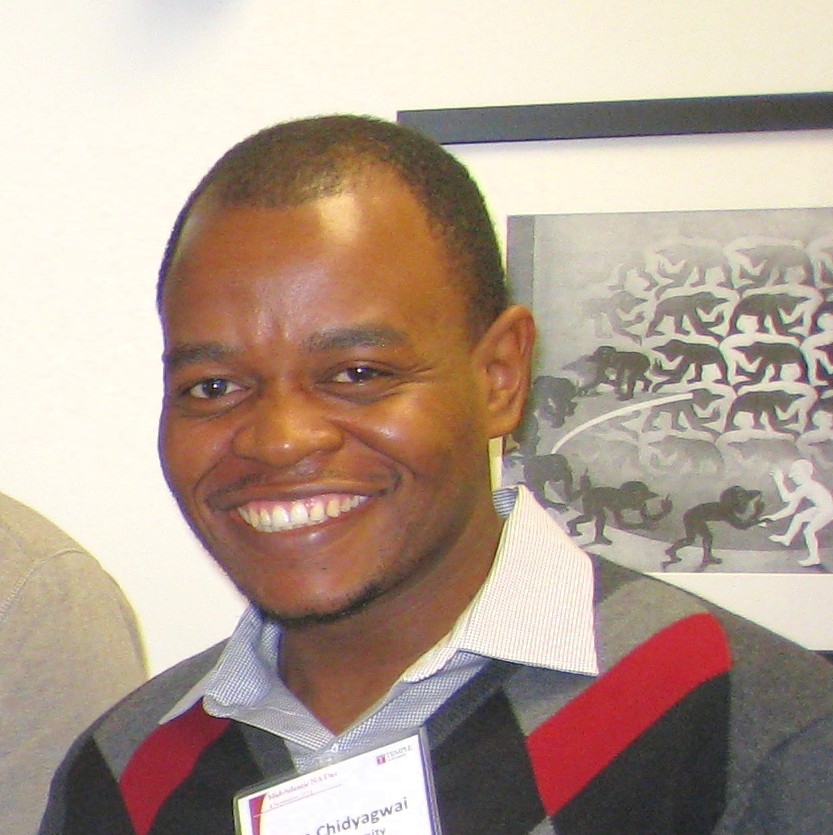
Prince Chidyagwai is an Associate Professor of Mathematics at Loyola University Maryland, specializing in Numerical Analysis and Scientific Computing. His primary affiliation is the Department of Mathematics and Statistics. He holds a Ph.D. in Computational and Applied Mathematics from Rice University (2010), an M.A. in Mathematics from the University of Pittsburgh (2006), and dual B.S./B.A. degrees in Mathematics (Honors) and Computer Science from Lafayette College (2005). His research focuses on advanced numerical methods for coupled flow systems, including discontinuous Galerkin (DG) methods, finite element methods, and finite volume techniques applied to problems in porous media, fluid dynamics, and radiative transfer. Key areas include Stokes-Darcy coupling, multiphase flow, and the development of efficient multirate and decoupling algorithms for complex systems. Chidyagwai's publications span topics such as multilevel decoupling methods, constraint preconditioning for coupled systems, and high-order schemes for radiation transport. His work emphasizes practical applications in reservoir simulation, environmental flow modeling, and industrial fluid dynamics. Despite his prolific output, no scientific awards are explicitly mentioned in the provided materials. Teaching responsibilities include courses like Ordinary Differential Equations and Programming in Mathematics. His academic contributions extend to collaborative projects at the interface of computational mathematics and engineering, though no specific lab affiliations or grant details are disclosed.
Paras Mehta, Ph.D., is an Associate Professor in the Department of Psychology at the University of Houston, housed within the College of Liberal Arts and Social Sciences. His expertise lies in Industrial-Organizational Psychology with a strong methodological focus on multilevel and structural equation modeling. His research interests include: Multilevel Structural Equation Modeling (ML-SEM) Growth Curve Modeling Applications of ML-SEM in Educational Research Applications of ML-SEM in Organizational Research His teaching portfolio includes advanced courses in Structural Equation Modeling and Multilevel Modeling, reflecting his deep engagement with quantitative methods in psychology. The body of his recent publications reveals a consistent focus on psychometric and statistical methodology applied to educational and developmental contexts. Key themes across his articles include literacy development, bilingual education, adolescent behavioral trajectories, and advanced modeling of longitudinal and multilevel data. His work frequently appears in top-tier journals such as Journal of Educational Psychology , Psychological Methods , and Child Development . Notable scientific contributions include methodological advancements in latent growth modeling and multilevel SEM, as well as empirical studies on reading development and bilingual education. Dr. Mehta has advised or collaborated with numerous researchers and has contributed to federally supported research, including projects with NIH extramural support. While specific student advisees are not listed, his extensive publication record suggests active mentorship and collaboration. His work is grounded in both theoretical and applied psychological science, with implications for educational policy and intervention design. He is based in the Heyne Building, Room 207C, and is actively contributing to the academic mission of the Department of Psychology through research, teaching, and service.
Sarah Depaoli is Associate Professor of Quantitative Psychology at the University of California, Merced and Visiting Distinguished Professor at the Methods Center of the Eberhard Karls University of Tübingen . She specializes in Bayesian statistics, structural equation modeling, and mixture modeling with applications in psychological and health-related research. PhD in Quantitative Methods (minor in Mathematical Statistics), University of Wisconsin (2010) MA in Quantitative Psychology, California State University-Sacramento (2007) BA in Psychology, California State University-Sacramento (2003) Her research focuses on: Bayesian estimation of latent variable and growth models Prior distribution selection in small-sample research Measurement invariance testing across populations Development of guidelines for model transparency (WAMBS-checklist) Psychological and health outcome modeling with Bayesian methods The most recent articles demonstrate expertise in: Bayesian longitudinal analysis (CushingQoL interpretation differences) Latent class enumeration in growth mixture models ML vs Bayesian estimation comparisons Health psychological outcomes (PTSD, Quality of Life) Cross-cultural measurement invariance Statistical software implementation (JAGS, Mplus) Scientific awards include: 2015 Association for Psychological Science Rising Star 2013 Hellman Fellow 2011 APA Division 5 Distinguished Dissertation Multiple travel awards from Psychometric Society and SMEP She has advised numerous graduate students and served as Associate Editor for Psychological Methods , Multivariate Behavioral Research , and Journal of Royal Statistical Society, Series A .
Oliver Lüdtke is a Professor for Educational-Psychological Methodological Research at the Christian-Albrechts-University of Kiel and Director of the Department of Educational-Psychological Methods and Data Science at the Leibniz Institute for Science and Mathematics Education (IPN) in Kiel, Germany. His work bridges advanced statistical methodology with applications in educational and psychological research. His research interests include: Multilevel analysis in psychological research National and international comparative school performance studies (e.g., PISA) Personality development in adolescence and young adulthood Application of Bayesian methods in psychology Estimating causal effects with non-experimental data Methodological research and machine learning in education The recent publications highlight his focus on cutting-edge statistical techniques, particularly in psychometrics and longitudinal modeling. His work emphasizes methodological rigor in educational assessment, small-sample estimation, dynamic modeling, and data quality in experience sampling studies. Scientific contributions and leadership roles include: Director, Department of Educational-Psychological Methods and Data Science, IPN (since 2015) Professor at Christian-Albrechts-University of Kiel (since 2014) Key involvement in PISA and the Center for International Educational Comparative Studies (ZIB) He has advised on methodological frameworks in large-scale educational assessments and continues to advance statistical practices in psychology and education. His collaborative work spans institutions across Europe, focusing on data science applications in the social sciences.
Wen Luo is a Professor and Associate Department Head for Research in the Department of Educational Psychology at Texas A&M University. His work focuses on advanced statistical methodologies, including multilevel modeling, meta-analysis, and quantitative research techniques in education and psychology. He holds editorial roles at Journal of School Psychology and Statewide Standard . Luo has advised six doctoral students and contributed to over 50 peer-reviewed articles since 2007. His research addresses topics such as resilience in caregiving, peer victimization trajectories, and methodological advancements in statistical analysis. He has secured grants from NSF, Kellogg Foundation, and CPRIT for projects on educational equity, school improvement, and cancer screening disparities. Research Interests: Advanced multilevel modeling techniques Meta-analysis methodologies Quantitative methods in education and psychology Resilience and mental health Disparities in healthcare and education Key Projects: PEER: Laboratory-Oriented Online Mechatronics Curriculum Development (NSF, 2020–2022) Equity Toolkit for School Discipline Bias Assessment (William T. Grant Foundation, 2019–2020) Strategies for School Improvement in Diverse Settings (W.K. Kellogg Foundation, 2017–2020) His most recent publications emphasize transparency in multilevel modeling reporting, mediation effects in cross-classified data, and applications in healthcare disparities research.
Dr. Robert Dedrick is a Professor and Program Coordinator in Educational Measurement and Research at the University of South Florida's College of Education. His research focuses on structural equation modeling, multilevel modeling, and mentoring in doctoral education. He has collaborated on major Institute of Education Sciences (IES) grants evaluating mathematics education interventions and stress management programs for high school students in advanced curricula. Current affiliations: University of South Florida (College of Education, Educational Measurement and Research) Key research domains: Educational assessment, statistical modeling, adolescent mental health, and mathematics education interventions Dr. Dedrick employs advanced statistical methodologies to analyze educational interventions, including cluster randomized control trials for evaluating mathematics practice techniques and coping strategies in AP/IB programs. His work appears in journals like Psychological Assessment , Educational and Psychological Measurement , and Multivariate Behavioral Research . Recent collaborations include: IES Goal Three Efficacy grant with Dr. Doug Rohrer on Interleaved Mathematics Practice IES Goal Two Development grant with Drs. Shannon Suldo and Elizabeth Shaunessy-Dedrick on stress management interventions His teaching portfolio includes advanced courses in educational measurement and study design.