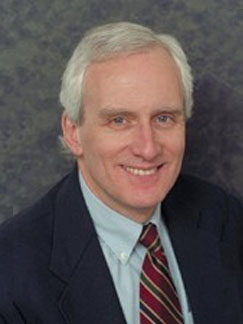
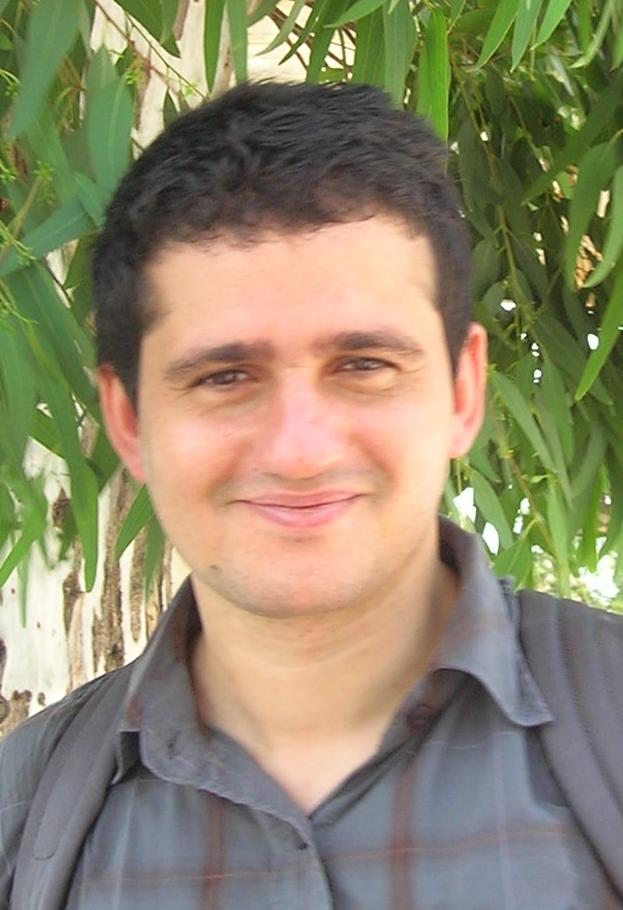
Deborah Kim is an Assistant Professor of Economics at the University of Warwick, specializing in econometrics and data science. She holds a Ph.D. in Economics from Northwestern University, an M.A. in Economics, and a B.S. in Industrial Engineering from Seoul National University. Her research focuses on econometric methodologies, including predictive ability testing and statistical techniques for small-sample cluster analysis. She teaches courses such as EC 349 (Data Science for Economists) and EC 346 (Research Methods in Economics). Her work has been published in Econometric Theory and Journal of Econometric Methods , with a notable contribution to STATA package development for applied econometrics. No scientific awards are explicitly mentioned, and no grants/students are listed in available texts.
Søren Lundbye-Christensen is an Associate Professor and Biostatistician affiliated with the Clinical Institute at the Faculty of Health Sciences, Aalborg University, and Aalborg University Hospital in Denmark. He specializes in biostatistical support for medical research, with a strong emphasis on cardiovascular and epidemiological studies. His research interests include biostatistics, survival analysis, cohort studies, clinical epidemiology, and statistical modeling in public health. He has contributed to a wide array of healthcare research, particularly in cardiovascular diseases, cancer, maternal health, and infectious diseases. His methodological expertise spans time-to-event analysis, registry-based research, and interval-censored data modeling. The recent publications highlight a strong trend in applying advanced statistical methods to large-scale clinical and population-based datasets. His work often involves collaboration with medical researchers to derive prognostic models, validate clinical databases, and assess public health outcomes. Key themes include cardiovascular risk, fertility, cancer biomarkers, and implementation of medical training programs. Scientific Contributions and Recognition: Published over 320 research articles and datasets. Active contributor to methodological advancements in biostatistics. Regular peer reviewer, including for journals like the R Journal. Public engagement through media appearances on statistics and health. Academic Advising and Grants: Søren has supervised 31 student theses, formally serving as PhD supervisor for 14 theses and as a biostatistical advisor for 19 others, primarily in mathematics and statistics. He has participated in numerous research projects funded through institutional and national grants, including studies on seasonal disease trends, postoperative complications, and metabolic disease prediction. His work often involves interdisciplinary collaboration across medicine, public health, and data science. Labs and Research Teams: He is embedded in collaborative research networks at Aalborg University Hospital and Aalborg University, contributing statistical expertise to clinical research groups. He is involved in projects utilizing Danish national health registries and has contributed to the development and validation of clinical databases. His work supports both hypothesis-driven medical research and methodological innovation in biostatistics.
Andreas Richter is a Professor of Organisational Behaviour at Cambridge Judge Business School (University of Cambridge), specialising in creativity and innovation in teams, leadership development, and team effectiveness. His research integrates theoretical insights with practical applications in healthcare, pharmaceutical, and financial sectors. He holds a PhD in Management from Aston University and advanced degrees from Giessen University. He advises multinational corporations and public institutions globally, including TomTom, UNICEF, and the UAE Ministry for Internal Affairs. His work focuses on enhancing team collaboration through psychological safety, leadership training, and resource distribution. Richter serves on editorial boards of top journals like the Academy of Management Journal and Journal of Applied Psychology . Key research themes include: Team processes & creative environments Leadership learning mechanisms Failure recovery systems Temporal dynamics in innovation Notable contributions include frameworks for converting workplace shame into creativity and analyzing team effectiveness through multiplex leadership networks. His 2019 study on learning from failure highlights team resource systems' role in transforming adversities into growth opportunities. Executive education expertise includes designing positive leadership programs addressing empathy and dark triad traits in management. Richter has developed innovative team-building models for organisational change, such as the 'twelve steps to heaven' framework for successful transitions.
Vladimir Vinogradov is a Professor in the Department of Mathematics at the College of Arts and Sciences, Ohio University. He is based in Morton Hall 579 and can be reached at vinograd@ohio.edu. His academic career reflects long-standing engagement in probabilistic and statistical theory with applications in finance, actuarial science, and population dynamics. Research Interests: His work spans a wide spectrum of stochastic processes and statistical methodologies. Key areas include Stochastic Analysis, Lévy and Markov Processes, Branching and Particle Systems, Fluctuation and Extreme Value Theory, Large Deviations, and Asymptotic Expansions. He also contributes to Distribution Theory, Saddlepoint Approximations, Generalized Linear Models, and probabilistic models in Population Genetics. Grants and Awards: Dr. Vinogradov has received sustained research support, including multiple Ohio University Research Challenge Program Grants (1999–2003), NSERC Canada Individual Research Grants (1995–2003), and a Fields Institute Conference Grant (2014). He also received the BC Asia Pacific Scholars' Award and several UNBC Conference Travel Grants. Education: Ph.D., Moscow State University Professional Activities: He co-organized the International Conference on Analysis, Applications and Computations in memory of Lee Lorch in 2014. His funding history indicates active collaboration and academic leadership. There is no mention of advising students or lab affiliations in the provided text.
Sally B. Coburn, PhD, MPH, is an Assistant Scientist in the Department of Epidemiology at the Johns Hopkins Bloomberg School of Public Health. Her research focuses on cancer outcomes and etiology in people living with HIV, with a strong emphasis on health disparities, longitudinal data, and the use of electronic health records (EHR) in large collaborative studies such as the North American AIDS Cohort Collaboration on Research and Design (NA-ACCORD) and IeDEA. PhD, Johns Hopkins University, 2021 MPH, George Washington University, 2015 BS, George Washington University, 2013 Her research interests include HIV, AIDS, HIV and aging, cancer outcomes and risk factors, health disparities, EHR data, and collaborative study design. She employs epidemiologic and statistical methods to understand mechanisms of disease and population-level implications for people with HIV in North America. The trends in her recent publications (2021–2025) reflect a strong focus on cancer risk, comorbidities, and treatment outcomes in HIV populations. Her work spans breast cancer, non-AIDS-defining cancers, anemia, statin use, and hormonal health in women with HIV. She frequently collaborates on large cohort studies and contributes to understanding the long-term health impacts of HIV and antiretroviral therapy. No scientific awards or prizes are mentioned in the provided text. Sally Coburn is actively involved in research grants and collaborative projects, particularly through NA-ACCORD and IeDEA. While no formal advisees are listed, her role as a researcher suggests mentorship within collaborative teams. She contributes to advancing public health knowledge through methodologically rigorous observational studies. She is affiliated with major research initiatives including the North American AIDS Cohort Collaboration on Research and Design (NA-ACCORD), which enables large-scale, multi-site epidemiological research on HIV and associated conditions.
Josh Pasek is a Professor of Communication & Media and Political Science at the University of Michigan, with additional affiliations as a Research Professor at the Center for Political Studies (Institute for Social Research) and Core Faculty at the Michigan Institute for Data Science. His research focuses on the intersection of political communication, survey methodology, and data science, particularly examining how new media and psychological processes shape political attitudes, public opinion, and measurement accuracy. Co-author of Words That Matter and Democracy Amid Crises Maintainer of R packages anesrake and weights Key research areas include: Political Communication Survey Methodology Media Psychology Social Media Data Electoral Behavior Ballot Design His recent publications address topics such as: Vaccine hesitancy and information environments Phubbing and trust dynamics Supreme Court legitimacy post-Dobbs Partisan polarization during the pandemic Climate change perception and partisanship Measurement error in surveys He has collaborated with institutions like the Annenberg Public Policy Center, Georgetown University, and the Pew Research Center, and serves on the AAPOR Task Force for 2024 Pre-Election Polls.
Bryan Dowd is a Professor in the Division of Health Policy & Management at the University of Minnesota. With a PhD in Public Policy Analysis from the University of Pennsylvania (1982), MS in Urban Administration from Georgia State University (1976), and BA in Architecture from Georgia Institute of Technology (1972), his work focuses on health economics , statistical modeling , and healthcare financing . PhD, Public Policy Analysis, University of Pennsylvania, 1982 MS, Urban Administration, Georgia State University, 1976 BA, Architecture, Georgia Institute of Technology, 1972 His research spans health insurance dynamics , payment models , and statistical methodologies in healthcare. Key themes include upcoding practices , instrumental variable applications , and policy implications of risk ratios . Publications often address healthcare access , economic incentives , and data-driven policy evaluation . Recent article trends highlight moral hazard decomposition , odds ratio critiques , and switching cost analysis in Medicare Advantage. These works emphasize causal inference , economic modeling , and policy design challenges . Contact: dowdx001@umn.edu
Sanjay Srinivasan is a Professor of Petroleum and Natural Gas Engineering and the John and Willie Leone Family Chair in the Department of Energy and Mineral Engineering at Penn State University. He serves as Director of the EMS Energy Institute and leads the Penn State Initiative for Geostatistics and GeoModeling Applications. His research focuses on petroleum reservoir characterization, CO2 sequestration, and integration of seismic data in reservoir models through advanced geostatistical and machine learning methods. Ph.D., Petroleum Engineering, Stanford University M.S., Petroleum Engineering, University of Southern California B. Tech, Petroleum Engineering, Indian School of Mines Srinivasan’s work addresses reservoir recovery processes, unconventional reservoirs, and subsurface energy security. His methodologies include probabilistic modeling, data assimilation, and AI-driven workflows for fracture network mapping and porous media generation. Key applications span Gulf of Mexico deepwater plays and geological carbon storage. Recent publications highlight trends in: Reinforcement learning for geostatistical workflows and well optimization Physics-informed GANs for 3D porous media modeling Probabilistic integration of geomechanical and geostatistical inferences Machine learning approaches for seismic fracture identification CO2 sequestration in heterogeneous reservoirs Scientific awards include Distinguished Member (SPE, 2022), SPE Faculty Pipeline Award (2012), Cox Visiting Fellowship (Stanford, 2010), and SPE Southwest Region Reservoir Description Award (2009).
Daniel Pettersson is a Professor at University of Gävle specializing in educational science with a particular focus on international knowledge measurements, comparative education, and curriculum studies. His work critically examines the hegemony of comparisons in education, particularly through large-scale assessments like PISA, and explores how these influence educational policy and practice. Professor Pettersson's research spans several interconnected domains within educational science. He investigates how international comparisons shape educational discourse and policy, examining the historical development of assessment practices and their impact on national education systems. His work frequently analyzes the production of educational knowledge through data visualization and quantification, revealing how numbers become authoritative in educational decision-making. A significant portion of his research focuses on Swedish education within international contexts, exploring how global educational trends are adopted, adapted, and contested in national settings. His extensive publication record reveals several key trends in his scholarly work. Over the past two decades, Pettersson has traced the evolution of international large-scale assessments from marginal research tools to central policy instruments. His recent work increasingly examines data visualization techniques in educational research and the historical construction of educational knowledge through quantification. He also explores the intersection of teacher education with international assessment frameworks, revealing tensions between global educational discourses and local teaching practices. Professor Pettersson has made significant contributions to understanding how educational policy is shaped by international comparisons. His research demonstrates how assessment data becomes transformed into policy narratives that influence educational reform. He has documented the historical trajectory of international assessment research, showing how it evolved from marginal academic interest to central policy instrument. His collaborative work with scholars like Sverker Lindblad, Thomas Popkewitz, and Tatiana Mikhaylova has been particularly influential in critically examining the political dimensions of educational measurement. His research activities include extensive work with international research teams, participation in major conferences including the Nordic Education Research Association (NERA) and the International Standing Conference for the History of Education (ISCHE), and contributions to systematic reviews of international comparative research. Professor Pettersson's work bridges historical analysis, policy studies, and critical examination of educational measurement practices, providing valuable insights into how global educational knowledge is produced and circulated.
Christian Lundahl is Professor of Education at Örebro University, specializing in the history of assessments, evaluation, and Swedish educational research. His work focuses on internationalization of educational data, marketization of schools, and the role of PISA in policy debates. He leads the transnational research project The Global Laboratory – Torsten Husén and the Internationalization of Educational Research (funded by the Swedish Research Council) and co-edited books like Beyond PISA . Lundahl also developed Sweden’s first MOOC for teacher education and serves as scientific leader for the Open Parliament Laboratory (OPaL) . Research Interests : History of educational assessments and evaluations Transnational educational policy flows Marketization and computational analysis in education PISA data utilization and mis/trust Curriculum theory and policy Equity in grading and national tests Recent Trends in Publications include computational analytics in policy data, historical analysis of educational laboratories, and critiques of PISA’s political role. His 2025 articles examine sampling bias in parliamentary data and school marketization. Projects and Leadership : Principal investigator for The Global Laboratory (2020-2024) Co-developer of Sweden’s first MOOC for teacher training (2013) Scientific leader of OPaL – The Open Parliament Laboratory Visiting Professor at Humboldt University (2020)
Ismail Ben Ayed is an Associate Professor at École de technologie supérieure (ETS) in Montreal, Canada, holding the ETS Research Chair on Artificial Intelligence in Medical Imaging. His research bridges computer vision, optimization, and medical image analysis to develop advanced algorithms for clinical applications, with particular focus on cardiac and neurological imaging. His research program centers on medical image segmentation using novel optimization techniques, graph-based methods, and deep learning models. He pioneers approaches for handling volumetric bias, shape compactness, and distribution matching in MRI and cardiac imaging, directly addressing clinical challenges in spine labeling, ventricle segmentation, and tumor detection. His work emphasizes mathematical rigor combined with practical medical relevance. Analysis of his 15 most recent publications (2014-2017) reveals dominant themes in medical image segmentation (80% of works), particularly for cardiac MRI (35%) and neurological applications (25%). Key methodological contributions include distributed optimization frameworks (20%), advanced graph cut techniques (30%), and deep learning architectures (25%), published consistently in top-tier venues including CVPR, MICCAI, and TPAMI. His scientific recognition includes: MICCAI travel award (2017) Outstanding Reviewer Award at CVPR (2015) GE innovation award (2010) He actively mentors researchers as evidenced by his recruitment of PhD students and postdocs, with research supported by the ETS Research Chair and multiple patents. His service includes chairing MICCAI 2017/2015 and IPTA 2017, plus continuous program committee roles at CVPR, ICCV, and MICCAI since 2011. Leading the ETS Research Chair on AI in Medical Imaging, he directs a collaborative team working on clinical translation of computer vision techniques. Current projects focus on cardiac motion analysis, brain tumor segmentation, and spine labeling systems with direct applications in radiology workflows.
Amanda Case, PhD, is an Associate Professor of Counseling Psychology in the College of Education at the University of Iowa. Prior to joining Iowa, she held Associate Professor positions at Purdue University and Washington College. She earned a PhD in Counseling Psychology from the University of Wisconsin-Madison (2009) and an MSEd in Counseling Psychology from Teachers College, Columbia University. Her research focuses on promoting youth well-being and educational success through collaborations with community-based organizations. Key areas include designing strengths-based inclusive practices, preparing out-of-school-time staff, and addressing mental health needs in educational access programs. Her work spans STEM education, social anxiety studies, and psychobiographies of community leaders. Recent publications highlight community engagement strategies, social class attitudes, parenting styles affecting anxiety, and pandemic responses in educational programs. Notable grants include a National Science Foundation award for STEM efficacy studies and Spencer Foundation funding for college access evaluations. Licensed Psychologist in Indiana (Health Service Provider in Psychology) Editorial Board Member, The Counseling Psychologist Editorial Board Member, Journal of Social Action in Counseling & Psychology Her career emphasizes community-based participatory research and partnerships with organizations like YMCA and Detroit’s Downtown Boxing Gym.
Kai Leonhard is an Adjunct Professor at the Chair of Technical Thermodynamics , RWTH Aachen University. His research focuses on computational chemistry, thermodynamics, and molecular modeling, particularly in solvent design and reactive chemical processes. Department: Chair of Technical Thermodynamics Email: kai.leonhard@ltt.rwth-aachen.de Prof. Leonhard's work integrates quantum chemistry with computer-aided molecular and process design (CAMD/CAPD), emphasizing solvation thermodynamics, reaction kinetics, and machine learning applications. His projects span biofuel combustion, microgel synthesis, and sustainable solvent development. Recent publications highlight advancements in COSMO-RS-based solvent screening, reaction network exploration via ChemTraYzer-TAD, and multi-fidelity modeling for partition coefficients. He employs machine learning to enhance predictive thermodynamic models and optimize chemical processes.
Matthew J. Graham is a Research Professor of Astronomy at the California Institute of Technology (Caltech), serving as the Project Scientist for the Zwicky Transient Facility (ZTF). His work bridges astronomy, machine learning, and data science, focusing on time-domain sky surveys that produce hundreds of thousands of public transient alerts per night. Previously, he has worked on the Catalina Real-time Transient Survey (CRTS), NOAO DataLab, Virtual Observatory, and Palomar-Quest Digital Sky Survey. Dr. Graham's primary research interests involve applying machine learning and advanced statistical methodologies to astrophysical problems, particularly the variability of quasars and other stochastic time series. His work addresses the unprecedented data volumes generated by 21st-century astronomy while expanding our ability to work with complex information systems beyond simple correlations. His current projects include real-time low latency inferencing via the NSF-funded A3D3 Institute, reinforcement learning for optimizing astrophysical follow-up campaigns, neural differential models for supermassive black hole variability, and functional analysis of multivariate time series. Analysis of Graham's recent publications reveals a strong focus on time-domain astronomy, particularly leveraging the capabilities of the Zwicky Transient Facility. His work spans multiple areas including gravitational wave counterpart identification, active galactic nuclei variability, supernova characterization, and machine learning applications for transient detection. A notable trend is the integration of artificial intelligence techniques to handle the massive data streams from modern sky surveys, enabling real-time analysis and decision-making that would be impossible with traditional methods. Dr. Graham has been instrumental in developing infrastructure for time-domain astronomy, including the alert distribution system for ZTF and data processing pipelines for handling massive transient datasets. His work on the Catalina Real-time Transient Survey established important methodologies for identifying variable and transient sources that continue to influence the field. As Project Scientist for ZTF, Graham leads a major international collaboration involving Caltech, IPAC, and numerous partner institutions worldwide. The facility represents a significant advancement in time-domain astronomy, providing unprecedented coverage of the dynamic sky and enabling discoveries across multiple areas of astrophysics.
Ruth Baker is a Professor of Applied Mathematics at the University of Oxford and a key member of the Mathematical Institute . Her work bridges mathematics, computational modeling, and biology to address complex developmental systems. Research Interests : Developing mathematical frameworks for cell and tissue-level biological processes Integrating computational and statistical methodologies with experimental data Exploring data-driven modeling for multidisciplinary collaboration Scientific Awards : Simons Investigator (2024-2029) Royal Society Wolfson Research Merit Award (2017-2022) FIMA (2021) FRSB (2020) Leverhulme Research Fellowship (2017-2019) London Mathematical Society Whitehead Prize (2014)