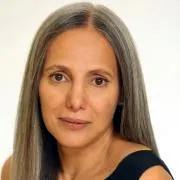
Prof. Ester Einhorn is a faculty member at the Coller School of Management, Tel Aviv University, specializing in financial accounting and information economics. She focuses on the dynamics of corporate disclosures in financial markets, analyzing how firms balance mandatory and voluntary reporting strategies. Her research investigates information asymmetry in financial markets, with a particular emphasis on voluntary disclosure mechanisms, earnings management detection through disaggregated accounting data, and the impact of biased disclosures on market efficiency. Her work often examines inter-temporal patterns in corporate communication and the strategic use of financial transparency. Prof. Einhorn's recent publications explore topics like cross-firm earnings management, analyst information processing, and the role of accounting data in regulatory compliance. Her research methodology combines theoretical modeling with empirical analysis of financial reporting practices. She can be contacted via email at einhorn@tauex.tau.ac.il. No scientific awards or student advising details were found in the provided text.
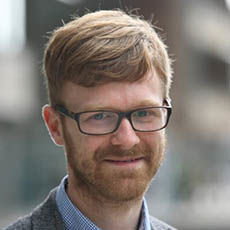
Erik Sverdrup is a Senior Lecturer in the Department of Econometrics & Business Statistics at Monash University. His research focuses on causal inference, statistical computing, and data science, with applications spanning mental health analytics, econometrics, and machine learning. Recent work has emphasized treatment effect heterogeneity, survival analysis, and algorithm development for complex healthcare and financial datasets. Research Interests: Causal inference, treatment effect modeling, statistical computing, mental health analytics, financial risk analysis. Key Collaborations: Involved in multi-institutional studies with applications to psychiatric research, veterans' health, and global disability assessment. Email Contact: Erik.Sverdrup@monash.edu
Stephen C. Adolph is the Stuart Mudd Professor of Biology at Harvey Mudd College. He is affiliated with the Department of Biology and actively engages in teaching and research. His primary roles include directing undergraduate research and collaborating with institutions like Claremont McKenna College. Education: B.S., Stanford University (Biological Sciences) M.S., Stanford University (Biological Sciences) Ph.D., University of Washington (Zoology) Dr. Adolph’s research focuses on the physiological, evolutionary, and behavioral ecology of lizards. His lab investigates topics such as stochastic population dynamics in Xantusia lizards, optimal foraging in arboreal lizards, physiological ecology of lizard eggs, and thermal performance curves. Past projects include tuatara conservation, tarantula locomotion, and lizard thermal biology. The articles of Dr. Adolph span thermal biology, ecological modeling, evolutionary adaptation, and statistical methodology. His work often integrates mathematical approaches with empirical data, emphasizing interdisciplinary research in ecology and physiology. Dr. Adolph collaborates with researchers like Lars Schmitz (Claremont McKenna College) on lizard ecology. He has mentored undergraduate researchers such as Arman Khasru and Callie Dawson, with publications frequently involving student co-authors.
Ian Young is a professor in the Department of Theology and Philosophy at Australian Catholic University and maintains a significant affiliation with the University of Sydney where he contributes to Hebrew and Biblical studies. His academic career spans several decades with substantial contributions to Biblical Hebrew linguistics, Dead Sea Scrolls research, and textual criticism of the Hebrew Bible. Professor Young's research primarily focuses on the linguistic analysis of Biblical Hebrew, with particular emphasis on textual variations between different manuscript traditions including the Masoretic Text, Old Greek translations, and Dead Sea Scrolls. His work challenges traditional approaches to linguistic dating of biblical texts and emphasizes understanding the fluid nature of ancient textual transmission. He has made significant contributions to the study of the Book of Daniel across different textual traditions, examining how variations affect interpretation of apocalyptic visions and historical contexts. His collaborative work with Robert Rezetko on 'Historical Linguistics and Biblical Hebrew' (2014) has been particularly influential in reshaping scholarly discussions about textual criticism and historical linguistics. Analysis of Young's publication trends reveals consistent methodological rigor in approaching ancient Hebrew texts. His work demonstrates a progression from specific textual analyses toward broader theoretical frameworks for understanding the relationship between textual criticism and historical linguistics. The recurring themes across his publications include the multidimensional nature of linguistic variation, the limitations of traditional chronological frameworks for dating biblical texts, and the importance of recognizing scribal practices in ancient textual transmission. His most recent works (2023-2025) continue to explore implications of textual variations in the Book of Daniel, particularly regarding carbon dating of the Dead Sea Scrolls and their impact on understanding apocalyptic literature.
Line Christoffersen is a Professor at Oslo Metropolitan University (OsloMet), affiliated with the Faculty of Social Sciences and specifically the Oslo Business School within the Department of Strategy, Innovation and Marketing. Her academic career spans multiple disciplines including social science methodology, health services research, and marketing. Dr. Christoffersen's research interests focus on Theory of Science, Health services research, Qualitative methodologies, and Marketing . Her work demonstrates a consistent emphasis on methodological rigor applied to practical problems, particularly in healthcare settings. She has made significant contributions to understanding how healthcare professionals, especially midwives, process and recover from critical incidents and adverse outcomes. Analysis of her publication history reveals a strong trajectory in developing and applying the Critical Incident Technique (CIT) across multiple domains. Her research shows a clear evolution from foundational methodological work to specific applications in healthcare management and midwifery. A notable theme throughout her career has been examining leadership practices following critical incidents in healthcare settings, particularly focusing on how managers can support healthcare professionals who experience traumatic events (the "second victims" of medical errors). Her academic output demonstrates remarkable breadth, spanning textbook authorship on research methodology for various academic disciplines (social sciences, business administration, teacher education, and nursing), scientific publications in peer-reviewed journals, research reports, and dissemination articles. This reflects her commitment to both theoretical advancement and practical application of research methods. Dr. Christoffersen has collaborated extensively with colleagues like Karl Joachim Breunig and Janne Teigen, particularly on projects related to healthcare management and midwifery. Her research on parental experiences after stillbirth represents a significant contribution to understanding grief processes and healthcare support systems for bereaved parents.
Trenton D. Mize is an Associate Professor in the College of Liberal Arts at Purdue University , holding appointments in the Department of Sociology and Statistics (by courtesy). He co-founded and co-directs both The Methodology Center at Purdue and the Kernan Experimental Social Science Lab . His work bridges methodological innovation with social psychological theory. Mize specializes in categorical data analysis , data visualization , latent variable modeling , and experimental design . His research explores how social categories shape self-perception and treatment by others, and how social factors influence health and well-being, with a focus on gender , race , and sexual orientation . He actively promotes open science through public sharing of data and code. He teaches graduate methodology courses and develops Stata commands like balanceplot , irt_me , and sgmediation2 for statistical analysis and visualization. His methodological contributions emphasize reproducibility and effective marginal effects interpretation across models.
Scott K. Aberegg is a Clinical Professor in the Department of Internal Medicine with expertise in Critical Care and Pulmonary Disease . He is board-certified in both Critical Care Medicine and Pulmonary Disease by the American Board of Internal Medicine, and his work spans clinical research, medical education, and epidemiology.
K. Bo Foreman is a Professor in the Department of Physical Therapy and Athletic Training at the University of Utah, serving the Rocky Mountain Center for Occupational and Environmental Health (RMCOEH) through its Ergonomics & Safety program. With 16 years of biomechanical analysis expertise and 27 years as a practicing physical therapist, he leads research on kinetic/kinematic changes from clinical interventions and disease progression across diverse populations. His research spans amputee biomechanics, falls prevention, and movement analysis in stroke rehabilitation, Parkinson's disease, and pregnancy. Key methodologies include motion capture, electromyography, and kinetic analysis to evaluate movement alterations. Recent work focuses on exoskeleton development for mobility assistance and open dataset creation for biomechanical research reproducibility. Analysis of his 2023-2025 publications reveals dominant themes in pregnancy-related balance challenges (12 articles), amputee/prosthetic biomechanics (7 articles), and stroke/Parkinson's mobility interventions (5 articles), with strong emphasis on translational applications for clinical rehabilitation and fall prevention strategies. Dr. Foreman has secured funding as principal investigator, co-investigator, and collaborator from university sources, nonprofit foundations, NSF, and NIH grants. His research design expertise ensures data integrity across biomechanical studies involving human movement analysis and clinical outcome measures. He actively contributes to the RMCOEH's Ergonomics & Safety program, developing workplace safety training and fall prevention initiatives through the Center for Meeting Effectiveness and outreach services.
Dr. Allan Sniderman serves as a Professor in the Department of Medicine at McGill University's Faculty of Medicine and Health Sciences and holds a Senior Scientist position at the Research Institute of the McGill University Health Centre (RI-MUHC) Glen site. He is formally affiliated with the Cardiovascular Health Across the Lifespan Program and the Centre for Outcomes Research and Evaluation (CORE), where he directs translational research in cardiovascular prevention and lipid metabolism. His research program centers on revolutionizing cardiovascular risk assessment through apolipoprotein B (apoB) quantification, challenging conventional lipid metrics to improve diagnosis of atherogenic dyslipoproteinemias. He pioneered the Benefit Model for optimizing primary prevention strategies and investigates the mechanistic link between LDL particle uptake and pancreatic beta-cell dysfunction in type 2 diabetes pathogenesis. Key focus areas include precision prevention, lipid biomarker validation, and long-term risk-benefit analysis of lipid-lowering interventions. Recent publications demonstrate his leadership in redefining cardiovascular risk paradigms, with emphasis on apoB's superiority over traditional cholesterol metrics, hypertriglyceridemia interpretation without metabolic confounding, and quantification of risk factor impacts. His work consistently bridges epidemiological evidence with clinical implementation strategies for cardiovascular prevention. Dr. Sniderman actively contributes to the Cardiovascular Health Across the Lifespan Program's multidisciplinary initiatives and CORE's outcomes-focused research infrastructure at RI-MUHC, collaborating with clinicians, epidemiologists, and translational scientists to advance evidence-based cardiovascular care.
Alessandra Gilibert is Associate Professor of Phoenician-Punic Archaeology at Ca' Foscari University of Venice, Department of Humanities. She researches the ancient Near East, the Levant, and the Caucasus, focusing on urbanism, ritual landscapes, monumental art, and the anthropology of images. Education & Training: (not explicitly detailed in source) Research Interests include: Phoenician-Punic and Levantine archaeology Armenian and Caucasus prehistory Urban public space and governance in antiquity Dragon-stone (vishap) stelae and high-altitude ritual landscapes Archaeology of performance, games and divination Obsidian provenance using machine-learning workflows Publication Trends: Recent output (2020-2025) couples rigorous fieldwork—especially in Armenia—with cutting-edge analytical approaches (geochemical sourcing, machine learning) and theoretical reflections on ritual, politics and space. Studies range from microscopic characterisation of obsidian to macro-scale interpretation of urban squares and sacred mountains. Scientific Awards: none explicitly listed Advising & Grants: no specific PhD students, grants or funding details disclosed in source Labs & Teams: Active in international collaborative projects with colleagues from Armenia, Germany, Slovakia and the USA, integrating geophysics, GIS and archaeometry within traditional archaeological fieldwork.
Bas Senden is a Postdoctoral Research Fellow at the Department of Primary and Secondary Teacher Education (GFU), Oslo Metropolitan University. His work focuses on educational assessment and evaluation, particularly on the validity and reliability of teaching quality measurement instruments. Current research includes the development and validation of survey instruments for the Teacher Education Panel Study (TEPS) , examining teaching quality in Norwegian primary education. Key collaborators include researchers from the University of Oslo and international institutions. PhD from Department of Teacher Educational and School Research, University of Oslo Specializes in classroom observation tools and student ratings of teaching quality Active in cross-national comparative studies across 38 countries
Pal Westermark is a researcher and Head of the Department of Bioinformatics and Biomathematics at the Research Institute for Farm Animal Biology (FBN) in Dummerstorf, Germany, a position he has held since 2016. He leads the Chronobiology and Bioinformatics Working Group and has previously held research and leadership roles at the Institute of Theoretical Biology, Charité – Universitätsmedizin Berlin. Doctorate (2005): Models of the Metabolism of the Pancreatic β-Cell, KTH Stockholm, Sweden Master's Degree (1999): Molecular Biotechnology, Uppsala University, Sweden His research focuses on circadian rhythms in animals, regulation of gene expression and metabolic pathways, tissue homeostasis, biogerontology, and the application of time series analysis, control theory, and biostatistics to biological systems. He employs mathematical modeling and bioinformatics to understand the dynamics of biological clocks and their impact on metabolism and physiology. The trends in his recent publications reveal a strong focus on circadian biology, particularly in muscle and liver tissues, using transcriptomic, proteomic, and phosphoproteomic approaches. His work integrates computational modeling with experimental data to dissect the mechanisms of circadian regulation, including promoter architecture, rhythmic degradation, and the effects of exercise. He has also contributed methodological tools like the RAIN algorithm and Seagull for analyzing biological rhythms and high-dimensional data. While no specific scientific awards are mentioned in the provided text, his extensive publication record in high-impact journals such as PNAS , PLoS Genetics , and The Journal of Physiology underscores his significant contributions to the field. Dr. Westermark mentors researchers within his working group and leads a research team focused on chronobiology and bioinformatics. His work is supported by institutional funding, though specific grants are not listed. His research program combines theoretical and computational approaches to advance understanding of biological timing systems. He is actively involved in leading the Chronobiology and Bioinformatics Working Group at FBN, which conducts interdisciplinary research at the intersection of biology, mathematics, and computer science. The team develops and applies computational models and bioinformatics tools to study circadian rhythms and their implications for animal and human health.
Associate Professor Weiwei Zhang is affiliated with the School of Psychology, Sociology and Rural Studies at South Dakota State University (SDSU). He holds a Ph.D. from Brown University, an M.A. from Bowling Green State University, and a B.A. from Suzhou University, China. His academic roles include teaching undergraduate courses like Research Methods and graduate seminars such as Advanced Statistics and Spatial Data Analysis. He chairs the Department Methods Prelim Committee and serves on the Information Technology Advisory Committee. His research focuses on quantitative methods, demography, migration, and population health, with a particular emphasis on spatial analysis and rural studies. Education: Ph.D. in Sociology, Brown University M.A. in Sociology, Bowling Green State University B.A. in Sociology, Suzhou University, China Dr. Zhang’s research interests span quantitative and spatial methodologies, migration patterns, and health disparities. He has contributed to studies on opioid vulnerability in rural areas, GIS mapping of historical urbanization, and the socioeconomic impacts of pandemics on marginalized communities. His work often integrates demographic data with policy analysis, addressing issues like racial inequality and rural development. He has secured grants for projects such as ‘Makiyutab Wokiksuye Ocanku (Memorial Road Map)’ and ‘Socio-Environmental Systems of Rural Health,’ demonstrating expertise in collaborative research. His awards include the Outstanding Researcher distinction from SDSU (2020). Dr. Zhang also advises on community vulnerability assessments for the CDC and contributes to state-level health initiatives. Key Grants: Wokini Challenge Grant for Indigenous land research NSF-funded analysis of socio-economic impacts via machine learning SPARC Funding for rural health studies His involvement in mapping historical landscapes and land narratives underscores his commitment to interdisciplinary work, bridging sociology, geography, and public health. Ongoing projects explore ‘Deaths of Despair’ in rural areas and the gender wage gap among Native Americans.
Dr Robert Cluley is an Associate Professor in the Department of Marketing at Birmingham Business School, University of Birmingham. He has previously held academic positions at the University of Leicester and the University of Nottingham, where he was promoted to Associate Professor and held leadership roles including Director of Postgraduate Studies and membership on the School Management Group. He is a leading scholar in the organization of marketing, the role of technology in marketing practice, and the application of critical and psychoanalytic theory to consumer behavior. His research integrates ethnography, advanced statistical analysis, and anthropological methods to explore how marketers and consumers engage with new technologies and data systems. PhD in Marketing and Organizations, University of Leicester, 2010 MSc in Management Research, University of Leicester, 2008 MA in Critical Theory, University of Nottingham, 2003 BSc (Hons) in Management, Lancaster University, 2002 His research interests focus on marketing organization, marketing analytics, consumer behavior, and the ethical implications of data-driven marketing. He is particularly interested in how new technologies reshape marketing labor, consumer insight, and organizational performance. His recent publications reflect a strong trend toward ethnographic and critical studies of marketing practice, especially in the areas of data science, facial coding, market research ethics, and the application of social theory. He frequently publishes in high-impact journals such as Marketing Theory , Human Relations , and Regulation & Governance . He is currently writing a book titled Marketing Science Fictions based on an ethnographic study of a marketing analytics firm. He is also involved in collaborative research on decarbonizing supply chains and the use of social theory in marketing with Dr Stephen Dunne and Prof Will Green. Founding member, NLAB – Nottingham’s Centre for Business Analytics Founding Executive Board Member, Nottingham Energy Institute Active contributor to interdisciplinary research on ethics, technology, and sustainability in marketing He has supervised and mentored students in critical marketing, organizational studies, and consumer research. His work is supported by grants and collaborations across the UK and internationally, particularly in the areas of responsible technology and sustainable marketing practices.
Oliver Rittmann serves as a Lorenz von Stein Research Fellow at the Mannheim Centre for European Social Sciences (MZES), University of Mannheim. His research integrates computational analysis of audio, image, and video data to address core political science questions in political representation, inequality, and communication. Rittmann pioneers the application of computer vision in legislative studies, notably through his current project analyzing gender-based attention disparities in the Baden-Württemberg state parliament. Using AI-driven video analysis of plenary sessions, he demonstrates that female members receive systematically less attention than male counterparts—a pattern driven exclusively by male MPs' behavior. His methodology transforms unstructured audiovisual data into quantifiable political behavior metrics, bridging longstanding gaps between social theory and empirical evidence. His publication record (2020-2025) reveals three thematic pillars: audiovisual analysis of parliamentary behavior (body language, vocal pitch, attention patterns), statistical methodology for regression interpretation, and electoral system dynamics . These works consistently advance data science applications in political science, particularly through novel computational frameworks for previously unstructured data sources. Scientific Awards Lorenz von Stein Research Fellowship Rittmann leads interdisciplinary collaborations between political scientists and computer scientists, as evidenced by his parliamentary attention project. His research demonstrates how data science enables large-scale behavioral analysis impossible through traditional methods—processing thousands of speeches rather than selective case studies. Future work will likely expand audiovisual analysis to other legislative contexts while refining gender inequality metrics.