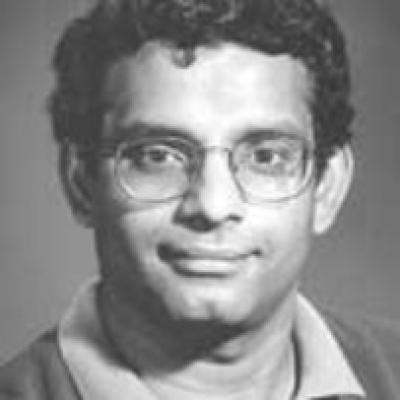
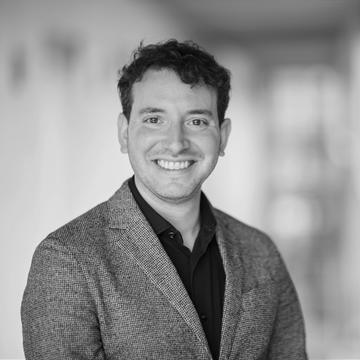
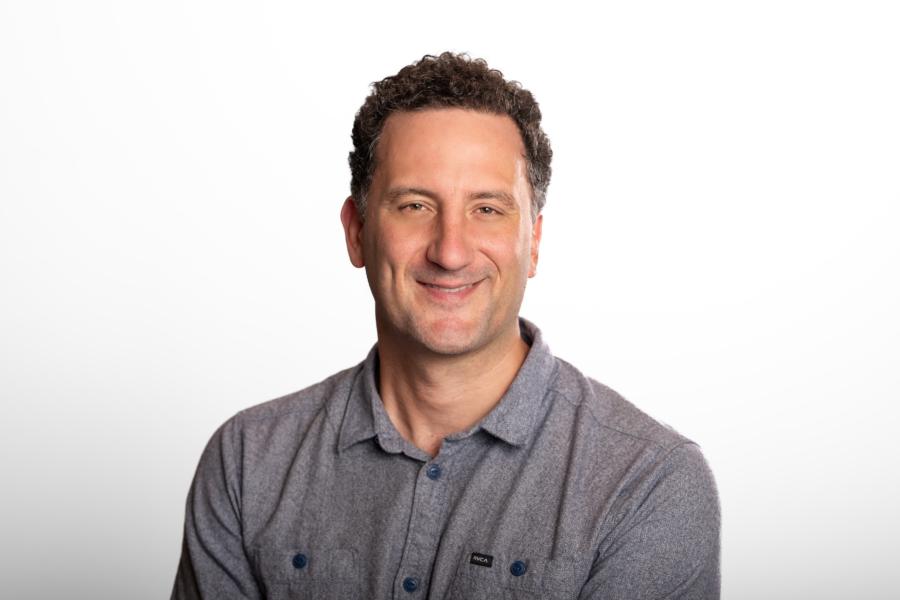
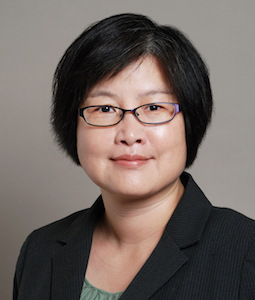
Andrew Török is a Professor in the Department of Mathematics at the University of Houston. His research focuses on dynamical systems, ergodic theory, and their applications to statistical mechanics and probability. He has contributed to studies on random dynamical systems, extreme value theory, and stability properties of hyperbolic flows. Teaching responsibilities include courses like MATH 3364: Introduction to Complex Analysis. His work spans topics such as cohomology of dynamical systems, transitivity of group extensions, and statistical limit theorems for non-uniformly hyperbolic systems. Key publications address Birkhoff sum convergence, stable laws for Gibbs-Markov systems, and transitivity properties of Heisenberg group extensions. Research extends to applications in financial mathematics and market dynamics through studies on stock price fluctuations. Professional activities include organizing the Dynamics Colloquium and participating in interdisciplinary projects like gene network modeling. His address is at PGH Building, University of Houston, with contact via torok@math.uh.edu.
Randolph H. Wynne is a Professor in the Department of Forest Resources and Environmental Conservation at Virginia Tech, part of the College of Natural Resources and Environment. He holds a B.S. from the University of North Carolina (1986), M.S. (1993), and Ph.D. (1995) from the University of Wisconsin-Madison. His research focuses on remote sensing applications in forestry, natural resource management, ecological modeling, and earth system science. He co-authored the textbook Introduction to Remote Sensing , now in its sixth edition, and leads the Interdisciplinary Graduate Education Program in Remote Sensing at Virginia Tech. Key research themes include forest carbon management, LiDAR-based canopy structure analysis, and integration of satellite data into decision support systems. His work spans NASA-funded projects on forest management and USDA initiatives in digital soil mapping. Recent publications emphasize Landsat time-series analysis, lidar applications in forest ecology, and climate change impacts on forest productivity. Awards: Estes Memorial Teaching Award (ASPRS), Award in Forest Science (Society of American Foresters), NASA New Investigator (2001). Grants: Over $1.7M in funding from NASA, USDA NRCS, and the Forest Nutrition Cooperative. Labs/Teams: Director of Virginia Tech’s Interdisciplinary Remote Sensing Program and affiliated with the Center for Environmental Applications in Remote Sensing (CEARS).
Niels Otani is an Associate Professor in the School of Mathematics and Statistics at the College of Science, Rochester Institute of Technology (RIT). He holds a BA from the University of Chicago and a Ph.D. from the University of California, Berkeley. His research focuses on cardiac electrophysiology, computational biology, and biomechanical imaging, with a particular emphasis on understanding and controlling cardiac arrhythmias such as ventricular fibrillation. Dr. Otani has pioneered methods for visualizing action potential propagation using ultrasound and developed novel defibrillation strategies that reduce energy requirements. He also investigates the role of ephaptic coupling in cardiac dynamics and the mechanisms underlying spiral wave formation and termination. His work bridges mathematics, physics, and cardiology, with applications in clinical therapies and biomedical engineering. Dr. Otani's research has been supported by grants such as an NSF award for developing diagnostic tools for cardiac disease. He teaches advanced courses in multivariable calculus, linear algebra, and research thesis supervision. Collaborations span interdisciplinary teams, including veterinary cardiology and biomedical imaging groups. His contributions include over 50 publications on topics ranging from action potential dynamics to computational modeling of cardiac tissue, with a focus on translating theoretical findings into clinical solutions.
**Daniel Romero** is a **Professor** in the **Department of Information and Communication Technology** at the **University of Agder**, Norway. His research focuses on UAV communications, time-series analysis using machine learning and network science, and decentralized processing for sensor networks. He holds a Ph.D. in Signal Theory and Communications from the University of Vigo (2015), an M.Sc. in Signal Theory (2011), and a Telecommunication Engineering degree (2009). **Education**: Ph.D. in Signal Theory and Communications, University of Vigo (2015) M.Sc. in Signal Theory and Communications, University of Vigo (2011) Telecommunication Engineering, University of Vigo (2009) **Research Interests**: His work spans UAV communication systems (focusing on low-latency, high-reliability networks), time-series analysis for complex systems (using ML and network science), and decentralized computation in sensor networks to improve robustness and hardware efficiency. Recent projects include radio map estimation for mmWave beam alignment, spoofing detection via graph neural networks, and aerial base station placement optimization. **Publications**: Over 30+ peer-reviewed articles in top venues like IEEE Transactions on Wireless Communications and ICC. Recent trends emphasize radio map estimation (2023–2024), UAV-enabled spectrum surveying (2022), and robust D2D communications (2022). **Advising & Grants**: Teaches PhD courses (Statistical Signal Processing, Advanced Optimization) and leads the **Advanced Signal Processing Lab (ASL)**. Collaborates with the **CIEM (Center for Integrated Emergency Management)** on crisis-related communication systems. **Labs/Teams**: Directs the Advanced Signal Processing Lab (ASL.uia.no) and contributes to CIEM, applying ML and signal processing to emergency management challenges.
Jayadev S. Athreya is an Associate Professor in the Department of Mathematics at the University of Washington, where he also serves as Director of the Washington Experimental Mathematics Lab. His primary affiliation is with the College of Liberal Arts & Sciences. He holds dual roles as a Professor of Mathematics and Professor of the Comparative History of Ideas. Athreya co-directs the Pacific Institute for the Mathematical Sciences and is a founder of the Washington Experimental Mathematics Lab, emphasizing interdisciplinary experimental mathematics. His research interests span dynamical systems, geometric topology, number theory, and algebraic geometry. He focuses on translation surfaces, billiards dynamics, geometric flows, and probabilistic methods in geometry. His work often intersects with problems in ergodic theory, Teichmüller theory, and moduli spaces. Athreya has an extensive publication record, with recent work exploring billiard complexity in regular polygons, linear flows on translation prisms, and spectral properties of marked tori. His papers frequently address counting problems, asymptotic distribution of geometric objects, and connections between number theory and dynamical systems. He has taught advanced courses such as Quasiconformal Maps and Teichmüller Theory, Complex Analysis, and Elementary Number Theory. His pedagogical approach emphasizes hands-on exploration through the Washington Experimental Mathematics Lab, fostering collaborative research projects with undergraduates. Athreya is committed to accessible mathematics education, reflecting his alignment with Federico Ardila-Mantilla's axioms on equity and inclusivity in mathematical experiences. His work bridges theoretical research with educational outreach, advocating for mathematics as a universal, adaptable tool.
Yonghao Xu is an Assistant Professor at the Department of Electrical Engineering , Linköping University , and affiliated with the Computer Vision Laboratory (CVL) and the Wallenberg Autonomous Systems Program (WASP) . His research bridges remote sensing , machine learning , and AI security . Research Trends Xu's recent publications focus on adversarial attacks and defenses in remote sensing, domain adaptation for semantic segmentation, and benchmark dataset creation (e.g., Sen2Fire). His work addresses challenges in urban sustainability , geospatial data analysis , and deep learning robustness . Labs & Programs He is associated with the Computer Vision Laboratory (CVL) , contributing to autonomous systems through the Wallenberg Autonomous Systems Program (WASP) , a major Swedish initiative in AI and robotics.
Distinguished Professor of Physics at the University of California Davis College of Letters and Science since 1989. Primary affiliation with the Department of Physics, with significant cross-disciplinary collaborations in Applied Mathematics and Computer Science through NSF and DOE grants. Research focuses on quantum many-body phenomena in condensed matter systems and ultracold atomic gases. Expertise spans magnetism, superconductivity, metal-insulator transitions, and quantum phase transitions. Pioneers advanced Quantum Monte Carlo simulation techniques, particularly determinant quantum Monte Carlo for Hubbard and electron-phonon models. Current work investigates spatial inhomogeneities in quantum phases and strong interparticle interactions. Recent publications reveal growing integration of machine learning with quantum simulation. Research trends indicate deepening exploration of SU(N) symmetric systems, flat-band quasicrystals, photonic quantum simulators, and neural quantum states. Increasing emphasis on interdisciplinary approaches combining condensed matter theory, quantum information science, and computational mathematics. Key methodological focus remains on overcoming fermionic sign problems and developing scalable numerical algorithms. Principal investigator for major grants from the National Science Foundation (NSF), Department of Energy (DOE), Office of Naval Research (ONR), and Defense Advanced Research Projects Agency (DARPA). Significant funding through NSF Information Technology Research and DOE Scientific Discovery through Advanced Computing Programs for quantum simulation algorithm development.
Michael E. Oskin is a Professor and former Department Chair (2017-2021) in the Department of Earth and Planetary Sciences at the University of California, Davis. He also serves as faculty director of the Lassen Field Station, part of the UC Natural Reserve System. His research focuses on structural geology, geomorphology, and active tectonics, particularly the interplay between earthquakes, surface processes, and landscape evolution. He specializes in using high-resolution topography and geochronological techniques to study deformation rates, fault mechanics, and tectonic processes in regions like California and the Tibetan Plateau. Education: B.S. in Geology/Engineering Geology, UC Los Angeles (1995) Ph.D. in Geology, California Institute of Technology (2002) Research Interests: His work addresses deformation rates linked to earthquakes, continental deformation mechanisms, and topographic responses to geologic structures. Techniques include field observations, cosmogenic dating, and lidar analysis to quantify processes like fault slip, erosion, and landscape evolution. Publications: Recent work includes studies on fault rupture dynamics (e.g., San Andreas and Ridgecrest earthquakes), geochronological modeling, and tectonic evolution in regions like the Tibetan Plateau. His research bridges structural geology with quantitative methods to advance understanding of active crustal processes. Awards: Recipient of the UC Davis Graduate Program Advising and Mentoring Award (2020). Advising & Grants: Mentor to over 20 graduate students, emphasizing collaborative research, fieldwork, and open science practices. Prioritizes student summer support and funding for field/analytical costs. Leads a lab focused on earthquake geology and hosts weekly reading groups. Labs/Teams: Oversees the Lassen Field Station, teaching the summer field course GEL 110A and conducting research in the region. Active in the UC Natural Reserve System and collaborates with international research groups.
R. Manmatha is an Adjunct Professor in the College of Information and Computer Sciences at the University of Massachusetts Amherst and a Principal Scientist at Amazon A9 since 2013. His academic journey includes a Ph.D. in Computer Science from University of Massachusetts Amherst (1997), an M.S. in Electrical Engineering from University of Hawaii (1986), and a B.Tech in Electrical Engineering from Indian Institute of Technology Kanpur (1983). Research Interests Manmatha's work spans Computer Vision , Information Retrieval , and Document Analysis . Key projects include: Developing Vision-Language Models for GUI grounding and OCR-free document understanding Creating Word Spotting techniques for historical manuscripts like George Washington's papers Advancing Image Retrieval through statistical and relevance models Building Meta Search systems using score distribution analysis Optimizing Diffusion Transformers for text-to-image generation Scientific Contributions His research has led to numerous publications in conferences like SIGIR , CVPR , and ICDAR , focusing on: Automatic Image Annotation using cross-media relevance models Scale Space Techniques for handwritten manuscript segmentation Alignment Methods for document-groundtruth generation Indian Language Document Search via locality-sensitive hashing Transformer-based architectures for multimodal and document tasks Advising & Collaborations Manmatha has mentored students including Jiwoon Jeon , Shaolei Feng , Toni Rath , Jamie Rothfeder , and Nitin Srimal . He co-founded Snaptell (acquired by Amazon) and contributed to Amazon's mobile search technology. Labs & Teams He leads the Multi-media Indexing and Retrieval (MIR) group at the Center for Intelligent Information Retrieval (CIIR) , focusing on non-textual information indexing through ASCII conversion and direct content analysis.
Zhong-Lin Lu is a Distinguished Professor of Psychology and Social and Behavioral Science at The Ohio State University, holding concurrent appointments in Optometry and the Translational Data Analytics Institute. He directs the Center for Cognitive and Brain Sciences and the Center for Cognitive and Behavioral Brain Imaging. Previously, he held the William M. Keck Chair in Cognitive Neuroscience at the University of Southern California. He earned his Ph.D. in Physics from New York University (1992), following an M.S. (1991) and B.S. in Theoretical Physics from the University of Science and Technology of China (1989). His research bridges computational neuroscience, vision science, and cognitive psychology, focusing on visual perception, attention, perceptual learning, and functional brain imaging. Key methods include fMRI, EEG, and hierarchical Bayesian modeling. His work addresses clinical applications in amblyopia, myopia, and glaucoma, alongside foundational studies on decision-making and neural plasticity. He has developed novel techniques like the quantitative Contrast Sensitivity Function (qCSF) and quasiconformal mapping for retinotopic brain mapping. His labs emphasize translational research linking computational models to real-world applications. Awards: APS Fellow (2007), Society of Experimental Psychologists Early Investigator Award (2003) Leadership: Directed USC's Dornsife Cognitive Neuroscience Imaging Center (2004–2011) Interdisciplinary roles: Co-Director of OSU's Humanities/Cognitive Sciences Summer Institute Current research explores visual processing across lifespan, neural mechanisms of perceptual learning, and optimizing fMRI data through advanced computational methods. His work integrates basic science with clinical and applied domains, influencing driver safety, vision correction, and neurotechnology development.
Francesco Rampazzo is a Lecturer in Demography at the University of Southampton, actively contributing to the Leverhulme Centre for Demographic Science. He maintains affiliations as a Non-Stipendiary Research Fellow at Nuffield College and collaborates with the Max Planck Institute for Demographic Research in Rostock and the Centre for Population Change in Southampton. Education: PhD in Social Statistics and Demography, University of Southampton European Doctoral School of Demography diploma Master in Demography, Stockholm University Bachelor in Statistical Science, University of Padova His research focuses on Digital and Computational Demography , leveraging digital traces from advertising platforms like Facebook to study demographic phenomena, particularly fertility and migration patterns. He pioneers methods for real-time migration tracking, crisis response analysis, and innovative survey methodologies. The 2025 article on Global South survey sampling demonstrates his commitment to non-traditional data sources, while his 2024 publications explore Brexit migration impacts, menstrual app fertility data, and cross-European adulthood transitions. His work consistently bridges digital analytics with classical demographic frameworks. Francesco's methodological innovations include validating Facebook's advertising data for social science research (2022), developing migration estimation frameworks combining digital and survey data (2021), and investigating pandemic behavioral impacts through social media surveys (2021). His earlier work (2018) tackled male fertility estimation challenges using digital data.
Dr. Paul Ruvolo is a Professor of Computer Science at Olin College in Needham, MA. His research focuses on developing assistive technologies for people with sensory and motor impairments, leveraging machine learning, robotics, and computer vision. He holds a Ph.D. and M.S. in Computer Science and Engineering from the University of California San Diego, and a B.S. in Computer Science from Harvey Mudd College. Key research areas include creating systems that learn through imitation and experience, such as navigation aids for the visually impaired and educational tools for orientation and mobility. He leads projects like Co-Designing Assistive Apps with Students Who Are Blind, emphasizing participatory design. His work integrates Bayesian statistics, numerical optimization, and linear algebra to solve complex sensorimotor tasks. Education: Ph.D., Computer Science and Engineering, UC San Diego M.S., Computer Science and Engineering, UC San Diego B.S., Computer Science, Harvey Mudd College Awards: NSF IGERT Fellowship for 'Learning and Vision in Humans and Machines' Recent publications highlight innovations in AR navigation systems, smartphone-based SLAM for indoor environments, and educational tools for blind users. His work bridges computational methods with real-world accessibility challenges, emphasizing interdisciplinary collaboration and user-centric design. Dr. Ruvolo’s lab, linked at occam.olin.edu , focuses on assistive technologies. He actively contributes to Teach Access and other initiatives promoting inclusive technology education. His research has applications in robotics, healthcare, and educational technology.
Yashar Hezaveh is an Associate Professor at the University of Montreal's Faculty of Arts and Sciences, Department of Physics. He holds the Canada Research Chair in Astrophysical Data Analysis and Machine Learning. His work focuses on using gravitational lensing and machine learning to map dark matter distributions in galaxy halos, advancing our understanding of dark matter's nature. He completed his PhD at McGill University in 2013, earning recognition for groundbreaking research on high-redshift dusty star-forming galaxies. Education: PhD in Physics (McGill University, 2013) Affiliations: Kavli Institute for Theoretical Physics, Flatiron Institute's Center for Computational Astrophysics Research interests include applying deep learning to analyze gravitational lensing data, Bayesian neural networks for dark matter mapping, and cosmological simulations. Notable projects include the CASTOR mission and advances in radio interferometry image reconstruction. His work bridges astrophysics and machine learning, addressing challenges in cosmic structure analysis. Awards: Hubble Fellowship (2015), Top 10 Quebec Science Discoveries (2013). Grants: Leads multiple projects on dark matter, AI-driven stellar mass measurement, and astrophysical data analysis funded by NSERC, FQRNT, and the Simons Foundation. Students: Supervised four Master's theses on topics like Bayesian lensing inversion and machine learning for galactic archaeology. He contributes to collaborative initiatives like the Centre de recherche en astrophysique du Québec (CRAQ), fostering interdisciplinary astrophysics research.
Cuizhen (Susan) Wang is a Professor in the Department of Geography at the University of South Carolina (UofSC), affiliated with the College of Arts and Sciences. She serves as Director of the USGIF GEOINT Certificate Program and the DBAR ICOE on Big Earth Data. Her expertise spans bio-environmental remote sensing, GIScience, and Big Earth Data analytics. Education : Ph.D. in Geography (2004), Michigan State University Ph.D. in Photogrammetry and Remote Sensing (1999), Chinese Academy of Sciences M.S. (1996) and B.S. (1993) in Remote Sensing, Shandong University of Science and Technology Research : Focuses on optical/radar remote sensing, satellite time series, and sUAS applications for environmental monitoring. Key areas include coastal marsh mapping, forest fire recovery, and climate change impacts on alpine grasslands. Her research integrates Big Earth Data to address sustainability challenges. Grants & Funding : Over 20 grants include NASA EPSCoR projects on coastal topography, NOAA Sea Grant for mariculture site selection, and USDA NIFA studies on bioenergy crops. Notable grants total over $1.5M in external funding. Awards : 2019 Global Carolina Faculty Travel Award 2015 USGIF Subject Matter Expert 2015 USC Featured Scholar Teaching : Courses include 'Remote Sensing of the Environment,' 'GIScience,' and 'Digital Earth.' She coordinates the GEOINT certificate program and emphasizes experiential learning. Labs & Teams : Leads projects on drone-based 3D marsh modeling, flood risk assessment, and Big Earth Data applications. Collaborates with institutions like NASA, NOAA, and the Chinese Academy of Sciences.
Yakov Pesin is a Distinguished Professor of Mathematics at Pennsylvania State University's Eberly College of Science, where he has served since 1990 and currently directs the Anatole Katok Center for Dynamical Systems and Geometry (established 2018). His career spans prestigious institutions worldwide, including visiting professorships at ETH Zurich, University of Maryland, and Research Institute in Mathematical Science in Kyoto. 1968 B.S. from Moscow State University, Russia 1970 M.S. from Moscow State University, Russia (with honors) 1979 Ph.D. from Gorky State University, Russia under advisor Prof. D. V. Anosov Pesin's research focuses on dynamical systems theory, where he pioneered the groundbreaking non-uniform hyperbolicity theory (commonly known as Pesin theory). His work bridges mathematical physics, ergodic theory, and geometric measure theory, with particular emphasis on Lyapunov exponents, dimension theory, and Riemannian geometry. His theoretical frameworks have provided essential tools for analyzing chaotic behavior in systems ranging from geodesic flows to coupled map lattices. His publications reveal a sustained research trajectory centered on understanding hyperbolic behavior in dynamical systems, with significant contributions to dimension theory of invariant sets, ergodic properties of non-uniformly hyperbolic systems, and applications to mathematical physics. The consistent citation pattern (over 5,000 total citations with steady annual counts) demonstrates enduring influence across mathematics and theoretical physics. Scientific Awards: Inaugural class of Fellows of the American Mathematical Society (2012) Bernoulli Lecture at École Polytechnique Fédérale de Lausanne (2013) Invited Speaker at International Congress of Mathematicians (1986) Multiple invited addresses at AMS and SIAM meetings Pesin has received continuous National Science Foundation support since 1991, including individual research grants, collaborative projects, and numerous conference/travel awards. His extensive visiting appointments at major mathematical centers worldwide—including IHES, Newton Institute, Max Planck Institute, and Fields Institute—demonstrate his international standing in the mathematical community. As Director of the Anatole Katok Center for Dynamical Systems and Geometry, Pesin leads a vibrant research group advancing the frontiers of dynamical systems theory, fostering collaborations between pure and applied mathematicians working on problems ranging from theoretical foundations to applications in physics and biology.