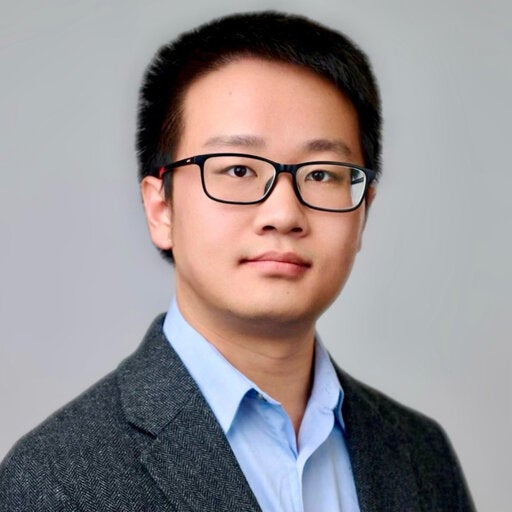
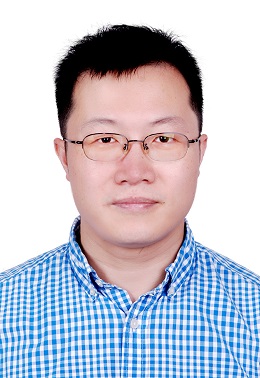
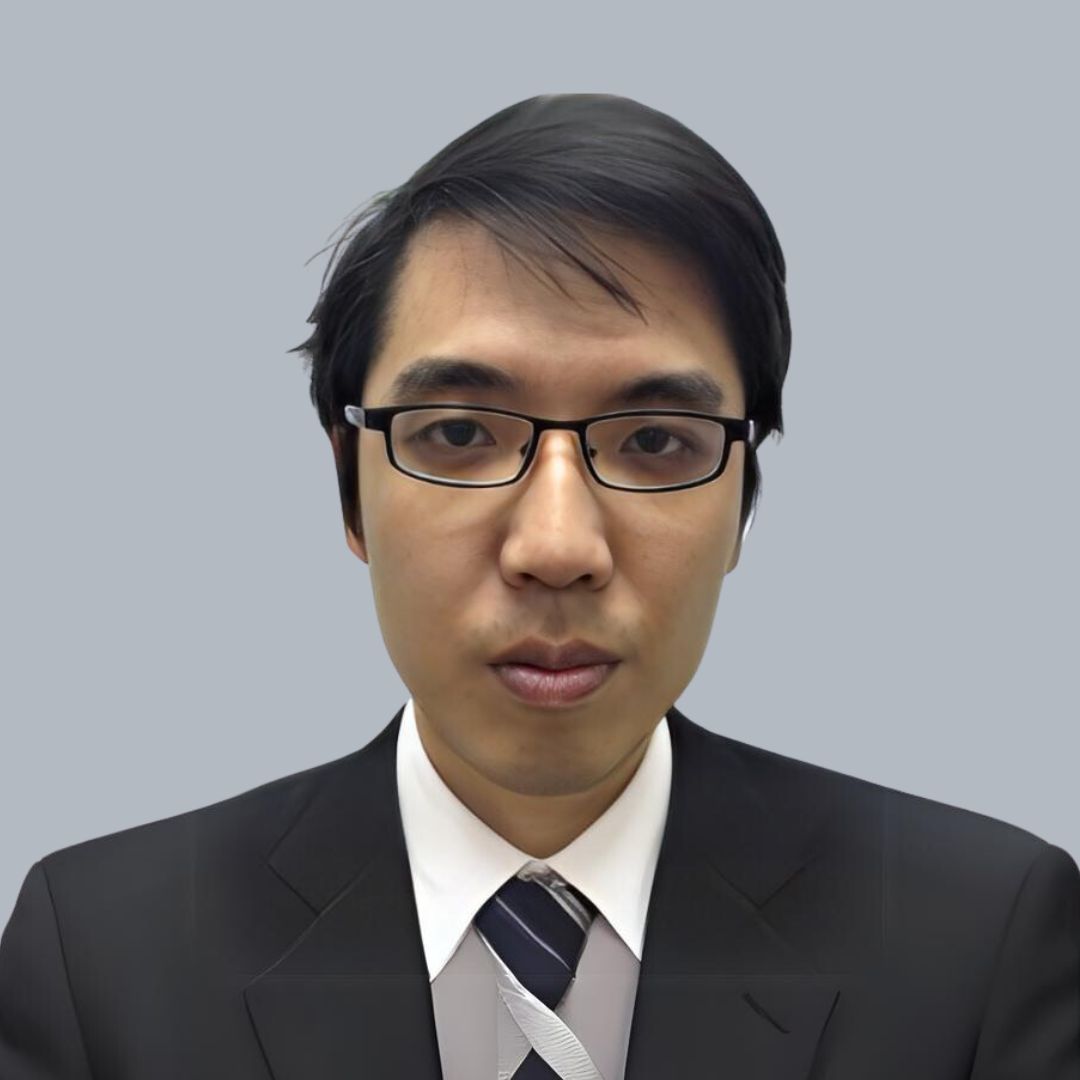
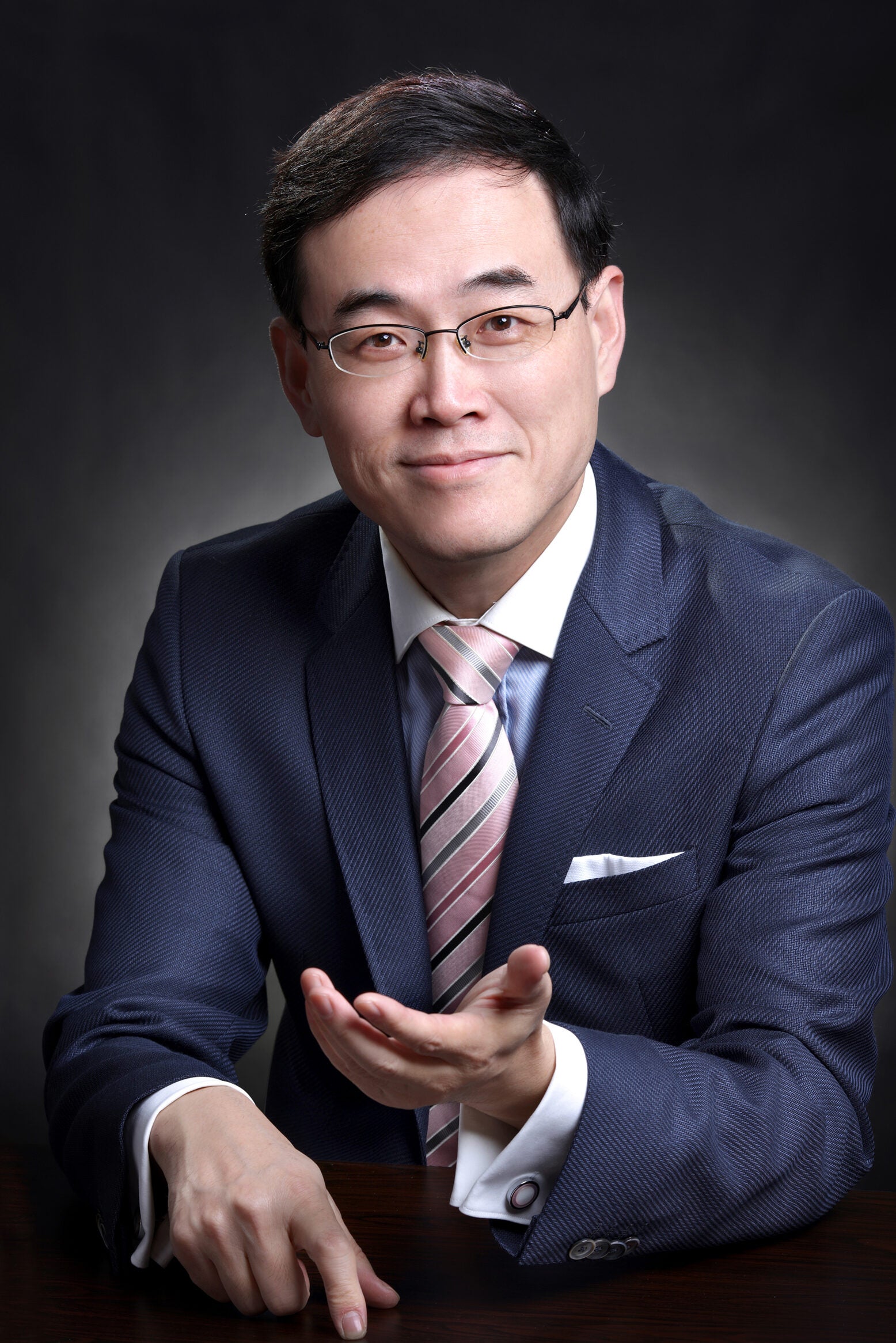
Dr. Peichen Zhong is an Assistant Professor in the Department of Materials Science and Engineering at the National University of Singapore (NUS). He leads the Applied Machine Learning and Materials Modeling (AM³) Group, focused on advancing computational methods for clean energy technologies. His research integrates machine learning with atomistic simulations to tackle challenges in battery materials, disordered materials, and sustainable energy systems. Education: B.S. in Physics from University of Science and Technology of China (2018); Ph.D. in Materials Science from UC Berkeley (2023, advised by Prof. Gerbrand Ceder); Postdoctoral training at Lawrence Berkeley National Lab and BIDMaP, co-advised by Persson, Cheng, and Krishnapriyan. Research Interests: Computational modeling of battery cathodes/electrolytes, AI-driven interatomic potentials, statistical mechanics in disordered materials, and generative models for scientific discovery. Key areas include Li/Na-ion batteries, solid-state reactions, and sustainable energy materials. Awards: BIDMaP Emerging Scholar Fellowship (UC Berkeley CDSS, 202?), 2023 Rising Stars in Materials Science (CMU/MIT/Stanford). Labs/Teams: The AM³ Group at NUS MSE focuses on interdisciplinary research combining theory, computation, and AI4Science. Current openings include PhD students and postdoctoral researchers.
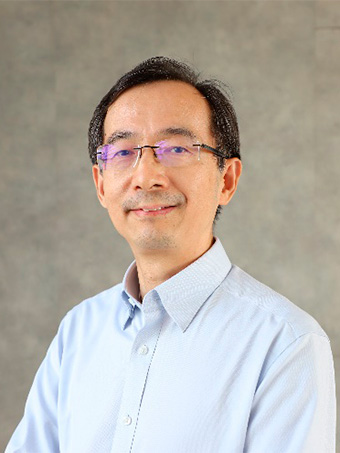
Kenji Kawaguchi is the Presidential Young Professor in the Department of Computer Science at the National University of Singapore (NUS), where he leads the Deep Learning Lab and is a faculty affiliate at the NUS Institute of Data Science. His research bridges theoretical and applied machine learning, focusing on deep learning, large language models, and physics-informed neural networks. His educational background includes a Ph.D. and S.M. in Computer Science and Electrical Engineering from the Massachusetts Institute of Technology (MIT), advised by Leslie Pack Kaelbling, and a postdoctoral fellowship at Harvard University’s Center of Mathematical Sciences and Applications. Dr. Kawaguchi’s research interests center on the theoretical foundations of deep learning, optimization, generalization, and applications in areas such as molecular modeling, AI safety, and efficient training of large models. He has made significant contributions to understanding in-context learning, diffusion models, and neural operators for partial differential equations. His recent publications (2023–2025) reflect a strong trend toward improving the efficiency, robustness, and interpretability of large-scale models, particularly in language and scientific domains. Key themes include LLM alignment and safety, diffusion model optimization, and physics-informed learning for high-dimensional problems. Presidential Young Professor He has served as Area Chair and PC Member for top-tier conferences including NeurIPS, ICML, ICLR, AAAI, and UAI, and as reviewer for journals such as JMLR and Annals of Statistics. He has delivered invited talks at Harvard, MIT, Stanford, CMU, Brown, and Google Research, reflecting his international recognition. He actively mentors students and welcomes PhD candidates and postdocs to join his research group.
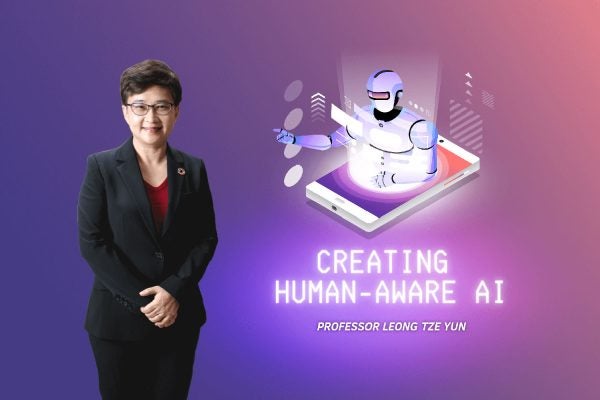
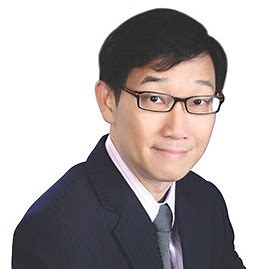
LEONG Tze Yun is a Professor in the Department of Computer Science at the School of Computing, National University of Singapore (NUS). She holds S.B., S.M., and Ph.D. degrees in Computer Science from the Massachusetts Institute of Technology (MIT). Her academic career spans both research and industry experience, with significant contributions to the fields of artificial intelligence and health informatics. Dr. Leong's educational background includes: Ph.D. in Electrical Engineering & Computer Science, Massachusetts Institute of Technology S.M. in Electrical Engineering & Computer Science, Massachusetts Institute of Technology S.B. in Computer Science & Engineering, Massachusetts Institute of Technology Her primary research interests focus on responsible AI, dynamic decision-making, neurocognitive modeling, reinforcement learning, artificial general intelligence, and biomedical and health informatics. Her work bridges the gap between theoretical AI development and practical healthcare applications, with an emphasis on ethical considerations and human-centered design. She directs the Medical Computing Laboratory at NUS, a multidisciplinary research program exploring human-aware decision modeling in complex environments. Analysis of her recent publications reveals a strong trend toward responsible AI development, with significant contributions to reinforcement learning techniques, causal inference methods, and applications of AI in healthcare. Her work increasingly integrates ethical considerations with technical AI development, particularly evident in her 2024 publications on medical AI and human values. Her scientific recognition includes: Fellow of the American College of Medical Informatics (ACMI) Founding Fellow of the International Academy of Health Sciences Informatics (IAHSI) Member of Eta Kappa Nu (Honor Society for Electrical Engineers) Dr. Leong has supervised numerous doctoral and master's students throughout her career, many of whom have gone on to prominent positions at institutions like Google, Netflix, Mayo Clinic, and academic institutions worldwide. Her advisory work extends to significant policy development, including contributions to WHO guidance on ethics and governance of AI for health. She currently serves on the World Health Organization (WHO) Expert Group on Ethics and Governance of AI for Health, the World Economic Forum (WEF) AI Governance Alliance, and the Advisory Council on AI in Uzbekistan. Her laboratory work focuses on developing adaptive systems that evolve with changing technical functionalities, system infrastructures, usage patterns, and operational contexts, with applications spanning prediction and decision analytics, human-aware robotics, game artificial intelligence, personalized education, and assistive care for elderly with neurocognitive disorders.
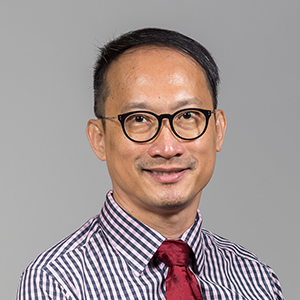
Reza Shokri is a Dean's Chair Associate Professor in the Department of Computer Science at the National University of Singapore (NUS), School of Computing. His research lies at the intersection of data privacy, security, and trustworthy machine learning, with a focus on quantifying privacy risks and developing robust, fair, and interpretable models. PhD in Computer Science, EPFL His research interests center on data privacy and trustworthy machine learning , particularly in the context of deep learning and federated systems. He investigates how machine learning models memorize training data, leading to privacy leakage, and designs frameworks to audit and mitigate such risks. His work bridges theoretical guarantees with practical applications, emphasizing the trade-offs among privacy, fairness, robustness, and utility. His recent publications (2023–2025) reveal a strong trend in analyzing privacy in large language models (LLMs), membership inference attacks, federated learning, and fairness. These works are published in top venues such as NeurIPS, ICML, ICLR, CCS, and FAccT, highlighting his leadership in both AI and security communities. Notable scientific awards include: Asian Young Scientist Fellowship (2023) Intel Outstanding Researcher Award (2023) Best Paper Award, ACM FAccT (2023) IEEE S&P Test-of-Time Award (2021) Caspar Bowden Award for Privacy Enhancing Technologies (2018) NUS Presidential Young Professorship (2019–2023) VMware Early Career Faculty Award (2021) He has advised numerous PhD and Master’s students, many of whom have contributed to high-impact publications. He has also received research grants from major industry partners including Meta, Google, Intel, and VMware. He leads the Data Privacy and Trustworthy Machine Learning Lab at NUS and has served on program committees for top conferences such as IEEE S&P, ACM CCS, and FAccT, including co-chairing roles at HotPETs and Shadow PC of IEEE S&P. He has delivered tutorials at ICML and CCS on privacy auditing in machine learning. His lab focuses on developing tools and frameworks—such as the ML Privacy Meter—for assessing and improving the privacy properties of machine learning models, with applications in regulatory compliance and secure AI deployment.
Dr. Zhu Lailai serves as Assistant Professor in the Department of Mechanical Engineering at the National University of Singapore (NUS), appointed in January 2020. His research bridges fundamental fluid mechanics with cutting-edge engineering applications through computational and theoretical approaches. Dr. Zhu holds a PhD from KTH Royal Institute of Technology (Sweden) and completed postdoctoral training at Princeton University. His research program centers on: Low-Reynolds-number fluid-structure interactions and bio-inspired adaptive systems Active matter dynamics (Janus colloids, active droplets, flagella/cilia) Intelligent fluids integrating machine learning for fluid dynamics Microrobotics with reinforcement learning-based chemotactic navigation Non-Newtonian/multiphase flows and microfluidics applications Analysis of his 2017-2025 publications reveals a clear trajectory toward AI-enhanced fluid mechanics, evolving from foundational theoretical models to machine learning integration. Recent work emphasizes foundation models for fluid dynamics prediction and topology-adaptive microrobotic navigation, demonstrating interdisciplinary convergence of physics, AI, and bionics. Scientific Awards: No major scientific awards specified in source materials Advising and Grants: While specific advisees and grants aren't detailed, his active publication record across high-impact journals (Nature Communications, Journal of Fluid Mechanics) indicates ongoing supervised research and likely grant funding through NUS and collaborative projects. Research Group: Dr. Zhu leads a computational/theoretical research team at NUS investigating active and intelligent fluids, with current projects on PCM thermal systems, microrobotic navigation, and active matter phase transitions, collaborating with experimentalists globally.
Assoc Prof Ying Chen is an Associate Professor at the National University of Singapore , affiliated with the Department of Mathematics, Asian Institute of Digital Finance (as Academic Director of PhD Program in Digital FinTech 2022–2024), Risk Management Institute (2019–2023), Department of Statistics and Data Science (2019–2023), and Department of Economics (2018–2023). She also contributes to NUS Graduate School for Integrative Sciences and Engineering since 2016. Research Interests include: AI forecasting and quantum computing for finance Nonstationary time series and functional data analysis Energy data analytics and precision medicine Network autoregression and spatial-temporal modeling Explainable AI and citation metrics Portfolio liquidation and market-making algorithms Article Trends demonstrate expertise in: Adaptive forecasting for gas flows and electricity prices Blockchain network influence detection Quantum computing applications in finance Functional autoregression with mixed predictors Credit rating fairness and explainability High-resolution implied volatility modeling Scientific Awards include: ISI Elected Member (2016–) International Statistical Institute Council (2023–2027) IASC Scientific Secretary (2017–2019, 2023–2025) Advisory roles for EU FIN-TECH and xAIM projects
Assoc Prof Ng Teng Yong is an Associate Professor at the School of Mechanical & Aerospace Engineering (NTU), specializing in numerical modeling and simulation. With a background as Research Manager at A*STAR Institute of High Performance Computing, his work spans materials science, nanotechnology, and aerospace engineering. Current focus on graphene-based desalination membranes Expertise in molecular dynamics simulations Investigates nanoscale fluid mechanics and structural dynamics Recent publications highlight advancements in energy-efficient electrodialysis, smart robotics, and nonlinear vibration analysis. His interdisciplinary approach integrates computational methods with experimental validation in additive manufacturing and soft material mechanics.
GONG Jiangbin serves as Professor and Head of Department at the National University of Singapore (NUS), holding the prestigious Provost's Chair Professorship (2020-2026). He is a Principal Investigator at the Centre for Quantum Technologies (CQT) with office S12-02-10 and contact email phygj@nus.edu.sg. Education: PhD, University of Toronto, Canada (2001) His research program centers on topological quantum phenomena, with primary focus on novel topological phases of matter and their applications in quantum computation and information transfer. The group actively investigates quantum dynamics control, quantum simulation frameworks for metrology/sensing applications, disorder physics in few/many-body systems, quantum chaos, and emerging quantum machine learning paradigms to bridge theoretical advances with practical quantum technologies. Analysis of recent publications (2018-2024) reveals consistent expertise in topological quantum systems, spanning non-Abelian braiding in Majorana time crystals, Thouless pumping with single spins, exotic Floquet semimetals, acoustic topological platforms, and KPZ physics in Anderson localization - demonstrating deep integration of theoretical modeling with experimental quantum platforms. Scientific Awards: Provost's Chair Professorship (2020-2026) National Research Foundation Investigatorship (class of 2017) No explicit information regarding student advising or specific research grants was provided in the source material, though his leadership role suggests significant mentorship responsibilities and grant oversight. Gong leads a multidisciplinary research group at CQT/NUS that synergizes theoretical quantum physics with experimental quantum technologies, maintaining active collaborations across quantum simulation, topological materials, and quantum information science to advance next-generation quantum computing architectures.
Phoon Kok Kwang is a Distinguished Professor and Vice Provost (Academic Personnel) at the National University of Singapore (NUS). He specializes in geotechnical engineering, focusing on statistical and data-driven methods for decision-making in civil infrastructure. His work has significantly influenced international standards like ISO2394 and earned over 10,000 citations (h-index 47). He is a Fellow of ASCE, IES, and the Singapore Academy of Engineering. Education: PhD in Civil Engineering from Cornell University (USA). Professional qualifications include Professional Engineer (Singapore) and ASEAN Chartered Professional Engineer. Research Interests: Reliability-based design, probabilistic modeling of geotechnical parameters, uncertainty quantification in geotechnical systems, and computational methods in geomechanics. His recent work emphasizes Bayesian machine learning for site-specific modeling and statistical characterization of geotechnical data. Awards & Honors Norman Medal (ASCE) – 2005 John Booker Medal – 2014 Humboldt Research Award – 2017 Luojia Distinguished Visiting Professor (Wuhan University) – 2018–2022 Advising & Grants Edited 3 books including Reliability of Geotechnical Structures in ISO2394 . Led special issues in Georisk and Underground Space . Spearheaded initiatives like the 6th International Symposium on Reliability Engineering (2018). Served as editor for major journals including Journal of Risk and Uncertainty in Engineering Systems . Labs & Teams Founded the Georisk journal and leads research groups focused on computational geomechanics and probabilistic site characterization at NUS.
Prof Aaron Thean is the Deputy President (Academic Affairs) and Provost at the National University of Singapore (NUS). Formerly, he served as Dean of the College of Design and Engineering at NUS and held senior roles at IMEC (Belgium) as Vice President of Logic Technologies and Director of Logic Devices Research. His expertise spans advanced semiconductor device technologies, including FinFETs, nanowire FETs, III-V/Ge channels, and emerging beyond-CMOS architectures. He holds degrees from the University of Illinois Urbana-Champaign (B.Sc., M.Sc., Ph.D. in Electrical Engineering) and has published over 300 papers with 50+ patents. His awards include the Gregory Stillman Award (2001) and Compound Semiconductor Innovation Award (2014). Research interests focus on semiconductor innovation, device-process co-optimization (DTCO), and monolithic 3D integration. Notable contributions include industry-first Gate-First HKMG technologies, advanced strained silicon platforms, and neuromorphic computing hardware. His work bridges academia and industry through collaborations with Qualcomm, IBM, and foundry partners. Current initiatives emphasize energy-efficient computing and wearable sensor systems. Prof Thean’s leadership spans NUS-wide academic strategy and global research partnerships. His technical legacy includes foundational advancements in transistor scaling, low-power CMOS design, and AI-driven failure analysis methodologies.
LEE Wee Sun is a Professor in the Department of Computer Science at the National University of Singapore (NUS), where he previously served as Head of Department, Vice Dean of Undergraduate Studies, and Vice Dean of Research. His academic journey began with a B.Eng. in Computer Systems Engineering from the University of Queensland (1992) and a Ph.D. from the Australian National University (1996), followed by research roles at the Australian Defence Force Academy and MIT. Education: Ph.D., Australian National University, Canberra, Australia (1996) B.Eng. in Computer Systems Engineering, University of Queensland, Brisbane, Australia (1992) Research Focus: Professor Lee pioneers work in Machine Learning , Planning Under Uncertainty , and Approximate Inference , with emphasis on integrating AI subfields for holistic reasoning. His current projects include "Learning to Decompose for Reasoning and Planning" (enhancing LLMs via self-supervised problem decomposition) and "Learning to Reason with Visual-Linguistic Inputs" (unifying vision, language, and reasoning in single architectures). Publication Trends: Recent work (2023-2025) centers on bridging LLMs with classical AI techniques, featuring breakthroughs in uncertainty quantification, multi-task optimization, and graph-based reasoning. Key themes include sparsity-aware vehicle routing, epistemic uncertainty for reliable LLMs, and differentiable neural solvers for combinatorial problems. Awards: IJCAI-JAIR Best Paper Prize (2022) RSS Test of Time Award (2021) RoboCup Best Paper Award (IROS 2015) HRATC 1st Place (2015) IPPC POMDP Track 1st Place (2011, 2014) UAI Google Best Student Paper (2014) Semeval-1 1st/2nd Place (2007) J.G. Crawford Prize (ANU 1996) Leadership & Service: As steering committee chair for ACML and area chair for NeurIPS/ICML/AAAI/IJCAI, Professor Lee shapes global AI discourse. His administrative roles at NUS and collaborations with MIT/Singapore-MIT Alliance demonstrate commitment to advancing AI education and research infrastructure. While student advisees aren't listed, his leadership positions imply extensive mentoring. Research Ecosystem: His work drives NUS's AI initiatives including Knowledge@Computing projects on reasoning frontiers. Current efforts focus on making AI systems robust through uncertainty-aware planning and multi-modal integration, with applications in robotics, verification systems, and combinatorial optimization.
See Kiong Ng serves as Professor of Practice in the Department of Computer Science at the School of Computing, National University of Singapore (NUS), while concurrently holding leadership roles as Director of AI Technology at AI Singapore and Deputy Director of NUS's Institute of Data Science (IDS). His work focuses on translational data science research and developing integrated capabilities for Singapore's Smart Nation initiative through industry and public agency collaborations. His academic credentials include a B.S. in Applied Mathematics (Computer Science Track) from Carnegie Mellon University (1989), an M.S.E. in Computer & Information Science (Artificial Intelligence) from the University of Pennsylvania (1990), and a Ph.D. in Computer Science from Carnegie Mellon University (1998), supported by Singapore's National Computer Board overseas scholarship. Professor Ng's research bridges artificial intelligence with real-world applications across diverse domains. His primary interests span Data Mining, Machine Learning, Natural Language Processing, Smart Cities, and Computational Biology, with emphasis on extracting value from big data through interdisciplinary approaches. He actively pioneers applications in urban systems and bioinformatics, demonstrating data science's transformative potential beyond traditional boundaries. His publication record reveals consistent innovation in algorithm development for complex data challenges, with recent work focusing on taxonomy construction, single-cell genomics analysis, urban transportation systems, and imbalanced time series classification. These contributions demonstrate his commitment to solving practical problems through cutting-edge data science techniques. His major recognitions include: MTI Borderless Award (2014) as Green Growth Working Group project member Minister for National Development's R&D Award 2017 (Distinguished Award) for city-level analytics platform innovation A*STAR Borderless Award (2014) as Urban Systems Initiative team leader MTI Innovation Award (2013) for Strategic Technology Translation in Business Analytics Professor Ng has established significant research infrastructure including founding A*STAR's Data Analytics Department and leading the Urban Systems Initiative. His translational research model emphasizes industry partnerships and practical implementation, particularly in smart city development where he connects data science with urban planning challenges across Singapore's government agencies.
Ye Zhisheng is the Dean’s Chair and Associate Professor in the Department of Industrial Systems Engineering & Management at the National University of Singapore (NUS). His research focuses on reliability engineering, inventory control, emergency response systems, and statistical modeling. He holds a PhD in Industrial and Systems Engineering from NUS, along with a BEng in Material Science and Engineering and a BEco in Economics from Tsinghua University. His work emphasizes practical applications in mission-critical systems, predictive maintenance, and data-driven decision-making. Current research initiatives include optimal maintenance policies for manufacturing systems, degradation analysis of bearings, and federated learning approaches for battery lifecycle prediction. He has pioneered methods for integrating physics-informed neural networks into prognostics and health management (PHM) systems. Key technical contributions span advanced statistical methodologies like sieve estimation for survival data, phase-type distributions modeling, and condition-based maintenance optimization. His interdisciplinary approach bridges operations research, mechanical engineering, and computer science to address complex reliability challenges. Recent projects include resilient consensus-based power grid management and contamination source identification frameworks. Notable collaborations involve developing intelligent cross-domain fault diagnosis systems using transformer networks and advancing the Internet of Federated Things (IoFT) for distributed data analytics. His work has been applied in aerospace, telecommunication infrastructure, and medical emergency response systems.
LING Chun Kai is an Assistant Professor in the Department of Computer Science at the National University of Singapore (NUS), School of Computing. His research focuses on multiagent systems, computational game theory, and machine learning applications in adversarial real-world domains like cybersecurity and logistics. Educational background includes a PhD in Computer Science (2017-2023) from Carnegie Mellon University and a First Class BEng in Computer Engineering (2015) from NUS. Previously, he was a Postdoctoral Research Scientist at Columbia University. Current research interests span computational game theory, machine learning for multi-agent systems, equilibrium characterization in imperfect information settings, and applications in network security, logistics, and recreational games. Key methodological contributions include scalable algorithms for game solving, differentiable game solvers, and copula-based statistical modeling. Recent publications focus on attacker-defender graph games, language negotiation agents, and modeling games with incomplete information. Collaborations include researchers from Columbia University, Carnegie Mellon, and institutions working on GameSec, AAAI, Neurips, and ICML venues. Scientific Awards: IJCAI 2018 Distinguished Paper Award GameSec 2023 Best Paper Award GameSec 2024 Best Paper Award Singapore Teaching and Academic Research Talent Scheme (2024) Teaching includes courses on AI Planning and Decision Making (CS4246, CS5446) and Advanced Topics in Artificial Intelligence (CS6208).
Shen Wei is the KoGuan Distinguished Professor of Law at the Shanghai Jiao Tong University Law School, with a concurrent role as Visiting Professor (2025). His academic career spans legal practice and academia, focusing on international investment law, corporate governance, financial regulation, and international commercial arbitration. Concurrently, his research extends into computational and mathematical domains, including machine learning, deep neural networks, and approximation theory. He teaches international investment law, international financial regulation, company law, and international economic law. His interdisciplinary work bridges legal scholarship with advanced mathematical modeling and algorithmic analysis. Recent research emphasizes neural network architecture, optimization techniques, and approximation theory applied to complex systems. Notable contributions include studies on deep network expressivity, gradient methods, and wavelet-based image restoration. Awards and grants are not explicitly mentioned, but his work reflects significant contributions to both legal and computational fields.