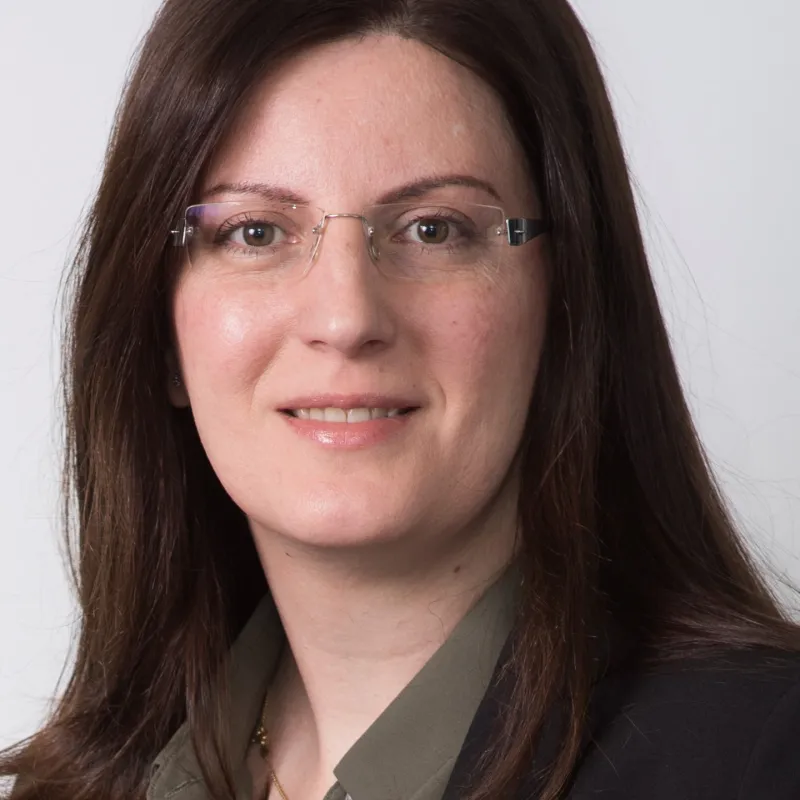
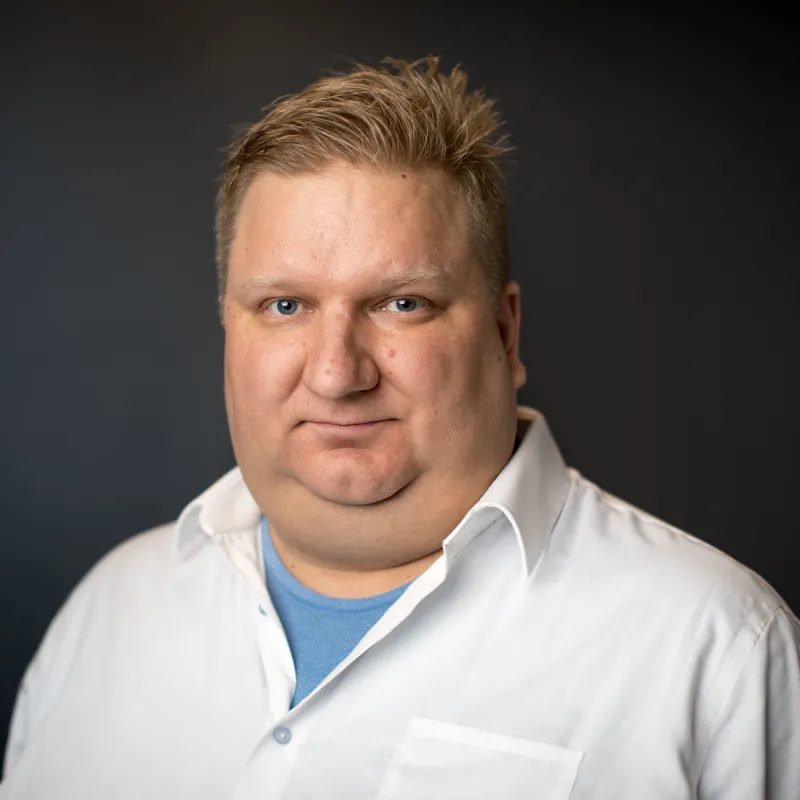
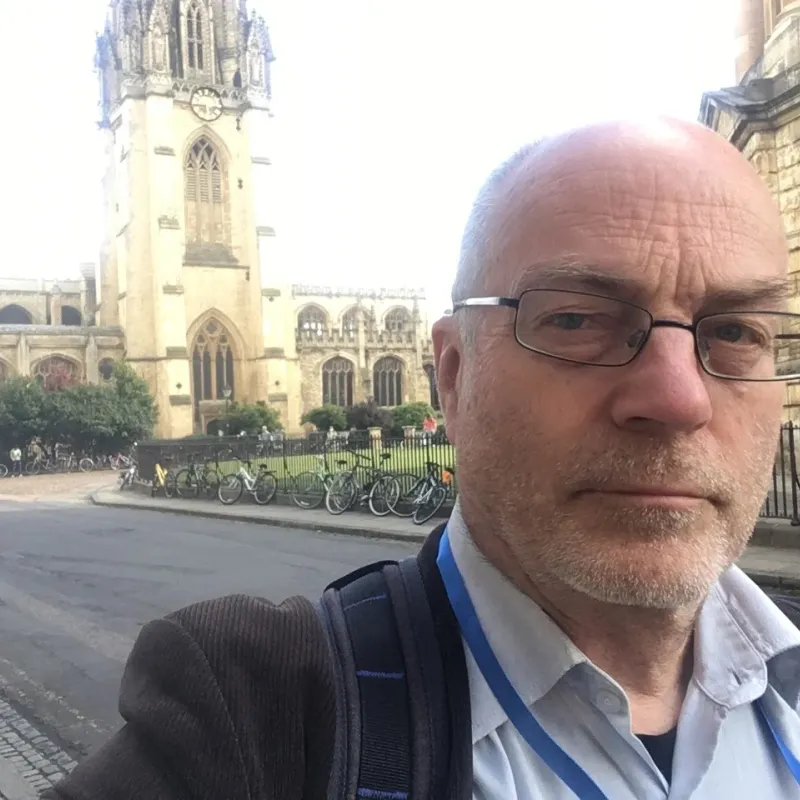
Yogesh Verma is a doctoral researcher at Aalto University's Department of Computer Science, specializing in machine learning and computational data analysis. His work bridges theoretical advancements with practical applications in molecular generation, climate forecasting, and topological modeling. Areas of expertise: Computer and information sciences, Computational data analysis Research interests: Focus on physics-informed neural ODEs for climate modeling, graph generation with diffusion models, topological neural networks, and ab initio antibody design. His interdisciplinary approach connects machine learning with computational biology and scientific computing. Scientific awards: Nokia Scholarship for doctoral studies in ICT-related fields Key publications appear in leading venues like ICLR and NeurIPS, spanning topics from molecular design to climate forecasting. Collaborators include Vikas Garg, Markus Heinonen, and Giangiacomo Mercatali.
Maria Ballestar de las Heras is a Visiting Associate Professor at LUT University, School of Engineering Sciences, where her work intersects Social Sciences, Statistics, and Artificial Intelligence. She is concurrently an Associate Professor in Applied Economics at Universidad Rey Juan Carlos (URJC), Madrid, Spain, and serves as Head of Analytical Consultants at Google in Spain, demonstrating a strong bridge between academia and industry. Universidad Rey Juan Carlos – Associate Professor, Applied Economics LUT University – Visiting Associate Professor, School of Engineering Sciences Google Spain – Head of Analytical Consultants She earned her B.A. in Statistics from Universidad de Zaragoza, M.Sc. in Marketing and Market Research, and M.A. in Information and Knowledge Society from Universitat Oberta de Catalunya, and her Ph.D. in Applied Economics from Universidad Rey Juan Carlos. Her research focuses on applying data science, Big Data, and AI to real-world problems in customer behavior, digital transformation, public policy evaluation, and sustainability. She investigates how AI can enhance marketing strategies, evaluate educational reforms, predict stock markets, and analyze social media discourse on climate change. Her interdisciplinary approach integrates economics, marketing, and machine learning to generate actionable insights for businesses and policymakers. Her recent publications (2021–2025) reveal a consistent trend in leveraging machine learning and AI for business and social impact, particularly in e-commerce, robotics adoption, and educational policy. She frequently collaborates with researchers such as Jorge Sainz, Ismael Sanz, and Taraneh Shahin. Scientific Contributions: Published over 20 articles in leading journals including Technological Forecasting and Social Change , Journal of Business Research , and IEEE Transactions on Engineering Management . Active peer reviewer for journals like Arabian Journal for Science and Engineering and Journal of Business Research . She advises on data-driven decision-making and digital innovation, though no formal students are listed. She leads research at the intersection of technology and society, contributing to both academic knowledge and industrial practice. Her work is supported by her extensive industry experience across banking, IT, and pharmaceuticals.
Klaus Nordhausen is a Professor in the Department of Mathematics and Statistics at the University of Helsinki. His research focuses on multivariate statistical methods, spatial statistics, blind source separation, and high-dimensional data analysis. He actively contributes to computational statistics and machine learning applications in environmental and biomedical domains. Recent work includes advancements in spatio-temporal modeling, invariant coordinate selection, and variational autoencoders for multivariate data. Nordhausen leads the project Signal recovery in noisy spatial data (2024–2028), funded by the Academy of Finland. He is a frequent invited speaker at international conferences and collaborates with researchers globally, particularly in spatial and computational statistics. His publications span statistical methodology, environmental modeling, and machine learning, emphasizing robust techniques for complex data structures. Key contributions include spatial blind source separation algorithms, signal dimension estimation, and novel applications of independent component analysis. Professional activities include organizing workshops and hosting academic visitors, reflecting his role in fostering international collaboration. Nordhausen maintains an active research agenda with over 130+ peer-reviewed outputs across journals like Environmetrics , Neural Networks , and Annals of the Institute of Statistical Mathematics .
Tapio Ala-Nissilä is Professor of Physics at Aalto University School of Science, Finland, where he heads the Multiscale Statistical and Quantum Physics (MSP) group. He simultaneously serves as Head of the Interdisciplinary Centre for Mathematical Modelling and Professor of Applied Mathematics & Theoretical Physics at Loughborough University, UK, and as Adjunct Professor of Physics at Brown University, USA. His research spans statistical physics, quantum mechanics, and soft matter systems with emphasis on computational approaches. Key interests include complex fluids, nanofluids, polymer translocation, quantum thermodynamics, and open quantum systems. He extensively employs molecular dynamics, Monte Carlo methods, and density functional theory to study nanoscale phenomena in biological, material, and quantum contexts. Recent publications (2024-2025) reveal strong interdisciplinary trends across quantum materials, biophysics, and environmental engineering. Work focuses on thermal properties of 2D materials like graphene, protein dynamics in viral systems, novel surface phenomena in liquid-repellent materials, and advanced computational methods for many-body quantum systems. He directs the Multiscale Statistical and Quantum Physics group at Aalto University investigating fundamental quantum and statistical phenomena, and leads the Interdisciplinary Centre for Mathematical Modelling at Loughborough University fostering cross-departmental collaboration in applied mathematics.
Jukka Mikael Kohonen is a University Lecturer in the Department of Mathematics and Systems Analysis at Aalto University, Finland. He is affiliated with the Mathematical Statistics and Data Science, as well as Algebra and Discrete Mathematics research groups. His research interests span lattice theory and combinatorics, with recent work focusing on modular lattice reduction and enumeration techniques. He has contributed to algorithmic optimization and outlier correlation detection, collaborating across disciplines such as biomedical signal processing and computational mathematics. In his publications since 2017, Kohonen has explored topics ranging from symmetry reduction algorithms to additive number theory, with a notable emphasis on computational methods in discrete mathematics. Recent work (2025) advances techniques for simplifying modular lattices through elimination of irreducible elements. Research groups: Mathematical Statistics and Data Science, Algebra and Discrete Mathematics Email: jukka.kohonen@aalto.fi
Zekeriya Uykan serves as a Visiting Professor in the Department of Information and Communications Engineering at Aalto University, affiliated with the Communication Engineering research group. His current research profile is accessible via Aalto University's research portal, and he maintains direct contact through university email and phone channels. His primary research domains encompass Wireless Communications, Network Optimization, Machine Learning, and Neural Networks, with specialized focus on channel charting, femtocell optimization, device-to-device communications, and antenna placement. Recent work integrates Hopfield Neural Networks and stochastic optimization techniques to address dynamic resource allocation challenges in 5G/6G systems, emphasizing practical implementation in heterogeneous wireless environments. Analysis of his 2023-2024 publications reveals a strong trajectory toward machine learning-driven solutions for next-generation wireless networks, particularly in channel modeling and interference management. This builds upon his foundational contributions to relay network capacity bounds and SINR-balancing systems, demonstrating consistent innovation in merging theoretical information theory with applied neural network models. As a visiting researcher, Uykan actively collaborates within Aalto University's Communication Engineering group, contributing to advanced projects in wireless infrastructure design and optimization. His work bridges academic theory with industry-relevant communication system challenges, particularly in dense network scenarios requiring intelligent interference mitigation.
Nikolaj Tatti is a Visiting Professor at Aalto University's Department of Computer Science , affiliated with the Helsinki Institute for Information Technology (HIIT) and the Adj. Prof. Gionis Aris research group . His work focuses on algorithmic analysis of temporal networks and graph theory. Research Interests: Temporal network analysis Graph decomposition and density Segmentation algorithms Pattern discovery in time-series data Interactive data analysis frameworks Publication Trends (2018-2021): Research spans Temporal Networks (dynamic hierarchies, cascade reconstruction), Graph Theory (density, decomposition), and Data Mining (periodic patterns, event detection). Collaborative work with Aris Gionis and Polina Rozenshtein dominates his publications. Technical Collaborations : Works with multidisciplinary teams including researchers from ACM Transactions on Knowledge Discovery and IEEE conferences.
Maia Aisha Malonzo is a Researcher at the Computational Biology Research Group in the Department of Computer Science at Aalto University . She specializes in Bioinformatics and Epigenetics , with a focus on DNA methylation analysis, transcriptome profiling, and computational modeling of biological systems. Key collaborations with Harri Lähdesmäki 's research team Active in Statistical Genetics and Genomic Data Analysis Her research involves: Developing computational methods for epigenetic profiling (LuxHMM, LuxRep) Investigating DNA methylation changes in disease contexts like Alzheimer's and asthma Elucidating regulatory mechanisms in human pluripotent stem cells
Ersin Yılmaz serves as a Postdoctoral Researcher within the Department of Computer Science at Aalto University, conducting advanced research at the intersection of statistical theory and computational applications. His work contributes to the university's data science initiatives through methodological innovations in regression analysis. His research concentrates on statistical methodology development, particularly for complex data structures involving correlated errors and high-dimensional spaces. Key interests include shrinkage estimation techniques, kernel-based regression frameworks, and robust modeling approaches applicable to machine learning systems. This work bridges theoretical statistics with practical computational implementations in computer science contexts. Analysis of his publication record reveals a focused trajectory in advanced regression methodologies, specifically addressing estimation challenges in partially linear models with dependency structures. His work demonstrates technical rigor in mathematical statistics while maintaining relevance to contemporary data science applications, particularly in improving estimator efficiency under complex error dependencies. Scientific Awards: No scientific awards, fellowships, or honors were documented in the source material. Current information indicates no formal student supervision roles or grant-funded projects. The researcher operates within Aalto University's computer science infrastructure without specific lab or team affiliations mentioned in available records.
Mojtaba Naghdyzadegan Jahromi is a postdoctoral researcher at the University of Oulu in the Hydrosystems Engineering & Management (HEM) research group within the Water, Energy, and Environmental Engineering Research Unit . He holds a Ph.D. in Agriculture-Water Engineering from Shiraz University (2023) and has previously worked at Shiraz University, Ghent University, and Georg-August University of Göttingen. B.Sc. and M.Sc. in Water Engineering , Shiraz University Ph.D. in Agriculture-Water Engineering , Shiraz University His research focuses on crop modeling , remote sensing , and machine learning for agricultural and environmental applications. Recent work includes wheat yield prediction , inland water body depletion analysis , and precision agriculture techniques. Publications span journals like European Journal of Agronomy and Water , book chapters on remote sensing and machine learning, and conferences including EGU and Tropentag. Ph.D. Student Travel Grant (2021), Ministry of Science, Iran Student Travel Grant (2017), ICTP, Italy Tropentag 2015 Grant Award He has contributed to interdisciplinary projects involving Google Earth Engine , MODIS data , and GLEAM evapotranspiration models , with applications in water resource management and climate change impact assessment.
Lassi Roininen is a tenured Professor of Applied Mathematics at LUT University's School of Engineering Sciences, holding this position since September 2022 after serving as Assistant Professor there from 2018 to 2022. He maintains significant adjunct appointments as Associate Professor at University of Oulu, Assistant Professor at Bahir Dar University (Ethiopia), and faculty member at AIMS Rwanda, demonstrating strong international academic engagement. Education: Master of Science (Engineering), Tampere University of Technology Doctorate in Applied Mathematics, University of Oulu (2015) - conducted at Sodankylä Geophysical Observatory His research integrates Statistics, Geophysics, and Applied Mathematics with core expertise in Bayesian inference, uncertainty quantification, and inversion problems. He develops computational frameworks for geophysical imaging, climate modeling, and industrial applications, emphasizing robust statistical methodologies for real-world data challenges. Recent work shows increasing focus on African climate adaptation and medical/industrial tomography. Analysis of his 15 most recent publications reveals dominant trends in Bayesian approaches to climate science (particularly East African adaptation studies), medical/industrial imaging (tomography and fault detection), and geophysical modeling. His work consistently bridges mathematical innovation with practical applications across environmental science, healthcare, and manufacturing sectors. Research support includes Academy of Finland postdoctoral funding. Through AIMS Rwanda, he actively mentors African mathematicians and contributes to capacity building in computational sciences across the continent. His collaborative projects demonstrate commitment to solving region-specific challenges through advanced statistical methods. His work is closely tied to geophysical research networks including Sodankylä Geophysical Observatory, with recent expansions into East African climate resilience initiatives. Current projects integrate multi-instrument atmospheric data with Bayesian frameworks to address pressing environmental challenges in developing regions.
Heikki Haario is a Professor in Computational Engineering at the LUT School of Engineering Sciences, LUT University, Lappeenranta. His research focuses on robust Bayesian inference, parameter estimation, and uncertainty quantification in chaotic and stochastic systems. Broad research areas: Bayesian Statistics, Chaotic Dynamical Systems, Gaussian Processes, Machine Learning The 15 most recent publications (2025-2023) demonstrate expertise in computational modeling, data-driven methods, and interdisciplinary applications spanning finance, biology, and engineering. Articles emphasize Bayesian techniques, kernel flows, and neural network integration for solving inverse problems and optimizing predictions in uncertain environments.
Maia Malonzo is a visiting faculty member at Aalto University's Department of Computer Science, focused on bioinformatics and epigenetic research. She is affiliated with the Professorship Lähdesmäki Harri and has contributed to 8 research outputs since 2015. Doctor of Science in Technology (2024, Aalto University) Master of Science in Technology (2012, Aalto University) Her research spans DNA methylation analysis, stem cell biochemistry, transcriptome studies, and biomedical informatics. Key projects include the SyMMys initiative (2015–2017) under the Finnish Centre of Excellence in Molecular Systems Immunology and Physiology Research. Recent publications (2022–2024) include tools like LuxHMM and LuxRep for bisulfite sequencing data analysis, with applications in epigenetics and disease biomarker discovery. She has collaborated on datasets for genome segmentation and received media coverage for her bioinformatics work, including mentions in news outlets and social media discussions (2023).
Professor Iiro Harjunkoski is affiliated with Aalto University, School of Chemical Engineering, Department of Chemical Engineering and Metallurgy. His research focuses on advanced optimization techniques in Process Systems Engineering. The top fields of interest for Professor Harjunkoski include: Process Systems Engineering Production Planning and Scheduling Waste Supply Chain Management Mixed Integer Linear and Non-Linear Programming Hybrid Algorithms with Data Analytics Process and Operational Optimization His recent work emphasizes: Energy systems optimization under uncertainty Bike-sharing logistics modeling Machine learning integration in chemical production scheduling Stochastic programming for energy storage operations Surrogate-based optimization techniques Hybrid algorithm development Scientific awards and recognitions: Computers and Chemical Engineering Best Paper Award (2014) Award or recognition for output from Department of Chemical Engineering and Metallurgy (Nov 2015)
Esa Räsänen is a Professor in Physics, specializing in quantum systems and biomedical signal analysis. His research focuses on quantum dots, nonlinear dynamics, and heart rate variability analysis, contributing to UN Sustainable Development Goals. He has published 158 articles and engaged in 103 academic activities, including journal reviewing and conference presentations. Collaborations span multiple countries, with notable work on artificial graphene and cardiac electrophysiology. His activities include peer review for journals like Physical Review B and conference talks on topics such as branched flow and quantum scars. Research interests bridge quantum physics and cardiovascular medicine, with a focus on theoretical models and clinical applications. Recent work includes studies on anomalous diffusion, bouncing-ball quantum scars, and heart failure detection using ECG data. He contributes to interdisciplinary projects, such as the MI-ECG cohort study on post-myocardial infarction monitoring. His academic engagement includes roles as a reviewer, conference speaker, and opponent in doctoral examinations. Notable activities include contributions to the Journal of Chemical Theory and Computation and collaborations in water quality research. Despite extensive output, no specific grants or awards are explicitly detailed in the provided text.