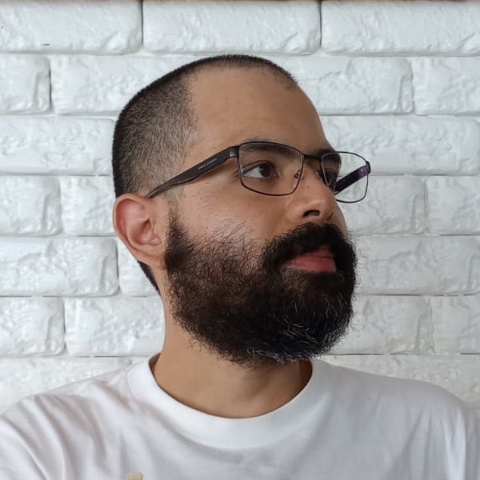
Martin Dalgaard Ulriksen is an Associate Professor at Aarhus University's Department of Mechanical and Production Engineering, specializing in system dynamics and affiliated with the Mechatronics and Dynamics section. His work focuses on vibration theory, system identification, and control theory with applications in offshore structures and wind turbines. His research encompasses fault detection, parameter estimation, and digital twin technologies. Key projects include True Digital Twin (2024-2025) for wind turbine design and CP-SENS (2023-2026) for cyber-physical sensing in structural monitoring. Publications highlight methodologies like modal expansion, basis pursuit, and eigenstructure assignment for damage localization and system identification. Martin teaches vibration theory and system identification courses at both bachelor's and master's levels while supervising thesis projects. Current collaborations with researchers like D. Bernal demonstrate his emphasis on interdisciplinary approaches. Contact: mdu@mpe.au.dk | +45 93 50 88 66.
Anna Murphy Høgenhaug is a Part-time Lecturer in the Master in Law (LL.M.) program at the Faculty of Law, University of Copenhagen, while concurrently pursuing her PhD studies. She serves as a Guest Researcher and External Lecturer at the MOBILE - Center for Global Mobility Law, with her primary affiliation at Karen Blixens Plads 16 in Copenhagen S. Her research focuses on the intersection of artificial intelligence and refugee law, particularly examining algorithmic decision-making in Scandinavian asylum systems. Key interests include explainable AI governance, bias detection in migration adjudication, and the legal implications of machine learning in administrative processes. Her work employs quantitative analysis of asylum decision patterns across Denmark, Norway, and Sweden. Recent publications demonstrate a clear trajectory toward demystifying 'black box' refugee status determination through XAI (Explainable AI) frameworks like SIDU-TXT. Her scholarship bridges technical AI development with practical legal applications, emphasizing transparency requirements under the AI Act and Nordic administrative law traditions. Høgenhaug actively collaborates with researchers including Gammeltoft-Hansen, Jarlner, and Moeslund on interdisciplinary projects spanning law, computer science, and migration studies. Her ORCID profile (0009-0004-6715-0561) documents growing influence in computational legal studies. Her teaching activities center on advanced legal topics within the LL.M. program, particularly courses related to AI regulation and international protection systems. Current research directions include developing holistic assessment approaches for NLP in legal contexts and analyzing religious conversion claims within Nordic asylum frameworks.
Stefan Thurner is a Professor and Chair of Science of Complex Systems at the Medical University of Vienna, and President and co-founder of the Complexity Science Hub (CSH) in Vienna. He is also an external professor at the Santa Fe Institute. His work spans complex systems theory, network science, and applications in healthcare, economics, supply chains, and social dynamics. PhD in Theoretical Physics, TU Wien PhD in Economics, University of Vienna Habilitation in Theoretical Physics Postdoctoral positions at Humboldt University Berlin and Boston University Thurner's research focuses on the dynamics of complex adaptive systems, with applications in medicine (network medicine, comorbidity), financial and supply chain economics, systemic risk, social opinion dynamics, and healthcare resilience. He has published over 300 scientific articles and his work is widely covered in global media including The New York Times, BBC, Nature, and New Scientist. The recent 15 publications reflect a strong trend toward interdisciplinary applications of network science and complexity theory, particularly in healthcare (epidemiology, comorbidity, mental health), supply chain resilience, systemic risk modeling, and social dynamics. Key themes include the impact of shocks (pandemics, famines, war), network-based risk propagation, policy-relevant modeling, and data-driven insights into societal systems. Austrian Scientist of the Year (2017) Paul Watzlawick Ring of Honor (2021) Thurner leads major research initiatives at CSH, advising PhD students and collaborating with a wide network of researchers. He has been involved in forecasting models for pandemic response, supply chain risk assessment, election forensics, and policy recommendations for climate transition. His team leverages large-scale datasets from health registers, supply chains, and digital platforms to build predictive models of complex socio-technical systems. He advocates for data transparency and open science, particularly in public health and economic policy. Thurner leads the Complexity Science Hub, a multidisciplinary research institute focused on data-driven modeling of complex systems. The CSH team includes experts in network science, data analytics, economics, and public policy. The hub collaborates with national and international institutions, including the Austrian Central Bank (OeNB), and has spun off initiatives like Iknaio for forensic data analysis. Current projects include modeling societal metabolism, algorithmic fairness, and digital humanism.
Arthur Matsuo Yamashita Rios De Sousa is an Assistant Professor in the School of Computing at the Tokyo Institute of Technology, where he conducts interdisciplinary research bridging applied mathematics, statistical physics, and data science. His work focuses on the modeling and analysis of complex systems through stochastic processes, time series analysis, and network science. His primary research interests include: Applied Mathematics and Probability Theory Statistical Physics and Econophysics Complex Systems and Network Science Time Series Analysis and Forecasting Symbolic Dynamics and Entropy-Based Methods Power-Law and Heavy-Tailed Distributions His recent publications demonstrate a consistent focus on developing quantitative methods for analyzing financial time series, sales data, and other real-world complex systems. The articles span topics such as volatility modeling, network-based market analysis, multiscale entropy, and symbolic dynamics, reflecting a strong integration of theoretical physics and practical data science applications. Notable trends in his research include the use of entropy measures for regime detection, modeling of heavy-tailed phenomena in economics, and the application of complex networks to multivariate systems. These efforts contribute to both fundamental understanding and practical tools in econophysics and data-driven science. There are currently no listed scientific awards or honors in the provided text. Dr. Yamashita advises students in computational and quantitative research, particularly in areas related to data analysis of complex systems. While specific grant funding is not mentioned, his sustained publication record suggests active research support. He likely contributes to collaborative projects involving financial data modeling, nonlinear dynamics, and interdisciplinary applications of statistical physics. He is involved in academic events such as the Econophysics Colloquium and workshops at the Complexity Science Hub, indicating participation in international research networks focused on complex systems science.
Michele Coscia is an Associate Professor in the Department of Computer Science at the IT University of Copenhagen (ITU), where he conducts research at the intersection of network science, digital humanities, and data analytics. He leads the NERDS research group and supervises PhD students and postdoctoral researchers working on financial crime detection, archaeological networks, and work environment modeling. PhD in Computer Science, University of Pisa (2012) Former researcher at the Center for International Development (CID), Harvard University (6 years) Visiting researcher at Barabási Lab, Northeastern University His research focuses on developing and applying network science methodologies such as noise-corrected backboning , node attribute analysis , and network variance to study complex systems. His work spans diverse domains including: Archaeology : Inferring social and biological relationships from material culture at Neolithic sites like Çatalhöyük. Cultural Analytics : Mapping Italian music networks, analyzing Wikipedia’s gender bias, and studying ideological polarization on social media. Social Media Dynamics : Investigating meritocracy vs. topocracy, intolerance feedback loops, and information virality on platforms like Reddit and Twitter. Sports Analytics : Analyzing predictability trends in team sports and the impact of economic systems on league competitiveness. His publications appear in high-impact journals such as Science Advances , EPJ Data Science , and Applied Network Science . He is the author of The Atlas for the Aspiring Network Scientist , a comprehensive open-access textbook now in its second edition, which covers graph theory, machine learning on graphs, and statistical foundations of network analysis. Recent trends in his work show a growing emphasis on interdisciplinary applications of network science, particularly in archaeology and cultural studies, often in collaboration with institutions such as Aarhus University and the National Research Center for Work Environment. His research consistently promotes open science, with datasets and code publicly shared. Co-PI on a Villum Synergy project applying network analysis to Roman Empire archaeological data Active contributor to the CUDAN (Cultural Data Analytics) community Developing methods for uncertain and incomplete network data Michele Coscia’s work demonstrates a strong commitment to methodological innovation and real-world impact across the humanities, social sciences, and computational domains.
Christian Graugaard is a Professor of Sexology at Aalborg University, affiliated with the Faculty of Medicine and the Department of Clinical Medicine. He is a key member of the Center for Sexology Research and leads Project SEXUS, aiming to study Danish sexual behavior comprehensively. His work emphasizes the intersection of biological, psychological, and cultural factors in human sexuality, challenging simplistic gender-based stereotypes. Research interests include gender differences in sexual behavior, societal norms influencing sexual health, and the cultural dimensions of human sexuality. He actively participates in public discourse, as seen in his DR-podcast interview on 'Ramt af kærlighed,' where he discussed the complex interplay between biology and culture in shaping sexual identities. Though no specific awards or grants are detailed here, his publications span advanced technical domains like spatiotemporal data analysis, federated learning, and trajectory modeling, suggesting interdisciplinary research collaborations. His work on systems like OneDB and SWASH highlights contributions to distributed computing and data science, which may underpin his methodologies in large-scale sexual behavior studies. He currently holds no listed students or formal advisees in the provided texts, and his involvement in labs/teams is limited to the Center for Sexology Research and Project SEXUS.
Matteo Pegoraro is a Postdoc Researcher at the Department of Mathematical Sciences, Aalborg University, within The Faculty of Engineering and Science. His work bridges mathematical methodologies with biomedical and materials science applications. Active research in Topological Data Analysis (TDA) applied to abdominal aortic aneurysms Contributions to statistical frameworks for circular measures in data analysis Collaborator on the project 'Deciphering Nanoporosity of Amorphous Materials using Topological Data Analysis' (2021–2026) His recent publications (2024) focus on Shape Variability in vascular diseases and Circular Measure analysis, reflecting interdisciplinary expertise in mathematics, computational methods, and biomedical modeling. No formal advising roles or awards are currently documented, but his collaborations span multiple institutions and disciplines.
Petr Taborsky is a postdoctoral researcher affiliated with the Department of Applied Mathematics and Computer Science at the Technical University of Denmark (DTU). His work focuses on artificial intelligence, machine learning, and computational methods within the Cognitive Systems group. Research interests include Bayesian inference , deep learning generalization , and graph-based learning , with applications in high-performance computing and federated learning . Key contributions involve developing the Bayesian Cut method for clustering and analyzing gradient noise in AI models. Recent publications highlight trends in European HPC/AI collaboration (2025) Bayesian graph cut techniques (2022) Statistical modeling in machine learning (2021)
Lars Nørvang Andersen is an Associate Professor at the Department of Mathematics, Aarhus University, affiliated with the Stochastics research group. His academic journey includes a Ph.D. in applied probability theory (2009) and a master's degree in statistics from Aarhus University. Research focus: statistical learning, bioinformatics, stochastic modeling Former positions: Postdoctoral researcher at Bioinformatics Research Centre (Aarhus) and Stanford University's Department of Biology Academic service: Assessment committees and Danish Statistical Society treasurer His research spans statistical learning, machine learning, and stochastic modeling in bioinformatics and operations research. Recent publications highlight interdisciplinary work in Gaussian process models, population genetics, and differentially private learning algorithms. Key trends in publications include: Advancements in self-distillation techniques (2021) Applications of phase-type distributions in genetics Stochastic modeling for rare event simulations (2018) Optimization algorithms for logistics and machine learning Teaching activities cover applied statistics, theoretical statistics, and modern statistical learning at bachelor's and master's levels, with industry collaborations in student projects.
Anne Helby Petersen is an Assistant Professor in the Department of Public Health at the University of Copenhagen. Her research focuses on causal inference using observational data, with a particular emphasis on causal discovery and its applications in life course studies and epidemiology. PhD in Biostatistics (2022), University of Copenhagen M.Sc. in Statistics (2016), University of Copenhagen B.Sc. in Mathematics (2014), University of Copenhagen Her research interests include: Developing causal discovery algorithms for observational data Sibling comparison designs to control for confounding factors Handling missing information in register-based studies Advancing R software packages for data quality and causal analysis (dataReporter, PCADSC, causalDisco, geeasy) Recent research trends highlight her work on: Integrating temporal background information into causal discovery Comparative studies of data-driven vs. theory-driven life course models Validation frameworks using negative controls in algorithm evaluation Applications in health disparities and work-environment epidemiology
Peter Vestergaard is a Clinical Professor and Senior Physician/Professor at Aalborg University Hospital, affiliated with the Clinical Institute within the Faculty of Health Sciences at Aalborg University. He works in the Department of Diabetes and Hormonal Diseases and is associated with the "AI for the People" initiative. His ORCID identifier is 0000-0002-9046-2967. His research spans multiple critical areas in endocrinology and metabolic diseases, with a primary focus on diabetes and its complications. Dr. Vestergaard investigates calcium-metabolic diseases, particularly osteoporosis with special emphasis on diabetes-related bone complications. He also studies drugs as causes of fractures, develops novel QCT and PET-based scan techniques for visualizing bone microarchitecture and turnover, and examines primary hyperparathyroidism, sodium-bone interactions, and antidepressant effects on bone health. His work extends to health economics related to fracture liaison services and genetic causes of endocrine diseases, especially multiple endocrine neoplasia. His recent publication trends show a strong focus on diabetes technology, particularly continuous glucose monitoring systems, and their application in complex patient populations like those with kidney disease. He has been actively researching telemedicine applications in diabetes management, insulin adherence, and the intersection of thyroid disorders with bone health. His work combines clinical research with technological innovation to address critical gaps in diabetes and bone disease management. Dr. Vestergaard has supervised 17 PhD students and is involved in multiple research projects, including the NeuroPREDICT-DK study on early onset diabetic peripheral neuropathy. His activities include teaching, conference participation, and membership in professional organizations like the Danish Diabetes Academy. He has been active in media engagement, with 34 press/media appearances discussing topics like osteoporosis prevention and innovative diabetes research databases. His research output is substantial, with 516 publications spanning from 1995 to 2025, showing increasing productivity in recent years with 57 publications in 2024 and 46 in 2025 alone. His work appears across various formats including journal articles, conference abstracts, reviews, book chapters, posters, and preprints.
Anastasia Ioannou is an Associate Professor at the Department of Wind and Energy Systems at the Technical University of Denmark (DTU). Her work focuses on energy systems, predictive control modeling, and sustainable development, with applications in wind energy and heat pump systems. Key Expertise: Wind Power Engineering, Variable Power Production, Predictive Control Models, Technoeconomic Analysis Research Trends: Recent publications highlight her contributions to data-driven wind turbine control, energy citizen profiling for policy design, and optimization of decentralized heating/cooling networks using machine learning and deep learning methodologies. Projects: She actively contributes to a consultancy project analyzing offshore wind potential in Ukraine, collaborating with international stakeholders. Activities: Presented at the IEA Wind Task 53 conference on uncertainty impacts in wind energy economics.
Laurent Cazor is a Postdoctoral Fellow at the Department of Technology, Management and Economics within DTU Management, Technical University of Denmark. His research focuses on transportation systems modeling with emphasis on behavioral realism in route choice and travel demand analysis. His primary research interests include: Transportation Engineering Route Choice Modeling Travel Demand Modeling Behavioral Modeling Transport Systems Analysis of his publication trends reveals significant advancements in bounded rationality frameworks, addressing heteroscedasticity, overlap effects, and bias reduction in imbalanced datasets. His work bridges theoretical choice modeling with practical applications in sustainable transport infrastructure, particularly bicycle path planning using open data sources. Cazor operates within the Transport Systems Modelling section of the Division of Transport, contributing to large-scale network analysis and behavioral model development for transportation planning.
Sebastian Basterrech is a Postdoctoral Researcher (Researcher) in the Department of Civil and Mechanical Engineering at the Technical University of Denmark (DTU), actively contributing to interdisciplinary research at the machine learning-engineering interface. His work spans materials science, energy systems, and climate science with strong international collaborations. Research interests focus on: Physics-informed machine learning for additive manufacturing process optimization Time series forecasting of seasonal extremes and energy consumption using AutoML Topological data analysis for environmental landscape shift detection Neural network-enhanced materials characterization via instrumented indentation Recent publications (2024-2025) reveal a cohesive trajectory: integrating domain physics with data-driven models across diverse applications. Key trends include advancing continual learning for non-stationary energy data, developing topology-based change detection for environmental monitoring, and creating hybrid experimental-ML frameworks for materials science—demonstrating exceptional methodological versatility. Active collaborations with institutions across Europe and South America support this work, with consistent output in high-impact journals and conferences. The research group maintains computational resources through DTU's infrastructure, accessible via http://www.construct.dtu.dk , focusing on real-world engineering solutions aligned with sustainability goals.
Guillermina Eslava serves as an External Lecturer in the Department of Applied Mathematics and Computer Science at the Technical University of Denmark (DTU), specializing in Statistics and Data Analysis. Her research bridges advanced statistical methodology with critical public health applications, particularly in Danish register-based studies. Her research interests feature prominently in: Discriminant Analysis : Pioneering tree-structured approaches for mixed data classification Graphical Models : Leveraging conditional independence structures for efficient modeling Multimorbidity Research : Analyzing co-occurring chronic conditions in Danish populations Health Statistics : Transforming register data into epidemiological insights Tree-structured Models : Building interpretable frameworks for complex healthcare data Data Analysis : Solving real-world challenges in health statistics Recent publications reveal a dual focus: methodological innovation in discriminant analysis (using tree structures and graphical models) and applied health research on multimorbidity patterns. Her work consistently integrates simulated and real-world data validation, with increasing emphasis on Danish healthcare register applications since 2023. No scientific awards were documented in available materials. While specific PhD advising isn't detailed, Eslava actively contributes to doctoral education through courses like 'Introduction to applied statistics and R for PhD students' at DTU. Conference presentations at national healthcare research events demonstrate her engagement in knowledge dissemination, though grant funding details remain unspecified.