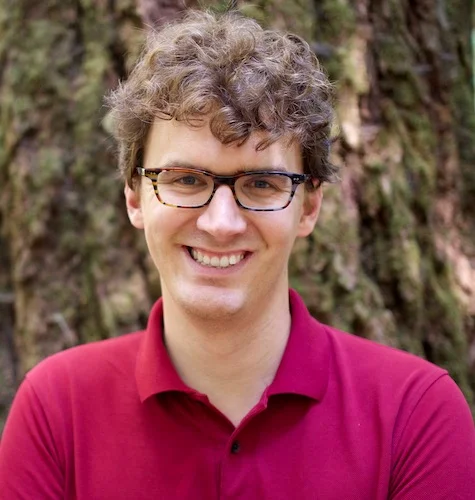
Carl Vondrick is a Professor in the Department of Computer Science at Columbia University. His research focuses on creating robust and versatile perception systems that leverage video and interaction with the natural world, with applications in 3D reconstruction, visual question answering, and robot manipulation. Former research scientist at Google Visiting researcher at Cruise Education: PhD (2017) from MIT, advised by Antonio Torralba BS (2011) from UC Irvine, advised by Deva Ramanan His research explores multimodal approaches for cross-task and cross-modal transfer, scene dynamics, audiovisual perception, interpretable models, and spatial awareness systems. The lab emphasizes zero-shot generalization and neuro-symbolic methods while addressing safety and robustness in AI systems. Key publication trends include: 2025: Video generation for robotics 2024: Differentiable rendering and cross-modal reasoning 2023: Robust perception and 3D modeling Scientific Awards: 2024 PAMI Young Researcher Award 2021 NSF CAREER Award Teaching Roles: Teaching Computer Vision II (2021-2025), Computer Vision I (2018-2019), and Representation Learning (2020-2022). Advising: Advises 8 current PhD students and has mentored 5 graduated students now at institutions like MBZUAI and UMD. The lab recruits 1-2 PhD students annually through Columbia’s PhD program. Grants and Collaborations: Funded by NSF, DARPA, Toyota Research Institute, Amazon Research, and Google.
Prof. Niki Kilbertus is an Assistant Professor at the Technical University of Munich (TUM) in the Department of Informatics, and Group Leader at Helmholtz AI. His research focuses on causal machine learning, ethical AI systems, and applications in healthcare, climate science, and dynamical systems. He earned his PhD from the University of Cambridge (2020) and has held positions at DeepMind, Google, and Amazon during his studies. His research interests include causal discovery, fairness in AI, counterfactual reasoning, and integrating physics-based constraints into neural networks. Key contributions include foundational work on fair machine learning (e.g., avoiding discrimination through causal models) and developing methods for causal inference in complex systems like healthcare and climate modeling. Recent work emphasizes generative models for causal interventions, robust treatment effect estimation, and physically consistent neural differential equations. He leads a large interdisciplinary group with over 20 students and postdocs working on projects funded by Helmholtz Association, ERC, and industry collaborations. Notable awards include the Leopoldina Prize for Young Scientists (2024) and membership in the Junge Akademie. His lab maintains active partnerships with ELLIS, MCML, and the Zuse Institute Berlin.
Jonas Fischer is the head of the Explainable Machine Learning group at the Max Planck Institute for Informatics, Department of Computer Vision and Machine Learning. His research focuses on interpreting complex machine learning models, particularly in genomics and healthcare, aiming to enhance robustness and alignment with human decision-making. Prior to his role at MPI, he was a postdoctoral fellow at Harvard University's Department of Biostatistics, where he worked on interpretable models for gene regulatory systems in cancer. Education: PhD in Computer Science from Saarland University (2022), with a thesis titled More than the sum of its parts , exploring the intersection of pattern mining and deep learning. He has contributed to advancing methods in neural network pruning, federated learning, and low-dimensional embeddings (e.g., dtSNE, Mercat). His work bridges computational biology, data mining, and machine learning, with applications in DNA methylation analysis, graph-based differential networks, and biomedical informatics. Key research areas include: (1) Explainable AI and neural network interpretability, (2) Biomedical applications of machine learning (e.g., gene regulatory networks, cancer genomics), (3) Low-dimensional embeddings and visualization techniques, (4) Federated learning for privacy-preserving collaborative models, and (5) Pattern mining for error analysis in NLP and classification tasks. Publications span top venues like NeurIPS, ICLR, Bioinformatics, and Genome Biology. His group develops tools such as BONOBO for omics data integration and node2vec2rank for scalable graph analysis. He actively collaborates with biomedical researchers to address challenges in data-driven healthcare and precision medicine.
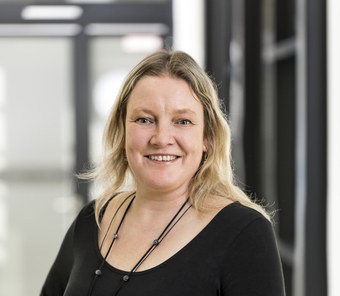
Celestine Mendler-Dünner is a Principal Investigator at the ELLIS Institute in Tübingen, co-affiliated with the Max Planck Institute for Intelligent Systems and the Tübingen AI Center. She leads the Algorithms and Society research group, focusing on machine learning in social contexts and the role of prediction in digital economies. Her work bridges theoretical machine learning with practical societal impact, developing tools for safe, reliable, and equitable AI ecosystems. Her educational background includes a PhD from ETH Zurich in collaboration with IBM Research, followed by an SNSF postdoctoral fellowship at UC Berkeley hosted by Moritz Hardt. She was previously a group leader at the Max Planck Institute for Intelligent Systems before joining the ELLIS Institute. Mendler-Dünner's research spans several interconnected themes including performative prediction (where predictions change the behavior they aim to predict), algorithmic collective action (how participants can steer AI systems toward common goals), and the role of LLMs in social science research. Her work combines theoretical foundations with practical implementations, addressing challenges in interactive machine learning, optimization in dynamic environments, and context-specific evaluation of AI systems. She particularly examines how algorithmic predictions mediate services and platforms at societal scale, exploring concepts of economic power in digital markets. Her publication record shows a clear evolution from system-aware machine learning algorithms (including foundational work on IBM Snap ML) toward increasingly sociotechnical questions at the intersection of machine learning, economics, and policy. Recent work focuses on measuring performative power in digital economies, evaluating LLMs as risk scores, and developing frameworks for algorithmic collective action in recommender systems and labor markets. Among her notable recognitions are the ETH Medal for her dissertation, the IBM Research Division Award, the Fritz Kutter Award, and the IBM Eminence and Excellence Award. She is an ELLIS Scholar, a fellow of the Elisabeth-Schiemann-Kolleg, and affiliated with several prestigious research programs including the International Max Planck Research School for Intelligent Systems and the Max Planck ETH Center for Learning Systems. ETH Medal (dissertation award) IBM Research Division Award Fritz Kutter Award IBM Eminence and Excellence Award SNSF Early Postdoc Mobility Fellowship Mendler-Dünner actively mentors the next generation of researchers, advising PhD student Patrik Wolf and supervising research interns including Joachim Baumann, Haiqing Zhu, and Anna Badalyan, as well as Master's student Dorothee Sigg. She serves as core faculty for the International Max Planck Research School and associated faculty for the Max Planck ETH Center for Learning Systems. Her group has secured significant research funding through fellowships and institutional support, enabling work on projects like Powermeter (measuring search engine influence) and Snap ML (resource-efficient machine learning library with over 1 million PyPI downloads). She leads the Algorithms and Society research group, which examines machine learning as part of broader sociotechnical ecosystems. The group explores human-population interactions with algorithmic systems and incorporates these insights into learning system fundamentals. Current projects include investigating economic incentives in digital platforms, developing tools for systematic LLM evaluation in social science contexts, and creating frameworks for collective action in algorithmic systems. Mendler-Dünner also co-organizes the Algorithmic Collective Action workshop at NeurIPS 2025, demonstrating her leadership in emerging research directions at the AI-society interface.
Matthias Hein is a Professor at the Department of Computer Science, Faculty of Mathematics and Natural Sciences, University of Tübingen. His research focuses on Machine Learning , Adversarial Robustness , and Out-of-Distribution Detection , with applications in computer vision and medical imaging. He has received notable recognition including the Best Paper Honorable Mention Prize at ICLR 2021 and Outstanding Paper Award at CVPR 2021. His work includes developing benchmarks like RobustBench and Spurious ImageNet , and frameworks such as Sparse-RS and DIG-IN . His recent publications emphasize adversarial robustness across multiple domains (vision, text), counterfactual explanations for classifiers, and improved OOD detection methods . Collaborators include prominent researchers like Francesco Croce, Julian Bitterwolf, and Alexander Meinke. Scientific Awards : Best Paper Honorable Mention (ICLR 2021) CVPR 2021 Outstanding Paper Award Key Research Areas : Adversarial Robustness Vision-Language Models Medical Imaging AI Neural Network Calibration
Angela Capel Cuevas is an Assistant Professor of Quantum Information Theory/Theoretical Quantum Computation at the University of Cambridge's Department of Applied Mathematics and Theoretical Physics (DAMTP). Previously, she held a Junior Professorship at Eberhard Karls Universität Tübingen (2021-2024) and was an MCQST Distinguished PostDoc at TU München (2020-2021). Her research focuses on the intersection of quantum information theory and quantum many-body systems, particularly studying thermalization dynamics via quantum functional inequalities. She is a recipient of the Simons Emmy Noether Fellowship and Forbes 30 Under 30 (Spain 2023). Education: PhD in Mathematics, Universidad Autónoma de Madrid/ICMAT (2015-2019) Master in Computational Engineering and Mathematics, URV/UOC (2016-2018) Bachelor in Mathematics, Universidad de Granada (2009-2014) Research: Angela's work applies analytic and geometric tools to quantum systems, emphasizing decay of correlations in Gibbs states and quantum dissipative evolutions. Key topics include entropy inequalities, modified logarithmic Sobolev inequalities, and thermalization rates in spin chains. Her recent work bridges quantum functional analysis with practical implications for quantum computing and thermalization phenomena. Grants & Roles: PI of CRC TRR 352 'Mathematics of Many-Body Quantum Systems' (7M€) Co-PI of QuantERA project TouQan (1.25M€) Organized workshops at BIRS and Tübingen (2023-2024) Awards: Simons Emmy Noether Fellowship (2023) Forbes 30 Under 30 (2023) Vicent Caselles RSME-FBBVA Award (2022) Labs/Teams: Leads a group studying quantum dissipative systems and thermalization at DAMTP. Collaborates with institutions globally on quantum functional inequalities and Gibbs state properties.
Jonathan T. Barron is a Researcher at Google DeepMind in San Francisco, specializing in Computer Vision , Neural Rendering , and 3D Scene Reconstruction . He earned his PhD at UC Berkeley under Jitendra Malik and has pioneered advancements in NeRF (Neural Radiance Fields) and diffusion-based 3D generation. Research Interests : Computer Vision, Deep Learning, Generative AI, Image Processing, and 3D Reconstruction via Radiance Fields. His work includes Bolt3D for rapid 3D scene generation, CAT3D/CAT4D for text-to-3D/4D, and Zip-NeRF for anti-aliased radiance fields. He has also developed real-time rendering frameworks like SMERF and NeRF-Casting for reflections. Scientific awards: PAMI Young Researcher Award He has served as Area Chair for CVPR, ICCV, and NeurIPS, and his research is widely adopted in applications like Google's Lens Blur , Portrait Mode , and Jump VR .
Prof. Senthold Asseng is a Professor of Digital Agriculture at the Technical University of Munich (TUM), leading the Hans Eisenmann Forum for Agricultural Sciences since 2021. His research focuses on climate-plant-soil systems modeling, addressing global food security, sustainable agriculture, and digital technologies like vertical farming and autonomous robotics. He holds a PhD from Humboldt University Berlin and habilitation from TUM, with prior roles at CSIRO Australia and the University of Florida (as Full Professor and Director of the Florida Climate Institute). His honors include AAAS Fellow, Web of Science Highly Cited Researcher, and multiple teaching/mentorship awards. Education: BSc/MSc in Agronomy & Horticulture, Humboldt University Berlin (1989-1990) PhD in Agronomy, Humboldt University Berlin (1994) Habilitation in Agronomy, TUM (2004) Research Interests: Climate change impacts on crops, digital agriculture technologies, systems analysis for autonomous farming, and vertical farming sustainability. His work integrates modeling, robotics, and environmental control to enhance agricultural resilience and productivity. Awards: AAAS Fellow (2019) Highly Cited Researcher (2019) UF Research Foundation Professor (2016-2019) Grants & Leadership: Led interdisciplinary projects like AgMIP-Wheat, SECC, and FAO advisory roles. Active in editorial roles for journals like Global Change Biology and Environmental Research Letters . Labs/Teams: Chair of Digital Agriculture at TUM, collaborating on projects like Smartfield and Proteins4Singapore , focusing on automation, controlled environment agriculture, and climate-smart solutions.
Yin Tat Lee is an Associate Professor at the Paul G. Allen School of Computer Science & Engineering , University of Washington, and a Senior Principal Researcher in Microsoft AI. His research spans convex optimization , convex geometry , graph algorithms , online algorithms , and differential privacy , with applications in machine learning and theoretical computer science.
Professor Knut Reinert is a leading figure in algorithmic bioinformatics at the Free University of Berlin, where he holds a professorship in the Department of Mathematics and Computer Science. He also maintains a significant affiliation with the Max Planck Institute for Molecular Genetics in Berlin, where he leads the Efficient Algorithms for Omics Data group. His research spans both institutions through the Reinert Lab, which focuses on developing novel computational approaches for biological data analysis. Reinert's educational background includes a Diploma in Computer Science (1994) and a Doctorate (Dr. Ing./Ph.D., 1999, with honors) from the Max-Planck-Institut for Computer Science and Universität des Saarlandes in Saarbrücken. Prior to his professorship, he worked as a computer scientist under Prof. Gene Myers at Celera Genomics in Rockville, USA (1999-2002). His primary research interests center on algorithmic bioinformatics with specific focus on developing novel algorithms and data structures for biomedical mass data analysis. This includes creating mathematical models for genomic sequence analysis and algorithms for mass spectrometry data to detect differential protein expression between normal and diseased samples. His work bridges the gap between computational tool development and practical biological applications, with particular emphasis on NGS and proteomics data. The publications and projects led by Prof. Reinert demonstrate a consistent focus on advancing computational methods in bioinformatics. His research spans genomic sequence analysis, RNA research (particularly long non-coding RNAs), parallel computing applications, and GPU acceleration for biological data processing. The work shows increasing sophistication in handling large-scale biological datasets through innovative algorithmic approaches. Intel® Parallel Computing Center designation for his lab CUDA Research Center status DFG funding of 530 thousand Euros for RNA research de.NBI funding of 2 million Euros BMBF funded projects 'LIVE-DREAM' and 'EssBar' Prof. Reinert leads multiple significant research projects and has established strong collaborations with international partners including Texas A&M, Kings College London, Eberhardt-Karls Universität Tübingen, Robert-Koch-Institute, and various Turkish institutions. His lab receives funding from major organizations including DFG, BMBF, and Intel. The Reinert Lab maintains active teaching responsibilities at FU Berlin, offering courses at BSc, MSc, and PhD levels using both traditional and innovative learning concepts like e-learning and inverted classrooms. The Reinert Lab consists of two interconnected research groups that work closely with experimental biologists and medical researchers to develop practical computational solutions for real-world biological problems. The lab has established itself as a key player in the German and international bioinformatics community through its development of the widely-used SeqAn library and participation in national infrastructure initiatives.
Prof. Justus Thies is Full Professor for 3D Graphics & Vision at the Technical University of Darmstadt and leads the Neural Capture & Synthesis research group at the Max Planck Institute for Intelligent Systems. His research develops AI methods to capture and synthesize the real world using commodity hardware, focusing on markerless motion capture of faces and bodies, and photorealistic neural rendering. His work has been recognized with the German Pattern Recognition Award, Eurographics Young Researcher Award, and an ERC Starting Grant (all 2024). Recent publications focus on Gaussian-based avatars, neural human reconstruction, and diffusion models for scene synthesis.
Susanne Weis is a Research Professor and Group Leader of the 'Variability of the Brain' group at the Department of Brain and Behavior (INM-7), part of the Institute of Neuroscience and Medicine (INM) at Research Center Jülich GmbH. Her work focuses on understanding brain variability through advanced neuroimaging techniques and machine learning, with particular emphasis on sex differences, hormonal influences, and clinical applications in mental health. Her research interests include neuroimaging methodologies, machine learning applications in cognitive neuroscience, and the structural-functional relationships underlying brain variability. She investigates how factors like sex hormones and naturalistic stimuli (e.g., movies) affect brain connectivity and cognitive performance, aiming to improve diagnostic and predictive tools for disorders such as schizophrenia and Alzheimer’s disease. Publications highlight her contributions to developing datasets (e.g., SpEx), analyzing confound leakage in ML models, and exploring meta-analytic networks during naturalistic viewing. Her work bridges basic science and clinical impact, addressing challenges in interpreting neuroimaging data and advancing personalized medicine approaches. In her role as a group leader, Weis oversees research projects and collaborates with interdisciplinary teams. She is affiliated with the Helmholtz Association and contributes to the broader scientific community through her research in neuroimaging and computational neuroscience.
Prof. Dr.-Ing. Rüdiger Daub serves as Professor and Chair of Production Engineering and Energy Storage Systems at the Technical University of Munich (TUM), operating within the Department of Mechanical Engineering. His leadership encompasses research direction, academic supervision, and strategic development of battery production technologies at TUM's Garching campus (Boltzmannstr. 15), with active industry collaborations driving innovation in sustainable manufacturing. Daub's research program pioneers advanced production methodologies for lithium-ion and solid-state batteries, focusing on electrode manufacturing, electrolyte filling, and cell assembly processes. His work investigates critical parameter interdependencies affecting battery safety and performance, developing inline monitoring systems and digital twin technologies for real-time process optimization. Key contributions include moisture control in electrode production, electrochemo-mechanical characterization of solid-state systems, and robotics solutions for deformable object assembly, all integrated with machine learning for quality assurance in industrial settings. Analysis of his 2023-2025 publications reveals a dominant research trajectory toward solving production bottlenecks in next-generation energy storage. The work demonstrates increasing integration of computational modeling with empirical validation, particularly in solid-state battery manufacturing and high-voltage electrolyte systems. A notable trend is the cross-pollination of robotics, computer vision, and uncertainty quantification techniques to address complex assembly challenges and distribution shifts in quality monitoring, reflecting industry's urgent need for adaptable, data-driven production systems. Leading TUM's specialized laboratories for battery cell production, Daub's team maintains comprehensive facilities for electrode calendering, electrolyte filling, and cell assembly with integrated tracking and tracing capabilities. The research infrastructure supports collaborative projects with automotive OEMs and battery manufacturers to develop scalable production processes, emphasizing environmental sustainability through water-based electrode production and footprint optimization. Current initiatives focus on digital factory modeling and prelithiation technologies for next-generation battery systems.
Holger Fröning is a full professor at Heidelberg University’s Institute of Computer Engineering (ZITI), where he leads the Hardware and Artificial Intelligence (HAWAII) Lab. His research focuses on embedded machine learning , high-performance computing , and hardware-software co-design , with emphasis on resource efficiency, power optimization, and emerging architectures like analog , photonic , and resistive memory systems. He has held leadership roles including Managing Director of ZITI (2023–present) and Dean of Studies for Computer Science (2019–2022) , and has collaborated with institutions such as NVIDIA Research, Chinese Academy of Sciences, and Graz University of Technology. Research Trends : His recent publications explore Bayesian neural networks , green machine learning , analog computing noise mitigation , and GPU/FPGA optimization . Articles highlight photonic computing for AI , memory-efficient training , and hardware-aware DNN compression . Scientific Awards : 2025 HiPEAC Paper Award (Nature Computational Science) 2014 Google Faculty Research Award Multiple Best Paper Awards (IPDPS, ICPP, ECML-PKDD workshops) Leadership & Service : Organized workshops (WEML, ITEM, F4HD), chaired tracks at EuroPar and ISC, and served on program committees for ICPR, ECAI, and FPL. Education & Affiliations : PhD and MSc from University of Mannheim (2007/2001). Sponsors include DFG, FWF, FFG, NVIDIA, SAP, and XILINX.
Matthias Feurer is a Thomas Bayes Fellow and interim professor at the Chair of Statistical Learning and Data Science, funded by the Munich Center for Machine Learning (MCML) at Ludwig Maximilian University of Munich. He is a member of the Department of Statistics at LMU Munich, working under Prof. Dr. Bernd Bischl. His academic background includes: PhD in Computer Science from Albert-Ludwigs-Universität Freiburg, supervised by Prof. Dr. Frank Hutter M.Sc. in Computer Science from the University of Freiburg B.Sc. in Computer Science and Media from the Media University Stuttgart Feurer's research focuses on simplifying machine learning usage through Automated Machine Learning (AutoML). His work encompasses hyperparameter optimization, meta-learning, and model selection, with increasing emphasis on multi-objective AutoML that considers factors beyond predictive performance such as interpretability, deployability, and fairness. He actively develops open-source tools to advance the field. His recent publications demonstrate a strong trajectory in practical AutoML systems, with growing attention to tabular machine learning, foundation models integration, and addressing real-world constraints in optimization. His work consistently bridges theoretical advances with practical implementations through several widely-used open-source projects. Notable achievements include: 1st place in the warmstarting-friendly leaderboard of the BBO NeurIPS challenge Winner of the 2nd AutoML challenge Winner of the kdnuggets blog contest on AutoML Feurer is actively mentoring and teaching, having advertised PhD positions focused on AutoML, optimization, and benchmarking. He co-founded the Open Machine Learning Foundation supporting OpenML.org. His upcoming move to TU Dortmund as an assistant professor in AutoML and Optimization signals continued growth in his academic career while maintaining his research focus on making machine learning more accessible and rigorous.