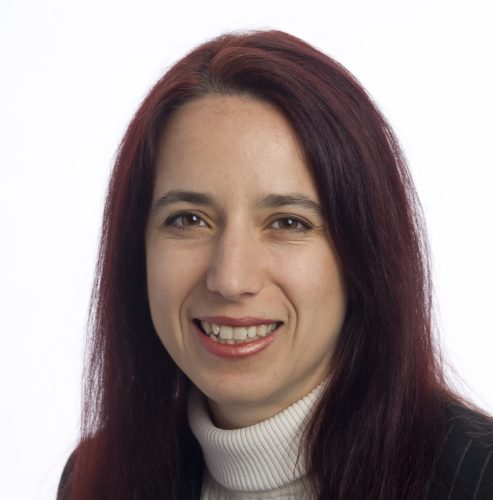
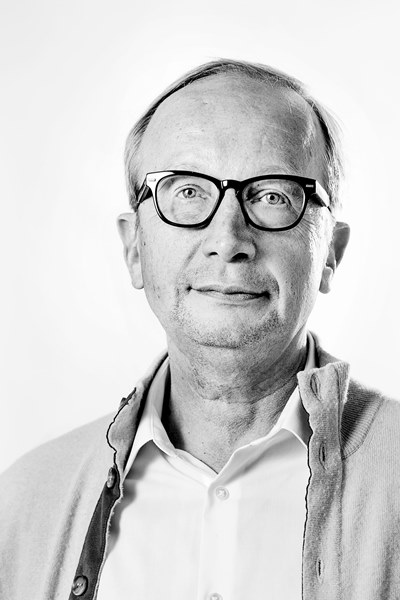
Anton Rask Lundborg is a Postdoctoral Research Fellow at the Department of Mathematical Sciences, University of Copenhagen. He works in the areas of Statistics, Machine Learning, and Functional Data Analysis. Key research areas: Statistics, Machine Learning, Functional Data Analysis, Causal Inference, Bioinformatics, Nonparametric Statistics Research groups: SPT (Statistical Learning Theory), CoCaLa (Collaborative Causal Learning) His recent work focuses on causal feature selection, variable significance testing, and functional data analysis applications. Publications span journals like Journal of the American Statistical Association , Briefings in Bioinformatics , and Annals of Statistics . Methodological innovations include the Projected Covariance Measure and conditional independence testing in Hilbert spaces. Explore his full research profile and publications via ORCID or the University of Copenhagen's Mathematical Sciences website .
Irena Vodenska is Professor of Finance and Director of Finance Programs at Boston University’s Metropolitan College, Department of Administrative Sciences. She holds a PhD in statistical finance and an MA in economics from Boston University, an MBA from Vanderbilt University, and a BS in computer information systems from the University of Belgrade. She is also a Chartered Financial Analyst (CFA) charter holder. Her research is at the intersection of finance, complexity science, and artificial intelligence, focusing on systemic risk modeling, ESG investments, and financial network dynamics. She has led major interdisciplinary research projects funded by the National Science Foundation, the European Commission, and the U.S. Army Research Office. PhD, Statistical Finance – Boston University MA, Economics – Boston University MBA – Owen Graduate School of Management, Vanderbilt University BS, Computer Information Systems – University of Belgrade Dr. Vodenska’s research interests include network theory in finance, systemic risk propagation, AI-powered ESG analysis, cryptocurrency price forecasting, and financial regulation. She employs big data, machine learning, and natural language processing to analyze financial news, market dynamics, and corporate sustainability. Her work investigates how climate disinformation spreads via social networks and influences public policy and governance. The recent articles highlight a consistent focus on modeling financial and economic systems using network science and AI. Trends include systemic stress testing, sentiment analysis in financial markets, cascading failures, and the interplay between macroeconomic indicators and financial networks. Her work spans econophysics, behavioral finance, public health economics, and ethical AI in fintech. National Science Foundation (NSF) research grant (2023) NSF EAGER Award (2014–2015) European Commission FET Open Grant (2012–2014) U.S. Army Research Office (ARO) Grant (2020–2021) MEXT Post-K Computer Grant, Japan (2016–2019) Alexander Hamilton Fulbright Fellowship (1994) Owen Graduate School Fellowship (1995–1996) Dr. Vodenska teaches core finance courses such as Investment Analysis and Portfolio Management, Derivatives Securities, and Financial Regulation and Ethics. She co-developed the MET AD 678 course with Professor Tamar Frankel from BU Law, emphasizing real-world case studies and ethical decision-making. Her research grants have supported innovative work in systemic risk modeling, AI for ESG, and financial network stability. She is actively involved in mentoring, conference organization, and editorial roles in leading journals. She is a key organizer of the International School and Conference on Network Science (NetSci) and the Big Data in Economics, Science, and Technology (BEST) Conference. Her lab and research team focus on complexity in financial systems, bringing together economists, physicists, computer scientists, and data analysts to study global financial stability and sustainability.
Shuai Zhao is an Assistant Professor at the AAU Energy Department, Faculty of Engineering and Science, Aalborg University. His research focuses on applying machine learning and artificial intelligence techniques to enhance reliability and condition monitoring in power electronic systems, with specific interests in lifetime estimation, fault diagnosis, and health management of critical components like capacitors and semiconductor devices. Institution: Aalborg University School: Faculty of Engineering and Science Department: AAU Energy Email: szh@energy.aau.dk His research spans multiple domains including: Physics-informed machine learning for power converter systems Remaining useful life prediction with hybrid Bayesian deep learning Thermal transient analysis and stress emulation methods IoT-enabled monitoring schemes for semiconductor devices Neural network applications in lithium-ion battery prognostics Recent publications show a strong trend toward integrating domain-specific physics with machine learning frameworks to address real-world challenges in: Power electronics reliability under operational stress Anomaly detection in multivariate time-series data Robust fault diagnosis for railway traction systems Temperature estimation in electric vehicle motors Imbalanced data handling in diagnostic systems Capacitance degradation modeling under environmental factors Current projects demonstrate collaboration with leading institutions on: AI-assisted long-term maintenance strategies Physics-informed neural network architectures Smart agricultural monitoring systems via IoT platforms Advanced particle filter methods for life prediction
Mojtaba Zarei is a researcher at the Department of Clinical Research, Faculty of Health Sciences, University of Southern Denmark, with additional affiliations at Odense University Hospital (OUH) and Karolinska Institutet (KI). His primary research unit is the Neurology Research Unit in Odense, focusing on advanced neuroimaging techniques and their applications in neurological and sleep disorders. Dr. Zarei's research spans multiple domains within neuroscience, with particular expertise in Positron Emission Tomography (PET), Diffusion Tensor Imaging (DTI), and cognitive function assessment. His work frequently addresses Alzheimer's Disease, Parkinson's Disease, and insomnia disorders, utilizing both clinical and computational approaches. His fingerprint analysis shows strong activity in neuroscience (100% for PET), diffusion tensor imaging (66%), cognitive function (45%), and Alzheimer's Disease (40%). His recent publications reveal a clear trajectory toward integrating multimodal imaging techniques with machine learning approaches for improved diagnosis and understanding of neurological conditions. The work on OPETIA (Odense-Oxford PET Image Analysis) demonstrates his contribution to developing standardized tools for neuroimaging analysis. His research increasingly bridges computational methods with clinical neuroscience, as evidenced by his work on image stitching algorithms and machine learning applications for insomnia classification. Dr. Zarei actively collaborates with researchers across multiple institutions, with notable external collaborations visible on the international network map. His work has been mentioned by peer review sites, picked up by news outlets, and shared across social media platforms, indicating growing impact in his field. Within his research unit of Neurology in Odense, Dr. Zarei appears to be part of a multidisciplinary team working at the intersection of clinical neurology, advanced imaging, and computational analysis, contributing to both methodological development and clinical applications of neuroimaging techniques.
Helle Sørensen is a Professor at the Department of Mathematical Sciences, University of Copenhagen. Her work bridges theoretical and applied statistics with interdisciplinary applications in biological and environmental sciences. Education : BSc (1993), MSc (1997), PhD (2000) in Statistics from University of Copenhagen. Employment : Professor (2018–present), Head of Data Science Lab (2018–2021), Professor MSO and head of Laboratory for Applied Statistics (2013–2018), Associate/Assistant Professor across multiple departments (2000–2013). Research Interests focus on: Functional data analysis Statistical inference for dependent data and stochastic processes Applications in biology, agriculture, and food science Her recent publications highlight statistical methodologies applied to: Enzymatic degradation of plant material Multivariate analysis in metabolic studies Random forest efficiency in metric spaces Quantile regression for longitudinal data Child food texture preferences and insect acceptance Teaching includes courses in basic probability, statistical theory, and applied statistics for bio/life sciences students. She supervises BSc, MSc, and PhD students in Statistics with co-supervision roles in interdisciplinary fields.
Mateja Novak is an Assistant Professor at AAU Energy, Aalborg University, Denmark, within the Department of Applied Power Electronic Systems under the Faculty of Engineering and Science. Her research focuses on model predictive control, multilevel converters, machine learning, and reliability of power electronic systems, contributing to sustainable energy systems and renewable energy integration. She holds a Ph.D. from Aalborg University (2020) and an M.Sc. from Zagreb University (2014). Previously, she was a Postdoc at AAU Energy (2020-2023) and a visiting researcher at Kiel University (2018) and Danfoss (2023). Notable achievements include the EPE Outstanding Young EPE Member Award (2019) and 2nd place in the 2021 IEEE-IES Student and YP Competition. Her work spans projects like ALL2GaN (2023-2026) and AI-Power (2022-2027), addressing GaN IC solutions and AI-driven power electronics advancements. She is actively involved with IEEE societies including the Power Electronics Society and IEEE Women in Engineering. Her research outputs emphasize control strategies for power electronics, reliability analysis, and optimization techniques. Key areas of exploration include thermal stress balancing in converters, statistical model checking, and multiobjective control algorithms. Collaborations with industry partners like Danfoss and academic institutions like Kiel University underscore her interdisciplinary approach to advancing power electronics technology.
Henrik Madsen is a Professor at the Department of Applied Mathematics and Computer Science, Technical University of Denmark (DTU). His work focuses on energy systems, stochastic processes, and mathematical modeling. He leads research in areas such as demand response in district heating, probabilistic forecasting, and integration of renewable energy sources. Madsen has supervised multiple PhD students and contributes to projects like the IEA DHC Annex TS9 and SEEDS initiative. His expertise includes statistical analysis, time series modeling, and data-driven approaches for energy systems. He actively engages in collaborative research on smart grids, thermal energy storage, and sustainable energy solutions. Education: Academic qualifications from DTU, though specific details are not provided in the text. Research Interests: Mathematical modeling of energy systems Probabilistic forecasting methodologies Integration of wind and solar power Dynamic modeling for district heating Data assimilation in hydrological systems Optimization of energy flexibility Publications & Trends: Recent works emphasize demand response strategies, district heating optimization, and machine learning tools like the nabqr Python package and evalprob4cast R package. His research bridges theoretical stochastic methods with practical applications in energy infrastructure. Grants & Projects: IEA DHC Annex TS9: Digitalization of district heating SEEDS: RES-integrated electrified heating systems Data-Driven Methods for Demand-Side Flexibility Labs/Teams: Collaborates with DTU's Dynamical Systems group and participates in interdisciplinary initiatives like the Frigg 2.0 energy system analysis framework.
Henning Tangen Søgaard is an Associate Professor at the Department of Mechanical and Production Engineering, part of AU Engineering at Aarhus University. He teaches mathematics, numerical methods, and mathematical statistics to BEng students. His research focuses on robotics in agriculture , dynamic modeling , and precision agriculture . Primary Affiliation: Department of Mechanical and Production Engineering, AU Engineering, Aarhus University Research Expertise: Computer vision, control systems for agricultural robotics, environmental modeling (ammonia emissions, spray drift), and wireless sensor networks. His work includes developing autonomous systems for weed control, GPS-based geo-referencing of crops, and mathematical models for fertilizer-related emissions. Publications span peer-reviewed journals and reports in agricultural engineering , robotics , and environmental science . Scientific awards are not mentioned in the provided text. He has no listed PhD students but has collaborated on multiple projects. For direct contact, his email is hts@mpe.au.dk .
Thorbjørn Knudsen is a Part-Time Professor of Strategic Organization Design at the University of Southern Denmark (SDU), co-director of the Danish Institute for Advanced Study (DIAS), and research leader of the Strategic Organization Design (SOD) unit. His work focuses on evolutionary processes, organizational adaptation, and how design impacts collective outcomes. He holds a PhD in Business Economics (1999) and a Diploma in Economics (1994), both from SDU. Knudsen has led over €3.75 million in research projects, including a Sapere Aude Advanced Grant (2014–2019). He serves as Senior Editor of Organization Science and editorial roles in top journals like Strategic Management Journal . His research spans organizational learning, decision-making hierarchies, and biological analogies to organizational complexity. Notable works include Context and Aggregation (2023) and Ant Colonies (2021). Awards include the Order of Dannebrog and Tietgenprisen 2003. Knudsen’s SOD unit hosts international researchers and focuses on strategic design, search/learning, and value chain organization. He supervises PhDs and teaches strategy, organization theory, and statistics. Key collaborations include institutions like Wharton, Stanford, and Warwick. His funded projects address risk management, knowledge sharing, and firm dynamics. Current roles include Chair of Social Sciences at DIAS and member of the Strategy Research Initiative.
Dr. Mogens Dam is an Associate Professor at the Niels Bohr Institute , University of Copenhagen , specializing in Experimental Particle Physics . He is a key contributor to the ATLAS Collaboration at CERN, focusing on high-energy physics research and detector technologies. His research interests include Higgs boson studies , top quark physics , neural simulation-based inference , and detector design for future colliders . He has led significant work on heavy-ion collisions and trigger systems for the ATLAS experiment. Dr. Dam's recent publications highlight advancements in parameter estimation using machine learning, searches for new particles at the LHC, and commissioning of detector technologies for precision measurements. His work spans both theoretical and applied aspects of experimental high-energy physics.
Joanna Bergström is an Associate Professor in the Department of Computer Science within the Faculty of Science at the University of Copenhagen. Her research focuses on human-centered computing, specifically in human-computer interaction (HCI), virtual reality (VR), and body-based user interfaces. Based at Sigurdsgade 41 in Copenhagen, she maintains an active research profile with 41 publications and significant international collaborations. Her primary research interests include virtual reality systems , haptic feedback mechanisms , interaction techniques , and perceptual studies . She investigates experimental methods in HCI, human perception, motor skills, and statistical modeling. Current projects explore tendon vibration for movement illusions in VR, ultrasound-based chemical stimulants for skin haptics, and doorway effects on memory in virtual environments. Analysis of her 15 most recent publications (2023-2025) reveals strong emphasis on VR locomotion techniques , haptic perception , and cognitive aspects of virtual environments . Key trends include multimodal feedback systems (combining tactile and chemical stimulation), real-world application of VR for medical training, and rigorous experimental validation of interaction paradigms. Her work frequently appears in top venues like CHI and IEEE Transactions on Haptics. Bergström maintains active research networks across multiple countries, with significant external collaborations reflected in her publication record. Her work has been referenced by 12 news outlets and garnered attention on social media platforms including X (7 users) and Bluesky (3 users), while accumulating 23 Mendeley readers for her 2025 DIRA paper.
Jens Petersen is an Associate Professor at the Department of Computer Science , University of Copenhagen, specializing in medical image analysis. He works within the Image Analysis, Computational Modelling, and Geometry research section. Education: B.Sc. (2005), M.Sc. (2010) in Computer Science from University of Copenhagen; Ph.D. (2014) in Medical Image Analysis from University of Copenhagen with visiting researcher experience at University College London. Research Interests: Focus on medical image analysis techniques for segmentation and statistical analysis of tubular/branching structures like airways and carotid arteries. Key methodologies involve graph cuts, optimal surface methods, and computational modeling. Current research includes AI-guided tumor delineation, longitudinal image synthesis, and physics-based deformable registration. Publications Trends: Recent work spans AI applications in oncology, computational methods for cardiovascular imaging, and algorithm development for radiation therapy. Collaborations include international institutions and cross-disciplinary teams in machine learning and medical imaging.
Jonas Vinther is a Research Fellow at the Department of Computer Science , University of Copenhagen, specializing in Machine Learning and its intersections with quantum computing, medical data analysis, and sustainability. He is also an external PhD student in the Quantum Information Science & Technology program at the Niels Bohr Institute. Email: jonas.vinther@nbi.ku.dk , jonas.vinther@di.ku.dk Location: Universitetsparken 1, 2100 København Ø His research spans quantum machine learning , AI ethics , medical imaging , and environmentally sustainable AI , with recent publications on topics ranging from quantum neural networks to fairness in recommender systems . He contributes to the SCIENCE AI Centre and collaborates on initiatives like TreeSense for global tree resource monitoring.
Francois Lauze is an Associate Professor at the Department of Computer Science , University of Copenhagen, affiliated with the Image Analysis, Computational Modelling and Geometry research group. His work bridges mathematical rigor and practical applications in image processing and shape analysis. Research Focus: Mathematical Image Analysis (variational/PDE methods) Differential and Riemannian geometry for shape statistics Applications: image inpainting, motion estimation, segmentation, medical imaging Contact: Email: francois@di.ku.dk Phone: +4535335671, +4521553933 Location: Universitetsparken 1, 2100 Copenhagen Ø Recent publications highlight advancements in SE(3) group CNNs for diffusion imaging, locally orderless networks for efficient processing, and refractive multi-view stereo techniques. His work integrates geometric modeling with computational implementations, emphasizing medical and video applications.
Abdulkadir Celikkanat is an Assistant Professor in the Department of Computer Science at Aalborg University, Denmark. He is affiliated with The Technical Faculty of IT and Design and the Data, Knowledge and Web Engineering research group. His research focuses on graph representation learning, network analysis, bioinformatics, and machine learning applications in dynamic systems. Key projects include the Villum Foundation-funded 'DarkScience: Illuminating microbial dark matter through data science,' which explores metagenomic binning and microbial ecology using advanced data science techniques. He has been recognized with the Best Paper Award (2023) for contributions to temporal graph analysis and modeling. His work spans continuous-time dynamic node representations, scalable genome profiling, and polarization detection in social networks. Celikkanat collaborates widely, contributing to interdisciplinary research at the intersection of computer science, biology, and environmental science. Recent publications highlight innovations in graph embeddings, citation network modeling, and hybrid membership latent distance models. His research addresses challenges in low-dimensional graph representations, efficient kernel methods, and integrating biological networks for protein analysis.