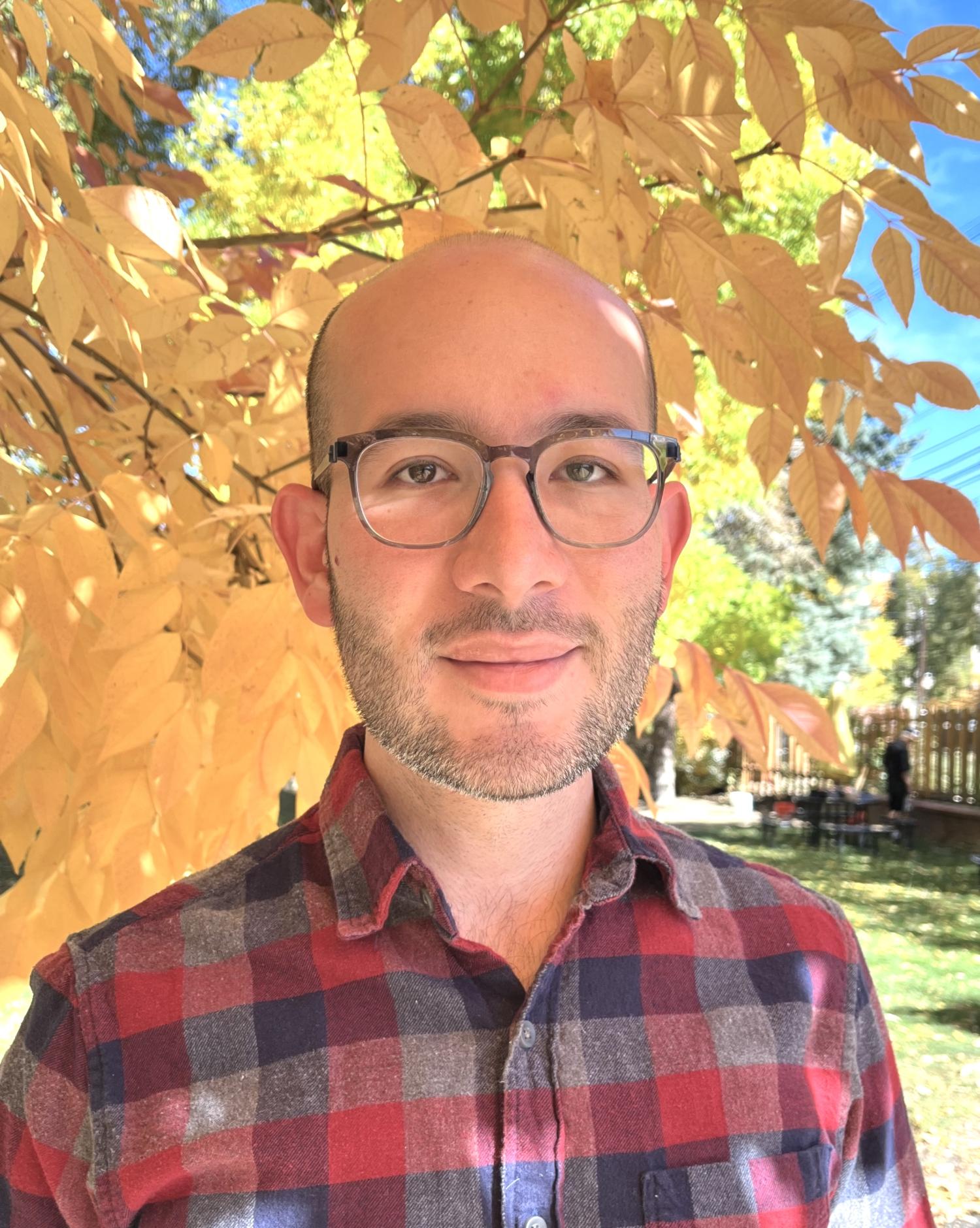
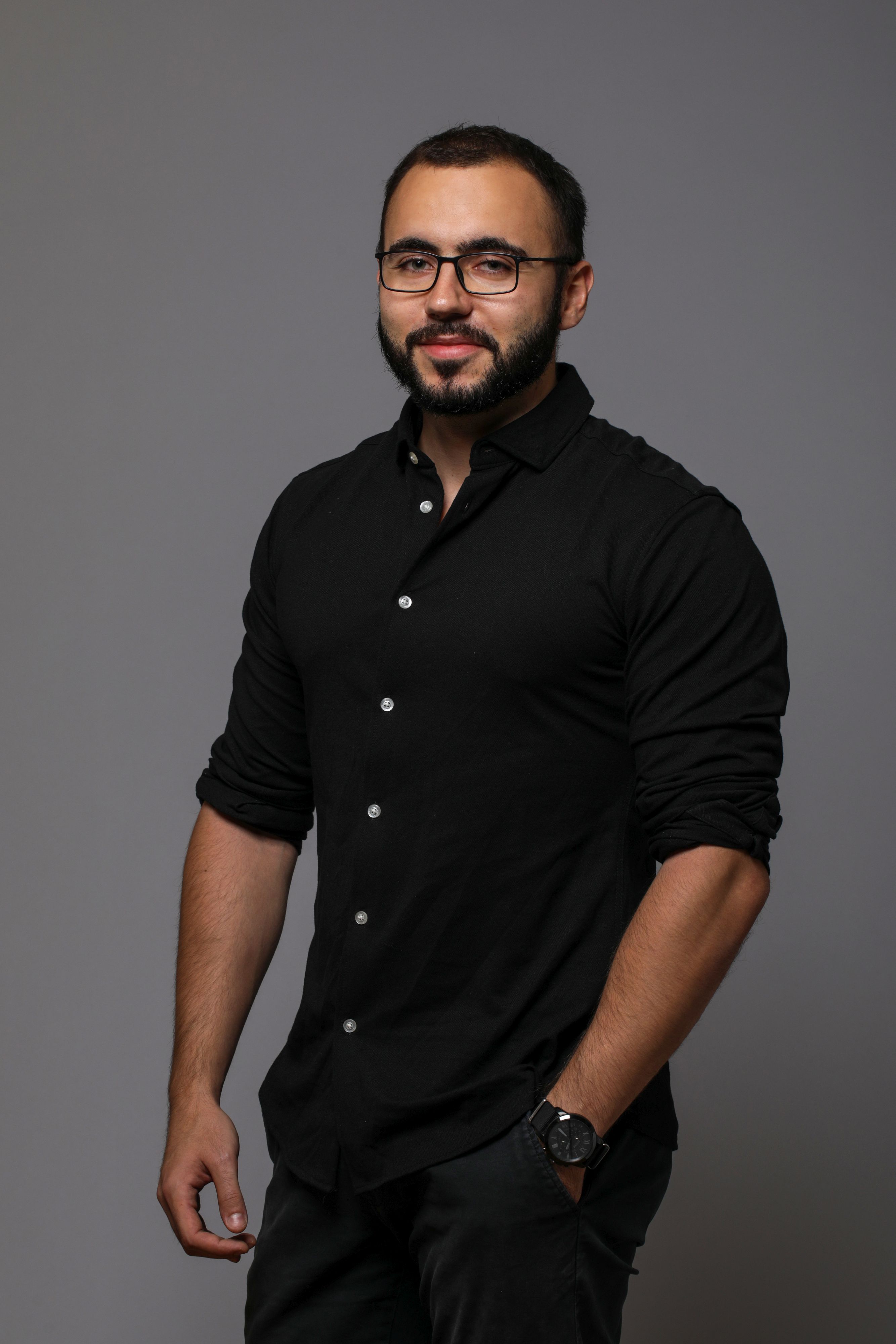
Paul Zinn-Justin is a Professor in Mathematical Physics at the School of Mathematics and Statistics . His research spans the intersection of quantum integrable systems , algebraic geometry , and combinatorics , with a focus on connections between these fields. Education: PhD and Habilitation from Universite Pierre et Marie Curie (Paris VI) Recent projects include Shuffle Algebras and Vertex Models (2024-2027) and Elliptic Schubert Calculus (2021-2026), funded by ARC, NHMRC, and MRFF grants . His work applies lattice models and quantum algebra to problems in symmetric function theory and Schubert calculus. Paul contributes to computational algebra through the CotangentSchubert Macaulay2 package (2024), enabling computation of motivic Chern and Segre classes of Schubert cells. His scholarly output includes over 93 works, with recent emphasis on exactly solvable lattice models, shuffle algebras, and quantum group structures.
Gregory Grason is a Professor in the Department of Polymer Science and Engineering at the University of Massachusetts Amherst , affiliated with the Silvio O. Conte National Center for Polymer Research. His work bridges condensed matter theory , statistical physics , and differential geometry to study geometric frustration in soft matter and polymeric assemblies . PhD in Physics , University of Pennsylvania, 2005 BA in Physics , University of Pennsylvania, 2000 His research focuses on how geometric frustration —local incompatibility in molecular or particulate building blocks—drives self-organization of complex, robust structures across scales. Current projects include: Morphology selection in 2D soft matter , analyzing non-planar geometries in thin sheets and membranes. Programmable self-assembly principles inspired by biological systems and synthetic design (e.g., DNA origami). Filamentous matter studies, linking one-dimensional intra-filament properties to multi-filament organization. Complex macromolecular mesophases , such as block copolymer assemblies with polycontinuous networks. His group’s publications span journals like Nature Communications , PNAS , Physical Review Letters , and Soft Matter , with recent emphasis on scale-dependent behaviors and design principles for frustrated assemblies. Key awards include the NSF CAREER Award , Sloan Research Fellowship , and Fellow of the American Physical Society , with funding from the NSF , Department of Energy , and ACS PRF . Grason’s lab trains future scientists in theoretical modeling and interdisciplinary approaches, while his editorial roles (e.g., New Journal of Physics ) shape the field’s discourse.
Prof. Dr. Carsten Burstedde is a faculty member at the Institut für Numerische Simulation within the University of Bonn , specifically affiliated with the Faculty of Mathematics and Natural Sciences . His work focuses on developing scalable algorithms for adaptive mesh refinement (AMR) that operate efficiently on the world’s largest supercomputers. He leads the development of the p4est software library , a foundational tool for parallel AMR applications, and contributes to projects like ForestClaw for simulating volcanic ash transport in atmospheric flows. His research spans scientific computing , applied mathematics , and high-performance computing . Key application areas include geophysics (mantle convection, seismic wave propagation), fluid dynamics (incompressible flows, volcanic ash transport), and uncertainty quantification for inverse problems. He emphasizes non-conforming mesh techniques and parallel numerical solutions of PDEs , with a particular interest in hybrid mesh algorithms for complex domains. The 15 most recent publications highlight his expertise in adaptive mesh refinement across diverse contexts: 2021 works on heterogeneous systems and ghost layer optimization , 2020 contributions to p4est software and CPU ray tracing of AMR data, 2019 studies on Morton-type space-filling curves , and 2018–2016 projects enhancing ParFlow and ESPResSo with adaptive methods. Earlier papers (2015–2012) address Bayesian inverse problems , level-set methods , and multi-scale geodynamics . Scientific Awards include the Springer CSE Prize (2011) and the NSF TeraGrid Capability Computing Challenge (2008) . He has advised PhD student Johannes Holke , with whom he developed tetrahedral space-filling curves and hybrid AMR algorithms . His teaching includes courses on scientific computing , adaptive mesh refinement , and mathematics in music . The p4est summer school (2020) and collaboration with Donna Calhoun (ForestClaw project) underscore his leadership in computational science outreach and education.
Rahul Nandkishore is an Associate Professor of Physics at the University of Colorado Boulder and Director of the Center for Theory of Quantum Matter. His research focuses on emergent phenomena in complex quantum systems, particularly many-body systems and their non-equilibrium dynamics. He explores topics such as quantum phase transitions, ergodicity breaking, topological order, and the interplay of symmetry and localization in quantum matter. His academic affiliation includes the Department of Physics within the University of Colorado Boulder. He is actively involved in theoretical physics research with a dynamic focus on cutting-edge topics in quantum many-body systems. His work often intersects with condensed matter physics, quantum information, and algebraic topology. Recent research trends in his publications emphasize robustness of quantum phenomena to perturbations, topological stability in quantum memories, and the interplay between symmetry and localization. His contributions address foundational questions in quantum mechanics and materials science, with applications to quantum computing and novel material discovery. As a theorist, he collaborates widely on topics such as quantum spin liquids, heavy-fermion systems, and chiral orbital currents. His office is located in Duan F619, and he can be reached at Rahul.Nandkishore@colorado.edu.
Andrés Montoya-Castillo is an Assistant Professor in the Department of Chemistry at the University of Colorado Boulder. He holds a B.A. in Chemistry & Literature from Macaulay Honors College, CUNY (2005-2009), a Ph.D. in Chemical Physics from Columbia University (2011-2016), and was a postdoctoral scholar at Stanford University (2016-2020). His research bridges physical chemistry, condensed matter physics, and quantum information, focusing on theoretical methods to study condensed phase systems. Specific interests include molecular mechanisms of neurodegenerative diseases, quantum metrology for material characterization, and energy/charge transfer dynamics in nanomaterials. His group develops advanced simulation techniques to interpret spectroscopic data and design next-generation energy technologies. He leads the Montoya-Castillo Group, located in the Cristol Chemistry building, and has secured major funding including the Packard Fellowship and DOE Early Career Award. Education: B.A. Chemistry & Literature, Macaulay Honors College, CUNY (2005-2009) Ph.D. Chemical Physics, Columbia University (2011-2016) Postdoctoral Scholar, Stanford University (2016-2020) Research Interests: His work integrates theoretical frameworks to address challenges in: Biomolecular dynamics and disease mechanisms Quantum sensing and noise spectroscopy Energy transfer in nanomaterials Ab initio modeling of electronic structure Recent studies focus on polaron transport, trion formation in 2D semiconductors, and memory effects in molecular systems. Awards: David and Lucile Packard Fellow in Science and Engineering (2024-2029) Marinus Smith Award (2024) DOE Early Career Award (2023) Postdoctoral Fellow Award, Penn Conference in Theoretical Chemistry (2017) Labs & Facilities: Faculty office at Ekeley M323 and research lab in Cristol Chemistry 125.
Joscha Henheik is a Postdoctoral Researcher at the Institute of Science and Technology Austria (IST Austria), transitioning to the University of Geneva in September 2025 under Antti Knowles. He completed his M.Sc. (Physics, 2020) and B.Sc. (Mathematics/Physics, 2019) at the University of Tübingen, followed by a Ph.D. in Mathematics at IST Austria (2025). He co-organizes the MIX Colloquium at IST Austria. His research focuses on mathematical physics, emphasizing random matrices, quantum many-body systems, and BCS theory. Key contributions include studies on the Loschmidt echo, universality in BCS models, and adiabatic theory for quantum spin systems. His work bridges theoretical physics and rigorous mathematical analysis, addressing topics like prethermalization, eigenvector decorrelation, and integrable systems. Publications span random matrix theory, superconductivity, and adiabatic processes, with methods rooted in statistical mechanics and quantum dynamics. His collaborations include László Erdős, Giorgio Cipolloni, and Antti Knowles. Future work will explore quantum lattice systems and low-dimensional BCS phenomena at Geneva.
Max Planck is a Researcher at the Max Planck Institute for the Physics of Complex Systems (MPI-PKS), Germany, since June 2022. Prior to this, he held postdoctoral positions at the Cavendish Laboratory, University of Cambridge (2019–2022), Boston University (2018–2019), and Ghent University/University of Amsterdam (2014–2018). His research focuses on quantum many-body dynamics, dual-unitary systems, entanglement, integrability, and operator spreading. He has published extensively on exactly solvable quantum circuits, spatiotemporal information scrambling, and ergodicity-breaking phenomena, with a recent emphasis on Krylov complexity, temporal entanglement barriers, and biunitary constructions in 2024–2025. His work explores the intersection of quantum chaos, thermalization, and the eigenstate thermalization hypothesis, often leveraging space-time duality and geometric methods. He supervises a research group including Hansveer Singh, Gabriel Alves, and others. His email is claeys@pks.mpg.de.
Markus Heyl is a Professor of Theoretical Physics III at the University of Augsburg, part of the Faculty of Mathematics, Natural Sciences, and Materials Engineering. His research focuses on quantum many-body systems, dynamical quantum phase transitions, and machine learning applications in physics. He has organized workshops like 'Connecting Physics and Computer Science' (2024) and 'Bridging the Divide' (2023). Education: PhD in Theoretical Physics (2012), Ludwig-Maximilians-Universität München, advisor: Prof. Stefan Kehrein PostDoc at IQOQI Innsbruck, TU Dresden, and Technical University of Munich (2013–2022) Leibniz Group Leader at Max-Planck Institute for Physics of Complex Systems (2016–2022) Research Interests: Dr. Heyl investigates non-equilibrium quantum dynamics, including quantum phase transitions, many-body localization, and quantum simulation. His work bridges theoretical physics with machine learning, exploring neural quantum states and adaptive algorithms for NISQ-era devices. Advising & Grants: He leads the Theoretical Physics III group, advising 12 PhD students and postdocs. His research has been supported by grants focusing on quantum dynamics, machine learning applications, and collaborative projects with institutions like IQOQI Innsbruck and TU Dresden. Labs/Teams: The Theoretical Physics III group at Universität Augsburg includes experts in quantum many-body systems, with active collaborations on neural network approaches, lattice gauge theories, and quantum simulation.
Paweł T. Jochym is a Professor at the Institute of Nuclear Physics, Polish Academy of Sciences. His primary research focuses on solid-state physics, particularly the dynamical, mechanical, and electronic properties of crystalline materials, including minerals and nanomaterials. He has contributed extensively to computational studies of lattice dynamics, phase transitions, and nanomaterial behavior using density functional theory (DFT). Alongside his academic work, he is a founder of the Polish Wikipedia and actively contributes to free software projects in computational physics, such as HECSS and Elastic. His research explores advanced topics like phonon confinement in nanostructures, anharmonicity in materials, and structural phase transitions. He collaborates with international teams on projects involving nuclear inelastic scattering and computational modeling. Beyond physics, Jochym is an astronomy enthusiast, having observed variable stars and published early work on eclipsing binaries. He remains engaged in outreach through the Polish Wikimedia Foundation, emphasizing educational and open-source initiatives. Key contributions include software tools for configuration space sampling and elastic property analysis, widely used in computational materials science. His work bridges theoretical physics with practical applications, reflecting a commitment to both academic rigor and open scientific collaboration.
Dr. Josip Žubrinić is an Assistant Professor in the Department of Applied Mathematics at the Faculty of Electrical Engineering and Computing (FER), University of Zagreb. His research focuses on applied mathematics, homogenization theory, elasticity, and interdisciplinary applications in materials science and quantum systems. He is affiliated with FER's applied mathematics group and actively contributes to the Bibliography (CROSBI) research repository. Dr. Žubrinić's work spans theoretical and applied domains, including: Homogenization of PDEs in heterogeneous media Statistical mechanics models (e.g., Rydberg atoms, Flory polymer models) Combinatorial optimization for settlement planning Mathematical analysis of elastic structures and poroelastic plates Recent research highlights include studies on critical-contrast PDEs, quantum lattice systems, and multiscale modeling of composite materials. His articles demonstrate a strong emphasis on interdisciplinary methods bridging pure mathematics and real-world engineering problems. No scientific awards or grants are explicitly listed in the provided materials. His teaching includes specialized topics like complexity functions in jammed systems and combinatorial models.
Alberto Rodríguez González is a Research Professor at the Albert-Ludwigs-Universität Freiburg, Germany, affiliated with the Quantum Optics and Statistics Group. He holds a PhD in Quantum Physics from the Universidad de Salamanca (2005), with a dissertation on one-dimensional disordered quantum systems. His research focuses on disorder-induced phenomena in quantum systems, including Anderson localization, multifractal analysis, and many-body interactions in cold atoms and condensed matter. Key research areas include quantum chaos, Bose-Hubbard model dynamics, and the interplay between disorder and interactions. He has contributed to understanding critical parameters at Anderson transitions and engineered extended states in disordered systems. His work spans theoretical and computational approaches, with applications to graphene, optical lattices, and ultracold bosons. Publications highlight advancements in multifractal finite-size scaling, symmetry-induced tunneling in disordered potentials, and quantum transport phenomena. His research has been published in journals like Physical Review B, Phys. Rev. Lett., and Ann. Phys. No scientific awards are explicitly mentioned, but his contributions reflect sustained excellence in theoretical physics. Labs/Teams: Active member of the Quantum Optics and Statistics Group at Freiburg, collaborating internationally on quantum materials and nonlinear physics. Research facilities include advanced computational tools for simulating disordered systems and many-body quantum dynamics.
Matteo D'Achille is an Associate Professor (maître de conférences) of Probability at the Institut Élie Cartan de Lorraine , Université de Lorraine, France, since September 2025. He previously held post-doctoral positions at Laboratoire de Mathématiques d’Orsay (2022-2025) and at LAMA, Université Paris-Est Créteil (2020-2022), and obtained his PhD from Paris-Saclay University in 2020. Education: Ph.D. in Mathematics, Paris-Saclay University, 2020 M.Sc. in Physics (110/110 cum laude), University of Milan, 2016 B.Sc. in Physics (110/110), University of Milan, 2012 Research interests: D’Achille’s work lies at the interface of probability theory, statistical mechanics and random combinatorial optimisation . He investigates random geometric structures such as ideal Poisson–Voronoi tessellations in hyperbolic spaces, massive spanning forests , and random assignment problems on manifolds. A recurrent theme is the study of Gibbs measures and their stability under renormalisation transformations, exemplified by his analyses of decimated Ising and rotator models. Publications trend: His 13 papers (9 published, 4 submitted) display a steady trajectory from early works on one-dimensional random matching to recent deep contributions on hyperbolic random tessellations and extremal Gibbs states on Lobachevsky lattices . The research spans pure probability, rigorous statistical physics and discrete geometry, often combining exact computations with probabilistic limit theorems. Grants & recognition: He was awarded a €2.25k travel grant (2023-2025) from the Fondation Mathématique Jacques Hadamard and serves as a peer reviewer for leading journals including Ann. Inst. Henri Poincaré B , Prob. Theory Rel. Fields , Electronic J. Probability , IEEE Trans. Information Theory and Phys. Rev. X . Supervision & seminars: D’Achille currently advises PhD students and co-organises three recurring seminar series in the Paris area: the SuPerGRandMa Weekly Seminar (Orsay), The Probabilities of Tomorrow (IHP), and the Seed Seminar of Mathematics and Physics (IHP/IHES).
Prof. Gerard Barkema is a faculty member at Utrecht University, holding the position of Professor in the Simulation of Complex Systems within the Department of Information and Computing Sciences at the Faculty of Science . His research focuses on computational physics, statistical mechanics, and materials science, with a particular emphasis on polymer dynamics, phase transitions, and Monte Carlo methods. He leads the Simulation of Complex Systems chair and contributes to interdisciplinary initiatives such as the university's AI/Data Science Taskforce and the Centre for Complex Systems Studies. Key research areas include applied data science, complex systems foundations, and computational modeling of materials like graphene and amorphous silicon. His work spans topics such as critical phenomena in Ising models, structural dynamics of polycrystalline systems, and cluster algorithms for bond-diluted models. He actively collaborates on projects involving nucleation mechanisms, skyrmion dynamics, and high-performance computing techniques like GPU acceleration. Prof. Barkema is deeply engaged in academic service, including roles on steering committees for initiatives like I-partnership and Co-teach Informatics, as well as executive board memberships in national research platforms (e.g., ICT-research Platform Netherlands). His extensive publication record reflects a commitment to advancing computational methods and their applications in understanding complex physical systems.
Dr. Tanmoy Chatterjee is a Lecturer in Resilient Design at the University of Surrey's School of Mechanical Engineering Sciences, affiliated with the Surrey Institute for People-Centred AI and the Institute for Sustainability. Previously, he was a postdoctoral researcher at Swansea University (2018–2022), funded by the EPSRC 'DigiTwin' grant. His research focuses on algorithmic development, stochastic modeling, and machine learning for structural systems, with applications in nonlinear dynamics, metamaterials, and energy harvesting. Education: PhD in Civil Engineering (2014–2018), Indian Institute of Technology Roorkee Masters in Structural Engineering (2011–2013) Key Research Areas: Resilient design of structures under uncertainty Data-driven discovery of nonlinear dynamics Metamaterials for wave propagation control Machine learning for uncertainty quantification Publications: Recent work includes stochastic model updating, Bayesian inference for aeroelastic systems, and PINN-based reliability analysis. His 2025 paper on nonlinear structural joints introduced a novel framework combining experimental data with deep learning. Awards: Recipient of CSIR and Ministry of Education scholarships for his master's and PhD. Supervision: Co-supervised PhD students James Smith (University of Surrey) and Pushpa Pandey (Swansea University). Open to exceptional candidates for funded PhD projects in AI-driven engineering and resilient design. Labs/Teams: Active in Surrey's Centre for Engineering Materials and collaborations with industry partners like Autodesk and UK Atomic Energy Authority.
Harm Askes is a Full Professor in the Department of Civil and Structural Engineering at the University of Sheffield. His research focuses on computational mechanics of multiscale materials, particularly in gradient elasticity, homogenization, and metamaterials. He holds degrees from Delft University of Technology (MSc, PhD) and a DEng from the University of Sheffield. His work contributes to UN Sustainable Development Goals through advanced material modeling and structural analysis. Key research areas include wave propagation in heterogeneous media, dynamic homogenization, and fracture mechanics. Collaborations span international institutions, with notable contributions to lattice material mechanics and finite element methodologies. His publications reflect expertise in multiscale modeling, with a focus on bridging microstructural details to macroscale behavior. Dr. Askes has an h-index of 20 and over 1,108 citations. His research integrates computational techniques with experimental validation, addressing challenges in material characterization and structural integrity. Ongoing projects explore stochastic material behavior and the design of advanced composite systems. His academic contributions include editorial roles, supervision of postgraduate research, and development of innovative numerical methods for engineering applications. Theoretical frameworks developed by his team, such as gradient-enriched continuum models, are widely applied in computational mechanics.