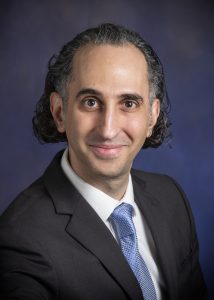
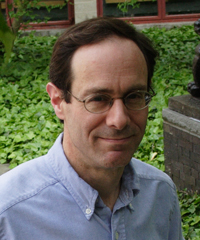
Assoc Prof Ng Teng Yong is an Associate Professor at the School of Mechanical & Aerospace Engineering (NTU), specializing in numerical modeling and simulation. With a background as Research Manager at A*STAR Institute of High Performance Computing, his work spans materials science, nanotechnology, and aerospace engineering. Current focus on graphene-based desalination membranes Expertise in molecular dynamics simulations Investigates nanoscale fluid mechanics and structural dynamics Recent publications highlight advancements in energy-efficient electrodialysis, smart robotics, and nonlinear vibration analysis. His interdisciplinary approach integrates computational methods with experimental validation in additive manufacturing and soft material mechanics.
Cong Ling is a Professor of Information Theory and Cryptography at Imperial College London's Department of Electrical and Electronic Engineering, within the Faculty of Engineering. His research focuses on lattice theory and its applications in coding, cryptography, quantum information, and number theory. Key affiliations include the Academic Centre of Excellence in Cyber Security Research and the Engineering Secure Software Systems group. Education details are not explicitly provided in the text, but his professional experience indicates advanced qualifications in electrical engineering and mathematics. Research interests span lattice-based cryptography, post-quantum security, algebraic coding theory, and quantum-resistant algorithms. His work bridges information theory and number theory, with contributions to MIMO systems, secure communication protocols, and cryptographic protocol design. Recent publications emphasize lattice reduction techniques, quantum algorithms for the shortest vector problem, and advancements in polar codes. Notable trends include exploration of non-commutative algebras for cryptography, Gaussian sampling optimizations, and hybrid quantum-classical approaches to hard integer problems. Over 50+ articles published since 2018 reflect his leadership in lattice-based research and quantum-safe technologies. Awards: None explicitly listed in the text. Grants/Advising: No specific grants or student advisees mentioned; focus remains on collaborative research outputs. Labs/Teams: Associated with Imperial's Cyber Security Research groups and quantum engineering initiatives.
Professor Brian Leeds DeMarco is a leading academic in the Department of Physics at the University of Illinois Urbana-Champaign (UIUC), serving as the IQUIST Director and Bardeen Faculty Scholar. He specializes in Atomic, Molecular, and Optical Physics, with a focus on quantum simulation using ultracold atoms in optical lattices to address problems in condensed matter physics. His research has led to groundbreaking discoveries, including the first quantum-degenerate Fermi gas and three-dimensional Anderson localization of matter, earning him prestigious awards like the NSF CAREER Award and Sloan Fellowship. DeMarco holds a B.A. in Physics from SUNY Geneseo (1996) and a Ph.D. from the University of Colorado Boulder (2001). His postdoctoral work at NIST with David Wineland advanced quantum computing with trapped ions. At UIUC since 2003, he has held roles such as Associate Head for Undergraduate Programs and currently chairs NASA's Fundamental Physical Sciences Standing Review Board. His research explores quantum simulation, quantum computing architectures, and ultracold matter. Notable achievements include identifying phase-slip crossover in optical lattices and pioneering 3D Anderson localization. He has published over 30 high-impact articles, with recent work focusing on quantum simulators and hybrid quantum systems. Awards: APS Fellow, University of Illinois Scholar, NASA Review Board Chair, Defense Sciences Study Group member. Grants: NSF, ONR, Sloan Foundation support for quantum simulation and ultracold atom research. DeMarco leads the DeMarco Group, advancing quantum technologies and training students in experimental physics. His lab’s work on quantum testbeds and trapped ion processors positions him at the forefront of quantum information science.
David Jerison is a Professor of Mathematics at the Massachusetts Institute of Technology (MIT), where he conducts research in Fourier analysis and partial differential equations. His work focuses primarily on free boundary problems and, more recently, on internal Diffusion Limited Aggregation (internal DLA), a stochastic growth model. He maintains an active research program with numerous publications in leading mathematical journals. Professor Jerison's research spans several interconnected areas of mathematical analysis. His primary interests include Fourier analysis and partial differential equations, with particular emphasis on free boundary problems. In recent years, he has expanded his research to include internal Diffusion Limited Aggregation, a stochastic growth model that has connections to probability theory and mathematical physics. His work often bridges geometric analysis, spectral theory, and probabilistic methods, demonstrating the deep connections between different branches of mathematics. Analysis of Professor Jerison's recent publications reveals a consistent focus on geometric aspects of partial differential equations, particularly free boundary problems. His research shows progression from classical PDE theory toward more stochastic and probabilistic approaches, as evidenced by his work on internal DLA. The publications demonstrate interdisciplinary connections between mathematical analysis, probability theory, and mathematical physics, with applications ranging from geometric measure theory to quantum mechanics. Professor Jerison is actively involved in teaching and mentoring at MIT. He has taught courses including Differential Equations (18.03), Fourier Analysis and Applications (18.103), and Differential Analysis (18.155). He also directs the Summer Program for Undergraduate Research (SPUR), which is exclusively for MIT undergraduates, and organizes the mathematics section of the Research Science Institute (RSI) for high school students. His teaching materials are available through MIT's Open Courseware platform, indicating his commitment to educational outreach and accessibility.
Alex Blumenthal is an Assistant Professor in the School of Mathematics at the Georgia Institute of Technology since Fall 2020. His academic background includes a Ph.D. from New York University (2016) with a dissertation titled 'Nonuniformly hyperbolic theory for Banach space mappings.' Prior to joining Georgia Tech, he held positions as an instructor at the University of Maryland, teaching courses in probability theory, linear algebra, and precalculus, and served as a recitation leader at New York University for courses in chaos theory, differential equations, and analysis. Blumenthal's research focuses on dynamical systems and ergodic theory, with specialization in: Chaotic behavior in deterministic and stochastic systems Smooth ergodic theory and SRB measures Lyapunov exponents in random dynamical systems Stochastic fluid mechanics and turbulence modeling Infinite-dimensional dynamical systems on Banach spaces Statistical properties of complex systems His work bridges abstract mathematical theory with physical applications like fluid dynamics and statistical mechanics. Analysis of his recent publications shows strong emphasis on stochastic dynamics, Lyapunov exponents, and fluid mechanical systems, with mathematical techniques drawn from ergodic theory, functional analysis, and probability theory. His publications frequently appear in top mathematical physics and dynamics journals. No scientific awards or honors are mentioned in the source materials. Similarly, no information is available regarding research grants, student advising, or laboratory affiliations.
David Croydon is an Associate Professor at the Research Institute for Mathematical Sciences (RIMS), Kyoto University. His research focuses on probability theory, particularly diffusions on random fractals and scaling limits of random walks on random graphs. He also investigates discrete integrable systems with random initial conditions. Dr. Croydon's primary research interests span several areas of probability theory and mathematical physics. His work centers on diffusions on random fractals and how these processes can be constructed as scaling limits of related random walks on random graphs. He has made significant contributions to understanding random walks on critical structures including Galton-Watson trees, uniform spanning trees, and percolation clusters. More recently, he has developed a growing interest in the behavior of discrete integrable systems such as the box-ball system, particularly when started from random initial conditions. His research often bridges theoretical probability with applications in statistical physics and mathematical physics. Dr. Croydon's recent publications demonstrate a dual focus on theoretical probability and mathematical physics. His work on random walks spans various structures including binary trees, critical percolation clusters, and uniform spanning trees. He has made significant contributions to understanding aging phenomena, heat kernel fluctuations, and scaling limits in random media. Simultaneously, his research on discrete integrable systems explores the connections between probability theory and soliton theory, particularly through the lens of the box-ball system and related models. These two research strands converge in his investigations of scaling limits and invariant measures for complex stochastic systems. Dr. Croydon's scientific contributions have been recognized through publications in top-tier journals across probability theory and mathematical physics, though specific awards are not mentioned in the available information. Dr. Croydon has supervised several doctoral students to completion, including Adam Bowditch (2017), George Andriopoulos (2019), Eleanor Archer (2020), and Takumu Ooi (2024). He has also served in advisory roles for other students including John Sylvester (2017). His collaborative research spans multiple international institutions, suggesting involvement in various research grants supporting his work in probability theory and mathematical physics. While specific lab names aren't mentioned, Dr. Croydon is part of the vibrant probability theory research group at the Research Institute for Mathematical Sciences (RIMS) at Kyoto University. His extensive collaborations with researchers worldwide, particularly in the UK, France, and Japan, indicate active participation in international research networks focused on stochastic processes, random media, and discrete integrable systems.
Jan de Gier is a Professor at the School of Mathematics and Statistics, The University of Melbourne . He is also the Founding Director of MATRIX , Australia’s residential research institute in the mathematical sciences, and a former Deputy Director and Chief Investigator in the Australian Research Council Centre of Excellence for Mathematical and Statistical Frontiers (ACEMS) . Additionally, he co-founded the Australian and New Zealand Association for Mathematical Physics (ANZAMP) in 2011 and served as its inaugural Chair. His research focuses on solvable lattice models at the intersection of mathematical physics and statistical mechanics . Key areas include the application of quantum integrability , algebraic structures like the Yang-Baxter equation, Hecke algebras, and quantum groups, as well as analytical methods such as complex analysis and elliptic curves. His work bridges pure and applied mathematics through connections between enumerative combinatorics , representation theory , and real-world phenomena like traffic flow modeling via exclusion processes . The 15 most recent articles reflect his expertise in integrable systems , non-equilibrium statistical mechanics , and algebraic combinatorics . Topics span Macdonald polynomials , stochastic duality , quantum spin chains , and traffic modeling , with methodologies involving matrix product forms , exact solutions , and critical phenomena analysis. He has contributed to editorial efforts through the AustMS Gazette and MATRIX Annals, and has been involved in public science communication via opinion pieces on mathematics funding and applications. His work emphasizes the importance of fundamental research in driving technological innovation, as highlighted in media articles discussing pi calculation , zero-knowledge proofs , and mathematics education .
Konstantinos Karapiperis is a Tenure Track Assistant Professor at EPFL's Laboratory of Multiscale Modeling of Materials (LMD), within the School of Architecture, Civil and Environmental Engineering (ENAC). His research integrates mechanics , multiscale modeling , and data science to study geomaterials and structural materials. PhD in Applied Mechanics (minor in Applied Mathematics), Caltech Postdoctoral Researcher & Lecturer, ETH Zürich (Marie Skłodowska-Curie Fellowship) Research focuses on granular materials , architected materials , and nonlocal modeling using techniques like Level-Set Discrete Element Method (LS-DEM) and machine learning . Recent work explores fracture control via graph neural networks and thermodynamics-informed models. Selected scientific award: Marie Skłodowska-Curie Fellowship Teaches courses in Soil Mechanics and Multiscale Modeling . PhD students include Thomas Henzel and Hrishikesh Gopakumar Menon. His Data-Driven Mechanics Laboratory (LMD) develops predictive tools for granular and structured material behavior.
Sean Carroll serves as the Homewood Professor of Natural Philosophy at Johns Hopkins University and holds External Faculty status at the Santa Fe Institute. His research bridges cosmology, quantum mechanics, and philosophy, focusing on foundational questions about spacetime emergence, quantum interpretation, and complexity across cosmic scales. Carroll earned his Ph.D. from Harvard University in 1993. His academic trajectory reflects deep engagement with theoretical physics and philosophical inquiry, culminating in his current named professorship at Johns Hopkins. Carroll's research centers on the intersection of physics and philosophy, with significant contributions to quantum foundations, cosmology, and the nature of emergence. He is a leading proponent of the many-worlds interpretation of quantum mechanics and has pioneered work on the thermodynamic arrow of time, quantum decoherence, and the fine-tuning of initial cosmic conditions. His recent investigations explore discretized quantum systems, holographic principles in gravity, and the philosophical implications of quantum gravity. Analysis of his 2022-2025 publications reveals a pronounced shift toward computational approaches in quantum gravity, with increasing emphasis on finite-dimensional Hilbert spaces and GPU-accelerated modeling. His work consistently integrates quantum information theory with cosmological questions, particularly examining how spacetime geometry emerges from quantum entanglement and how complexity evolves in closed systems. Carroll's scientific recognition includes: National Science Foundation Fellowship NASA Fellowship Sloan Research Fellowship Packard Fellowship Fellow of the American Physical Society American Institute of Physics Award Fellow of the Royal Society Guggenheim Fellowship Fellow of the American Association for the Advancement of Science His research has been sustained through major fellowships from NSF, NASA, Sloan, and Packard foundations, enabling interdisciplinary collaborations across physics and philosophy. Carroll actively mentors graduate students at Johns Hopkins and contributes to public discourse through his popular science books (including the Biggest Ideas in the Universe series) and the weekly Mindscape podcast. As Fractal Faculty at the Santa Fe Institute, Carroll participates in cross-disciplinary research on complex systems, exploring how emergent phenomena arise from fundamental physical laws. His work bridges theoretical physics with broader questions about complexity in biological, cognitive, and social systems.
Oussama Damen is a Professor at the University of Waterloo's Department of Electrical and Computer Engineering. His research focuses on advanced wireless communication systems, particularly in MIMO (Multiple-Input Multiple-Output) systems, signal processing, and machine learning applications in telecommunications. He is actively involved in developing innovative solutions for beamforming, hybrid precoding, and distributed decoding in massive MIMO and millimeter-wave networks. Damen's work also extends to optical fiber communication, federated learning in wireless systems, and optimization of resource allocation in next-generation networks like 5G/6G. His research interests include wireless communication theory, antenna system design, channel modeling, and algorithm development for improving spectral and energy efficiency. He has contributed extensively to the theoretical foundations of MIMO detection, lattice reduction techniques, and statistical signal processing methods. Notable trends in his publications emphasize bridging theoretical performance limits with practical implementations, particularly in scenarios involving channel impairments, limited backhaul capacity, and multi-core fiber transmission. His work often addresses fairness and optimization in distributed systems, including federated learning frameworks and hybrid beamforming architectures. No scientific awards or grants are explicitly mentioned in the provided information. Damen has advised no listed students, and no specific lab affiliations are noted.
Alan Hammond is a Professor in the Department of Statistics at the University of California, Berkeley. His research focuses on rigorous mathematical probability techniques applied to problems in statistical mechanics, including percolation theory, polymer models, and random growth processes. He has contributed to understanding critical phenomena, phase transitions, and universality classes in stochastic systems. Hammond's work spans topics such as KPZ universality, Brownian motion, and the geometry of random media. He has investigated models like last passage percolation, self-avoiding walks, and tug-of-war games, often uncovering deep connections between stochastic processes and nonlinear PDEs. His teaching includes courses on stochastic processes and statistical theory at both graduate and undergraduate levels. Notable research highlights include studies on fractal properties of Airy processes, stability in dynamical last passage percolation, and the behavior of geodesics in random environments. His contributions bridge probability theory with applications in physics and combinatorics.
Michael Knap is an Associate Professor of Collective Quantum Dynamics at the Technical University of Munich (TUM), within the Department of Physics at the TUM School of Natural Sciences. His research group focuses on condensed matter theory, quantum many-body systems, and quantum simulation. Knap holds office in room 5101.01.037 at James-Franck-Str. 1, 85748 Garching b. München, and can be reached at michael.knap@ph.tum.de or +49 (89) 289 - 53777. Prof. Knap's research delves into the rich physics of quantum many-body systems, particularly exploring non-equilibrium dynamics and transport phenomena in ultracold quantum gases, interacting light-matter systems, and correlated quantum materials. His work spans multiple subfields including topological phases of matter, quantum simulation with trapped ions, fracton physics, and quantum computation. He develops novel numerical approaches based on quantum information theory and utilizes artificial intelligence and machine learning to tackle challenging problems in condensed matter physics. His group's research connects fundamental theoretical questions with experimental implementations in quantum simulators. The analysis of Prof. Knap's recent publications (2023-2025) reveals a strong focus on topological quantum matter, quantum simulation, and emergent phenomena in constrained quantum systems. His work frequently bridges condensed matter theory with quantum information science, as evidenced by publications on fracton hydrodynamics, higher-form symmetries, and quantum error correction. There's a clear progression toward increasingly complex quantum systems and connections to experimental implementations on quantum processors. His research shows significant interdisciplinary reach, connecting condensed matter physics with quantum computing and quantum information theory. ERC Consolidator Grant (2025) ERC Starting Grant (2019) Supervisory Award, TUM Department of Physics (2018) Promotio sub auspiciis Praesidentis rei publicae, Austria (2013) Prof. Knap has established a robust research program supported by prestigious European Research Council grants. His group actively collaborates with both theoretical and experimental groups worldwide, particularly in the quantum simulation community. He has supervised numerous students through Master's Seminars on Collective Quantum Dynamics covering topics like quantum simulation with trapped ions and theoretical quantum computation. His research has received significant attention, with several publications featured as Editors' suggestions and Research Highlights in leading journals. The Collective Quantum Dynamics group maintains strong connections with experimental quantum simulation efforts, particularly in the areas of ultracold atoms and trapped ion systems. Knap's theoretical work often provides frameworks for interpreting experimental results in quantum simulators, creating a productive feedback loop between theory and experiment. His group participates in collaborative research networks focused on advancing quantum simulation capabilities and understanding fundamental aspects of quantum many-body physics.
Prof. Maciej Lewenstein is a Group Leader and ICREA Professor at the Institute of Photonic Sciences (ICFO), Spain. He leads the Quantum Optics Theory group, focusing on theoretical and computational studies of quantum many-body systems, topological phases, and nonlinear optics. He holds a Dr.rer.nat. in Physics from the University of Essen, Germany. His research interests include quantum simulations, high-harmonic generation, Bose-Einstein condensation, and quantum information processing. He has pioneered work on topological quantum thermometry and ultrafast phase transitions in materials like vanadium dioxide. His group actively explores the intersection of quantum optics with condensed matter physics and quantum computing. Recent articles highlight advancements in tensor network approaches for topological phases, quantum algorithms for many-body systems, and the application of sonification to quantum entanglement dynamics. He has received a prestigious ERC Advanced Grant and the ICREA Professorship, recognizing his contributions to quantum science. Prof. Lewenstein advises over a dozen PhD students and postdoctoral researchers, fostering a dynamic research environment at ICFO. His grants include ERC and ICREA funding, supporting projects on quantum simulations and nonlinear optical phenomena. The Quantum Optics Theory group collaborates internationally, with expertise in light-matter interactions, quantum resource theory, and quantum many-body localization. Their lab develops novel methods for probing quantum systems using high-harmonic spectroscopy and quantum trajectory simulations.
Juan Alvarez is a Teaching Assistant Professor at the Department of Electrical and Computer Engineering, University of Illinois at Urbana-Champaign (UIUC), where he has held roles since 2013. He also served as a Visiting Lecturer at institutions like Zhejiang University and Ho Chi Minh City University of Technology. His academic journey includes postdoctoral fellowships at York University (Canada), University of Toronto, and University of Saskatchewan, alongside sessional lecturing roles in Canada. **Education**: Ph.D., M.S., and B.Sc. in Electrical Engineering from UIUC and ITESM-CCM, respectively. **Research Interests**: Focus on applied probability, polymer physics (e.g., self-avoiding walks, copolymer localization), biophysical systems, and engineering education. He explores student success strategies, metacognition, and pedagogical approaches to improve learning outcomes. **Recent Publications**: Over 15 articles in journals like Journal of Statistical Mechanics and conferences like ASEE, covering topics from polymer models to student learning profiles. Recent work emphasizes undergraduate education innovations. **Teaching**: Courses include ECE 210 (Analog Signal Processing), ECE 313 (Probability), and ECE 398MA (Modern Communications with Python).
Alexey Bufetov is a Professor at Leipzig University, holding an ERC Starting Grant for his research in Integrable Probability (2022-2027). Previously, he served as a W2-Professor ("Bonn Junior Fellow") at the Hausdorff Center for Mathematics (2018-2021) and as a CLE Moore Instructor at Massachusetts Institute of Technology (2015-2018). His research centers on Probability Theory , with deep connections to Mathematical Physics and Combinatorics . Key areas include integrable probability, stochastic particle systems (ASEP/TASEP), random tilings, Schur generating functions, and representation-theoretic aspects of probability. His work often bridges abstract mathematical structures with physical models from statistical mechanics. Bufetov's recent publications reveal a strong focus on integrable systems and asymptotic analysis , particularly exploring connections between Mallows measures, vertex models, and random matrix theory. His 2025 work on Aztec diamond domino tilings exemplifies his signature approach combining combinatorial structures with probabilistic methods. His primary recognition is the ERC Starting Grant "Integrable Probability" (2022-2027), supporting his cutting-edge research program. Bufetov has maintained a prolific collaborative network, frequently publishing with leading researchers including Alexei Borodin, Vadim Gorin, Leonid Petrov, and Kailun Chen. His work appears in top journals such as Advances in Mathematics , Duke Mathematical Journal , and Communications in Mathematical Physics .