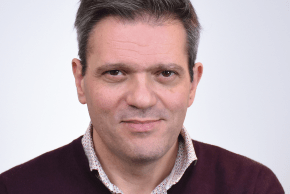
Prof. Dr. Alexander Meister is a Professor of Mathematical Statistics at the University of Rostock, Germany, specializing in stochastic processes. He holds a position at the Institute for Mathematics and focuses on areas such as nonparametric statistics, asymptotic theory, and statistical inverse problems. His research interests include density estimation, regression analysis, functional data analysis, and time series modeling. He leads the Chair for Mathematical Statistics with an emphasis on stochastic processes. Contact: alexander.meister@uni-rostock.de | +49 381 4 98 66 20 | University of Rostock, D-18051 Rostock, Germany
Ricardo Mantilla serves as an Associate Professor in the Department of Civil Engineering at the University of Manitoba's Price Faculty of Engineering. He joined the faculty in July 2021 after previously working as an Assistant Professor at the University of Iowa in the Department of Civil and Environmental Engineering. His academic journey includes significant contributions to hydrological research and flood forecasting systems development. Ph.D. in Civil Engineering (Hydrology), University of Colorado at Boulder (2007) M.Sc. in Civil Engineering (Water Resources), Universidad Nacional de Colombia (2003) B.Sc. in Civil Engineering, Universidad Nacional de Colombia (2000) Mantilla's research focuses on Surface Hydrology, particularly the role of self-similarity in river network topology and hydraulic geometric variables in shaping flood characteristics. He is recognized for developing the Hillslope-Link Model (HLM) and contributing to the Iowa Flood Information System (IFIS). His work bridges theoretical hydrology with practical flood forecasting applications, addressing how climatic and anthropogenic changes affect flood and drought regimes globally. Mantilla's publications demonstrate a consistent trajectory from theoretical foundations to practical implementations, with recent work emphasizing physics-based modeling approaches over purely statistical methods for flood prediction under changing climate conditions. Mantilla actively seeks graduate students for his research group, emphasizing the need for strong communication skills, passion for water resources engineering, problem-solving abilities, and comfort working in diverse environments. His research has led to the development of operational flood forecasting systems that utilize High-Performance Computing resources to provide public flood information through web platforms.
Ronald I. Brent serves as a Professor in the Department of Mathematics & Statistics within the College of Sciences at the University of Massachusetts Lowell, where he maintains an active research program in wave propagation phenomena. His academic credentials include: Ph.D. in Mathematics from Rensselaer Polytechnic Institute (1987) MS in Applied Mathematics from Rensselaer Polytechnic Institute (1984) BS in Mathematics with Specialization in Computer Science from State University of New York at Binghamton (1982) Professor Brent's research centers on acoustic and electromagnetic wave propagation in terrestrial and oceanic environments, with emphasis on numerical solutions of partial differential equations through parabolic approximation methods. His work bridges theoretical mathematics with practical applications in atmospheric science, underwater acoustics, and electromagnetic modeling, developing computational techniques like the Split-Step Pade approximation for complex wave propagation scenarios. He has contributed significantly to both electromagnetic theory (including vector wave extensions and anisotropic media) and ocean acoustics (addressing current effects and matched-field processing). Analysis of his 14 publications (1987-2005) reveals consistent focus on wave propagation modeling, with 70% dedicated to electromagnetic phenomena and 30% to acoustics. His research evolved from foundational parabolic equation methods in the late 1980s to sophisticated implementations for 3D environments and vector waves in the 1990s, culminating in educational contributions like his 2005 calculus textbook. Key thematic threads include Gaussian beam methods, split-step algorithms, and adaptation to terrestrial magnetic fields. Information regarding student advising, research grants, laboratory facilities, or scientific awards was not provided in the source material. His professional activities include extensive conference presentations at venues like the Beyond Line-Of-Sight Conference and Joint Electronic Warfare Center seminars, demonstrating strong industry-government collaboration.
Professor Antoine PERASSO is affiliated with the Université Bourgogne-Franche-Comté as a full professor in the Chrono-environnement research unit (UMR 6249 CNRS/UFC). His work focuses on interdisciplinary research at the intersection of mathematics, environmental sciences, and life sciences. He holds positions in the DYNABIO, GEODE, PATHOGENES, and POLLUTION research groups. Education includes a PhD in Mathematics from Université Paris Sud (2009) and an Habilitation à diriger des recherches (2017), both specializing in structured population dynamics and epidemiological modeling. His research emphasizes mathematical frameworks for ecological and health systems, including: Population Dynamics: Age-structured models, Lotka-Volterra systems, and resource-consumer interactions Epidemiology: Threshold behavior analysis and infection load modeling Ecotoxicology: Contaminant impacts on food chains and trophic cascades Inverse Problems: Parameter identifiability and model calibration Recent publications (2014–2021) highlight expertise in process-based ecological modeling (e.g., grassland dynamics), plankton community stability, and prion disease transmission. His work integrates differential equations and numerical simulations to address environmental and health challenges. Notable contributions include the DynaGraM model for grassland management and collaborations on ecotoxicological risk assessment. Current affiliations include the Chrono-environnement lab in Besançon, France, where he advises students like Mario Saussereau.
Andres Algaba is a Part-time Professor in econometrics and mathematics for business and economics at Vrije Universiteit Brussel (VUB), where he also serves as an FWO Postdoctoral Researcher in Artificial Intelligence and Coordinator in Generative AI. He holds a joint PhD in Business Economics from VUB and Ghent University (2020), along with MSc (2015) and BSc (2014) degrees in Business Sciences from KU Leuven. His research focuses on: Fairness in machine learning and algorithmic decision-making Large language models and their scientific applications Generative AI and interpretability methods Science of science and bibliometric analysis Econometric modeling and sentiment analysis His publications demonstrate a strong evolution from econometric modeling (2020) toward cutting-edge AI fairness research and LLM analysis (2023-2025), with increasing focus on generative models and scientific disruption patterns. Awards: FWO Postdoctoral Fellowship Election to Young Academy Belgium (2024) Research Leadership: Principal investigator for Francqui Collen Start-Up Grants (2025-2028) focusing on generative AI and interpretability methods. Supervises multiple master's students in AI fairness and algorithmic bias. Affiliations: Member of Data Analytics Lab and Integrated Intelligence Lab at VUB, with frequent collaborations in national and international research networks focused on algorithmic transparency and AI ethics.
Joseph GABET is a PhD student at CentraleSupélec, affiliated with the Laboratoire des Signaux et Systèmes (L2S). His research focuses on statistical feasibility of continuous inverse problems, data science, and theoretical machine learning, with applications in physics, imaging, and communication networks. The thesis is funded by the French Ministry of the Armed Forces via a scholarship (AID). Research interests include inverse problems, signal processing, and interdisciplinary applications in energy, industry 4.0, and health/biology. He contributes to projects like the Inverse Problems Group and Modelling and Estimation team within L2S.
Alireza Doostan is a Professor in the Smead Aerospace Engineering Sciences department at the University of Colorado Boulder. He is also an Affiliated Faculty member in Applied Mathematics at the same institution. His research focuses on uncertainty quantification, computational stochastic mechanics, and scientific machine learning, with applications to aerospace and mechanical systems. PhD, Structural Engineering, The Johns Hopkins University (2006) MA, Applied Mathematics and Statistics, The Johns Hopkins University (2006) MS, Structural Engineering, Sharif University of Technology (2002) BS, Civil Engineering, Sharif University of Technology (2000) His work emphasizes uncertainty quantification (UQ), model reduction for stochastic systems, and data assimilation in mechanics. He develops methods for statistical inverse analysis , design under uncertainty , and data-driven model discovery applied to fluid and structural dynamics. Recent publications focus on scientific machine learning (e.g., PINNs for Li-ion batteries), bi-fidelity methods for data reduction, and stochastic optimization in aerospace design. These works span topics like turbulence modeling, spacecraft trajectory planning, and adaptive data compression for PDE systems. Selected scientific awards include the H. Joseph Smead Faculty Fellow (2018), NSF and DOE Early Career Awards (2015, 2011), and multiple teaching accolades. He leads the UQ and Data-Driven Lab within the Aerospace Mechanics Research Center (AMREC).
Houman Owhadi is the IBM Professor of Applied and Computational Mathematics and Control and Dynamical Systems at the California Institute of Technology. His research explores interplays between numerical approximation, statistical inference, and learning from a game-theoretic perspective, with applications in numerical homogenization, operator-adapted wavelets, fast solvers, Gaussian process regression, and uncertainty quantification. His current research focuses on computational information games, kernel flows, and the development of universal scalable solvers. He has made fundamental contributions to uncertainty quantification through adversarial approaches and the development of optimal statistical estimators. Professor Owhadi has received numerous awards including the Vannevar Bush Faculty Fellowship (2024), Germund Dahlquist Prize (2019), and SIAM Fellowship (2022). His research has been supported by AFOSR, DARPA, DOE, NASA, NSF, and ONR.
Dr. Valery Vishnevskiy is a Lecturer at the Department of Information Technology and Electrical Engineering at ETH Zürich , affiliated with the Biomedical Imaging Group . His research focuses on advanced medical imaging techniques, particularly in cardiac MRI , ultrasound , and machine learning applications . He contributes to projects involving 4D flow MRI reconstruction , speed-of-sound imaging , and motion-corrected diffusion tensor analysis . Primary Affiliation : ETH Zürich, Department of Information Technology and Electrical Engineering Research Interests : Biomedical Imaging, MRI Reconstruction, Ultrasound Physics, Cardiac Imaging, Deep Learning His recent work emphasizes self-supervised learning for medical imaging, including the development of FlowMRI-Net for accelerated 4D flow MRI and Speed-of-Sound Imaging using diverging waves. Publications span hyperpolarized 13C metabolic imaging , viscoelasticity reconstruction , and probabilistic sampling optimization . Dr. Vishnevskiy's contributions to deformable image registration include methods for handling sliding interfaces in abdominal and cardiac imaging, with applications in respiratory motion compensation and tissue ablation monitoring . He also explores mathematical models for enzyme activity analysis and behavioral pattern detection.
Jian Qiu Zhang is a Professor at Fudan University in the School of Information Science and Technology , affiliated with the Key Laboratory for Information Science of Electromagnetic Waves and Research Center of Smart Networks and Systems in Shanghai, China. Previously, he was at the University of Greenwich (1999-2002) and earned his PhD in 1996 from Harbin Institute of Technology in the Department of Electrical Engineering . His research interests span Signal Processing , Image Analysis , and Machine Learning , with a focus on applications in Biomedical Imaging , Hyperspectral Data Analysis , and Smart Network Systems . His work often integrates Wavelet Transforms , Tensor Decomposition , and Bayesian Filtering to solve complex problems in Medical Imaging and Wireless Sensor Networks . Recent publications highlight advancements in Deep Learning for 3D Ultrasound , PARAFAC Decomposition , and Graph Neural Networks for Hyperspectral Classification . His technical contributions include Adaptive Filtering Algorithms , Nonlinear Unmixing , and Wavelet-Based Sensor Analysis . Key collaborations include researchers from institutions such as Harbin Institute of Technology, University of Greenwich, and international teams in IEEE Transactions and IGARSS conferences.
Douglas Cochran is a Research Professor in the School of Mathematical and Statistical Sciences and an Emeritus Professor in the School of Electrical, Computer and Energy Engineering at Arizona State University (ASU). He has held roles such as Program Manager for Mathematics at the U.S. Air Force and DARPA, and served as a Visiting Faculty Fellow at the ASU Barrett Honors College. His research focuses on mathematical aspects of remote sensing, particularly for national security applications, with expertise in signal processing, radar systems, and information theory. Education: Ph.D. Applied Mathematics (Harvard, 1990), S.M. Applied Mathematics (Harvard, 1986), M.A. Mathematics (UC San Diego, 1980), S.B. Mathematics (MIT, 1979). Key Roles: Program Manager (U.S. Air Force, DARPA), Consultant (Australian Defense Science), Editor (IEEE Transactions on Signal Processing, Sampling Theory in Signal and Image Processing). His research interests include radar signal processing, multi-channel detection, and information-geometric foundations of sensing systems. Recent work addresses topics like cyclostationary signal analysis, radar clutter cancellation, and eigenvalue distributions in statistical signal processing. Notable awards include the IEEE Fellowship (2015), U.S. Department of Defense Medal for Exceptional Public Service (2005), and multiple teaching excellence recognitions. He has led over 20 grants, including NSF-funded projects on mathematical methods in medical imaging and MURI initiatives on information theory for adaptive systems. Cochran has advised numerous students and contributed to industry through consulting roles at companies like Motorola and Raytheon. His academic service includes editorial roles and organizing IEEE conferences, reflecting his broad impact in academia and defense applications.
Toshiya Hachisuka is an Associate Professor in the Department of Computer Science at the University of Waterloo, part of the School of Computer Science. His research focuses on combining applied mathematics, computer science, and physics to address challenges in visual simulation, particularly in computer graphics, light transport, and computational statistics. He holds a Ph.D. from the University of California, San Diego (2011) and a B.Eng. from the University of Tokyo (2006). Research Interests: Hachisuka’s work spans light transport simulation , Monte Carlo rendering , numerical analysis , and fluid dynamics . He develops algorithms for efficient rendering and simulation, including methods like segment-based light transport and quantum ray marching. His techniques often integrate mathematical rigor with computational efficiency. Publications: His recent work explores advancements in Monte Carlo methods, fluid simulation, and quantum computing applications in rendering. Notable themes include denoising techniques , boundary element methods , and gradient-domain rendering . Awards: No scientific awards explicitly mentioned in the text. Advising & Grants: No specific students or grants listed, but his extensive publication record suggests active research collaboration. Labs/Teams: Involved in computer graphics research groups at the University of Waterloo, contributing to cutting-edge rendering and simulation projects.
Ayşın Baytan Ertüzün is a Professor at Boğaziçi University, specializing in signal processing and statistical methodologies. Their research focuses on blind signal processing, Bayesian estimation techniques, particle filters, and seismological applications. They have contributed extensively to defect detection in textiles using advanced signal processing methods like wavelet transforms and independent component analysis, as well as geophysical signal analysis through Bayesian deconvolution approaches. Over 25 years of academic work includes pioneering work in non-Gaussian processes, time-varying autoregressive models, and particle filtering algorithms for complex signal environments. Their research bridges theoretical advancements with practical applications in manufacturing quality control and seismic data analysis. Key technical contributions include hybrid deconvolution methods for Bernoulli-Gaussian processes, subband domain subspace analysis for texture defects, and entropy-based 2D lattice filter structures. Their work often emphasizes robust statistical frameworks for non-stationary and non-Gaussian signal environments, with applications spanning from environmental forecasting (wind speed modeling) to medical signal analysis (respiratory sound coherence). Publications span from foundational 1990s lattice filter innovations to modern Bayesian approaches. Their methodologies are characterized by interdisciplinary fusion of signal processing theory with real-world industrial and geophysical challenges. No specific awards are listed in the provided materials, though their extensive publication record indicates sustained academic impact.
Benjamin Adric Dunn is an Associate Professor in (Neural) Data Science at NTNU's Department of Mathematical Sciences. Formerly, he held positions as a PhD researcher and postdoc at NTNU's Kavli Institute for Systems Neuroscience, with prior education including an MS in Computational Engineering from Purdue University and a BS in Applied Mathematics from the University of Connecticut. His career also includes industrial experience as a Computational Methods Engineer at Pratt & Whitney, UTC. His research focuses on integrating mathematical and computational approaches to understand neural systems, particularly spatial cognition, grid cells, and topological data analysis in neuroscience. Key contributions include work on toroidal representations in grid cells, posture coding in neocortex, and cohomological feature extraction from neural data. Publications emphasize multidisciplinary methods bridging algebraic topology, statistical physics, and neuroscience. Teaching includes courses like TMA4255 (Applied Statistics) and TMA4285 (Time Series). Outreach activities highlight engagement in scientific communication, including media interviews about posture-coding neurons and grid cell research.
Pedro Diez is a researcher specializing in computational methods for geotechnical and geophysical applications. His work focuses on developing data-driven models, particularly Reduced-Order Models (ROM) and Bayesian solvers for inverse problems. He explores advanced techniques like kernel Principal Component Analysis (kPCA) combined with Proper Orthogonal Decomposition (POD) to optimize dimensionality reduction in parametric forward problems. His research emphasizes uncertainty quantification using Markov-Chain Monte Carlo (MCMC) strategies, addressing challenges in geophysical crust dynamics and large-scale parameter identification.