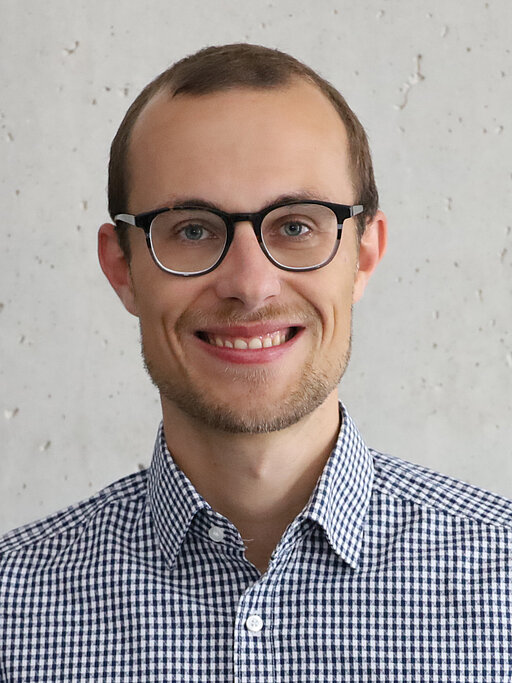
Xin T. Tong is Associate Professor in the Department of Mathematics at the National University of Singapore, specializing in uncertainty quantification, machine learning, and operations research. His research develops theoretical foundations and methodologies for structured problem-solving in high-dimensional settings. Current investigations focus on ensemble Kalman methods, Bayesian inverse problems, sampling algorithms, and stochastic optimization with non-i.i.d. data. Research emphasizes mathematical analysis of algorithm efficiency and structure-aware computational methods. Professional background includes postdoctoral work at NYU's Courant Institute and Ph.D. from Princeton University.
Manuel Torrilhon serves as Professor and head of the Research Lab for Applied and Computational Mathematics (ACoM) at RWTH Aachen University, where he has held a full professorship since 2010. He currently leads the Department of Mathematics as its elected Speaker for the 2024-2026 term, overseeing academic strategy and research initiatives within the Faculty of Mathematics, Computer Science and Natural Sciences. His academic foundation includes: Diplom-Ingenieur in Engineering Physics from TU Berlin (1994-1999) PhD in Applied Mathematics from ETH Zurich (2004) Postdoctoral research at HKUST (2004/05) and Princeton University (2005/06) Research Assistant Professor at ETH Zurich (2007-2010) Professor Torrilhon's research pioneers mathematical modeling in continuum physics and kinetic gas theory , with seminal contributions to the Boltzmann equation, rarefied gas dynamics, and magnetohydrodynamics. His work develops advanced numerical methods for nonlinear hyperbolic systems , particularly entropy-stable high-order schemes and multi-scale time integrators. The ACoM lab under his direction bridges theoretical mathematics with engineering applications through computational frameworks like fenicsR13 for moment equation solvers. His methodologies enable high-fidelity simulations of micro-flows, plasma instabilities, and electron transport phenomena critical to aerospace and materials science. Analysis of his 2025-2024 publications reveals dominant trends in entropy-conservative numerical schemes for kinetic equations, multirate time integration for stiff systems, and moment-method extensions to polytropic gases and shallow flows. These works consistently address computational challenges in rarefaction effects, non-equilibrium thermodynamics, and high-enthalpy regimes, demonstrating cross-cutting applications from microfluidics to plasma physics. Scientific recognition includes: EURYI Award (Pre-ERC) from European Science Foundation (2006) As director of ACoM, Professor Torrilhon secures research funding for computational mathematics projects and mentors graduate students in numerical analysis and kinetic theory. His lab maintains strong collaborations with engineering departments for applied validation of mathematical models, particularly in micro-flow devices and plasma containment systems. Current grants focus on adaptive solvers for multi-scale kinetic problems and inverse methods for electron probe microanalysis. The Research Lab for Applied and Computational Mathematics (ACoM) operates as an interdisciplinary hub developing open-source computational tools like fenicsR13. The team specializes in tensor-based numerical methods for moment equations, with ongoing projects in X-ray emission modeling, Richtmyer-Meshkov instability simulations, and thermodynamically consistent electrolyte solvers. ACoM maintains strategic partnerships with aerospace research institutes for hypersonic flow validation and with materials science centers for nanoscale transport studies.
Anna Fabijańska is a Professor at the Institute of Applied Computer Science within the Faculty of Electrical, Electronic, Computer and Control Engineering at Lodz University of Technology, Poland. Her research focuses on computer vision, medical image analysis, and machine learning applications in biomedical engineering and environmental science. Her primary research interests include developing advanced algorithms for image segmentation, 3D reconstruction, and neural network applications in medical diagnostics (especially ophthalmology and pulmonology) and forestry research. She specializes in techniques like graph convolutional networks, hyperspectral imaging, and generative adversarial networks for data augmentation. Through analysis of her recent publications, Fabijańska demonstrates consistent focus on improving computational efficiency and accuracy in image-based diagnostics and monitoring systems. Her work spans industrial tomography, corneal endothelium analysis, timber identification, and glacial sediment studies. Her laboratory develops practical computer vision pipelines for healthcare and environmental applications, demonstrating interdisciplinary collaboration between computer science, medicine, and ecology.
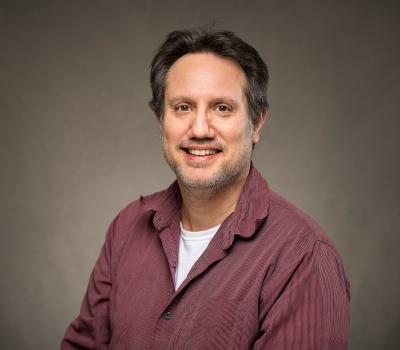
Dr. Wojciech L. Golik serves as Professor of Mathematics and Assistant Dean for Mathematical and Natural Sciences at Lindenwood University's College of Science, Technology, and Health. With a distinguished academic career spanning over three decades, he holds leadership responsibilities while maintaining active research and teaching commitments. His educational background includes a Master of Science in Mechanical Engineering from Poznan Technological University (1982), followed by an M.S. (1985) and Ph.D. (1988) in Mathematics from New Mexico State University. His doctoral dissertation focused on Convergence of the Boundary Integral Methods in Numerical Solutions of Fourier Problems . Dr. Golik's research centers on advanced computational methodologies, with particular expertise in numerical analysis, computational electromagnetics, and data science applications. His work demonstrates sophisticated integration of wavelet theory with electromagnetic modeling, developing innovative algorithms for solving complex boundary value problems and integral equations. The publication timeline reveals sustained contributions to computational mathematics, with recent expansion into data science and interdisciplinary applications. His 2013 Polish-language publication Siedemdziesiąt Trzy indicates broader intellectual interests beyond pure mathematics. Teaching responsibilities encompass foundational and advanced mathematics courses including Calculus sequences, Differential Equations, Linear Algebra, Numerical Analysis, and specialized topics like Computational Electromagnetics and History of Mathematics. His extensive course portfolio reflects deep expertise across both theoretical and applied mathematics domains. Professional activities include significant administrative leadership as Assistant Dean, though specific grant funding details aren't documented in available materials. His departmental involvement supports multiple undergraduate and graduate programs including Mathematics (BA/BS), Data Science, and Actuarial Science tracks within the College of Science, Technology, and Health.
Leon Bungert is a W2 Professor with Tenure Track to W3 Professorship for Mathematics III (Mathematics of Machine Learning) at the University of Würzburg, appointed since 2023. He leads the Mathematics of Machine Learning group within the Institute of Mathematics. His academic journey includes a Ph.D. (summa cum laude) from the University of Erlangen-Nürnberg in 2020, focusing on nonlinear spectral theory with variational methods, followed by postdoctoral research at TU Berlin, Bonn, and Erlangen-Nürnberg. Research Interests: Bungert's work bridges applied analysis and machine learning, emphasizing PDEs on graphs, adversarial robustness, inverse problems, optimization, and nonlinear eigenvalue problems. His research often employs variational methods and explores the intersection of geometry, probability, and numerical analysis. Notable areas include adversarial machine learning, Lipschitz learning on graphs, and regularization techniques for inverse problems. Professional Activities: He serves as a guest editor for the European Journal of Applied Mathematics , associate editor for Advances in Continuous and Discrete Models , and co-organizes major conferences like MIA'25 and SSVM 2025. His work has been published in top journals such as Annals of Applied Probability , Journal de Mathématiques Pures et Appliquées , and SIAM Journal on Imaging Sciences . Upcoming Engagements: Invited speaker and organizer at events including the IHP Paris conference (January 2025), Osaka workshop on machine learning and numerics (March 2025), and the BIRS workshop on adversarial machine learning (August 2025). His research team collaborates with institutions globally, including MIT, University of Cambridge, and University of Bonn. Lab/Team: The Mathematics of Machine Learning group at Würzburg focuses on theoretical and applied aspects of machine learning, with active projects in adversarial robustness, PDE-based optimization, and geometric data analysis. Bungert’s team includes researchers like Eloi Martinet and Tim Roith, advancing interdisciplinary work in mathematical foundations of AI.
Professor Jamie Foster is a faculty member in the School of Mathematics and Physics at the University of Portsmouth , affiliated with the Centre for Environmental and Renewable Energy Solutions . Their research focuses on mathematical modeling of physical processes in energy systems, particularly lithium-ion batteries, solar cells, and fluid dynamics. Foster leads a team developing models for battery degradation, charge transport, and energy storage technologies. They are a PhD supervisor and actively collaborate on interdisciplinary projects combining mathematics with engineering, chemistry, and biology. Research Interests: Mathematical modeling of electrochemical systems, continuum mechanics, homogenization techniques, and numerical methods. Key application areas include lithium-ion batteries (electrode mechanics, plating/dendrite formation), perovskite solar cells (charge transport, ion vacancy dynamics), and fluid flow in industrial processes (e.g., coffee brewing). Recent Work Trends: Articles emphasize multiscale modeling of energy storage systems, validation against experimental data, and software development (e.g., IonMonger for solar cells, DandeLiion for battery simulations). The work bridges fundamental mathematics with practical engineering solutions. Advising & Collaborations: Supervises PhD projects on batteries, solar cells, and coffee brewing. Collaborates with engineers, material scientists, and computational experts through interdisciplinary teams. Active in grants focusing on renewable energy solutions and battery technology advancement. Labs/Teams: Involved in the Centre for Environmental and Renewable Energy Solutions , leading projects on sustainable energy systems and mathematical modeling of energy technologies.
Alexis ARAVANIS is an Associate Professor at CentraleSupélec, affiliated with the Laboratory for Systems and Control (L2S) in Gif-sur-Yvette, France. His primary department is L2S, where he contributes to research in automatic systems, control theory, and telecommunications. He holds a PhD in engineering or related fields, though specific educational details are not provided. Research interests include Modeling and Estimation of Systems , Dynamic Systems Control , Robust Control of Complex Systems , Intelligent Physical Layers in telecommunications, Optimization and Learning , and applications in Energy , Industry of the Future , and Health Technologies . His work spans transverse areas like Inverse Problems and Signal Processing. No specific articles or awards are listed here, but his affiliations with groups like MODESTY, COMEDY, and SYCOMORE suggest focus on system analysis and control. He collaborates with teams in Multimedia Networks (MULTINET) and Telecommunications (IPHYCOM, ILOCOS). Labs/Teams: Active member of L2S research groups including Modeling for Control of Dynamic Systems (COMEDY), Robust Control (SYCOMORE), and Intelligent Physical Layers (IPHYCOM).
Aurélia FRAYSSE is an Associate Professor at CentraleSupélec, affiliated with the Laboratoire des Signaux et Systèmes (L2S). Her research focuses on inverse problems, signal and image processing, with applications in electromagnetics, astrophysics, and computational imaging. She earned her HDR (Habilitation) in 2017 on methodological contributions using sparsity for inverse problems, and her PhD in 2005 from Université Paris XII Val de Marne, specializing in multifractal analysis. Her work emphasizes Bayesian methods, sparse representations, and optimization algorithms in challenging imaging scenarios. Her research areas include variational Bayesian approaches for image reconstruction, sparse coding techniques, and applications in gravitational wave detection, electromagnetic imaging, and multispectral data processing. She has collaborated on projects involving wavelet-based methods, low-rank approximations, and machine learning for inverse problems. Key contributions include advancements in contrast source inversion methods for nonlinear electromagnetic imaging, efficient algorithms for sparse gradient priors, and the development of small-scale networks for seismic pattern classification. Her work bridges theoretical foundations (e.g., minimax theory, Sobolev space regularity) with practical applications in engineering and astrophysics. Dr. FRAYSSE has published extensively in IEEE journals and conferences, including Transactions on Antennas and Propagation, Signal Processing, and European Signal Processing Conferences. Her research also extends to the energy, industry, and health domains through transversal axes at L2S. She is actively involved in the lab’s initiatives for the future of industry and sustainable energy solutions.
Michael Bertolacci is a Senior Lecturer in Mathematics and Statistics at the University of Western Australia. His research tackles large-scale spatio-temporal problems, particularly in environmental statistics and carbon cycle modeling. He co-developed the WOMBAT framework for global carbon flux inversion and contributed to the UNFCCC Global Stocktake. Recent projects include GeoWarp for subsea sediment analysis and probabilistic forecasting for maritime engineering. Bertolacci collaborates internationally on climate data initiatives, with work featured in high-impact journals like Earth System Science Data and the Journal of the American Statistical Association .
Professor Carola Bibiane Schönlieb is a Professor of Applied Mathematics at the Department of Applied Mathematics and Theoretical Physics (DAMTP), University of Cambridge. She leads the Cambridge Image Analysis (CIA) group and serves as Director of the Cantab Capital Institute for the Mathematics of Information (CCIMI) and the EPSRC Centre for Mathematical and Statistical Analysis of Multimodal Clinical Imaging (CMIH). She is a Fellow of Jesus College, Cambridge, and co-Chair of the Cambridge Centre for Data Driven Discovery (C2D3). Her research focuses on variational methods, partial differential equations, and machine learning for image analysis, with applications in biomedical imaging, art restoration, and interdisciplinary collaborations with clinicians, biologists, physicists, and engineers. Career: Since 2018, Professor at DAMTP; Reader (2015–2018); Lecturer (2010–2015); Postdoc (2009–2010); Research Assistant roles in Austria and Germany (2002–2009). Education: PhD in Mathematics (2009, University of Cambridge); Master’s in Mathematics (2004, University of Salzburg). Research Interests: Image analysis, inverse problems, biomedical imaging, machine learning, and interdisciplinary applications in medicine, biology, and art. Awards: Wolfson Fellowship (2020), Calderón Prize (2019), Philip Leverhulme Prize (2017), Whitehead Prize (2016), and others. Labs/Teams: Leads CIA group and directs CCIMI and CMIH, collaborating with institutions globally on projects like Alzheimer’s disease diagnosis and medical imaging technologies. Her work bridges mathematical theory and practical applications, driving advancements in imaging science through innovative methodologies and interdisciplinary partnerships.
Raviv Raich is a Professor in the School of Electrical Engineering and Computer Science at Oregon State University. He holds a B.Sc. and M.Sc. from Tel-Aviv University (1994, 1998) and a Ph.D. from Georgia Institute of Technology (2004). His research focuses on signal processing, machine learning, optimization, and probabilistic modeling with applications in adaptive sensing, manifold learning, and sparse signal reconstruction. He has advised numerous graduate students and contributed to impactful work in bioacoustics, hyperspectral imaging, and medical diagnostics. Notable awards include the NSF CAREER Award (2013) and multiple best paper awards. His academic leadership includes editorial roles at IEEE Transactions on Signal Processing and contributions to the IEEE Signal Processing Society. Education: B.Sc. Electrical Engineering, Tel-Aviv University (1994) M.Sc. Electrical Engineering, Tel-Aviv University (1998) Ph.D. Electrical Engineering, Georgia Tech (2004) Research Interests: Statistical signal processing and machine learning frameworks Adaptive sensing strategies for optimization in imaging and tracking Manifold learning for high-dimensional data analysis Sparse representations in signal reconstruction and inverse problems Publications: Over 100 peer-reviewed articles in top venues like IEEE Transactions on Signal Processing, IEEE Sensors Journal, and Pattern Recognition Letters, emphasizing theoretical guarantees and practical applications in bioacoustics, medical imaging, and environmental monitoring. Grants: Active funding from NSF, DARPA, and industry partnerships supporting research in optimization, multi-instance learning, and hyperspectral sensing.
Prof. Dr. Alexander Meister is a Professor of Mathematical Statistics at the University of Rostock, Germany, specializing in stochastic processes. He holds a position at the Institute for Mathematics and focuses on areas such as nonparametric statistics, asymptotic theory, and statistical inverse problems. His research interests include density estimation, regression analysis, functional data analysis, and time series modeling. He leads the Chair for Mathematical Statistics with an emphasis on stochastic processes. Contact: alexander.meister@uni-rostock.de | +49 381 4 98 66 20 | University of Rostock, D-18051 Rostock, Germany
Ricardo Mantilla serves as an Associate Professor in the Department of Civil Engineering at the University of Manitoba's Price Faculty of Engineering. He joined the faculty in July 2021 after previously working as an Assistant Professor at the University of Iowa in the Department of Civil and Environmental Engineering. His academic journey includes significant contributions to hydrological research and flood forecasting systems development. Ph.D. in Civil Engineering (Hydrology), University of Colorado at Boulder (2007) M.Sc. in Civil Engineering (Water Resources), Universidad Nacional de Colombia (2003) B.Sc. in Civil Engineering, Universidad Nacional de Colombia (2000) Mantilla's research focuses on Surface Hydrology, particularly the role of self-similarity in river network topology and hydraulic geometric variables in shaping flood characteristics. He is recognized for developing the Hillslope-Link Model (HLM) and contributing to the Iowa Flood Information System (IFIS). His work bridges theoretical hydrology with practical flood forecasting applications, addressing how climatic and anthropogenic changes affect flood and drought regimes globally. Mantilla's publications demonstrate a consistent trajectory from theoretical foundations to practical implementations, with recent work emphasizing physics-based modeling approaches over purely statistical methods for flood prediction under changing climate conditions. Mantilla actively seeks graduate students for his research group, emphasizing the need for strong communication skills, passion for water resources engineering, problem-solving abilities, and comfort working in diverse environments. His research has led to the development of operational flood forecasting systems that utilize High-Performance Computing resources to provide public flood information through web platforms.
Ronald I. Brent serves as a Professor in the Department of Mathematics & Statistics within the College of Sciences at the University of Massachusetts Lowell, where he maintains an active research program in wave propagation phenomena. His academic credentials include: Ph.D. in Mathematics from Rensselaer Polytechnic Institute (1987) MS in Applied Mathematics from Rensselaer Polytechnic Institute (1984) BS in Mathematics with Specialization in Computer Science from State University of New York at Binghamton (1982) Professor Brent's research centers on acoustic and electromagnetic wave propagation in terrestrial and oceanic environments, with emphasis on numerical solutions of partial differential equations through parabolic approximation methods. His work bridges theoretical mathematics with practical applications in atmospheric science, underwater acoustics, and electromagnetic modeling, developing computational techniques like the Split-Step Pade approximation for complex wave propagation scenarios. He has contributed significantly to both electromagnetic theory (including vector wave extensions and anisotropic media) and ocean acoustics (addressing current effects and matched-field processing). Analysis of his 14 publications (1987-2005) reveals consistent focus on wave propagation modeling, with 70% dedicated to electromagnetic phenomena and 30% to acoustics. His research evolved from foundational parabolic equation methods in the late 1980s to sophisticated implementations for 3D environments and vector waves in the 1990s, culminating in educational contributions like his 2005 calculus textbook. Key thematic threads include Gaussian beam methods, split-step algorithms, and adaptation to terrestrial magnetic fields. Information regarding student advising, research grants, laboratory facilities, or scientific awards was not provided in the source material. His professional activities include extensive conference presentations at venues like the Beyond Line-Of-Sight Conference and Joint Electronic Warfare Center seminars, demonstrating strong industry-government collaboration.
Professor Antoine PERASSO is affiliated with the Université Bourgogne-Franche-Comté as a full professor in the Chrono-environnement research unit (UMR 6249 CNRS/UFC). His work focuses on interdisciplinary research at the intersection of mathematics, environmental sciences, and life sciences. He holds positions in the DYNABIO, GEODE, PATHOGENES, and POLLUTION research groups. Education includes a PhD in Mathematics from Université Paris Sud (2009) and an Habilitation à diriger des recherches (2017), both specializing in structured population dynamics and epidemiological modeling. His research emphasizes mathematical frameworks for ecological and health systems, including: Population Dynamics: Age-structured models, Lotka-Volterra systems, and resource-consumer interactions Epidemiology: Threshold behavior analysis and infection load modeling Ecotoxicology: Contaminant impacts on food chains and trophic cascades Inverse Problems: Parameter identifiability and model calibration Recent publications (2014–2021) highlight expertise in process-based ecological modeling (e.g., grassland dynamics), plankton community stability, and prion disease transmission. His work integrates differential equations and numerical simulations to address environmental and health challenges. Notable contributions include the DynaGraM model for grassland management and collaborations on ecotoxicological risk assessment. Current affiliations include the Chrono-environnement lab in Besançon, France, where he advises students like Mario Saussereau.