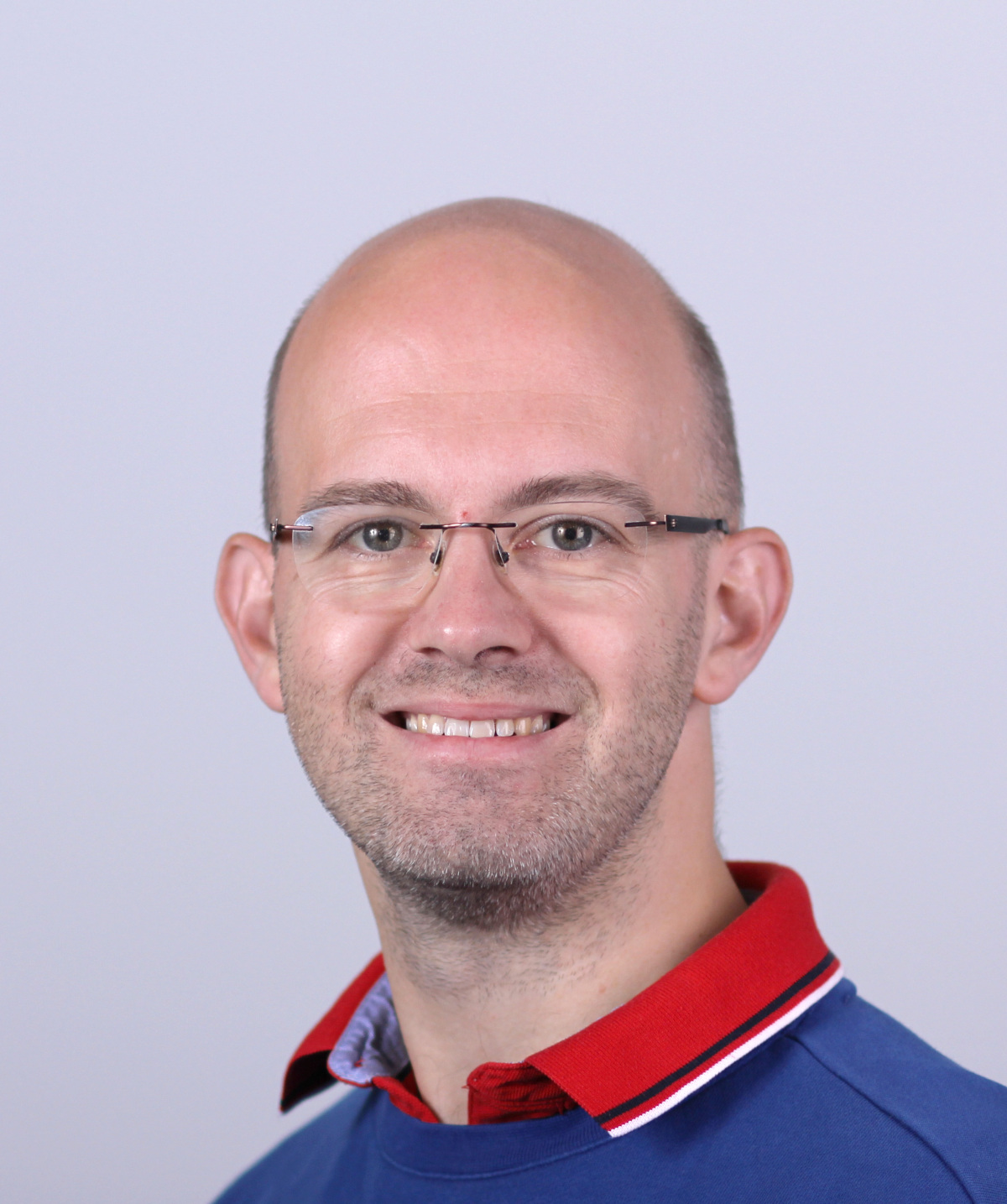
Prof. Björn Sothmann is a Principal Investigator at the Collaborative Research Centre 1242, affiliated with the University of Duisburg-Essen. He leads the project A02 Charge Carrier Dynamics in Nanostructures , focusing on quantum transport and condensed matter physics. His research explores quantum dynamics in nanoscale systems, including superconductors, quantum dots, and thermoelectrics. Key interests include: Nonequilibrium electron dynamics in heterostructures Superconductor-quantum dot hybrids Floquet engineering in time-periodic systems Full counting statistics and quantum coherence His 15 most recent publications (2017–2024) reveal a consistent focus on quantum transport, superconductivity, and nanostructure dynamics. Predominant themes include real-time quantum measurements, pair-amplitude dynamics in hybrid systems, and advanced statistical methods like Lee-Yang zeros and factorial cumulants.
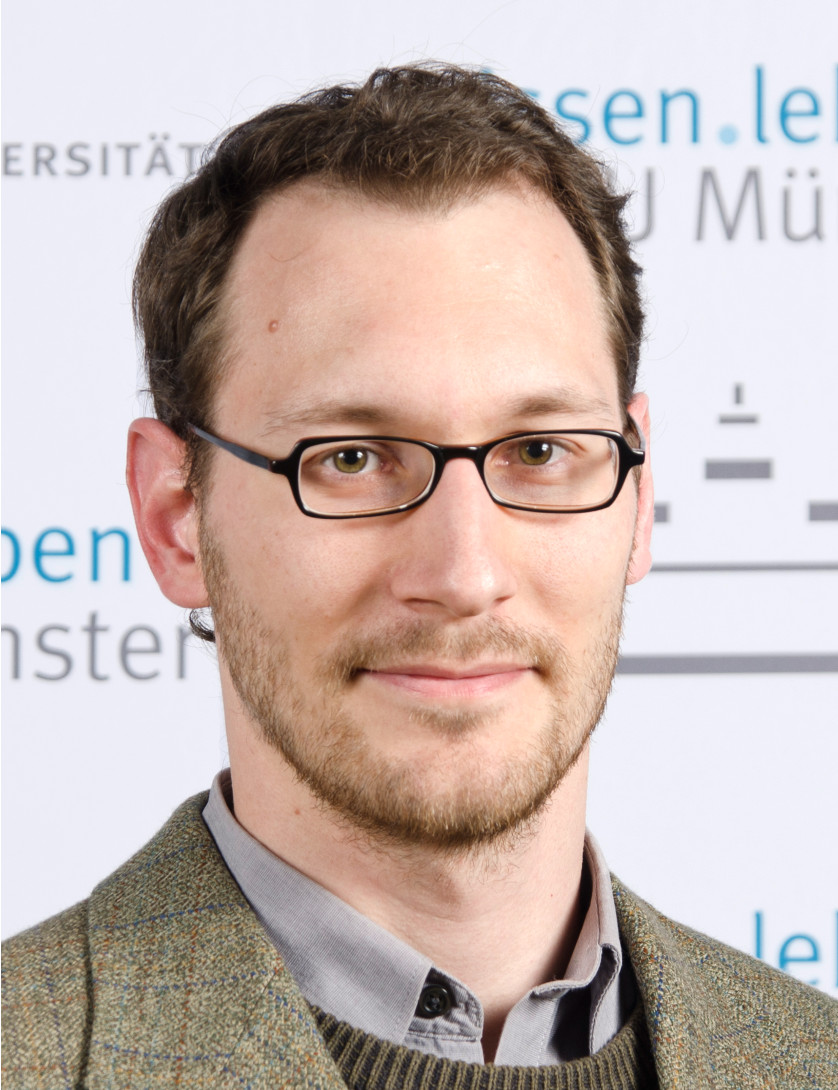
Prof. Dr. Benedikt Wirth is a Professor of Mathematics at the University of Münster, Germany, affiliated with the Institute for Analysis and Numerics within the Department of Mathematics and Computer Science. He is an active researcher and educator specializing in optimization and calculus of variations, with significant contributions to mathematical imaging and shape analysis. His research interests include image processing, scientific computing, numerical analysis, optimization, shape spaces, geodesics in shape space, variational methods, elastic deformation, and optimal transport. Wirth has developed innovative mathematical frameworks for shape analysis, particularly focusing on Riemannian metrics for shape spaces and variational approaches to shape comparison and optimization. His recent publications (2023-2025) demonstrate continued leadership in mathematical optimization, with particular focus on PET reconstruction, dimension reduction techniques, manifold embeddings, and branched transport theory. His work bridges theoretical mathematics with practical applications in medical imaging and computer vision, showing particular strength in connecting geometric analysis with computational methods. CRC 1450 - A05: Targeting immune cell dynamics by longitudinal whole-body imaging and mathematical modelling CRC 1450 - A06: Improving intravital microscopy of inflammatory cell response by active motion compensation EXC 2044 - C1: Evolution and asymptotics EXC 2044 - C2: Multi-scale phenomena and macroscopic structures EXC 2044 - C3: Interacting particle systems and phase transitions EXC 2044 - C4: Geometry-based modelling, approximation, and reduction Prof. Wirth actively supervises numerous bachelor's and master's students, with over 40 theses completed under his guidance since 2015. His teaching portfolio includes courses on inverse problems, numerical methods for partial differential equations, shape spaces, optimization, and optimal transport. He has consistently maintained an active research program while contributing significantly to the education of the next generation of mathematicians.
Dr. Thao Nguyen Hieu serves as a Lecturer in IT at RMIT University Vietnam's Faculty of Science, Engineering & Technology, based at the Saigon South Campus. With higher education experience spanning six universities across four countries, he brings substantial international expertise to his role. His research interests focus on Variational Analysis , Optimization Algorithms , Inverse Problems in Imaging , and Convolutional Neural Networks , representing a strong intersection of mathematical theory and practical applications in data science. His teaching portfolio includes Introduction to Programming (Python), Mathematics for Computing, and Statistical Signal Processing at the Masters level. German-Israeli Foundation Scholarship (2015-2017) Australian Research Council Scholarship (2011-2015) Special Overseas Student Scholarships (SOSS), Australia (2011-2015) Student Travel Award, Federation University Australia (2012) Best oral presentation 1st prize award (2013) Odon Vallet Scholarship (2004) Two bronze Medals in Mathematics Olympiad (2003, 2004) Dr. Hieu has supervised numerous graduation theses for math and engineering students and maintains active research connections through projects like Metrology Advances for Digitized Electronic Components and Systems Industry 4.0 (2019-2021) and Integrating Real-time and Post-processing Image Restoration (2017-2019).
Prof. Dr. Korbinian Schneeberger is a Research Professor and Group Leader at the Department of Plant Developmental Biology, Max Planck Institute for Plant Breeding Research in Cologne, Germany. His research focuses on genome plasticity and computational genetics, developing cutting-edge technologies to explore genome evolution. He leads a multidisciplinary team consisting of bioinformaticians, biologists, and biotechnologists driven by curiosity and passion for new genomic technologies. Dr. Schneeberger's research group pioneers genomic biotechnology for crop biology, addressing real-world problems in genomics-assisted science and breeding using Arabidopsis, potato, and fruit trees as model systems. They study genomic differences, how to find and describe them, and their relevance to phenotype. The group specializes in single-cell sequencing technologies to understand controlled (recombination) and uncontrolled (mutations) events that drive genomic diversity. His research spans four main areas: Optimizing Plant Performance by Mapping the Interface between Development and Metabolism, Plant Microbiota Metabolic Networks and Edaphic Adaptation, Synthetic and Reconstruction Biology, and Theoretical Plant Biology and Data Science. The group has developed several important bioinformatics tools including SyRI for finding genomic rearrangements, plotsr for visualization, SHOREmap for mapping-by-sequencing, and findGSE for genome size estimation. Genome Assembly: Developing new methods for genome assembly, particularly using long-read sequencing data Genomic Variation: Studying mutation accumulation and its role in evolution and adaptation Computational Genetics: Bridging genotype and phenotype using next-generation sequencing Association Studies: Creating methods that associate morphological differences to genomic differences Dr. Schneeberger's recent publications focus on somatic mutations in fruit trees, pan-genome analysis of Arabidopsis, and chromosome-scale genome assembly of potato. His work has significant implications for understanding plant evolution and improving crop breeding strategies. He mentors several PhD students and postdocs, with alumni who have gone on to successful careers in academia and industry. His laboratory maintains the Plant Metabolism and Metabolomics Facility and an Imaging Platform.