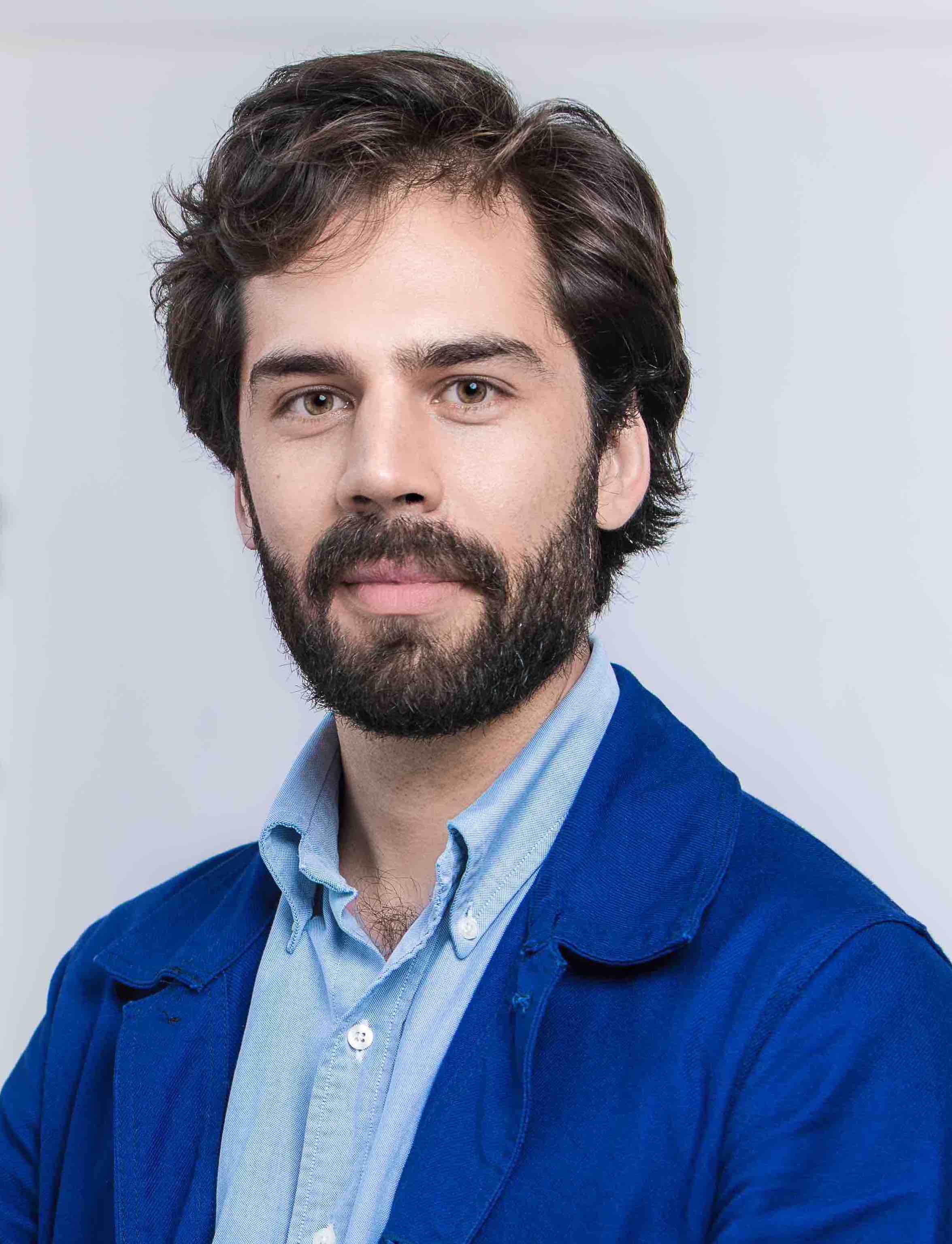
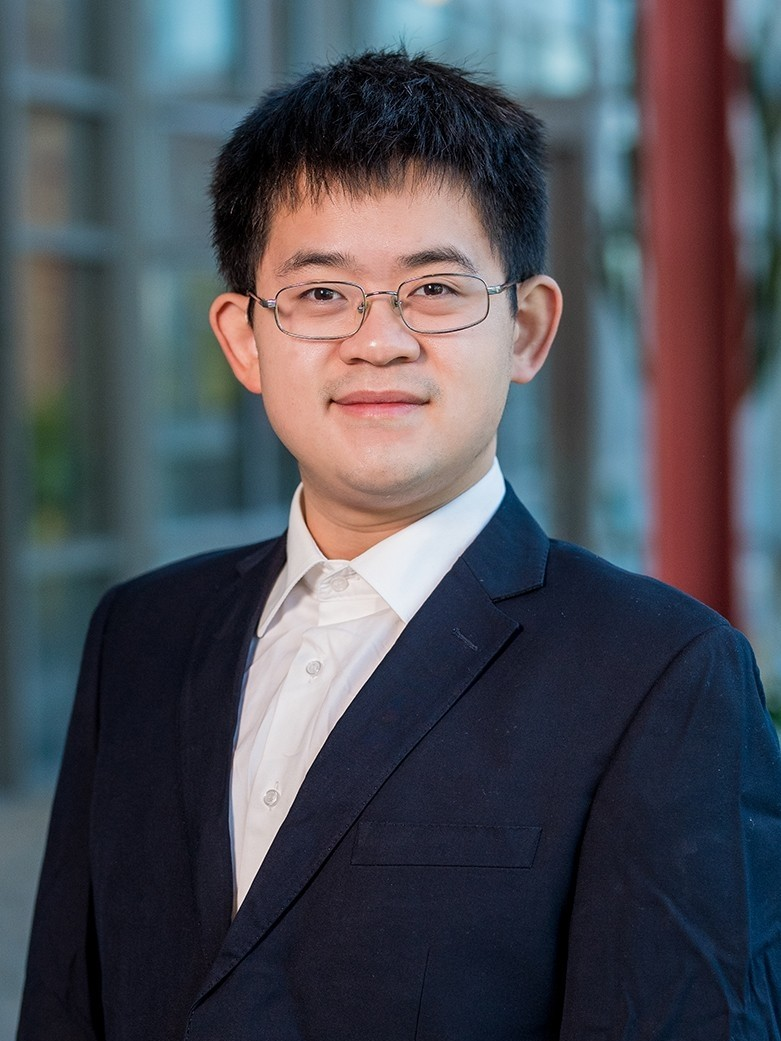
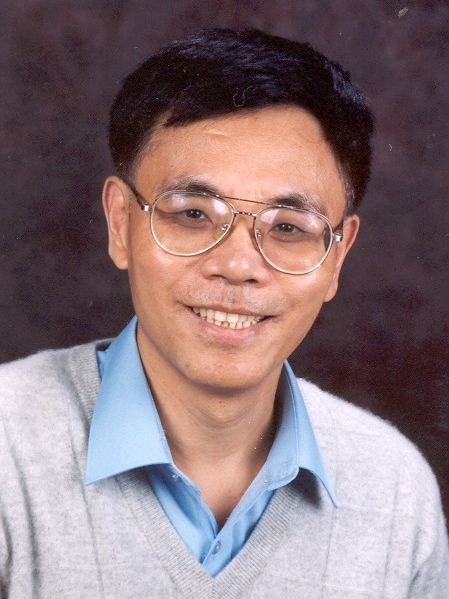
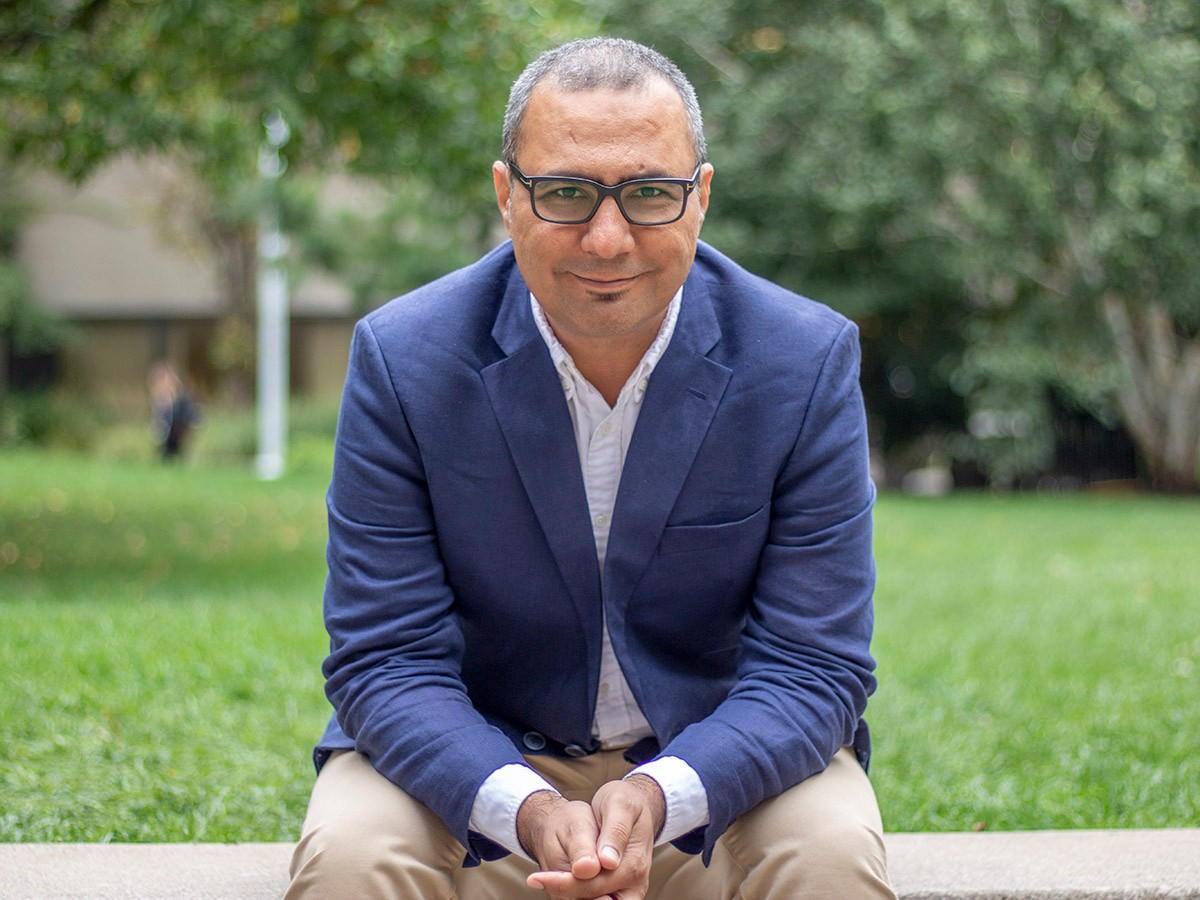
Chris Maddison is an Assistant Professor in the Department of Computer Science and the Department of Statistical Sciences at the University of Toronto. He serves as a CIFAR AI Chair at the Vector Institute, a member of the ELLIS Society, and a faculty affiliate of the Schwartz Reisman Institute for Technology and Society. His research focuses on machine learning methodology, particularly gradient estimation techniques and AI applications in natural sciences, such as drug discovery and causal inference. Maddison previously held positions at Google DeepMind and the Institute for Advanced Study in Princeton, NJ, and earned his DPhil from the University of Oxford. Education: DPhil in Computer Science, University of Oxford Affiliations: University of Toronto, Vector Institute, ELLIS Society, Schwartz Reisman Institute Maddison’s group works on methods for AI in drug discovery, causal inference, and scaling dynamics, with publications in top machine learning conferences (NeurIPS, ICML, ICLR). He developed gradient estimation techniques now standard in deep learning and co-founded the AlphaGo project at DeepMind. NeurIPS Best Paper Award 2014 Open Philanthropy AI Fellow CIFAR AI Chair His lab includes PhD students Nikita Dhawan, Honghua Dong, Haonan Duan, Ayoub El Hanchi, Chuning Li, Yangjun Ruan, and Anvith Thudi. Former members include Dami Choi, Daniel Johnson, and Max Paulus. He teaches courses on large models, statistical methods for machine learning, and machine learning fundamentals.
Richard J. Cook is a University Professor and Mathematics Faculty Research Chair in the Department of Statistics and Actuarial Science at the University of Waterloo. He holds cross-appointments at the School of Public Health and Health Systems at the University of Waterloo and the Faculty of Health Sciences at McMaster University. Previously, he held a Tier I Canada Research Chair in Statistical Methods for Health Research from 2005 to 2019. His educational background includes: BSc in Statistics from McMaster University MMath in Mathematics from University of Waterloo PhD in Statistics from University of Waterloo Professor Cook's research focuses on developing and applying statistical methods for public health research. His primary areas of interest include the analysis of life history data, longitudinal data analysis, methods for incomplete data, clinical trial design, and multivariate analysis. His work provides critical methodological frameworks for understanding disease progression and evaluating interventions in complex health settings. He has made significant contributions to the development of multistate models for disease processes and methods for handling interval-censored data. His extensive publication record demonstrates consistent focus on methodological innovations addressing real-world health research challenges. Recent work emphasizes estimand specification in clinical trials, transportability of research findings, and causal inference methods. His research bridges theoretical statistics with practical applications in autoimmune diseases, transfusion medicine, and public health. Professor Cook has received significant professional recognition: Tier I Canada Research Chair in Statistical Methods for Health Research (2005-2019) Mathematics Faculty Research Chair at University of Waterloo His students have earned prestigious awards including multiple Pierre-Robillard Awards, ISCB Student Conference Awards, and ENAR Distinguished Student Paper Awards, with notable achievements like Dr. Shu (Joy) Jiang being named in the Forbes Top 30 Under 30 North America (2023) for Healthcare. Professor Cook has advised numerous graduate students throughout his career, with many going on to successful academic and industry positions. His research has been supported by various grants, and he collaborates extensively with researchers in rheumatology, transfusion medicine, and public health through affiliations with the Centre for Prognosis Studies in Rheumatic Diseases, the International Psoriasis and Arthritis Research Team, and the McMaster Centre for Transfusion Research. He leads a vibrant research team that includes research associates, post-doctoral fellows, and graduate students working on cutting-edge statistical methodology. His research group maintains strong connections with multiple institutions and research centers focused on health outcomes and disease progression.
Linyi Li is an Assistant Professor in the School of Computing Science at Simon Fraser University (SFU), leading the Trustworthy Artificial Intelligence (TAI) Lab. His research focuses on certifiably trustworthy deep learning systems, combining machine learning and computer security. He holds a PhD from the University of Illinois Urbana-Champaign (UIUC) and a B.Eng. from Tsinghua University. Affiliations: Simon Fraser University, TAI Lab Education: PhD in Computer Science, UIUC, 2023 B.Eng (Cum Laude), Tsinghua University, 2018 His research interests include deep learning , trustworthy machine learning , large language models , and software engineering . He emphasizes rigorous certification of robustness, fairness, and numerical reliability in AI systems. Recent work includes the InfiBench benchmark for evaluating code LLMs and advancements in neural network verification. Recent Research Trends: His publications span certified robustness, fairness guarantees, and scalable verification techniques for deep learning models. He also explores scientific evaluation of foundation models and adversarial defense mechanisms. Awards: Rising Stars in Data Science AdvML Rising Star Award Wing Kai Cheng Fellowship Finalist: Qualcomm Innovation Fellowship (2022) Winner: VNN-COMP'23 Competition (Team α, β-CROWN) Advising & Grants: As a PI, he oversees the TAI Lab's research. Though no specific grants are listed, his work is funded through competitive awards and university resources. Labs/Teams: Leads the TAI Lab at SFU, focusing on foundational and applied research in trustworthy AI.
Chris J. Maddison is an Assistant Professor at the University of Toronto, holding joint appointments in the Department of Computer Science and the Department of Statistical Sciences. He is also a CIFAR AI Chair at the Vector Institute and a member of the ELLIS Society. Maddison earned his DPhil from the University of Oxford and previously worked as a Senior Research Scientist at Google DeepMind and a member at the Institute for Advanced Study. His research focuses on advancing machine learning methodologies, particularly in leveraging data’s natural structure for efficient learning, with applications in drug discovery, causal inference, and AI safety. Education: DPhil in Computer Science, University of Oxford His research interests span machine learning, AI safety, reinforcement learning, and the integration of logical reasoning into large language models. Maddison has contributed to foundational work on gradient estimation techniques and was a key member of the AlphaGo project. He actively explores how statistical structures in real-world data influence AI capabilities. Recent publications emphasize evaluating conversational agents, mitigating AI safety risks, and enhancing logical reasoning in LLMs. His work bridges theoretical advancements with practical applications, such as code generation and multi-agent systems. Awards: NeurIPS Best Paper Award (2014), Open Philanthropy AI Fellowship Maddison advises multiple PhD students and postdoctoral researchers, fostering collaborations across academia and industry. His former advisees now hold roles at institutions like OpenAI, Stanford, and Magic AI. He teaches advanced courses in machine learning and statistical methods, including CSC 2541 (Large Models) and STA 314 (Machine Learning). Maddison is affiliated with the Schwartz Reisman Institute for Technology and Society, extending his impact to societal implications of AI. His lab’s interdisciplinary approach combines algorithmic innovation with real-world problem-solving.
Michelle Dimitris is an Assistant Professor in the Department of Community Health and Epidemiology at Dalhousie University’s Faculty of Medicine. Her research focuses on advanced epidemiologic methods applied to pregnancy and child health globally, particularly in understanding pregnancy weight gain patterns and their implications for outcomes like gestational diabetes and preterm birth. She holds a PhD from McGill University, an MSc from Queen’s University, and a BScH from Queen’s University in Life Sciences. Her work includes studies on twin vs. singleton pregnancies, methodological challenges in epidemiology during pandemics, and global health research trends. Notable collaborations involve the National Institutes of Health (NIH) grants and fellowships, including a Fonds de Recherche Santé Doctoral Award. She contributes to professional societies like the Society for Pediatric and Perinatal Epidemiologic Research (SPER) and the Society for Epidemiologic Research (SER). Key research themes include causal inference approaches, perinatal epidemiology, and addressing gaps in global health studies. Recent publications analyze gestational weight gain trajectories, pandemic impacts on pregnancy outcomes, and methodological rigor in epidemiological studies.
Masoud Asgharian is a Professor in the Department of Mathematics and Statistics at McGill University. His research focuses on survival analysis, changepoint problems, nonparametric Bayesian methods, and data envelopment analysis. He has contributed to influential studies on dementia survival rates, censored data methodologies, and statistical efficiency measures. His work bridges biostatistics and operations research, with applications in public health and medical sciences. Key contributions include methodologies for prevalent cohort survival analysis, input relaxation efficiency measures in stochastic DEA, and causal inference techniques. Asgharian has collaborated extensively with researchers in epidemiology and biomedical engineering, as evidenced by his co-authored publications on topics ranging from tooth enamel properties to low-precision neural network quantization. His research has been published in high-impact journals such as New England Journal of Medicine , Journal of the American Statistical Association , and Biometrics . Current affiliations include leadership roles in statistical research at McGill, with ongoing projects in computational statistics and healthcare analytics.
Ke Wang is a Professor in the School of Computing Science at Simon Fraser University . His research focuses on Data Mining , Database Systems , Data Privacy , and Graph and Network Data . He holds a Ph.D. and M.Sc. from the Georgia Institute of Technology (1986 and 1984, respectively). Teaching includes courses like Database Systems II , Introduction to Data Mining , and Special Topics in Databases . He has advised numerous students and alumni, many of whom now work in tech, academia, and industry. Notable awards include the 2013 Faculty of Applied Sciences Research Excellence Award and the ECIR 2019 Best System Paper . His work emphasizes privacy-preserving techniques and has led to contributions like the Introduction to Privacy-Preserving Data Publishing textbook. He has served as a conference chair for major data mining events like SDM 2015/2016 and holds editorial roles in journals like ACM TKDD. His lab, the Database and Data Mining Laboratory , focuses on actionable solutions for real-world data challenges.
Bilal Farooq is an Associate Professor and Program Director for the Master of Engineering in Interdisciplinary Engineering (MEIE) at Toronto Metropolitan University, holding the Canada Research Chair in Disruptive Transportation Technologies and Services within the Department of Civil Engineering. His educational background includes a PhD from the University of Toronto (2011), MASc from Lahore University of Management Sciences (2004), and BSc from the University of Engineering and Technology (2001). Dr. Farooq's research pioneers disruptive transportation solutions through cyber-physical systems, AI/machine learning applications, behavioral modeling, and optimization techniques. His work specifically targets on-demand multimodal systems, sustainable urban transportation, urban air mobility, automated vehicles, and extended reality applications, addressing critical urban mobility challenges with human-centered approaches. Analysis of his recent publications reveals a strong trend toward quantum-enhanced computational methods, privacy-preserving federated learning frameworks, and sustainability-focused decarbonization strategies across transportation domains, with increasing emphasis on human factors and real-world implementation. Notable scientific awards include: Ontario Early Researcher Award (2018) Canada Research Chair (2017) MassMotion Academic Pedestrian Modelling Project of the Year (2016) Québec Early Researcher Award (2014) Dr. Farooq actively supervises graduate students and secures significant research funding through his Canada Research Chair position and Early Researcher Awards. He directs the Laboratory of Innovations in Transportation (LiTrans), which develops interdisciplinary solutions integrating mathematics, engineering, computer science, and economics to address emerging transportation challenges. LiTrans focuses on disruptive transportation technologies, complete streets design, cyber-physical systems, pedestrian dynamics, resilience, and climate change impacts, collaborating with industry and government partners to translate research into practical urban mobility innovations for smart cities worldwide.
Aaron Smith is an Associate Professor in the Department of Mathematics and Statistics at the University of Ottawa, affiliated with the Faculty of Science. He holds a PhD from Stanford University. His research focuses on applied probability, computational statistics, Monte Carlo methods, and Markov chains, with an emphasis on advancing theoretical understanding and practical applications of these methodologies. Dr. Smith's work includes contributions to community detection algorithms, Markov chain mixing times, and synthetic health data generation. His recent publications explore topics such as nonstandard Dirichlet form representations, perturbation analysis of MCMC algorithms, and sparse Bayesian multidimensional scaling. He advises students in applied probability and has supervised postdoctoral researchers in related fields. His research interests span a wide range of topics, including stochastic processes, statistical inference, and algorithm design. He is particularly known for his analysis of convergence rates in Markov chains and the development of efficient sampling techniques for complex models. His interdisciplinary work bridges theoretical mathematics and practical computational challenges in data science and healthcare. Dr. Smith collaborates on projects involving synthetic data frameworks for privacy-preserving applications and has contributed to foundational work on mixing times and perturbation effects in stochastic systems.
Geoff Pleiss is an Assistant Professor in the Department of Statistics at the University of British Columbia (UBC), affiliated with CAIDA's AIM-SI cluster. He is also a Canada CIFAR AI Chair and faculty member at the Vector Institute. His research bridges deep learning and probabilistic modeling, focusing on uncertainty quantification, Bayesian optimization, Gaussian processes, and ensemble methods. Pleiss earned his PhD in Computer Science from Cornell University (2020), followed by a postdoc at Columbia University. He holds multiple awards, including the AISTATS Top Reviewer and NeurIPS recognitions. His work emphasizes scalable algorithms and open-source contributions, such as the GPyTorch library. Pleiss advises students in Computer Science and Statistics, including Donney Fan (PhD), Tim G. Zhou (MSc), and others. He teaches advanced courses like STAT 547U (Deep Learning Theory) and STAT 520P (Bayesian Optimization). Grants include NSERC Discovery and New Frontiers in Research funding. Pleiss collaborates on interdisciplinary projects, such as astrophysical discovery via machine learning, and actively participates in academic service and outreach. Education: PhD in Computer Science, Cornell University (2020) MSc in Computer Science, Cornell University (2018) BSc in Engineering (Computing with Applied Mathematics), Olin College (2013) Key Research Themes: Uncertainty-aware decision-making with neural networks Scalable Gaussian processes and Bayesian optimization Ensemble methods and their theoretical limitations Recent Grants: NSERC Discovery Grant (2024) New Frontiers in Research Fund (2025, co-PI) His publications span foundational theory to applied machine learning, with over 14,500 citations. He actively mentors students through research internships and advises on open-source software development. Pleiss frequently presents at top conferences and collaborates with industry partners like Microsoft and ASAPP.
Noman Mohammed is an Associate Professor of Computer Science at the University of Manitoba’s Faculty of Science, leading the Data Security & Privacy (DSP) laboratory. He specializes in privacy-preserving techniques for data sharing, addressing challenges in healthcare, genomic, and financial data. In 2020, he received the Terry G. Falconer Memorial Rh Institute Foundation Emerging Researcher Award for his contributions to bridging privacy and data utility gaps. His research focuses on balancing data accessibility and individual privacy through technical solutions like federated learning, differential privacy, and secure genomic data processing. He emphasizes integrating policy guidelines with advanced technologies to mitigate privacy risks from interconnected data sources. Notable achievements include developing toolkits for data anonymization and federated learning frameworks, as well as advancing methods to secure cloud-based data storage and analysis. His work aligns with societal needs for robust privacy mechanisms in an era of expanding personal data collection. Future objectives involve addressing privacy challenges in emerging technologies, such as heterogeneous data integration and scalable systems for personal data management. Despite his research focus, he notably avoids social media platforms.
Guillaume Lajoie is an Associate Professor in the Department of Mathematics and Statistics at Université de Montréal and a Core Academic Member of Mila – Quebec Artificial Intelligence Institute. He holds a Canada CIFAR AI Research Chair and a Canada Research Chair in Neural Computation and Interfacing. His research focuses on the intersection of AI and neuroscience, particularly in understanding neural network dynamics and developing brain-machine interfaces for clinical and scientific applications. He is affiliated with the Centre de recherches mathématiques (CRM), the Interdisciplinary Center for Research on the Brain and Learning (CIRCA), and the UNIQUE initiative. Education: PhD in Applied Mathematics from the University of Washington (Seattle), postdoctoral fellowships at the Max Planck Institute for Dynamics and the University of Washington Institute for Neuroengineering. Awards include the FRQS Scholar designation and leadership roles in strategic research initiatives like UNIQUE and CIRCA. Research interests include neural computations, recurrent neural networks, neurotechnology, and responsible AI development. Supervised students include François Paugam (PhD), Giancarlo Kerg (PhD), and others. Key grants include projects on adaptive neuroprosthetics, neural decoding, and Canada Research Chairs funding.
Gautam Kamath is an Assistant Professor at the University of Waterloo's Cheriton School of Computer Science, a Faculty Member at the Vector Institute, and a Canada CIFAR AI Chair. He leads The Salon, a research group focused on statistics, algorithms, machine learning, and optimization. His work bridges theoretical foundations with practical applications in data privacy and robustness, contributing to both academic research and real-world deployments that impact millions of users. Dr. Kamath earned his PhD and SM degrees in Electrical Engineering and Computer Science at MIT, where he was advised by Costis Daskalakis. Prior to MIT, he graduated from Cornell University in May 2012 with a degree in Computer Science and Electrical and Computer Engineering, where he worked with Bobby Kleinberg. His academic journey reflects a strong foundation in both theoretical computer science and practical applications. His research focuses on developing solutions for trustworthy and reliable machine learning and statistics, with particular emphasis on data privacy and robustness. He addresses fundamental problems in these areas, revitalizing statistical toolkits for the modern data era where privacy preservation is paramount. His work spans theoretical foundations of differential privacy to practical applications that have been deployed at scale, including contributions to systems that protect the sensitive information of hundreds of millions of individuals. Analysis of his recent publications reveals a strong trend toward addressing the interplay between privacy, robustness, and machine learning performance. His work increasingly examines practical deployment challenges while maintaining theoretical rigor, with growing emphasis on diffusion models, generative AI, and the legal implications of AI systems. There's a clear trajectory from foundational privacy theory toward addressing real-world implementation challenges across diverse application domains. Canada CIFAR AI Chair Ontario Early Researcher Award 2024 Caspar Bowden Award for Outstanding Research in Privacy Enhancing Technologies STOC Best Student Presentation Award ICML 2024 Best Paper Award Microsoft Research Fellow at the Simons Institute for the Theory of Computing Dr. Kamath actively mentors students, with notable successes including Valentio Iverson winning the Germain-Erdős Undergraduate Award and Chris Trevisan receiving the CRA Outstanding Undergraduate Researcher Award. His service to the research community is extensive, serving as Editor-in-Chief of TMLR, on the Executive Committee of the Learning Theory Alliance, and on steering committees for major conferences including ICML, COLT, and ALT. He has organized numerous workshops focused on privacy-preserving machine learning and differential privacy. Through The Salon research group, Dr. Kamath fosters a collaborative environment where postdoctoral fellows, graduate students, and undergraduates work together on cutting-edge problems at the intersection of statistics, algorithms, machine learning, and optimization. The group maintains strong connections with industry partners and participates in major research initiatives, including the Vector Institute's privacy and security research efforts. Looking forward, Dr. Kamath will be moving to the Computer Science department at NYU's Courant Institute of Mathematical Sciences in September 2026, where he plans to expand his research program.
Grace Y. Yi is a Professor and Tier I Canada Research Chair in Data Science at the University of Western Ontario, holding a joint appointment in the Departments of Statistical & Actuarial Sciences and Computer Science. She previously served at the University of Waterloo (2000-2019) and earned degrees from Sichuan University (B.Sc., M.Sc. in Mathematics), York University (M.Sc. in Statistics), and the University of Toronto (Ph.D. in Statistics). Her research focuses on statistical methodology for missing/mismeasured data, biostatistics, causal inference, and machine learning. She has authored influential monographs and co-edited major handbooks in her field. Recognized for leadership, she served as SSC President (2021-2022) and holds editorial roles at top journals. Awards include the SSC Gold Medal (2025), CRM-SSC Prize (2010), and Fellowships from the Institute of Mathematical Statistics and American Statistical Association. Her doctoral thesis (2000) under Don Fraser explored asymptotic distributions. She has supervised 23 Ph.D. students, three of whom won the Pierre Robillard Award. She mentors actively and advocates for statistical education globally, including founding the ICSA Canada Chapter. Her work bridges statistical theory and modern machine learning challenges like label noise and domain adaptation.
Amanda Giang serves as Assistant Professor at the University of British Columbia's Faculty of Applied Science, Department of Mechanical Engineering, holding a Canada Research Chair in Environmental Modelling for Policy. She maintains a joint appointment with the Institute for Resources, Environment and Sustainability (IRES). Her educational background includes a B.A.Sc. from the University of Toronto, followed by M.S. and Ph.D. degrees from MIT, with postdoctoral training at MIT and Harvard. Dr. Giang's research employs interdisciplinary approaches to develop modeling tools for environmental policy analysis, focusing on pollution assessment, environmental injustice, and the intersection of air quality, decarbonization, and equity. Her work emphasizes action-oriented partnerships with community organizations and government health/environment agencies. Current projects address freight transport decarbonization equity, cumulative impact assessment methodologies for overburdened communities, and holistic environmental impact evaluation in technology design. Her recent publications demonstrate expertise across environmental modeling, policy analysis, and justice frameworks, with significant contributions to understanding spatial inequities in environmental risk distribution and developing community-engaged research methodologies. UBC Killam Research Prize, 2023 Dr. Giang actively collaborates with community groups and government authorities through her LEAP (Learning, Environmental Assessment, and Policy) research group. Her work integrates technical modeling with real-world policy applications, particularly in urban environmental planning contexts where equity considerations are paramount. She has developed innovative frameworks for cumulative impact assessment and environmental justice analysis that directly inform regulatory decision-making processes. Her research laboratory focuses on developing open-source modeling tools for environmental policy analysis while maintaining strong community partnerships that ensure research addresses pressing local environmental justice concerns.