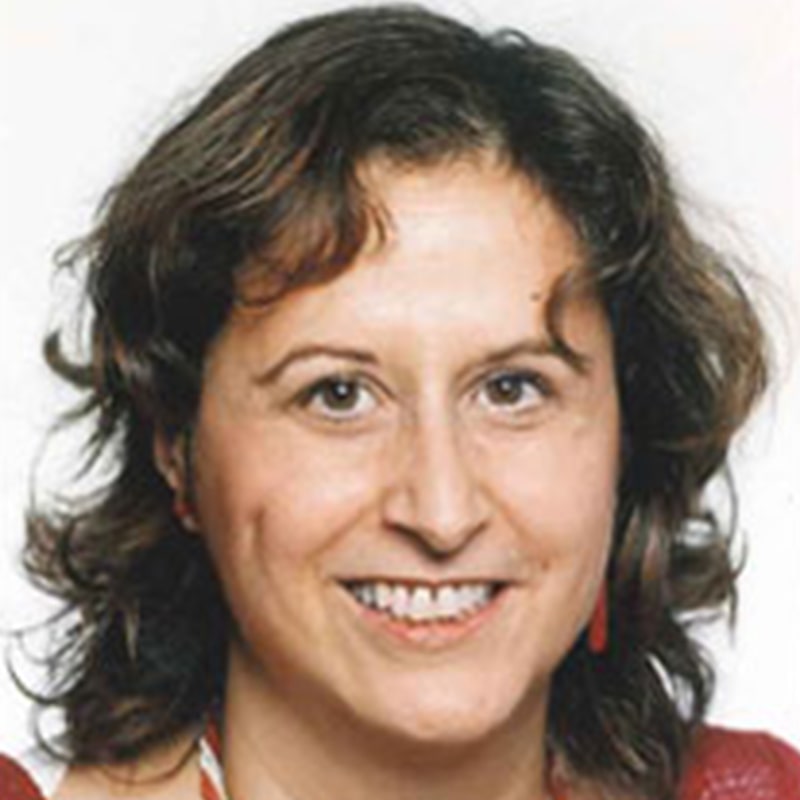
Isabella Verdinelli is a dual-affiliated professor serving as Professor in Residence at Carnegie Mellon University's Department of Statistics (Dietrich College of Humanities and Social Sciences) and as Full Professor at Sapienza University of Rome's Department of Statistical Sciences. She splits her academic year between Pittsburgh (fall) and Rome (spring), maintaining active research collaborations at both institutions. Her education includes a Master's degree from University College London and a PhD from Carnegie Mellon University. Her career spans postdoctoral work, assistant/associate positions, and professorship roles since her student days in Rome. Verdinelli's research focuses on: Nonparametric and high-dimensional methods for uncovering latent structures in complex datasets Bayesian experimental design with applications in medicine and engineering Manifold/filament estimation and minimax convergence theory Monte Carlo Markov Chains and hypothesis testing using Bayes factors Multiple testing procedures (FDR control) Her publications demonstrate sustained focus on Bayesian methodologies, nonparametric inference, and optimization techniques. Recent work (2007-2010) emphasizes high-dimensional data structures and theoretical statistics, while earlier contributions center on experimental design and Bayesian model selection.
Barnabas Poczos is an Associate Professor in the Machine Learning Department at the School of Computer Science, Carnegie Mellon University. He is a member of the Auton Lab and has established himself as a leading researcher in theoretical machine learning with applications spanning numerous scientific domains. Carnegie Mellon University, School of Computer Science Machine Learning Department Auton Lab member Dr. Poczos earned his M.Sc. in applied mathematics from Eotvos Lorand University in Budapest, Hungary in 2001, followed by a Ph.D. in computer science from the same institution in 2007. He completed postdoctoral training at the University of Alberta (2007-2010) in the RLAI group and at Carnegie Mellon University (2010-2012) in the Auton Lab. His research focuses on theoretical questions of statistics and their applications to machine learning. Dr. Poczos develops machine learning methods for advancing automated discovery and efficient data processing across diverse scientific fields including health-sciences, neuroscience, bioinformatics, cosmology, agriculture, robotics, civil engineering, and material sciences. His work bridges theoretical foundations with practical applications, making significant contributions to both machine learning methodology and domain-specific scientific problems. Analysis of his recent publications reveals a strong emphasis on diffusion models and generative AI techniques applied to scientific discovery. His work spans drug design, genomics, cosmology, and materials science, demonstrating a consistent pattern of developing novel machine learning methodologies that address specific challenges in scientific domains. The interdisciplinary nature of his research is particularly evident in the application of advanced ML techniques to solve complex problems in biology, physics, and engineering. Yahoo! ACE award Dr. Poczos has served as PI or co-Investigator on 15+ federal and non-federal grants, supporting his research in theoretical machine learning and its scientific applications. His teaching portfolio at CMU includes advanced courses in optimization, convex optimization, and machine learning with large datasets. While specific students aren't mentioned in the provided information, as an Associate Professor at CMU, he undoubtedly mentors graduate students in the Machine Learning Department. As a core member of the Auton Lab at Carnegie Mellon University, Dr. Poczos contributes to a research environment focused on developing machine learning methods for real-world applications, particularly in healthcare and scientific discovery. The lab's work emphasizes both theoretical foundations and practical implementations of machine learning systems.
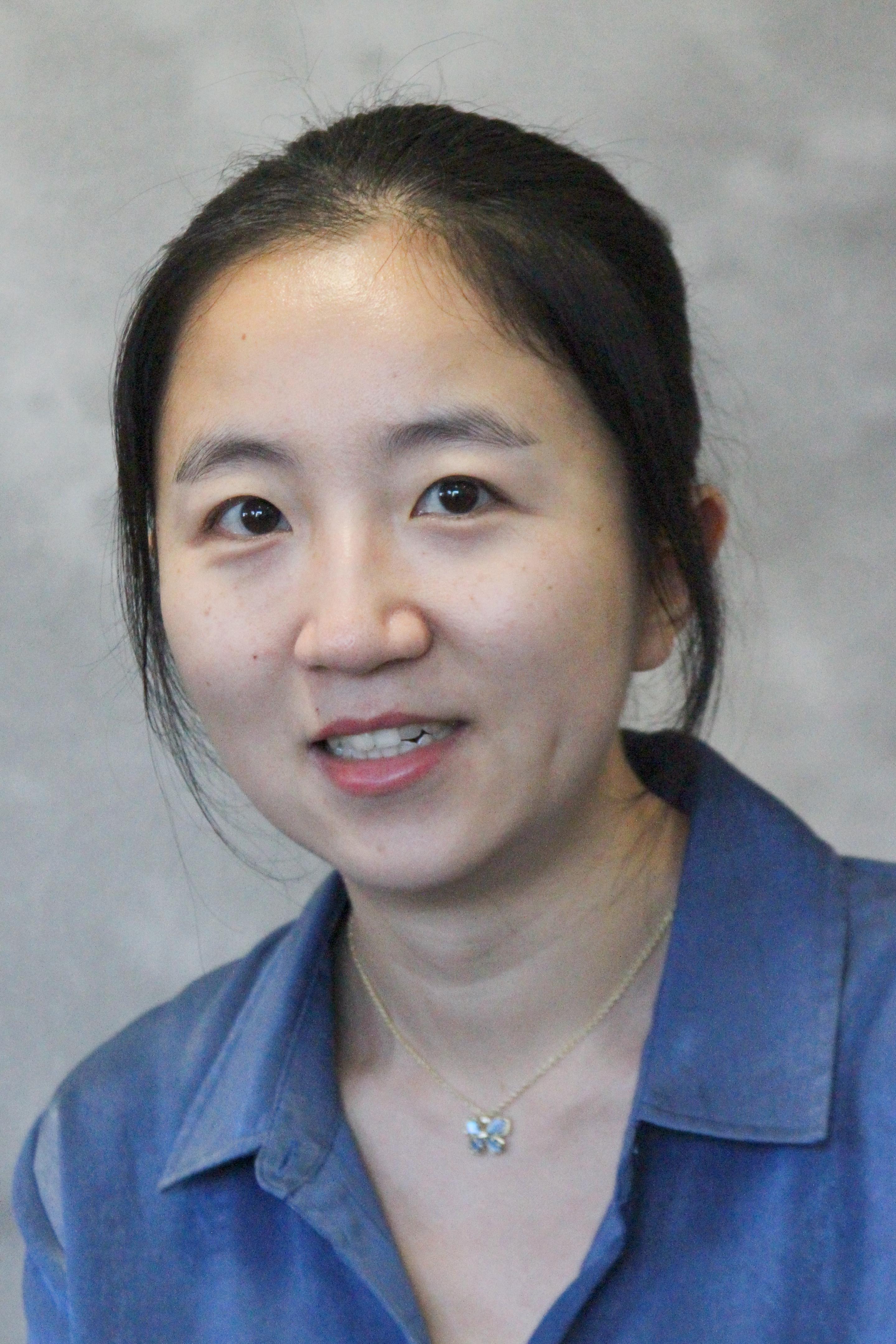
Erin Molloy is an Assistant Professor in the Department of Computer Science at the University of Maryland, College Park. She holds appointments in UMIACS (University of Maryland Institute for Advanced Computer Studies) and the Center for Bioinformatics and Computational Biology (CBCB). Her research focuses on developing efficient algorithms for phylogenetic tree reconstruction, leveraging distributed-memory systems and genomic data analysis. She earned her Ph.D. in Computer Science from the University of Illinois at Urbana-Champaign in 2020 and completed a postdoctoral fellowship at UCLA's Machine Learning and Genomics Lab. Research interests include computational methods for evolutionary biology, scalable phylogenetics, high-performance computing for genomics, and applications in metagenomics, cancer genomics, and microbial ecology. Her lab, the Molloy Lab, emphasizes interdisciplinary approaches combining algorithm design, statistical guarantees, and parallel computing. Key collaborations include work with Mihai Pop (UMIACS Director) on metagenomic taxon identification, Brantley Hall on microbiome gene functions, and Michael Cummings on phylogeny estimation methodologies. She is funded by the NSF CAREER Award, USDA grants, and the NCI-UMD Partnership Program. Advising includes PhD students in CS, AMSC, and BISI programs. Current projects explore cell lineage tree reconstruction, species tree estimation under low-homoplasy models, and algorithmic improvements for large genomic datasets. The lab actively participates in conferences like ISMB/ECCB and workshops on phylogenomics.
Yanyuan Ma is a Professor of Statistics at The Pennsylvania State University, affiliated with the Eberly College of Science and the Department of Statistics. She holds a B.S. in Mathematics from Beijing University (1994) and a Ph.D. in Applied Mathematics from MIT (1999). Her research focuses on semiparametric methods, dimension reduction, measurement error models, latent variables, survival analysis, and missing data problems. She is particularly known for contributions to statistical theory with applications in biostatistics and econometrics. Education: Ph.D. in Applied Mathematics, Massachusetts Institute of Technology, 1999 B.S. in Mathematics, Beijing University, 1994 Research Interests: Measurement error modeling and bias correction Dimension reduction techniques in high-dimensional data Analysis of censored and missing data Latent variable models and selection bias mechanisms Skew-elliptical distributions and semiparametric efficiency Publications Overview: Her work spans methodological advancements in statistical theory with applications to genetics, epidemiology, and econometrics. Recent research emphasizes efficient estimation in complex models involving measurement errors, nonignorable missingness, and functional data. Key contributions include model averaging strategies, pseudolikelihood estimation, and risk score methodologies across populations. Awards: Fellow of the Institute of Mathematical Statistics (IMS) Fellow of the American Statistical Association (ASA) Teaching & Advising: Teaches advanced courses including Applied Statistics, Survival Analysis, and Semiparametrics. While no specific advisees are listed, her research contributions indicate active mentorship in statistical methodology and applications.
Peihan Miao is an Assistant Professor in the Department of Computer Science at Brown University, affiliated with the Theory Group. She holds a PhD from UC Berkeley (2019) under Sanjam Garg and a BS from Shanghai Jiao Tong University. Prior to Brown, she was at the University of Illinois Chicago (2020–2022) and Visa Research (2019–2020). Her research focuses on cryptography and security, particularly secure multi-party computation (MPC), with applications in genomics and privacy-preserving machine learning. She has received NSF, Meta, Google, and Amazon awards. Her work bridges theoretical foundations and practical implementations, addressing challenges in private set intersection (PSI), updatable encryption, and federated learning. Teaching includes courses on cryptography and secure computation at Brown and UIC. She mentors PhD students and postdocs, leading collaborative projects in privacy-enhancing technologies. Her lab explores MPC protocols, privacy-preserving techniques, and interdisciplinary applications in bioinformatics. Key awards include the NSF CAREER Award and Google/Amazon Research Scholarships. Grants support projects like privateQTL for genomic data analysis and secure PSI protocols. Her service includes program committees for CRYPTO, TCC, and ASIACRYPT.
Dr. Haiyan Wang is Professor of Statistics at Kansas State University's College of Arts and Sciences. She earned her Ph.D. from Pennsylvania State University (2004) and leads research in machine learning, nonparametric statistics, and high-dimensional data analysis with applications in genomics, lipidomics, and image processing. She directs the Statistical Consulting program and has developed R packages for functional data analysis and high-dimensional testing. Her methodological research spans: 1) Inference for heteroscedastic functional data 2) Rank-based high-dimensional testing 3) Test-based clustering 4) Image quality assessment 5) Variable selection for high-dimensional data. She maintains active collaborations in plant science, bioinformatics, and materials engineering. As Graduate Council representative, she oversees statistics curriculum development. She has advised 19+ graduate students and teaches courses spanning statistical theory, machine learning, and computational statistics.
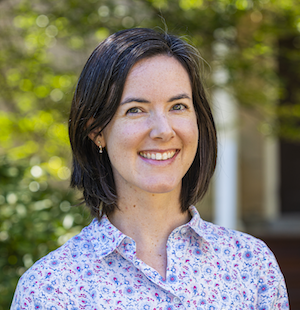
Sara Mathieson is an Associate Professor in the Computer Science Department at Haverford College. She holds a PhD in Computer Science from UC Berkeley (2015), advised by Yun S. Song, with a Designated Emphasis in Computational and Genomic Biology. Her research focuses on computational and population genetics, particularly demographic inference using statistical and machine learning methods. She has held prior positions at Swarthmore College (2017–2019) and Smith College (2015–2017). Education: PhD in Computer Science, UC Berkeley (2015) Bachelor's in Mathematics with Computer Science, MIT (2010) Harvey Mudd College (2006–2007) Research Interests: Developing statistical methods for genomic data Demographic inference in population genetics Applications of machine learning (GANs, CNNs) in evolutionary biology Analysis of endogamous populations and admixing dynamics Grants & Funding: NIH R15 Grant (2020–2027): 'Adaptive evolutionary inference frameworks using GANs' Lab & Collaborators: Current lab members: Kai Britt, Jadyn Elliott, Sarah Keim, etc. Notable alumni: Darshan Mehta (CRA Award), Sam Tan (CRA finalist)
Jialin Zhang is an Assistant Professor of Statistics at Mississippi State University. He received his Ph.D. in Statistics from the University of North Carolina at Charlotte in 2019. His research focuses on entropic statistics, including nonparametric estimation of entropy, mutual information, tail probabilities, and biodiversity indices, with applications in machine learning and data science. His work addresses high-dimensional and non-ordinal data challenges using information-theoretic frameworks, developing tools like R packages for tail classification and entropic statistics. Research emphasizes theoretical foundations and practical implementations in computational biology and healthcare analytics.
David Spade is an Associate Professor in the Department of Mathematical Sciences at the University of Wisconsin-Milwaukee, with office location in the Engineering and Mathematical Sciences building (room E459). He holds active roles as an Undergraduate Advisor and member of the Statistics Research Group. His research centers on theoretical and computational statistics, specializing in Markov chain Monte Carlo methods, Bayesian inference, and phylogenetic analysis. Key interests include convergence diagnostics for Gibbs and Metropolis-Hastings samplers, statistical modeling of biological systems (notably Daphnia motion), and applications in genomics and cancer research. His work bridges rigorous statistical theory with interdisciplinary biological problems. Analysis of his 2016-2025 publications reveals dominant trends in MCMC convergence theory (mixing time, geometric ergodicity, drift-minorization), phylogenetic inference, and biological modeling. His research demonstrates consistent focus on computational statistics with expanding applications in ecology, evolutionary biology, and medical research, particularly through collaborations with biologists. No scientific awards were documented in the provided materials. As an Undergraduate Advisor, he mentors statistics students within the department's academic framework. Dr. Spade actively contributes to the Statistics Research Group, fostering collaborative projects in statistical methodology development and interdisciplinary applications.
Dr. Sarah P. Otto (Nickname: Sally) is a Professor at the University of British Columbia , affiliated with the Faculty of Science and the Department of Zoology . Her research focuses on understanding evolutionary processes through mathematical models, statistical inference, and experimental evolution with Saccharomyces cerevisiae and plant systems. Key themes include the evolution of recombination, dominance, genome structure, and adaptation to changing environments. Research Interests : Evolutionary transitions in reproduction and mating systems Genome size variation and its ecological implications Eco-evolutionary theory and speciation dynamics Genetic modifiers and selection processes Experimental validation using yeast and plant models Mathematical frameworks for adaptive trade-offs Scientific Awards : Killam University Chair Canada Research Chair She has supervised numerous graduate students and postdocs, including notable researchers like Dr. Aneil Agrawal (University of Toronto), Dr. Itay Mayrose (Tel Aviv University), and Dr. Shing Zhan (Oxford University). Her lab at the Biodiversity Research Center combines theoretical and experimental approaches to address fundamental questions in evolutionary biology.
Dr. Simón Rodríguez Santana is an Assistant Professor at the Higher Technical School of Engineering (ICAI) of Comillas Pontifical University, where he teaches in the Mathematical Engineering and Artificial Intelligence program. He holds a Physics degree from the Autonomous University of Madrid, a Master's in Theoretical Physics, and a PhD in Mathematical Engineering from Complutense University of Madrid. His research focuses on developing probabilistic machine learning and statistical techniques, particularly Bayesian methods applied to drug discovery, adversarial risk analysis, and time series forecasting. Professional experience includes a postdoctoral position at the Institute of Mathematical Sciences (ICMAT-CSIC) and visiting scholar roles at Aalto University (Finland). He has led two industrial research projects and contributed to national/international initiatives. Technical skills include Python (TensorFlow/PyTorch), R, LaTeX, and Slurm. Key research areas span probabilistic ML, Bayesian statistics, approximate inference, and operations research. Recent work emphasizes applications in personalized pricing strategies and AI-driven drug design. He has reviewed for top conferences (ICML, NeurIPS) and presented invited seminars on probabilistic ML applications. Awarded PAD accreditation from ANECA, he actively engages in academic dissemination through media appearances like 'Casting the Future' podcast and external training programs such as Generative AI for Education. His current teaching includes tenure-track positions and thesis supervision at undergraduate and master's levels.
Anita Raja is a Professor of Computer Science at Hunter College and a member of the doctoral faculty at the Graduate Center, CUNY. She previously served as Acting Chair of the Department (2024-2025), Associate Dean of Research and Graduate Programs at The Cooper Union (2014-2019), and Associate Professor at the University of North Carolina at Charlotte (2003-2014). Educational Background: B.S. Honors in Computer Science with Mathematics minor (summa cum laude, Phi Beta Kappa) from Temple University (1996) M.S. (1998) and Ph.D. (2003) in Computer Science from University of Massachusetts Amherst Her research focuses on bounded rationality, distributed problem-solving, and artificial intelligence. She has pioneered real-time multiagent systems under uncertainty and limited resources, with significant contributions in automated refactoring of deep learning programs and healthcare risk prediction models. Scientific Awards: FASE 2025 Distinguished Paper Award 2024 TEDxCUNY Speaker 2021 NIH Decoding Maternal Morbidity Challenge Prize 2019 Crain's Notable Women in Tech 2010 IEEE IAT Best Paper Award 2006 UNCC Essam El-Kwae Research Award As director of the Distributed Artificial Intelligence Research (DAIR) Lab, Raja's work is supported by NSF, NIH, ONR, DARPA, DHS, and Pacific Northwest National Laboratory (PNNL). She co-chairs the Civic-Led Urban Adaptation Research Center (CIVIC-UARC) and serves on the AAAI Executive Council (2022-present).
Tin Nguyen is an Associate Professor in the Department of Computer Science and Software Engineering at Auburn University, and holds the Ginn Faculty Achievement Fellowship. He specializes in data science and machine learning applied to biomedical challenges, particularly in disease subtyping, pathway analysis, and single-cell genomics. His research integrates multi-omics data to improve cancer diagnosis and treatment strategies. Dr. Nguyen earned his Ph.D. in Computer Science from Wayne State University, followed by M.S. and B.S. degrees in Computer Science from Eötvös Loránd University. His work has led to tools like CPA (Consensus Pathway Analysis) and CytoAnalyst, web-based platforms for genomic and single-cell data analysis. His scientific contributions include $1.8M NIH funding for developing single-cell analysis platforms and a $1.2M NIH grant for cancer subtype identification. He has published extensively on topics like single-cell trajectory inference, data imputation, and computational methods for biomarker discovery. Awardees of the NSF CAREER grant and Ginn Fellowship, Dr. Nguyen’s research bridges computational methods with clinical applications, addressing challenges in precision medicine and systems biology.
Dr. Daqing Chen is a Senior Lecturer in Data Science at London South Bank University (LSBU), serving as Deputy Head of the Division of Computer Science and Informatics and Course Director for the MSc Data Science program. His expertise spans deep learning algorithms, data mining, and AI applications in fields like medical diagnostics, lip-reading systems, and business intelligence. He holds a PhD in Automatic Control Engineering (1990-1993) and has held academic and research roles at institutions including Xidian University and the University of Nantes. His work addresses challenges in high-dimensional data embedding, UAV target tracking, and healthcare technology. Research Interests: Deep learning for lip-reading and silent speech recognition Data visualization and manifold learning techniques Medical image analysis and healthcare analytics AI-driven business intelligence solutions Autonomous systems and UAV motion planning Recent Projects: Smart Technology for Fighting Zika-Virus Epidemics (UK-Brazil collaboration) Big Data analytics for the London Borough of Lambeth Consumer-centric business intelligence for online retailers Teaching Responsibilities include Data Mining and Big Data Analytics modules. His research contributes to UN Sustainable Development Goals related to quality education and innovation in healthcare.
Aritra Halder is an Assistant Professor of Biostatistics in the Department of Epidemiology and Biostatistics at Drexel University's Dornsife School of Public Health. He holds a PhD and MS in Statistics from the University of Connecticut, and an MS in Applied Mathematics from the Chennai Mathematical Institute, alongside a BS in Statistics from Presidency College. His research focuses on Bayesian modeling, spatial and spatiotemporal statistical methods, and optimization techniques applied to public health policy, environmental science, and biomedical domains. Recent work includes developing R packages for Bayesian wombling (boundary detection), analyzing spatial heterogeneity in air pollution effects on pediatric health, and modeling pandemic dynamics during India's 2020 lockdown. Education: PhD, Statistics, University of Connecticut (2020) MS, Statistics, University of Connecticut MS, Applied Mathematics, Chennai Mathematical Institute BS, Statistics, Presidency College Dr. Halder's applied research spans epidemiological modeling, spatial omics analysis, and infrastructure policy evaluation. His 2023 work on rural broadband efficacy and 2021 pandemic modeling contributions highlight his interdisciplinary approach to solving complex societal challenges through statistical innovation. His academic contributions include over 15 peer-reviewed articles in journals like Scandinavian Actuarial Journal and Methodology and Computing in Applied Probability , alongside conference proceedings on linguistic perception and pharmaceutical engineering.