Nicolas Rodrigue is an Associate Professor in the Department of Biology at Carleton University, with a cross appointment in Biology. He holds degrees from Bishop's University (BA), McGill University (BSc), École de technologie supérieure (MSc), and Université de Montréal (PhD). His research focuses on Bayesian modeling of molecular evolution, particularly protein-coding genes and evolutionary forces like mutation, selection, and drift. He also explores Markov chain Monte Carlo methods, protein structure modeling, and next-generation sequencing for viral/microbial evolution studies. Education: BA, Bishop's University BSc, McGill University MSc, École de technologie supérieure PhD, Université de Montréal Research Interests: Bayesian phylogenetic models Mutation-selection dynamics Protein sequence and structural evolution High-performance statistical computing Microbial genomics and clinical evolution Recent publications highlight advancements in phylogenetic modeling, adaptive evolution detection, and computational methods for analyzing molecular data. His work integrates statistical frameworks with evolutionary biology to address complex questions about genomic adaptation and sequence evolution. Awards: None explicitly listed. Advising/Grants: No student advising or grant details provided in the text. Lab/Teams: No specific lab or team affiliations mentioned.
Dr. Lyanne Brouwer is a researcher at James Cook University's College of Science and Engineering, specializing in Zoology and Ecology. Her work focuses on avian behavior, evolutionary strategies, and ecological impacts of environmental change. Academic Rank: Researcher Institution: James Cook University Dr. Brouwer's research spans ornithology , evolutionary biology , and ecology , with particular emphasis on cooperative breeding systems, parental investment, and climate change effects on bird populations. Her recent publications explore topics such as sex-ratio biases, paternity assurance mechanisms, and vocal communication in fairy-wrens. Scientific trends in her work include urban ecology (analyzing anthropogenic impacts), climate sensitivity (meta-analyzing global avian responses), and behavioral innovation (studying prenatal learning and rescue behaviors). She contributes to computational biology through tools like the HIPHOP R package for parentage analysis. Dr. Brouwer investigates ecological constraints in tropical coastal ecosystems and integrates fitness components across generations in cooperatively breeding species. Her work combines field studies with statistical modeling to understand population viability under environmental stressors.
Asst Prof LIU Boxiang holds the position of Assistant Professor and NUS Presidential Young Professorship at the Department of Pharmacy and Pharmaceutical Sciences, National University of Singapore (NUS), within the Faculty of Science. His research focuses on integrating multi-omics approaches with computational methods to study complex diseases such as coronary artery disease and age-related macular degeneration. He specializes in developing statistical and machine learning tools for genomic analysis, including eQTL mapping and deep learning architectures for gene expression regulation. Education: BA in Biophysics (Illinois Wesleyan University), MS and PhD in Bioinformatics (Stanford University). He contributed to the GTEx consortium and is part of the Asian Immune Diversity Atlas (AIDA) initiative. His lab develops methods like ANTseq for ancestry determination and scPrediXcan for cell-type-specific transcriptome studies. Research Interests: Functional genomics, eQTL analysis, deep learning in biomedicine, and computational tools for omics data integration. His work bridges disciplines such as natural language processing and computer vision with biological questions. Scientific Awards: NUS Presidential Young Professorship (2021). His lab's innovations include ParaMed, a biomedical translation dataset, and LinearDesign for optimized mRNA stability. Advising and Grants: Leads the Liu Lab (boxiangliulab.com), focusing on single-cell genomics, mitochondrial dynamics, and computational biomedicine. Collaborates on projects like the RESET cohort study for cardiovascular disease prevention.
Heather J Huson is an Associate Professor of Animal Genetics in the Department of Animal Science at Cornell University's College of Agriculture and Life Sciences (CALS), with joint appointments in the College of Veterinary Medicine's Department of Clinical Sciences and Department of Biomedical Sciences. Her research spans multiple species including working dogs, dairy cattle, musk ox, and small ruminants, focusing on genetic improvement, population structure, adaptation, and genomic tool development. Dr. Huson's educational background includes: Post-Doctoral Researcher at USDA-ARS, Bovine Functional Genomics, Beltsville, MD Doctorate in Molecular Genetics from University of Alaska, Fairbanks, AK; National Institutes of Health Graduate Partnership Program, Bethesda, MD (2011) VTL, Alaska State Veterinary Technician License (2002) Bachelor of Science in Animal Science from Cornell University (1997) Associate of Science, Math and Science from Jefferson Community College, Watertown, NY (1995) Dr. Huson's research program uses genomic tools to investigate ancestry, relatedness, and genetic regulation of traits across domestic and wild species. Her primary focus areas include working dog genetics (particularly sled dogs), dairy cattle health traits, and musk ox conservation. She studies the genetics of athletic performance, behavior, health, and adaptation across species, with specific projects examining the human-canine bond and public perspectives on extreme conformation in dog breeds. In dairy cattle research, she investigates disease genetics, crossbreeding effects, and epigenetic inheritance related to disease and performance. Dr. Huson's recent publications reveal her expertise in comparative genomics across species, with particular emphasis on sled dog evolution, working dog performance genetics, and dairy cattle health traits. Her research bridges historical analysis with modern genomic techniques, identifying connections between genetic variants and phenotypic traits across diverse populations. Dr. Huson has received notable recognition for her work: 2022 CALS Rising Star Faculty Award for demonstrating extraordinary promise early in her career 2017 Atkinson Center Faculty Fellow As an educator and mentor, Dr. Huson directs the Cornell Raptor Program (CRP), which houses approximately 25 resident birds of prey. She teaches courses including ANSC 1130: Introduction to Captive Raptor Husbandry, ANSC 2210/5210: Principles of Animal Genetics, and ANSC 3310/6310: Applied Dairy Cattle Genetics. She mentors post-doctoral, graduate, and undergraduate researchers who learn laboratory techniques, animal handling, and genomic data analysis. Her team collaborates with guide, detection, and assistance dog groups, as well as dairy cattle producers. Dr. Huson leads the Odyssey DNA Lab, which supports her multi-species genomic research. Her background as a sled dog racer (25 years of experience, including professional racing in Alaska for six years) deeply informs her research on working dog genetics, connecting her personal experience with scientific inquiry.
Thomas A. Runkler is an Adjunct Professor at the Technical University of Munich (TUM), holding a Chair in the Foundations of Software Reliability and Theoretical Computer Science within the TUM School of Computation, Information and Technology. Since 1999, he has taught computer science at TUM while concurrently serving in various expert and managerial roles at Siemens AG, where he currently holds the position of Senior Principal Research Scientist. His academic journey includes a Master’s and PhD in electrical engineering from TU Darmstadt (1992/1995), followed by postdoctoral research at the University of West Florida (1996–1997). Runkler’s research spans machine learning , data analytics , fuzzy systems , and optimization . He has authored/co-authored over 200 publications, focusing on topics like clustering algorithms, neural networks, and decision-making frameworks. Professional contributions include leadership roles in organizations such as the IEEE CIS committees and the German Association for Computer Science’s Fuzzy Systems group. His teaching includes courses on Data Mining and Knowledge Discovery . Key publications include foundational works on fuzzy preference structures, Bayesian decomposition of dynamical systems, and interpretable reinforcement learning policies. Runkler’s work bridges academia and industry, emphasizing practical applications in automation, recommendation systems, and industrial procurement forecasting. His research often addresses challenges in uncertainty handling, algorithm design, and scalable data analysis.
Lucy Gao is an Assistant Professor in the Department of Statistics at the University of British Columbia (UBC). Her research focuses on statistical inference, machine learning, and bioinformatics, with particular emphasis on clustering methods, high-dimensional data analysis, and optimal design theory. She holds a faculty position within UBC’s Faculty of Science and is affiliated with the Vancouver Campus. Her work spans theoretical developments in statistical methodologies and applications to biological data, such as single-cell RNA sequencing analysis. She has contributed to areas like selective inference for hierarchical clustering and algorithmic optimization for complex systems. Her email is lucy.gao@stat.ubc.ca, and she maintains a website at https://www.lucylgao.com/ . Recent publications highlight her expertise in data thinning techniques, latent variable modeling, and multiview network analysis. She has explored topics ranging from negative binomial count splitting in genomics to bilevel optimization algorithms. Her research bridges statistical theory and practical computational challenges in modern data science. No scientific awards or advising records are explicitly listed in the provided materials. Her academic contributions are primarily through peer-reviewed articles and methodological innovations.
Yongjin Park Yongjin Park is an Assistant Professor in the Department of Statistics at the University of British Columbia (UBC) . He is affiliated with the Causal Path Lab , focusing on computational biology and genomics. His research integrates statistical methods with large-scale genomic data to understand complex diseases like multiple sclerosis (MS) and Alzheimer’s, particularly through single-cell analysis and epigenomic studies. Affiliations: Faculty of Science, UBC; BC Cancer Research Research Interests: Single-cell RNA sequencing, immune cell dynamics, epigenomics, and regulatory genomics in disease contexts. Key projects include analyzing T-cell subtypes in MS patients and developing scalable computational tools for genomic data (e.g., CoCoA-diff, pseudobulk projection methods). His lab emphasizes translating genomic insights into clinical applications. Awards & Honors Data Science Award Dr. John and Barbara Petkau Scholarship Killam Graduate Teaching Assistant Award Margaret Wylie Memorial Scholarship in Statistics Lab & Collaborations The Causal Path Lab collaborates on projects involving Alzheimer’s disease progression, placental methylation, and cancer genomics. Recent work includes single-nucleus transcriptomic analysis of brain vasculature and epigenetic drivers of disease.
Will Pearse is a Professor in Evolutionary Ecology at Imperial College London's Department of Life Sciences (Silwood Park). He leads the Pearse Lab, which focuses on using evolutionary history to predict ecological processes, develop computational tools, and address biodiversity, health, and AI challenges. His work spans academia, government, and industry collaborations. Education: PhD in Ecology, Evolution & Conservation, Imperial College London (2013) MSc in Ecology, Evolution & Conservation, Imperial College London (2009) BSc Zoology, University of Cambridge (2008) Research Interests: The lab integrates phylogenetics, AI, and statistical modeling to study biodiversity conservation, climate impacts on species, and ecosystem services. Key areas include: - Phylogenetic diversity and conservation prioritization (EDGE program) - Fractal sampling designs for ecological monitoring - AI-driven phenology and disease forecasting (e.g., SARS-CoV-2) - Biodiversity-ecosystem service linkages Recent Articles Trends: His 2024-2025 work emphasizes AI applications in ecology, climate-driven pathogen evolution, and rewilding assessments. Earlier publications focused on phylogenetic methods, phenology modeling, and biodiversity policy. Awards: Robert May Prize (2014) for phylogenetic tools in ecology NERC funding leadership ($1.48M+) Co-lead on EDGE 2.0 conservation framework Advising & Grants: Supervised 19+ students/postdocs. Key grants include: - NERC/UKRI projects on biodiversity and health - NSF funding for macroecological studies (e.g., $299k for NSF MacroSystems Biology) - Imperial College collaborations with Hitachi and USDA Forest Service Labs/Teams: Maintains the Ecological Fractal Network (EFN) with >40 global collaborators and leads Imperial's Alan Turing Institute partnership for data-driven ecology.
Anshul Thakur is a Departmental Lecturer in Clinical Machine Learning at the University of Oxford's Institute of Biomedical Engineering. His research focuses on advancing data-efficient deep learning techniques, adversarial attacks, and interpretable AI frameworks for healthcare applications. He holds a PhD from IIT Mandi (2020), where his thesis explored audio signal analysis using dynamic kernels and deep learning. Education: PhD in Computing & Electrical Engineering, Indian Institute of Technology Mandi (2020) Research concentrated on bioacoustic signal pattern analysis and ML frameworks for acoustic classification. Research Interests: His work emphasizes clinical AI applications, including federated learning for medical data, multimodal diagnosis systems, and mitigating class imbalance in healthcare datasets. He develops interpretable models for medical practitioners and explores ethical AI deployment in clinical settings. Recent Trends in Publications: Recent work addresses federated learning optimization, multimodal clinical diagnosis, and early disease prediction using biomarker patterns. His studies highlight innovations in EHR analysis, privacy-preserving techniques, and cross-domain medical model adaptation. Labs & Teams: Active in the Institute of Biomedical Engineering, collaborating on projects like the RapiD_AI framework for pandemic preparedness and Continuous Patient State Attention Models for irregular EHR data analysis.
Hanwen Xing is a Research Associate at St Peter's College and a Postdoctoral Researcher in Artificial Intelligence at the Nuffield Department of Women's & Reproductive Health, University of Oxford. He holds a DPhil in Statistics (2022) and MSc in Statistical Science (2018) from Oxford, following a Bachelor of Mathematics from the University of Waterloo (2017). Affiliations: University of Oxford, St Peter's College Roles: Academic support for MSc/DPhil students, Bayesian methodology development His research focuses on computational statistics and Bayesian modelling, particularly applying approximate Bayesian inference methods to healthcare and medical science challenges. He has developed novel Bayesian approaches for integrating drug response and protein profiling data to identify tumor-specific cancer dependencies, demonstrated through projects like DepInfeR-GP. His work bridges statistical theory with practical applications in precision oncology. Key research outputs include advancements in Gaussian process modelling for single-cell perturbation data, continual learning frameworks using probabilistic methods, and improved bridge estimators via f-GAN techniques. These contributions highlight his expertise in both foundational statistical theory and applied computational methods. No scientific awards explicitly mentioned. He advises students in statistics programs and contributes to collaborative projects involving ex-vivo drug sensitivity analysis. His GitHub repository hosts implementations of his Bayesian models, reflecting a commitment to open-source scientific software development.
Dr. Miguel Juarez is a Lecturer in Statistics at the University of Sheffield's School of Mathematical and Physical Sciences. He holds a PhD in Mathematical Sciences from Universidad de Valencia (2004), an MSc in Economics from CIDE (Mexico), and a BSc in Actuarial Sciences from ITAM (Mexico). His research focuses on Bayesian hierarchical modeling for panel/longitudinal data with applications in biology, medicine, and econometrics. Key projects include the STriTuVaD initiative for integrating computer simulations with clinical trials and developing models for super-resolution microscopy image analysis. He has contributed to advancing in silico trial methodologies through the UISS-TB simulator and works on objective Bayesian methods for non-Gaussian data. Professional activities include teaching MAS2010 Statistical Inference and Modelling. His recent work emphasizes accelerating tuberculosis vaccine development via augmented clinical trials and establishing credibility frameworks for in silico trials. He collaborates with interdisciplinary teams in systems biology and biomedical informatics. Research outputs span Bayesian statistical theory, computational epidemiology, and medical technology innovation. Notable collaborations include the Warwick Systems Biology Centre and EU-funded H2020 projects.
Xiaofeng Zhu, PhD is a Professor in the Department of Population and Quantitative Health Sciences at Case Western Reserve University School of Medicine. He also serves as faculty at the Cleveland Institute for Computational Biology. His research focuses on developing statistical methods and computational tools for analyzing genetic and genomic data, particularly in the context of association analysis, admixture mapping, and rare variant identification. He leads the Continental Origins and Genetic Epidemiology Network (COGENT) consortium and has identified multiple genetic loci associated with blood pressure, sleep disorders, and Alzheimer's disease. Education: Ph.D. in Biostatistics, Epidemiology and Biostatistics, Case Western Reserve University (1998) M.S. in Statistics, University of Cincinnati (1994) M.S. and B.Sc. in Mathematics, Peking University (1989, 1986) Research Interests: Dr. Zhu's work emphasizes statistical genetics, including the development of methods to control population stratification, admixture mapping in admixed populations, and cross-phenotype association analyses. His lab integrates deep learning and bioinformatics to study complex traits such as cardiovascular disease, obesity, and sleep disorders. Recent efforts include analyzing whole-genome sequencing data to uncover rare variants influencing phenotypic variation. Publications Trends: His recent work spans Mendelian randomization methods (e.g., MRBEE), gene-sleep interaction studies, and multi-ancestry genomic analyses. Key themes include causal inference, pleiotropy analysis, and leveraging diverse genetic datasets to improve polygenic risk scores. Awards & Memberships: Fellow of the Royal Statistical Society Member, American Society of Human Genetics Member, International Genetic Epidemiology Society Advising & Grants: He has mentored 3 Master’s students, 9/10 PhD graduates, and 11/12 postdoctoral researchers. Notable mentees hold positions at Harvard, Mayo Clinic, and NIH. Active grants include studies on sleep health metrics, lipid loci discovery, and cardiovascular disease genetics. Labs & Teams: Leads COGENT consortium and collaborates with the NHLBI Trans-Omics for Precision Medicine (TOPMed) program. His lab develops software tools for ancestry inference, rare variant analysis, and epigenetic association studies.
Laura Raffield, PhD, is an Assistant Professor in the Department of Genetics at the UNC School of Medicine, University of North Carolina at Chapel Hill. Her research focuses on genetic epidemiology and human genomics, particularly in understudied populations, to understand inherited and environmental risk factors for cardiometabolic diseases, Alzheimer’s disease, and related quantitative traits. She co-leads collaborative efforts such as the Jackson Heart Study Genetics Working Group and the NHLBI TOPMed Multi-Omics working group. Dr. Raffield’s work emphasizes multi-omics integration (transcriptomic, epigenomic, proteomic, metabolomic) to link genetic variants to molecular function. She has received grants including a U01 from the NIA to study racial disparities in Alzheimer’s disease mechanisms and a subcontract from UTSW Medical Center for proteomic profiling in the Jackson Heart Study. Her lab actively publishes on topics like polygenic risk scores, clonal hematopoiesis, and inflammation-cardiovascular links. Recent studies include characterizing Duffy-null genotype effects and proteomic associations with cognitive impairment. Key collaborations involve TOPMed, CHARGE, and PAGE consortia. Dr. Raffield advises students like Micah Hysong (Blood Advances publication) and Madeline Gillman (proteomic trajectory research). Her lab focuses on improving genomic representativeness for precision medicine equity, including leadership in the PRIMED consortium for polygenic risk scores in diverse populations.
Andrew B. Nobel is the Robert Paul Ziff Distinguished Professor of Statistics and Operations Research and Professor of Biostatistics at the University of North Carolina at Chapel Hill (UNC). He holds affiliations with the Lineberger Comprehensive Cancer Center and the Computational Genomics Program. His research focuses on statistical genomics, machine learning, network analysis, and inference from dynamical systems. Nobel has collaborated extensively with researchers in Biology, Computer Science, Genetics, and Mathematics. Dr. Nobel earned his PhD in Electrical Engineering from Stanford University (1992), an MS from Stanford (1988), a Certificate of Study in Mathematics from Cambridge University (1986), and a BS in Electrical Engineering from Cornell University (1985). He has taught courses ranging from undergraduate discrete mathematics to advanced graduate-level theoretical statistics and machine learning. His research interests include developing methodologies for analyzing complex biological and network data, with applications to cancer genomics, systems biology, and medical informatics. Recent work emphasizes optimal transport methods for network analysis and statistical approaches for genomic data integration. Awards: Elected Fellow of the Institute of Mathematical Statistics (2008) National Science Foundation CAREER Grant (1995) Beckman Institute Fellow (1992–1995) Churchill Scholar (1985–1986) Dr. Nobel serves on the editorial board of the Journal of the Royal Statistical Society, Series B and has previously contributed to the Annals of Statistics and IEEE Transactions on Information Theory . His work bridges theoretical statistical foundations with practical applications in public health and biomedical research.
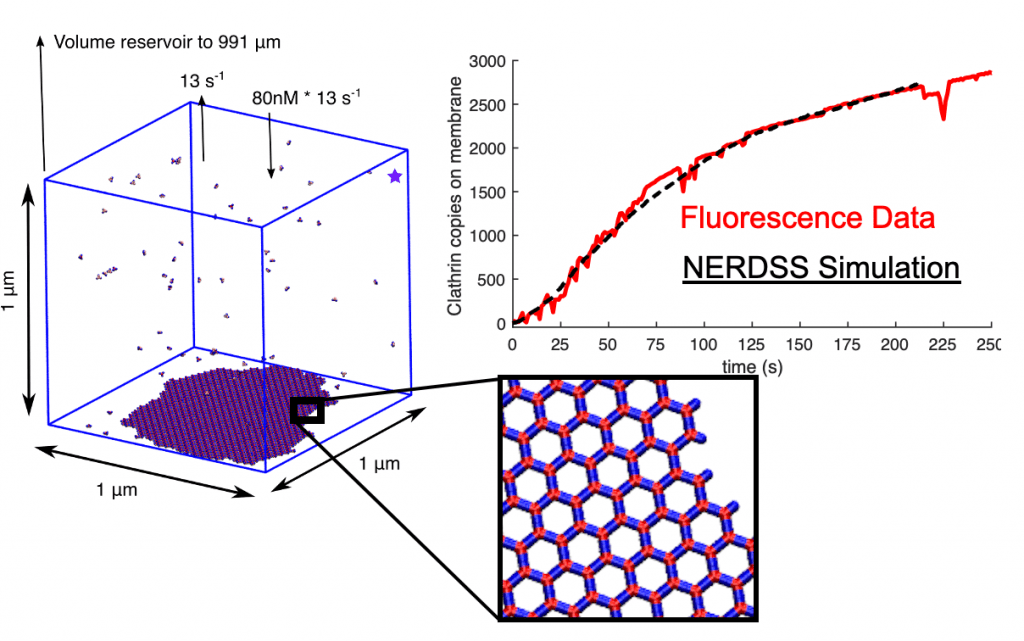
Margaret Johnson is an Associate Professor in the Department of Biophysics at Johns Hopkins University, where she has been since 2013. Her research group focuses on self-assembly and self-organization in cellular systems, with emphasis on clathrin-mediated endocytosis, viral exit mechanisms, and transcriptional regulation. Education: B.S. in Applied Mathematics from Columbia University Ph.D. in Bioengineering from University of California, Berkeley Her multidisciplinary research combines statistical mechanics, computational modeling, and experimental collaborations to study how macromolecular self-assembly is spatially and temporally controlled in biological systems. Key areas include dimensional reduction effects in protein binding, membrane remodeling dynamics, and reaction-diffusion modeling of cellular processes. Recent publications highlight her group's work on optimal kinetic pathways for self-assembly membrane-associated assembly mechanisms dimensional reduction effects in biological systems parallelized simulation algorithms temporal control of viral assembly membrane energy and protein lattice formation These studies often integrate with software development like ioNERDSS for simulation analysis. Scientific Awards: NIH Pathway to Independence Award NSF CAREER Award NIH MIRA Award Margaret's group has trained numerous graduate and postdoctoral researchers, with recent graduates securing academic positions and PhD programs at top institutions. Her lab actively develops open-source simulation tools and maintains collaborations across disciplines to advance understanding of non-equilibrium biological systems.