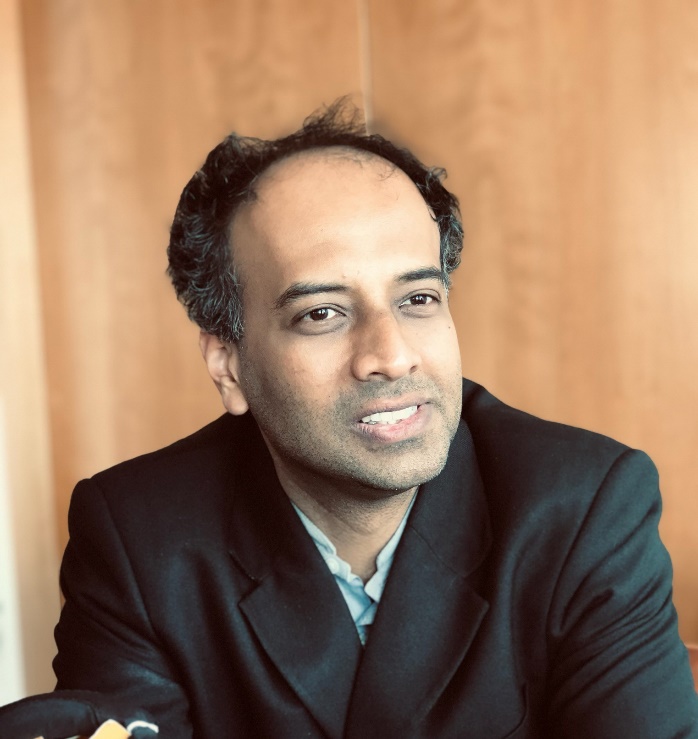
Arnab Sen is an Associate Professor at the School of Mathematics, University of Minnesota. His research focuses on probability theory and discrete harmonic analysis, with emphasis on models from statistical physics such as spin glasses, random graphs, random matrices, and random polynomials. PhD in Statistics, UC Berkeley (2010), advised by Steven N. Evans and Elchanan Mossel Postdoctoral Fellow, Statistical Laboratory, University of Cambridge His research spans discrete probability , statistical physics , and random matrix theory , addressing topics like disorder chaos in spin glasses, eigenvalue distributions, and quantum percolation. He has taught graduate and undergraduate courses including Random Matrix Theory , Introduction to Stochastic Processes , and Multivariable Calculus . His recent publications analyze spin glass models, random matrices, and combinatorial systems.
Jian Peng is an Assistant Professor in the Department of Computer Science at the University of Illinois at Urbana-Champaign. His research focuses on computational biology, machine learning, and their applications to protein structure prediction, drug design, and molecular modeling. He has contributed to advancements in antibody engineering, protein-ligand docking, and generative models for biological systems. Key research areas include: Machine Learning for Molecular Modeling Protein Structure Prediction Antibody and Peptide Design Genomics and Single-Cell Analysis Structure-Based Drug Discovery His work emphasizes integrating deep learning techniques with biological datasets to address challenges in precision medicine, drug development, and systems biology. Notable achievements include developing the FastFold system to accelerate AlphaFold training and pioneering flow-based methods for antibody design. Awards include the Overton Prize (2020), recognizing contributions to computational biology. His research has been published in top journals and conferences, spanning topics from protein mutation prediction to geodesic-based immune complex modeling.
Luigi Acerbi is an Associate Professor in the Department of Computer Science at the University of Helsinki, where he leads the Machine and Human Intelligence research group. He is also an active member of the Finnish Center for Artificial Intelligence (FCAI) and ELLIS (European Laboratory for Learning and Intelligent Systems). His research focuses on probabilistic machine learning and computational neuroscience, particularly on developing efficient methods for statistical inference, Bayesian models of perception, and resource-constrained rationality. His work bridges machine learning and cognitive science, with applications in Bayesian optimization, simulation-based inference, and image completion. The recent publications highlight a strong trend toward unifying probabilistic conditioning across diverse tasks using transformer-based meta-learning frameworks like the Amortized Conditioning Engine (ACE). These works emphasize amortized inference, flexible latent variable modeling, and the integration of prior knowledge at runtime, enabling efficient and scalable Bayesian methods for complex problems. Scientific Affiliations: University of Helsinki, Department of Computer Science Finnish Center for Artificial Intelligence (FCAI) ELLIS (European Laboratory for Learning and Intelligent Systems) Education: PhD in Computational Neuroscience, Doctoral Training Centre, Edinburgh, UK Advisor: Sethu Vijayakumar and Daniel Wolpert Visiting work at Computational and Biological Learning Lab, Cambridge Postdoctoral Experience: Alex Pouget’s lab, University of Geneva, Switzerland Wei Ji Ma, New York University, USA Collaboration with the International Brain Laboratory Luigi Acerbi mentors PhD students including Daolang Huang and Nasrulloh Loka, and collaborates widely with researchers such as Samuel Kaski. He has contributed to open-source tools like PyVBMC and is involved in community initiatives such as the EurIPS conference. His work is supported by grants from the Research Council of Finland, Business Finland, and the UKRI Turing AI World-Leading Researcher Fellowship. He leads a research lab focused on amortized probabilistic inference, with ongoing projects including PriorGuide and Stacked VBMC, aiming to make Bayesian methods more practical and accessible for real-world scientific and engineering applications.
Prof. Dr. Martin Burger is a leading scientist at DESY and a Full Professor in the Department of Mathematics at Universität Hamburg, where he leads the Computational Imaging Group. His research bridges applied mathematics, imaging sciences, and machine learning, with a focus on inverse problems, mathematical modeling, and partial differential equations. He has held professorial positions at Universität Münster and FAU Erlangen-Nürnberg prior to his current dual appointment. Full Professor, Universität Hamburg (2023–present) Leading Scientist, DESY, Hamburg (2023–present) Full Professor, FAU Erlangen-Nürnberg (2018–2023) Full Professor, Universität Münster (2006–2018) His research interests include inverse problems, variational regularization, optimal transport, kinetic models, and mathematical modeling in biology and social sciences. He has made significant contributions to imaging reconstruction, sparse neural networks, and the analysis of transformer architectures. His work often integrates theoretical analysis with computational methods, influencing both pure and applied mathematics. The most recent articles reflect a strong trend toward interdisciplinary applications, combining deep learning with PDE-based modeling, analyzing social and biological systems via kinetic and mean-field models, and advancing mathematical imaging through graph-based and optimal transport methods. His publications span high-impact venues in applied mathematics and computational science. Calderon Prize, Inverse Problems International Association (IPIA) ERC Consolidator Grant (2014) Invited speaker at ECM (2021), ICM (2022), and ICIAM (2023) Editor-in-Chief, European Journal of Applied Mathematics (since 2017) Prof. Burger has supervised numerous PhD students and postdoctoral researchers, many of whom appear as co-authors in his publications. His research is supported by major grants, including funding from the German Federal Ministry of Education and Research (BMBF). He is actively involved in collaborative projects across mathematics, physics, and engineering disciplines. He leads the Computational Imaging Group at DESY, fostering a collaborative environment for developing novel mathematical tools in imaging science. The group works on both theoretical foundations and practical implementations, contributing to advancements in tomography, machine learning, and data analysis.
Justin Sirignano is a Professor of Mathematics at the University of Oxford, affiliated with the Mathematical Institute. His research bridges Applied Mathematics, Machine Learning, and Financial Mathematics, developing novel mathematical frameworks and computational methods. Education: B.A. in Mathematics, Princeton University PhD in Mathematics, Stanford University Chapman Fellow, Imperial College London His research focuses on theoretical and applied aspects of machine learning, particularly in mean-field analysis of neural networks , deep learning for PDEs/SDEs , and scientific machine learning . He has pioneered methods for solving complex financial and scientific problems using data-driven approaches. His recent publications emphasize recurrent neural networks, reinforcement learning, and PDE closure models with applications in turbulence simulation and hypersonic flows. These works span numerical methods, optimization, and stochastic processes. Scientific Awards: 2014 SIAM Financial Mathematics and Engineering Conference Paper Prize Grants & Collaborations: He has secured over $16.5 million in funding from agencies like ONR, NSF-EPSRC, and DoE. His PhD students hold positions at J.P. Morgan, Bank of America, and other institutions. Labs & Teams: He leads research groups in Machine Learning and Mathematical Finance at Oxford, collaborating with institutions like Notre Dame, Boston University, and UIUC.
Ben Bloem-Reddy is an Assistant Professor in the Department of Statistics at the University of British Columbia (UBC), Vancouver Campus. His research focuses on statistical theory and applications in machine learning, particularly in causal inference, Bayesian methods, neural networks, and probabilistic models. He advises current students Quanhan (Johnny) Xi, Kenny Chiu, and Gian Carlo Diluvi. His work bridges foundational statistical theory with practical machine learning challenges, including causal discovery, model identifiability, and uncertainty quantification. Recent research explores topics such as latent variable models, generative processes, and symmetry in data and algorithms. His contributions span interdisciplinary areas like particle physics applications and information theory-based compression techniques. Ben’s research trends emphasize advancing theoretical guarantees for modern machine learning systems while addressing real-world problems. His publications frequently intersect with algebraic topology (e.g., cocycles in causal inference) and nonparametric methods. He maintains an active lab within the Department of Statistics, fostering collaborations across UBC’s academic ecosystem. No scientific awards are explicitly listed in the provided information. His advising and grant activities focus on statistical methodology development, as evidenced by his student supervision and published work. His office is located in ESB 3168, and he can be reached at benbr@stat.ubc.ca.
June Huh is a Mathematics Professor at Princeton University's Department of Mathematics. His research focuses on the interplay between algebraic geometry, combinatorics, and matroid theory, with notable contributions to Hodge theory, tropical geometry, and log-concavity phenomena. He is actively involved in collaborative projects such as the FRG initiative on matroids, graphs, and algebraic geometry. Key research interests include matroid polytopes, Chow rings, Lagrangian geometry, and combinatorial applications of Hodge-Riemann relations. His work bridges discrete and continuous mathematics, with implications for enumerative geometry and geometric combinatorics. Recent publications explore topics like volume polynomials, Bergman fans, and singular Hodge theory in combinatorial geometries. He has received funding for interdisciplinary research through grants like the FRG Collaborative Research program. His contributions highlight innovative methods in geometric and algebraic combinatorics.
Michael J. Shelley is the Lilian and George Lyttle Professor of Applied Mathematics and holds joint appointments in Mathematics, Neural Science, and Mechanical Engineering at New York University's Courant Institute of Mathematical Sciences. He also serves as Co-Director of the Applied Mathematics Laboratory and Director of the Center for Computational Biology at the Flatiron Institute. Education: PhD (Applied Mathematics) from the University of Arizona (1985), MS (Applied Mathematics) from the University of Arizona (1984), BA (Mathematics) from the University of Colorado (1981). Research: Focuses on complex phenomena in active matter, biophysics, and complex fluids. Key areas include fluid-structure interactions (e.g., swimming/flying mechanics), cytoskeletal dynamics, and collective behavior in biological systems. Collaborates closely with experimentalists through the Applied Math Lab and Flatiron Institute. Labs & Affiliations: Co-Director, Applied Mathematics Laboratory; Director, Center for Computational Biology (Simons Foundation); affiliated with NYU’s Courant Institute and Department of Mathematics. Notable Work: Models for microtubule-motor assemblies, active suspensions, and fluid-structure interactions. Pioneered computational frameworks for Stokes suspensions and fiber dynamics in viscous fluids.
Mohit Singh is the Coca-Cola Foundation Professor at the H. Milton Stewart School of Industrial and Systems Engineering, Georgia Institute of Technology. He previously held positions at Microsoft Research (2011-2016) and as an Assistant Professor at McGill University (2010-2012). PhD in Algorithms, Combinatorics, and Optimization (ACO) at Carnegie Mellon University His research focuses on discrete optimization , approximation algorithms , and convex optimization , with applications to combinatorial optimization, submodular functions, and network design. He has contributed to topics like Sticky Brownian Rounding, integrality gaps, and online adaptive algorithms. His recent work includes theoretical advancements in matroid constraints, dimensionality reduction, and submodular maximization. He has published extensively in top conferences such as FOCS, SODA, ICML, and NeurIPS. He has been recognized with the Coca-Cola Foundation Professorship and served as Director of the Algorithms and Randomness Center at Georgia Tech (2019-2023). He has also held editorial roles and organized key academic workshops like the Bellairs Workshop on Approximation Algorithms (2011). His teaching includes advanced courses on approximation algorithms, combinatorial optimization, and linear inequalities. He has collaborated with institutions such as Microsoft Research and McGill University.
Richard B. Sowers is a Professor at the University of Illinois at Urbana-Champaign, holding joint appointments in the Department of Industrial and Enterprise Systems Engineering, Mathematics, and Statistics (courtesy). He has held faculty positions since 1996, starting as an Assistant Professor in Mathematics and advancing to Professor across multiple departments. His research spans stochastic processes, financial engineering, and data analytics. He also serves as a Research Principal at the Office of Financial Research since 2012. Education: B.S. in Electrical Engineering (Drexel University, 1986), M.S. and Ph.D. in Applied Mathematics (University of Maryland, 1988 and 1991). Research Interests: Financial networks, stochastic systems, and applications in decision-making and control. His work bridges theoretical probability with practical domains like finance and healthcare. Recent articles focus on machine learning applications in gait analysis for neurological disorders and stochastic modeling in financial systems. Professional Contributions: Taught courses in stochastic calculus, deep learning, and financial mathematics. His research often involves interdisciplinary collaboration, including projects on credit risk, algorithmic trading, and wearable technology for health monitoring. Labs/Teams: Active in the Institute for Predictive and Computational Science, focusing on data-driven solutions for complex systems.
Carolina Osorio is a Professor at HEC Montréal, holding the Scale AI Research Chair in Artificial Intelligence for Urban Mobility and Logistics. She is affiliated with the Department of Decision Sciences and is a member of the Group for Research in Decision Analysis (GERAD) and the Interuniversity Research Centre on Enterprise Networks, Logistics and Transportation (CIRRELT). Her research focuses on transportation optimization, urban mobility, and data-driven simulation-based methods. She has been recognized among the world’s most influential researchers in 2023 and 2024. Education: Ph.D. in Mathematics, École Polytechnique Fédérale de Lausanne (EPFL) M.Sc. in Statistics, University College London (UCL) Bachelor’s in Engineering, École nationale supérieure d'informatique et de mathématiques appliquées de Grenoble (ENSIMAG) Research Interests: Her work emphasizes scalable transportation modeling, simulation-based optimization, and AI applications for urban logistics. She develops methods for large-scale network analysis, traffic demand estimation, and sustainable urban mobility solutions. Key areas include traffic signal optimization, car-sharing service design, and high-dimensional stochastic systems. Publications: Recent articles highlight advancements in scalable traffic demand estimation, Bayesian optimization for transportation systems, and simulation-based toll optimization. Her work addresses challenges in global highway networks, urban congestion dynamics, and multi-city calibration. Awards: Scale AI Research Chair (Artificial Intelligence for Urban Mobility and Logistics) Recognition as a world-leading researcher in transportation science Advising & Grants: Osorio collaborates on projects funded by Scale AI and leads research initiatives through GERAD and CIRRELT. Her supervision activities include teaching courses such as Decision Analysis and Sample Efficient Optimization at HEC Montréal. Labs & Teams: She contributes to interdisciplinary teams at GERAD and CIRRELT, focusing on integrating advanced analytics into urban transportation systems.
Christiane Barz is a Professor of Mathematics at the University of Zurich's Institute for Business Administration since 2016. Previously, she held academic roles at the UCLA Anderson School of Management, the Chicago Booth School of Business, and the Technical University (TU) Berlin. Her research focuses on stochastic dynamic systems, Markov decision processes, and their applications in revenue management. She emphasizes making mathematical tools accessible and practical for real-world problem-solving, particularly in optimizing decision-making under uncertainty. Education includes a degree in industrial engineering and a doctorate from the University of Karlsruhe (TH), Germany. Her career path includes postdoctoral research at the University of Chicago's Booth School of Business and roles as an Assistant Professor at UCLA. She combines academic excellence with balancing family life, advocating for gender equity in STEM fields. Her research explores risk-sensitive decision-making frameworks, dynamic pricing models for transportation and healthcare, and optimizing resource allocation in complex systems. Recent work includes applications in FlixBus, air cargo networks, and improving patient admission scheduling in hospitals. Barz's teaching philosophy prioritizes demystifying mathematics for students, encouraging critical engagement rather than fear of complexity. She collaborates with industry partners to apply operations research methods to real-world challenges, emphasizing both theoretical rigor and practical relevance.
Krishna Jagannathan is a full-time Professor in the Department of Electrical Engineering at the Indian Institute of Technology Madras (IIT Madras), India. He specializes in stochastic modeling, communication networks, information theory, and queuing theory. He obtained his B.Tech from IIT Madras in 2004, followed by S.M. and Ph.D. degrees from MIT in 2006 and 2010, respectively. After post-doctoral positions at Caltech and MIT, he joined IIT Madras in 2011. Education: B.Tech in Electrical Engineering, IIT Madras (2004) S.M. in Electrical Engineering and Computer Science, MIT (2006) Ph.D. in Electrical Engineering and Computer Science, MIT (2010) Research Interests: His research focuses on stochastic modeling and analysis of communication networks , information theory , and queuing theory . He has made significant contributions to understanding network performance, resource allocation, and risk-aware decision-making in complex systems. He leads the Networks and Stochastic Systems lab at IIT Madras, mentoring a large cohort of Ph.D. and M.S. students working on cutting-edge problems in networking, optimization, and stochastic systems. Scientific Awards: Best Paper Award at WiOpt 2013, Tsukuba, Japan Young Faculty Recognition Award for Excellence in Teaching and Research, IIT Madras (2014) Teaching & Mentorship: He has taught a wide range of courses including Probability Foundations , Stochastic Modeling and Queuing Theory , Convex Optimization , and Signals & Systems , consistently receiving high teaching evaluations. He has supervised over 15 Ph.D. and M.S. students to completion and continues to guide several active researchers.
Lars Nyberg is a Professor of Neuroscience at Umeå University's Medical Faculty and Director of the Umeå Centre for Functional Brain Imaging (UFBI) since 2001. He has held concurrent roles as Guest Professor in Bergen and Oslo, Norway, and led the Wallenberg Centre for Molecular Medicine (WCMM) from 2019. His academic leadership includes directing major initiatives like the EU-funded Lifebrain project (2017–2022) and holding the Torsten & Ragnar Söderberg Research Professorship in Medicine (2012–2017). Education: PhD in Psychology (1993) and Docent (1996) from Umeå University, with postdoctoral training at the Rotman Research Institute, Toronto. His research focuses on neuroimaging techniques (MRI/PET), dopamine systems, working memory, aging, and episodic memory. Key contributions include linking dopamine receptor availability to cognitive decline and demonstrating brain maintenance mechanisms in aging. Research Interests: Neuroimaging of memory systems, dopamine's role in cognition, aging-related brain changes, and cognitive reserve. Grants: EU Horizon 2020 (Lifebrain, €10M), KA Wallenberg Scholarships (2009, 2016), Swedish Research Council funding for COBRA (2013–2017). His awards include Royal Swedish Academy of Sciences membership (2008), Mångbergs Prize in Neural Sciences (2008), and multiple Wallenberg grants. Nyberg has supervised 27 PhD students and 11 postdocs, advancing translational neuroscience and aging research through interdisciplinary teams at UFBI and WCMM.
Professor Tony Shardlow is affiliated with the Department of Mathematical Sciences at the University of Bath , UK. His research spans Stochastic Differential Equations , Bayesian Inverse Problems , Statistical Shape Modelling , and Numerical Analysis , with applications in data science, medical imaging, and computational physics. Labs/Teams : IMI (Institute for Mathematical Innovation), Prob-L@b (Probability Laboratory at Bath), SAMBa (EPSRC Centre for Doctoral Training in Statistical Applied Mathematics). Recent Research Trends : Focus on geometric shape analysis using flow fields, stochastic PDEs for particle dynamics, and Bayesian inference techniques in industrial and medical contexts. Collaborative work bridges computational mathematics with applications in hip dysplasia assessment and pesticide delivery systems. Advising : Supervised Fengpei Wang's PhD thesis on dimension reduction and Sinkhorn algorithms. Collaborates with researchers like N. D. F. Campbell and C. Poon. Teaching : Offers MA30170 - Numerical Solution of Elliptic PDEs.