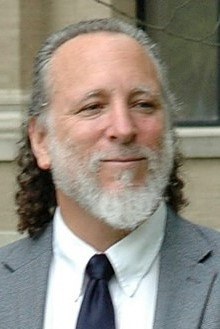
Dongwook Kim is affiliated with the Korea Advanced Institute of Science & Technology (KAIST) as a faculty member in the Department of Business and Technology Management under the College of Business. His research spans multiple domains including machine learning, robotics, signal processing, and biomedical engineering. Key contributions in Computer Vision (CNN-based semantic segmentation, 3D point cloud analysis) Significant work in Hardware Design (energy-efficient processors, neuromorphic computing) Interdisciplinary expertise in Medical Imaging (bone age assessment, retinal biomarkers) and Cybersecurity (attack detection, network analytics) Publications since 2015 demonstrate sustained innovation in AI applications , Signal Processing , and Smart City Governance . His work often integrates theoretical advances with practical implementations in real-world systems. No scientific awards or student mentorship details are explicitly documented in the provided records.
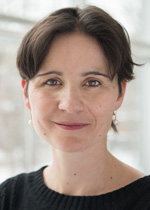
Prof. Melanie Schienle is a Professor and Chair of Statistical Methods and Econometrics at the Department of Economics and Management, Karlsruhe Institute of Technology (KIT). She also holds a professorship in the Department of Mathematics at KIT since 2021. Her expertise spans statistical methods, econometrics, financial risk analysis, and forecasting. She leads the HKMetrics Network and the RespiNow Hub for respiratory disease forecasting. She serves as a Senior Fellow at the Rimini Center for Economic Analysis (RCEA), a steering committee member of the German Economic Association, and a member of the University Research Council at KIT. Education: Ph.D. (Dr. rer. pol.) in Economics from Mannheim University (2008), summa cum laude; Diploma in Mathematics (University of Karlsruhe, 2003) with a minor in theoretical physics. She has held academic positions at Leibniz University Hannover (2012–2015) and Humboldt University of Berlin (2008–2012). Research interests focus on financial networks, systemic risk, time series analysis, and machine learning applications in economics. She co-leads projects on nowcasting and forecasting, including collaborative efforts during the pandemic to predict hospitalizations. Her work integrates advanced statistical techniques with real-world policy implications. Prof. Schienle is an Associate Editor for the International Journal of Forecasting and Journal of Time Series Analysis . She has authored over 50 peer-reviewed publications and contributed to high-impact journals like Nature Communications and Journal of Business & Economic Statistics . She leads the Institute of Statistics at KIT and chairs the MathSEE initiative for interdisciplinary mathematical applications.
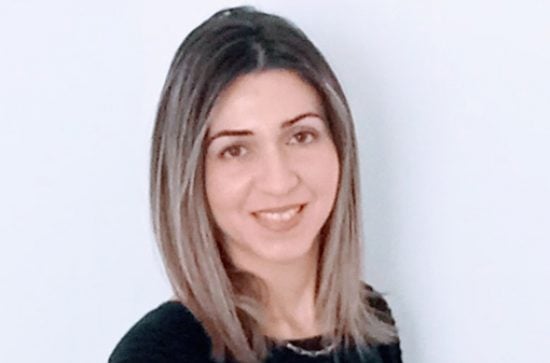
Paolo Papotti is an Associate Professor of Computer Science at EURECOM (France) since 2017, affiliated with the Data Science department. Previously, he was a senior scientist at QCRI (Qatar) and an assistant professor at Arizona State University (USA). He earned his PhD in Computer Science from the University of Roma Tre (Italy) in 2007, following an MEng in Computer Engineering from the same institution in 2003. His research focuses on scalable data management, data integration, data cleaning, and computational fact-checking. Notable contributions include work on knowledge graph rule discovery (Rudik), fact-checking frameworks (Scrutinizer), and data quality systems. His research has been supported by awards such as the 2020 Google Faculty Research Fellowship. Key publications include advancements in table representation learning, LLM-based data querying, and crowdsourced fact-checking validation. His work spans theoretical foundations and practical tools for improving data quality and information trustworthiness.
Babak Moaveni is a Professor in the Department of Civil and Environmental Engineering at Tufts University, serving as the Associate Chair since September 2024. He also holds a joint appointment as a Professor in Electrical and Computer Engineering. His research focuses on structural health monitoring, Bayesian inference, earthquake engineering, and offshore wind energy systems. Moaveni earned his Ph.D. in Structural Engineering from the University of California San Diego (2007), following an M.S. (2001) and B.S. (1999) from Sharif University of Technology in Tehran, Iran. His research interests span probabilistic system identification, signal processing, uncertainty quantification, and verification/validation of computational models. Notable grants include leadership in the PIRE project on offshore wind energy digital twins and the Coastal Virginia Offshore Wind Pilot Project. He has supervised multiple Ph.D. and M.S. students, with current advisees including Mehdi Akhlaghi and Nasim Partovi-Mehr. Moaveni has received the Best Presentation Award at the 2022 EDGE Symposium and serves on editorial boards for journals like Structural Health Monitoring and Frontiers in Built Environment . His lab, the Structural Health Monitoring Lab, specializes in infrastructure management and offshore wind energy systems. Key professional activities include membership in the American Society of Civil Engineers (ASCE) and roles on Tufts' Tenure and Promotion Committee. His teaching includes courses on structural health monitoring, numerical methods, and structural reliability.
Helen Suh is a Professor at Tufts University, jointly appointed in the departments of Civil and Environmental Engineering and Community Health . As an internationally-recognized expert in air pollution health effects, she combines environmental epidemiology , exposure science , and data analytics to investigate how pollutants impact human health. Sc.D. , Harvard University (1993) M.S. , Harvard University (1990) S.B. , Massachusetts Institute of Technology (1985) Her research focuses on three areas: air pollutant impacts on cognitive performance and child development , multi-pollutant health effects , and GIS-based spatio-temporal modeling for epidemiological studies. Recent publications highlight her work on PM2.5 measurement error correction , hormonal disruptions in pregnancy , and machine learning applications in environmental health analysis. Current trends include: Advanced statistical methods for exposure assessment Multi-omics approaches to cardiometabolic health International comparative studies (e.g., Tehran, Puerto Rico) Long-term mortality analysis in Medicare populations Pollution-immune system interactions in vulnerable groups Policy-relevant modeling for air quality standards Helen Suh has served as an Associate Editor for the Journal of Exposure Science and Environmental Epidemiology and advised major U.S. and international health organizations. Her work spans over 150 publications and integrates multidisciplinary team leadership in environmental health science. Her laboratory develops large-scale data analytics tools and spatio-temporal exposure models to support population-level health research. Current projects include air pollution and aging cohorts , urban environmental noise measurement , and epigenetic responses to pollutants .
Patrick Wu is a Professor in the Department of Computer Science at American University, with additional affiliations as Faculty Fellow at the Center for Data Science and Faculty Affiliate at the Center for Security, Innovation, and New Technology. He holds a PhD in Political Science and Scientific Computing from the University of Michigan, an MA in Statistics from Michigan, and a BA in Political Science and Statistics from the University of Chicago. His research develops AI/ML and natural language processing approaches for computational social science, focusing on: Political elite and non-elite ideology measurement Affective polarization on social media platforms Detection of hateful/abusive speech and memes Application of large language models to political science research Recent work explores innovative methods for political attitude measurement using LLMs, in-context learning techniques for social media analysis, and frameworks for multimodal representation learning. His publications demonstrate consistent innovation in applying NLP and machine learning to political discourse analysis, with emerging focus on generative AI's impact on political science education and methodology. Wu teaches courses including Object-Oriented Programming and topics in Natural Language Processing/Text as Data.
Natalia Villanueva-Rosales is an Associate Professor in the Department of Computer Science at The University of Texas at El Paso (UTEP). As Co-Principal Investigator at the NSF-funded Cyber-ShARE Center of Excellence, she leads the iLink Research Group focusing on semantic technologies and smart city initiatives. Ph.D. in Computer Science, Carleton University (2011) M.Sc. in Artificial Intelligence, University of Edinburgh (2005) B.Sc. in Computer Science & Statistics, Universidad Panamericana & CINVESTAV-IPN (2002) Her research bridges Semantic Web technologies with Smart Cities applications, particularly in Water Sustainability and Senior Mobility . Key projects include ontology-based frameworks for freight performance data integration and community-driven smart mobility solutions. Recent publications demonstrate her interdisciplinary approach across Environmental Informatics (2022-2025) and Urban Mobility (2019-2022). She holds editorial and leadership roles in semantic science initiatives while actively mentoring through the ACM-W WICS student group. 2019 HEENAC Education Award 2019 NCWIT Undergraduate Research Mentoring Award Her NSF grants include IRES-1658733 for US-Mexico Smart Cities collaboration and OAC-1835897 for the SWIM water sustainability project. The iLink Research Group under her leadership develops ontological frameworks for cross-domain data integration and trust establishment in collaborative environments.
Elisabeth Schilling serves as Associate Professor of Social Sciences at the University of Applied Sciences for Police and Public Administration North Rhine-Westphalia (HSPV NRW), holding a W2 professorship since December 2009. She previously taught at the Cologne department until 2012 and now works at the Bielefeld location. Her academic appointments include habilitation in Sociology at the University of Erfurt (2022) and guest professorship at Georg-August-Universität Göttingen (2015). Schilling's institutional affiliations extend to the Max-Weber-Kolleg at the University of Erfurt and the Institute for Diversity Research at Göttingen. Her education includes a PhD in Sociology from Heinrich-Heine-University Düsseldorf (2005, magna cum laude), with dissertation titled "Die Zukunft der Zeit: Vergleich von Zeitvorstellungen in Russland und Deutschland im Zeichen der Globalisierung." Additional academic training includes specialized sociology studies at RWTH Aachen (2000-2001) and University of California at Davis (2000), where she achieved top 5% standing in her cohort. Schilling's research fundamentally examines how time structures shape social experience across multiple domains. Her work explores temporal dimensions of migration, particularly how Ukrainian refugees construct future perspectives amid trauma. She investigates gendered time inequalities in public administration careers, analyzing how interrupted career paths disproportionately affect women. Her scholarship reveals how bureaucratic systems administer time through scheduling practices that reinforce social inequalities. Schilling develops methodological approaches for studying temporal diversity through qualitative time practice assessments, bridging classical life course theory with biographical subjectivity. Her publication trajectory shows consistent focus on time, migration, and biography since 2005, with recent work increasingly addressing refugee experiences and temporal aspects of public administration. The articles reveal methodological sophistication in qualitative time research, with growing emphasis on practical applications for public sector management. Schilling's work demonstrates strong interdisciplinary connections between sociology, gender studies, and public administration. Her current research portfolio includes multiple funded projects examining time perspectives among Ukrainian refugees (2023-2024), integration of Ukrainian refugees (2022-2023), and time management during remote work periods (2020-2021). These projects reflect her ability to address timely social issues through her temporal lens while maintaining theoretical rigor. Schilling maintains active research collaborations including the Time Perspective Network around Philip Zimbardo and the Max-Weber-Kolleg. Her editorial work includes special issues of BIOS journal and edited volumes with Springer VS. She directs research groups focusing on time structures as inequality-reproducing classification systems, demonstrating sustained scholarly impact in her field.
Chris Deeming serves as Reader (Associate Professor) in Social Policy at the University of Strathclyde's Faculty of Humanities & Social Sciences. He holds 7 UKRI-funded research awards and serves as Office for National Statistics Accredited Researcher. His academic leadership includes editorial roles for the Journal of European Social Policy (Sage) and Journal of Sociology (Sage), alongside Senior Fellowship in the Higher Education Academy and External Examiner position at the University of Salford. His research focuses on comparative social policy analysis, global challenges, and welfare systems. Key areas include Nordic welfare models, health policy during crises, inequality measurement, and methodological approaches to cross-national comparison. His work demonstrates strong engagement with UN Sustainable Development Goals through social policy frameworks. Recent publications reveal consistent focus on comparative methodologies applied to contemporary crises (particularly pandemic responses), welfare regime analysis, and public attitudes toward inequality. His research integrates longitudinal data analysis with theoretical frameworks examining social security, health systems, and policy transfer mechanisms across European contexts. Social Policy Association Award 2013 Social Policy Association Research Prize 2009 Social Policy & Administration Prize 2008 As Principal Investigator for multiple UKRI-funded projects, Deeming directs research on administrative fairness for disabled adults, changing public attitudes toward inequality, and longitudinal analysis of coronavirus impacts. His teaching portfolio includes advanced courses on comparative welfare systems and global challenges at undergraduate and postgraduate levels. Current projects involve collaboration with institutions across Europe including Sciences Po (Paris) and University of Southern Denmark.
Eunchun Park serves as an Assistant Professor in the Department of Agricultural Economics and Agribusiness at the University of Arkansas, concurrently holding the position of Director of the Experiment Station (DREX). A specialist in Bayesian spatial statistics and econometrics, his research focuses on agricultural risk analysis with particular emphasis on crop insurance mechanisms and financial commodity markets. His methodological expertise addresses critical data scarcity challenges in federal crop insurance premium calculations through advanced spatial modeling techniques. Dr. Park's academic foundation includes: Ph.D. in Agricultural Economics from Oklahoma State University (2017) M.S. in Food and Resource Economics from Korea University (2013) B.S. in Food and Resource Economics from Korea University (2010) His research program centers on extreme price and yield risk quantification in agricultural commodities, employing sophisticated Bayesian modeling frameworks to overcome data limitations in spatial risk assessment. Current work develops innovative approaches for measuring catastrophic risks in crop production systems and refining insurance rating structures through spatial smoothing of yield densities. This research bridges theoretical econometric advances with practical applications for risk management tools used by farmers and policymakers. Analysis of Dr. Park's recent publications reveals a consistent trajectory in spatial risk modeling for agricultural insurance systems, with increasing focus on prevented planting coverage factors, commodity market volatility around information releases, and climate-related production risks. His work demonstrates methodological progression from theoretical Bayesian frameworks toward actionable risk assessment tools, particularly through the application of kriging techniques to non-normal yield distributions and extreme event modeling. Dr. Park's scholarly contributions have been recognized through: Outstanding Contribution to Applied Risk Analysis Award (2020) from the Agricultural and Applied Economics Association Outstanding Graduate Student Paper Award (2018) from the Agricultural and Applied Economics Association Outstanding Doctoral Dissertation Award (2018) from the Southern Agricultural Economics Association While specific details of current advisees and grant funding are not provided in available materials, his active publication record in top agricultural economics journals suggests an ongoing mentorship role for graduate students and potential involvement in externally funded research initiatives related to agricultural risk management. His work on spatial smoothing techniques and extreme risk modeling likely informs collaborative projects with agricultural extension services and federal risk management agencies. No specific laboratory facilities or dedicated research teams are mentioned in the available documentation, though his methodological expertise suggests collaboration with spatial statistics and agricultural risk modeling groups within the university's research infrastructure.
Aaron Pincus is a Professor of Psychology at Penn State University's Department of Psychology within the College of the Liberal Arts. He is a Licensed Psychologist with extensive research expertise in personality psychology, clinical psychology, and interpersonal processes. Dr. Pincus directs the Personality Psychology Laboratory with a focus on adult clinical psychology. His primary research interests include Contemporary Integrative Interpersonal Theory (CIIT), pathological narcissism, and the DSM-5 Alternative Model of Personality Disorders. His work integrates clinical and personality psychology through the "interpersonal situation" framework, examining how individual differences in personality impact social functioning across multiple timescales. Dr. Pincus has developed several assessment tools including the Pathological Narcissism Inventory (PNI), the Inventory of Interpersonal Problems Circumplex Scales (IIP-C), and the Interpersonal Stressors Circumplex (ISC). His recent publications demonstrate expertise in circumplex measurement methods, interpersonal pathoplasticity, and the integration of personality structure and dynamics. Contemporary Integrative Interpersonal Theory (CIIT) Circumplex Measures and Methods Interpersonal Pathoplasticity Integration of Personality Structure and Dynamics Pathological Narcissism (grandiosity and vulnerability) DSM-5 Alternative Model of Personality Disorders His laboratory employs intensive repeated measures of social perception and behavior using daily diary assessments via smartphone technology to examine intraindividual variability across interactions, days, weeks, and years. This research connects social perception, behavior, emotions, and symptoms to stress, health, psychopathology, and adjustment.
Andrea Burattin is an Associate Professor at the Department of Applied Mathematics and Computer Science, Technical University of Denmark. His work bridges formal methods and practical process analysis, focusing on process mining, business process management, and hybrid modeling techniques. He actively contributes to research in healthcare process optimization, streaming data analysis, and system verification through Petri nets and CCS transformations. UN Sustainable Development Goals: Poverty eradication, environmental protection, and prosperity for all (via process optimization) Active projects: Immersive Process Mining (2024-2027), Usability and Understandability of Hybrid Process Models (2018-2021) His research explores large language model integration with process mining, proposing frameworks like Tiramisù for multi-faceted process visualization and PN2CCS for formal model translation. Recent work emphasizes real-time monitoring, conformance checking, and IoT-driven process analytics. Key trends in his publications include: 1) Streaming process mining pipelines (2022-2025); 2) LLM-plan generation frameworks (2024); 3) Formal verification techniques (Petri nets, CCS); 4) Healthcare process modeling (2019-2023); 5) Behavioral pattern analysis in process compliance. Scientific Awards Best Demo Award (2022, 2016) Best Process Mining Dissertation Award (2014) Best Workshop Paper (EDBA and PODS4H, 2023) As advisor, he supervises PhD projects on process mining and hybrid modeling. His editorial roles include Information Systems reviewer (2024-2025) and past editor for Engineering Applications of AI (2022-2023). Collaborations span Denmark, Italy, and the Netherlands.
Aurélie Labbe is a Full Professor in the Department of Decision Sciences at HEC Montréal, holding the prestigious FRQ-IVADO Chair in Data Science. Appointed as Co-Scientific Director – Academic Partnerships at IVADO in October 2023, she plays a key leadership role in establishing connections between IVADO and partner universities. Her academic journey includes a PhD in Statistics from the University of Waterloo, a Master's degree in Statistics from the University of Montreal, and dual Bachelor's degrees in Applied Mathematics and Social Sciences from Paris-Dauphine University and Pure Mathematics from Versailles-St Quentin University. Her research spans multiple interdisciplinary domains with a focus on developing advanced statistical and machine learning methodologies for big data analysis. Labbe's work bridges theoretical statistics with practical applications across diverse fields including genomics, neuroscience, transportation systems, and health informatics. She has made significant contributions to kernel methods, matrix factorization techniques, random forest applications, and spatiotemporal data analysis, with publications appearing in top journals across multiple disciplines. Analyzing her recent publications reveals a clear trend toward methodological innovation applied to complex real-world problems. Her work demonstrates expertise in handling high-dimensional data from diverse sources including neuroimaging, transportation networks, and genomic studies. The interdisciplinary nature of her research connects statistical theory with applications in healthcare, transportation safety, and biological sciences, reflecting her ability to develop methods that address domain-specific challenges while advancing statistical methodology. Holder of the FRQ-IVADO Chair in Data Science Member of the Center for Mathematical Research Training Professor Labbe actively mentors the next generation of data scientists, supervising numerous doctoral and master's students. Her supervision portfolio includes 1 doctoral thesis (2023), 4 master's theses (2022-2024), and 32 supervised projects spanning 2019-2025. Her students' work covers diverse applications including transportation safety, healthcare analytics, financial modeling, and environmental analysis. Through her leadership of the FRQ-IVADO Chair in Data Science, she coordinates research activities that integrate mathematical, statistical, and computer science expertise with domain knowledge from various data-generating fields. As Co-Scientific Director at IVADO, Professor Labbe leads efforts to establish connections with faculties and departments across five partner universities, integrating them into IVADO's research and knowledge transfer activities. Her leadership role positions her at the forefront of advancing data science research and applications in Quebec's academic ecosystem.
Dr. Galatia Cleanthous is a Lecturer in the Department of Mathematics and Statistics at Maynooth University, Ireland, affiliated with the Faculty of Science & Engineering and the Hamilton Institute. She joined Maynooth in 2020 after postdoctoral positions at Trinity College Dublin, Newcastle University, and University of Cyprus, and holds a PhD in Pure Mathematics from Aristotle University of Thessaloniki (2014). Education PhD in Mathematics, Aristotle University of Thessaloniki, Greece (2014) MSc in Mathematics, Aristotle University of Thessaloniki, Greece Diploma in Mathematics, Aristotle University of Thessaloniki, Greece Research Interests Her research bridges pure and applied mathematics, focusing on Mathematical Analysis , Probability , and Statistics . Specifically, she explores Geometric Analysis , Geometric Function Theory , and Harmonic Analysis on manifolds and metric spaces. In statistics, she works on Nonparametric , Spatial , and Environmental Statistics , developing adaptive estimation techniques and studying Gaussian random fields on spheres and other domains. Publication Trends From 2025 back to 2013, her work has consistently appeared in top journals such as Annals of Statistics , Bernoulli , Journal of Nonparametric Statistics , and Transactions of the American Mathematical Society . A clear trend emerges: early publications concentrate on pure analytic topics like Fourier multipliers and function spaces, while recent outputs integrate these theoretical tools into modern nonparametric statistics, density estimation on manifolds, and stochastic modeling of environmental and seismological data. Scientific Awards Master’s degree ranked first with grade 9.8/10, Aristotle University of Thessaloniki (2011) Diploma ranked first among ~200 students, grade 9.7/10, Aristotle University of Thessaloniki (2009) Undergraduate merit awards for three consecutive academic years (2005-2008), State Scholarship Foundation of Greece National first place in Cypriot high-school mathematics entrance exams (2005), Ministry of Education, Cyprus Advising & Outreach Dr. Cleanthous has supervised BSc and MSc students, including Ultán Doherty (BSc, 1st Class Honors, 2021) and Anush Harish (MSc, 2022). She serves as Chair of the Department PR Committee, Member of the University STEM Promotions Committee, and Member of the departmental Equality, Diversity & Inclusion committee. Beyond campus, she trains young mathematicians at the North Kildare Maths Problem Solving Club and organizes public engagement events for Science Week. Labs & Teams She is associated with the Hamilton Institute at Maynooth University, a multidisciplinary research institute fostering collaboration between mathematics, computer science, and engineering.
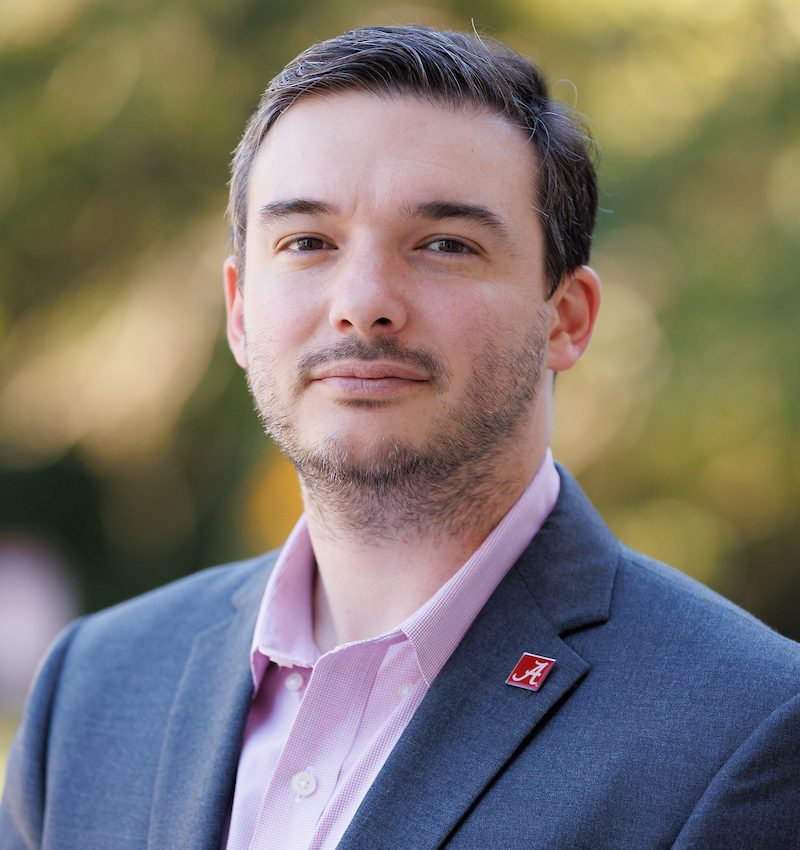
Dr. Patrick Shane Crawford serves as Assistant Professor in the Department of Civil, Construction and Environmental Engineering at the University of Alabama's College of Engineering. Affiliated with the Center for Sustainable Infrastructure and Alabama Water Institute, his research focuses on enhancing community resilience to tornadoes, floods, and hurricanes through interdisciplinary engineering approaches integrating social science and policy perspectives. His educational background includes: B.S. in Civil Engineering (2012, University of Alabama) M.S. in Civil Engineering (2014, University of Alabama) Ph.D. in Civil Engineering (2018, University of Alabama) Dr. Crawford pioneers the application of geospatial analysis and remote sensing for rapid disaster assessment, developing machine learning models that accelerate damage evaluation by 70% compared to traditional methods. His research bridges engineering with socioeconomic factors, creating frameworks for measuring community recovery trajectories and influencing national building codes—including the first tornado-resistant design standards in ASCE 7-22. Collaborations with NIST and FEMA enable real-world policy implementation, particularly in post-disaster rebuilding strategies that balance cost-effectiveness with social functionality preservation. Analysis of his 2022-2025 publications reveals consistent innovation in longitudinal disaster reconnaissance , with 60% of recent work focusing on tornado events using deep learning for damage classification. Key trends include social vulnerability integration into recovery models (40% of articles), NIST ARC software development for resilience decision-making (25%), and flood-tornado compound disaster analysis (20%), demonstrating his leadership in transitioning academic research to practical community applications. Active in federal partnerships, Dr. Crawford's 2025 feature Confident but Exposed: How Prepared Are U.S. Homeowners for Extreme Weather? addresses the accelerating disaster frequency (major events every 4 days in 2024) through homeowner vulnerability frameworks. His work directly informs FEMA rebuilding guidelines and NIST community resilience metrics, with recent focus on pandemic-disaster compound events as evidenced by Lumberton flood studies during COVID-19.