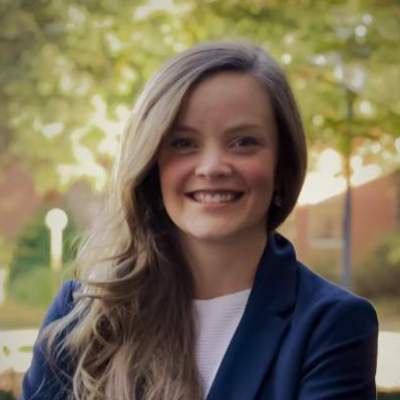
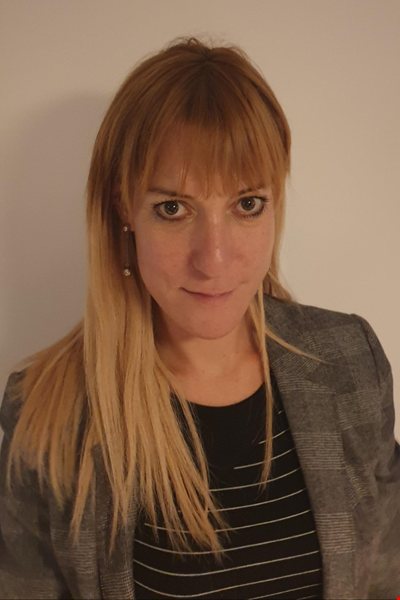
Holly Munro is a Senior Research Scientist (Forest Biometrics and Ecology) at the National Council for Air and Stream Improvement and serves as an Adjunct Assistant Professor in Forest Biometrics Education at the University of Georgia. She holds a Ph.D. in Forestry and Natural Resources from the University of Georgia, an M.S. in Data Science from the same institution, and a B.S. in Biology from the University of North Georgia. Her research focuses on forest biometrics, disturbance ecology, forest entomology, and the application of machine learning to ecological problems. Notable work includes developing predictive models for bark beetle outbreaks and studying the ecological impacts of invasive pests under climate change scenarios. She has contributed to interdisciplinary projects blending data science with traditional ecological methods. Munro’s publications span high-impact journals such as Forest Ecology and Management and Ecological Informatics , with a thematic focus on pest-behavior analysis, climate adaptation strategies, and forest health monitoring. Her work bridges theoretical ecology with practical management solutions for forest ecosystems. No scientific awards are explicitly listed in the provided text. Her advising and grants information is currently unavailable, though her research collaborations suggest active involvement in funded projects. She is affiliated with the Department of Forest Biometrics Education at UGA and contributes to forest management initiatives through her dual roles in academia and industry.
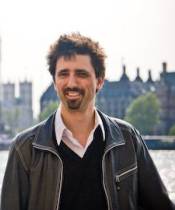
Dr. Polly Smith is a research-focused academic affiliated with the Department of Mathematics and Statistics at the University of Reading, within the School of Mathematical, Physical and Computational Sciences. She has been actively publishing since 2007, with a strong emphasis on data assimilation techniques applied to environmental and geophysical systems. Her research interests center on data assimilation , parameter estimation , and model predictability in complex dynamical systems. These include sea-ice models, fluvial inundation forecasting, morphodynamic modeling of coastal systems, and strongly coupled atmosphere-ocean models. Her work combines advanced numerical methods with real-world environmental data to improve forecasting accuracy and model reliability. The recent publications show a trend toward interdisciplinary applications, integrating satellite remote sensing, image-based monitoring, and hybrid variational-ensemble data assimilation methods. Her work spans climate science, hydrology, and coastal engineering, demonstrating a consistent focus on improving predictive capabilities in Earth system modeling. Scientific Awards: No awards explicitly mentioned in the provided text. Dr. Smith has collaborated extensively with leading researchers such as Sarah L. Dance, Nancy K. Nichols, and Andrew S. Lawless. While no formal students or advising roles are listed, her frequent first-author status and technical reports suggest a leadership role in research projects. There is no mention of specific grants, but her work aligns with major environmental modeling initiatives. She has contributed to both peer-reviewed journals and conference proceedings, including the International Conference on Coastal Engineering. Dr. Smith's research is supported by the computational and mathematical infrastructure at the University of Reading. Her work is part of a larger effort in environmental prediction, likely involving collaborations within the university’s meteorology and climate research groups. While no dedicated lab is named, her research falls within the scope of data-driven environmental modeling teams at Reading.
Maria Antonia Barceló Rado is a Professor at the Department of Economics, University of Girona, and a member of the Research Group on Statistics, Econometrics and Health (GRECS). She is also affiliated with the Centro de Investigación Biomédica en Red en Epidemiología y Salud Pública (CIBERESP) and collaborates with the Centre de Recerca en Economia i Salut (CRES) at Pompeu Fabra University. Her research spans methodological advancements in survival analysis, spatio-temporal modeling, Bayesian statistics , and applied work in clinical epidemiology, environmental epidemiology, cardiovascular risk factors, chronic diseases , and cancer epidemiology . She has developed a mixed-methods line combining Real World Data with Real World Evidence for epidemic prevention and detection. Licenciate in Mathematics (Universitat Autònoma de Barcelona, 1995) PhD in Mathematics (University of Girona, 2001) Accredited as Catedràtica d’Universitat (ANECA, 2018) Her recent publications focus on environmental stressors , air pollution effects , and spatio-temporal modeling across Spain. Articles address mental health in adolescents , vaccination equity , Covid-19 impacts , and chronic disease epidemiology . Collaborations include institutions like Johns Hopkins University, Pompeu Fabra University, and hospitals in Bellvitge and Barcelona.
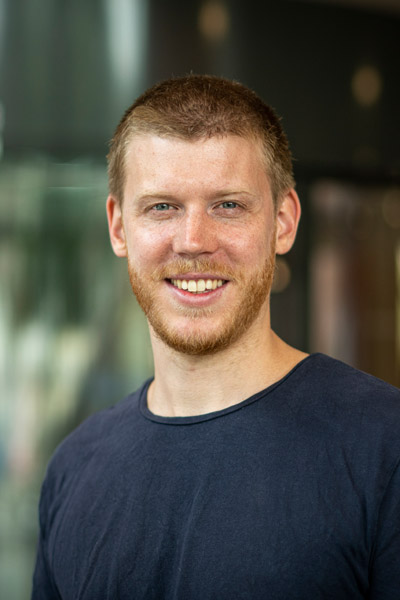
Johannes Hübl is a Full Professor at the University of Natural Resources and Life Sciences, Vienna (BOKU), leading the Institute for Alpine Natural Hazards within the Department of Landscape, Water and Infrastructure. His research focuses on alpine mass movement dynamics—particularly debris flows, rockfalls, and floods—with emphasis on risk management, mitigation engineering, and climate change adaptation. He maintains an active project portfolio including EU-funded initiatives and Austrian federal collaborations. His primary research interests include the physical processes of debris flows (surge dynamics, run-up behavior, sediment transport), rockfall hazard assessment, flood protection engineering, and climate change impacts on alpine hazards. Recent work pioneers advanced monitoring techniques like pulse-Doppler radar and LiDAR for real-time measurement of flow velocity and height, directly informing protective dam design and early warning systems. He also develops GIS-integrated simulation models for granular flows and risk assessment. Hübl's publications trend toward high-resolution field studies of debris flow dynamics, with significant focus on spatial impact distribution, statistical discharge modeling, and wildfire-hazard linkages. This reflects growing priorities in climate-resilient infrastructure and quantifiable risk assessment methodologies across European alpine regions. Scientific awards: No awards, fellowships, or medals are documented in the provided materials. Advising and grants: Professor Hübl has supervised numerous university theses as indicated by his profile. His grant leadership spans over 30 projects since 1994, including: EU projects: Nature-Based Solutions for Climate-Resilient Infrastructure (2024-2028), THARMIT (2000-2003) Austrian federal funding: 20+ projects with BMLFUW/BMF (e.g., rockfall detection, sediment management) International commissions: Bhutan flood mitigation (2000), Melamchi River reviews (2023) Industry collaborations: Check dam failure analysis, Cougar Creek optimization Labs and teams: He directs field monitoring operations including the Illgraben (Switzerland) and Gadria Creek (Italy) test sites. His institute employs physical modeling (hydraulic experiments, laser scanning) and develops real-time warning systems for alpine catchments, working closely with Austrian watershed management agencies and European consortia on event documentation and structural countermeasures.
Roman Frigg is Professor of Philosophy at the London School of Economics and Political Science (LSE) , affiliated with the Department of Philosophy, Logic and Scientific Method . He serves as Director of the Centre for Philosophy of Natural and Social Science (CPNSS) and Co-Director of the Centre for the Analysis of the Time Series (CATS) . Holding a PhD from the University of London and MScs in theoretical physics and philosophy from the University of Basel, his research spans philosophy of science , statistical mechanics , and climate modeling . Education : PhD (University of London), MSc (University of Basel: Theoretical Physics, Philosophy) His work addresses foundational questions in statistical mechanics and thermodynamics , including equilibrium theory, entropy interpretation, and relations between Boltzmannian and Gibbsian frameworks. Recent publications focus on probabilistic forecasts in chaotic climate models , culminating in the co-authored book The Fundamentals of Thermodynamics (Springer, 2025). Articles explore topics like the Ergodic Hierarchy , GRW quantum theory , and robustness analysis in climate science. Roman has made significant contributions to reconciling deterministic dynamics with objective probability via Humean interpretations. His collaborations with Charlotte Werndl, Carl Hoefer, and David Lavis have produced key insights into typicality , chaos-randomness relations , and non-equilibrium thermodynamics . Scientific Awards : Friedrich Wilhelm Bessel Research Award (Alexander von Humboldt Foundation) Roman supervises PhD students on topics ranging from scientific representation to quantum mechanics and climate policy uncertainty . His website provides access to his publications and teaching materials.
Dr. Heinrich Zozmann is an environmental economist at the Helmholtz Centre for Environmental Research - UFZ , affiliated with the Department of Economics. His research bridges human behavior and sustainable development through statistical analysis, simulation modeling, and participatory methods. PhD in Economics (2019-2023), University of Leipzig Joint International Master in Sustainable Development (2014-2017), Universities of Leipzig and Utrecht His research focuses on: Sustainable Resource Management : Addressing water scarcity and food-water-energy nexus challenges through integrated modeling and policy analysis Urban Climate Adaptation : Designing green infrastructure solutions like Living Walls for heat mitigation and biodiversity enhancement Pandemic Preparedness : Exploring systemic crisis management frameworks in the COCAP project The articles listed (2025) highlight his expertise in drought impact quantification, Jordan's water-energy-food systems, and ecological exploitation dynamics. These works span environmental economics, climate modeling, and transdisciplinary sustainability transformations. While no explicit scientific awards are documented, Zozmann's contributions include: Co-development of strategic water management tools for Jordan Design of participatory processes for urban climate resilience Integration of sensor-based monitoring with social science in climate adaptation projects He works extensively with cross-institutional teams in Leipzig, including collaborations with the University of Leipzig and international partners, while maintaining an active role in science communication through projects like Carbon Cascadia and public engagement initiatives.
Professor Katrin Meissner serves as Director of the Climate Change Research Centre at the University of New South Wales and is an Associate Investigator of the Australian Research Council's Centre of Excellence for Climate Extremes. Her research employs Earth System Climate Models and paleoclimate records to investigate abrupt climate change events, thresholds, and feedback mechanisms in the climate system, with particular emphasis on terrestrial biogeochemical cycles and ocean circulation dynamics. Research interests focus on: Dynamics of abrupt climate transitions and tipping points Interactions between ocean circulation and carbon cycling Paleoclimate reconstruction using model-data synthesis Impacts of Southern Ocean processes on global climate Biogeochemical feedbacks in warming and cooling scenarios Publications demonstrate consistent focus on paleoclimate modeling, particularly Last Interglacial and glacial termination dynamics, Southern Ocean processes, ice-sheet interactions, and carbon cycle feedbacks. Recent work expands into climate health impacts, including extreme heat mortality and air pollution effects on birth outcomes. Scientific awards include: Multiple ARC Discovery Grants (2013-2025) UNSW Science Goldstar & Silverstar Awards ARC Future Fellowship (Level II) NSERC Accelerator and Discovery Grants CFCAS Targeted Project Grant Leads the Climate Change Research Centre, coordinating interdisciplinary climate research. Manages significant grant portfolios and collaborates internationally on model intercomparison projects (e.g., CMIP6-PMIP4). Current work investigates Eocene climate dynamics, ocean deoxygenation, and climate-health interactions using high-resolution modeling approaches.
Sarah Perkins-Kirkpatrick is a Professor of Climate Science at the Fenner School of Environment and Society, Australian National University . Her research focuses on climate extremes , particularly heatwaves and marine heatwaves , their attribution to climate change , and human health impacts . She leads science communication initiatives at the Monash Climate Change Communications Research Hub and holds leadership roles in the ARC Centre of Excellence for 21st Century Weather and Australian Meteorological and Oceanographic Society . PhD in Climate Science (UNSW Sydney) Previous positions at UNSW Canberra, UNSW Sydney, and CSIRO Research interests span: Climate extremes (heatwaves, droughts, marine heatwaves) Attribution science (isolating anthropogenic vs natural drivers) Climate modeling (CMIP5/6 analysis, ensemble simulations) Urban climate impacts (heat island effects on public health) Interdisciplinary climate (health, finance, ecology links) Recent publications demonstrate trends in increasing heatwave frequency , compound event risks , and attribution methodologies . Key scientific awards include the Dorothy Hill Medal (2021), AMOS Communication Award (2021), and Clarivate Highly Cited Researcher recognition (2021–2023). She actively contributes to science outreach through media engagements and intergovernmental collaborations .
Mohamed Allali is an Associate Professor at Chapman University, affiliated with both the Fowler School of Engineering (Department of Electrical Engineering and Computer Science) and Schmid College of Science and Technology (Department of Mathematics). His research spans data engineering, machine learning, climate informatics, and mathematical education. He has contributed to constraint-based intelligent tutoring systems, data drift detection using KL divergence, and geospatial analysis for environmental monitoring. Education: University of Oklahoma (BS, MA, PhD). His recent work focuses on data distribution divergence, climate modeling for sea turtle habitats, and neural network applications in medical imaging. He has collaborated extensively on drought indices, satellite data validation, and educational technologies. His publications highlight expertise in statistical learning, computational methods, and interdisciplinary environmental applications.
Julius Kristjan Bjørnsson is a researcher at the University of Oslo , affiliated with the Department of Teacher Education and School Research . His work focuses on psychometrics , educational assessment , and the psychological aspects of learning , with a particular emphasis on national testing and international comparative studies . He contributes to large-scale assessments like PISA , TALIS , and ICILS .
Dr Evina Katsou is a Visiting Professor in the Department of Mechanical and Aerospace Engineering within the College of Engineering, Design and Physical Sciences at Brunel University London. She serves as Course Director for the Water Engineering MSc program and leads the Water & Environmental Engineering research group with 20 researchers. Dr Katsou's educational background includes a PhD in 'Wastewater Treatment with the Use of Membranes' (2008-2011), an MSc in Water Resources Science & Technology (2006-2008), and an MEng in Chemical Engineering (2000-2005), all from the National Technical University of Athens (NTUA), Greece. Her research program focuses on three interconnected areas: (1) Sustainable resource recovery from wastewater and safe reuse; (2) Data analytics, knowledge discovery and process modelling; and (3) Circularity & sustainability measurement and assessment. Dr Katsou has developed innovative approaches for biological nutrient removal from wastewater, including partial nitrification/denitrification and complete autotrophic nitrogen removal processes. Her work integrates advanced data analytics methods such as multivariate statistics, clustering techniques, machine learning algorithms, and artificial neural networks to identify complex relationships between process variables, particularly for measuring GHG emissions in water treatment systems. Dr Katsou has authored 98 journal publications (h-index: 27) and 12 book chapters with over 100 presentations, and holds a patent on biopolymers recovery. Her recent publications demonstrate a strong focus on circular economy applications in water systems, nature-based solutions for urban environments, and resource recovery technologies. The research trends show increasing integration of data-driven decision support systems with environmental sustainability metrics, particularly in the water-energy-food nexus domain. Chartered Chemical Engineer (Greece) HEA Fellow (FHEA) of the Higher Education Academy Mentor in the APEX (Academic Practice & Professional Excellence Framework) scheme Member of management group of the Royal Academy of Engineering (RAE) Visiting Professors Scheme Co-leader of Circular Economy VLT in Water Europe Leader of SMART WATER Working Group in ICT4Water Cluster-EC Member of ISO standards drafting team on Circular Economy Dr Katsou has successfully supervised 16 PhD students to completion and currently supervises several ongoing doctoral projects. She has secured substantial research funding as Principal Investigator on 11 national and international projects including RESILEX Horizon Europe, SYMBIOREM Horizon Europe, BORECER Horizon Europe, HYDROUSA H2020, and WATER-MINING H2020. Her industrial consulting portfolio includes significant contracts with leading UK water industry partners such as Affinity Water, Arup, Severn Trent, and Anglian Water, with projects ranging from carbon footprint assessment to corrosion mitigation and process optimization. She leads the Transformation Tools group of the Cost Action on Circular Cities, co-leads the Circular Water VLT of Water Europe, and co-leads the SMART-WATER group of the ICT4Water Cluster-EC. Dr Katsou is also a member of the drafting team for new ISO standards on Circular Economy (Measuring and Assessing Circularity - ISO5902).
Margaret Short is an Associate Professor of Statistics at the University of Alaska Fairbanks, Department of Statistics, holding this position since 2006. She earned her PhD in Statistics from the University of Minnesota in 2003. Her educational background includes: PhD in Statistics, University of Minnesota, 2003 Dr. Short specializes in Bayesian and spatial statistics with strong applications in environmental and ecological domains, natural resource management (including salmon escapement and halibut movement modeling), and astronomy. She employs both standard statistical software (OpenBUGS, JAGS, Stan) and custom C++ implementations for Markov chain Monte Carlo methods, demonstrating technical versatility in statistical computing. Her publication record reveals a consistent focus on applying advanced Bayesian techniques to critical environmental challenges, particularly in fisheries management and glaciology. These works showcase interdisciplinary collaborations bridging statistical theory with practical ecological and climate science applications. Margaret has supervised graduate student Jasper on salmon passage modeling and undergraduate student Khurana on glacier evolution research. Her academic profile indicates active involvement in grant-funded interdisciplinary projects addressing natural resource management and climate impacts, though specific funding mechanisms aren't detailed in available information.
Dr. Joanna Gambetta serves as a Lecturer in Food Science at the University of Newcastle , affiliated with the School of Environmental and Life Sciences . With academic qualifications from Montpellier SupAgro (MSc in Oenology and Viticulture) and the University of Adelaide (PhD in Wine Science), her research focuses on grape and wine quality assessment , biotic/abiotic stress impacts on aroma composition , and practical solutions for vineyard challenges in Australian contexts. Education : MSc in Oenology and Viticulture, Montpellier SupAgro PhD in Wine Science, University of Adelaide Research Interests span three primary domains: Antifungal microbial volatile organic compounds (VOCs) for biocontrol applications, particularly against Botrytis cinerea and Alternaria alternata through novel analytical approaches Climate change adaptation strategies in viticulture, including modeling vine phenology and mitigating sunburn damage via secondary metabolite analysis Food chemistry innovations in plant-based protein gels and dairy alternatives, integrating fermentation and enzymatic crosslinking Publication Trends reveal a multidisciplinary approach combining analytical chemistry (SPME-GC-MS, LC-MS/MS), chemometrics , and industrial collaboration . Her work bridges agricultural science with food sensory analysis , while recent studies tackle plant-based cheese development using pea protein emulsions.
Richard York serves as Professor of Sociology and Environmental Studies at the University of Oregon's College of Arts and Sciences, where he has held faculty positions since 2002. His interdisciplinary work bridges sociological theory with environmental science to address pressing ecological crises. His academic foundation includes: B.S. in Psychology from Southern Oregon State College (1994) M.S. in Environmental Studies from Bemidji State University (1997) Ph.D. in Sociology from Washington State University (2002) York's research integrates human ecology and political economy through quantitative analysis, examining how demographic, economic, and technological structures drive resource consumption and pollution. He pioneers materialist approaches to animal and plant studies while critically analyzing energy systems, climate policy, and the limitations of technological solutions to environmental crises. His work consistently challenges assumptions about efficiency and growth within capitalist frameworks. Analysis of his 2022-2025 publications reveals dominant themes: critiques of climate 'tipping points' discourse, rebound effects in energy efficiency, settler colonial dimensions of wildlife management, and the social construction of biodiversity loss. These works demonstrate increasing interdisciplinary convergence between environmental sociology, animal studies, and critical energy scholarship. His scholarly impact is recognized through major awards: Frederick H. Buttel Distinguished Contribution Award (2017) from the American Sociological Association's Environmental Sociology Section Distinguished Scholarship Award (2015) for co-authored work on macrosociological animal studies University of Oregon's Faculty Excellence Award and top teaching honor (2013) While the available text confirms York's active teaching role (Spring 2025 office hours listed), it contains no details about student advising or specific research grants. Similarly, no information about laboratories or research teams was provided in the source materials.
Mark Edward Borsuk is the James L. and Elizabeth M. Vincent Professor in the Department of Civil and Environmental Engineering at Duke University’s Pratt School of Engineering. He leads the Borsuk Lab, which specializes in interdisciplinary modeling of coupled social, environmental, and technical systems. His research spans climate change, ecosystem services, water resources, land use, and environmental health, using advanced methods such as Bayesian networks, agent-based modeling, game theory, and risk analysis. He co-directs the Center on Risk within Duke’s Science & Society Initiative and is an Associate of the Duke Initiative for Science & Society. B.S.E. in Civil Engineering and Operations Research, Princeton University, 1995 M.S. in Statistics and Decision Sciences, Duke University, 2001 Ph.D. in Environmental Science and Policy, Duke University, 2001 Postdoctoral Training, EAWAG (Swiss Federal Institute for Aquatic Science and Technology), Systems Analysis, Integrated Assessment, and Modelling (SIAM) Dr. Borsuk’s research focuses on integrating scientific data across disciplines to support decision-making under uncertainty. He is a leading expert in Bayesian network modeling applied to environmental and human health regulation. His work combines risk analysis, game theory, and agent-based modeling to assess climate change and environmental policy. He has developed novel frameworks for valuing ecosystem services, modeling landowner behavior, and assessing geoengineering risks. His lab emphasizes interdisciplinary collaboration, stakeholder engagement, and quantitative decision support. His recent publications reflect a strong trend toward integrating machine learning, causal inference, and spatial modeling into environmental assessment. Topics include solar radiation modification governance, land-use policy forecasting, invasive species impacts, and urban green space valuation. His work increasingly leverages big data (e.g., Zillow, remote sensing) and probabilistic programming to enhance model transparency and predictive accuracy. Chauncey Starr Distinguished Young Risk Analyst Award, Society for Risk Analysis, 2013 Early Career Research Excellence Award, International Environmental Modelling and Software Society, 2008 Earl I. Brown Outstanding Civil Engineering Faculty Award, Duke University, 2018 Best Paper, Integrated Environmental Assessment and Management Journal, 2012 Excellence in Mentoring Award, Dartmouth College Postdoctoral Association, 2010 Best Paper in Integrated Modelling, Environmental Modelling & Software Journal, 2008 Dr. Borsuk has been a principal investigator on grants from NSF, EPA, NIH, NIEHS, and USFS. He mentors a diverse group of graduate students and postdoctoral fellows, including Kim Bourne, Jon Holt, Chris Krapu, and Ryan Calder. He teaches courses such as Risk and Resilience Engineering, Engineering Economics, and Independent Study in Civil and Environmental Engineering. He is actively involved in advising and curriculum development through the Bass Connections Energy & Environment Research Team. He leads the Borsuk Lab, a dynamic research group focused on systems, risk, and decision analysis. The lab is a key contributor to the Bridge Collaborative—a partnership between Duke, The Nature Conservancy, IFPRI, and PATH—where it develops quantitative models to support cross-sectoral decision-making. The lab also investigates landowner decision-making in New England forests and the governance of solar geoengineering, using agent-based and deliberative modeling approaches.