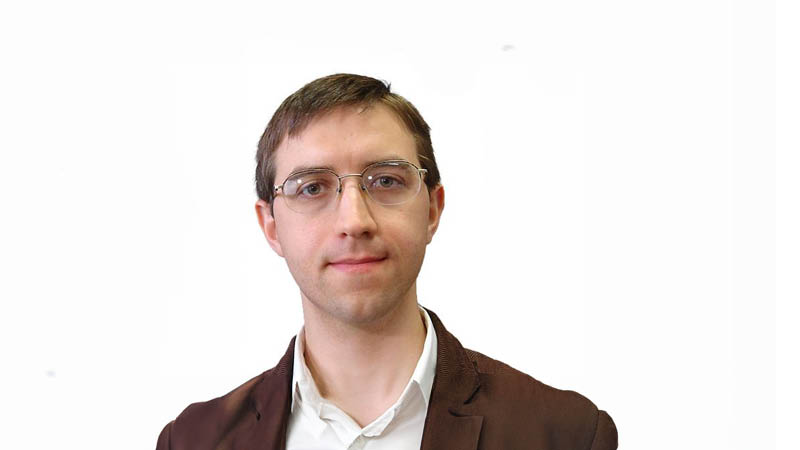
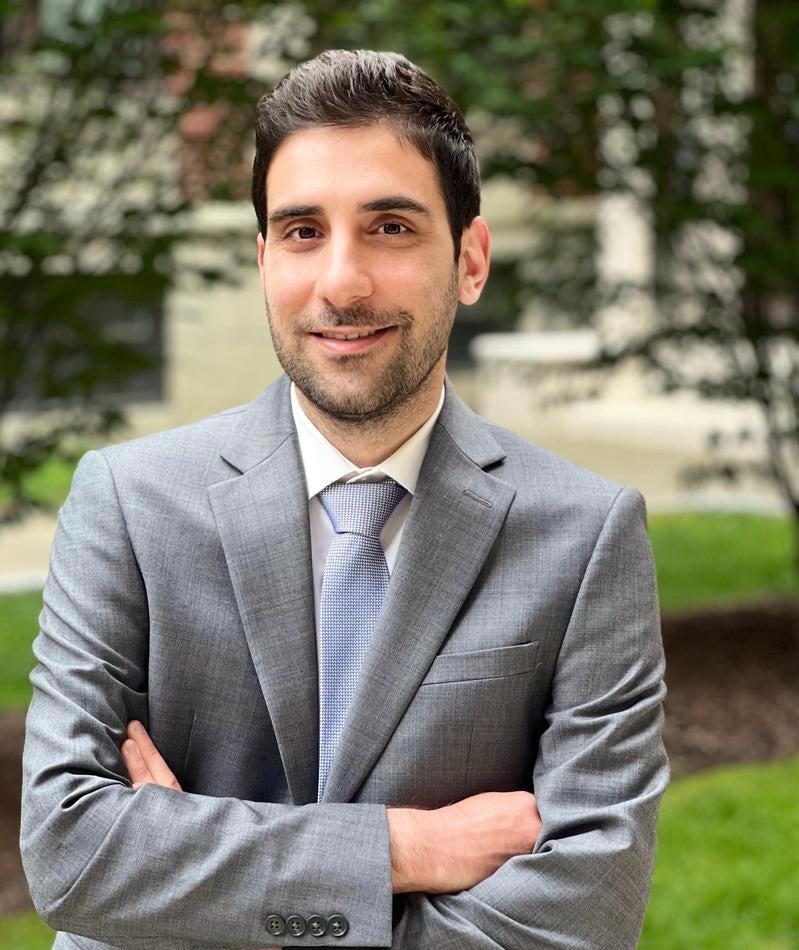
Harold D. Chiang is an Assistant Professor in the Department of Economics at the University of Wisconsin-Madison. His research focuses on econometric theory and methods, particularly robust inference techniques for clustered and network data, machine learning applications, and causal inference frameworks like regression discontinuity/kink designs. He employs computational statistics and asymptotic theory to address methodological challenges in high-dimensional and complex datasets.
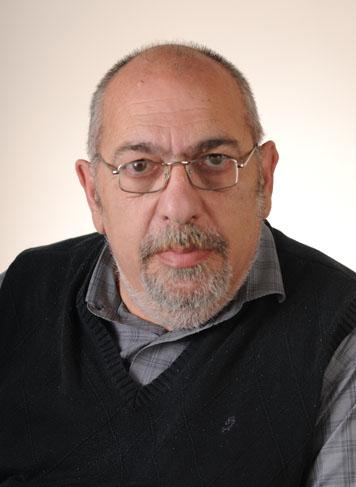
Arkadi Nemirovski is the John P. Hunter, Jr. Chair and Professor at the H. Milton Stewart School of Industrial and Systems Engineering, Georgia Tech. He holds a Ph.D. in Mathematics (1974) from Moscow State University, a Doctor of Sciences in Mathematics (1990) from the USSR Supreme Attestation Board, and an honorary Doctor of Mathematics from the University of Waterloo (2009). Ph.D. in Mathematics, Moscow State University (1974) Doctor of Sciences in Mathematics, USSR Supreme Attestation Board (1990) Doctor of Mathematics (Honoris Causa), University of Waterloo (2009) His research focuses on Optimization Theory and Algorithms , with emphasis on complexity analysis, efficient methods for nonlinear convex programs, robust optimization, optimization under uncertainty, and applications in engineering and nonparametric statistics. He has pioneered advancements in interior-point methods, semidefinite programming, and stochastic approximation, shaping modern convex optimization. His article trends highlight a trajectory from foundational interior-point algorithms (1990s) to robust optimization (2000s) and recent works on first-order methods, polyhedral estimates, and applications in machine learning, signal processing, and tomography. Key subfields include matrix norms , large-scale optimization , and stochastic uncertainty handling . Scientific awards include: 1982 Fulkerson Prize (joint with L. Khachiyan and D. Yudin) 1991 Dantzig Prize (joint with M. Grotschel) 2003 John von Neumann Theory Prize (joint with M. Todd) 2017 Member, National Academy of Engineering 2018 Fellow, American Academy of Arts and Sciences 2020 Norbert Wiener Prize (joint with M. Berger) He has supervised students like Dmitry Gabelev (polynomial-time cutting plane algorithms), Daureen Steinberg (matrix norms in robust optimization), and Eitan Rubinstein (SVMs via advanced optimization), with their works later formalized in academic journals.
Stephen Robert Hanneke is an Assistant Professor in the Department of Computer Science at Purdue University, specializing in theoretical machine learning and statistical learning theory. His work focuses on reducing the number of training examples required for learning, with contributions to supervised, semi-supervised, active, and transfer learning. He joined Purdue in Fall 2021 after roles including Research Assistant Professor at the Toyota Technological Institute at Chicago (2018–2021), Visiting Lecturer at Princeton University (2018), and Visiting Assistant Professor at Carnegie Mellon University (2009–2012). Education: B.S. in Computer Science from the University of Illinois at Urbana-Champaign (2005), Ph.D. in Machine Learning from Carnegie Mellon University (2009). Research interests include statistical learning theory, machine learning foundations, algorithms, and quantum computing. Notable contributions explore the theoretical underpinnings of active learning, adversarial robustness, and universal learning frameworks. His research bridges disciplines like probability theory, philosophy of science, and algorithmic information theory. Key awards include the Best Paper Award at ALT 2021 for 'Stable Sample Compression Schemes' and runner-up for COLT 2021. He has also received the COLT 2020 Best Paper Award and an Honorable Mention for the ICML 2017 Test of Time Award. His work on 'A Bound on the Label Complexity of Agnostic Active Learning' (ICML 2007) received further recognition in 2017. Teaching includes courses on machine learning theory and data mining at Purdue, Princeton, and Carnegie Mellon. He has organized workshops like the ALT 2019 'When Smaller Sample Sizes Suffice for Learning' and chaired the program committee for ALT 2017. His research outputs span over 100 publications in top venues like COLT, NeurIPS, and JMLR, focusing on foundational questions in learning theory and algorithmic efficiency.
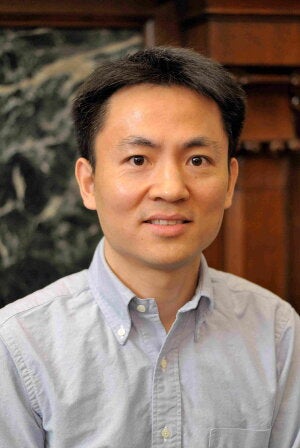
Yuguo Chen is a Professor in the Department of Statistics at the University of Illinois at Urbana-Champaign (UIUC), serving as Interim Department Chair and Director of the Illinois Statistics Office. He holds affiliations with the Department of Computer Science, Information Trust Institute, Coordinated Science Lab, and Illinois Informatics Institute. Chen earned his PhD in Statistics from Stanford University (2001) and a B.S. in Mathematics from the University of Science and Technology of China (1997). His research focuses on Monte Carlo methods, network data analysis, state space models, bioinformatics, and Bayesian inference. Key interests include scalable network estimation, community detection, and applications in public health, education, and computational biology. Recent work highlights include advancements in dynamic network modeling, Bayesian latent class models for cognitive diagnosis, and statistical methods for analyzing multi-layer networks. His contributions have been recognized through awards such as the American Statistical Association Fellowship (2018) and the Charles Edison Lectureship (2018). Editorial Roles: Associate Editor of Journal of the American Statistical Association , Journal of Computational and Graphical Statistics , and Journal of Algebraic Statistics . Grants & Consulting: Directs the Illinois Statistics Office, providing interdisciplinary research support. Active in collaborative projects involving healthcare, education, and computational infrastructure. Labs & Teams: Leads initiatives at the Coordinated Science Lab and Information Trust Institute, integrating statistical methods with cybersecurity and data-driven decision-making.
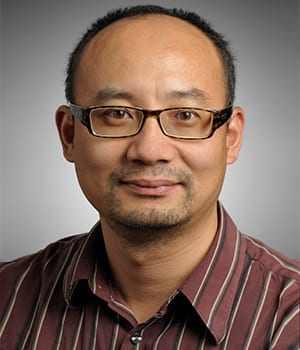
Dr. Liqiang Ni is an Associate Professor in the Department of Statistics and Data Science at the University of Central Florida (UCF). He is affiliated with the College of Sciences and holds office in TC2 Room 205. His research focuses on multivariate analysis, dimension reduction techniques, regression analysis, data mining methodologies, and bioinformatics applications. Education: Ph.D. in Statistics, 2003 – University of Minnesota B.S. in Computational Mathematics, 1996 – Fudan University Research Interests: Dr. Ni's work bridges theoretical statistics and applied data science, with emphasis on developing novel methodologies for high-dimensional data analysis. His contributions span statistical modeling in bioinformatics, optimization in regression frameworks, and scalable algorithms for modern data mining challenges. Awards & Grants: No specific awards or grants are listed in the provided information. Advising & Mentorship: No advisee名单 is explicitly mentioned here, though his role as faculty suggests involvement in mentoring students in statistics and data science. Labs & Teams: No specific lab affiliations or research teams are detailed in the text.
Mohammad Mohammadi Amiri serves as an Assistant Professor in the Department of Computer Science at Rensselaer Polytechnic Institute (RPI), appointed in Fall 2023. His research focuses on advancing artificial intelligence through strategic data utilization, with emphasis on large language models, data valuation, federated learning, and deep learning. Previously, he held postdoctoral appointments at Princeton University and MIT Media Lab, building on his strong educational foundation from Imperial College London, University of Tehran, and Iran University of Science and Technology. Education: Ph.D. in Electrical and Electronic Engineering, Imperial College London (2019) - Best Ph.D. Thesis Award recipient M.Sc. in Electrical and Computer Engineering, University of Tehran (2014) - Ranked 1st among all M.Sc. students B.Sc. in Electrical Engineering, Iran University of Science and Technology (2011) - Ranked 1st among all B.Sc. students Dr. Amiri's research centers on optimizing artificial intelligence systems through innovative data strategies. His work addresses critical challenges in large language models including efficiency, memory usage, alignment, and reasoning capabilities. In data valuation, he develops principled methods to quantify data worth for fair trading platforms. His federated learning research tackles privacy concerns, heterogeneous data distribution, and communication overhead in decentralized environments. The deep learning component explores theoretical foundations to improve model interpretability and robustness. Analysis of his recent publications reveals a strong focus on making AI systems more efficient and accessible, with particular emphasis on large language model optimization, federated learning advancements, and data valuation frameworks. His work bridges theoretical foundations with practical applications in wireless communications and distributed computing environments. Scientific Awards: IEEE Communications Society Young Author Best Paper Award (2022) Best PhD Thesis Award from IEEE Information Theory Chapter of UK and Ireland (2019) Eryl Cadwallader Davies Prize for Outstanding PhD Thesis (2019) EEE Departmental Scholarship at Imperial College London (2015-2019) Ranked 1st among M.Sc. students at University of Tehran (2014) Ranked 1st among B.Sc. students at Iran University of Science and Technology (2011) Dr. Amiri actively mentors graduate students, currently supervising five Ph.D. candidates and one M.Sc. student working on efficient LLM fine-tuning, inference, and storage. His research has attracted significant attention, evidenced by numerous keynote invitations at prestigious institutions including Bell Labs, MIT, King's College London, and various IEEE conferences. He serves on program committees for major conferences including IEEE Globecom and ICC, demonstrating his growing influence in the academic community. His research group operates at the intersection of machine learning and wireless communications, developing innovative solutions for resource-constrained environments while addressing fundamental theoretical challenges in AI systems. Current projects focus on making advanced AI more scalable and accessible through efficiency improvements in model training and inference.
LEE Wee Sun is a Professor in the Department of Computer Science at the National University of Singapore (NUS), where he previously served as Head of Department, Vice Dean of Undergraduate Studies, and Vice Dean of Research. His academic journey began with a B.Eng. in Computer Systems Engineering from the University of Queensland (1992) and a Ph.D. from the Australian National University (1996), followed by research roles at the Australian Defence Force Academy and MIT. Education: Ph.D., Australian National University, Canberra, Australia (1996) B.Eng. in Computer Systems Engineering, University of Queensland, Brisbane, Australia (1992) Research Focus: Professor Lee pioneers work in Machine Learning , Planning Under Uncertainty , and Approximate Inference , with emphasis on integrating AI subfields for holistic reasoning. His current projects include "Learning to Decompose for Reasoning and Planning" (enhancing LLMs via self-supervised problem decomposition) and "Learning to Reason with Visual-Linguistic Inputs" (unifying vision, language, and reasoning in single architectures). Publication Trends: Recent work (2023-2025) centers on bridging LLMs with classical AI techniques, featuring breakthroughs in uncertainty quantification, multi-task optimization, and graph-based reasoning. Key themes include sparsity-aware vehicle routing, epistemic uncertainty for reliable LLMs, and differentiable neural solvers for combinatorial problems. Awards: IJCAI-JAIR Best Paper Prize (2022) RSS Test of Time Award (2021) RoboCup Best Paper Award (IROS 2015) HRATC 1st Place (2015) IPPC POMDP Track 1st Place (2011, 2014) UAI Google Best Student Paper (2014) Semeval-1 1st/2nd Place (2007) J.G. Crawford Prize (ANU 1996) Leadership & Service: As steering committee chair for ACML and area chair for NeurIPS/ICML/AAAI/IJCAI, Professor Lee shapes global AI discourse. His administrative roles at NUS and collaborations with MIT/Singapore-MIT Alliance demonstrate commitment to advancing AI education and research infrastructure. While student advisees aren't listed, his leadership positions imply extensive mentoring. Research Ecosystem: His work drives NUS's AI initiatives including Knowledge@Computing projects on reasoning frontiers. Current efforts focus on making AI systems robust through uncertainty-aware planning and multi-modal integration, with applications in robotics, verification systems, and combinatorial optimization.
See Kiong Ng serves as Professor of Practice in the Department of Computer Science at the School of Computing, National University of Singapore (NUS), while concurrently holding leadership roles as Director of AI Technology at AI Singapore and Deputy Director of NUS's Institute of Data Science (IDS). His work focuses on translational data science research and developing integrated capabilities for Singapore's Smart Nation initiative through industry and public agency collaborations. His academic credentials include a B.S. in Applied Mathematics (Computer Science Track) from Carnegie Mellon University (1989), an M.S.E. in Computer & Information Science (Artificial Intelligence) from the University of Pennsylvania (1990), and a Ph.D. in Computer Science from Carnegie Mellon University (1998), supported by Singapore's National Computer Board overseas scholarship. Professor Ng's research bridges artificial intelligence with real-world applications across diverse domains. His primary interests span Data Mining, Machine Learning, Natural Language Processing, Smart Cities, and Computational Biology, with emphasis on extracting value from big data through interdisciplinary approaches. He actively pioneers applications in urban systems and bioinformatics, demonstrating data science's transformative potential beyond traditional boundaries. His publication record reveals consistent innovation in algorithm development for complex data challenges, with recent work focusing on taxonomy construction, single-cell genomics analysis, urban transportation systems, and imbalanced time series classification. These contributions demonstrate his commitment to solving practical problems through cutting-edge data science techniques. His major recognitions include: MTI Borderless Award (2014) as Green Growth Working Group project member Minister for National Development's R&D Award 2017 (Distinguished Award) for city-level analytics platform innovation A*STAR Borderless Award (2014) as Urban Systems Initiative team leader MTI Innovation Award (2013) for Strategic Technology Translation in Business Analytics Professor Ng has established significant research infrastructure including founding A*STAR's Data Analytics Department and leading the Urban Systems Initiative. His translational research model emphasizes industry partnerships and practical implementation, particularly in smart city development where he connects data science with urban planning challenges across Singapore's government agencies.
Jens Kreitewolf is a Faculty Lecturer in the Departments of Psychology and Mathematics and Statistics at McGill University. He teaches courses in statistics, research methodology, and psychophysics. His research focuses on auditory cognition, speech comprehension, and the neural mechanisms underlying voice perception. Dr. Kreitewolf holds a Ph.D. (Dr. rer. nat.) from Humboldt University of Berlin and completed postdoctoral fellowships at BRAMS and the University of Lübeck. His work combines experimental psychology, neuroimaging, and psychophysics to explore auditory processing challenges in adverse listening conditions. Key interests include how familiarity with a talker’s voice aids comprehension and the impact of hearing impairment on speech perception. Education: M.Sc. in Psychology (Ruhr University Bochum, 2009); Ph.D. in Psychology (Humboldt University of Berlin, 2014). Research Interests: Auditory scene analysis and speech-in-noise processing Voice recognition and familiarity effects Neural correlates of perceptual decision-making Circadian rhythms and perceptual sensitivity Cognitive neuroscience of auditory attention Publications highlight contributions to understanding: Risk factors for depression symptom progression Self-concept clarity in romantic evaluations Neurobiological mechanisms of working memory vulnerability Vestibular symptoms in migraine patients His interdisciplinary approach bridges psychology, statistics, and neuroscience, with applications to clinical populations and sensory processing disorders.
Geoff Pleiss is an Assistant Professor in the Department of Statistics at the University of British Columbia (UBC), affiliated with CAIDA's AIM-SI cluster. He is also a Canada CIFAR AI Chair and faculty member at the Vector Institute. His research bridges deep learning and probabilistic modeling, focusing on uncertainty quantification, Bayesian optimization, Gaussian processes, and ensemble methods. Pleiss earned his PhD in Computer Science from Cornell University (2020), followed by a postdoc at Columbia University. He holds multiple awards, including the AISTATS Top Reviewer and NeurIPS recognitions. His work emphasizes scalable algorithms and open-source contributions, such as the GPyTorch library. Pleiss advises students in Computer Science and Statistics, including Donney Fan (PhD), Tim G. Zhou (MSc), and others. He teaches advanced courses like STAT 547U (Deep Learning Theory) and STAT 520P (Bayesian Optimization). Grants include NSERC Discovery and New Frontiers in Research funding. Pleiss collaborates on interdisciplinary projects, such as astrophysical discovery via machine learning, and actively participates in academic service and outreach. Education: PhD in Computer Science, Cornell University (2020) MSc in Computer Science, Cornell University (2018) BSc in Engineering (Computing with Applied Mathematics), Olin College (2013) Key Research Themes: Uncertainty-aware decision-making with neural networks Scalable Gaussian processes and Bayesian optimization Ensemble methods and their theoretical limitations Recent Grants: NSERC Discovery Grant (2024) New Frontiers in Research Fund (2025, co-PI) His publications span foundational theory to applied machine learning, with over 14,500 citations. He actively mentors students through research internships and advises on open-source software development. Pleiss frequently presents at top conferences and collaborates with industry partners like Microsoft and ASAPP.
Chris De Sa is an Associate Professor in the Department of Computer Science at Cornell University, affiliated with the Cornell Machine Learning Group and leading the Relax ML Lab. His research focuses on algorithmic, software, and hardware techniques for high-performance machine learning, particularly relaxed-consistency stochastic algorithms like asynchronous and low-precision stochastic gradient descent (SGD). He earned his Ph.D. from Stanford University under advisors Kunle Olukotun and Chris Ré. His work emphasizes constructing efficient, parallel, and distributed machine learning frameworks for deep learning and data analytics. Education: Ph.D. in Computer Science, Stanford University (2017) Research Interests: Algorithmic techniques for scalable ML, quantization, distributed optimization, hyperbolic geometry in ML, and reliable measurement of ML systems. His group develops frameworks for efficient inference/training and explores the intersection of ML with domains like agriculture and plant science through courses like PLSCI 7202. Recent Highlights: DARPA YFA Grant (2024), NSF CAREER Award, Google Research Scholar Award, and multiple best paper recognitions. Key contributions include QuIP quantization methods, Coneheads attention mechanisms, and theoretical advances in decentralized training. Awards: NSF CAREER Award DARPA YFA Grant (2024) Google Research Scholar Award Mr. & Mrs. Richard F. Tucker Teaching Award Grants & Advising: Advises 8 Ph.D. students (including Ruqi Zhang, Yucheng Lu, A. Feder Cooper) and holds leadership roles in MLSys conferences. Active in grant-funded research (e.g., NSF Robust Intelligence). Labs/Teams: Leads the Relax ML Lab and participates in Cornell’s Institute for Digital Agriculture (CIDA).
Christopher O'Donnell is a Professor of Econometrics at the University of Queensland's School of Economics. He holds a PhD from the University of Sydney and has held academic leadership roles including Director of the Centre for Efficiency and Productivity Analysis. His research focuses on productivity and efficiency analysis, econometric methods, and their applications in agriculture, public policy, and environmental economics. Education: PhD (University of Sydney), MCom (University of New South Wales), BAgEc (Hons) (University of New England). Research interests include economic and statistical methods for measuring productivity changes, stochastic frontier analysis, and metafrontier frameworks. He has authored/co-authored three books and over 80 journal articles, with notable contributions in the American Journal of Agricultural Economics , Journal of Econometrics , and European Journal of Operational Research . Scientific awards include being a Distinguished Fellow of the Australian Agricultural and Resource Economics Society. His work has been applied in sectors like healthcare, fisheries, and public utilities through collaborations with organizations such as the World Bank and Asian Productivity Organization. Key projects include measuring agricultural productivity in China, analyzing hospital efficiency, and evaluating climate impacts on farming. Grants include studies on productivity measurement in Australian universities and Northern Grains Region farms. Labs/Teams: Former Director of the Centre for Efficiency and Productivity Analysis, collaborating with global institutions on productivity benchmarking and policy analysis.
Elizabeth Bruch is an Associate Professor of Sociology and Complex Systems at the University of Michigan, serving as Associate Director of the Institute for Data and AI in Society. She holds External Faculty status at the Santa Fe Institute and is affiliated with the Center for Population Studies. With a Ph.D. from UCLA and an M.S. in Statistics, her research integrates choice modeling, network science, and agent-based simulations to study individual decisions in social environments. Key areas include residential segregation, dating markets, and higher education. Education: Ph.D. and M.S. in Sociology/Statistics (UCLA), B.A. in Sociology (Reed College) Affiliations: Santa Fe Institute, Institute for Advanced Study Berlin Her work has been published in Science , PNAS , and American Journal of Sociology , earning awards like the ASA Methodology Innovation Prize and the Merton Prize. Her upcoming book Date Like a Local (Princeton, 2026) explores urban influences on romantic behavior. Bruch’s research addresses societal challenges through computational methods, including pandemic modeling during the 2020 crisis and algorithmic analysis of dating markets. She serves on Santa Fe Institute’s Science Steering Committee and collaborates across disciplines to advance complexity science.
Michael Smith is the McCosh Professor of Philosophy at Princeton University. He holds a DPhil from Oxford University (1989) and has been a faculty member since 2004, previously at the Australian National University. His research focuses on ethics, moral psychology, philosophy of mind, political philosophy, and philosophy of law. Smith’s work integrates constitutivist theories of practical reason with analyses of moral agency. He has contributed to debates on moral rationalism, the nature of reasons for action, and the relationship between rationality and normativity. Education: MA, Monash University (1980); BPhil (1983), DPhil (1989), University of Oxford Smith’s scholarship emphasizes the interplay between ethical theory and psychological explanations of agency. Recent publications explore topics like carbon capture technologies, cultural clashes in moral reasoning, and probabilistic forecasting in oceanography. His philosophical contributions address foundational questions in meta-ethics, including the ‘moral problem’ and the implications of constitutivism for normative frameworks. He advises on interdisciplinary projects at the intersection of philosophy and emerging technologies. Notable research trends include applying philosophical analysis to environmental ethics and developing frameworks for resolving moral dilemmas through rational agency models. His work often bridges analytic philosophy with empirical inquiries in psychology and social science.
Mark Bocko is a Distinguished Professor of Electrical and Computer Engineering at the University of Rochester, affiliated with the Hajim School of Engineering & Applied Sciences. He holds roles as Director of the Center for Emerging and Innovative Sciences (CEIS) and Director of Audio & Music Engineering. He earned his PhD in Physics from the University of Rochester in 1984, focusing on gravitational wave detectors. His research spans audio signal processing, sensors, superconductivity, and quantum computing. Notable contributions include flat-panel loudspeaker development, non-contact ECG sensors, and quantum coherence studies in Josephson junctions. Research interests include audio and acoustic signal processing, computer audition, and sensor technologies. His work integrates interdisciplinary approaches, combining electrical engineering, physics, and computer science. Awards include the 2012 Goergen Award for Teaching and Mercer Brugler Distinguished Teaching Professor (2008–2011). Recent publications address modal crossover networks for loudspeakers, vibrational touch sensing, and room impulse response modeling. He has advised PhD students on topics like spatial audio rendering and musical vibrato analysis. His labs focus on advancing audio engineering and smart sensor systems through collaborative industry partnerships.